
Reviewed · OSAKA TEA CEREMONY & MATCHA
Osaka: Tea Ceremony, Calligraphy, and Kimono Experience
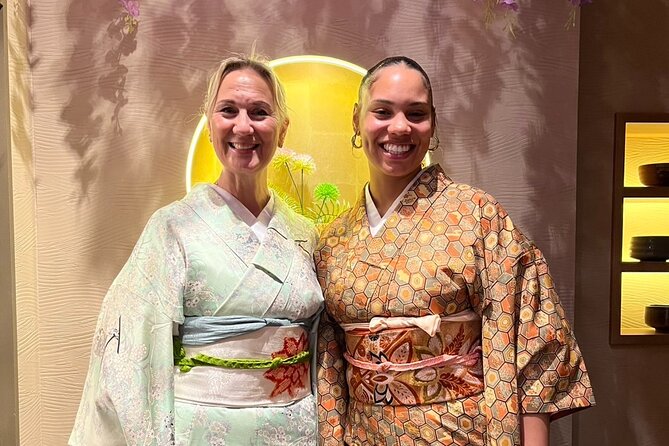
A kimono day that feels like slow Japanese TV. This Osaka experience pairs a traditional tea ceremony with guided calligraphy and dressing time in a peaceful studio near downtown, with hosts like Meiji and Mika earning consistent praise for patience and warm English support. The downside: the meeting spot involves finding the right building and then taking stairs up to the second floor.
I especially like the careful kimono dressing (including help with hair) and how the tea ceremony is explained step by step, not rushed. For a 3-hour plan at $96, it’s also a good value because you get instruction plus a take-home calligraphy result and included sweets. One practical consideration: the studio spaces can be tight for groups, so at one point you may split into smaller rooms to keep things comfortable.
In This Review
- Quick takeaways
- Entering the Osaka calm: what this 3-hour experience actually feels like
- Finding the meeting spot: MixyHearts stairs and a Lawson landmark
- Kimono dressing in a downtown studio: selection, fit, and hair help
- Calligraphy in English (and beyond): your brushwork keepsake
- Tea ceremony: matcha, sweets, and the meaning behind the steps
- Group flow and time: what to expect with up to 8 people
- Price and value: does $96 make sense?
- Who should book this Osaka experience (and who might skip)
- Final verdict: should you book it?
- FAQ
- What’s the duration of the Osaka tea, calligraphy, and kimono experience?
- How many people are in a group?
- What languages are available for the live guide?
- What’s included in the price?
- Is transportation included?
- Where is the meeting point?
- Is pickup and drop-off provided?
- Is it suitable for young children or babies?
- Can I cancel and get a refund?
Quick takeaways
- Kimono dressing + simple hairstyle included, with staff help that can accommodate different hair situations (including braids)
- Beginner-friendly calligraphy with guided brushwork, so you’re not “expected to already know kanji”
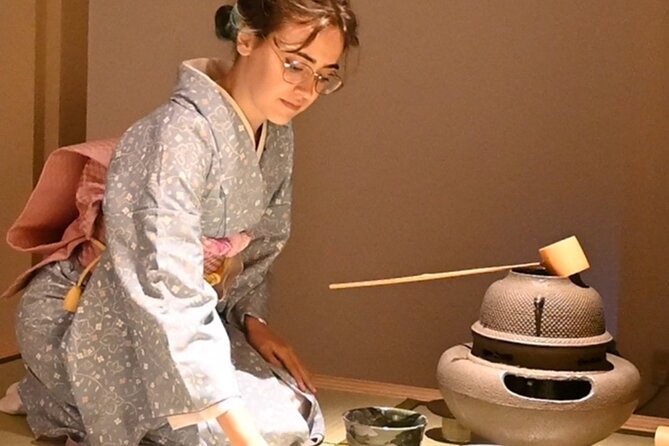
- Hands-on matcha tea ceremony rather than only watching, with explanation of the rituals and meaning
- A calm, studio setting in downtown Osaka that feels like a pause button from the city
- Small group size (up to 8), with smoother flow even when you split into smaller groups
Another bowl whisked slowly in Osaka
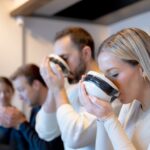
Entering the Osaka calm: what this 3-hour experience actually feels like
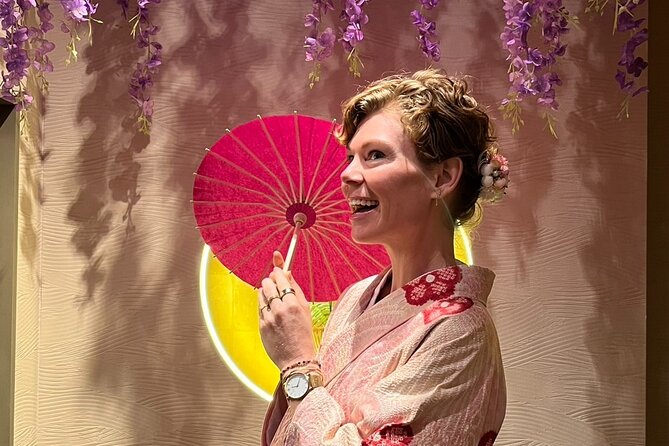
This is a structured cultural workshop, but it doesn’t feel like a classroom drill. You’ll move from dressing to writing to tea in a slow, respectful rhythm, with your guide acting as translator, instructor, and helper all at once.
The best part for me is the pacing. You get time to ask questions, redo a brush stroke, and settle into the tea moments without feeling shoved along.
And since it’s limited to a small group of up to 8, the tone stays personal. That matters for first-timers, especially if you’re nervous about wearing a kimono or holding a brush.
Finding the meeting spot: MixyHearts stairs and a Lawson landmark
You’ll meet in a building near Tanimachi 9-chome Station or Osaka Uehommachi Station—easy enough once you’re pointed in the right direction.
From Tanimachi 9-chome (Osaka Metro): take Exit 11, walk about 3 minutes straight, use Lawson as your visual anchor, then look for the building with MixyHearts beauty salon on the first floor. Go inside and take the stairs to the second floor.
From Osaka Uehommachi (Kintetsu): take the East Exit, walk left about 7 minutes, find the building with MixyHearts on the first floor, then go up to the second floor.
Tip: entry can be easy to miss, so I’d give yourself a few extra minutes rather than arriving at the last second.
Kimono dressing in a downtown studio: selection, fit, and hair help
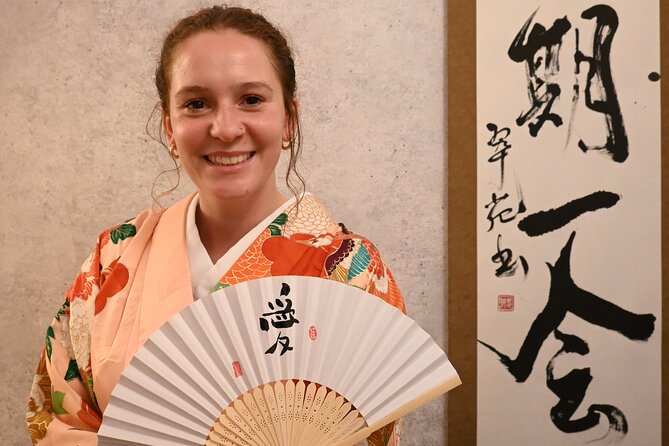
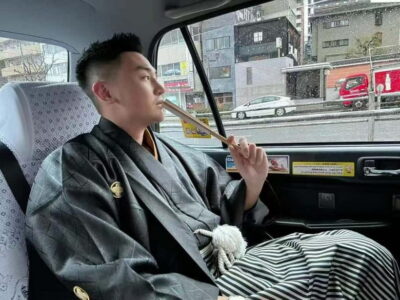
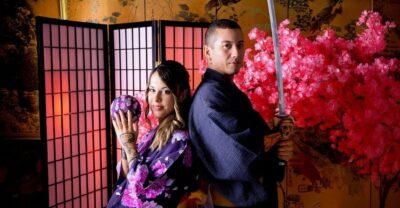
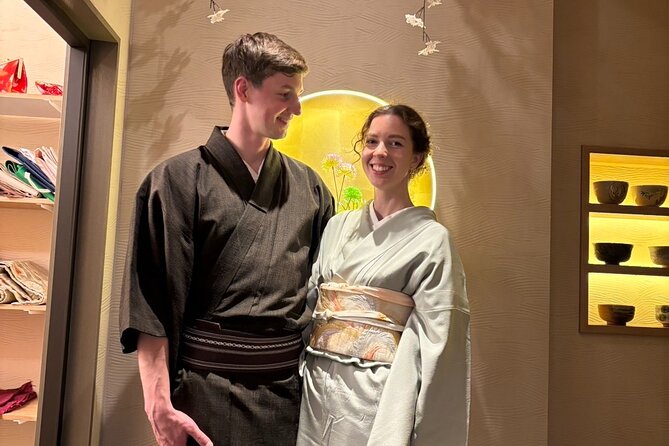
The kimono portion is more than costume rental. You’ll choose from a selection of kimonos, and the staff will help you get dressed properly.
Guests consistently praise how the dressing process is handled with care—patient, respectful, and focused on comfort. One reviewer even noted feeling welcomed despite having braids, and another mentioned concerns about size; the guide helped ensure the outfit fit correctly.
You also get simple hairstyling included. Reviews mention the hair being gently handled with a finishing touch so the look feels complete, not “just bundled up.”
Practical note: this is a hands-on process, so wear something easy to change out of and plan for a bit of time before you’re fully camera-ready.
Dressed for old Osaka a while longer
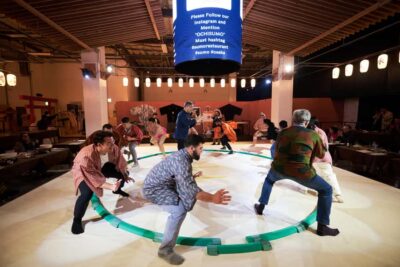
Calligraphy in English (and beyond): your brushwork keepsake
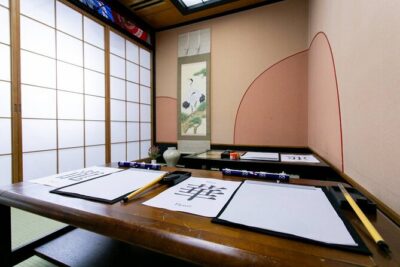
After dressing, you move into the calligraphy lesson. This is where the experience becomes very personal, because your result becomes your souvenir.
Guides teach the basics and help you write your own characters, including kanji. Several reviews highlight how the instructors are encouraging even when the strokes aren’t perfect, and how you’ll be given enough time to practice.
What I like about this setup: it’s not only about the final piece. You learn the rhythm of brush control—pressure, direction, and spacing—while the instructor explains what you’re doing and why it matters.
And yes, you end up with something tangible. Multiple guests mention taking home a calligraphy keepsake that actually feels meaningful because you made it yourself.
Tea ceremony: matcha, sweets, and the meaning behind the steps
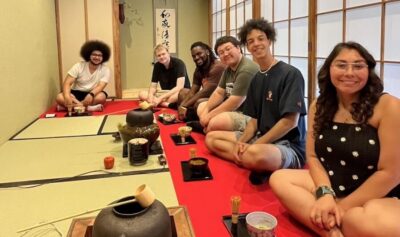
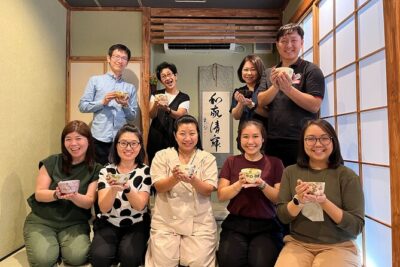
The tea ceremony is the final “slow moment,” and it’s also the most memorable for many people. The guides explain the history and philosophy behind the ritual, but they also keep it practical, showing what to do and then letting you try.
A standout detail from real feedback: you get a turn with the correct technique for making matcha, not just a passive demonstration. That’s a big difference from the usual tea “watch and smile” format.
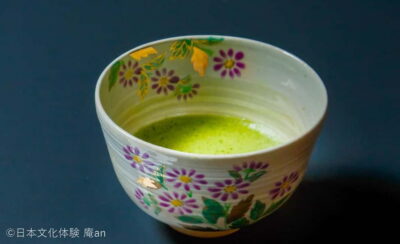
You’ll also have sweets included, which makes the ceremony feel complete—like the whole set of senses is considered, not just the tea.
The room style matters too. One review described a traditional Japanese room with a small external garden, which helps the ceremony feel grounded and calm, even in the middle of a city.
Group flow and time: what to expect with up to 8 people
This runs for 3 hours, with a live guide in English, Japanese, or Chinese depending on the booking.
Even with a small group, the studio rooms can be limited in size. One reviewer mentioned that when there was a larger group, they split during the calligraphy and tea portions because the rooms held about five people.
That’s not a negative—more a reality of small, real spaces. It can actually help the instructors keep an eye on everyone’s technique. If you want maximum personal attention, this format usually works in your favor.
Price and value: does $96 make sense?
At $96 per person for 3 hours, the price looks steep at first glance—until you break down what’s included.
You’re getting:
- Kimono costume
- Simple hairstyling
- Calligraphy instruction
- Japanese tea ceremony
- Sweets
Add the time and expertise of the guides—plus the fact that you leave with a calligraphy result—and it starts to feel more like a bundled cultural workshop than a short “activity.”
Also, you avoid the headache of planning. First-timers often spend hours figuring out where to start, how to dress, and what to do during a ceremony. Here, someone does the translating and the sequencing for you.
Who should book this Osaka experience (and who might skip)
This is a great fit if you:
- Want an easy beginner-friendly cultural activity
- Like hands-on learning (especially calligraphy and matcha)
- Want a photo-worthy experience that still teaches you something
- Travel as a couple, a small group, or even solo and want a guided pace
It may be less ideal if you:
- Want a long sightseeing day with minimal sitting (this is workshop time)
- Are very sensitive to stairs at the meeting building (the route to the second floor is part of the plan)
Final verdict: should you book it?
I think you should book it if you want more than a quick photo stop. The combination of kimono dressing, a guided calligraphy keepsake, and a hands-on matcha tea ceremony is the kind of package that’s hard to recreate on your own in Osaka—especially if it’s your first time with any of these traditions.
If you’re the type who enjoys thoughtful instruction, calm surroundings, and leaving with something you made yourself, this is a strong choice. It’s also a safe bet for families and couples, as long as everyone is okay with a few steps and a changing-dress routine.
FAQ
What’s the duration of the Osaka tea, calligraphy, and kimono experience?
It runs for 3 hours.
How many people are in a group?
The group is small, limited to 8 participants.
What languages are available for the live guide?
The live tour guide is available in English, Japanese, and Chinese.
What’s included in the price?
The experience includes kimono costume, simple hairstyling, calligraphy, Japanese tea ceremony, and sweets.
Is transportation included?
No. Transportation is not included.
Where is the meeting point?
You’ll meet at a location near the MixyHearts beauty salon building (use Lawson as a landmark), and the activity takes place on the second floor.
Is pickup and drop-off provided?
No. Pickup and drop-off services are not included.
Is it suitable for young children or babies?
It’s not suitable for children under 2 years and babies under 1 year.
Can I cancel and get a refund?
Yes. You can cancel up to 24 hours in advance for a full refund.
Made in Osaka, by You
- 1.5〜2 Hours Traditional Kintsugi Work Shop in Namba Osaka★ 5.0 · 75 reviews
- Osaka: Private Japanese Calligraphy Experience★ 5.0 · 66 reviews
- From Osaka: Sakai Knife Maker or Blacksmith Walking Tour★ 4.9 · 64 reviews
- Osaka: Traditional Japanese Ceramics Private Experience★ 5.0 · 57 reviews
- Calligraphy Workshop in Namba, Dotonbori★ 5.0 · 57 reviews
In Kimono Around Osaka
- Osaka: Sumo Show & Experience w/ Optional Kimono & Hot Pot★ 4.5 · 609 reviews
- Learning Zen of Japanese Calligraphy in kimono near Osaka Castle★ 4.5 · 53 reviews
- Osaka: Kimono or Yukata Rental &Photos Service Options★ 4.9 · 25 reviews
- Kimono photoshoot-Includes 100 photo data★ 5.0 · 21 reviews
- Premium Kimono Dressing, Tea Ceremony, Calligraphy, Samurai show★ 5.0 · 18 reviews
Matcha, Whisked and Poured
- Osaka: Tea Ceremony Experience★ 4.9 · 1,426 reviews
- Tea Ceremony Experience in Osaka Doutonbori★ 5.0 · 754 reviews
- Matcha Making Class in Osaka with Authentic Japanese Sweets Set★ 5.0 · 509 reviews
- Osaka: Matcha Making Experience with Japanese Sweets★ 5.0 · 146 reviews
- Osaka: Japanese Traditional Sweets Making and Tea Ceremony★ 4.7 · 118 reviews
The Newest Osaka Write-Ups
- Private Photoshoot in Osaka with a Professional Photographer
★ 5.0 · 3 reviews - Osaka Early Morning Osaka Castle Tour Avoid Crowds
★ 5.0 · 3 reviews - Nara Private Tour with Pick and Drop and English Speaking Driver
★ 3.5 · 3 reviews - Osaka: Modern Vegetarian Sushi Cooking Class
★ 5.0 · 3 reviews - Nara Day Trip from Osaka with a Licensed Guide
★ 5.0 · 3 reviews
Osaka Tea Ceremony & Matcha, compared.
 ★ 4.9Tea Ceremony ExperienceFrom $251,426 reviews
 ★ 5.0Tea Ceremony Experience in Osaka DoutonboriFrom $20754 reviews
 ★ 5.0Matcha Making Class in Osaka with Authentic Japanese Sweets SetFrom $21509 reviews
 ★ 5.0Matcha Making Experience with Japanese SweetsFrom $22146 reviews
 ★ 4.7Japanese Traditional Sweets Making and Tea CeremonyFrom $18118 reviews
 ★ 4.9Osaka Temple Cool Foot Bath & Matcha Experience〈45min〉From $3482 reviews
 ★ 5.0Samurai Show, Tea Ceremony, Japanese Traditional ActivitiesFrom $4456 reviews
 ★ 5.0Private Tea Ceremony and Calligraphy ExperienceFrom $6450 reviews
Browse the lists this tour appears in