
Reviewed · OSAKA TEA CEREMONY & MATCHA
Samurai Show, Tea Ceremony, Japanese Traditional Activities
Samurai drama meets a quiet cup of tea. This Osaka experience strings together tea ceremony + calligraphy with a participatory samurai performance, then tops it off with traditional music you can actually try. What I like most is how much of the time is hands-on (not just watching) and how smoothly the staff guide you, including friendly helpers like Yui and Miyu. One thing to consider: the most photo-worthy costume pieces such as samurai armor and kimono are not included in the base ticket, so you may want to budget extra if you want the full look.
You’ll do it in a big indoor facility in Osaka, with a small cap of 20 people. The meeting point is near public transit in the Shinsaibashi area, and you’ll use a mobile ticket. The overall session runs about 2.5 hours on paper, but plan for more like a half-day if you want to slow down for pictures, questions, and the extra stations.
In This Review
- Key Points I’d Plan Around
- Getting Oriented Near Shinsaibashi (and Timing Your Half-Day)
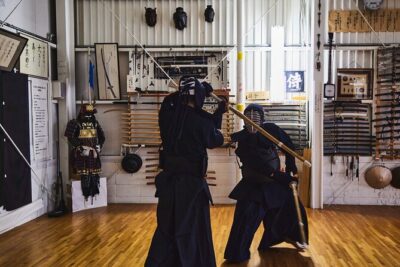
- Samurai Show You Can Join (Without Real Swords)
- Tea Ceremony and Calligraphy: The Two Stops That Actually Teach
- Traditional Japanese Music: Try Instruments, Not Just Watch
- The Big Indoor Facility Factor (and Why Rain Can Help)
- Costume Upgrades: What’s Not Included (and What You Might Pay Extra For)
- Staff and English Support: Why This Feels Smooth
- Price and Value Check for $44.92
- Who Should Book This (and Who Might Skip It)
- Should You Book Samurai Show, Tea Ceremony, and Traditional Activities in Osaka?
- FAQ
- What’s included in the Samurai show, tea ceremony, and traditional activities ticket?
- How long does the experience take?
- Where is the meeting point in Osaka?
- Is there a mobile ticket?
- Are samurai armor or kimono included in the price?
- Is it suitable for most travelers?
- How big are the groups?
- What happens if weather conditions are poor?
Key Points I’d Plan Around
- Hands-on stops throughout: tea, calligraphy, and music practice, not a passive show-only format
- Participate in the samurai segment: you practice moves and do sword-action moments that are not real blades
- Small-group size: up to 20 travelers, which helps you get attention and photos
- English support is built in: translators are present around the activity stations
- Costume upgrades cost extra: kimono and samurai-style attire are options, not automatically included
- Indoor-friendly set-up: great when Osaka weather is messy, though the operator still notes a good-weather requirement
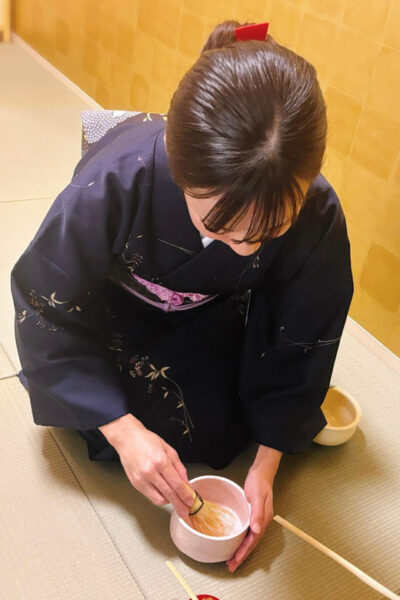
Another bowl whisked slowly in Osaka

Getting Oriented Near Shinsaibashi (and Timing Your Half-Day)
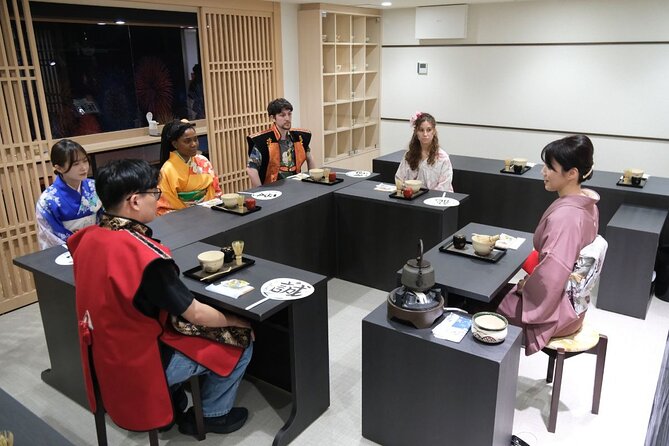
Your start point is Shinsaibashi ARTY Inn, in the Nishishinsaibashi area (Chuo Ward). The activity ends back at the same meeting point, which makes it easy to tack onto the rest of your Osaka day without a puzzle.
The scheduled duration is about 2 hours 30 minutes. In reality, the program can stretch closer to 3.5 to 4 hours if you take your time at the activity stations and watch the music pieces all the way through. If you’re choosing between this and a nearby attraction, I’d give it a dedicated chunk of your morning or afternoon.
Because it’s near public transportation, you can keep your route flexible. I like this format for travel days when you want culture without committing to a long transit shuffle across multiple neighborhoods.
Samurai Show You Can Join (Without Real Swords)
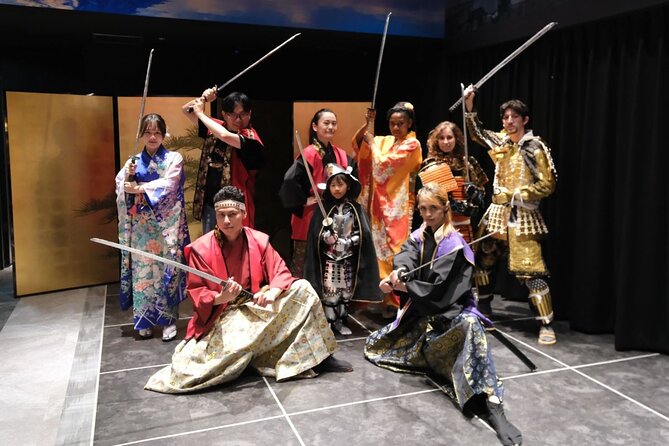
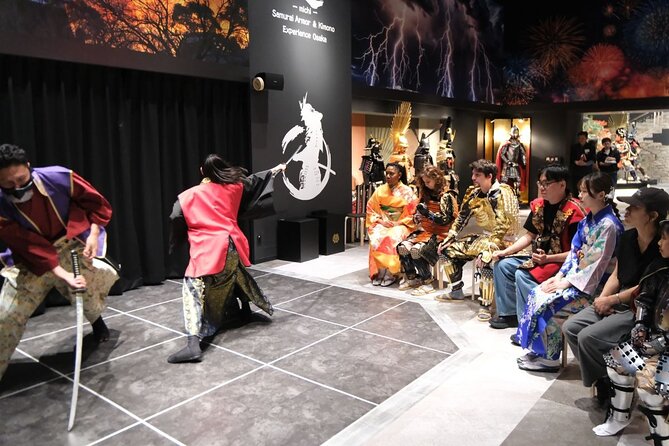
The centerpiece is a samurai performance paired with interactive practice. You get to try some samurai-style moves and join the energy of the show, which is a big reason this works well for families and first-timers.
A key safety and comfort point: the show and crossing-swords moments are not done with real swords. You should still expect big dramatic staging, crowd participation, and quick instructions, but it’s set up so most people can participate.
How authentic does it feel? The experience is clearly theatrical, and the base ticket focuses more on the performance and the interactive “try this” moments than on a museum-level deep dive into historical armor. If you’re the kind of traveler who wants strict accuracy in every prop, keep your expectations aligned: this is entertainment plus cultural lessons, not a reenactment workshop where you analyze rivets.
Tea Ceremony and Calligraphy: The Two Stops That Actually Teach
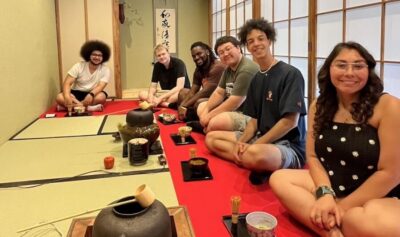
Tea ceremony gets treated as a skill, not a photo op. You’ll learn how to do it correctly, and you’ll get the chance to handle the process as part of the session. Several people also mention making green tea, which is a satisfying payoff because it ties the ritual to something you can taste.
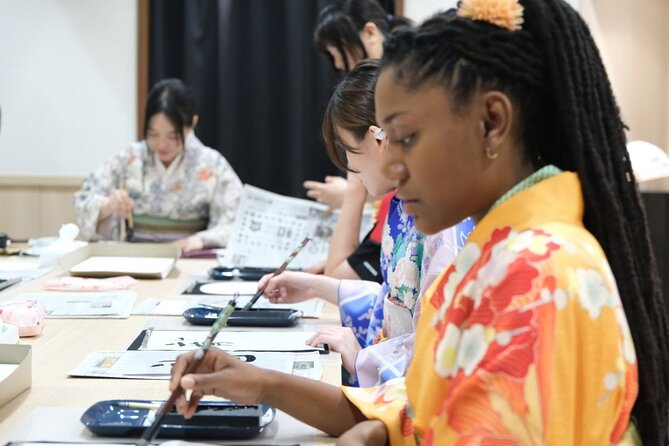
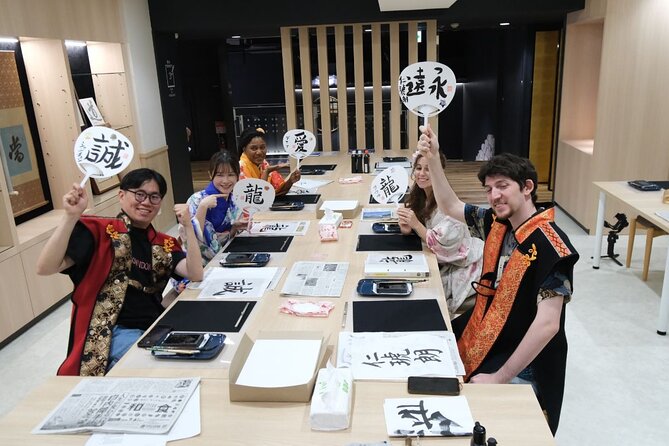
Then there’s calligraphy, where you’re not just shown characters. You practice, get guided step-by-step, and end up with a take-home item. One review specifically mentioned taking home a personalized fan, which is the kind of souvenir that feels meaningful because you made it.
Why this matters in Osaka: you can walk past temples and displays all day, but you don’t always get to slow down and understand how daily rituals translate into art. Tea and calligraphy are perfect “small effort, big meaning” activities.
Practical tip: wear sleeves you’re comfortable adjusting. Tea and calligraphy stations can be hands-on and a bit hands-above-the-table in posture, so loose layers help.
Pick the sword back up with these sessions



Traditional Japanese Music: Try Instruments, Not Just Watch
After the samurai and culture basics, you move into traditional music. This part is set up as a show and a workshop at the same time, so you aren’t stuck in spectator mode.
A standout theme from the experience is that you can try instruments yourself. Some examples mentioned include a Japanese guitar, a Japanese flute, and a harp-style instrument. There’s also mention of a complex Japanese-style piano player, which gives you a sense of the range of sounds the program covers.
This is also where the staff shine. Several people highlighted how helpful the team is while you’re learning, including English translators moving around so you’re not stuck guessing what the instructor wants. If you like hands-on learning, this music section is one of the best parts of the day.
If you’re worried it will be too fast: don’t. The format moves station to station, but you typically get a chance to participate more than once. For most travelers, that’s the difference between an interesting performance and a memorable one.
The Big Indoor Facility Factor (and Why Rain Can Help)
One thing Osaka does well is ambush your plans with weather. The upside here is that the experience runs indoors in a big facility, so rainy-day visits don’t automatically turn into a ruined itinerary.
At the same time, the operator notes that the experience requires good weather. That’s unusual alongside the indoor setup, so here’s the practical way to handle it: treat your schedule as flexible. If rain or conditions cause cancellation, you should expect either a different date or a full refund, depending on what’s offered.
Bring the basics you’d bring anyway in Japan: comfortable shoes and a small bag for personal items. If you’re coming straight from shopping streets, you’ll appreciate the fact that the activity doesn’t require a complicated outfit.
Costume Upgrades: What’s Not Included (and What You Might Pay Extra For)
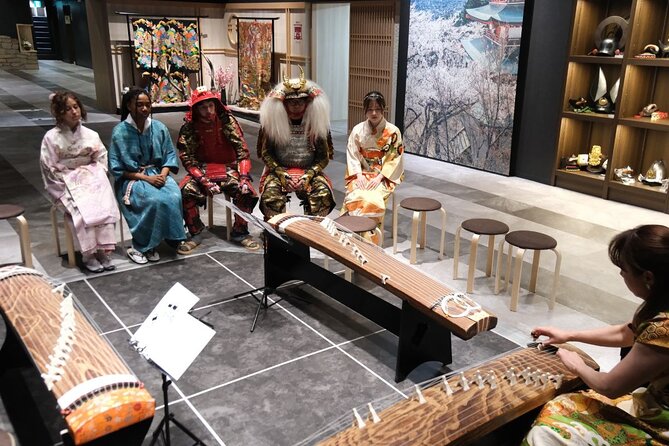
Here’s the big money and photo reality check. The base ticket includes the performances and workshops, but it does not include samurai armor, kimono, or ninja costumes.
You can add a kimono experience as an upgrade, and one review mentioned paying 5,000 yen for the kimono option. Another review also mentioned a samurai attire option. If you want the full dramatic look, decide ahead of time so it doesn’t surprise your budget mid-session.
Costume practicality also matters. The kimono option described includes attendants dressing you and helping with photos as you move around. You keep the socks and undergarments used for the costume, which is a nice extra because it reduces what you need to pack.
If you don’t care about dressing up, you can still have a full experience on the base ticket. In that case, focus your budget on enjoying the tea, calligraphy, and music rather than on a costume you might only wear for an hour.
Staff and English Support: Why This Feels Smooth
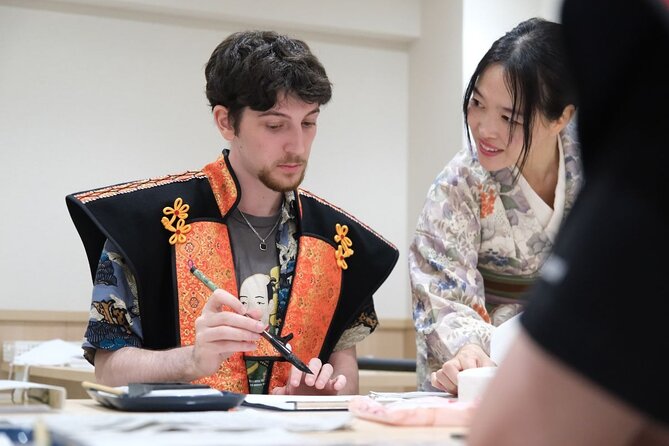
The experience is built around people guiding you through each step. Multiple reviews emphasize friendly, patient staff who handle questions well and help you with Japanese even if your vocabulary is basic.
Names show up in the feedback, including Yui and Miyu, which is a good sign that staff interaction isn’t just generic. In practice, this kind of team-guided structure is what turns a cultural activity into a story you can tell later.
The translators are also part of the flow. One detailed review specifically called out English translators around the stations, helping you understand what to do next and aiding with photos. That’s important because calligraphy and tea have their own rhythms. If you’re left guessing, the experience can feel awkward fast.
So if you’re traveling solo, with kids, or with relatives who don’t speak Japanese, this kind of support is a real value.
Price and Value Check for $44.92
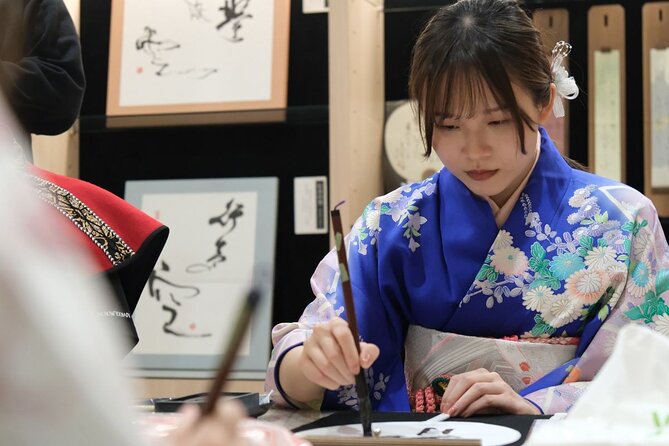
At about $44.92 per person, the value depends on what you want out of Osaka. This ticket isn’t just a single show. You get multiple live components: tea ceremony, calligraphy, traditional music, and the samurai performance with participation.
You also get learning time, not just entertainment time. That’s why the experience tends to earn such strong ratings: people aren’t walking away saying they watched stuff. They’re walking away with a practiced skill (tea and calligraphy) and a hands-on memory (music practice and samurai moves).
There’s also the small-group factor. Up to 20 travelers means the staff can give instructions and help with photos without turning everything into a production line.
The one value “catch,” if you can call it that, is optional add-ons. Since kimono and samurai armor aren’t included, you may pay more if you want the full costume package. But even without that upgrade, you’re still getting several different cultural activities for one admission price.
Who Should Book This (and Who Might Skip It)
You should book this if you want a well-paced, indoor-friendly Osaka activity that mixes culture with participation. It’s ideal if you like hands-on learning more than museum wandering. It also fits rainy days and travel days with limited time, since it’s a half-day style plan starting and ending near the same spot.
Families do well here because the samurai segment includes joining in, and the stations offer something for different ages. One review mentioned the program worked well with grandchildren and children, and the staff handled a larger group politely and patiently.
You might skip it if your top priority is strict authenticity. The samurai portion is theatrical, and at least one person felt the samurai segment was less convincing because parts were reproductions. If you’re a hardcore history buff chasing exact historical reconstruction, you may prefer a museum-focused day.
Should You Book Samurai Show, Tea Ceremony, and Traditional Activities in Osaka?
If you want a single ticket that gives you tea ceremony + calligraphy + samurai performance + traditional music, then yes, book it. The biggest reason is the balance: you learn small skills, you participate, and you still get big show energy without needing advanced Japanese or special preparation.
My final recommendation: book the base experience if you want the core cultural mix at a fair price. Add kimono or samurai attire only if you’re sure you’ll use the photos and the experience of dressing up. And if you’re short on time, treat the session as at least a half-day so you don’t feel rushed at the calligraphy and tea stations.
FAQ
What’s included in the Samurai show, tea ceremony, and traditional activities ticket?
The included activities are a tea ceremony experience, a calligraphy experience, traditional Japanese music, and a samurai performance.
How long does the experience take?
It’s approximately 2 hours 30 minutes.
Where is the meeting point in Osaka?
You meet at Shinsaibashi ARTY Inn, 2-chōme-17-3 Nishishinsaibashi, Chuo Ward, Osaka, 542-0086, Japan. The activity ends back at the meeting point.
Is there a mobile ticket?
Yes. The experience uses a mobile ticket.
Are samurai armor or kimono included in the price?
No. Samurai armor and kimono are not included in the base ticket, though costume options may be available as upgrades.
Is it suitable for most travelers?
Yes. Most travelers can participate.
How big are the groups?
The maximum group size is 20 travelers.
What happens if weather conditions are poor?
The operator states the experience requires good weather. If it’s canceled due to poor weather, you’ll be offered a different date or a full refund.
Showtime in Osaka
- Osaka: Sumo Show & Experience w/ Optional Kimono & Hot Pot★ 4.5 · 609 reviews
- Osaka: Sumo Stage Show with Bento or Snack + Fight & Photo★ 4.3 · 364 reviews
- Osaka: English Stand Up Comedy Show at Osaka Comedy Club★ 4.7 · 203 reviews
- Osaka: UTAGE Japanese Taiko Live Show★ 4.9 · 167 reviews
- Osaka Sumo Experience with Live Show and Audience Challenge★ 5.0 · 162 reviews
Blades Out: More Samurai Sessions
- Samurai Training Experience KENDO in Osaka★ 5.0 · 515 reviews
- OSAKA NIGHT FUSION Japanese Taiko Kabuki Samurai Dance Show★ 4.8 · 155 reviews
- Osaka: Samurai Training Experience KENDO in Osaka★ 5.0 · 111 reviews
- Osaka: A Modern Samurai, Kabuki, Taiko, & Dance Show★ 4.5 · 66 reviews
- Osaka 2-Hour Genuine Kendo / Samurai Experience In Japan★ 5.0 · 65 reviews
Matcha, Whisked and Poured
- Osaka: Tea Ceremony Experience★ 4.9 · 1,426 reviews
- Tea Ceremony Experience in Osaka Doutonbori★ 5.0 · 754 reviews
- Matcha Making Class in Osaka with Authentic Japanese Sweets Set★ 5.0 · 509 reviews
- Osaka: Matcha Making Experience with Japanese Sweets★ 5.0 · 146 reviews
- Osaka: Tea Ceremony, Calligraphy, and Kimono Experience★ 4.9 · 130 reviews
The Newest Osaka Write-Ups
- Private Photoshoot in Osaka with a Professional Photographer
★ 5.0 · 3 reviews - Osaka Early Morning Osaka Castle Tour Avoid Crowds
★ 5.0 · 3 reviews - Nara Private Tour with Pick and Drop and English Speaking Driver
★ 3.5 · 3 reviews - Osaka: Modern Vegetarian Sushi Cooking Class
★ 5.0 · 3 reviews - Nara Day Trip from Osaka with a Licensed Guide
★ 5.0 · 3 reviews
Osaka Tea Ceremony & Matcha, compared.
 ★ 4.9Tea Ceremony ExperienceFrom $251,426 reviews
 ★ 5.0Tea Ceremony Experience in Osaka DoutonboriFrom $20754 reviews
 ★ 5.0Matcha Making Class in Osaka with Authentic Japanese Sweets SetFrom $21509 reviews
 ★ 5.0Matcha Making Experience with Japanese SweetsFrom $22146 reviews
 ★ 4.9Tea Ceremony, Calligraphy, and Kimono ExperienceFrom $96130 reviews
 ★ 4.7Japanese Traditional Sweets Making and Tea CeremonyFrom $18118 reviews
 ★ 4.9Osaka Temple Cool Foot Bath & Matcha Experience〈45min〉From $3482 reviews
 ★ 5.0Private Tea Ceremony and Calligraphy ExperienceFrom $6450 reviews
Browse the lists this tour appears in