
Reviewed · OSAKA TEA CEREMONY & MATCHA
Premium Kimono Dressing, Tea Ceremony, Calligraphy, Samurai show
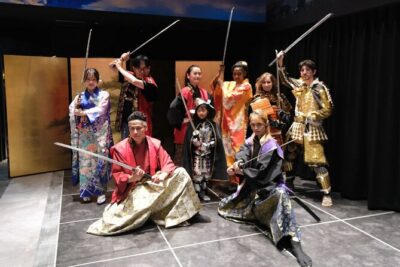
A perfect sampler of old-school Japan. This -michi- Osaka experience strings together kimono dressing with a hands-on tea ceremony and calligraphy, all wrapped in live cultural performances and a samurai sword show. It’s built for people who want more than a photo stop.
What I like most is the step-by-step feel: you’re guided through the look, the etiquette, and the art, so you can actually participate. The other big win is variety in a short window, with traditional music alongside samurai-style performance energy.
One thing to consider: kimono dressing is women only, and armor dressing is not included (it’s an add-on). If you’re traveling as a mixed group or with men who want the same photo moments, plan ahead.
In This Review
- Key highlights you shouldn’t miss
- Osaka’s -michi- experience: why this mix works
- Where you’ll start: Shinsaibashi ARTY Inn and a 3-hour rhythm
- Women-only kimono dressing: the practical parts you’ll be glad you had
- Tea ceremony: matcha manners you can use later
- Calligraphy class: one stroke, real satisfaction
- Japanese traditional music and samurai sword performances: watch, then feel it
- Photos, courtyard calm, and the historical gallery
- Armor dressing: possible, but plan for extras
- Price and value: is $123.49 a fair deal?
- Who this suits best (and who might not love it)
- Should you book -michi- in Osaka?
- FAQ
- What’s the duration of the Osaka experience?
- Where does the experience take place?
- What’s included in the ticket price?
- Is armor dressing included?
- Can I try on armor during the experience?
- Are there any extra costs?
- Do I get a mobile ticket?
- When will I receive confirmation?
- What’s the cancellation policy?
Key highlights you shouldn’t miss
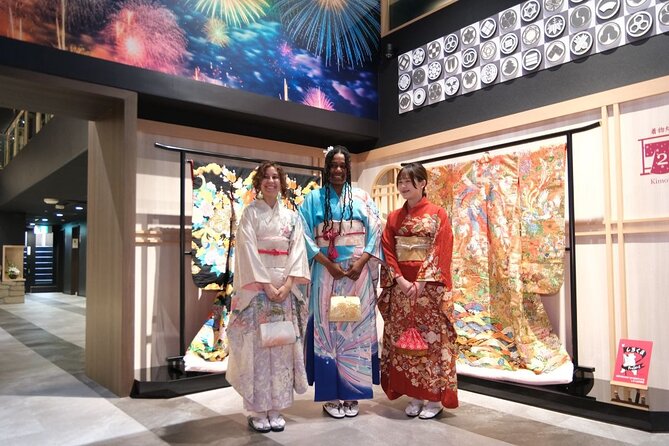
- Women-only kimono dressing with guided help from start to finish
- Tea ceremony as an activity, not a lecture
- Calligraphy with time to create something you can keep
- Japanese traditional music performance plus samurai sword performances
- Mobile ticket and a central Shinsaibashi meeting area for easy access
Another bowl whisked slowly in Osaka

Osaka’s -michi- experience: why this mix works
If you’ve ever tried to see Japan by rushing from one landmark to the next, you know the feeling: you end up outside the thing, not inside the culture. This experience in Osaka aims for the opposite. In about 3 hours, you get put into the clothing and routines that show up again and again in Japanese traditions.
The best part is the pairing. Kimono dressing gives you the visual and physical starting point. Then the activities follow with your hands and eyes engaged—tea ceremony etiquette, calligraphy basics, and cultural performance moments. It’s a smooth sequence that helps you understand what you’re seeing later in museums, shrines, and neighborhood streets.
Also, the setting matters. You’re in a facility with a courtyard and a historical gallery, which makes the experience feel less like a rushed show and more like a mini cultural visit.
Where you’ll start: Shinsaibashi ARTY Inn and a 3-hour rhythm
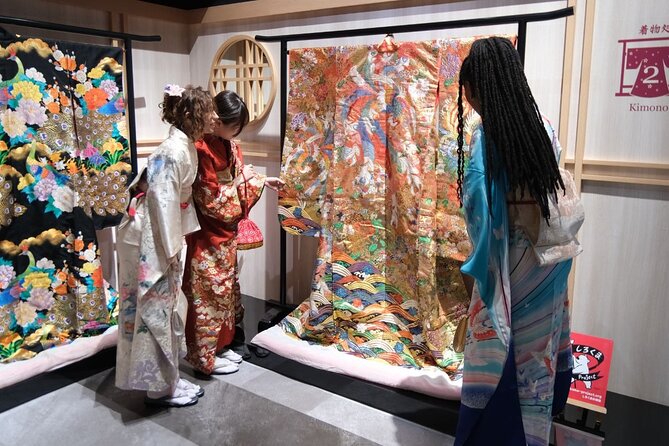
The session starts at Shinsaibashi ARTY Inn. It’s a smart choice for logistics: you’re near public transportation, so you’re not burning half your day just getting there. That matters in Osaka, where trains are great but your time is still your time.
The pacing is built around a compact schedule—about 3 hours total. That’s long enough to get involved, but short enough that you won’t feel trapped. Think of it as an afternoon reset: you leave with new skills (or at least new confidence) and better context for what you’ll see around the city afterward.
You’ll also use a mobile ticket, which is usually fast at check-in. And because you receive confirmation at booking time, you can plan without last-minute guessing.
Women-only kimono dressing: the practical parts you’ll be glad you had
The kimono portion is women only, and that’s the clearest boundary in the experience. If you’re traveling with a partner who isn’t a woman, you’ll want to check what they can do during kimono time, since armor dressing is separate and not included.
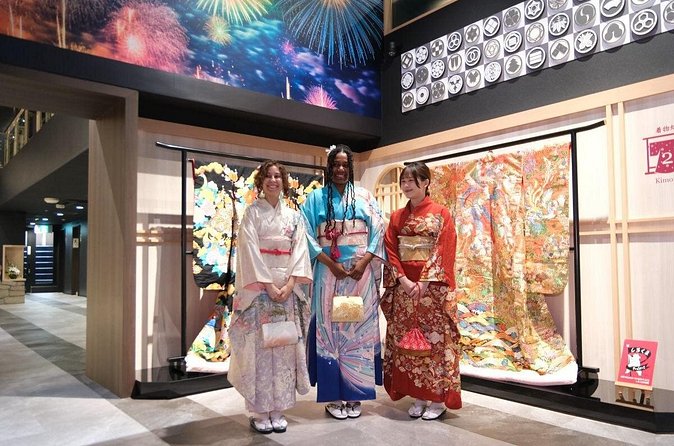
That said, the kimono dressing is one of the most praised elements. The staff guidance is a huge part of why this works. You’re not just handed a robe and a mirror. You get explained steps, and you can expect a calm, friendly atmosphere while you get dressed.
Here’s how to get the most out of it:
- Wear easy clothing underneath (something you can slip on and off without wrestling).
- Plan for hair and accessories to be handled in a way that matches the kimono style you’re given.
- Keep an eye on how the staff helps you position yourself for photos—this is where the difference between awkward and graceful happens.
The tone from the reviews is consistent: the explanations make the process feel approachable, and the result feels special. If you’ve only ever seen kimono in rental shops, this is the next step up: it’s about learning how the outfit works, not just wearing it.
Pick the sword back up with these sessions



Tea ceremony: matcha manners you can use later
The tea ceremony is included, and it’s not presented like a passive performance. You’re there to participate, which is the key difference between a “watch and leave” experience and one that changes how you see things.
Tea ceremony in Japan is all about small gestures. When you’re guided through it in a structured way—how to handle the cup, how to sit, how to move—you pick up the logic behind the ritual. You don’t need prior knowledge. Most people can participate, and the staff is attentive enough to help you get it right.
Practical tip: don’t rush your movements. The whole point is that tea is slow. Even if you’re thinking about what time it is, try to let the pace set your brain to “ceremony mode.” You’ll get more out of the experience, and your photos won’t be blurry because you’re sprinting.
Calligraphy class: one stroke, real satisfaction
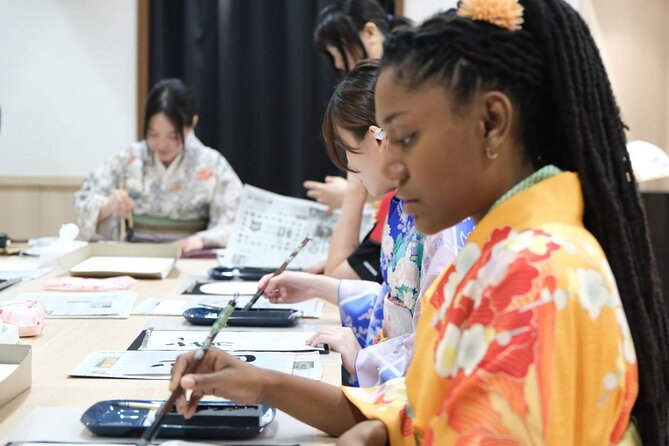
The calligraphy portion is another standout. The big value here is the teaching style. People love that it’s not just ink-on-paper. You get instruction that helps you understand what you’re actually doing—so your final piece feels like yours, not just a souvenir shaped like scribbles.
From the feedback, the calligraphy lesson can be memorable enough that people want their work kept—some mention having their efforts framed. Even if you don’t plan to frame anything, you’ll still walk away with a tangible reminder.
How to prepare (without overthinking):
- Expect to be guided on posture and brush handling.
- Don’t aim for perfect like a trained artist. Aim for focused.
- Take your time with the first attempt. The second tends to be easier once you feel the brush.
Japanese traditional music and samurai sword performances: watch, then feel it
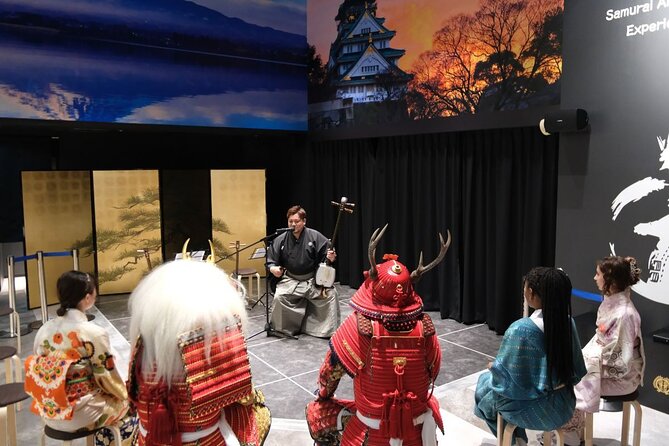
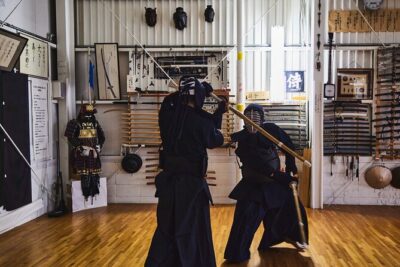
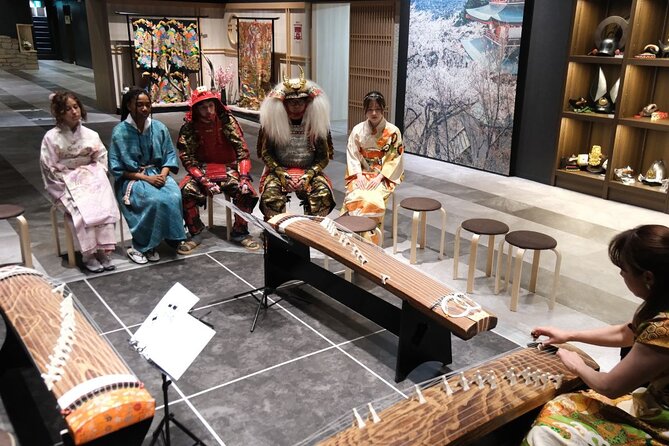
This is where the energy changes. You’ll have a Japanese traditional music performance and samurai sword performances, including viewing and participation elements tied to the program.
Even if sword performance sounds intimidating, it’s presented as part of cultural showmanship rather than a live-combat lesson. The value is context: you see the theatrical side of samurai imagery and the disciplined vibe that people associate with it.
For music, the appeal is similar. Instead of listening while half-distracted, you’re in a structured setting where you can actually pay attention. That’s how the sounds start to make sense, even if you don’t know the names of every instrument yet.
If you like experiences where the staff explains what matters, this part is a strong match. Reviews repeatedly highlight that the staff can explain the meaning behind what’s happening, not just the schedule.
Photos, courtyard calm, and the historical gallery
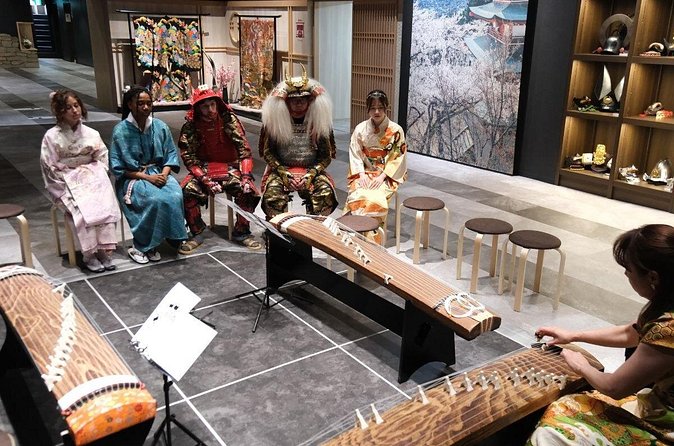
You’ll also have time in the courtyard and a historical gallery. This helps break up the “activity” parts, and it’s where your photos stop looking like a random checklist.
If you care about pictures, here’s a quick strategy:
- Do your main kimono photos early, while you’re still in the dressing flow and everything looks crisp.
- Use the courtyard and gallery for background variety. Courtyards give you open natural light. Galleries give you texture and depth.
- Listen for staff cues. When they suggest a spot or posture, it’s usually because it photographs well and stays respectful of the setting.
The overall vibe reported is boutique-like and organized. That matters because crowded photo sessions are a pain. Here, it sounds more controlled and warm.
Armor dressing: possible, but plan for extras
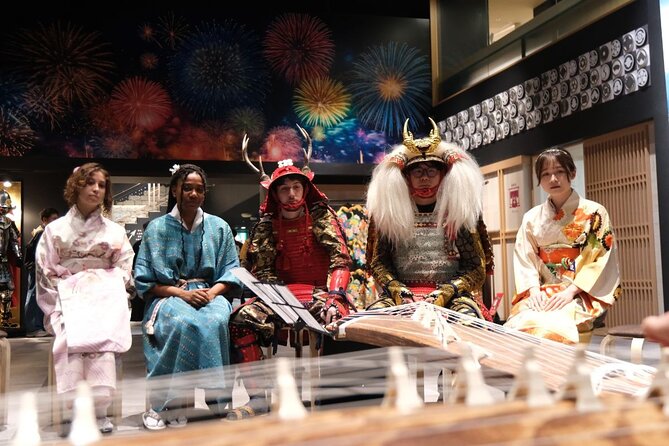
You’ll likely see armor mentioned because this concept connects kimono and samurai culture in one place. But here’s the important detail: armor dressing is not included.
Some people say you can try on real armor. If you want that look, treat it as an add-on option rather than part of the base ticket. That way you won’t be surprised when you’re offered the upsell.
Also note that souvenir costs can come into play. The only stated souvenir price is ¥10,000 per person. If you’re souvenir-lite, you can still enjoy the activities without buying anything. Just don’t assume a perfect “no extra spending” day.
Price and value: is $123.49 a fair deal?
At $123.49 per person, you’re paying for more than one attraction. This isn’t just a quick photo moment. Your included ticket covers:
- Kimono dressing (women only)
- Tea ceremony
- Calligraphy
- Japanese traditional music performance
Then you add in the samurai sword performance within the overall program flow.
So the value question becomes: do you want guided participation across multiple traditions in one compact session? If yes, the price starts to feel reasonable, because you’re buying instruction plus time plus access to performance elements, all in a single stop.
If you’re trying to save money, you might compare it to piecing these together on your own. But DIY comes with friction: finding classes, scheduling, language barriers, and transport time. For many first-timers in Osaka, paying for one organized session beats spending your energy chasing opportunities.
One more value note: timing. With a 3-hour duration, you can fit this into a first- or second-day Osaka plan without giving up the whole evening.
Who this suits best (and who might not love it)
This experience is ideal if you:
- Want hands-on culture (tea and calligraphy) instead of just watching
- Like a structured flow with guidance and explanations
- Want a photo-worthy experience that still feels educational
- Are in Osaka with a limited time window
You might hesitate if:
- You need kimono dressing for men, since it’s women only in the included package
- You don’t want any extras at all, because armor dressing and souvenir purchases can add cost
- You prefer fully self-guided activities where you control every minute
The good news is that the program is described as something most travelers can participate in, so you’re not expected to bring special skills.
Should you book -michi- in Osaka?
I’d book it if you want a concentrated, guided taste of Japanese culture with real participation. The combination of kimono dressing, tea ceremony, calligraphy, plus music and samurai sword performance is exactly the kind of “do it, don’t just see it” experience that makes early Osaka memories feel memorable.
But if kimono dressing eligibility is a deal-breaker for your group, make your call based on that first. Remember: kimono is women only in what’s included, and armor dressing is separate.
If you’re flexible and you like the idea of learning the etiquette behind the aesthetics, this is one of the better ways to spend a few hours in Osaka.
FAQ
What’s the duration of the Osaka experience?
It runs about 3 hours (approx.).
Where does the experience take place?
It’s in Osaka, starting at Shinsaibashi ARTY Inn.
What’s included in the ticket price?
Included: kimono dressing (women only), tea ceremony, calligraphy, and Japanese traditional music performance.
Is armor dressing included?
No. Armor dressing is not included.
Can I try on armor during the experience?
You might be able to try it, but armor dressing is an additional option since it’s not included.
Are there any extra costs?
A souvenir option is listed at ¥10,000 per person. Armor dressing is also not included, so plan for possible add-on costs.
Do I get a mobile ticket?
Yes, the experience uses a mobile ticket.
When will I receive confirmation?
You receive confirmation at time of booking.
What’s the cancellation policy?
You can cancel for a full refund if you cancel up to 24 hours in advance. Cancellations within 24 hours are not refunded.
In Kimono Around Osaka
- Osaka: Sumo Show & Experience w/ Optional Kimono & Hot Pot★ 4.5 · 609 reviews
- Osaka: Tea Ceremony, Calligraphy, and Kimono Experience★ 4.9 · 130 reviews
- Learning Zen of Japanese Calligraphy in kimono near Osaka Castle★ 4.5 · 53 reviews
- Osaka: Kimono or Yukata Rental &Photos Service Options★ 4.9 · 25 reviews
- Kimono photoshoot-Includes 100 photo data★ 5.0 · 21 reviews
Blades Out: More Samurai Sessions
- Samurai Training Experience KENDO in Osaka★ 5.0 · 515 reviews
- OSAKA NIGHT FUSION Japanese Taiko Kabuki Samurai Dance Show★ 4.8 · 155 reviews
- Osaka: Samurai Training Experience KENDO in Osaka★ 5.0 · 111 reviews
- Osaka: A Modern Samurai, Kabuki, Taiko, & Dance Show★ 4.5 · 66 reviews
- Osaka 2-Hour Genuine Kendo / Samurai Experience In Japan★ 5.0 · 65 reviews
Matcha, Whisked and Poured
- Osaka: Tea Ceremony Experience★ 4.9 · 1,426 reviews
- Tea Ceremony Experience in Osaka Doutonbori★ 5.0 · 754 reviews
- Matcha Making Class in Osaka with Authentic Japanese Sweets Set★ 5.0 · 509 reviews
- Osaka: Matcha Making Experience with Japanese Sweets★ 5.0 · 146 reviews
- Osaka: Tea Ceremony, Calligraphy, and Kimono Experience★ 4.9 · 130 reviews
The Newest Osaka Write-Ups
- Private Photoshoot in Osaka with a Professional Photographer
★ 5.0 · 3 reviews - Osaka Early Morning Osaka Castle Tour Avoid Crowds
★ 5.0 · 3 reviews - Nara Private Tour with Pick and Drop and English Speaking Driver
★ 3.5 · 3 reviews - Osaka: Modern Vegetarian Sushi Cooking Class
★ 5.0 · 3 reviews - Nara Day Trip from Osaka with a Licensed Guide
★ 5.0 · 3 reviews
Osaka Tea Ceremony & Matcha, compared.
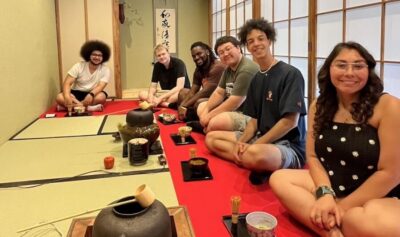 ★ 4.9Tea Ceremony ExperienceFrom $251,426 reviews
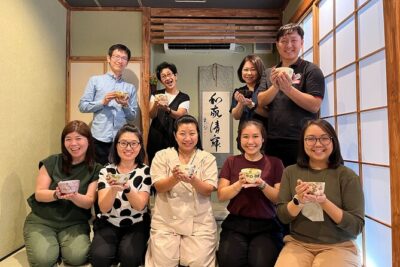 ★ 5.0Tea Ceremony Experience in Osaka DoutonboriFrom $20754 reviews
 ★ 5.0Matcha Making Class in Osaka with Authentic Japanese Sweets SetFrom $21509 reviews
 ★ 5.0Matcha Making Experience with Japanese SweetsFrom $22146 reviews
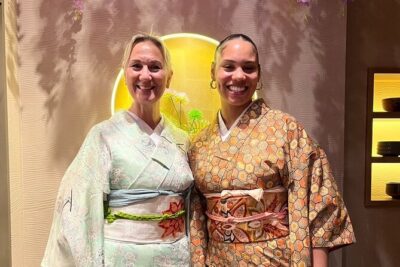 ★ 4.9Tea Ceremony, Calligraphy, and Kimono ExperienceFrom $96130 reviews
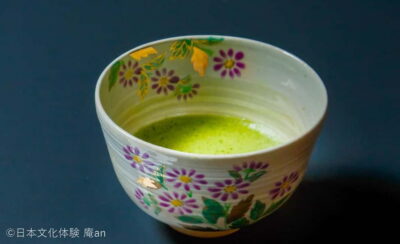 ★ 4.7Japanese Traditional Sweets Making and Tea CeremonyFrom $18118 reviews
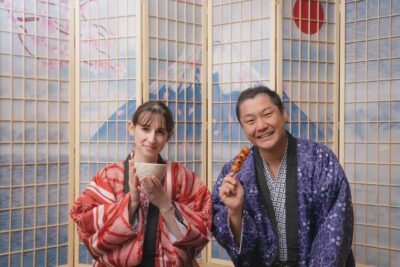 ★ 4.9Osaka Temple Cool Foot Bath & Matcha Experience〈45min〉From $3482 reviews
 ★ 5.0Samurai Show, Tea Ceremony, Japanese Traditional ActivitiesFrom $4456 reviews