
Reviewed · OSAKA COOKING CLASSES
Osaka: Japanese Traditional Sweets Making and Tea Ceremony
Turning bean paste into art. That’s the hook, and the payoff is real: you’ll shape nerikiri wagashi tied to the seasons, then enjoy it with Uji Matcha. I like that you’re not just watching; you’re hands-on with the coloring and forming, and you’ll make two sweets that match what’s appropriate for the time of year. I also like that the workshop uses Kyoto-sourced white/red bean paste from long-established shops, which makes a noticeable difference in taste and texture.
The one thing to think about: this is an activity where the instructions are mostly in Japanese, with English support offered as much as possible, so you’ll get the most out of it if you’re comfortable following along even when language slips a bit. You should also know the building has no elevator, so plan on stairs.
In This Review
- Key highlights you’ll care about
- Osaka Wagashi and Tea Ceremony: what this workshop feels like
- Your first stop: nerikiri wagashi making from colored bean paste
- Break time and resetting your hands (and expectations)
- Uji matcha ceremony: grinding demo, tea steps, and tasting
- Ingredients you can taste: Kyoto bean paste and single-origin matcha
- Who teaches, and how English support typically works
- Timing in plain language: how the 95 minutes are structured
- Getting there around Osaka: meeting points and practical arrival advice
- Price and value: is $18 for nerikiri and matcha worth it?
- Who should book this Osaka nerikiri and matcha class
- Should you book? My practical take
- FAQ
- How long is the Osaka Japanese Traditional Sweets Making and Tea Ceremony?
- How much does it cost?
- What are the main activities during the class?
- What matcha is used?
- What sweet ingredients are used?
- Is anything included in the price besides the experience?
- Are take-out boxes included?
- Is English provided?
- What are the operating hours?
- Is there an elevator at the venue?
- Would you like me to tailor this review for a specific date/time slot in Osaka (so you can plan what to do before and after)?
Key highlights you’ll care about
- Two seasonal nerikiri sweets you actually make, not just a tasting
- Kyoto long-established bean paste for both white/red sweet base
- Uji matcha, single-origin special Matcha used for your tea
- Matcha grinding demonstration before you sit down to drink
- Short, calm 95-minute flow with breaks built in
- Friendly, patient instruction; you may be guided by instructors such as Maiko, Jun, or Mihiko
Flour on your hands, more Osaka kitchens to try


Osaka Wagashi and Tea Ceremony: what this workshop feels like
This is one of those Osaka experiences that’s quiet in the right way. You’re in a room for about 95 minutes, working with your hands, learning the logic behind Japanese sweets and tea, and then eating what you made. It’s not a high-volume show. It’s more like a guided craft session where attention and patience matter.
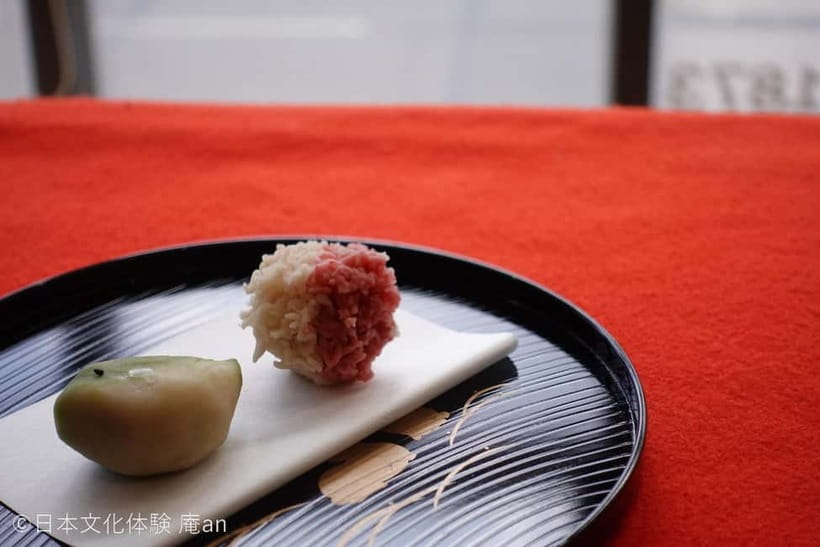
What makes it especially appealing is the combination: nerikiri wagashi first, then the tea ceremony portion right after. Nerikiri is not your everyday cookie-style sweetness. It’s a high-grade confection made with colored bean paste shaped into seasonal flowers and fruits. Then matcha comes in, not as an optional add-on, but as the companion to what you crafted—so the sweet and the tea land together.
And you get enough time to do both properly. The schedule has a clear midpoint break, so you’re not rushed from sweets into tea without catching your breath.
Your first stop: nerikiri wagashi making from colored bean paste
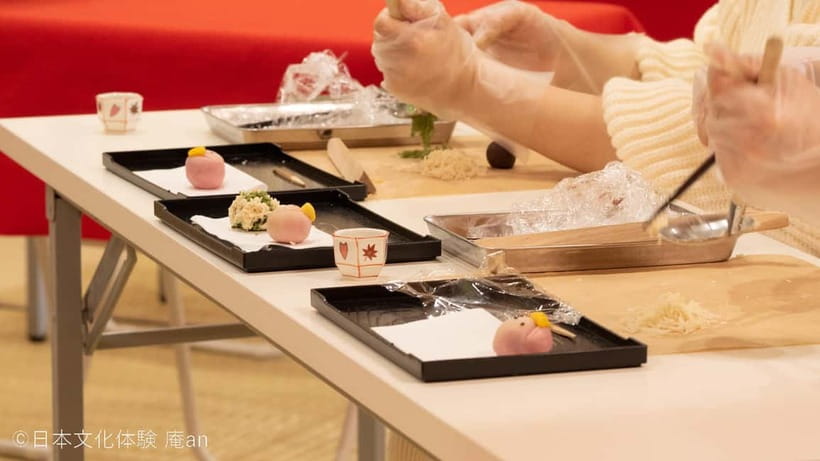
The workshop begins with a quick setup and explanation of traditional Japanese sweets, then you move into nerikiri making. Nerikiri is often described as a craft of detail—color, texture, and shape all matter. The good part for you: the class starts with the base, so you’re not left guessing how to “make it look right.” You begin with coloring white bean paste, which is the foundation of everything that comes next.
You’ll form two sweets over the session, matching the season. That seasonal focus isn’t just decorative. In Japanese sweets culture, the choice of shape and theme is a way of acknowledging time of year. In practice, it means the teacher is guiding you toward specific forms, not just letting you freestyle wildly (unless you’re doing it within those seasonal guidelines).
During this part, you’re building something that feels like edible small sculpture. Reviews from past participants repeatedly highlight that the instructor is patient and explains the steps clearly. People also note that the final sweets turn out well—meaning you’re not paying just to participate, you’re paying to leave with results you’ll actually want to eat.
A detail worth calling out: the timeline references a Kinton nerikiri making segment. Translation: you’ll likely work through specific nerikiri techniques rather than a single one-step “mold and done” method. That’s part of why this feels like real learning.
Break time and resetting your hands (and expectations)
At around the halfway point, there’s a break. In most workshops, the pause helps you reset your hands and attention. Here, it also sets you up for the shift from sweets craft to tea ritual.
Use the break well. If you’re thinking about taking photos, this is the moment to do it before you move into the matcha section. If you’re trying to understand the tea part better, keep an ear out during the explanation so the next steps don’t feel like a jump cut.
Also, if language is a concern, breaks are when you can relax your focus. You’ll likely be more comfortable during the tea portion once you’ve had time to reset after working with bean paste.
Another bowl whisked slowly in Osaka


Uji matcha ceremony: grinding demo, tea steps, and tasting
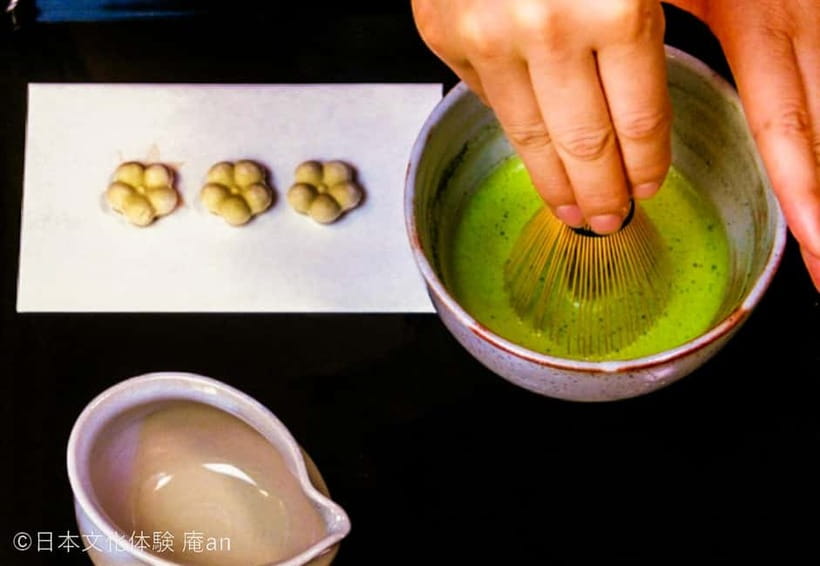
Next comes the tea portion, starting with an explanation of tea. Then you’ll see a matcha grinding demonstration. That’s one of the most satisfying parts for first-timers because matcha isn’t just “green powder.” You’re seeing the process that creates the powder you’ll taste.
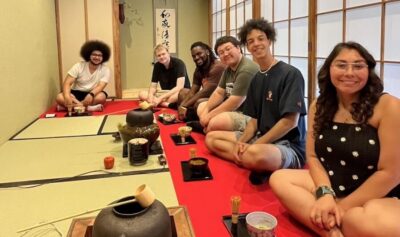
After the demo, you’ll do a tea-ceremony experience. The exact level of hands-on participation can vary by class flow—some participants note a more guided tasting and traditions-focused explanation, while others get more of the ceremony steps practiced with them. Either way, the goal is the same: you learn how to make and drink matcha with intention, not as a quick caffeine stop.
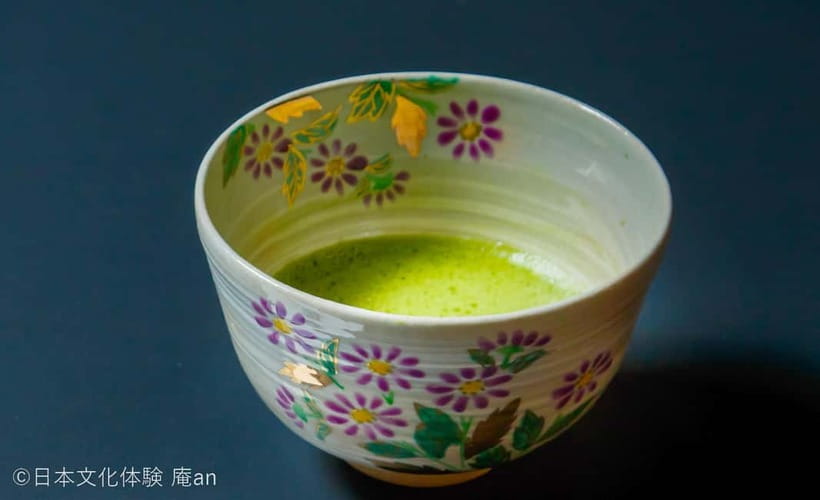
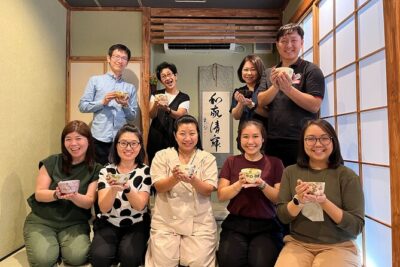
You’ll then enjoy the two sweets you prepared along with your own matcha. This is where the quality of the ingredients shows up.
The workshop uses single-origin special Matcha, and it’s paired with high-quality white/red bean paste made by Kyoto’s long-established shops. That matters because matcha has a distinct balance—bitterness, vegetal notes, and a creamy texture when whisked well. If the sweet base is bland or low-grade, the pair can feel either too heavy or too sharp. Here, the sweetness is meant to balance the tea.
In plain terms: you’ll taste how Japanese sweets and matcha were designed to work together. Not sugar plus sugar. More like flavor contrast that feels thoughtful.
Ingredients you can taste: Kyoto bean paste and single-origin matcha
A lot of DIY experiences use generic ingredients. This one calls out specifics: bean paste produced by Kyoto’s long-established shops, and Uji Matcha described as single-origin special Matcha.
Why should you care? Because nerikiri is largely about the bean paste. You start by coloring it, and you shape it with technique. If the paste is too dry, too loose, or too sweet in an unbalanced way, your work gets harder and your finished sweets don’t taste as good.
For matcha, single-origin matters because it signals consistent sourcing and a tea profile intended to be noticeable. Uji is the name you’ll hear again and again in Japanese tea culture, and the workshop leans into that credibility with the way it frames the tea portion and the grinding demo.
Also, since you’ll eat the sweets immediately, you’re tasting the “why” behind the choices. This is one of the few activities where ingredient quality isn’t hidden behind a finished product you never see made.
Who teaches, and how English support typically works
The instructor is Japanese, and English translation is provided as much as possible. If you want additional English support, you’re told to contact them in advance.
From the experience notes shared by previous participants, the big theme is clear communication. People describe instructors as friendly, patient, and willing to answer questions. Some class leaders appear by name—Maiko, Jun, and Mihiko show up in participant write-ups—so you might recognize those names when choosing a time slot.
One practical tip: treat this like a hands-on class more than a lecture. Even if you catch fewer words, the actions guide you. Coloring and shaping nerikiri is visual work. Matcha steps are sensory work. If you can follow the motion, you can learn the meaning.
If you want to maximize your comfort level, come with a light curiosity mindset. Ask one or two simple questions during the workshop, like what shape represents the season or what changes when preparing the matcha.
Timing in plain language: how the 95 minutes are structured
You’re looking at 95 minutes total. The schedule runs with a smooth arc:
- Start: explanation of Japanese traditional sweets
- First making phase: flower-shaped nerikiri-style work, starting with coloring the bean paste
- Midpoint break
- Tea phase: tea explanation, matcha grinding demo, then the tea-ceremony experience
- Picture time
- Final eating/drinking time
- Room departure
It’s tight but not frantic. The class is long enough for you to complete two sweets, learn the matcha flow, and still sit down to enjoy what you made. That makes it feel like real value versus shorter “one-step” workshops that leave you with half the story.
Getting there around Osaka: meeting points and practical arrival advice
The meeting area is well connected to multiple lines, which is helpful in Osaka. You’ve got several nearby options, including a one-minute walk from Osaka Metro Yotsubashi Line Higobashi Station (Exit 10), and other close walks from Watanabebashi, Yodoyabashi, and Kitashinchi stations.
A few practical pointers so your arrival goes smoothly:
- Build in a few extra minutes. Some people report that the building can be easy to miss, even with map help, so give yourself buffer time.
- Have the provided coordinates handy. That helps when signage is harder than expected.
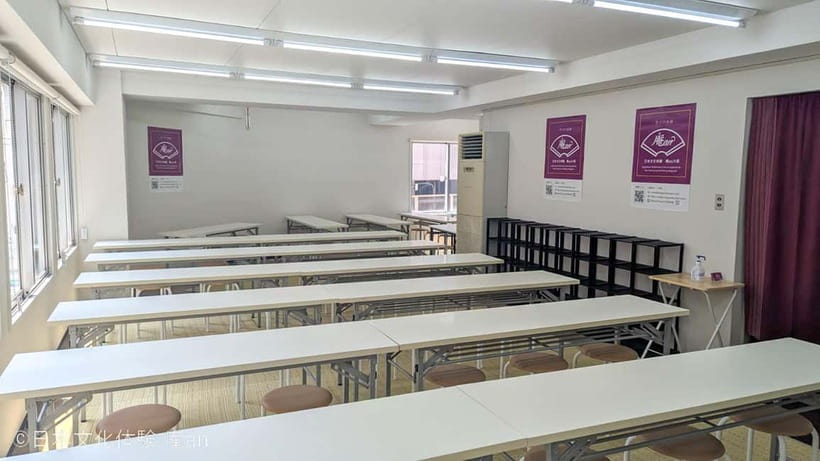
- Remember: there’s no elevator. You’ll need stairs to reach the venue.
If you’re combining this with other Osaka plans, aim to arrive early enough that you don’t feel stressed about being on time. The experience notes also indicate delays can’t always be accommodated.
Price and value: is $18 for nerikiri and matcha worth it?
At $18 per person for 95 minutes, this workshop is priced like a high-value local craft session rather than a premium private lesson. You’re paying for materials and guided instruction through two main parts: making two nerikiri sweets and participating in a matcha tea experience with a grinding demonstration.
What justifies the cost isn’t just the tea. It’s the hands-on nature of nerikiri. Coloring and shaping bean paste is time-consuming and detail-heavy, so having an instructor guide you through the technique matters.
There are a couple of add-ons you might consider:
- Take-out box for sweets is available for 100 JPY (not included).
- A completion certificate costs 300 JPY.
Even with those extras, the base experience still reads as solid value because you leave with food and an actual cultural process, not only a demo.
If you’re doing a Japan “greatest hits” schedule, this fits well as a calmer half-day activity. If your trip is more food-focused, it also works as a meaningful craft add-on.
Who should book this Osaka nerikiri and matcha class
This workshop is best for people who like hands-on learning and don’t need a big crowd scene.
You’ll probably enjoy it if:
- you want a genuine wagashi craft experience rather than a souvenir stop
- you care about matcha quality and want to see the grinding step
- you like seasonal themes and small, careful making
- you want something doable within a short time window
You might reconsider if:
- you strongly prefer fully English instruction with no Japanese spoken
- stairs are a problem for you, since there’s no elevator in the building
- you need a longer tea-ceremony practice session, since the schedule is compact and focuses on the core experience
Families can also fit here. One participant did the class with children who joined in, and kids sitting on parents’ laps are free if they’re under 2.
Should you book? My practical take
If you’re choosing between this and a more casual wagashi option, I’d lean toward booking it. The reason is simple: you get two sweets, not one, and you pair it with a structured matcha sequence that includes a grinding demonstration. That combination makes the session feel complete.
If your ideal day is calm, craft-focused, and food-forward, this fits. If you want a loud cultural show, you may find it too mellow. But if you like learning the process behind what you eat, this is the kind of experience that turns into a lasting memory—because you can literally taste what you made.
So yes, I’d book it, especially if you’re near the meeting area and can arrive without stress.
FAQ
How long is the Osaka Japanese Traditional Sweets Making and Tea Ceremony?
The experience lasts 95 minutes.
How much does it cost?
It’s priced at $18 per person.
What are the main activities during the class?
You’ll make two Japanese traditional sweets called nerikiri and participate in a tea ceremony experience with Uji matcha.
What matcha is used?
The class uses Uji Matcha, described as single-origin special Matcha.
What sweet ingredients are used?
The white/red bean paste is produced by Kyoto’s long-established shops.
Is anything included in the price besides the experience?
Yes. The experience and use of required tools are included.
Are take-out boxes included?
No. A sweets take-out box is available for 100 JPY.
Is English provided?
English translation is provided as much as possible. If you want to add English translation, you’re asked to contact them.
What are the operating hours?
Operation hours are from 10:00 to 17:00.
Is there an elevator at the venue?
No. There is no elevator, and you will need to take stairs.
Would you like me to tailor this review for a specific date/time slot in Osaka (so you can plan what to do before and after)?
More Tour Reviews in Osaka
- Osaka Go Karting Tour with Funny Costume★ 5.0 · 2,658 reviews
- Osaka Castle: Museum and Tower Entry Ticket★ 4.5 · 2,380 reviews
- Osaka: Shinsekai Food Tour with 13-15 Dishes at 5 Eateries★ 4.8 · 2,204 reviews
- Osaka Food Tour: 13 Dishes at 5 Local Eateries★ 5.0 · 2,149 reviews
- Hungry Osaka Street Food Tour:15 Tastings & 3 Drinks with a Local★ 5.0 · 1,727 reviews
Matcha, Whisked and Poured
- Osaka: Tea Ceremony Experience★ 4.9 · 1,426 reviews
- Tea Ceremony Experience in Osaka Doutonbori★ 5.0 · 754 reviews
- Matcha Making Class in Osaka with Authentic Japanese Sweets Set★ 5.0 · 509 reviews
- Osaka: Matcha Making Experience with Japanese Sweets★ 5.0 · 146 reviews
- Osaka: Tea Ceremony, Calligraphy, and Kimono Experience★ 4.9 · 130 reviews
Cook It Yourself in Osaka
- Sushi Making Osaka Roll and Authentic Japanese Sushi Class★ 5.0 · 1,220 reviews
- Osaka: Five Must-See Highlights Walking Tour & Ramen Lunch★ 4.7 · 411 reviews
- Osaka Sushi Making Experience★ 5.0 · 400 reviews
- Osaka: Ramen and Gyoza Cooking Class in Dotonbori★ 5.0 · 378 reviews
- Osaka: Sumo Stage Show with Bento or Snack + Fight & Photo★ 4.3 · 364 reviews
The Newest Osaka Write-Ups
- Private Photoshoot in Osaka with a Professional Photographer
★ 5.0 · 3 reviews - Osaka Early Morning Osaka Castle Tour Avoid Crowds
★ 5.0 · 3 reviews - Nara Private Tour with Pick and Drop and English Speaking Driver
★ 3.5 · 3 reviews - Osaka: Modern Vegetarian Sushi Cooking Class
★ 5.0 · 3 reviews - Nara Day Trip from Osaka with a Licensed Guide
★ 5.0 · 3 reviews
Osaka Cooking Classes, compared.
 ★ 5.0Sushi Making Osaka Roll and Authentic Japanese Sushi ClassFrom $311,220 reviews
 ★ 4.7Five Must-See Highlights Walking Tour & Ramen LunchFrom $56411 reviews
 ★ 5.0Osaka Sushi Making ExperienceFrom $29400 reviews
 ★ 5.0Ramen and Gyoza Cooking Class in DotonboriFrom $70378 reviews
 ★ 4.3Sumo Stage Show with Bento or Snack + Fight & PhotoFrom $93364 reviews
 ★ 4.9Traditional Mochi Pounding Experience with TastingFrom $31306 reviews
 ★ 5.0Osaka Cooking Class: Okonomiyaki &Japanese cuisines experienceFrom $104261 reviews
 ★ 4.9Roll and Authentic Sushi Making Class in DotonboriFrom $45239 reviews
Browse the lists this tour appears in