
Reviewed · DOTONBORI & NAMBA TOURS
Osaka: Roll and Authentic Sushi Making Class in Dotonbori
Sushi lessons in Dotonbori feel like play. In a 100-minute class near Shinsaibashi Station, you’ll learn how sushi is built, not just how it looks, with an English-led, hands-on format that keeps things light. You’ll be working in the heart of Osaka’s food scene, close to the canals and neon that make this part of town instantly recognizable.
What I like most is the mix of fun and technique. First, the class starts with an interactive sushi history quiz, so you understand why things are done a certain way. Then you make two kinds of sushi, including classic roll sushi and authentic Japanese styles, and you actually get to eat everything you form at the end.
One consideration: the class runs at a lively pace. A few people noted they wished they had a bit more time to eat after finishing their last pieces, so go in ready to focus and take your time while you still can.
In This Review
- Key points before you go
- Finding the class in central Osaka: Shinsaibashi to Dotonbori
- The 100-minute flow: quiz first, sushi second, eat at the end
- What you actually make: roll sushi plus authentic Japanese styles
- Roll sushi (maki-style)
- Authentic Japanese sushi (nigiri-style)
- The history quiz: why it’s worth your attention
- Where the ingredients come in: ready-to-cook prep plus real technique
- Eating what you made: how to avoid the end-of-class rush
- English-led instruction: how staff like Shoki and Takara keep it moving
- Diet options: vegan, halal, gluten-free, and allergy notes
- Location value: why Dotonbori timing works
- Cost and value: what you’re paying for at $45
- Who this class is best for (and who should skip it)
- My booking call: should you book Sushi Making Osaka in Dotonbori?
- FAQ
- How long is the sushi making class?
- Do I need any sushi-making experience?
- What kinds of sushi will I make?
- Where do I meet for the class?
- Is hotel pickup and drop-off included?
- Is the class taught in English?
- Can the class accommodate dietary needs?
- What are the cancellation and payment options?
Key points before you go
- Interactive sushi history quiz to make the cooking make sense
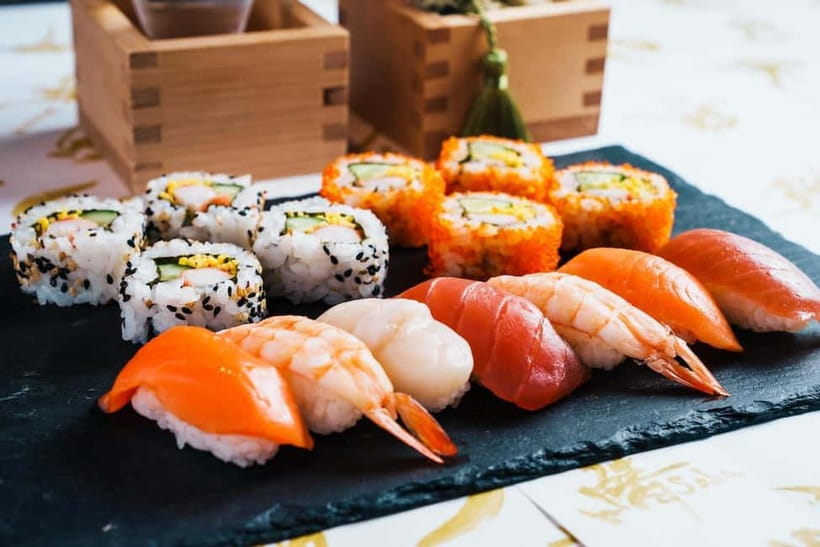
- Two sushi styles made by you: roll sushi plus authentic Japanese sushi
- English-speaking instructors, with energy that tends to carry the room
- Central Osaka location near Dotonbori and Shinsaibashi, easy to pair with food stops
- Diet options supported (vegan, vegetarian, gluten-free, halal) with clear ingredient notes
Back under the Glico sign: more Dotonbori runs


Finding the class in central Osaka: Shinsaibashi to Dotonbori
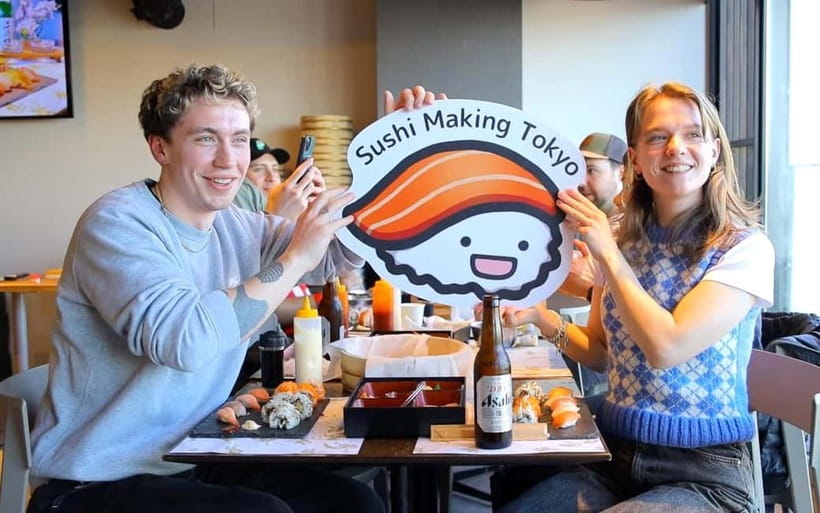
This class meets at the 3rd floor of the Galleria Acca Building, about a 5-minute walk from Shinsaibashi Station. That matters because Osaka is easy to enjoy on foot, and you don’t want to lose precious minutes crossing the city after a food-focused activity.
The meeting point sits in a busy, very walkable area. You’ll be able to roll straight into sightseeing after your class without needing a plan that involves trains. Dotonbori is close enough that you can treat this as either a lunch slot or an afternoon activity before dinner.
Practical note: the activity space is wheelchair accessible, which is great. One detail to keep in mind is that some buildings can have elevators that don’t reach every exact floor of a workplace, so if mobility is a concern, arrive a little early and let staff know what you need.
The 100-minute flow: quiz first, sushi second, eat at the end
The whole experience is designed around one simple idea: you learn faster when you do. The structure usually follows a rhythm that goes from explanation to practice without long pauses.
You start with the sushi history quiz, described as interactive and lighthearted. Think of it as orientation: you’ll pick up basics about sushi’s development and different styles, which makes the later steps feel less random. In many sessions, the instructor names you might see include people like Shoki, Hinata, or Takara, and their common thread is making the room feel playful while staying clear on technique.
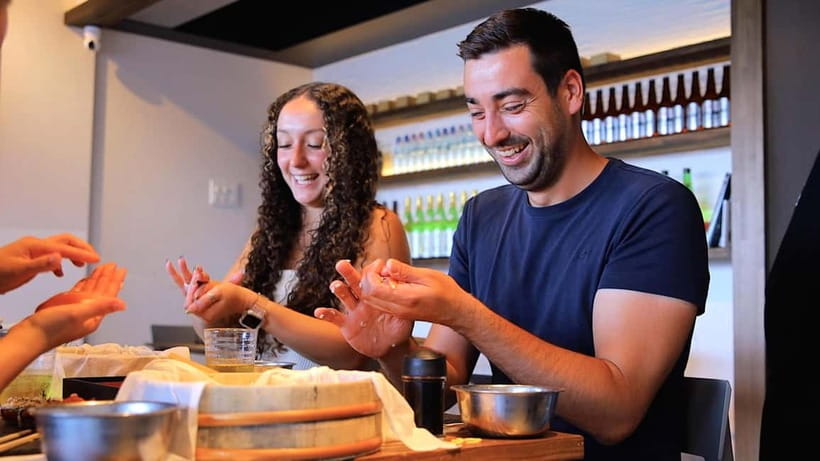
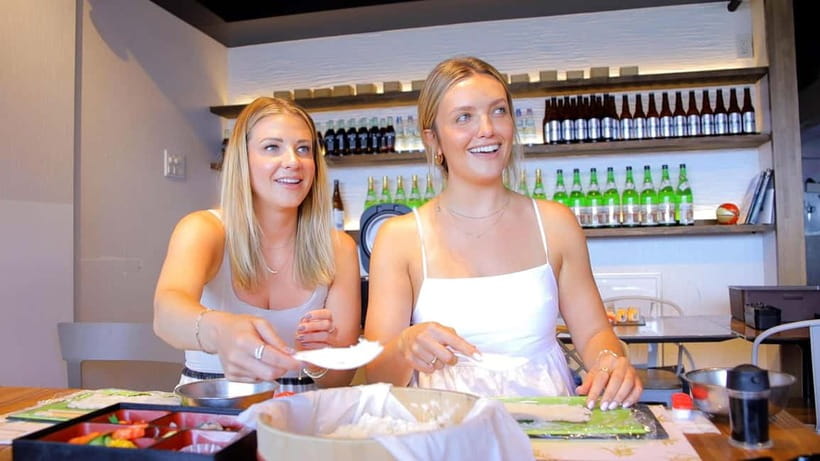
Then you move into the hands-on part. The class centers on making roll sushi and authentic Japanese sushi (the hands-on output people mention most often is maki plus nigiri-style sushi). Expect the instructor to guide the steps, correct your grip, and show how to assemble cleanly.
Finally, you eat what you made. This sounds obvious, but it’s a big deal in a cooking class. You’re not watching while someone else plates. You’re building, shaping, and then tasting your own work.
What you actually make: roll sushi plus authentic Japanese styles
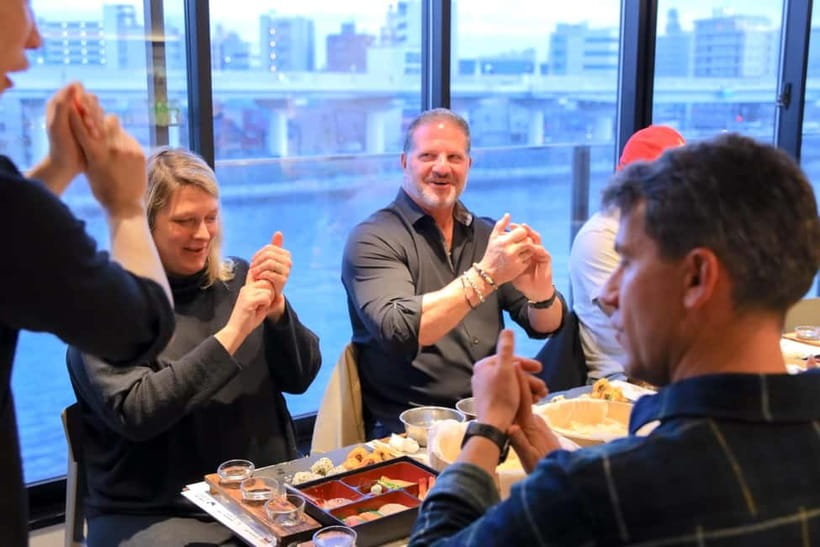
This is not a one-technique class. You’ll learn two approaches, which helps you understand sushi as a set of methods rather than just one recipe.
Flour on your hands, more Osaka kitchens to try
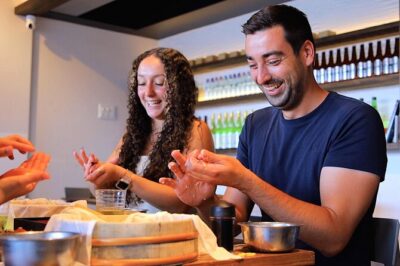
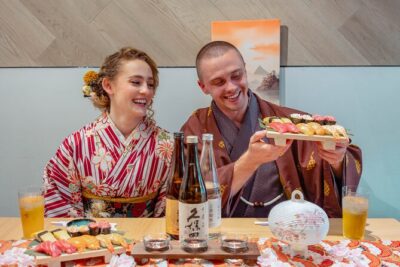
Roll sushi (maki-style)
Roll sushi is where you practice the fundamentals: rice handling, filling, and even pressure while rolling. The “secret” is that rice has to be sticky enough to hold, but not so wet that it turns sloppy. In the class format, you’ll be guided through the process step by step, so you don’t need prior cooking skills.
A nice bonus here is that the staff keeps instructions in English, so you can focus on what your hands are doing, not decoding translation during the trickiest parts.
Authentic Japanese sushi (nigiri-style)
Authentic Japanese sushi typically means you’ll form something closer to nigiri-style pieces rather than only rolling. That shifts the skills from rolling technique to shaping and topping: how to press rice, how to position fish or alternative ingredients properly, and how to keep each piece neat.
In classes led by instructors such as Yui or Yoshi-style names you may see listed, the emphasis tends to be on getting the shape right and then tasting what that shape produces.
The benefit for you: you’ll leave knowing sushi isn’t one skill. It’s two related skills that give you way more confidence if you ever want to try again at home.
The history quiz: why it’s worth your attention
At first, a quiz might sound like a distraction. But it’s actually one of the smartest parts of this class, because sushi has a bunch of small traditions that only click once you know what the pieces are.
The quiz is described as interactive and lighthearted, so it doesn’t feel like school. You’ll learn sushi history in a way that connects directly to what you’ll be making: rice, seasoning, and why different styles exist.
This is also where the class personality shows up. Many instructors in this program—Shoki, Hinata, Rika, Yuvi, and others you may encounter—use humor and a friendly pace. Even people who say they’re not great in the kitchen tend to do well, because the quiz gives you a mental framework before your hands start moving.
If you like food facts that don’t drag, you’ll probably enjoy this part more than you expect.
Where the ingredients come in: ready-to-cook prep plus real technique
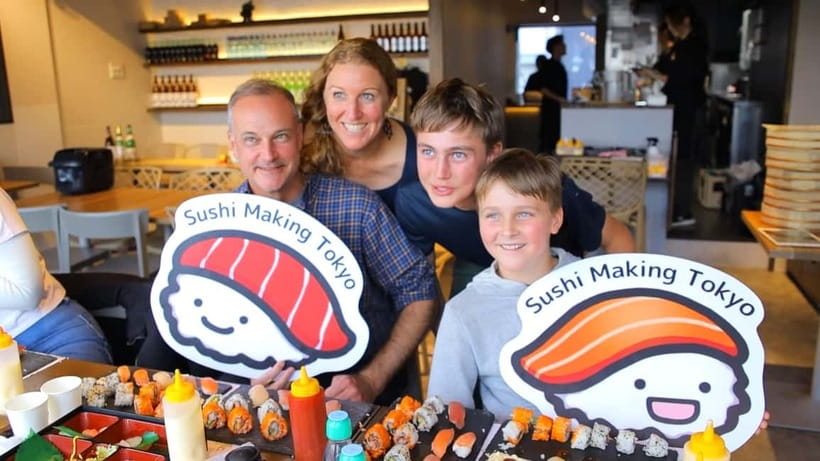
The ingredients are included, and the setup is built for a cooking class experience rather than a DIY kitchen marathon. In other words, you’re not stuck chopping everything from scratch.
Some participants note that rice and ingredients may be prepared in advance, which makes sense for a class timed to 100 minutes. That’s not a weakness. It’s practical: it keeps you learning the skills that matter most—shaping, assembling, and balancing flavors—rather than spending the whole time just doing prep work.
You’ll also get enough ingredients so you can eat what you make. That shows up in the feedback as a common theme: people feel like they leave satisfied, not just with a few bites and a plastic container.
Eating what you made: how to avoid the end-of-class rush
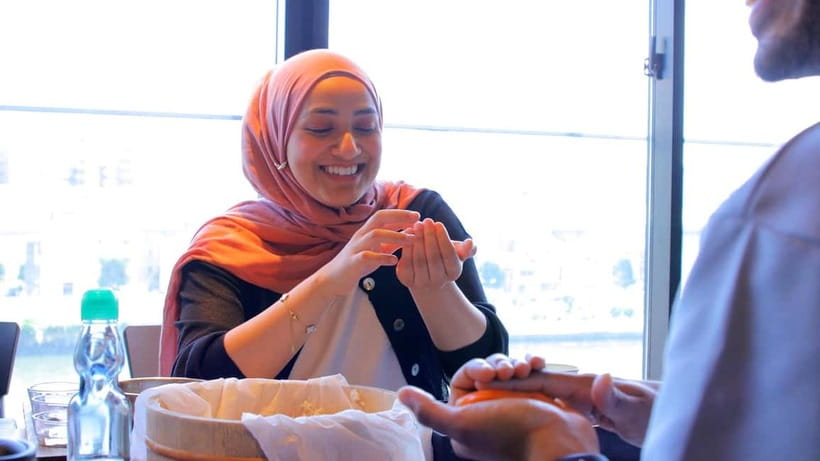
I like that the class ends with eating your own sushi. It’s the fastest way to learn: taste, then mentally compare your piece to what the instructor demonstrated.
That said, the class timing can feel tight toward the end. Some people mention they wanted a little more time to eat after finishing their pieces, even if they later realized there was still a short window left. So here’s my practical advice: don’t wait until the last minute to slow down and enjoy the taste.
A good approach is to eat while your hands are still warm from making. Don’t save everything for a single moment at the very end. You’ll enjoy the flavors more, and you won’t feel like you’re racing the clock.
English-led instruction: how staff like Shoki and Takara keep it moving
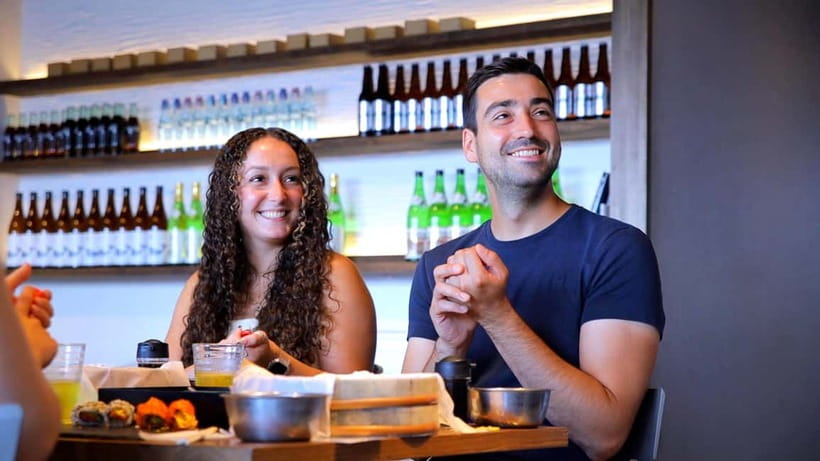
English instruction is a core part of this experience. With sushi, the steps are precise, and it’s a lot easier when you can hear what to do in plain language.
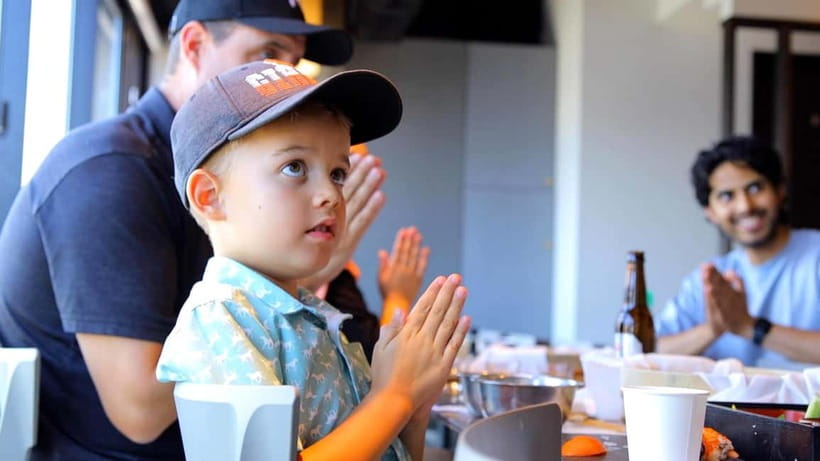
Instructors you may encounter include Shoki, Takara, Hinata, Rika, Yui, and others named in class feedback. The common pattern is clear communication plus encouragement. People repeatedly mention that the instructors are helpful and patient, and that they create a fun, conversational atmosphere.
For you, that means two things:
- You’re less likely to freeze mid-step when you’re unsure.
- You’ll probably leave with a better sense of what to remember for your next try at home.
Even the class catchphrase shows up in the vibe, with staff using HoiHoiHoi energy during the process. It’s goofy in the best way, and it helps make repetitive movements feel less intimidating.
Diet options: vegan, halal, gluten-free, and allergy notes
This class includes options for vegan, vegetarian, gluten-free, and halal. That’s a major value point, because sushi classes often become complicated when someone has restrictions.
There’s also a specific allergy note listed: meat, nuts, fruits, and dairy are noted as not used. The important detail for you is that allergy handling is controlled, and the menu also depends on what’s available in that class format.
Menu changes are possible if you contact ahead of time, with a 3-day deadline. They also note they can’t respond on the day, and you can’t request exact ingredient specifications. Translation: you should plan your needs early, but you don’t have to scramble at the last minute.
If you’re traveling with dietary needs, this is one of those Osaka cooking options that feels built for real life, not just for people who eat everything.
Location value: why Dotonbori timing works
You’re doing this in central Osaka—near Dotonbori and Shinsaibashi—which is ideal because Osaka is all about pacing. You can stack this with street food browsing, viewpoints, and dessert stops without losing time on transit.
Because the class includes ingredients and an instructor, the cost is focused on your time and learning. At $45 per person for 100 minutes, it sits in the sweet spot between a quick tasting and a full-day food workshop. You’re not only buying sushi. You’re buying a guided method you can repeat later.
Also, the location means you’re likely to be in the right mood. Osaka’s food energy makes cooking feel less like a chore and more like part of the city’s rhythm.
Cost and value: what you’re paying for at $45
Let’s break down the value in plain terms. You pay for:
- Instruction in English
- Ingredients
- A structured session built around making sushi and eating it
You don’t pay for hotel pickup or drop-off. That’s fine because the meeting point is walkable from Shinsaibashi Station. For most people, avoiding pickup keeps the schedule tighter and easier to plan.
Compared to buying a single sushi meal, you’re getting more than food. You’re getting a skill set. Even if you don’t master sushi overnight, you’ll come away with technique you can use when craving hits back home.
If you’re a sushi fan or you want a hands-on food memory that beats a photo stop, this price feels reasonable. If you only want a light snack, it might feel like more structure than you need. But as a focused food experience in Osaka’s center, it’s strong value.
Who this class is best for (and who should skip it)
This works especially well for:
- Sushi lovers who want to learn the how, not just the what
- First-timers who are nervous in the kitchen (clear step-by-step help)
- People with dietary needs, since options like vegan and halal are supported
- Solo travelers or small groups who want an activity with conversation baked in
You might consider skipping if:
- You hate structured schedules and prefer freeform eating
- You need a long, slow meal with lots of downtime
- You’re expecting a fully hands-on, from-scratch cooking marathon (some prep is done ahead)
My booking call: should you book Sushi Making Osaka in Dotonbori?
I’d book it if you want a memorable Osaka food moment that gives you something practical to take home. The combo of sushi history quiz, roll + authentic sushi-making, and eating what you make is a smart way to get value in just 100 minutes.
Book it sooner rather than later if you’re traveling with dietary needs, because menu adjustments have a lead time. And arrive a bit early if you want to settle in comfortably before the class starts, especially if you’re concerned about stairs or elevators in the building.
If you want a hands-on class that fits neatly into central Osaka, this one checks a lot of boxes.
FAQ
How long is the sushi making class?
The class runs for 100 minutes.
Do I need any sushi-making experience?
No experience is needed. The instructors guide you step by step in English.
What kinds of sushi will I make?
You’ll make roll sushi and authentic Japanese sushi.
Where do I meet for the class?
You meet at the 3rd floor of the Galleria Acca Building, about a 5-minute walk from Shinsaibashi Station.
Is hotel pickup and drop-off included?
No, hotel pickup and drop-off are not included.
Is the class taught in English?
Yes. Instruction is in English.
Can the class accommodate dietary needs?
Yes. The class offers vegan, vegetarian, gluten-free, and halal options. For allergy-related needs, there is a listed note that meat, nuts, fruits, and dairy are not used, and you should contact the team at least 3 days in advance for menu changes.
What are the cancellation and payment options?
You can cancel up to 24 hours in advance for a full refund. You can also reserve now and pay later, depending on availability.
More Tour Reviews in Osaka
- Osaka Go Karting Tour with Funny Costume★ 5.0 · 2,658 reviews
- Osaka Castle: Museum and Tower Entry Ticket★ 4.5 · 2,380 reviews
- Osaka: Shinsekai Food Tour with 13-15 Dishes at 5 Eateries★ 4.8 · 2,204 reviews
- Osaka Food Tour: 13 Dishes at 5 Local Eateries★ 5.0 · 2,149 reviews
- Hungry Osaka Street Food Tour:15 Tastings & 3 Drinks with a Local★ 5.0 · 1,727 reviews
Cook It Yourself in Osaka
- Sushi Making Osaka Roll and Authentic Japanese Sushi Class★ 5.0 · 1,220 reviews
- Osaka: Five Must-See Highlights Walking Tour & Ramen Lunch★ 4.7 · 411 reviews
- Osaka Sushi Making Experience★ 5.0 · 400 reviews
- Osaka: Ramen and Gyoza Cooking Class in Dotonbori★ 5.0 · 378 reviews
- Osaka: Sumo Stage Show with Bento or Snack + Fight & Photo★ 4.3 · 364 reviews
Dotonbori and Namba, Round Two
- Osaka Local Foodie Walking Tour in Dotonbori and Shinsekai★ 5.0 · 985 reviews
- Osaka: Dotonbori District River Cruise with Drink Discount★ 4.2 · 876 reviews
- Ultimate Osaka Walking Tour: Castle, Dotonbori & Hidden Gems★ 5.0 · 862 reviews
- Tea Ceremony Experience in Osaka Doutonbori★ 5.0 · 754 reviews
- Osaka: Namba Pub Bar Crawl with a Local Guide★ 4.9 · 424 reviews
The Newest Osaka Write-Ups
- Private Photoshoot in Osaka with a Professional Photographer
★ 5.0 · 3 reviews - Osaka Early Morning Osaka Castle Tour Avoid Crowds
★ 5.0 · 3 reviews - Nara Private Tour with Pick and Drop and English Speaking Driver
★ 3.5 · 3 reviews - Osaka: Modern Vegetarian Sushi Cooking Class
★ 5.0 · 3 reviews - Nara Day Trip from Osaka with a Licensed Guide
★ 5.0 · 3 reviews
Dotonbori & Namba Tours, compared.
 ★ 5.0Osaka Local Foodie Walking Tour in Dotonbori and ShinsekaiFrom $111985 reviews
 ★ 4.2Dotonbori District River Cruise with Drink DiscountFrom $12876 reviews
 ★ 5.0Ultimate Osaka Walking Tour: Castle, Dotonbori & Hidden GemsFrom $73862 reviews
 ★ 5.0Tea Ceremony Experience in Osaka DoutonboriFrom $20754 reviews
 ★ 4.9Namba Pub Bar Crawl with a Local GuideFrom $30424 reviews
 ★ 5.0Ramen and Gyoza Cooking Class in DotonboriFrom $70378 reviews
Dotonbori River Cruise with Glico Sign & Neon ViewsFrom $12376 reviews
★ 5.0Ramen and Gyoza Cooking Class in DotonboriFrom $70378 reviews
Dotonbori River Cruise with Glico Sign & Neon ViewsFrom $12376 reviews
 ★ 3.9Dotonbori’s Bridges 20-Minute CruiseFrom $12303 reviews
Browse the lists this tour appears in