
Reviewed · OSAKA COOKING CLASSES
Osaka: Five Must-See Highlights Walking Tour & Ramen Lunch
Osaka in one day needs a plan. This five-sight walking tour ties together Osaka Castle, Shitennoji Temple, Shinsekai, Kuromon Market, and Dotonbori with smart subway routing and a local English guide.
I like the small-group size (capped at 8), because it keeps the day flexible when you want photos, shade, or a quick detour. I also like that lunch ramen is included, so you don’t waste time hunting a good shop while you’re on the move.
The main consideration is the workload: you’re walking a lot, and subway stations mean plenty of steps. Also budget for extra entrance fees at Osaka Castle and Shitennoji Temple, plus the Osaka Metro day pass if you choose to buy one.
In This Review
- Key Highlights You’ll Actually Feel
- How This Osaka “Best-of” Route Fits Into 7 Hours
- Meet at Tanimachi 4-Chome and Let Your Guide Handle the First Steps
- Osaka Castle Museum: City Views and the Sengoku Angle
- Ramen Lunch Near Temmabashi: Included, Popular, and Actually Useful
- Shitennoji Temple: Old Roots in a Working City
- Shinsekai and Tsutenkaku: Retro Streets, Photos, and Snack Breaks
- Kuromon Ichiba Market: Food Under One Roof
- Dotonbori and Hozenji Temple: Running Man, Bridge Energy, and a Calm Finish
- Price and Value: What $56 Covers and What to Plan For
- Tips to Make the Day Feel Easier (Not Just Longer)
- Who Should Book This Osaka Tour (and Who Should Skip It)
- Should You Book This Osaka “Five Highlights + Ramen” Tour?
- FAQ
- How long is the tour?
- What’s included in the price?
- Where do I meet the guide?
- What time does the tour start?
- Is the Osaka Metro 1-day pass included?
- Are the entrance fees included for Osaka Castle and Shitennoji?
- What stops are included in the tour?
- What should I bring for the tour?
- What group size is it?
- Is cancellation free?
Key Highlights You’ll Actually Feel
- Five major Osaka stops in one route, from castle views to street-food districts
- Ramen lunch included, handled by your local English guide
- Photo support at key viewpoints like Tsutenkaku and Dotonbori
- Skip-the-line help for Osaka Castle via a separate entrance
- Subway + walking pace designed to help you get your bearings fast
Flour on your hands, more Osaka kitchens to try


How This Osaka “Best-of” Route Fits Into 7 Hours
This is the kind of Osaka day that works when you have limited time but still want variety. You’ll move from big landmark energy (Osaka Castle) to older spiritual ground (Shitennoji) to food-and-photo neighborhoods (Shinsekai, Kuromon, Dotonbori). It’s not one long museum lesson. It’s a guided walk that keeps switching gears.
The tour also uses subway travel on purpose. Osaka looks confusing until you start following the train lines and station exits like a pro. With a guide leading the turns, stairs, and timing, you spend less time lost and more time looking up at towers, bridges, and temple gates.
One more thing: the guide’s role isn’t just facts. It’s comfort and timing. Multiple guides are named in feedback as especially careful about keeping people comfortable during heat and rain, which matters when your schedule is packed.
Meet at Tanimachi 4-Chome and Let Your Guide Handle the First Steps
You start at FamilyMart near Osaka Metro Tanimachi Line, Tanimachi 4-chome Station (Exit 4). The instruction is clear: look for a man wearing green glasses. If you arrive right at 9:00AM, you’ll still have to find the right exit in a crowded station. I’d rather you be early and calm.
From the meeting point, there’s a short on-foot stretch before you reach Osaka Castle. It’s a nice warm-up walk, not a marathon start. Then the real walking begins later as you bounce between districts.
Because the group stays small, your guide can keep track of everyone’s pace. If you want extra photo minutes, you usually get that chance without the whole group falling behind.
Osaka Castle Museum: City Views and the Sengoku Angle
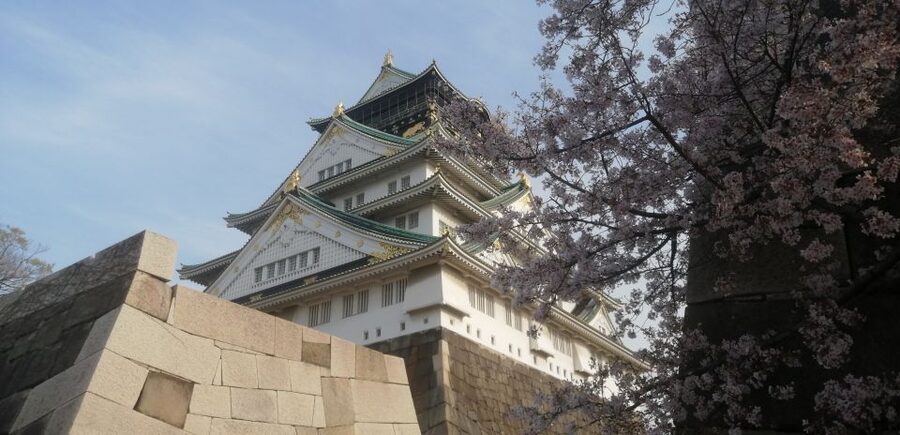
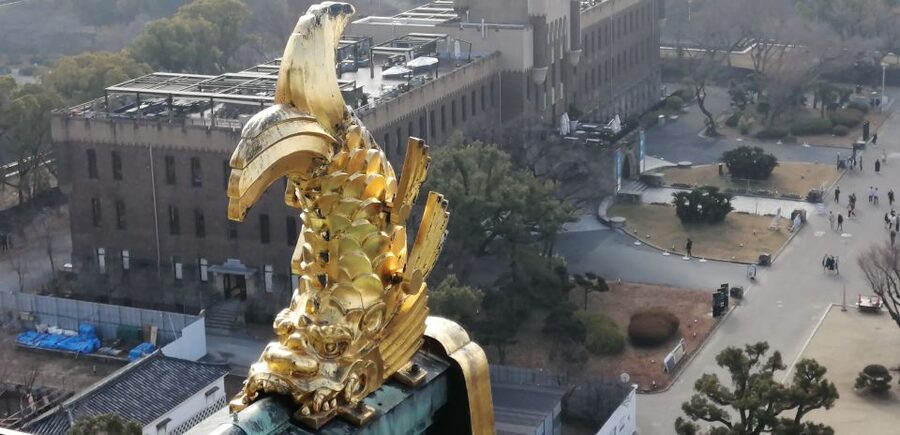
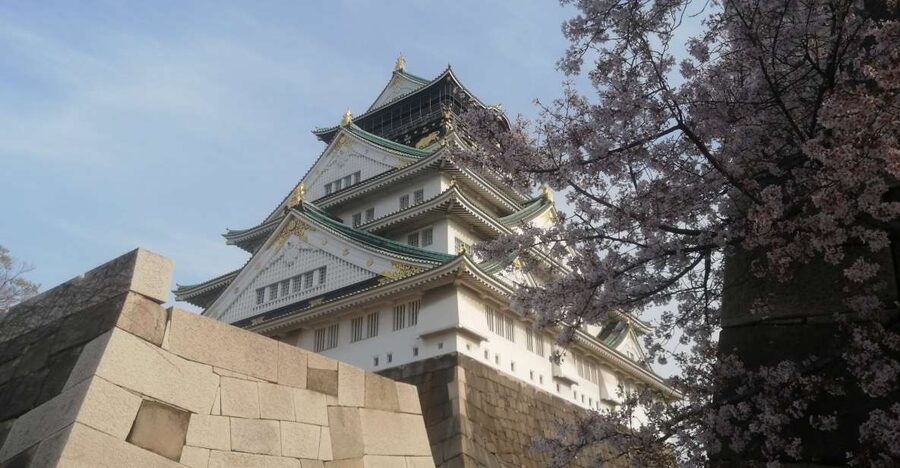
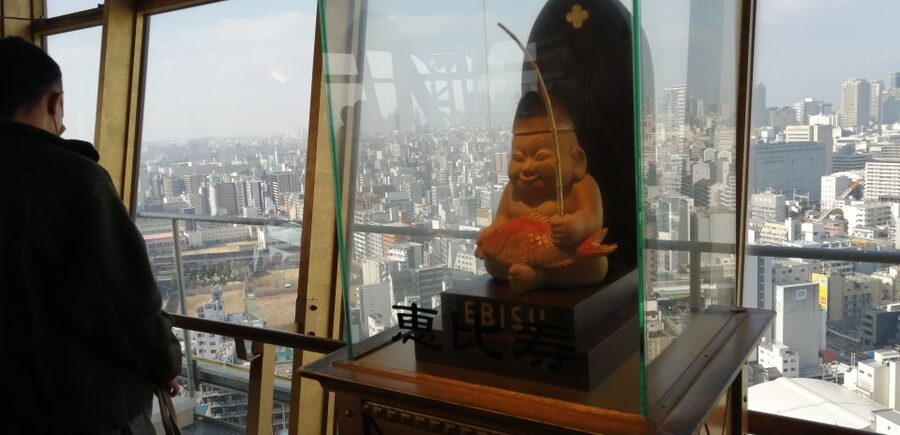
Osaka Castle is one of those places where the views tell half the story. Even if you’re not into castle design, the top gives you context: you start seeing how Osaka is built and how districts connect. The castle tower also includes a museum, which your guide uses to frame what you’re seeing.
This stop is also where the tour’s theme clicks. Your guide explains the Sengoku period connection and ties it back to why Osaka mattered. Even if you don’t remember every date, you’ll remember the bigger picture: power, conflict, and how Osaka became a key player in Japanese history.
Practical value: the tour includes skip-the-line help through a separate entrance. That matters because Osaka Castle can get slow at peak hours. Cutting that waiting time gives you more minutes for photos and looking around at ground level.
What to watch for: depending on the season, you may feel it more at the top—heat, wind, or stairs. Bring a light layer if you get cold easily, and plan for walking inside and outside.
Osaka block by block, more routes on foot

Ramen Lunch Near Temmabashi: Included, Popular, and Actually Useful
Lunch is built in right after the Osaka Castle segment. You head toward Temmabashi for the ramen stop, and the tour fee covers the ramen.
This is a smart inclusion for first-timers. If you’re moving fast, you don’t want to gamble on a random ramen shop line or language mix-up when you’re hungry. With the guide handling the reservation approach and timing, you get food without turning lunch into a side quest.
Ramen is also a great Osaka entry point because it’s the kind of meal you can eat anywhere—but local shop styles and broths still feel like a real taste of place. The tour is set up so you’re not just eating, you’re refueling for the rest of the day’s walking.
Tip: ask your guide what to try if you’re unsure. The group size is small enough that you can usually get specific ordering guidance, and your guide can steer you toward something you’ll enjoy.
Shitennoji Temple: Old Roots in a Working City
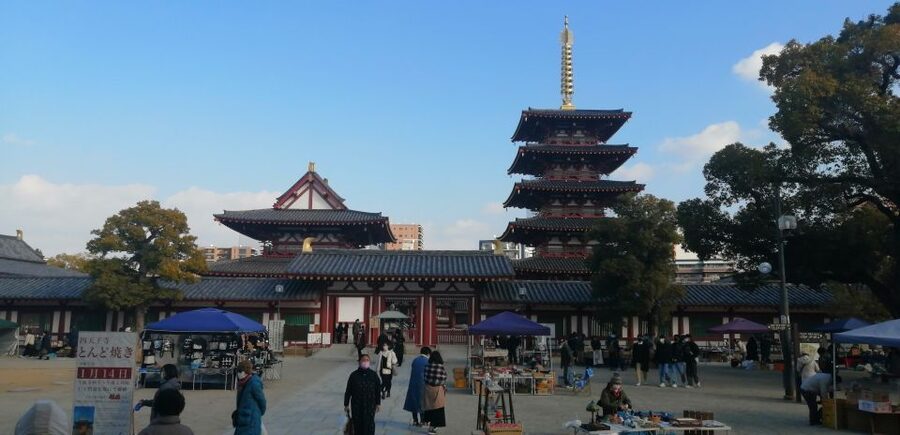
Shitennoji Temple dates back to 593, which makes it one of Japan’s oldest Buddhist temples. It’s also described as the first temple built by the state, so it has both age and authority in its background. Your guide explains how it developed and shares what you’re meant to notice.
This part of the day balances the Osaka “modern city” vibe. Instead of neon food streets, you get temple grounds and the feeling that this place has been part of the city’s life for centuries. Even if temples aren’t your top priority, this stop helps Osaka feel like more than a photo itinerary.
Time-wise, you’ll have guided visit time, enough to understand the basics and still take your own quiet looks. If you like history told in human terms, this is the kind of stop where your guide’s explanations help everything connect.
Entrance fee note: Shitennoji Temple entry is not included and is listed as JPY 400–600 depending on season/day. Keep cash or a card ready, and don’t count on the tour price to cover it.
Shinsekai and Tsutenkaku: Retro Streets, Photos, and Snack Breaks
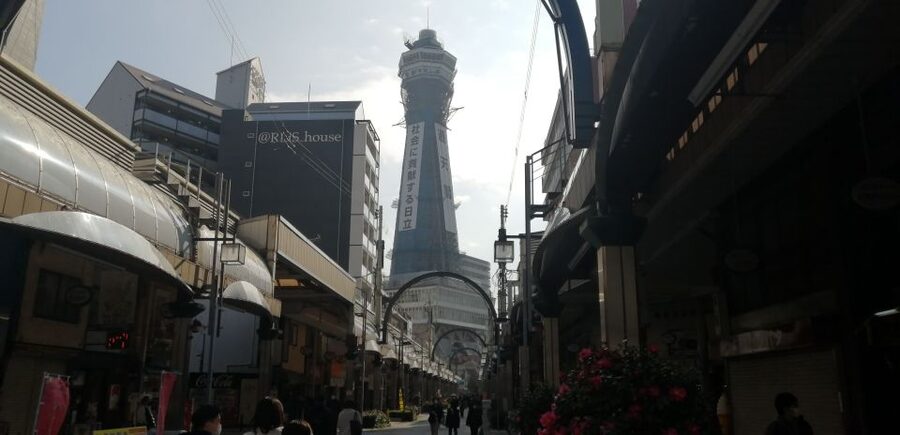
After Shitennoji, you walk into Shinsekai, a retro district known for colorful streets and the iconic Tsutenkaku Tower. This is one of those Osaka neighborhoods that feels like it’s designed for wandering. Your guide sets up a photo moment with Tsutenkaku in the background, which is exactly what most people want from this area.
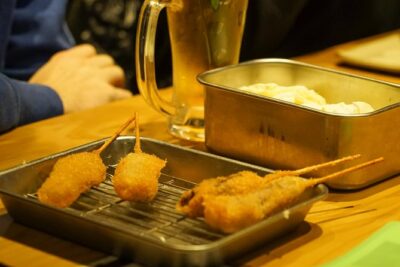
Then you get a break: shopping time and free time. This is where you can snack around without feeling rushed. Some food stops you might hear about in the area include kushikatsu (deep-fried skewers). Even if you don’t order that exact item, the point is you get time to choose your own street-food vibe.
This is also where the “walking pace” becomes clearer. Your legs are working, but your mind gets easy wins: a tower shot, street scenes, small shops, and quick bites.
Weather tip: if it’s hot, your guide’s routing matters. There’s evidence in feedback of guides actively choosing shaded routes and keeping groups comfortable. If it’s raining, the guide also tends to steer you toward covered areas and keep you moving.
Kuromon Ichiba Market: Food Under One Roof
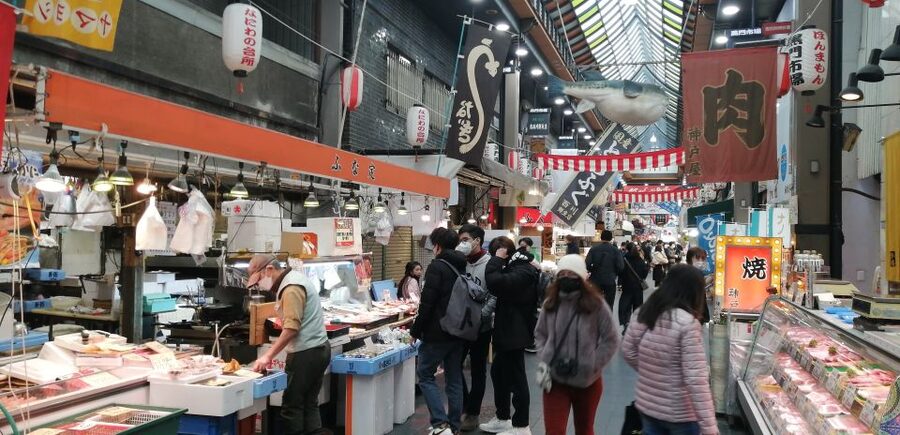
Kuromon Market is a classic Osaka experience for a reason. It’s a covered public market with a long run—over 200 years—and it’s still a place where everyday food happens, not just a staged souvenir corridor.
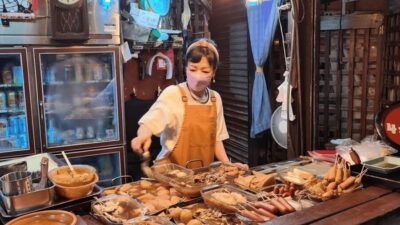
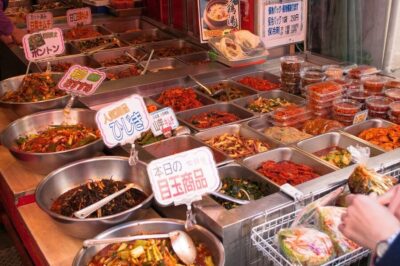
Your guide walks you through the market atmosphere and points out what to look for. You’ll also get recommendations for tasty local street foods, which is a big advantage if your Japanese is limited. The market is crowded in a way that can feel overwhelming without a plan, but with a guide it becomes a smooth walk-and-snack circuit.
Then you have free time to explore. That’s useful because market food is personal. Some people want sweet, some salty. You can go at your own speed while still staying within the tour’s overall timing.
Budget note: shopping at Kuromon is not included, so expect to pay for what you choose to eat and buy.
Dotonbori and Hozenji Temple: Running Man, Bridge Energy, and a Calm Finish
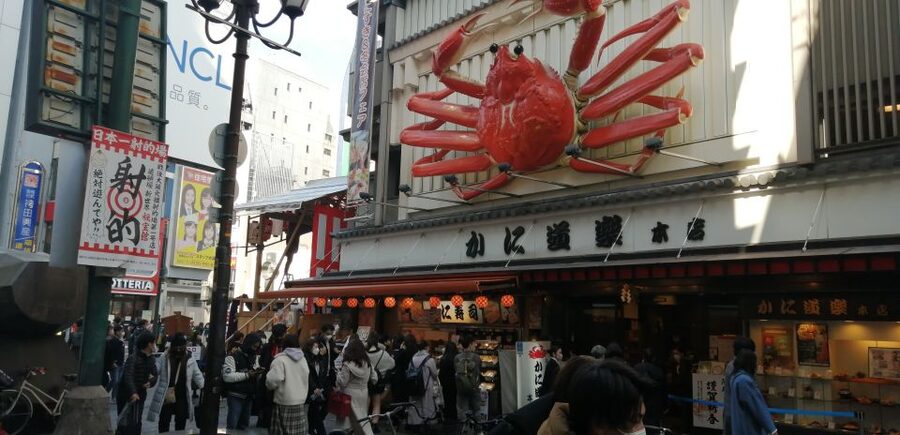
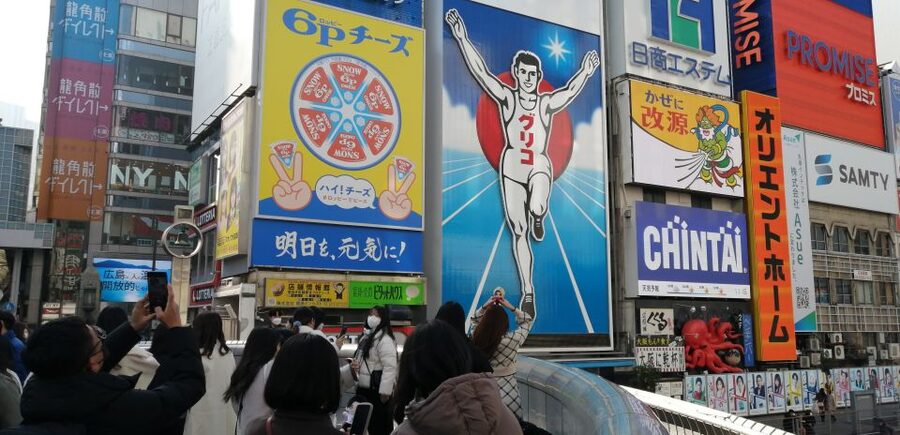
Dotonbori is one of Osaka’s main entertainment zones, and your guide takes you through the key sights. You’ll check out Ebisbashi Bridge and the famous Running Man sign above it. This is the Osaka photo you’ve probably seen online—big lights, bold signs, and a sense of movement even when you’re standing still.
After Dotonbori, you end at Hozenji Temple (天龍山 法善寺). That finishing touch matters. Your day goes from bright street energy to a more grounded temple stop, which helps the whole experience feel rounded instead of nonstop chaos.
Time-wise, you get guided sightseeing plus time to look around. If you’re someone who likes photos but also wants to actually read signs and notice details, this ending is a good balance.
Price and Value: What $56 Covers and What to Plan For
At $56 per person for about 7 hours, this tour is priced as a time-saver. You’re paying for five major districts, guided explanations, photo support, and—most importantly—lunch ramen that’s included. For an Osaka first-timer, that’s a strong deal.
What’s not included is the stuff that can surprise you later:
- Osaka Castle entrance fee: JPY 1,080–1,430 depending on season/day
- Shitennoji Temple entrance fee: JPY 400–600 depending on season/day
- Osaka Metro day pass (if you buy one): JPY 620–820 depending on weekday
Even with those extras, I see the value in how the guide saves you from the stress of timing tickets and finding meeting points across stations. Also, skip-the-line help at Osaka Castle is exactly the kind of small benefit that feels big in real life.
If you’re also considering an Osaka city pass, ask your guide what fits your plan. One named guide reference in feedback points out the Osaka city pass can offer discounts and even help with skipping the general line for Osaka Castle. That’s worth checking before you buy anything.
Tips to Make the Day Feel Easier (Not Just Longer)
This tour is built on walking. Reviews-style feedback points to roughly 11 km of walking on an active day, plus stairs from subway travel. So treat this like a hike with cultural stops, not a gentle stroll.
Here’s what helps most:
- Wear hiking or supportive shoes; sneakers alone may not cut it if your feet run hot
- Bring rain gear even if the forecast looks okay
- Carry water, and plan for breaks during free-time blocks
- Be ready for stairs at subway stations. If mobility is a concern, this may not be the right fit
One more small practical note: the meeting point is a specific FamilyMart and you’re told to look for a guide in green glasses. That’s fine, but stations are big. Arrive early so you don’t spend your first 10 minutes sprinting.
Who Should Book This Osaka Tour (and Who Should Skip It)
This experience is best for you if:
- You want a first introduction to Osaka with a guided plan
- You’re happy moving between districts by subway and on foot
- You care about seeing both “old” and “street food” Osaka in one day
- You want ramen lunch handled for you without guesswork
It may not be a good match if:
- You need step-free routes or have mobility limits. Subway stairs and walking time are part of the design.
- You’re traveling with young kids (not suitable for children under 12).
- You’re pregnant or dealing with heart issues or currently sick with a cold (the tour lists these as not suitable).
If you’re coming for big sights but also want someone to answer questions as you walk, this is the right energy. It’s structured enough to keep you oriented, but flexible enough to let you enjoy the neighborhood moments.
Should You Book This Osaka “Five Highlights + Ramen” Tour?
I’d book it if you want a high-return Osaka day: castle views, one old temple that matters, retro Shinsekai for photos, a real food market, and Dotonbori’s iconic street life—with ramen lunch included. The combination of guided context plus practical routing is what makes the value hold up.
Skip it if you hate walking, dislike crowds, or need step-free travel. Also check your budget for castle and temple entrance fees, since those are not included in the base price.
If you’re short on time, this is one of the most straightforward ways to get your bearings fast and eat well while you do it.
FAQ
How long is the tour?
The tour duration is 7 hours.
What’s included in the price?
Ramen lunch, a local English-speaking guide, tour commentary and guidance, and photo shoot assistance.
Where do I meet the guide?
Meet at Osaka Metro Tanimachi Line, Tanimachi 4-chome Station, Exit 4, in front of FamilyMart. Look for a man wearing green glasses.
What time does the tour start?
The meeting time is 9:00AM.
Is the Osaka Metro 1-day pass included?
No. The public transportation pass is not included, and the Osaka Metro 1-day Pass is listed as JPY 620–820 depending on the day of the week.
Are the entrance fees included for Osaka Castle and Shitennoji?
No. Osaka Castle entrance fee (JPY 1,080–1,430 depending on season/day) and Shitennoji Temple entrance fee (JPY 400–600 depending on season) are not included.
What stops are included in the tour?
You visit Osaka Castle Museum, Shitennoji Temple, Shinsekai, Kuromon Market, and Dotonbori, ending at Hozenji Temple.
What should I bring for the tour?
Bring hiking shoes and rain gear.
What group size is it?
It’s a small group limited to 8 participants.
Is cancellation free?
Yes. Free cancellation is available up to 24 hours in advance for a full refund.
More Tour Reviews in Osaka
- Osaka Go Karting Tour with Funny Costume★ 5.0 · 2,658 reviews
- Osaka Castle: Museum and Tower Entry Ticket★ 4.5 · 2,380 reviews
- Osaka: Shinsekai Food Tour with 13-15 Dishes at 5 Eateries★ 4.8 · 2,204 reviews
- Osaka Food Tour: 13 Dishes at 5 Local Eateries★ 5.0 · 2,149 reviews
- Hungry Osaka Street Food Tour:15 Tastings & 3 Drinks with a Local★ 5.0 · 1,727 reviews
Osaka at Street Level
- Osaka Local Foodie Walking Tour in Dotonbori and Shinsekai★ 5.0 · 985 reviews
- Osaka: Deep Backstreets Walking Tour with Dinner Option★ 4.9 · 902 reviews
- Ultimate Osaka Walking Tour: Castle, Dotonbori & Hidden Gems★ 5.0 · 862 reviews
- Osaka: Main Sights and Hidden Spots Guided Walking Tour★ 4.9 · 702 reviews
- Private Osaka Walking Tour: Highlights & Hidden Gems★ 5.0 · 569 reviews
Cook It Yourself in Osaka
- Sushi Making Osaka Roll and Authentic Japanese Sushi Class★ 5.0 · 1,220 reviews
- Osaka Sushi Making Experience★ 5.0 · 400 reviews
- Osaka: Ramen and Gyoza Cooking Class in Dotonbori★ 5.0 · 378 reviews
- Osaka: Sumo Stage Show with Bento or Snack + Fight & Photo★ 4.3 · 364 reviews
- Osaka: Traditional Mochi Pounding Experience with Tasting★ 4.9 · 306 reviews
The Newest Osaka Write-Ups
- Private Photoshoot in Osaka with a Professional Photographer
★ 5.0 · 3 reviews - Osaka Early Morning Osaka Castle Tour Avoid Crowds
★ 5.0 · 3 reviews - Nara Private Tour with Pick and Drop and English Speaking Driver
★ 3.5 · 3 reviews - Osaka: Modern Vegetarian Sushi Cooking Class
★ 5.0 · 3 reviews - Nara Day Trip from Osaka with a Licensed Guide
★ 5.0 · 3 reviews
Osaka Cooking Classes, compared.
 ★ 5.0Sushi Making Osaka Roll and Authentic Japanese Sushi ClassFrom $311,220 reviews
 ★ 5.0Osaka Sushi Making ExperienceFrom $29400 reviews
 ★ 5.0Ramen and Gyoza Cooking Class in DotonboriFrom $70378 reviews
 ★ 4.3Sumo Stage Show with Bento or Snack + Fight & PhotoFrom $93364 reviews
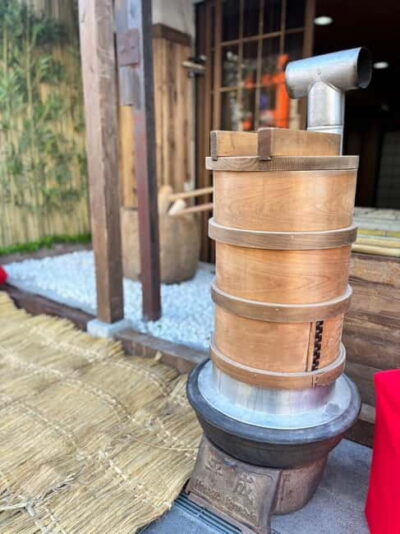 ★ 4.9Traditional Mochi Pounding Experience with TastingFrom $31306 reviews
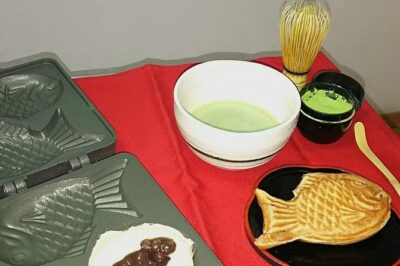 ★ 5.0Osaka Cooking Class: Okonomiyaki &Japanese cuisines experienceFrom $104261 reviews
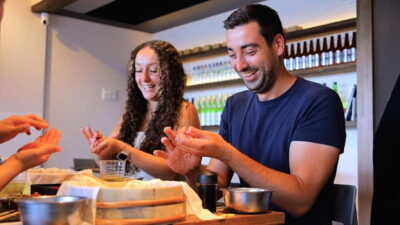 ★ 4.9Roll and Authentic Sushi Making Class in DotonboriFrom $45239 reviews
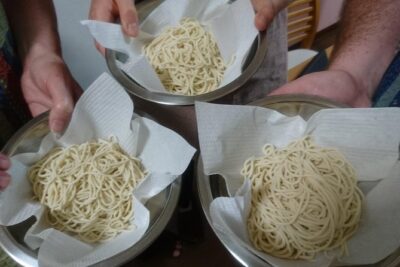 ★ 5.0Ramen and Gyoza Cooking Class in OsakaFrom $79202 reviews
Browse the lists this tour appears in