
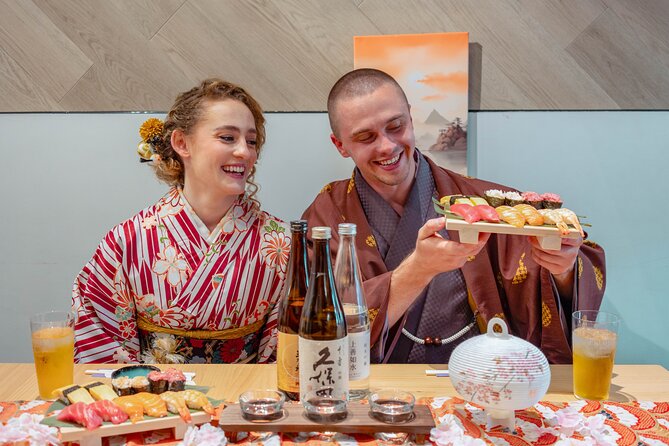
Reviewed · OSAKA COOKING CLASSES
Osaka Sushi Making Experience
Making sushi in Dōtonbori feels like cheating.
I love the Dōtonbori location, because you’re close to Osaka’s best people-watching before and after class. I also like that this is a hands-on lesson where you make 12 pieces yourself, including two styles—nigiri and gunkan—instead of just watching. The session runs about 1 hour 30 minutes with guidance in English (plus Chinese and Korean support), so you won’t get lost in food jargon.
One thing to consider: the meeting spot can be a little tricky to spot the first time, and the class has a light, commercial feel (not everyone’s vibe). Still, with a small cap of 16 people and very patient instruction, it’s an easy win if you want a fun Osaka cooking activity with a skill you can actually take home.
In This Review
- Key things to know before you go
- Dōtonbori sushi class in Osaka: what you’re really signing up for
- Inside the 90 minutes: from rice prep to nigiri and gunkan
- Where the fun happens: making it hands-on (and eating it immediately)
- Your meal plan: what’s included, what you’ll drink, and what’s not
- Dietary needs in Osaka: vegetarian, vegan, and halal sushi
- Instructors you might meet: clear English guidance and patient teaching
- Group size, timing, and where to meet in Namba
- Value for money: why $29.85 can work in Osaka
- Quick checklist: how to get the best results
- Should you book this Osaka sushi making experience?
- FAQ
- How long is the Osaka sushi making class?
- How many sushi pieces will I make?
- Is there a vegetarian or halal option?
- What languages are the instructions in?
- What’s the meeting point for the class in Namba?
- Is alcohol included?
- What’s the maximum group size?
- Can I cancel and get a refund?
Key things to know before you go

- Dōtonbori, Namba area location means you can pair class time with food and nightlife nearby.
- Make 12 pieces of sushi with two styles: nigiri and gunkan.
- Vegetarian, vegan, and halal sushi are available if you request the menu ahead.
- Small group size (up to 16) keeps things practical and gives you a better shot at real guidance.
- English-first instruction (plus Chinese and Korean) helps beginners keep up.
- You eat what you make, plus a certificate and photo in some sessions.
Flour on your hands, more Osaka kitchens to try

Dōtonbori sushi class in Osaka: what you’re really signing up for
This is the kind of experience that works because it turns a “food stop” into a skill. You’ll learn what makes sushi sushi—rice handling, shaping, and the basics behind different styles—then you’ll sit down and eat your own work. At the end, it’s not just satisfaction. It’s something tangible: in many classes, you also leave with a certificate and a photo, and sometimes a name written in Kanji.
The price—$29.85 per person—also makes it feel doable. You’re paying for hands-on instruction, ingredients, and the structured process to get from messy hands to good-looking pieces in 90 minutes. For Osaka, where cooking experiences can jump quickly, this one is aimed at giving you a lot of outcome for the money.
It’s also built for people who are short on time. There are afternoon and evening options, so you can line it up around your day—without sacrificing dinner plans or getting stuck too late.
Inside the 90 minutes: from rice prep to nigiri and gunkan
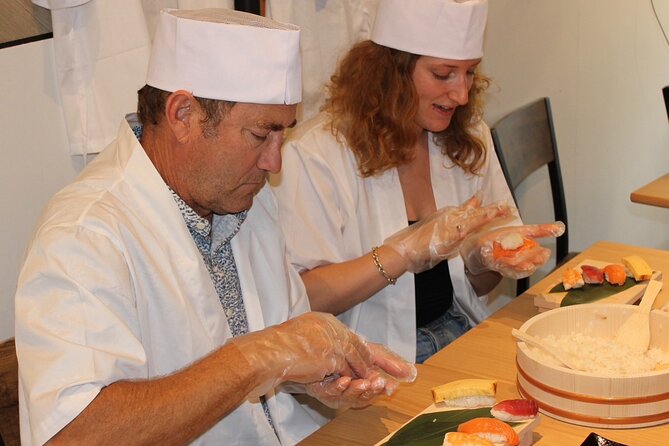
Your class time is structured around making a set amount of sushi—12 pieces—so you’re not guessing how long it’ll take or whether you’ll have enough material to learn from. You’ll work step-by-step, and the goal is consistency: get your rice right, then get your shaping right.
Typically, you start with the rice basics. One of the most useful details from past classes is how precise the instruction can get—like learning an exact rice portion (for example, 10g guidance was mentioned in a review). That kind of instruction matters because sushi success is 80% technique and 20% luck. If you can control portion size and pressure, you can repeat the result later at home.
Next comes technique for the two sushi styles. You’ll learn nigiri—usually the “classic” hand-formed piece—and gunkan, the style with a more bowl-like base that holds toppings well. Reviews and the class outline point to guided shaping, not just assembling ingredients, so you’re learning the difference between styles instead of making the same thing over and over.
At the same time, the teaching doesn’t stay purely mechanical. You’ll also get explanations about different sushi types and how they differ. That context is helpful because once you understand the why, you stop copying and start adapting.
Where the fun happens: making it hands-on (and eating it immediately)
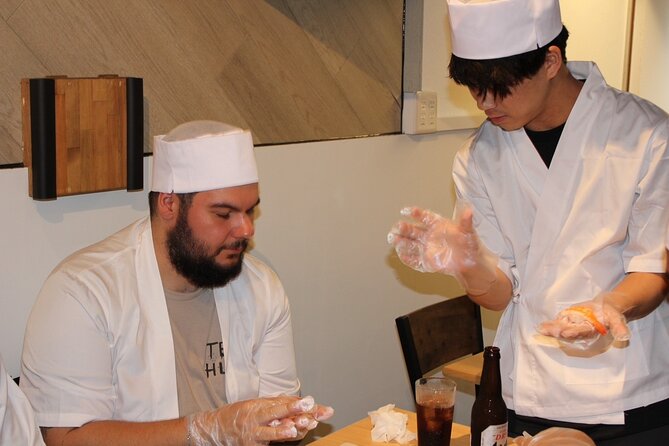
This isn’t a sit-there-while-someone-else-cooks class. You’ll actually shape the sushi. And then—this is the part that makes it worth your time—you’ll eat it when it’s fresh and still at its best.
That “make it, then taste it” sequence changes everything. It turns food into feedback: if your rice portion was off, you’ll feel it; if your shaping was uneven, you’ll notice it. And if you did everything right, you’ll get that clean bite that makes you want to try again.
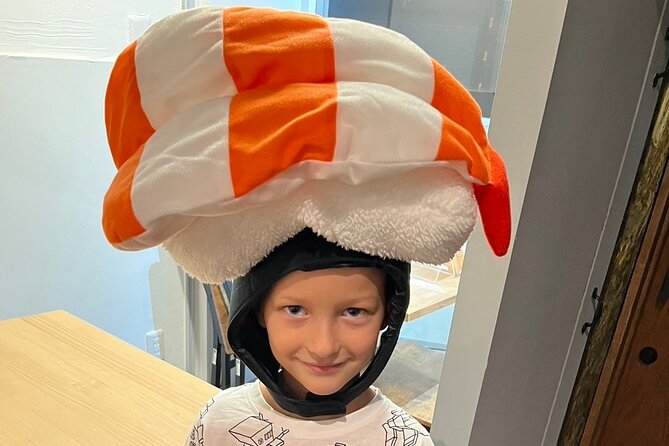
The vibe also matters. Many of the positive comments describe a relaxed, fun atmosphere, with instructors running things like an energetic workshop rather than a stiff demonstration. You might even see a sushi-chef costume moment, which sounds silly until you realize it lowers the stress level for beginners.
There’s also a social element. With a maximum of 16 people, you’re not swallowed by a huge production. It still feels like a class, not a cafeteria line.


Your meal plan: what’s included, what you’ll drink, and what’s not
The included part is straightforward: you get snacks consisting of 12 pieces of sushi, and all fees and taxes are covered. That means you’re not walking out hungry wondering what you paid for.
On the drink question, the details are a little mixed in the information you’re given. Japanese sake and beer are mentioned as part of the session, but the “not included” section also states that alcoholic beverages aren’t included. If you care about a specific drink, I’d confirm when you book. Either way, you’re guaranteed the sushi portion.
This matters because it affects how you plan dinner. If you’re the type who wants a full Osaka meal after, consider booking a time that fits around your appetite. In practice, 12 pieces is satisfying for many people, but it’s still a cooking class amount—so plan on dinner afterward if you’re a big eater.
Dietary needs in Osaka: vegetarian, vegan, and halal sushi
One of the biggest practical strengths here is that the class offers vegetarian, vegan, and halal sushi options upon request, and vegetarian sushi is available. That’s not always a given in Japanese cooking classes, especially when the menu involves seafood.
The key is to request your menu ahead of time. With Japanese ingredients, a last-minute swap is harder than you’d think. If you’re vegan or halal, be specific about what you need so the kitchen can prepare ingredients that match.
There is one reasonable consideration. One review noted that vegan options may involve fewer vegetables compared with meat-and-seafood versions. That doesn’t mean the vegan meal isn’t good—it just means it might be less varied than the standard spread. If you want lots of vegetable options, message your dietary needs clearly so you can get the best match possible.
Instructors you might meet: clear English guidance and patient teaching
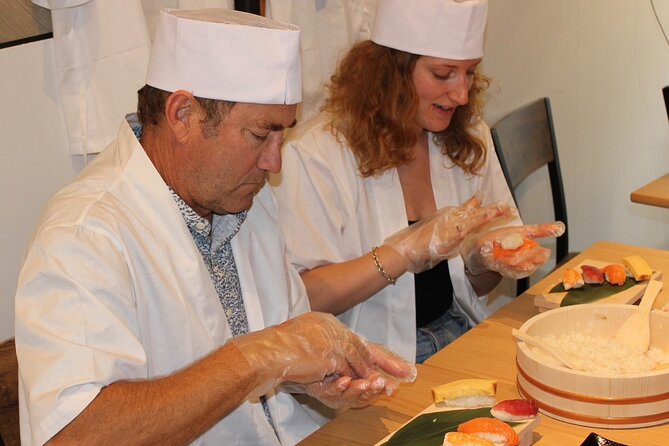
Instruction is a huge part of why this class gets such strong ratings. Guidance is offered in English (with Chinese and Korean support), which is important because sushi technique has small details that are hard to “guess” from pictures. The best classes make those details feel simple.
In the reviews, you’ll see specific instructor names mentioned again and again—like Mika and Kosei, and also Yui and Mako, Shiori and Toshiki, plus Toshiki and Hana. You can’t count on the exact pair, but it’s a good sign that the team is consistent and personable.
From what’s described, the instructors tend to be patient and helpful. That’s especially valuable if you’re traveling with anyone who’s nervous in kitchens. Sushi can look delicate, but with the right guidance you’ll be surprised how quickly your hands learn.
Some sessions also include extras that make the class feel memorable, like a certificate with your name in Kanji and a photo at the end. Those small keepsakes can become a fun way to remember Osaka beyond the usual photo of neon.
Group size, timing, and where to meet in Namba
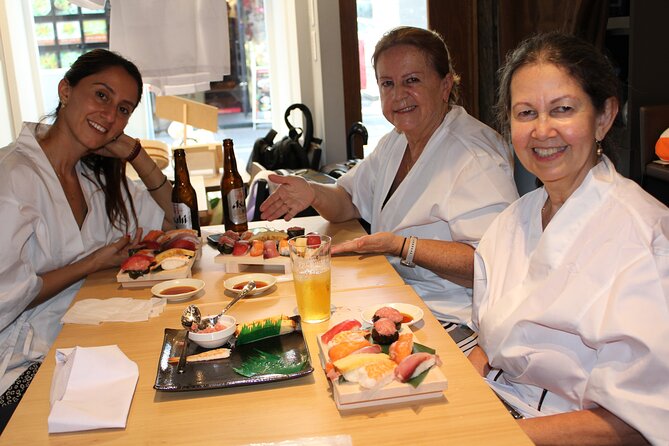
This activity caps at 16 travelers, which is a real advantage. It usually means faster attention from instructors and less time waiting around while someone else figures out the steps.
The duration is about 1 hour 30 minutes. That timing is ideal for travelers who want a meaningful activity without committing to an all-day plan. You can slot it into an afternoon lull, then head back out for dinner—or do an evening class after sightseeing.
Now the practical detail: the meeting point is listed as Sushi Making Experience Namba1A, 2-chome-6-11 Nishishinsaibashi, Chuo-ku, Osaka, 542-0086, Japan. Since at least one review mentions it can be hard to find, do yourself a favor: get there a little early and use a map app with the exact address. Dōtonbori is crowded enough that “nearby” isn’t always the same as “easy to spot.”
Because it’s near public transportation, it’s not a hassle to reach. Still, arriving early is the difference between calm confidence and last-minute stress.
Value for money: why $29.85 can work in Osaka
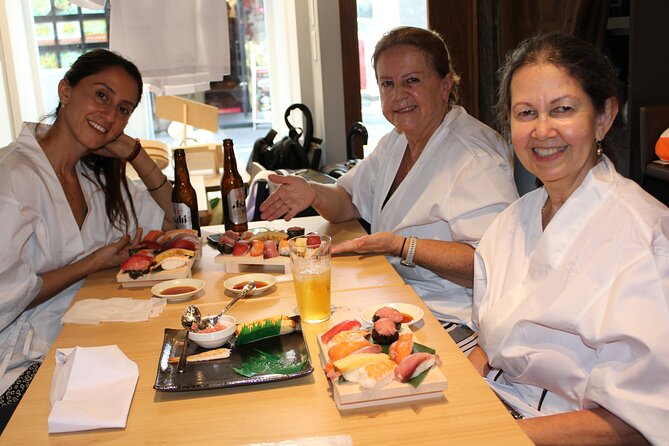
Here’s how I think about value in a case like this: you’re not paying just for “a taste of sushi.” You’re paying for (1) instruction, (2) ingredients, and (3) a full portion you can eat.
At $29.85, the deal becomes better if you’re a beginner and want structure. If you’ve ever tried to learn sushi from videos, you know the frustration: rice handling and shaping are where things go wrong. This class gives you a guided path, and you leave with repeatable technique.
It’s also one of the more flexible options, with afternoon and evening classes. That can translate to value if you’re trying to balance a busy trip schedule and still squeeze in one memorable “do something” experience.
If you’re strictly anti-touristy experiences, you should know the class has a commercial-friendly feel. That doesn’t automatically mean it’s low-quality—it just means it’s designed to be welcoming and efficient for visitors.
Quick checklist: how to get the best results
Want your sushi to look good and taste good? Here’s what helps, based on how these classes are taught.
- Arrive a few minutes early and confirm you’re at the right storefront. The address matters.
- Ask dietary questions early if you need vegan or halal substitutions.
- Watch the rice portion and pressure cues. Reviews mention exact portions like 10g, and that kind of precision is how you avoid soggy or misshapen pieces.
- Don’t rush your shaping. Even if the class has a schedule, sushi is a technique task—slow down just enough to form clean edges.
- Take the final photo and certificate seriously. It’s a real souvenir, not just a “nice-to-have.”
Should you book this Osaka sushi making experience?
Book it if you want a hands-on Osaka activity in Dōtonbori that teaches you something practical—nigiri and gunkan, plus the rice-and-shaping basics—and then lets you eat your results right away. It’s also a good pick for groups or couples because the class size stays small (up to 16) and instruction is available in English.
Skip it only if you’re the type who hates anything that feels a bit polished for tourists, or if you’re very sensitive about presentation and would rather do a quieter, less structured experience. Also, if your vegan diet is extremely specific, send your request clearly, because menus can vary.
FAQ
How long is the Osaka sushi making class?
It runs about 1 hour 30 minutes.
How many sushi pieces will I make?
You’ll make 12 pieces of sushi, including two styles: nigiri and gunkan-sushi.
Is there a vegetarian or halal option?
Yes. Vegetarian, vegan, and halal sushi options are available upon request, and vegetarian sushi is provided.
What languages are the instructions in?
All guidance is provided in English, Chinese, and Korean.
What’s the meeting point for the class in Namba?
The start point is Sushi Making Experience Namba1A, 2丁目-6-11 西心斎橋 中央区 大阪市 大阪府 542-0086, Japan. The activity ends back at the meeting point.
Is alcohol included?
Alcoholic beverages are listed as not included. At the same time, Japanese sake and beer are mentioned in the class features—so if alcohol matters to you, confirm what’s actually available for your session.
What’s the maximum group size?
The class has a maximum of 16 travelers.
Can I cancel and get a refund?
Yes. Free cancellation is available if you cancel up to 24 hours in advance for a full refund.
More Tour Reviews in Osaka
- Osaka Go Karting Tour with Funny Costume★ 5.0 · 2,658 reviews
- Osaka Castle: Museum and Tower Entry Ticket★ 4.5 · 2,380 reviews
- Osaka: Shinsekai Food Tour with 13-15 Dishes at 5 Eateries★ 4.8 · 2,204 reviews
- Osaka Food Tour: 13 Dishes at 5 Local Eateries★ 5.0 · 2,149 reviews
- Hungry Osaka Street Food Tour:15 Tastings & 3 Drinks with a Local★ 5.0 · 1,727 reviews
Cook It Yourself in Osaka
- Sushi Making Osaka Roll and Authentic Japanese Sushi Class★ 5.0 · 1,220 reviews
- Osaka: Five Must-See Highlights Walking Tour & Ramen Lunch★ 4.7 · 411 reviews
- Osaka: Ramen and Gyoza Cooking Class in Dotonbori★ 5.0 · 378 reviews
- Osaka: Sumo Stage Show with Bento or Snack + Fight & Photo★ 4.3 · 364 reviews
- Osaka: Traditional Mochi Pounding Experience with Tasting★ 4.9 · 306 reviews
The Newest Osaka Write-Ups
- Private Photoshoot in Osaka with a Professional Photographer
★ 5.0 · 3 reviews - Osaka Early Morning Osaka Castle Tour Avoid Crowds
★ 5.0 · 3 reviews - Nara Private Tour with Pick and Drop and English Speaking Driver
★ 3.5 · 3 reviews - Osaka: Modern Vegetarian Sushi Cooking Class
★ 5.0 · 3 reviews - Nara Day Trip from Osaka with a Licensed Guide
★ 5.0 · 3 reviews
Osaka Cooking Classes, compared.
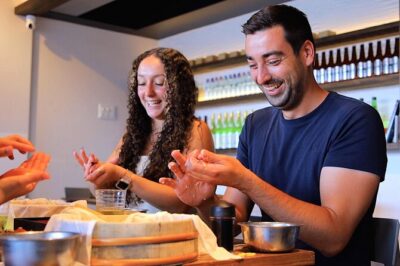 ★ 5.0Sushi Making Osaka Roll and Authentic Japanese Sushi ClassFrom $311,220 reviews
 ★ 4.7Five Must-See Highlights Walking Tour & Ramen LunchFrom $56411 reviews
 ★ 5.0Ramen and Gyoza Cooking Class in DotonboriFrom $70378 reviews
 ★ 4.3Sumo Stage Show with Bento or Snack + Fight & PhotoFrom $93364 reviews
 ★ 4.9Traditional Mochi Pounding Experience with TastingFrom $31306 reviews
 ★ 5.0Osaka Cooking Class: Okonomiyaki &Japanese cuisines experienceFrom $104261 reviews
 ★ 4.9Roll and Authentic Sushi Making Class in DotonboriFrom $45239 reviews
 ★ 5.0Ramen and Gyoza Cooking Class in OsakaFrom $79202 reviews
Browse the lists this tour appears in