
Reviewed · OSAKA COOKING CLASSES
Sushi Making Osaka Roll and Authentic Japanese Sushi Class
A sushi class you can actually finish, and enjoy.
What makes this one in Osaka so fun is the hands-on structure (ingredients are prepped for you, so you’re cooking quickly) and the English-speaking instruction that turns questions into quick answers. I also like that you’re right by Dotonbori and Shinsaibashi for an easy pre- or post-class wander. The only real caution: a few people felt the timing can run tight for extra photo/video time, so plan to prioritize making (and tasting) over filming.
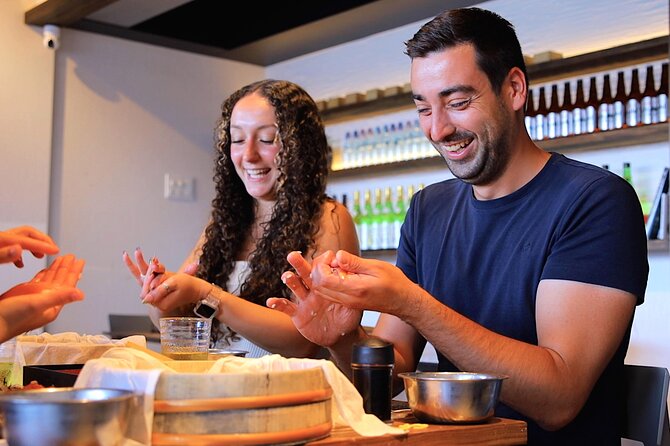
This is a beginner-friendly, step-by-step class focused on two sushi styles: maki rolls and authentic nigiri. You’ll learn techniques, get cultural context about sushi, and then eat what you make—no long waiting, no awkward “watch only” portion.
In This Review
- Key things to know before you go
- Osaka Sushi in 1 Hour 40: A class built for real beginners
- Finding the workshop near Dotonbori and Shinsaibashi
- Maki rolls and nigiri: What happens during your hands-on session
- 1) A quick start and sushi basics
- 2) Step-by-step technique at your station
- 3) Eat what you made, then ask questions
- Instructor style in plain terms: friendly, English-led, and question-friendly
- How much sushi you get, and why $31.01 can actually feel fair
- Dietary notes and the real-world timing for photos
- Dietary preferences
- Timing and photo/video space
- Food handling comfort
- Where this class shines: small-group Osaka fun that teaches you something
- Who should book this sushi making class
- Should you book Sushi Making Osaka?
- FAQ
- How long is the sushi making class?
- What sushi do you learn to make?
- Is the class taught in English?
- Do I need any prior cooking experience?
- How big is the group?
- Is hotel pickup and drop-off included?
- Can I get a refund if I cancel?
Key things to know before you go
- Ingredients are prepped so you can focus on technique instead of prep work.
- Maki rolls + nigiri means you’re practicing more than one sushi skill.
- English-speaking instructors with time for questions, not just a lecture.
- Small group size (up to 20) keeps things interactive.
- Food is part of the ticket price since you eat the sushi you make.
- Location is walkable to Dotonbori and Shinsaibashi, handy for a smooth Osaka day.
Flour on your hands, more Osaka kitchens to try


Osaka Sushi in 1 Hour 40: A class built for real beginners
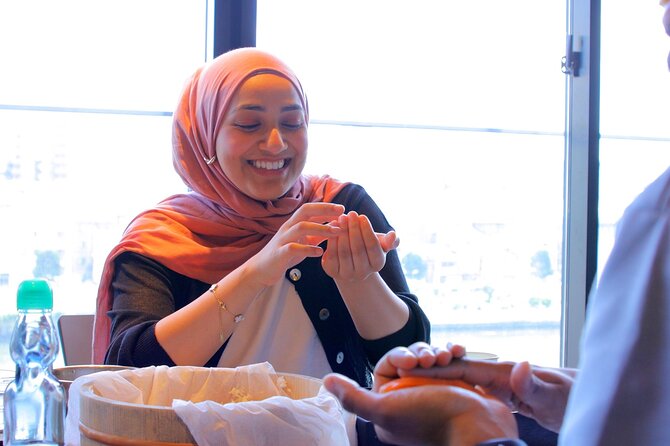
Sushi classes often fall into two buckets: either you get a short demo and watch, or you spend the whole time chopping and prepping like you’re auditioning for a Japanese MasterChef. This one is different. You still do real work at your station, but the setup is designed so you’re learning the technique part—how to form, assemble, and present maki and nigiri—without getting bogged down.
The class runs about 1 hour 40 minutes, which is long enough to learn, make, and eat, but short enough that it won’t derail your Osaka plans. And since you finish back at the starting meeting point, you can plug it neatly into a morning, afternoon, or evening food crawl around Dotonbori and Shinsaibashi.
Finding the workshop near Dotonbori and Shinsaibashi
The meeting point is at 1-chōme-16-20 Higashishinsaibashi, Chuo Ward, Osaka (542-0083). The practical win is proximity. Dotonbori is a short hop away, and Shinsaibashi is right there too, so you’re not stuck with a “far from everything” cooking stop.
A couple of things to keep in mind:
- Bring your confirmation and use your mobile ticket on arrival.
- Leave a little extra buffer to find the exact room inside the building. One recent note described it as a small room on an upper level, very close to Dotonbori.
Also, the class is near public transportation, which matters because you’ll probably want to pair this with shopping or street-food time. Osaka is easy when your plans don’t fight transit schedules.
Maki rolls and nigiri: What happens during your hands-on session
Think of the session as three phases: learn, build, eat.
Put this one next to a few other Osaka options first:

1) A quick start and sushi basics
Right away, the instructors guide you through what you’ll be making and how the process works. The class is beginner-friendly, and the tone tends to stay calm and encouraging rather than strict. You’ll also get some cultural insights about sushi—enough context to make the food feel more meaningful, without turning it into a textbook lesson.
2) Step-by-step technique at your station
Next comes the real work: making maki rolls and nigiri step by step. One thing I appreciate here is that the workflow is set up so you’re not waiting forever. Ingredients arrive ready and prepped, which keeps the focus where it belongs: practicing the motion and the final form.
You’ll likely spend time on:
- Getting the roll technique right for maki
- Shaping nigiri so it looks clean and holds together
- Making small adjustments based on instructor feedback
If you’re bringing kids, this is a big plus. One family-friendly note mentioned patience and support for students, especially kids, which can be the difference between a fun activity and a frustration marathon.
3) Eat what you made, then ask questions
Once your sushi is done, you get to enjoy it yourself. That’s the core value of this class: it’s not a tasting menu experience. It’s a make-and-eat experience where the meal is included.
After you eat, you’re still in a learning environment. You can ask sushi questions—everything from technique to how to make something similar at home. Instructors are reported to be energetic and interactive, and several named instructors showed up in past sessions (like Reika, Fuko, Ina, Aina, Arisa, Fujiko, Matty, and Yui). You might not get the exact same teacher, but it gives you a sense that the instruction team is active and hands-on.
Instructor style in plain terms: friendly, English-led, and question-friendly
This is one of the strongest parts of the experience. The instructors are English-speaking, and that matters a lot when you’re learning a hands-on skill. In a language barrier situation, you can’t tell whether your problem is technique, timing, or just confusion. Here, you can ask directly and get answers that click.
I also like that the class doesn’t treat sushi like it’s only for “real food people.” It’s pitched as a fun, approachable way to learn. Several people highlighted history and cultural context alongside the cooking, while one person wanted more time focused on making and eating. Translation: expect some context, but the main event is still the sushi.
How much sushi you get, and why $31.01 can actually feel fair
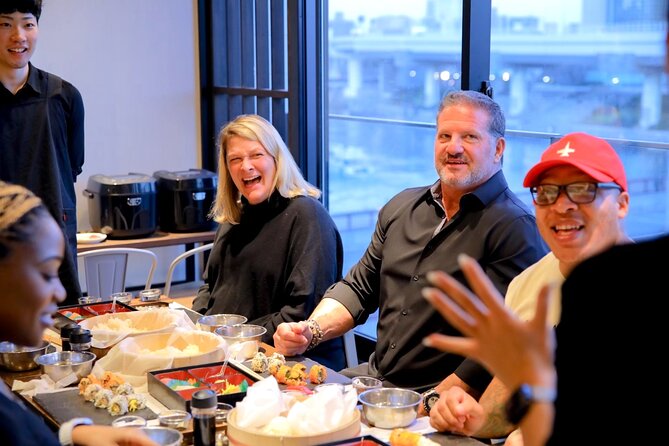
At $31.01 per person, you might wonder what you’re really buying. The answer: a short class plus a meal.
From past experiences described, you can expect a solid payoff. One note estimated about 1 maki roll and roughly 4–8 nigiri, depending on how quickly you move through the activity. Even if your number lands on the lower or higher end of that range, you’re still getting sushi you made—not just a snack-sized demonstration.
That’s what makes the price feel reasonable. You’re paying for:
- Ingredients (already portioned and prepped)
- An English-speaking instructor
- A structured class
- Lunch or an included meal component (you eat what you make)
If you’re someone who wants to eat well in Osaka anyway, this tends to be a smart value add because it turns your food budget into both an experience and a meal.
Dietary notes and the real-world timing for photos
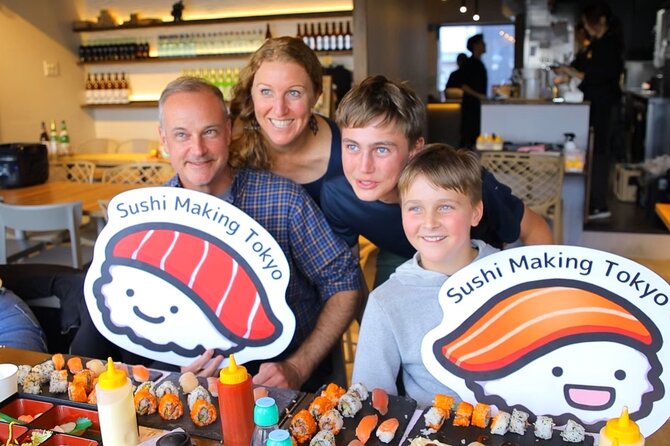
This is where you should go in with clear expectations.
Dietary preferences
The data says ingredients are included, but it doesn’t spell out a full dietary policy. One past note mentioned vegetarian options and praised them, while another pointed out that a specific swap (shrimp) wasn’t possible at the time of the session. That tells you the practical move:
- If you have a strong dietary restriction, flag it as early as you can during booking.
Timing and photo/video space
A couple of people felt the class could feel a bit rushed, with less time than they wanted for photos or lingering over the food. Another mentioned room lighting wasn’t ideal for great phone photos.
So here’s my advice:
- Take photos at natural moments (before you start plating, right after finishing).
- Don’t plan to do a full TikTok-style video montage during the final eating window.
- Keep your expectations realistic: this is a cooking class first, a content studio second.
Food handling comfort
One note expressed concern about seafood sitting at room temperature for a period. You can’t see the kitchen process in every moment, but if food temperature affects your comfort, ask the instructor how they handle storage before you begin.
Where this class shines: small-group Osaka fun that teaches you something
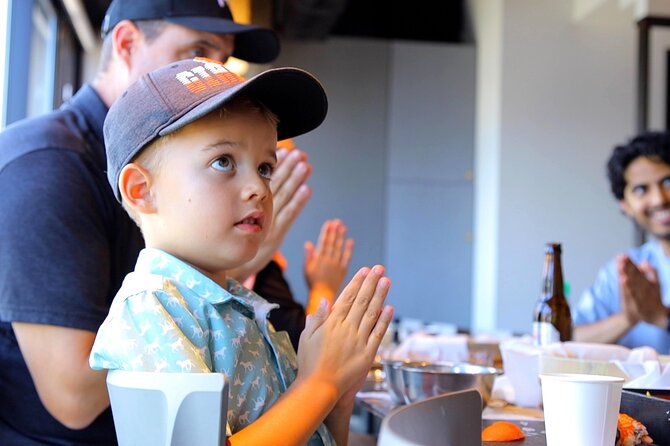
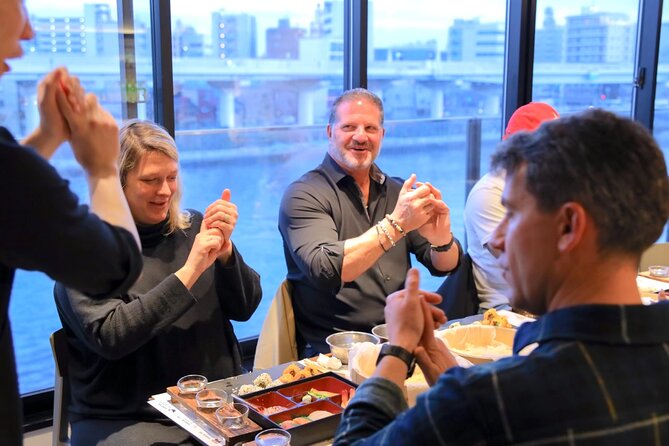
With a maximum of 20 travelers, this doesn’t feel like a factory line. You get more direct help than in the big group chaos you sometimes see around popular food districts.
This is also a great fit if:
- You want a structured activity that still feels playful
- You’re traveling with friends or family and want one shared moment that ends with food
- You have no cooking background and want something that won’t require prior knife skills
It’s especially good for a first Japan “how-to” experience—learning a technique that you can bring home rather than just eating your way through markets.
Who should book this sushi making class
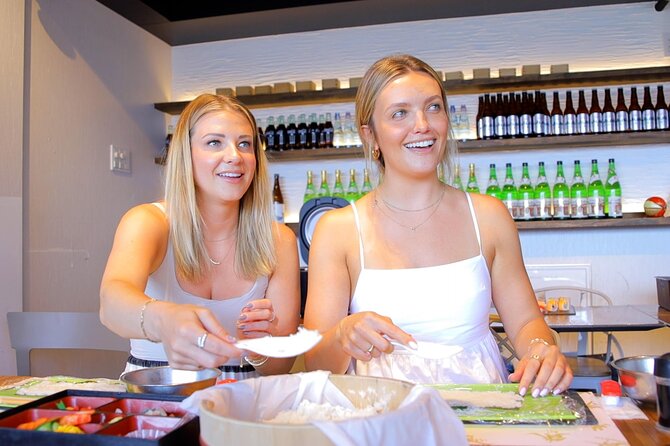
Book it if you want:
- A hands-on experience in Osaka (not a passive show)
- Maki and nigiri practice in a short timeframe
- English instruction and time for questions
- To eat the results you made
You might skip it if:
- You’re mainly looking for a long, slow, photo-first culinary event
- You have a complicated dietary restriction and need a guaranteed substitution
- You hate any sense of schedule pressure during activities
Should you book Sushi Making Osaka?
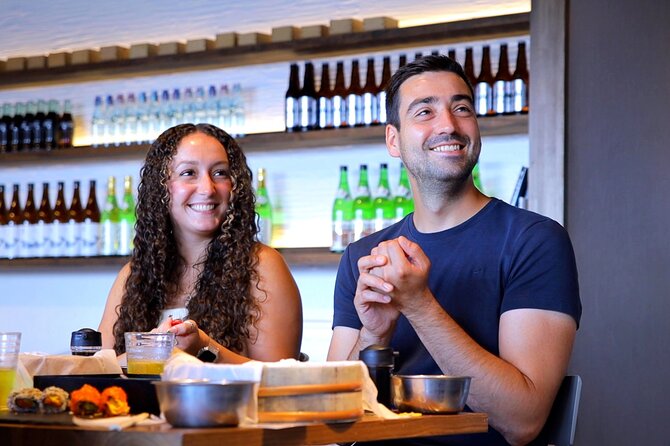
Yes, if your goal is to learn practical sushi technique while also getting a meal. For the price, the value is strong because you’re paying for instruction plus what you eat, and the location makes it easy to blend with your Dotonbori and Shinsaibashi plans.
My one “do this before you go” tip: when you book, note any dietary needs clearly. And when you arrive, focus on making good sushi first—photos come easier when your roll isn’t falling apart in your hands.
FAQ
How long is the sushi making class?
The experience lasts about 1 hour 40 minutes.
What sushi do you learn to make?
You learn to make sushi rolls (maki) and authentic Japanese nigiri step by step.
Is the class taught in English?
Yes. The class includes an English-speaking instructor.
Do I need any prior cooking experience?
No cooking experience is required. The class is beginner-friendly.
How big is the group?
The class has a maximum of 20 travelers.
Is hotel pickup and drop-off included?
No. Hotel pickup and drop-off are not included.
Can I get a refund if I cancel?
Yes. You can cancel for a full refund if you cancel at least 24 hours before the experience starts.
If you want, tell me your travel dates and whether you’re going with kids or have dietary limits, and I’ll help you pick the best time slot (morning vs afternoon vs evening) for fitting this into your Osaka food day.
Take Home Something You Made
- Matcha Making Class in Osaka with Authentic Japanese Sweets Set★ 5.0 · 509 reviews
- Osaka: Ramen and Gyoza Cooking Class in Dotonbori★ 5.0 · 378 reviews
- Osaka Cooking Class: Okonomiyaki &Japanese cuisines experience★ 5.0 · 261 reviews
- Osaka: Roll and Authentic Sushi Making Class in Dotonbori★ 4.9 · 239 reviews
- Ramen and Gyoza Cooking Class in Osaka★ 5.0 · 202 reviews
More Tour Reviews in Osaka
- Osaka Go Karting Tour with Funny Costume★ 5.0 · 2,658 reviews
- Osaka Castle: Museum and Tower Entry Ticket★ 4.5 · 2,380 reviews
- Osaka: Shinsekai Food Tour with 13-15 Dishes at 5 Eateries★ 4.8 · 2,204 reviews
- Osaka Food Tour: 13 Dishes at 5 Local Eateries★ 5.0 · 2,149 reviews
- Hungry Osaka Street Food Tour:15 Tastings & 3 Drinks with a Local★ 5.0 · 1,727 reviews
Cook It Yourself in Osaka
- Osaka: Five Must-See Highlights Walking Tour & Ramen Lunch★ 4.7 · 411 reviews
- Osaka Sushi Making Experience★ 5.0 · 400 reviews
- Osaka: Ramen and Gyoza Cooking Class in Dotonbori★ 5.0 · 378 reviews
- Osaka: Sumo Stage Show with Bento or Snack + Fight & Photo★ 4.3 · 364 reviews
- Osaka: Traditional Mochi Pounding Experience with Tasting★ 4.9 · 306 reviews
The Newest Osaka Write-Ups
- Private Photoshoot in Osaka with a Professional Photographer
★ 5.0 · 3 reviews - Osaka Early Morning Osaka Castle Tour Avoid Crowds
★ 5.0 · 3 reviews - Nara Private Tour with Pick and Drop and English Speaking Driver
★ 3.5 · 3 reviews - Osaka: Modern Vegetarian Sushi Cooking Class
★ 5.0 · 3 reviews - Nara Day Trip from Osaka with a Licensed Guide
★ 5.0 · 3 reviews
Osaka Cooking Classes, compared.
 ★ 4.7Five Must-See Highlights Walking Tour & Ramen LunchFrom $56411 reviews
 ★ 5.0Osaka Sushi Making ExperienceFrom $29400 reviews
 ★ 5.0Ramen and Gyoza Cooking Class in DotonboriFrom $70378 reviews
 ★ 4.3Sumo Stage Show with Bento or Snack + Fight & PhotoFrom $93364 reviews
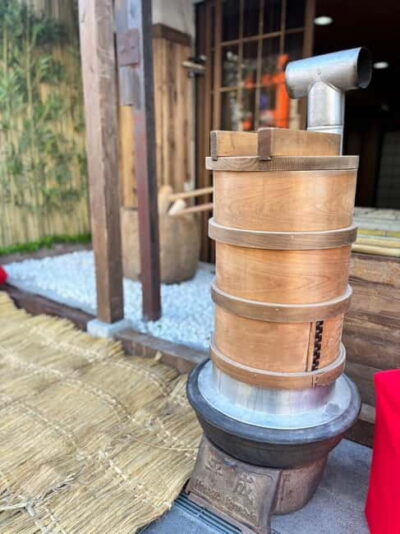 ★ 4.9Traditional Mochi Pounding Experience with TastingFrom $31306 reviews
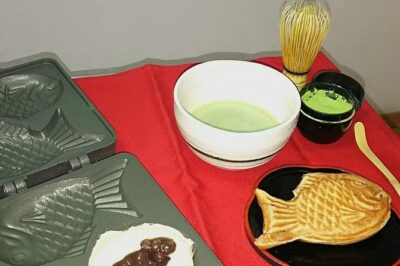 ★ 5.0Osaka Cooking Class: Okonomiyaki &Japanese cuisines experienceFrom $104261 reviews
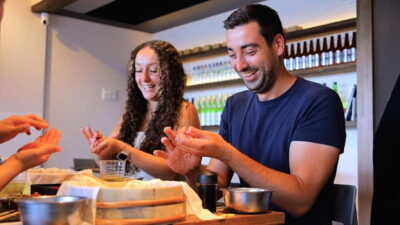 ★ 4.9Roll and Authentic Sushi Making Class in DotonboriFrom $45239 reviews
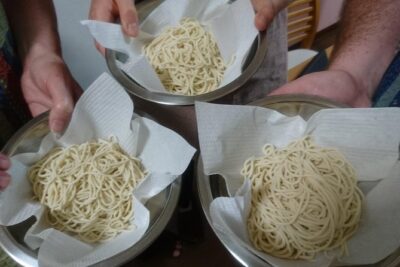 ★ 5.0Ramen and Gyoza Cooking Class in OsakaFrom $79202 reviews
Browse the lists this tour appears in