
Reviewed · OSAKA SAMURAI & NINJA EXPERIENCES
Immerse in Judo Martial Arts Class from Japan
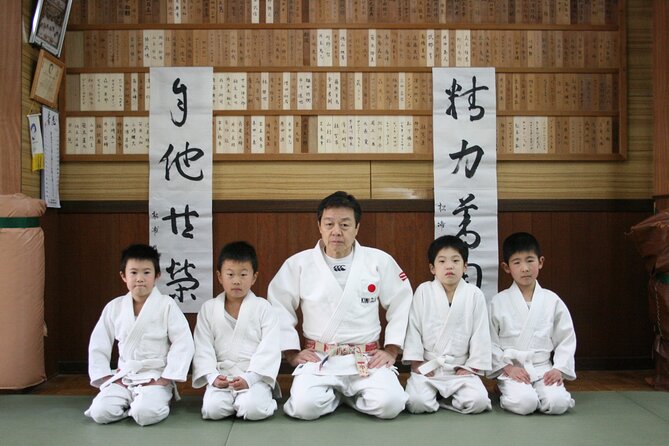
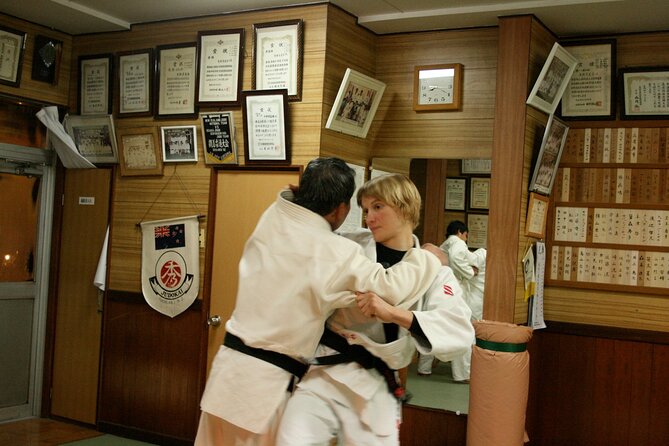
Judo in Osaka is a simple plan with deep cultural payoff. You’ll train on the tatami at Daishin Judo Club, led by 8th dan sensei Akihiro Matsuura, and the focus stays on respect, discipline, and self-control. Two big things I like here: you get clear instruction whether you’re new or experienced, and the class is small enough (up to 6) to actually get personal attention. One thing to consider: this is physical training, so if you’re dealing with injuries or limited mobility, you’ll want to gauge what movements you can safely attempt.
You also get something practical that’s hard to find when you only watch judo on TV: learning why the basics matter in real moments, like balance, safe break-falls (ukemi), and controlled throwing. The instructor can speak Japanese, English, and Korean, which helps a lot if you don’t speak Japanese. The other consideration is language and intensity—some sessions include harder training like randori, so you should be ready to work, not just observe.
In This Review
- Quick Highlights: What Makes This Osaka Judo Class Worth Your Time?
- Where You Start: Daishinjudo Orthopedic Clinic to the Tatami
- The Instructor Connection: Akihiro Matsuura’s Decades of Judo
- What Happens in the 90 Minutes: Beginner vs. Experienced Focus
- If It’s Your First Time: Posture, Ukemi, and Safe Throwing Basics
- If You Already Have Experience: Nage-waza and Ne-waza
- Etiquette and Respect: Why This Feels Different From a Typical Workout
- Ukemi: The Safety Skill That Makes Judo Click
- Throws and Grappling: Nage-waza Foundations Without the Chaos
- Ne-waza and Randori: Where the Session Gets Real
- Price and Value: Is $97.55 Fair for Osaka Judo?
- How to Plan Your Day Around This Dojo Session
- Who This Judo Class Is Best For
- Booking Sense: Should You Book This Osaka Judo Class?
- FAQ
- Where does the judo class start?
- How long is the judo class?
- What is the price per person?
- How big is the group?
- Is this class suitable for beginners?
- Can experienced judoka participate?
- Does the instructor speak English?
- How do I get the ticket?
- Is there free cancellation?
Quick Highlights: What Makes This Osaka Judo Class Worth Your Time?
- Up to 6 people keeps the coaching direct and the practice active
- Akihiro Matsuura (8th dan) brings decades of teaching into a beginner-friendly format
- Two training tracks: basics and ukemi for first-timers; nage-waza and ne-waza for experienced judoka
- Randori is part of the experience, and it can feel intense in a good way
- Multilingual instruction (Japanese, English, Korean) makes communication smoother
- Cultural etiquette is built into training, not tacked on afterward
Pick the sword back up with these sessions


Where You Start: Daishinjudo Orthopedic Clinic to the Tatami
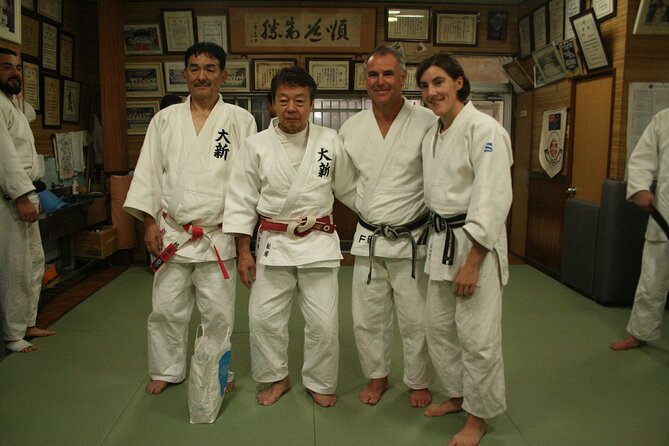
This experience begins at Daishinjudo Orthopedic Clinic in Tennoji Ward, Osaka. The address is 10-22 Funahashichō, Osaka 543-0024, and you’ll head back there afterward as well, so the logistics stay clean.
You’re not just buying a workout ticket. The meeting spot matters because it sets the tone: you’re entering a real local setup, not a tourist gym. And since the dojo is described as a traditional judo space for immersive learning and meditation, you can expect the class to be more mindful than random fitness.
Also, keep in mind the session length: about 1 hour 30 minutes. That’s long enough to teach basics, practice them, and get some live grappling/randori time, but short enough that you won’t lose the whole day to training.
Finally, group size is capped at 6 travelers. In a class like this, that difference shows up fast—more turns on the mat, more chances to ask questions, and fewer long waits.
The Instructor Connection: Akihiro Matsuura’s Decades of Judo
The heart of the experience is the sensei teaching it. The Daishin Judo Club dojo was founded in 1976, and the instructor, Akihiro Matsuura, is an 8th dan black belt with almost 50 years of teaching experience.
That’s not just a resume detail. In judo, years of instruction usually means the basics are taught in a way you can actually use. You’re not just learning moves; you’re learning how they should feel—balance, control, and safe movement.
Another practical plus: Akihiro Matsuura can speak Japanese, English, and Korean. If you’ve ever struggled in a class where the coach speaks only one language, you’ll appreciate this. It means you’re more likely to understand the corrections you receive, and you’ll be able to ask questions during the lesson instead of guessing.
What Happens in the 90 Minutes: Beginner vs. Experienced Focus
This class is structured so both first-timers and experienced judoka can get something useful. Here’s how the session typically breaks down, depending on your level.
Put this one next to a few other Osaka options first:



If It’s Your First Time: Posture, Ukemi, and Safe Throwing Basics
If you’re new to judo, you can expect to start with basics: posture and fundamental movements. Then you’ll work on grappling, and you’ll practice ukemi, the break-fall technique. That part is important. Most people are nervous about getting thrown; ukemi is how you learn to protect yourself so you can actually participate.
From there, you’ll practice some basic throwing forms. The goal at this level isn’t to become a throw machine in one sitting. It’s to learn the shape of the technique and what your body is supposed to do—how balance and timing matter.
If You Already Have Experience: Nage-waza and Ne-waza
If you’ve trained judo before, the class can shift toward nage-waza (throwing techniques) and ne-waza (ground techniques). You’ll have room to learn throw options and ground-control ideas that fit what the club is emphasizing that day.
One of the smartest things about the design is that you don’t need to feel locked into only one type of practice. You can also ask questions about the history of judo. That matters because when you understand the tradition behind the rules and the etiquette, you tend to take training more seriously and waste less energy trying random moves.
Etiquette and Respect: Why This Feels Different From a Typical Workout
Judo training is full of small rules that control the room: how you behave, how you interact, how you treat training partners. This class specifically emphasizes respect, discipline, and etiquette.
In practical terms, that means you’re likely to feel comfortable even if you’re nervous. The dojo setting described here is meant for learning and focus, so it’s less about ego and more about doing the basics correctly and safely.
The other cultural value is that you’re learning Japanese customs through movement, not through a lecture. When someone corrects your posture or teaches you ukemi, the correction isn’t only technical—it’s also a reminder about training as a shared responsibility.
And based on feedback from the class environment, the people on the mat tend to be friendly and willing to teach. That’s exactly what you want as a visitor: strong instruction, but not a hard, unfriendly wall between you and everyone else.
Ukemi: The Safety Skill That Makes Judo Click
If you do one thing in judo, make it ukemi. This class includes break-fall training as part of the beginner track, and that’s where you’ll probably feel the fastest improvement.
Here’s why ukemi is so valuable for you as a traveler:
- It turns fear into technique. Once you understand how falling should be done safely, you can participate without shutting down.
- It improves coordination. Even short practice helps you read where your body is going and how to protect yourself.
- It makes later throwing and grappling less stressful.
I also like that the class doesn’t skip directly to flashy throws. Real judo is built on the ability to move safely and stay present. Ukemi is the foundation that lets you train without constantly being afraid of injury.
Throws and Grappling: Nage-waza Foundations Without the Chaos
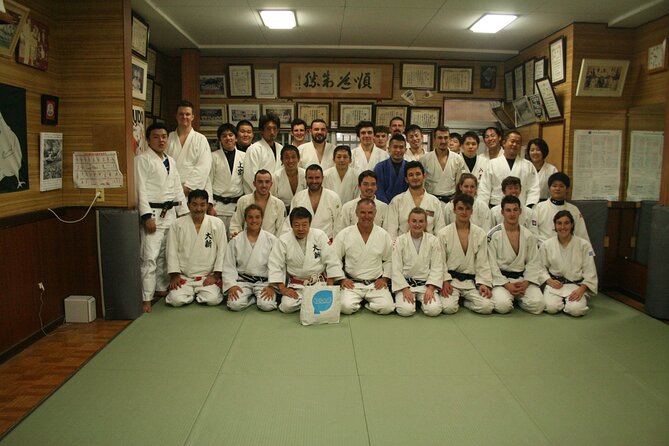
Throwing in judo is both technical and full of rhythm. In this class, you’ll practice basic throwing forms if you’re new. If you’re experienced, you can focus on nage-waza techniques.
What makes this kind of practice worth your money—especially for visitors—is that you get a guided path. You’re not just thrown into random sparring and told good luck. You get posture and control, then practice the throw shape, then integrate it into training with the help of the instructor.
Also, watch how balance and control show up in your body. Even short training sessions tend to reveal a truth: the more stable you are, the less you rely on brute strength. Judo is a control sport, not a strength sport.
Ne-waza and Randori: Where the Session Gets Real
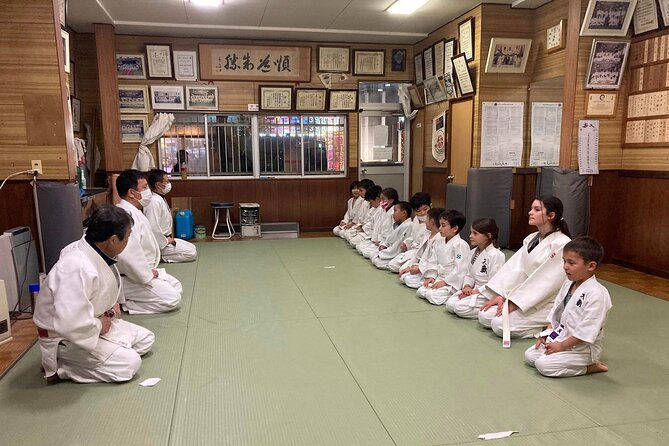
For experienced participants, ground techniques (ne-waza) are included. For everyone, the lesson can include live grappling work, described as randori. Randori is often the part that feels most intense, but also the part that makes the class memorable.
You should go in with the right mindset:
- Expect to work hard and move constantly.
- Don’t treat it like a match. Treat it like a learning situation where each round teaches you something about balance, grip, and timing.
- Ask questions when you get stuck. The instructors are there to guide you.
One reviewer highlight is that randori can be intense and enjoyable. That matches what makes judo fun: it stops being theoretical. You learn through resistance, not just through drills.
If you want an authentic feel of how judo training plays out, randori is a big part of that answer. It’s not just culture; it’s practice.
Price and Value: Is $97.55 Fair for Osaka Judo?
At $97.55 per person for about 90 minutes, the price isn’t bargain-bin. But for a small-group dojo session with an 8th dan instructor and hands-on coaching, it can be solid value—especially if you’re trying to do something you can’t easily replicate on your own.
Here’s how I think about value for this type of class:
- Small group size (max 6) reduces the “I’m paying for a crowd” problem. You’re paying for instruction and feedback.
- Instructor quality (Akihiro Matsuura, 8th dan) means corrections likely happen in real time and in a judo-accurate way.
- Structured learning means your time isn’t wasted. You cover posture, grappling, ukemi, and basic throwing forms (or nage-waza and ne-waza if experienced).
- Cultural context adds value beyond the workout. You’re learning etiquette and judo tradition through practice.
If you’re only after a generic fitness class, you’ll find cheaper options. But if you want an authentic Osaka martial arts moment with real instruction, this is a good way to spend your time—and it fits well into a travel schedule because it’s only 1.5 hours.
How to Plan Your Day Around This Dojo Session
This activity runs about 1 hour 30 minutes, starting and ending at the same meeting point near the clinic. That makes it easier to plug into your itinerary without long transfers.
A few planning tips that will help:
- Give yourself a little buffer before start time. Even if it’s near public transportation, you still want time to find the exact spot calmly.
- Wear a mindset that’s ready to learn. You’ll get the most out of it if you treat corrections as part of the experience.
- If you’re a first-timer, focus on safety skills like ukemi and posture. Those make everything else easier.
Also, the class uses mobile tickets, so you’ll want your confirmation handy on your phone.
If you’re the type who likes asking questions, this is a great match. The instructor can explain history and techniques, and you can participate even if you’re not fluent in Japanese.
Who This Judo Class Is Best For
I think this works especially well for:
- First-timers who want to learn judo basics without feeling lost
- Travelers who care about etiquette and discipline, not just taking photos
- People who want a clear path: posture → ukemi → grappling → throws
- Experienced judoka who want nage-waza and ne-waza practice in an organized setting
It may be less ideal if you want a passive cultural activity. This is training. You’ll be moving, falling (safely), and grappling.
It’s also worth thinking about comfort with intensity. Randori can be intense, even when everyone is friendly and supportive. If you have a medical concern, you’ll want to judge what you can safely participate in.
Booking Sense: Should You Book This Osaka Judo Class?
Book it if you want a real dojo practice experience in Osaka—small group, instructor-led, and built around judo’s respectful training culture. The fact that the instructor is an 8th dan with nearly 50 years of teaching is a big deal, and the beginner-to-experienced structure makes it easy to justify the time and cost.
Skip it only if you’re looking for something fully observational or low-impact. This is about learning through movement. If that matches your style, this is a smart, memorable way to spend 90 minutes in Osaka.
FAQ
Where does the judo class start?
The class starts at Daishinjudo Orthopedic Clinic, 10-22 Funahashichō, Tennoji Ward, Osaka, 543-0024, Japan.
How long is the judo class?
The duration is about 1 hour 30 minutes.
What is the price per person?
The price is $97.55 per person.
How big is the group?
The maximum group size is 6 travelers.
Is this class suitable for beginners?
Yes. If it’s your first time, you’ll practice basic posture and movements, learn grappling basics, train ukemi (break falling), and work on basic throwing forms.
Can experienced judoka participate?
Yes. If you already have judo experience, you can learn throwing techniques (nage-waza) and ground techniques (ne-waza), and you can ask about judo history.
Does the instructor speak English?
Yes. The instructor can speak Japanese, English, and Korean.
How do I get the ticket?
You’ll receive a mobile ticket.
Is there free cancellation?
Yes. You can cancel for a full refund up to 24 hours before the experience start time.
Take Home Something You Made
- Sushi Making Osaka Roll and Authentic Japanese Sushi Class★ 5.0 · 1,220 reviews
- Matcha Making Class in Osaka with Authentic Japanese Sweets Set★ 5.0 · 509 reviews
- Osaka: Ramen and Gyoza Cooking Class in Dotonbori★ 5.0 · 378 reviews
- Osaka Cooking Class: Okonomiyaki &Japanese cuisines experience★ 5.0 · 261 reviews
- Osaka: Roll and Authentic Sushi Making Class in Dotonbori★ 4.9 · 239 reviews
More Tour Reviews in Osaka
- Osaka Go Karting Tour with Funny Costume★ 5.0 · 2,658 reviews
- Osaka Castle: Museum and Tower Entry Ticket★ 4.5 · 2,380 reviews
- Osaka: Shinsekai Food Tour with 13-15 Dishes at 5 Eateries★ 4.8 · 2,204 reviews
- Osaka Food Tour: 13 Dishes at 5 Local Eateries★ 5.0 · 2,149 reviews
- Hungry Osaka Street Food Tour:15 Tastings & 3 Drinks with a Local★ 5.0 · 1,727 reviews
Blades Out: More Samurai Sessions
- Samurai Training Experience KENDO in Osaka★ 5.0 · 515 reviews
- OSAKA NIGHT FUSION Japanese Taiko Kabuki Samurai Dance Show★ 4.8 · 155 reviews
- Osaka: Samurai Training Experience KENDO in Osaka★ 5.0 · 111 reviews
- Osaka: A Modern Samurai, Kabuki, Taiko, & Dance Show★ 4.5 · 66 reviews
- Osaka 2-Hour Genuine Kendo / Samurai Experience In Japan★ 5.0 · 65 reviews
The Newest Osaka Write-Ups
- Private Photoshoot in Osaka with a Professional Photographer
★ 5.0 · 3 reviews - Osaka Early Morning Osaka Castle Tour Avoid Crowds
★ 5.0 · 3 reviews - Nara Private Tour with Pick and Drop and English Speaking Driver
★ 3.5 · 3 reviews - Osaka: Modern Vegetarian Sushi Cooking Class
★ 5.0 · 3 reviews - Nara Day Trip from Osaka with a Licensed Guide
★ 5.0 · 3 reviews
Osaka Samurai & Ninja Experiences, compared.
 ★ 5.0Samurai Training Experience KENDO in OsakaFrom $131515 reviews
 ★ 4.8OSAKA NIGHT FUSION Japanese Taiko Kabuki Samurai Dance ShowFrom $40155 reviews
 ★ 5.0Samurai Training Experience KENDO in OsakaFrom $127111 reviews
 ★ 4.5A Modern Samurai, Kabuki, Taiko, & Dance ShowFrom $1966 reviews
 ★ 5.0Osaka 2-Hour Genuine Kendo / Samurai Experience In JapanFrom $11865 reviews
 ★ 4.9Learn Bushido – Trial Slashing with Samurai SwordFrom $9259 reviews
 ★ 5.0Samurai Show, Tea Ceremony, Japanese Traditional ActivitiesFrom $4456 reviews
 ★ 5.0Private Samurai Experience – Train with Sword MasterFrom $15836 reviews
Browse the lists this tour appears in