
Reviewed · OSAKA SAMURAI & NINJA EXPERIENCES
Osaka: Learn Bushido – Trial Slashing with Samurai Sword
Katana practice, but with manners. This 1-hour Osaka Castle–area bushido session lets you dress up, bow properly, and learn sword fundamentals before you try trial slashing yourself. I like how it mixes discipline (bushido mindset) with hands-on mechanics (stances, pulls, and sheathing), and you get photos so you can remember the moment safely.
Two things I really enjoyed: the structured warm-up that starts with etiquette and ends in technique, and the clear progression from basic movements to actual cutting. One thing to consider: the experience is short on the clock, but you’ll need time to change clothes and arrive early, so plan your Osaka sightseeing day around that window.
In This Review
- Key Takeaways Before You Go
- Where Samurai Honor Is, and Why This Osaka Castle Area Fits
- The 30-Minute Early Arrival: Costume, Bowing, and the Dojo Setup
- Sword Etiquette and Samurai Manners: What You Learn Before Cutting
- From Iai Practice to Real Technique: Battou, Chiburui, Nottou
- The Stances and the hi-nari Sound: Why the Mechanics Matter
- Trial Slashing With a Rolled Straw: Your One Job
- Photo Shooting and English Support: Catch the Moment Without Stress
- Price and Value: What $92 Actually Buys You
- Who This Samurai Sword Trial Works Best For
- Practical Tips to Make the Hour Go Smoothly
- Should You Book This Samurai Sword Trial Near Osaka Castle?
- FAQ
- How long is the Osaka bushido and trial slashing experience?
- How big is the group?
- Where do I meet, and what landmark should I look for?
- What time should I arrive before the scheduled start?
- What is included in the price?
- What language is available for instruction?
- What should I bring with me?
- Do I get picked up from a hotel or train station?
- What do I cut during the trial slashing?
- Is movie shooting included?
Key Takeaways Before You Go
- Near Osaka Castle without the hassle: a focused samurai experience close to the castle area
- You practice the movements, not just watch: stances and iai steps are the core of the lesson
- Trial slashing with a real katana: you cut a rolled straw as your practice target
- Photos are part of the deal: staff handle the camera moments and send files by email
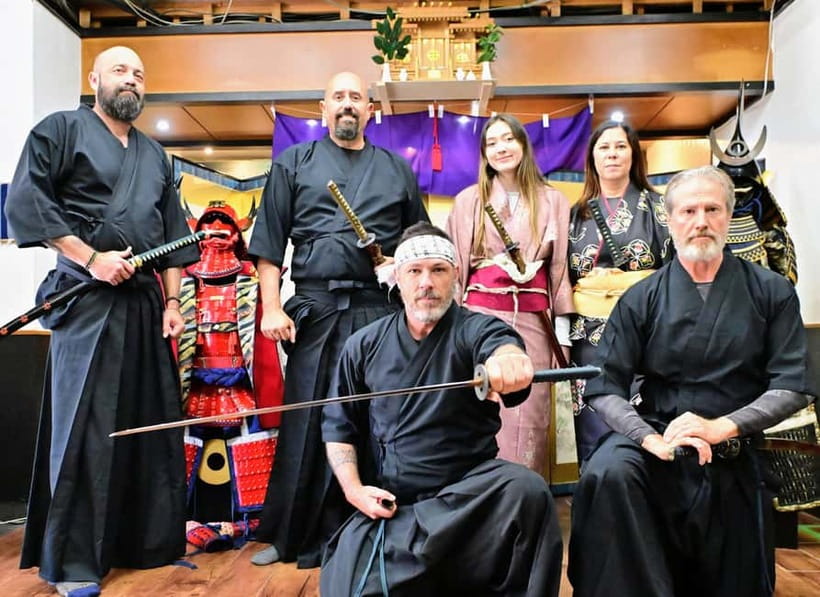
- Small group size: limited to 4 participants for more individual attention
- Bushido framing throughout: bowing, etiquette, and responsibility are taught alongside technique
Pick the sword back up with these sessions


Where Samurai Honor Is, and Why This Osaka Castle Area Fits
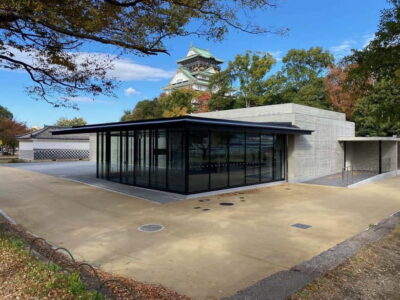
This is based at Bushi no Homare (Samurai Honor) in Osaka, in the Joto-ku area: Excellence Takayama 1F, 2-3-19 Shiginonishi, Joto-ku, Osaka-shi, Osaka 536-0014. Meeting is at a simple landmark: a wooden sign that reads Honor of the Samurai in front of the shop. The address shown on Apple Maps can be wrong, so I’d trust Google Maps for the correct spot.
The location makes sense for sightseeing. If you’re doing Osaka Castle and want something hands-on right afterward, this keeps you from bouncing across the city. One easy clue: the building is reachable from Osakajokoen Station, and you’re walking across the river area.
The 30-Minute Early Arrival: Costume, Bowing, and the Dojo Setup
The schedule is listed as a 1-hour experience, but you should treat it like a “lesson + changing time” appointment. You’re asked to arrive 30 minutes before your reserved time so you can get instructions and change into the costume.
When you show up, the first shift is practical: you change into samurai clothing—dogi and hakama—so the lesson is physical from the start. After that, the training begins with a bow before a shrine set in the dojo. That bow isn’t just ceremonial; it sets the tone that this is budo training, not entertainment.
You’ll also hear explanations that connect the sword to duty and restraint. The program emphasizes that the sword is treated as the samurai’s responsibility, not a toy. You’ll even learn a traditional framing: the sword can’t be sold, because it’s considered the “soul” of the samurai.
Sword Etiquette and Samurai Manners: What You Learn Before Cutting
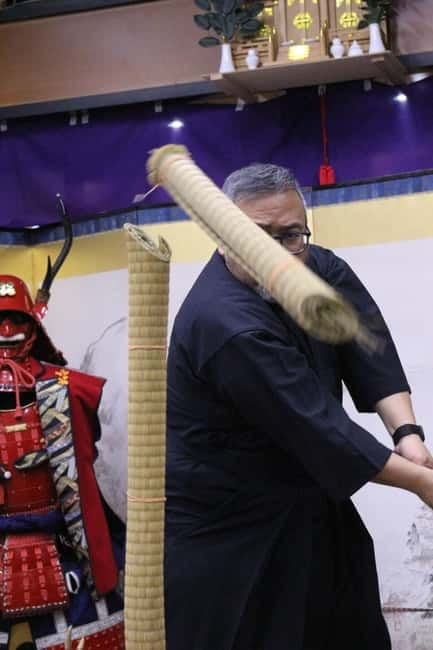
One of the smartest choices of this experience is that it doesn’t rush to swinging steel. You start with the story and the rules of respectful handling—because how you hold the sword matters as much as what you do with it.
You learn how samurai lived with their swords close by, even when resting or eating, and you get context for the responsibility behind carrying a deadly weapon. That might sound heavy for a short class, but the tone stays simple and instructional: this is meant to teach you how to move with care and attention.
There’s also a walking-and-belt component. You practice gestures for walking with a sword belt, which helps you understand the basics of posture before you ever pull a blade from the scabbard.



From Iai Practice to Real Technique: Battou, Chiburui, Nottou
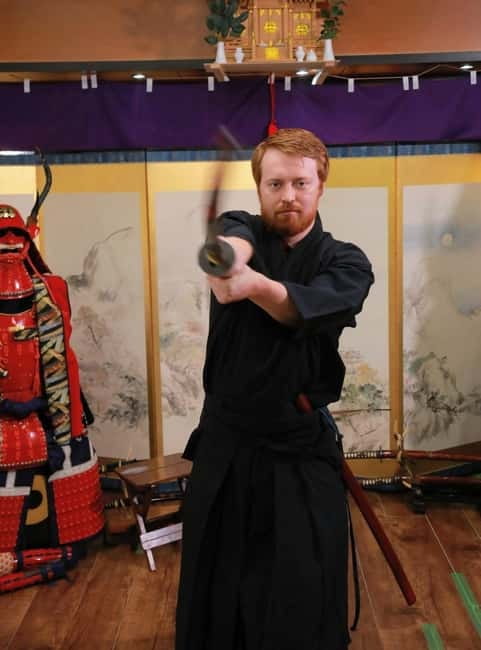
Next comes the technique foundation using an iai practice sword—a step that keeps you learning the sequence without turning the class into pure target-shooting.
The key movements you’ll work on are:
- Battou: pulling the sword out from the scabbard to cut
- Chiburui: the symbolic motion of removing blood from the blade after a cut
- Nottou: returning the sword to the sheath
I like this approach because it teaches you that the “cut” is only one part of the cycle. You’re learning transitions: start position, pull, follow-through, and then controlled re-sheathing. If you’ve ever watched sword videos online, you’ll notice most people get stuck on the dramatic cut; this lesson keeps bringing you back to the full sequence.
The Stances and the hi-nari Sound: Why the Mechanics Matter
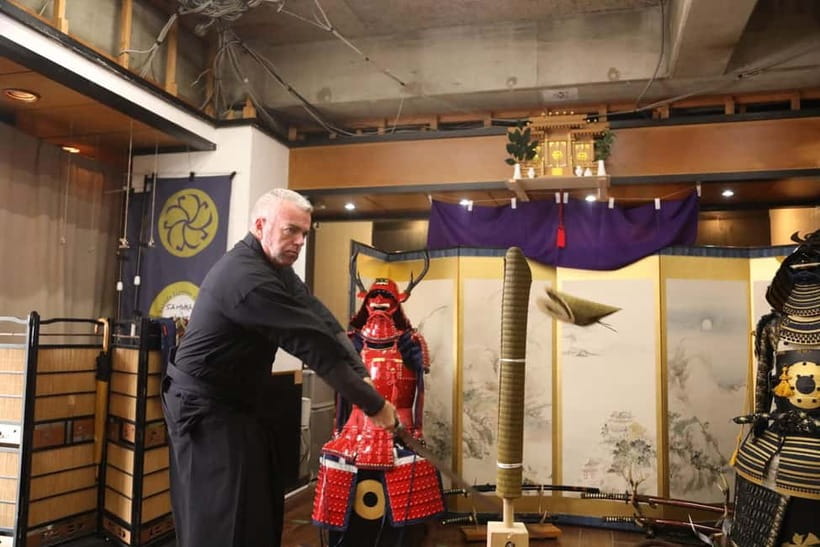
After the basics, you move into practicing fundamentals with guidance from the instructor. The class includes stances and kata-style components. You’ll work through positions like:
- Middle stance
- Upper and lower stance
- Side stance
- An eight-phase stance sequence
Then comes the fun part for many people: you practice swinging from those stances while focusing on how the sword moves. The program has a specific cue—when your swing is right, you can hear a sound from the sword described as hi-nari.
That detail matters for you because it gives a feedback loop. Even if you’re not a swordsport person, you’re not stuck guessing. You can compare what your body is doing with what the instructor is listening for.
Trial Slashing With a Rolled Straw: Your One Job
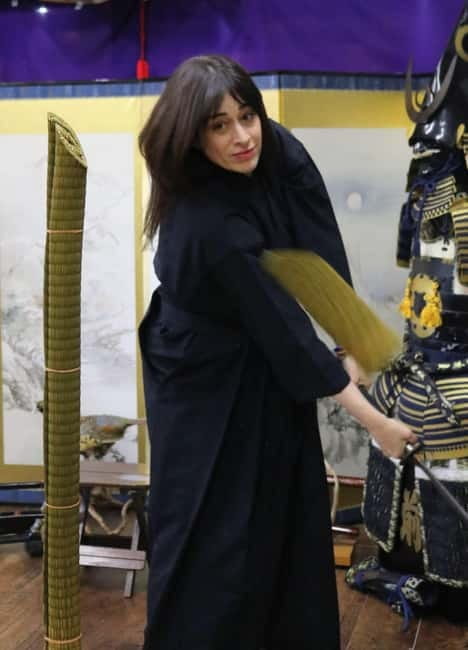
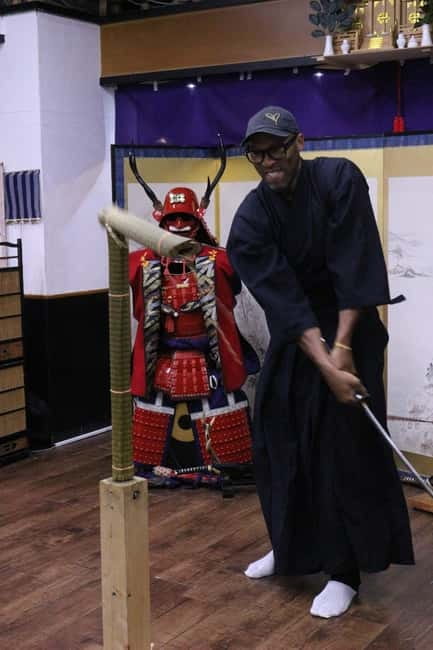
This experience’s headline moment is trial slashing. Before you try, a master swordsman demonstrates the cutting performance. Then you attempt your own cut using a real Japanese sword setup.
Your target for this specific session is a rolled straw. It’s not described as a movie-style dramatic arc; it’s a practice cut. The teaching goal is controlled form and a clean follow-through, not showing off.
One practical note: cutting takes concentration. Even with staff support, you’ll do best if you arrive rested and follow directions closely. Wear the simple outfit they ask for—a t-shirt—so you’re not fighting clothing layers during practice.
Photo Shooting and English Support: Catch the Moment Without Stress
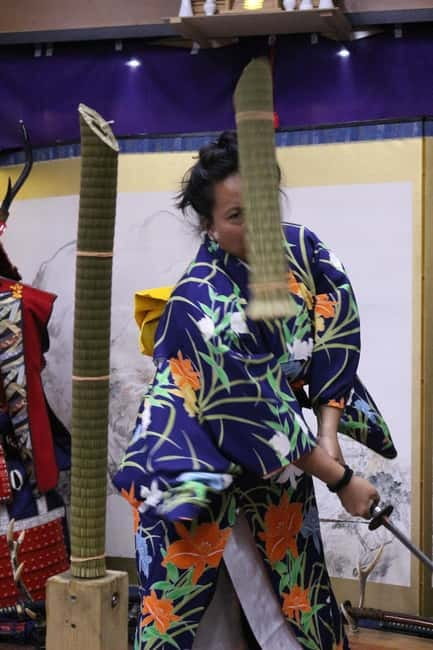
You get photo shooting included, and the photos are sent to a designated email address after. That’s a big deal because you’re focused on learning, not on coordinating your own camera.
The default language for interpreters is English. If you need another language—Italian, Spanish, French, Chinese, Thai, Indonesian—you need to inquire about staff availability before booking. They also note they may not be able to accommodate other languages due to limited staffing.
In a small class, you’ll usually get better results from an English-led session because the instruction is tight and quick. If you have any trouble understanding, ask early in the process so the instructor can adjust your pace.
Price and Value: What $92 Actually Buys You
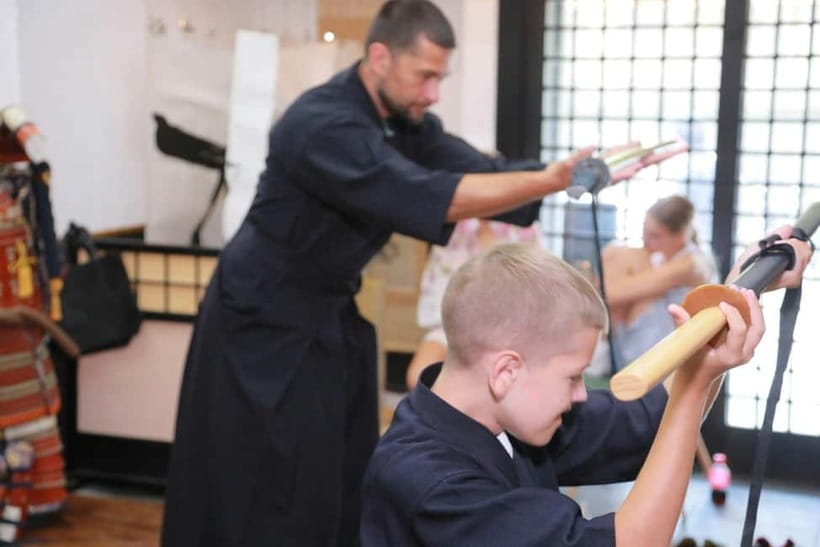
At $92 per person, this is not “cheap,” but it’s also not a generic costume photo. You’re paying for a real lesson structure, certified instruction, and the ability to handle and practice sword movements safely within the program format.
Here’s where the value comes from:
- Certified professional instructor and hands-on coaching
- Samurai clothing included (dogi and hakama)
- Trial slashing with a real katana as part of the teaching
- Photos included (sent by email)
- Tax and tips included, which removes one common “wait, what else?” surprise
What’s not included: pickup/drop-off from stations or hotels, transportation, and movie shooting (listed as a paid option). So if you’re budgeting your day, account for getting yourself there.
Who This Samurai Sword Trial Works Best For
This is ideal if you want:
- A memorable Osaka Castle–area activity that feels authentic, not staged
- A short, well-structured class instead of a half-day tour
- A chance to learn bushido framing alongside practical sword movements
It’s also a strong pick for families where age fits. The program isn’t suitable for children under 10, and it lists constraints like baby strollers not allowed. That means you’ll want to travel with kids old enough to follow directions and stand safely during practice.
If you have altitude sickness, the experience is listed as not suitable. If you’re very elderly (over 95), it’s also not recommended.
Practical Tips to Make the Hour Go Smoothly
- Arrive 30 minutes early. Changing clothes takes time and you’ll start the lesson calmer.
- Bring only what’s needed. You’re told to bring a t-shirt.
- Plan around the time you’ll need afterward. Trial cutting isn’t a long event, but you’ll still want a little buffer for photos and wrapping up.
- Don’t plan a tight connection right after. Since the session has instructor-led flow, it’s best to avoid sprinting from this to your next stop.
Should You Book This Samurai Sword Trial Near Osaka Castle?
If you’re in Osaka and you want one activity that feels hands-on, respectful, and very “Japan” without needing prior martial arts experience, I’d book it. The biggest reason is balance: you don’t just watch cutting—you practice the sequence, learn stances, and then try trial slashing with a real sword, all in a small group.
I’d skip it if you’re expecting a long, detailed sword history lecture or a performance-only show. This is training with etiquette first, technique second, and cutting as the payoff—short, focused, and direct. If that sounds like your kind of travel, you’ll likely find it worth the price.
FAQ
How long is the Osaka bushido and trial slashing experience?
The experience duration is listed as 1 hour.
How big is the group?
The class is limited to a small group of up to 4 participants.
Where do I meet, and what landmark should I look for?
Meet at the wooden sign that reads Honor of the Samurai in front of the store. It’s described as a rack with Samurai Honor activity pamphlets.
What time should I arrive before the scheduled start?
You should arrive 30 minutes before your reserved experience time for instructions and changing clothes.
What is included in the price?
Included items are samurai clothing, a certified professional instructor, tax, tips, and photo shooting (photos are sent to a designated email address).
What language is available for instruction?
The default interpreter language is English. The tour says other languages may be available if you inquire about staff schedules during reservation (Italian, Spanish, French, Chinese, Thai, Indonesian).
What should I bring with me?
You’re asked to bring a t-shirt.
Do I get picked up from a hotel or train station?
No. Pickup and drop-off at a train station or hotel are not included.
What do I cut during the trial slashing?
During trial slashing, you cut a rolled straw.
Is movie shooting included?
Movie shooting is listed as a paid option, so it’s not included by default.
More Tour Reviews in Osaka
- Osaka Go Karting Tour with Funny Costume★ 5.0 · 2,658 reviews
- Osaka Castle: Museum and Tower Entry Ticket★ 4.5 · 2,380 reviews
- Osaka: Shinsekai Food Tour with 13-15 Dishes at 5 Eateries★ 4.8 · 2,204 reviews
- Osaka Food Tour: 13 Dishes at 5 Local Eateries★ 5.0 · 2,149 reviews
- Hungry Osaka Street Food Tour:15 Tastings & 3 Drinks with a Local★ 5.0 · 1,727 reviews
Blades Out: More Samurai Sessions
- Samurai Training Experience KENDO in Osaka★ 5.0 · 515 reviews
- OSAKA NIGHT FUSION Japanese Taiko Kabuki Samurai Dance Show★ 4.8 · 155 reviews
- Osaka: Samurai Training Experience KENDO in Osaka★ 5.0 · 111 reviews
- Osaka: A Modern Samurai, Kabuki, Taiko, & Dance Show★ 4.5 · 66 reviews
- Osaka 2-Hour Genuine Kendo / Samurai Experience In Japan★ 5.0 · 65 reviews
The Newest Osaka Write-Ups
- Private Photoshoot in Osaka with a Professional Photographer
★ 5.0 · 3 reviews - Osaka Early Morning Osaka Castle Tour Avoid Crowds
★ 5.0 · 3 reviews - Nara Private Tour with Pick and Drop and English Speaking Driver
★ 3.5 · 3 reviews - Osaka: Modern Vegetarian Sushi Cooking Class
★ 5.0 · 3 reviews - Nara Day Trip from Osaka with a Licensed Guide
★ 5.0 · 3 reviews
Osaka Samurai & Ninja Experiences, compared.
 ★ 5.0Samurai Training Experience KENDO in OsakaFrom $131515 reviews
 ★ 4.8OSAKA NIGHT FUSION Japanese Taiko Kabuki Samurai Dance ShowFrom $40155 reviews
 ★ 5.0Samurai Training Experience KENDO in OsakaFrom $127111 reviews
 ★ 4.5A Modern Samurai, Kabuki, Taiko, & Dance ShowFrom $1966 reviews
 ★ 5.0Osaka 2-Hour Genuine Kendo / Samurai Experience In JapanFrom $11865 reviews
 ★ 5.0Samurai Show, Tea Ceremony, Japanese Traditional ActivitiesFrom $4456 reviews
 ★ 5.0Private Samurai Experience – Train with Sword MasterFrom $15836 reviews
 ★ 5.0Honor – Experience Samurai & traditional Culture to the fullestFrom $18132 reviews
Browse the lists this tour appears in