
Reviewed · OSAKA CRAFT & CULTURE WORKSHOPS
Samurai Calligraphy:Final brushstrokes of a lifetime before a War
A single character can say goodbye. In Osaka, this 90-minute session pairs Japanese shodo basics with a dramatic Samurai Calligraphy finale, so you leave with something you can feel, not just something you watch. I like that it’s structured and hands-on—stroke order, then your own chosen kanji—plus the guidance from Kaori and a helpful assistant in English or Chinese. One possible drawback: the concept centers on selecting a kanji with personal meaning, so you may want a little time in your head deciding what that character will be.
You’ll also learn why Japanese calligraphy cares so much about space—the beauty of margins and blank areas—rather than filling every inch of paper. And yes, the session uses a huge brush and a 150cm x 150cm sheet, which turns “writing neatly” into full-body control. If you prefer very fast, low-effort activities, plan for a calmer pace and a focus on doing the strokes right.
In This Review
- Key things I’d note before you go
- Entering shodo: how Japanese calligraphy teaches you to slow down
- The real heart of it: choosing your resignation character
- Stroke practice that actually matters: brush control for first-timers
- The oversized brush finale: full-body control on big paper
- Beauty of margins: why blank space is part of the art
- Rhythm and the taiko beats: writing with percussion energy
- Costumes, tools, and photos: what you get besides the art
- Where it happens: starting point in Joto Ward and how to plan your timing
- Who should book Samurai Calligraphy in Osaka
- Quick practical notes to make the most of your character choice
- Should you book this Samurai Calligraphy experience?
- FAQ
- How long is the Samurai Calligraphy experience?
- How many people are in the group?
- Is instruction available in English or Chinese?
- What’s included in the price?
- Are there any paid add-ons?
- Do I need calligraphy experience to participate?
- What is the cancellation policy?
Key things I’d note before you go
- 90 minutes total: 60 minutes of shodo practice plus 30 minutes on the final Samurai Calligraphy character
- Pick one resignation character: you decide the last kanji based on your own reflections and feelings
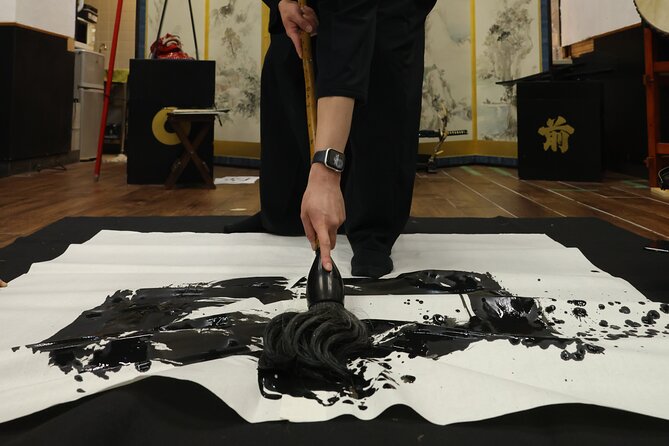
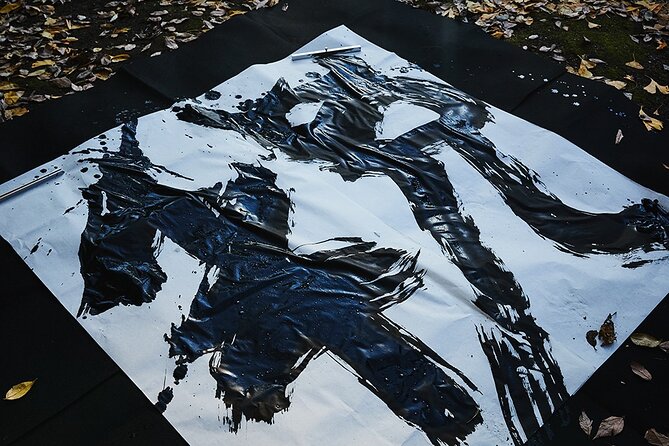
- Oversized brush experience: a big brush (more than five times usual) on a 150cm x 150cm sheet
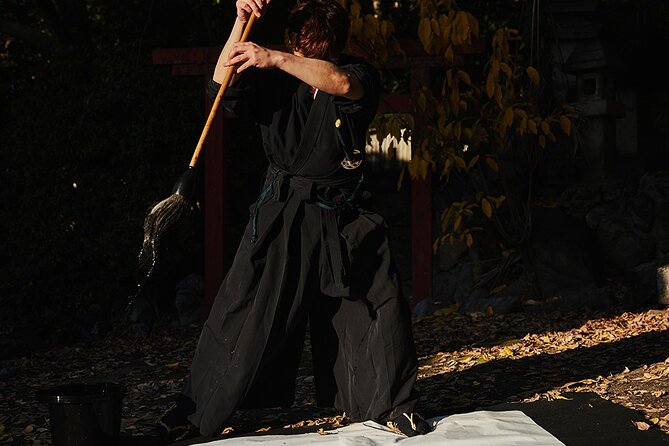
- Samurai outfit included: hakama and kimono pieces (not a full kimono set) for the performance-style writing
- Small group size: maximum of 8 people, so instruction and attention feel realistic
- Photo options: a professional photographer is included, with paid add-ons for movie shooting and extra hair styling
Pick the sword back up with these sessions


Entering shodo: how Japanese calligraphy teaches you to slow down
This experience is built like two lessons that connect. First comes Japanese shodo for about an hour, where you learn the basics in a way that actually translates into what you’ll do next. You’re not just handed a brush and told to copy something. You practice basic brush strokes and the stroke order for the kanji you’ve chosen, because in calligraphy the order matters almost as much as the shape.
What I like most here is that shodo isn’t presented as museum quiet. It’s taught as technique plus intention. Your instructor frames the idea of resignation—words written at the edge of life—as a way to think carefully. That mindset changes how you hold the brush and how hard you press, even if you’re a beginner.
And you’ll feel the pacing. Multiple reviews highlight the experience as beautiful and even meditative, and that matches the way the lesson flows: slow movements, deliberate strokes, and time to adjust when something doesn’t look right. If you’re traveling fast across Japan, this kind of focus can feel like a reset.
The real heart of it: choosing your resignation character
The “Samurai” part isn’t just costume and drama. The core activity is your own letter of resignation—a single kanji that functions like your last words before going to war in the Warring States Period, when life and death were close together.
Here’s how the selection process works:
- You decide on the last character. Each kanji has its own meaning, so you’re encouraged to reflect on your life and what you want that final mark to carry.
- You practice the stroke order of that character so the finished piece matches your intention.
- Then you create one character for resignation, thinking about who you want to leave behind and what feelings you want to carry forward.
This is where beginners can either shine or stall. If you already like words and symbols, you’ll probably have a great time turning feelings into form. If you don’t, you can still participate—but give yourself a little mental prep time before you arrive so your character choice feels personal instead of random.
Stroke practice that actually matters: brush control for first-timers
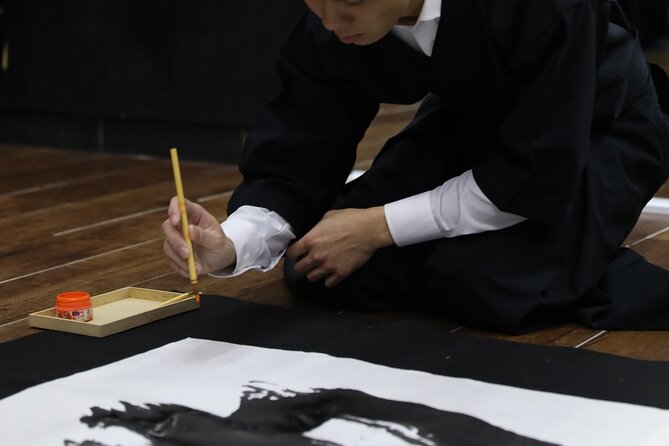
During the shodo portion, you build the skills you’ll rely on later. The emphasis is on:
- Basic brush strokes
- Stroke order for your chosen kanji
That might sound standard, but it’s the backbone of the craft. A kanji isn’t just a picture. It’s a sequence of movements that the brush makes visible. When you get the order wrong, the final balance often feels off—even if the kanji still “looks like” the intended one.
The experience also teaches you how to translate intention into pressure and timing. With calligraphy, the brush can’t be corrected in the same way as pencil. You learn quickly that a good stroke comes from committing to the movement.
In the reviews, the instructor is called Kaori, and people specifically mention how she guided them with history and culture and helped with choosing the symbols and writing practices. I’d expect that kind of coaching to show up for you too—especially since the group is capped at 8 travelers, meaning you’re less likely to get lost in the shuffle.
Make the souvenir yourself at more workshops
The oversized brush finale: full-body control on big paper
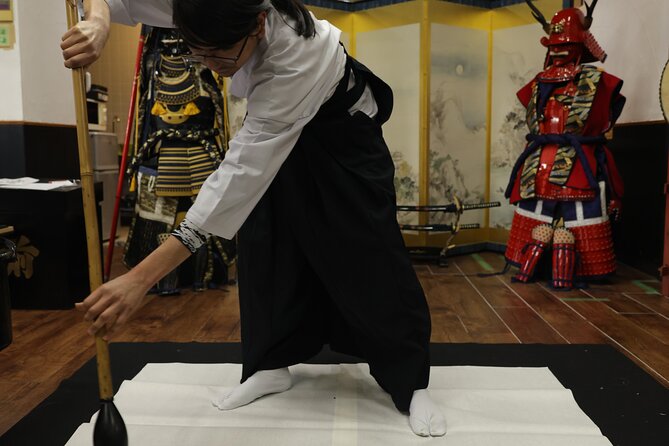
Then you move into the main performance: Samurai Calligraphy. This is about 30 minutes, but it feels like the climax of the whole experience because the scale changes everything.
You’ll create your one character using:
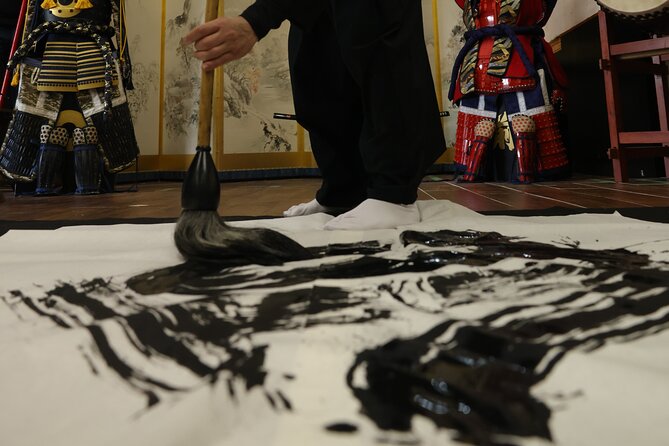
- An oversized brush (more than five times larger than usual)
- A massive 150cm x 150cm sheet of paper
This isn’t “try your best” scale-up. The brush is large enough that your body helps drive the shape. You’re not just moving your wrist. You’re using your whole movement—weight shifts, arm arcs, and rhythm—so the character has presence.
The instructor’s job here is to keep you from overthinking. Your job is to treat the brush like an extension of your intention. When it works, the strokes look powerful and a little fragile at the same time, which is exactly the aesthetic the lesson points to.
And yes, you’ll probably notice how much the paper size influences your decisions. Big space means you can’t micromanage tiny details. Instead, you learn to trust proportions and the flow of the stroke.
Beauty of margins: why blank space is part of the art
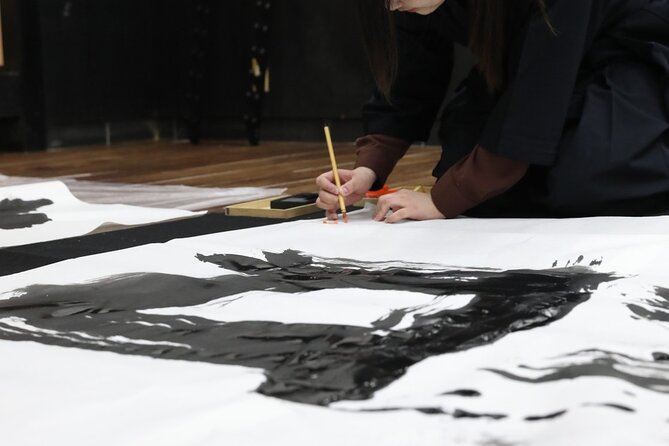
One of the most interesting ideas you’ll hear during this class is the Japanese sense of beauty called the beauty of the margins—basically, the space around the letter matters. The lesson highlights how calligraphy isn’t beautiful because everything is filled in; it can be beautiful because there’s room to breathe.
In practice, this affects:
- how centered your character feels
- how confident your stroke starts and ends
- whether the piece looks balanced rather than crowded
You might assume the goal is to make the character look perfect. But this style teaches that the margins carry weight too. The final character can look stronger when you leave space that feels intentional.
For me, that concept is also a travel lesson. In fast sightseeing, it’s easy to treat everything like a checklist. This activity treats space like meaning.
Rhythm and the taiko beats: writing with percussion energy
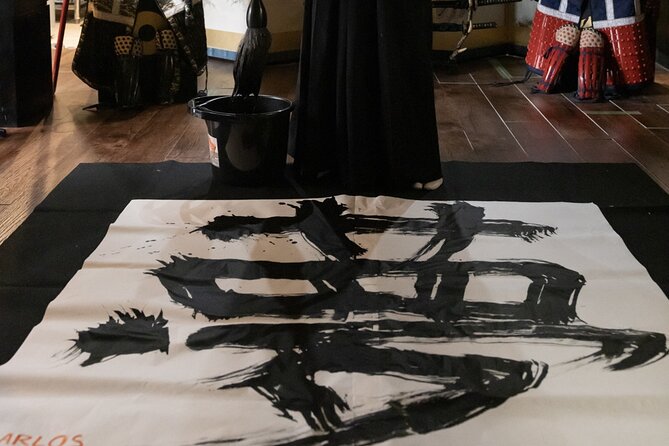
There’s also a performance element tied to rhythm. The lesson includes writing a bold circle, described as the ◯ written to the beat of taiko drums.
Even if you’ve never seen taiko up close, the point here isn’t technical percussion. It’s timing. Calligraphy benefits from rhythm because your brush movements become steadier and more connected, and your stance becomes calmer.
If you’re the type who freezes when you have to perform, this part can be unexpectedly helpful. A steady beat gives your body something to follow, and that removes some of the pressure of guessing.
Costumes, tools, and photos: what you get besides the art
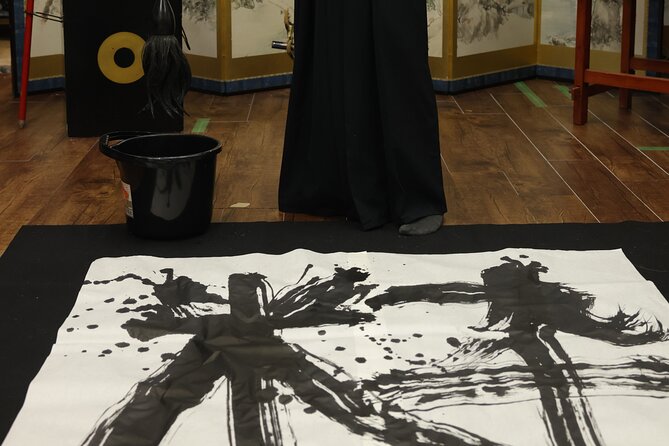
This is not just instruction. You also get a full “samurai moment” setup:
- Samurai outfit elements, including hakama and kimono pieces (not a full kimono set)
- Shodo tools provided
- An English or Chinese speaking assistant
- A professional photographer included
That matters for value. You’re paying for access to:
1) the teacher guidance,
2) the materials and large-paper setup,
3) the outfit for the visual story, and
4) documentation so you can remember the scale and the moment.
There are paid add-ons too:
- Movie shooting option for an extra fee
- Wagami option (collected hair + kanzashi) for an extra fee
If you’re someone who wants photos but not extra styling, you can likely keep it simple. The main photographer is already included, and you’ll want that because oversized brush calligraphy is hard to describe later. A photo shows the scale and your pose in the moment.
Where it happens: starting point in Joto Ward and how to plan your timing
The session meets at Japan, 536-0014 Osaka, Joto Ward, Shiginonishi, 2-chōme-3-19 エクセレンス高山 and ends back at the same meeting point. It’s listed as near public transportation, and you’ll receive a mobile ticket.
For timing, give yourself a little buffer. A 90-minute experience feels short, but you’ll want a few minutes to settle in, get dressed in the outfit pieces, and get oriented before the brush work starts. If you’re pairing this with other Osaka stops, I’d keep it away from anything that requires a tight rush right afterward.
Who should book Samurai Calligraphy in Osaka
This is a great fit if you want:
- a hands-on cultural experience, not a passive show
- a calm activity that still feels dramatic
- a personal souvenir made through effort and meaning
It also works well if you like structured instruction. The lesson explicitly includes stroke practice and order, so you’re not guessing.
Who might hesitate? If you strongly dislike reflection or you hate choosing from options with personal meaning, the resignation-character concept could feel like extra homework. You’re still guided, but you’ll be asked to think about what kind of feelings you want to leave behind and select a kanji accordingly.
The small group size (up to 8) helps either way, because you’re more likely to get attention when you need it—especially during the oversized brush part.
Quick practical notes to make the most of your character choice
Before you go in, it helps to think about your theme:
- a feeling you want to carry forward
- a person or relationship
- a kind of closure you want your character to symbolize
If you get stuck, don’t panic. The instruction includes practice and support, and the teaching approach (including guidance from Kaori in reviews) suggests you won’t be left floundering alone. Still, the smoother your choice is in your head, the more time you’ll have to focus on brush movement and balance.
Should you book this Samurai Calligraphy experience?
If you want one authentic Osaka activity that’s both meaningful and hands-on, yes, book it—especially if you’re the kind of traveler who enjoys learning a skill instead of just collecting photos. The value is strong because you get instruction, the oversized brush setup on large paper, samurai outfit pieces, and professional photos.
I’d especially recommend it if you’re traveling with limited time and want something that feels genuinely different from standard sightseeing. And if you like calm, focused experiences, the shodo practice and meditation-like pace can be a welcome change of rhythm.
If you’re worried about kanji selection, treat that as part of the experience, not a barrier. Your final character is the whole point. When you see your own chosen stroke balance on huge paper, it clicks.
FAQ
How long is the Samurai Calligraphy experience?
It’s about 1 hour 30 minutes total. You spend around 60 minutes on Japanese shodo and about 30 minutes on Samurai Calligraphy.
How many people are in the group?
The group size is capped at a maximum of 8 people.
Is instruction available in English or Chinese?
Yes. An English or Chinese speaking assistant is included.
What’s included in the price?
Included items are shodo tools, a samurai outfit with hakama and kimono pieces (not a full kimono set), a professional photographer, and assistant support for the class.
Are there any paid add-ons?
Yes. Movie shooting is a paid option, and Wagami (collected hair + kanzashi) is also available as a paid option.
Do I need calligraphy experience to participate?
Most travelers can participate. The class includes instruction on basic brush strokes and stroke order, so you can start as a beginner.
What is the cancellation policy?
You can cancel for free up to 24 hours in advance for a full refund. If you cancel less than 24 hours before the experience starts, the amount you paid will not be refunded.
More Tour Reviews in Osaka
- Osaka Go Karting Tour with Funny Costume★ 5.0 · 2,658 reviews
- Osaka Castle: Museum and Tower Entry Ticket★ 4.5 · 2,380 reviews
- Osaka: Shinsekai Food Tour with 13-15 Dishes at 5 Eateries★ 4.8 · 2,204 reviews
- Osaka Food Tour: 13 Dishes at 5 Local Eateries★ 5.0 · 2,149 reviews
- Hungry Osaka Street Food Tour:15 Tastings & 3 Drinks with a Local★ 5.0 · 1,727 reviews
Made in Osaka, by You
- Osaka: Tea Ceremony, Calligraphy, and Kimono Experience★ 4.9 · 130 reviews
- 1.5〜2 Hours Traditional Kintsugi Work Shop in Namba Osaka★ 5.0 · 75 reviews
- Osaka: Private Japanese Calligraphy Experience★ 5.0 · 66 reviews
- From Osaka: Sakai Knife Maker or Blacksmith Walking Tour★ 4.9 · 64 reviews
- Osaka: Traditional Japanese Ceramics Private Experience★ 5.0 · 57 reviews
Blades Out: More Samurai Sessions
- Samurai Training Experience KENDO in Osaka★ 5.0 · 515 reviews
- OSAKA NIGHT FUSION Japanese Taiko Kabuki Samurai Dance Show★ 4.8 · 155 reviews
- Osaka: Samurai Training Experience KENDO in Osaka★ 5.0 · 111 reviews
- Osaka: A Modern Samurai, Kabuki, Taiko, & Dance Show★ 4.5 · 66 reviews
- Osaka 2-Hour Genuine Kendo / Samurai Experience In Japan★ 5.0 · 65 reviews
The Newest Osaka Write-Ups
- Private Photoshoot in Osaka with a Professional Photographer
★ 5.0 · 3 reviews - Osaka Early Morning Osaka Castle Tour Avoid Crowds
★ 5.0 · 3 reviews - Nara Private Tour with Pick and Drop and English Speaking Driver
★ 3.5 · 3 reviews - Osaka: Modern Vegetarian Sushi Cooking Class
★ 5.0 · 3 reviews - Nara Day Trip from Osaka with a Licensed Guide
★ 5.0 · 3 reviews
Osaka Craft & Culture Workshops, compared.
 ★ 4.9Tea Ceremony, Calligraphy, and Kimono ExperienceFrom $96130 reviews
 ★ 5.01.5〜2 Hours Traditional Kintsugi Work Shop in Namba OsakaFrom $12575 reviews
 ★ 5.0Private Japanese Calligraphy ExperienceFrom $5166 reviews
 ★ 4.9From Osaka: Sakai Knife Maker or Blacksmith Walking TourFrom $6464 reviews
 ★ 5.0Calligraphy Workshop in Namba, DotonboriFrom $4957 reviews
 ★ 5.0Traditional Japanese Ceramics Private ExperienceFrom $9657 reviews
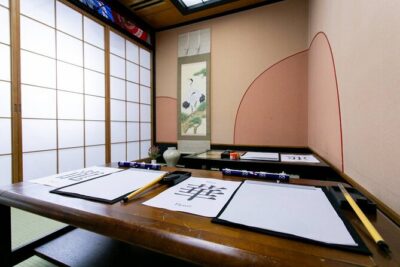 ★ 4.5Learning Zen of Japanese Calligraphy in kimono near Osaka CastleFrom $4353 reviews
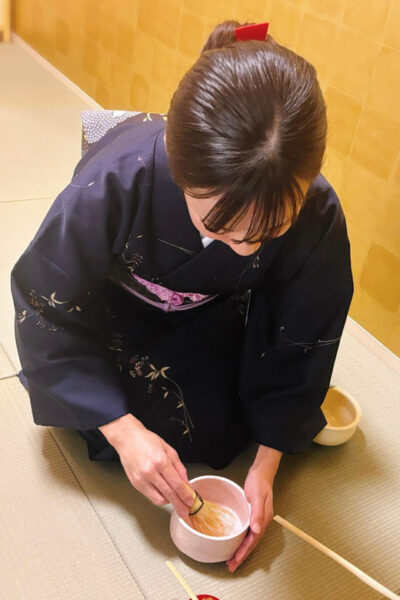 ★ 5.0Private Tea Ceremony and Calligraphy ExperienceFrom $6450 reviews
Browse the lists this tour appears in