
Reviewed · OSAKA CRAFT & CULTURE WORKSHOPS
Learning Shodo with a kimono and Trying Samurai Calligraphy
Write your name like a samurai. This kimono-and-shodo experience at Samurai Honor turns a simple brush lesson into a photo-ready memory, and you’ll practice your kanji name stroke-by-stroke. The main drawback is that the venue can feel basic and some noise from trains may reach the room.
I like the family angle here. The activity is built so even kids can join without feeling lost, and the class pace includes mindset, tools, and technique rather than throwing you straight into a final copy.
Plan a little ahead and you’ll be fine. You meet at the Samurai Honor sign and arrive about 30 minutes early to change, and you only need a plain T-shirt to get started.
In This Review
- Key highlights worth your time
- Arriving at Samurai Honor in Osaka (and finding the place fast)
- The kimono change + the moment your kanji name appears
- Shodo basics in 60 minutes: tools, stroke order, and control
- Mindset and tools (brush + posture)
- Brush technique: movement you can feel
- Kanji practice: stroke order matters
- The surprise moment: your name in calligraphy
- Final draft: keep your first work
- Trying Samurai Calligraphy: one oversized character and the idea of margins
- A character for resignation
- Beauty of margins: why space is part of the art
- The oversized brush on a huge 150cm x 150cm sheet
- Signing and ownership
- Photo shoot with your kimono: Yamato Nadeshiko or samurai mode
- Souvenirs that feel personal (not just extra stuff)
- Price and value: what $42 covers (and what to budget for)
- Language support and how to plan if you need a specific guide
- Who this experience suits best (and who should skip it)
- A fair look at the setting: noise and comfort considerations
- Should you book Samurai Honor’s shodo and samurai calligraphy?
- FAQ
- Where is the meeting point for Samurai Honor?
- What should I bring?
- How long does the experience take?
- What’s included in the price?
- What languages are available?
- Can kids participate?
- Is the activity wheelchair accessible?
- Is there free cancellation and reserve now pay later?
Key highlights worth your time
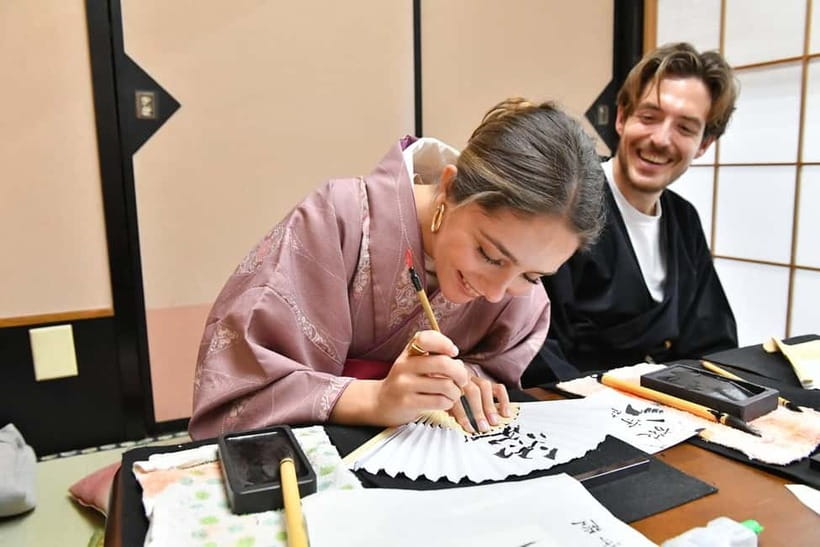
- Wear a kimono and get a guided photo shoot right after you create your calligraphy
- Your name in kanji, taught with stroke order and the meaning behind the characters
- Real shodo practice, from brush grip to controlled movements
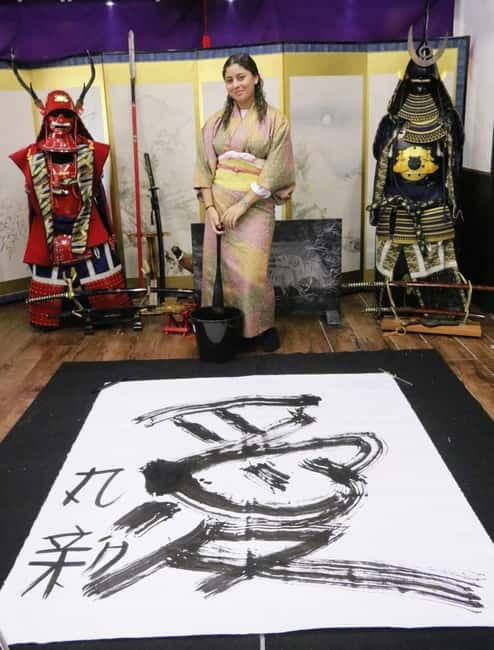
- Samurai-style calligraphy with an oversized brush on a huge sheet of paper
- A take-home souvenir bag with a character written by the master instructor
- Small group size (up to 10) with English as the default guide language
Pick the sword back up with these sessions


Arriving at Samurai Honor in Osaka (and finding the place fast)
This experience takes place in Osaka, at Bushi no Homare, also called Samurai Honor. The address listed is Excellence Takayama 1F, 2-3-19 Shiginonishi, Joto-ku, Osaka-shi, Osaka 536-0014, and the meeting landmark is a wooden sign rack that reads Honor of the Samurai.
Arrive 30 minutes early. That buffer matters because you’ll need time to change into your kimono or costume before instructions start.
One practical note: the guidance you’re given says the Apple Maps pin is wrong, and you should rely on Google Maps. If you’re the type who likes to show up early with zero stress, this matters a lot.
The kimono change + the moment your kanji name appears
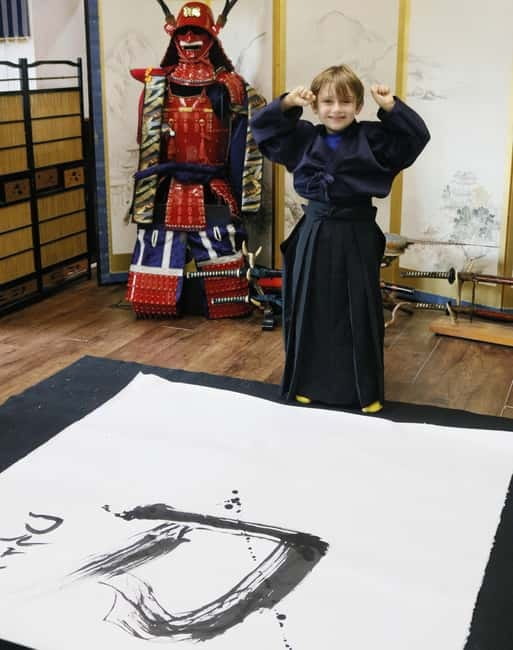
The class starts with preparation that’s more than a costume swap. Before you pick up the brush, you change into traditional Japanese clothing such as a kimono, and you’ll get a quick mindset shift toward calligraphy as a slow, deliberate art.
Then the key personal part kicks in: a master calligraphy instructor writes your name in kanji using characters chosen for you. The important detail is that each kanji character has meaning, so you don’t just copy shapes. You learn about the characters behind your name.
If you’re doing this with your child, this is where it becomes a family story. Your child watches the master write, you hear the meaning, and then you both move from admiration to actual practice.
Shodo basics in 60 minutes: tools, stroke order, and control
The shodo portion is designed like a sequence: mindset and tools first, then technique, then your name practice, and finally a draft you can take home.
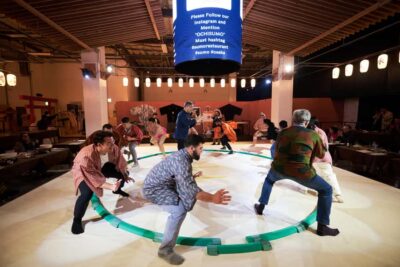
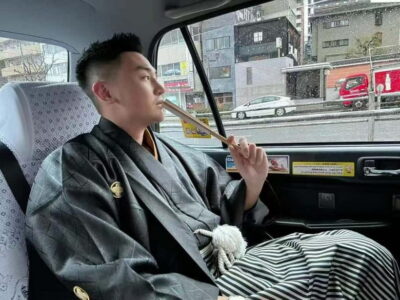
Dressed for old Osaka a while longer

Mindset and tools (brush + posture)
You’ll learn how to hold the brush and how to use the tools properly. Even if you think you’re not “artsy,” this part helps because it removes guesswork. Calligraphy looks fluid, but it’s built on correct grip and controlled motion.
Brush technique: movement you can feel
Next comes brush movement—how to guide pressure and direction so strokes look intentional rather than rushed. The session focuses on technique, not just results, which is great if you want something you can repeat later.
Kanji practice: stroke order matters
You’ll practice the stroke order of the kanji you selected earlier. A master demonstrates how to write the kanji with a brush, and you follow along while paying attention to technique.
This is one of the best value points of the experience. For tourists, copying a single symbol can feel random. Stroke order turns it into a skill you understand.
The surprise moment: your name in calligraphy
A featured part of the lesson is a surprise where the teacher writes the foreign names of participants in kanji characters they’ve chosen. You also learn the meaning of those characters.
Even if you’ve seen kanji before, learning your own name’s chosen kanji tends to land differently. It makes the experience personal in a way that a generic “learn calligraphy” demo can’t.
Final draft: keep your first work
At the end, you write a final draft. You can take home the calligraphy paper, and a few optional formats are offered, including kakejiku (hanging scroll). If you want that framed or display-ready style, check the options at booking time, because the standard and add-on packaging can differ.
Trying Samurai Calligraphy: one oversized character and the idea of margins
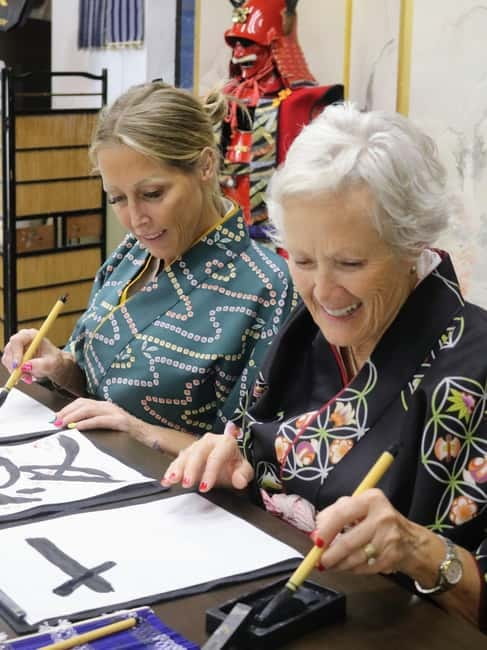
After the shodo practice, the program shifts gears into something more dramatic and story-driven.
A character for resignation
You start with a concept exercise: reflect on your life so far, imagine the story of the feelings you’d like to leave behind, and think about the composition of your last character in this world. Then you write one character for resignation.
This sounds philosophical, but it’s also practical. It gives your brain a reason to slow down and commit to the stroke choices.
Beauty of margins: why space is part of the art
Then the instructor introduces a Japanese aesthetic idea: beauty in the margins, meaning the empty space can be as beautiful as the letters themselves.
In real terms, it helps your calligraphy look balanced. If you try to fill every corner, the page can feel cramped. This lesson encourages restraint.
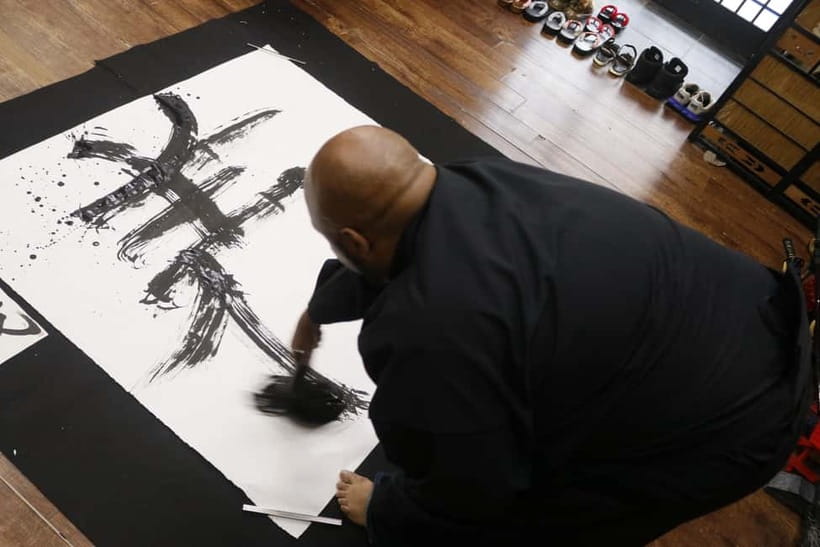
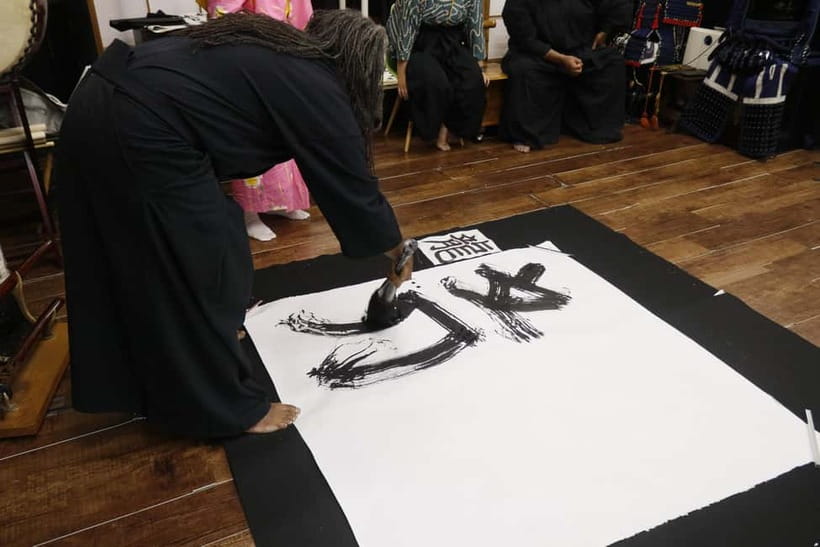
The oversized brush on a huge 150cm x 150cm sheet
Now for the spectacle. You use an oversized brush, more than five times larger than usual, and the artist creates one powerful yet fragile single character on a 150cm x 150cm sheet of paper.
Your body gets involved with the movement. That’s the reason this segment feels different from regular handwriting lessons. You’re not just controlling your wrist—you’re controlling your whole stance.
Signing and ownership
The artist also signs the work, identifying who wrote the last character and indicating the owner. It’s a small detail, but it turns the finished piece from a demo into something with identity.
Photo shoot with your kimono: Yamato Nadeshiko or samurai mode

After the calligraphy work, you’ll do a photo shoot. The experience is set up so you’re photographed dressed as a beautiful Yamato Nadeshiko or a brave samurai.
You also get photography delivered after the class via a designated email address (data sent to the email on file). This is an underrated convenience point: you don’t have to worry about post-processing or where the photos ended up.
If you’re traveling with kids, this is the “proof” moment. Calligraphy is quiet and focused. The photos turn it into something your family can actually share back home.
Souvenirs that feel personal (not just extra stuff)
You take home your first calligraphy work as a memento or souvenir. That’s the obvious keep.
But there’s also a character-based gift: the calligraphy master carefully writes the kanji character you attempted today on the surface of a bag, and you receive an original Samurai Honor souvenir bag that’s not available for sale elsewhere. This is a smart souvenir choice because it ties directly to what you practiced.
If you’re the type who likes practical gifts—things that match the activity rather than generic trinkets—this one works.
Price and value: what $42 covers (and what to budget for)
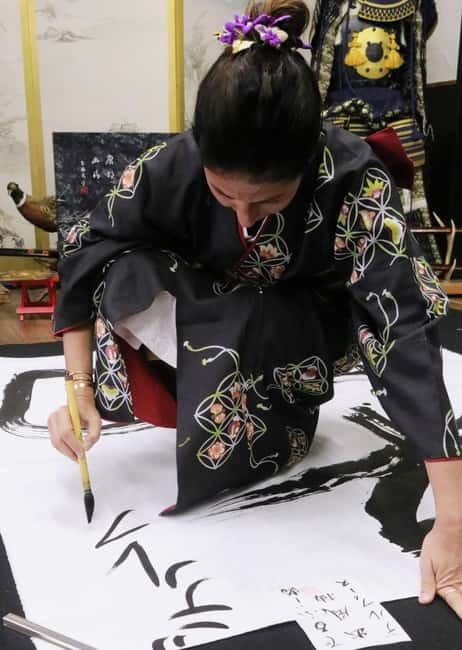
The price listed is $42 per person for an experience built around a kimono/costume, guided instruction, and take-home results.
What you get for that price includes:
- Kimono & Samurai costumes
- A certified professional instructor
- Taxes and tips
- Photography delivered by email
- An interpreter, with English as the default language
- A small group experience limited to 10 participants
What you should budget for separately:
- Station/hotel transfers (not included)
- Transportation to the meeting area
- Personal extras
There are also add-ons that can change the final total depending on what you choose, such as kakejiku or the Wasou bijin package (noted as included when selected). Some more complete attire elements for certain photo styles are listed as not included unless you choose the package.
My advice: treat the $42 as the core “skill + costume + photos + keepsake” value. If you want the more elaborate visual presentation, decide on add-ons early so there are no surprises on the day.
Language support and how to plan if you need a specific guide
English is listed as the default interpreter language. Other languages—Italian, Spanish, French, Chinese, Thai, and Indonesian—are available but only if staff availability allows. The guidance is to inquire before booking if you need a non-default language.
This matters because calligraphy instruction is tactile and visual. Even if you speak a little Japanese, the ability to understand instructions in your language can make the experience much more satisfying.
The experience is also listed as wheelchair accessible, and the group size is intentionally small (up to 10). That combination usually means less waiting and more personal attention.
Who this experience suits best (and who should skip it)
This is a strong fit if you want a hands-on cultural activity that looks good in photos and ends with something real you wrote yourself.
It’s especially well matched for families. The structure supports children, and calligraphy is noted as something many kids begin in Japan around school age. Still, there are limits: it’s not suitable for children under 5, babies under 1, and people over 95.
Also, it’s not listed as suitable for people with altitude sickness, and you should avoid it if you have that specific concern.
If you like quiet crafts, this works. If you want pure adrenaline, it won’t be that. Think focused, creative, and slightly ceremonial.
A fair look at the setting: noise and comfort considerations
One issue that comes up is the venue itself. Some people describe it as basic, with trains rattling by outside the door and the location feeling not ideal.
So here’s my practical advice: if you’re sensitive to background noise or you’re picky about the physical setting, go in with realistic expectations. The main value is the instruction, your output, and the photos—not a luxury studio.
Also remember: transportation isn’t included. If you’re planning from far across Osaka, factor that time in so you’re not stressed before you change into kimono.
Should you book Samurai Honor’s shodo and samurai calligraphy?
I think you should book it if you want a compact, memorable cultural experience that ends in real results: your kanji, a finished calligraphy piece, kimono photos, and a souvenir bag with your character.
Skip it or reconsider if you’re very location-sensitive, hate background noise, or are hoping for a high-end venue. The setting sounds practical rather than polished, and the experience depends on you showing up ready to learn and participate.
If your priority is a family activity that creates a shared memory plus take-home art, this is a strong choice.
FAQ
Where is the meeting point for Samurai Honor?
You meet at Samurai Honor, Bushi no Homare, at Excellence Takayama 1F, 2-3-19 Shiginonishi, Joto-ku, Osaka-shi, Osaka 536-0014. The landmark is a wooden sign that reads Honor of the Samurai, a rack in front of the store.
What should I bring?
Bring a T-shirt. You’ll change into your costume on-site.
How long does the experience take?
The listing says 1 hour. The program outline includes a shodo session and a samurai calligraphy segment, so check the starting time details when booking to understand the exact length for your slot.
What’s included in the price?
Kimono and Samurai costumes, taxes and tips, a certified professional instructor, and photography data sent to your designated email address are included. An interpreter is provided, with English as the default language.
What languages are available?
English is the default. Other languages (Italian, Spanish, French, Chinese, Thai, Indonesian) are available if staff availability allows, so it’s best to ask before booking for non-default languages.
Can kids participate?
The experience is not suitable for children under 5. It’s described as something children can participate in, and school-age kids are the most common starting point.
Is the activity wheelchair accessible?
Yes, it’s listed as wheelchair accessible.
Is there free cancellation and reserve now pay later?
Free cancellation is available up to 24 hours in advance for a full refund, and there’s a reserve now & pay later option (book now and pay later).
Made in Osaka, by You
- Osaka: Tea Ceremony, Calligraphy, and Kimono Experience★ 4.9 · 130 reviews
- 1.5〜2 Hours Traditional Kintsugi Work Shop in Namba Osaka★ 5.0 · 75 reviews
- Osaka: Private Japanese Calligraphy Experience★ 5.0 · 66 reviews
- From Osaka: Sakai Knife Maker or Blacksmith Walking Tour★ 4.9 · 64 reviews
- Osaka: Traditional Japanese Ceramics Private Experience★ 5.0 · 57 reviews
In Kimono Around Osaka
- Osaka: Sumo Show & Experience w/ Optional Kimono & Hot Pot★ 4.5 · 609 reviews
- Osaka: Tea Ceremony, Calligraphy, and Kimono Experience★ 4.9 · 130 reviews
- Learning Zen of Japanese Calligraphy in kimono near Osaka Castle★ 4.5 · 53 reviews
- Osaka: Kimono or Yukata Rental &Photos Service Options★ 4.9 · 25 reviews
- Kimono photoshoot-Includes 100 photo data★ 5.0 · 21 reviews
Blades Out: More Samurai Sessions
- Samurai Training Experience KENDO in Osaka★ 5.0 · 515 reviews
- OSAKA NIGHT FUSION Japanese Taiko Kabuki Samurai Dance Show★ 4.8 · 155 reviews
- Osaka: Samurai Training Experience KENDO in Osaka★ 5.0 · 111 reviews
- Osaka: A Modern Samurai, Kabuki, Taiko, & Dance Show★ 4.5 · 66 reviews
- Osaka 2-Hour Genuine Kendo / Samurai Experience In Japan★ 5.0 · 65 reviews
The Newest Osaka Write-Ups
- Private Photoshoot in Osaka with a Professional Photographer
★ 5.0 · 3 reviews - Osaka Early Morning Osaka Castle Tour Avoid Crowds
★ 5.0 · 3 reviews - Nara Private Tour with Pick and Drop and English Speaking Driver
★ 3.5 · 3 reviews - Osaka: Modern Vegetarian Sushi Cooking Class
★ 5.0 · 3 reviews - Nara Day Trip from Osaka with a Licensed Guide
★ 5.0 · 3 reviews
Osaka Craft & Culture Workshops, compared.
 ★ 4.9Tea Ceremony, Calligraphy, and Kimono ExperienceFrom $96130 reviews
 ★ 5.01.5〜2 Hours Traditional Kintsugi Work Shop in Namba OsakaFrom $12575 reviews
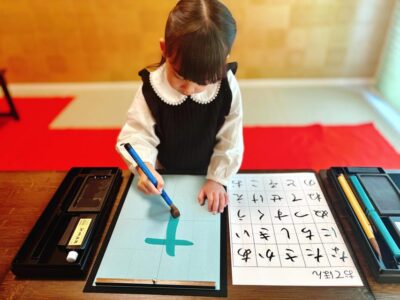 ★ 5.0Private Japanese Calligraphy ExperienceFrom $5166 reviews
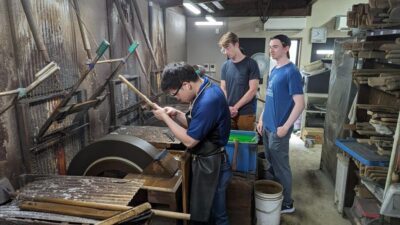 ★ 4.9From Osaka: Sakai Knife Maker or Blacksmith Walking TourFrom $6464 reviews
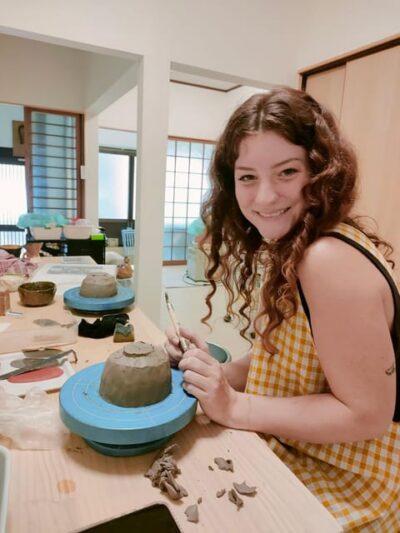 ★ 5.0Traditional Japanese Ceramics Private ExperienceFrom $9657 reviews
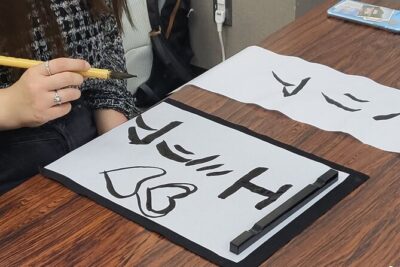 ★ 5.0Calligraphy Workshop in Namba, DotonboriFrom $4957 reviews
 ★ 4.5Learning Zen of Japanese Calligraphy in kimono near Osaka CastleFrom $4353 reviews
 ★ 5.0Private Tea Ceremony and Calligraphy ExperienceFrom $6450 reviews
Browse the lists this tour appears in