
Reviewed · OSAKA COOKING CLASSES
Japanese Traditional Sweets “Nerikiri” making
One bite-size art class, one sweet payoff. The Nerikiri workshop turns seasonal wagashi into something you can shape by hand, then taste right away.
I like that you work with real white/red bean paste sourced from long-established Kyoto shops. I also like the structure: you make two different sweets tied to the season, including a flower-shaped design and a Kinton-style Nerikiri. The main thing to consider is simple: there’s no elevator, so plan on stairs when you arrive.
In This Review
- Key points to know before you go
- Why Nerikiri in Osaka feels like small hands-on art
- What you make: flower-shaped Nerikiri and Kinton
- Kyoto bean paste: why the ingredients matter
- The 65-minute flow: what you’ll actually do
- Instructor support and English comfort
- Price and extras: where the value comes from
- Getting there near Higobashi, Watanabebashi, and Yodoyabashi
- Should you book the Nerikiri workshop
- FAQ
- How long is the Nerikiri making experience?
- What sweets will I make during the workshop?
- Can I eat the sweets right after making them?
- How much does it cost?
- Where is the meeting point?
- Is there an elevator in the building?
- Is English available during the experience?
Key points to know before you go
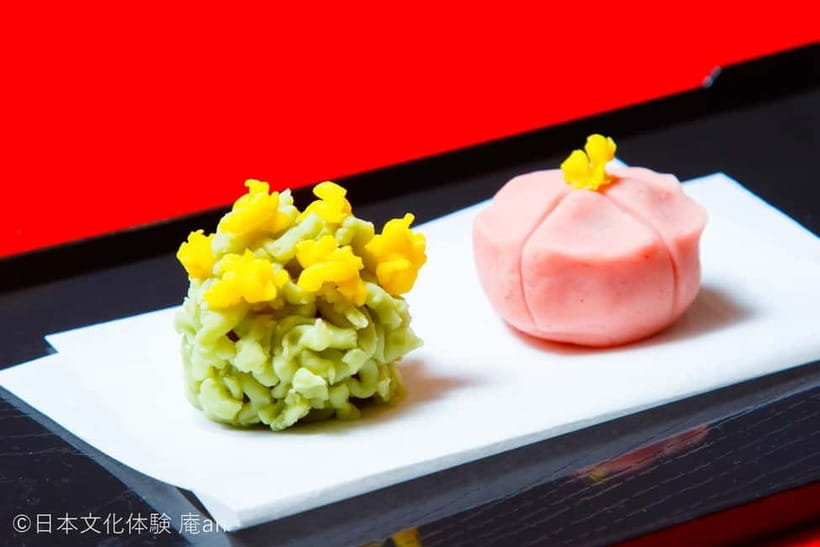
- Two seasonal Nerikiri sweets: you’ll make a flower-shaped sweet plus a Kinton Nerikiri
- Kyoto bean paste foundation: white/red bean paste from Kyoto’s established shops
- Hands-on learning, not just watching: you form the sweets yourself and plate them
- Eat on the spot: you can taste the sweets you make immediately
- English support is available as much as possible with a Japanese instructor
- A tight 65-minute window that fits easily into a day of Osaka walking
Flour on your hands, more Osaka kitchens to try


Why Nerikiri in Osaka feels like small hands-on art
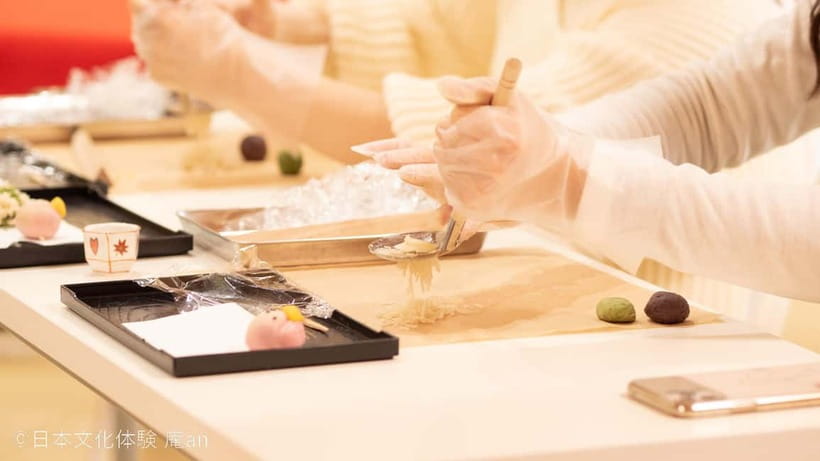
Nerikiri is wagashi at its most tactile. Instead of just ordering something sweet, you shape it with your hands until it looks like an edible little sculpture. That’s the charm here: it’s part food, part design lesson, and part mindful focus for an hour.
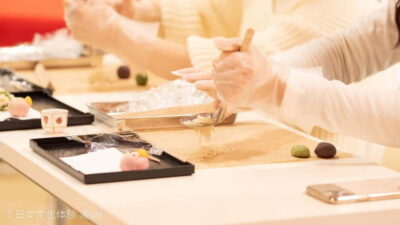
What makes this workshop practical for visitors is the pacing. You start with an explanation of traditional sweets, then you move straight into making. By the time you plate your creations, you’re not stuck with a “finished product” that someone else made for you. You get the satisfaction of seeing your own work land on the plate like proper Japanese presentation.
There’s also a nice cultural angle: Nerikiri is seasonal by design. You’ll make two sweets that match what’s happening in the year, which means you’re not just learning a technique—you’re also learning why Japanese sweets often act like a calendar. Even if you’re not a wagashi expert, the seasonal element helps everything feel more intentional.
One more thing I appreciate: the experience is described as memorable whether you go alone or in a group. If you’re traveling solo, you still get hands-on time at the center of the activity. If you’re with friends, you share the table moment when you plate and later eat what you made.
What you make: flower-shaped Nerikiri and Kinton
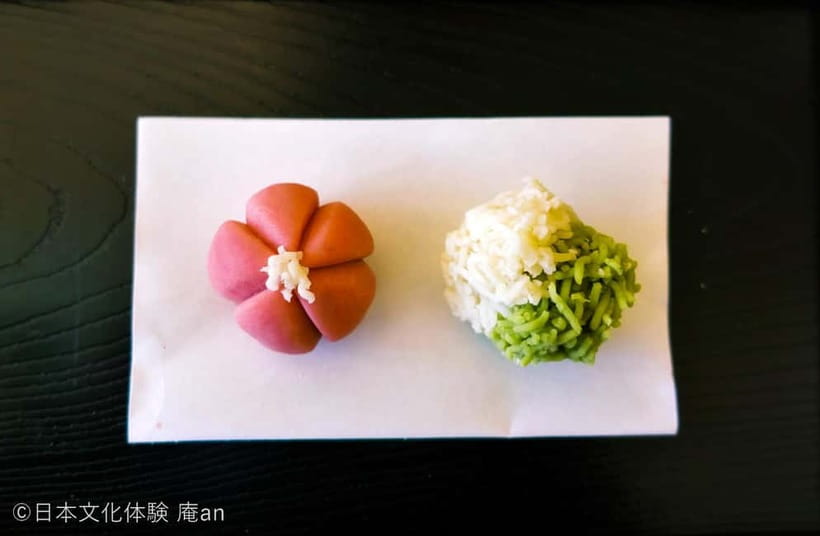
You’ll make two seasonal Nerikiri sweets, and the workshop walks you through both. First up is a flower-shaped Nerikiri. This is a great starting point because flowers in Nerikiri teach the fundamentals: shaping small details, smoothing the surface, and using the right pressure so the design holds without looking stiff.
Then you’ll make a Kinton Nerikiri. Kinton-style sweets are known for their playful look and texture, and learning this second form matters because it prevents the whole class from feeling like repetition. Your hands get different tasks—more than one technique, more than one final look—so the end result feels like you learned more than one “template.”
The best part of this setup is that it gives you two separate “wins.” One sweet is more floral and delicate; the other shifts into the Kinton style. When you eat later, you can compare them side by side: how the shaping looks, how the texture feels, and how the sweetness comes across with each piece.
And because the workshop includes time for pictures, you’ll likely want to pause before eating. Nerikiri is meant to be admired for a moment. It’s also a smart souvenir, even if you’re not taking anything home. A quick photo now makes the taste experience later feel even more special.
Kyoto bean paste: why the ingredients matter
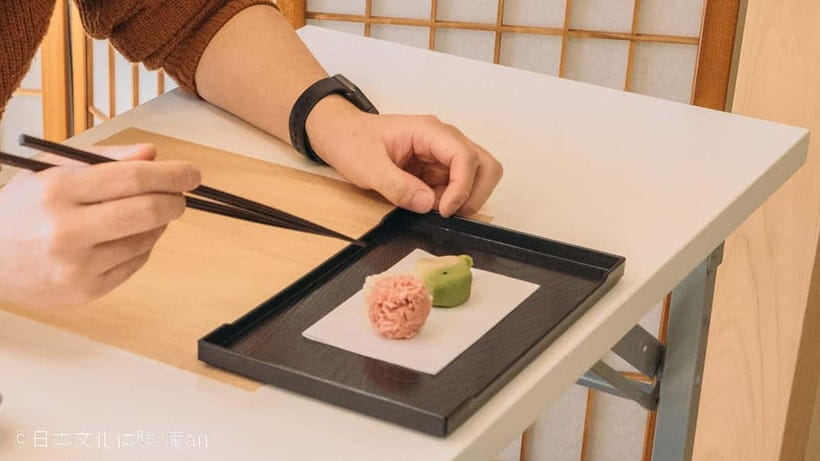
Nerikiri lives and dies by the bean paste. Here, the workshop emphasizes that you use white/red bean paste produced by Kyoto’s long-established shops. That’s not a throwaway detail. In wagashi, the paste affects everything: flavor depth, sweetness balance, and how smoothly it behaves when you shape it.
If you’ve ever bought wagashi that tasted fine but didn’t have that clean, rounded bean flavor, you already know the difference good paste makes. Using Kyoto-sourced paste gives you a baseline that’s more likely to taste “right” rather than overly sweet or flat. It also helps your technique work. When the paste has the right texture, you can shape it without it cracking or fighting back.
There’s another reason this matters for value. At many food workshops, the ingredient quality varies, and the hands-on part becomes more about the process than the result. This experience pairs both: you shape the sweets yourself, and you’re using ingredients that are likely to deliver a satisfying final bite.
You should also think about what you’re learning. Even without being a wagashi scholar, you can pick up the idea that traditional sweets are built from carefully prepared components. The bean paste is the foundation, and everything else—shape, seasonal design, plating—sits on top of that base.
Put this one next to a few other Osaka options first:
The 65-minute flow: what you’ll actually do
The total time is 65 minutes, which is refreshingly compact. That matters in Osaka, where you might be bouncing between stations, markets, shrines, and museums. This class doesn’t demand half your day.
Here’s how the experience runs, in plain terms:
- Start of the experience (about 0 minutes): You begin with an explanation of Japanese traditional sweets. This is your quick orientation so you understand what Nerikiri is and why it looks the way it does.
- Flower-shaped Nerikiri (midway): You move into making your first sweet, using the shaping process to form the flower design.
- Kinton Nerikiri (next): You shift to the second sweet style, which gives your hands and mind a new task. This second step helps the class feel complete, not repetitive.
- Picture time (around the later part): You get a moment to take photos before eating. It’s a nice pause that turns your work into an experience, not just a snack.
- Eating time (later): You eat the sweets on the spot. That’s a big deal: you taste at the right moment instead of worrying about keeping the sweets intact.
- Room departure (end): You wrap up and head out.
One practical note: the workshop says you’ll make sweets matching the season, so your exact designs may differ from what you expect. That’s normal and part of the fun. The seasonal matching is part of why Nerikiri is such a satisfying souvenir experience, even if you’re eating everything immediately.
If you’re the type who likes “finish line” activities—clear start, clear steps, clear end—this time structure fits nicely. You’ll likely walk out with both a taste memory and a better sense of how wagashi is put together.
Instructor support and English comfort
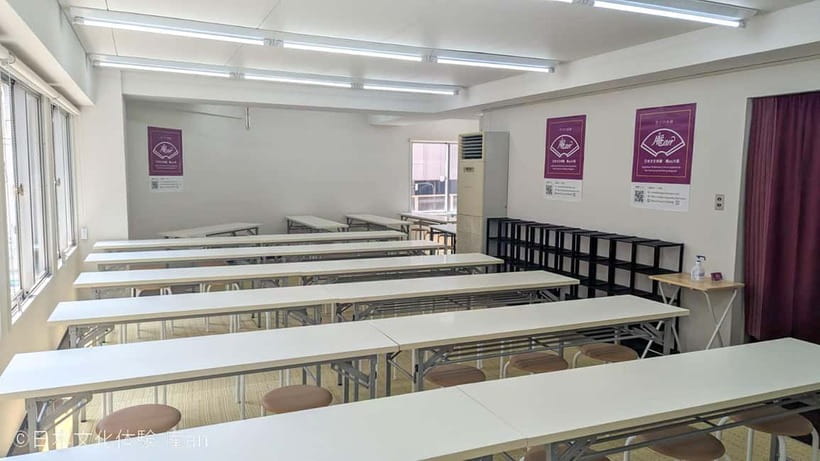
This is a Japanese-instructed experience with English translation provided as much as possible. That wording matters because it suggests you won’t be left totally on your own if you don’t speak Japanese.
The vibe from recent feedback is that the instructor takes time to explain. In one case, the instructor had enough English to make things click, and the session included light chat too. The takeaway for you: don’t stress about the language barrier. You’re doing a hands-on craft, and that kind of learning supports understanding even when your vocabulary is limited.
Also, because you’re working with the same paste and using guided steps, you don’t need to memorize a complicated process. You’re following along, correcting shape and detail as you go, and learning by doing.
One small consideration: the experience is not described as having an elevator, and it also says the event can’t be held to accommodate delays. Translation plus craft pacing is great, but it still helps to arrive a few minutes early so the schedule stays smooth.
Price and extras: where the value comes from
At $11 per person (and listed as a 65-minute activity), this workshop is priced like a fun, affordable Osaka cultural stop. The value comes from the combination of three things:
- You make two sweets, not one quick demo item.
- You use Kyoto-style paste, which affects how your finished sweets taste.
- You eat on the spot, so you get the reward immediately.
That’s the key idea: you pay for a full experience, not just a packet of ingredients. You’re learning technique, making two finished pieces, taking a few photos, and then tasting what you made right then.
A couple extras are available. A sweets take-out box is listed at 100 JPY, and there’s an experience completion certificate for 300 JPY. If you’re only in town briefly, the take-out box is a nice option, but it’s not essential since you can eat the sweets on the spot anyway.
If you’re wagashi-curious, this is also an efficient entry point. You don’t need to know the terminology in advance. You just need the willingness to get your hands involved for an hour.
Getting there near Higobashi, Watanabebashi, and Yodoyabashi
Location-wise, the meeting point is very walkable from multiple train lines. You’ve got several good options, depending on where you’re starting your day:
- 1 minute walk from Exit 10 of Osaka Metro Yotsubashi Line Higobashi Station
- 5 minutes walk from Exit 7 of Keihan Nakanoshima Line Watanabebashi Station
- 7 minutes walk from Exit 10 of Osaka Metro/Keihan Line Yodoyabashi Station
- 10 minutes walk from Exit 11-5 of JR Tozai Line Kitashinchi Station
- 15 minutes walk from South Central Gate of Osaka Station
If you’re driving, coin parking is mentioned nearby, so you can plan around that too.
One heads-up I’d put at the top of your packing list: no elevator in the building. You’ll need stairs to reach the venues. This matters most if you have mobility limitations or if you’re carrying a lot of shopping bags.
Should you book the Nerikiri workshop
Book this if you want a hands-on Osaka activity that’s short, culturally grounded, and actually results in edible art. It’s a good fit for couples, solo travelers, and small groups who want something different from the usual food hunt.
Skip it if you strongly prefer long guided experiences, or if stairs would be a problem for you. Also, if you’re the kind of traveler who doesn’t enjoy craft tasks at all, you might find it more frustrating than fun. The success here depends on willingness to shape and tinker for an hour.
If your ideal day includes walking between neighborhoods, sampling local snacks, and then finishing with a skill you can carry forward, this is a smart booking.
FAQ
How long is the Nerikiri making experience?
The experience lasts 65 minutes.
What sweets will I make during the workshop?
You will make two Japanese sweets called Nerikiri that match the season. The class includes a flower-shaped Nerikiri and a Kinton Nerikiri.
Can I eat the sweets right after making them?
Yes. You can eat the sweets on the spot.
How much does it cost?
The price is $11 per person.
Where is the meeting point?
It’s about a 1-minute walk from Exit 10 of Osaka Metro Yotsubashi Line Higobashi Station, with other nearby options including Watanabebashi Station and Yodoyabashi Station.
Is there an elevator in the building?
No. There is no elevator, and you will need to take stairs to reach the venues.
Is English available during the experience?
English translation is provided as much as possible, and the instructor is Japanese.
More Dessert Tours in Osaka
- Matcha Making Class in Osaka with Authentic Japanese Sweets Set★ 5.0 · 509 reviews
- Osaka: Matcha Making Experience with Japanese Sweets★ 5.0 · 146 reviews
- Osaka: Japanese Traditional Sweets Making and Tea Ceremony★ 4.7 · 118 reviews
More Tour Reviews in Osaka
- Osaka Go Karting Tour with Funny Costume★ 5.0 · 2,658 reviews
- Osaka Castle: Museum and Tower Entry Ticket★ 4.5 · 2,380 reviews
- Osaka: Shinsekai Food Tour with 13-15 Dishes at 5 Eateries★ 4.8 · 2,204 reviews
- Osaka Food Tour: 13 Dishes at 5 Local Eateries★ 5.0 · 2,149 reviews
- Hungry Osaka Street Food Tour:15 Tastings & 3 Drinks with a Local★ 5.0 · 1,727 reviews
Cook It Yourself in Osaka
- Sushi Making Osaka Roll and Authentic Japanese Sushi Class★ 5.0 · 1,220 reviews
- Osaka: Five Must-See Highlights Walking Tour & Ramen Lunch★ 4.7 · 411 reviews
- Osaka Sushi Making Experience★ 5.0 · 400 reviews
- Osaka: Ramen and Gyoza Cooking Class in Dotonbori★ 5.0 · 378 reviews
- Osaka: Sumo Stage Show with Bento or Snack + Fight & Photo★ 4.3 · 364 reviews
The Newest Osaka Write-Ups
- Private Photoshoot in Osaka with a Professional Photographer
★ 5.0 · 3 reviews - Osaka Early Morning Osaka Castle Tour Avoid Crowds
★ 5.0 · 3 reviews - Nara Private Tour with Pick and Drop and English Speaking Driver
★ 3.5 · 3 reviews - Osaka: Modern Vegetarian Sushi Cooking Class
★ 5.0 · 3 reviews - Nara Day Trip from Osaka with a Licensed Guide
★ 5.0 · 3 reviews
Osaka Cooking Classes, compared.
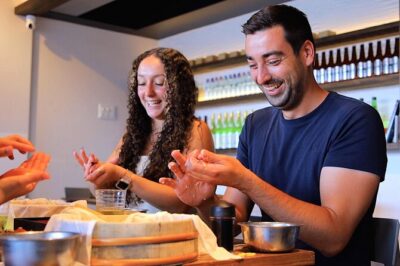 ★ 5.0Sushi Making Osaka Roll and Authentic Japanese Sushi ClassFrom $311,220 reviews
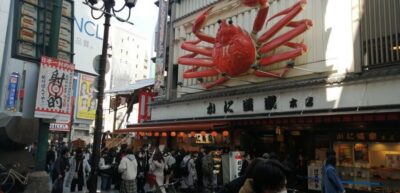 ★ 4.7Five Must-See Highlights Walking Tour & Ramen LunchFrom $56411 reviews
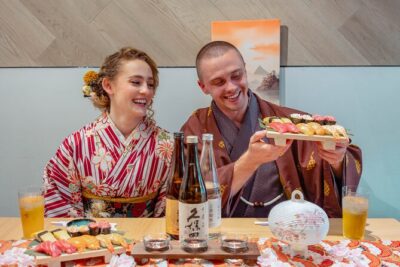 ★ 5.0Osaka Sushi Making ExperienceFrom $29400 reviews
 ★ 5.0Ramen and Gyoza Cooking Class in DotonboriFrom $70378 reviews
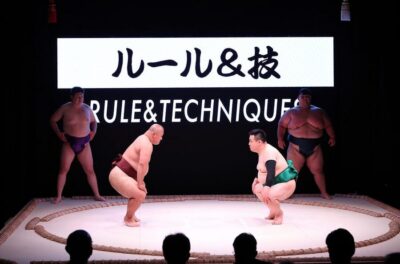 ★ 4.3Sumo Stage Show with Bento or Snack + Fight & PhotoFrom $93364 reviews
 ★ 4.9Traditional Mochi Pounding Experience with TastingFrom $31306 reviews
 ★ 5.0Osaka Cooking Class: Okonomiyaki &Japanese cuisines experienceFrom $104261 reviews
 ★ 4.9Roll and Authentic Sushi Making Class in DotonboriFrom $45239 reviews
Browse the lists this tour appears in