
Reviewed · OSAKA COOKING CLASSES
Three Types of Ramen Cooking Class in Osaka
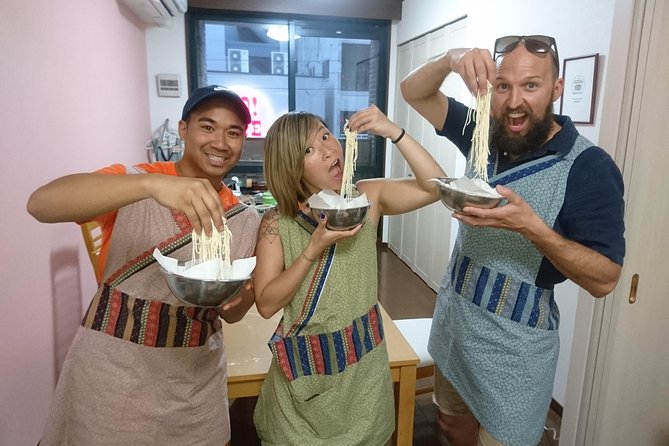
Osaka does ramen right. This class lets you cook it your way. You’ll make handmade noodles from scratch and then build salt, soy sauce, and miso ramen in one smooth 2.5-hour session. I like that it’s a small group (limited to eight), so instructions actually land, not float over your head. I also like the payoff: you finish with three bowls you made, plus dessert and green tea. One thing to consider: there’s no hotel pickup, so you’ll need to get yourself to Banix Kita-horie.
The setup is practical, and the teaching is geared for real people, not food-lab geniuses. In feedback, hosts like Fumi and Keigo (and similar names) are praised for clear English and patient guidance, including step-by-step directions. If you’re sensitive to spice, plan ahead—one highlight is a miso option with spicy chicken, and there’s a caution about using chili oil too casually.
In This Review
- 3 Types of Ramen Cooking Class in Osaka: The Quick Take
- Key Points at a Glance
- Where You Start: Banix Kita-horie and Getting Set Up
- Noodle Making From Scratch: The Skill That Changes Everything
- Cooking Three Broths and Three Topping Sets
- Salt Ramen
- Soy Sauce Ramen
- Miso Ramen
- The Timing: How 2.5 Hours Becomes Three Bowls
- Eating What You Made: Itadakimasu, Then the Payoff
- The Take-Home Recipe: Why You’ll Actually Use It
- Dietary Needs: Vegetarian Ramen Has Been Handled
- Who This Class Is Best For (and Who Might Prefer Something Else)
- Value for Money: What You Get for $79.28
- Bottom Line: Should You Book This Osaka Ramen Workshop?
3 Types of Ramen Cooking Class in Osaka: The Quick Take
This is one of the most efficient ramen experiences in Osaka. You’re not just eating; you’re learning how the noodles, broth, and toppings work together across three classic flavor paths. It’s hands-on, structured, and calm enough that you’ll actually enjoy the process.
Flour on your hands, more Osaka kitchens to try


Key Points at a Glance
- Make noodles from scratch and see how the dough turns into ramen-ready strands
- Three ramen styles in one class: salt, soy sauce, and miso
- Small-group feel with a limit of eight for more personal attention
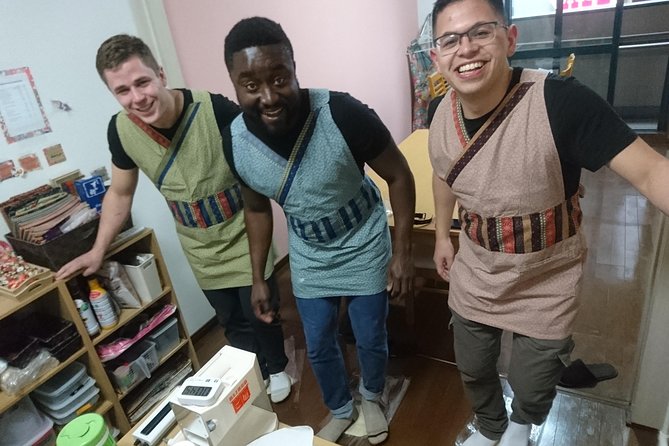
- Everything is provided (ingredients, utensils, apron setup, and a printed recipe to take home)
- You eat what you cook, with dessert, green tea, and seasonal fruits
Where You Start: Banix Kita-horie and Getting Set Up
The class meets at Banix 北堀江, in Osaka’s Nishi Ward, Kitahorie area. Your tour starts there and ends back at the same place, so you’re not stuck hopping between locations.
You’ll want to plan your arrival like you would for a cooking class anywhere: show up a little early, get oriented, and breathe. The experience is designed to feel low-stress once you’re inside. A lot of the reviews mention the workshop is well organized, with facilities that make the whole process easier—plus, some people specifically call out air-conditioned comfort, which matters in Osaka’s heat.
Also, there’s a mobile ticket. That’s a small thing, but it helps. You’ll spend less time figuring out paper tickets and more time cooking.
What you’ll likely notice right away: the class is built around flow. Apron on, then straight into noodle making, so you don’t wander around wondering what happens next.
Possible drawback: no hotel pickup. If you’re staying far from Nishi Ward or you don’t love navigating on foot/subway, factor in travel time. This class is easy once you’re there, but you are responsible for getting yourself to the start point.
Noodle Making From Scratch: The Skill That Changes Everything
This class doesn’t skip the important part. You make the noodles from scratch, not just assemble toppings.
You’ll learn how ramen noodles come together—think dough prep, handling, cutting/portioning, and getting them to the stage where they cook properly in broth. Even if you’ve never cooked noodles before, the structure is designed to keep you moving. The teaching style comes up repeatedly in feedback: clear directions, time given to each step, and an instructor who helps without rushing you.
One detail I like for planning your expectations: the total noodle amount is 100g. That’s enough to fill you up in ramen form when paired with broth and toppings, but it also keeps the class on track. In a 2.5-hour class, you need a realistic amount of production.
Why this part is worth the money: most ramen classes elsewhere stop at seasoning or assembly. Here, learning the noodle basics gives you something you can actually repeat at home. And once you’ve handled the dough yourself, you’ll understand why ramen texture matters.
Practical note: since you’re working with dough, expect some mess. That’s normal. Wear clothes you don’t mind getting a little splashed during hands-on cooking.
Put this one next to a few other Osaka options first:

Cooking Three Broths and Three Topping Sets
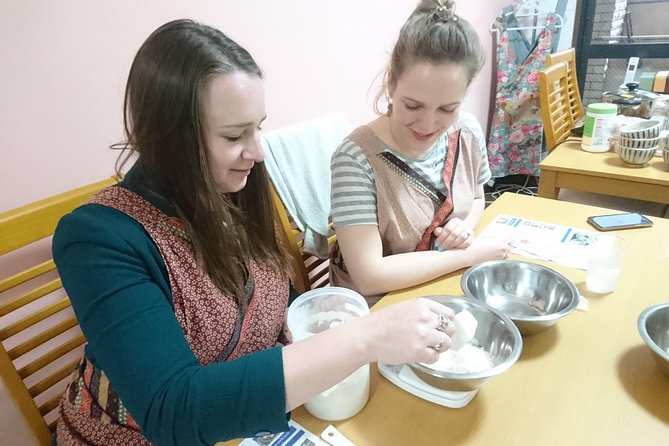
After noodles, the class shifts into ramen building: soup bases, then the toppings that define each style. The whole point is that ramen tastes different not because it’s a different dish each time—it’s because seasonings, ingredients, and toppings change the profile.
You’ll make:
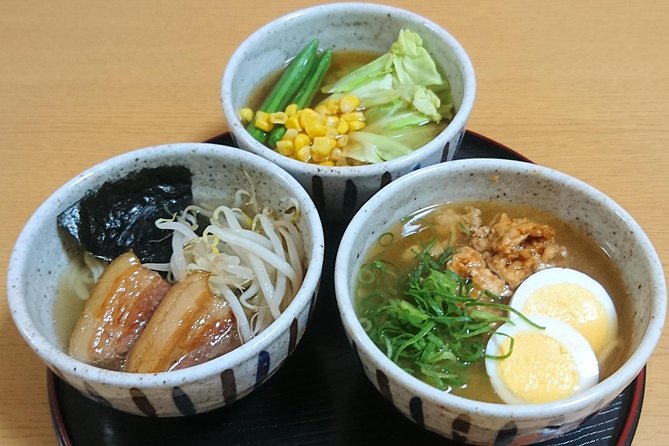
Salt Ramen
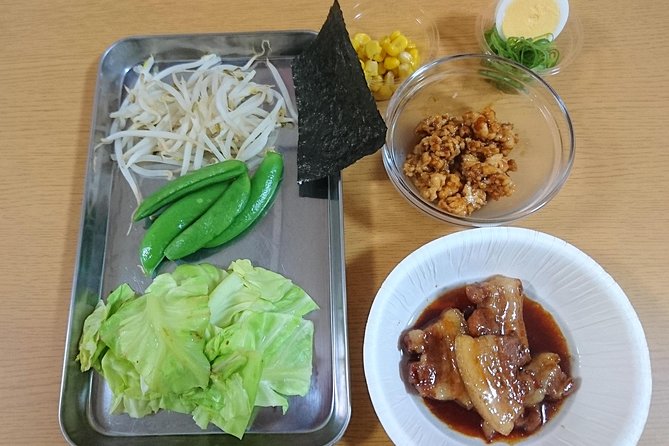
- Toppings: juicy sweet pork, bean sprouts, seaweed
Salt ramen is often the most straightforward on paper, but the flavor comes from balance. You’re learning how the base works with savory toppings, and how the mouthfeel of pork and the crunch of sprouts play off the broth.
Soy Sauce Ramen
- Toppings: steamed cabbage, green vegetables, sweet corn
Soy sauce ramen leans into savory depth and gentle sweetness. Cabbage and corn help round it out, so you get texture variety—soft, crisp, and sweet all in the same bowl.
Miso Ramen
- Toppings: spicy chicken, boiled eggs, green onion
Miso ramen is where the class shows off. It’s richer and more intense, and the topping set has clear structure: the chicken brings heat and savoriness, eggs add comfort, and green onion brings freshness.
One spice consideration: reviews include a friendly warning about chili oil at the end—people who poured too much felt it afterward. If you’re spice-sensitive, treat chili oil like seasoning, not like a requirement. Add it slowly, and stop when it tastes good.
The Timing: How 2.5 Hours Becomes Three Bowls
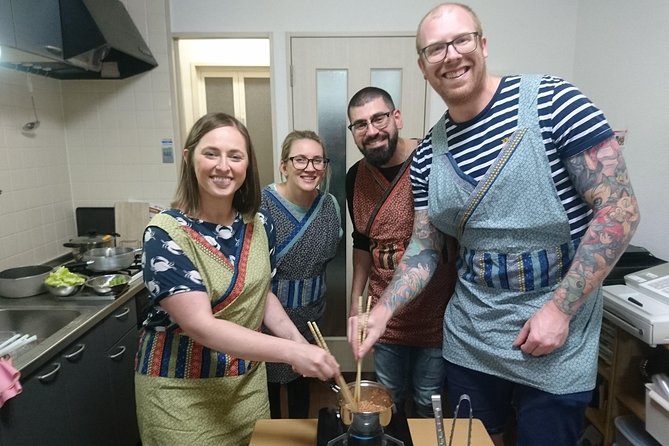
On paper, making three ramen styles in 2 hours 30 minutes sounds like a lot. In practice, it works because the class is designed for pace.
You’re not going to craft a multi-day ramen stock here. You’re going to learn what matters most: how noodles fit into broth, how to season for salt vs soy sauce vs miso, and how topping choices shape the final bowl.
This is a key value point. You’re paying for guided efficiency. You get a crash course that’s still hands-on, not a lecture with samples.
And the group size helps. With a limit of eight, you’re less likely to be stuck waiting while someone else catches up. If you’ve ever watched a class where half the group stands around, you know what I mean. This one aims to keep everyone cooking.
Eating What You Made: Itadakimasu, Then the Payoff
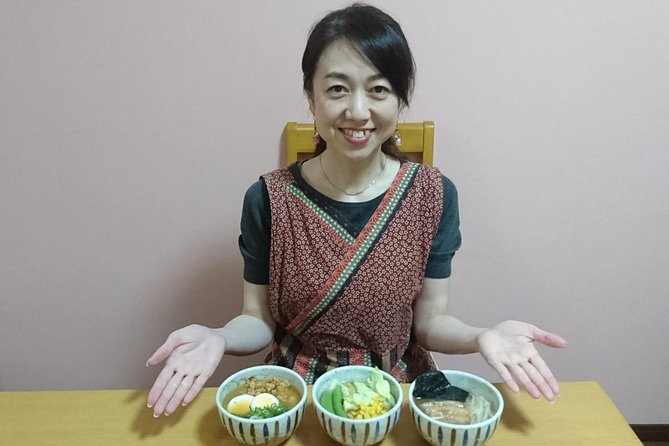
At the end, you eat your ramen with chopsticks, and the class includes the moment to enjoy it properly—say Itadakimasu and dig in.
You’ll also get:
- Dessert
- Green tea
- Seasonal fruits (included)
This matters more than it sounds. Cooking classes in Japan can sometimes feel like you do all the work and then get a tiny snack. Here, you actually finish hungry from effort and leave satisfied from outcome.
Also, three bowls means you get a real comparison. Salt ramen tastes different from soy sauce ramen. Miso ramen isn’t just another bowl with different meat. The toppings and base changes are obvious in your mouth, not just in theory.
The Take-Home Recipe: Why You’ll Actually Use It
You get a printed recipe to take home. That’s the difference between a fun event and a lasting skill.
In the feedback, people say the class is repeatable at home. You won’t recreate a perfect ramen shop broth the first night (no shame in that), but you can build a strong ramen workflow: noodle handling, seasoning logic, and topping choices.
And if you’re the type who likes to cook, this class gives you a path. If you aren’t, it still helps you order ramen smarter later—because now you understand what makes each style taste the way it does.
Dietary Needs: Vegetarian Ramen Has Been Handled
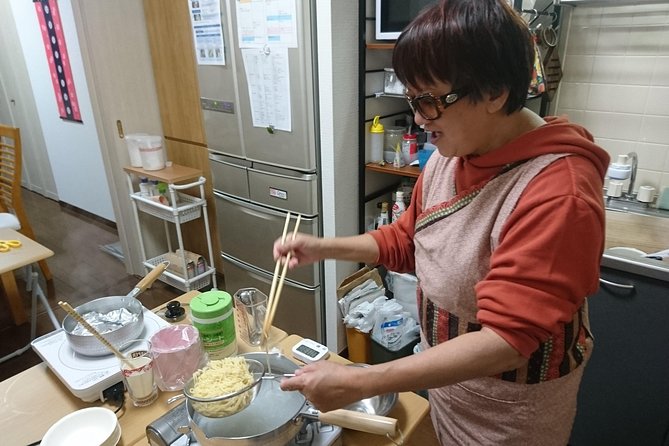
One of the more useful surprises from the feedback: the instructor has accommodated vegetarian diets in past classes, including care with ingredients so the broth doesn’t include animal products.
That’s not a guarantee written in the basic description, so don’t assume. But it’s encouraging. If your diet matters, tell the provider during booking so they can plan. Ramen is all about broth—so clear communication matters.
If you’re avoiding pork or eggs or spicy flavors, you should also mention it early. The class includes specific topping sets, so adjustments may be possible but depend on the ingredients available for your session.
Who This Class Is Best For (and Who Might Prefer Something Else)
This experience fits best if you want:
- A hands-on ramen learning experience
- Clear instructions in English (praised in feedback)
- A complete meal rather than small tastings
- A small group setting where you’re not just watching
It also sounds friendly for families. Reviews mention kids participating (including a child around 10 who followed steps comfortably), which suggests the class is paced in a way that doesn’t require advanced culinary skill.
You might look for a different option if:
- You only want to focus on one ramen style in deep detail. Here, you’re making three.
- You hate spice and chili oil. You can manage it, but miso includes spicy chicken, and the class ends with chili oil options.
Value for Money: What You Get for $79.28
Let’s talk value plainly.
You’re paying about $79.28 per person, and the price covers more than instruction. It includes:
- All ingredients for your ramen meal
- Kitchen utensils and equipment
- A printed recipe
- Seasonal fruits
- Dessert and green tea
- The hands-on experience making noodles from scratch
If you compare this to paying for a full meal in Osaka plus buying noodles and ingredients to try making ramen at home, the math gets closer fast. Here, you also get expert guidance so you don’t waste ingredients on mistakes.
The small-group format (limited to eight) is part of the value too. More personal attention means fewer awkward moments and a smoother experience.
Where you save the most: time. You’re not hunting down recipes, gathering materials, and hoping your first attempt works out.
Bottom Line: Should You Book This Osaka Ramen Workshop?
If you want an authentic, hands-on Osaka experience that ends with real food you made, this is a strong yes. It hits the basics that matter: noodles from scratch, three classic ramen styles, and a full meal with dessert and green tea. The instructors are repeatedly praised for clarity in English and for helping you succeed, even if you’ve never cooked noodles before.
Book it if you’re:
- A ramen fan who wants to understand the differences between styles
- A couple or small group that wants a calm, guided class
- Someone who likes cooking and wants a take-home recipe you can use
Skip it if:
- You don’t want to travel to the meeting point on your own (no hotel pickup)
- You want one style only and a slower pace for deeper specialization
- You’re extremely spice-avoidant (you can go easy, but the miso menu includes spicy chicken)
If you like learning by doing—and eating the results—this ramen class is exactly the kind of Osaka activity that feels worth planning around.
Take Home Something You Made
- Sushi Making Osaka Roll and Authentic Japanese Sushi Class★ 5.0 · 1,220 reviews
- Matcha Making Class in Osaka with Authentic Japanese Sweets Set★ 5.0 · 509 reviews
- Osaka: Ramen and Gyoza Cooking Class in Dotonbori★ 5.0 · 378 reviews
- Osaka Cooking Class: Okonomiyaki &Japanese cuisines experience★ 5.0 · 261 reviews
- Osaka: Roll and Authentic Sushi Making Class in Dotonbori★ 4.9 · 239 reviews
More Tour Reviews in Osaka
- Osaka Go Karting Tour with Funny Costume★ 5.0 · 2,658 reviews
- Osaka Castle: Museum and Tower Entry Ticket★ 4.5 · 2,380 reviews
- Osaka: Shinsekai Food Tour with 13-15 Dishes at 5 Eateries★ 4.8 · 2,204 reviews
- Osaka Food Tour: 13 Dishes at 5 Local Eateries★ 5.0 · 2,149 reviews
- Hungry Osaka Street Food Tour:15 Tastings & 3 Drinks with a Local★ 5.0 · 1,727 reviews
Cook It Yourself in Osaka
- Sushi Making Osaka Roll and Authentic Japanese Sushi Class★ 5.0 · 1,220 reviews
- Osaka: Five Must-See Highlights Walking Tour & Ramen Lunch★ 4.7 · 411 reviews
- Osaka Sushi Making Experience★ 5.0 · 400 reviews
- Osaka: Ramen and Gyoza Cooking Class in Dotonbori★ 5.0 · 378 reviews
- Osaka: Sumo Stage Show with Bento or Snack + Fight & Photo★ 4.3 · 364 reviews
The Newest Osaka Write-Ups
- Private Photoshoot in Osaka with a Professional Photographer
★ 5.0 · 3 reviews - Osaka Early Morning Osaka Castle Tour Avoid Crowds
★ 5.0 · 3 reviews - Nara Private Tour with Pick and Drop and English Speaking Driver
★ 3.5 · 3 reviews - Osaka: Modern Vegetarian Sushi Cooking Class
★ 5.0 · 3 reviews - Nara Day Trip from Osaka with a Licensed Guide
★ 5.0 · 3 reviews
Osaka Cooking Classes, compared.
 ★ 5.0Sushi Making Osaka Roll and Authentic Japanese Sushi ClassFrom $311,220 reviews
 ★ 4.7Five Must-See Highlights Walking Tour & Ramen LunchFrom $56411 reviews
 ★ 5.0Osaka Sushi Making ExperienceFrom $29400 reviews
 ★ 5.0Ramen and Gyoza Cooking Class in DotonboriFrom $70378 reviews
 ★ 4.3Sumo Stage Show with Bento or Snack + Fight & PhotoFrom $93364 reviews
 ★ 4.9Traditional Mochi Pounding Experience with TastingFrom $31306 reviews
 ★ 5.0Osaka Cooking Class: Okonomiyaki &Japanese cuisines experienceFrom $104261 reviews
 ★ 4.9Roll and Authentic Sushi Making Class in DotonboriFrom $45239 reviews
Browse the lists this tour appears in