
Reviewed · OSAKA COOKING CLASSES
Osaka Sushi Cooking Class
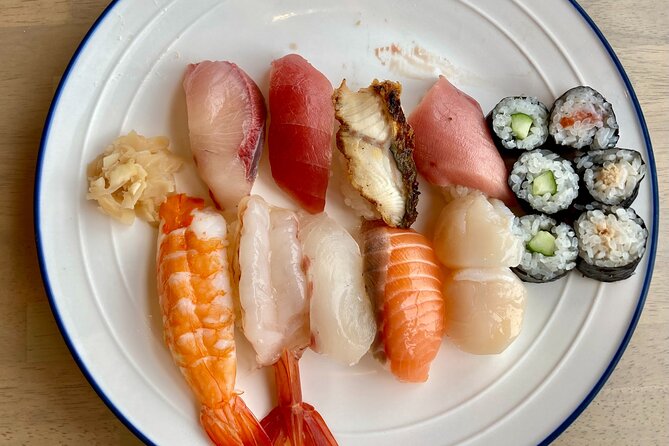
Sushi starts with rice, not magic. In this 90-minute Osaka class, chef Kazuki Harada guides you through Nigiri and Maki step by step, then you taste the sushi you made. It’s hands-on, not just watching.
I also like how the lesson focuses on the essentials that actually make sushi taste right: sushi rice foundations, nori and fillings, and flavor choices like wasabi, soy sauce, and pickled ginger. One consideration: with only 1 hour 30 minutes, you’ll nail the basics, but you won’t leave with a full multi-course meal, and alcohol isn’t included.
In This Review
- Key Highlights You’ll Care About
- A 90-Minute Osaka Sushi Class With Kazuki Harada
- Finding the Class in Suita: Tarumichō Meeting Point
- What You Learn First: Sushi Basics That Actually Matter
- Nigiri Session: Shaping Rice and Placing Toppings
- Maki Rolling Craft: Technique for Clean Rolls
- Flavor Enhancements: Wasabi, Soy Sauce, and Pickled Ginger
- Tasting and Sharing: The Moment It Clicks
- Price and Value: Is $78.04 Worth It
- Who This Osaka Class Suits Best
- A Few Practical Tips Before You Go
- Should You Book This Osaka Sushi Cooking Class?
- FAQ
- How long is the Osaka Sushi Cooking Class?
- What will I make during the class?
- Who is this class for?
- What is included in the price?
- Are alcoholic beverages included?
- How many people are in a group?
- Do I need to bring a ticket?
- Where does the class meet?
- Will I get confirmation after booking?
- Is free cancellation available?
Key Highlights You’ll Care About
- Small group (max 8) so your questions do not get lost
- Chef-led practice for both Nigiri shaping and Maki rolling
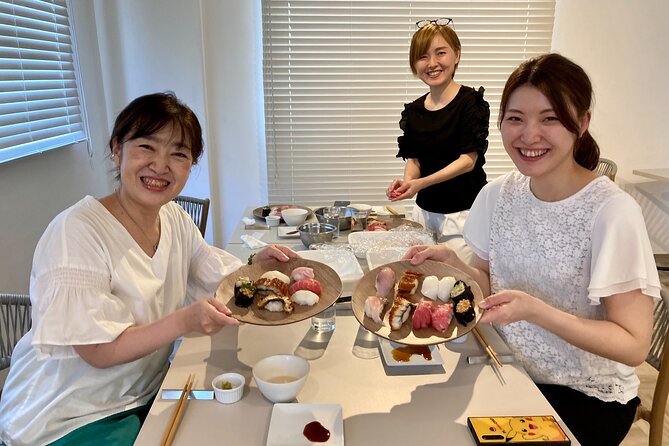
- Taste your own plate of self-made nigiri and maki at the end
- Flavor guidance for wasabi, soy sauce, and pickled ginger
- Includes green tea and water, plus ingredients and equipment
Flour on your hands, more Osaka kitchens to try
A 90-Minute Osaka Sushi Class With Kazuki Harada

If you’re short on time but still want the real craft, this class is a smart fit. You get a focused lesson that moves from core sushi building blocks to two classic styles: nigiri and maki.
Kazuki Harada’s teaching style comes through in the way the class is structured: you’re not left guessing. The flow is clear, the tasks are practical, and you get time to build confidence before tasting.
It’s also a nice change of pace in Osaka. Instead of hunting for the perfect bite, you make the bite yourself.
Finding the Class in Suita: Tarumichō Meeting Point
You’ll meet at 3-chōme-35-5 Tarumichō, Suita, Osaka 564-0062, Japan. The start point is listed as near public transportation, which matters because you don’t want your evening eating up your energy just getting there.
This is a local, hands-on activity, so arriving a bit early helps. You’ll have less rushing, and you can settle in before introductions start.
Tip: if you’re coming straight from sightseeing, give yourself a little buffer. A small delay can feel big when the full class is about 90 minutes.
What You Learn First: Sushi Basics That Actually Matter
The class begins with a welcome and a quick overview of what’s coming. Then you move into the real foundation: sushi basics.
Here’s what you’ll work with:
- Sushi rice (the base)
- Seaweed (nori)
- Fillings (your choices inside)
- Condiments (the flavor boosters)
This part matters more than people think. Good sushi is not just about fish or fancy toppings. It’s about getting the rice right and handling the other elements so the final bite is balanced.
If you’re a beginner, this is the moment you learn the logic behind sushi. If you already like sushi, it helps you understand why certain rolls or nigiri taste the way they do, even when the ingredients look similar.


Nigiri Session: Shaping Rice and Placing Toppings
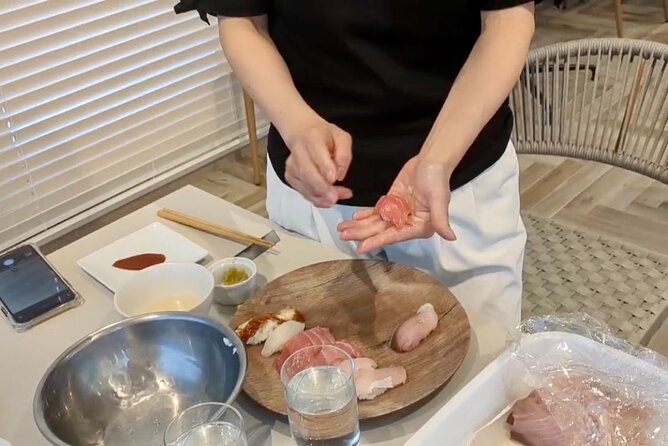
Next comes Nigiri Sushi. This is the classic “rice + topping” style, and the technique is simpler than it looks, as long as the steps are explained clearly.
You’ll be shown how to:
- Shape the rice
- Place toppings with control and consistency
Nigiri is a good skill to learn because it teaches discipline. The rice has to be formed the right way so it holds its shape, and the topping has to sit properly so the bite feels intentional, not lopsided.
I like that this class includes real practice time. Nigiri can feel intimidating in pictures. In a guided class, you quickly learn it’s mostly about attention and repetition.
Practical note: because this is a short class, you’ll focus on a core approach rather than trying to master every possible topping and rice variation.
Maki Rolling Craft: Technique for Clean Rolls
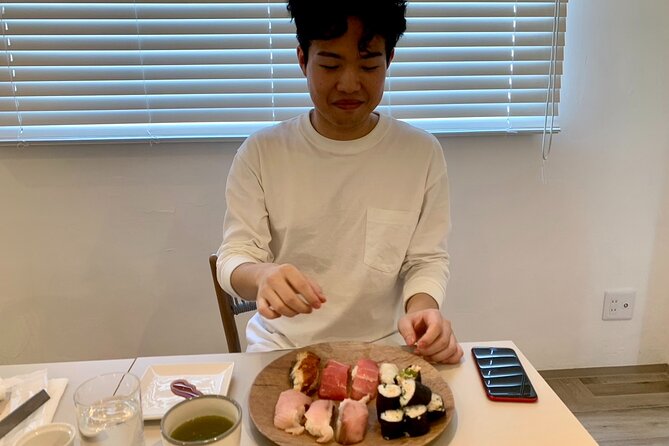
After nigiri, you tackle Maki roll crafting. Maki is the roll style where technique shows fast. You’ll be guided through the process of rolling sushi with your preferred fillings.
This section is where many people realize the difference between “I tried once” and “I can do this again at home.” Rolling is partly hand control, partly how you distribute fillings, and partly patience.
In a class like this, the value is you don’t just get instructions. You get to see the mechanics in action, then try it yourself with guidance.
If you’ve ever had a roll fall apart, leak filling, or come out uneven, you’ll appreciate learning what to fix first. Maki rewards small adjustments. A little change in how you handle the roll can make a big difference.
Flavor Enhancements: Wasabi, Soy Sauce, and Pickled Ginger
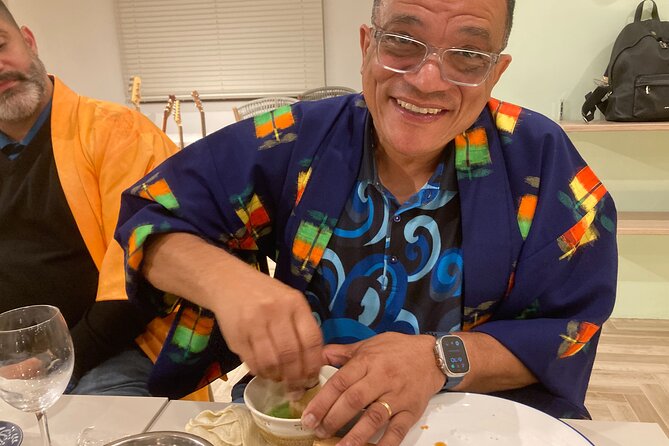
Once you’ve made sushi, the flavor conversation becomes practical. You’ll discover how to use wasabi, soy sauce, and pickled ginger to enhance each bite.
This part is not academic. It’s about tasting with intention:
- Wasabi adds heat and freshness
- Soy sauce brings salt and depth
- Pickled ginger helps reset your palate between bites
Even if you think you already know how you like to dip sushi, a guided approach helps you avoid the common problem: drowning the flavor you just worked hard to make.
In my view, this is one of the best “hidden benefits” of a cooking class. The cooking is half the equation. The finishing choices are the other half.
Tasting and Sharing: The Moment It Clicks
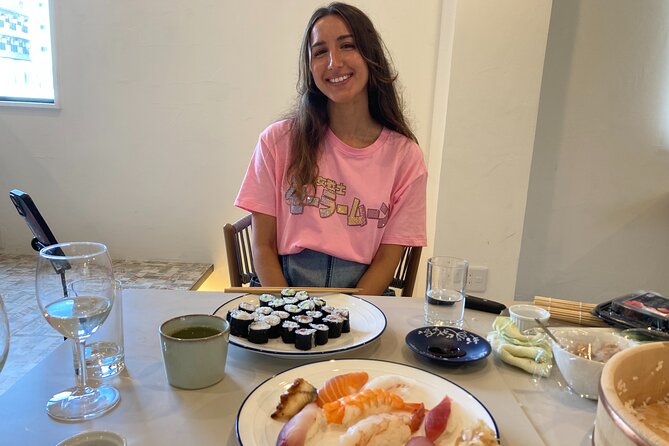
At the end, you’ll taste a plate of your own sushi: self-made Nigiri and Maki. That’s the satisfying payoff. You don’t have to guess how your rice, rolling, and topping choices should taste.
You also get a chance to share thoughts during the tasting. That makes it more social than a solo class, but the group size stays small enough (up to 8 travelers) that you don’t feel like you’re talking into a crowd.
This “eat what you made” step is where technique turns into understanding. You can see what works for you. You can also spot what you’d do differently next time.
And yes, green tea is part of the setup, along with water. It’s a simple touch, but it keeps the lesson comfortable from start to finish.
Price and Value: Is $78.04 Worth It
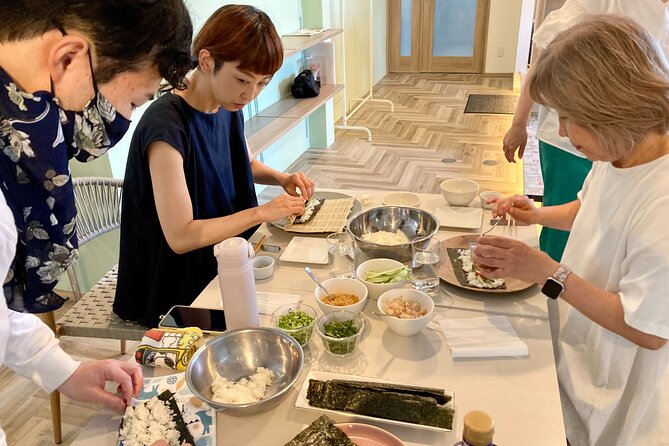
At $78.04 per person for about 1 hour 30 minutes, the price feels reasonable if you measure it against what you actually get.
You receive:
- Guided instruction by a chef
- Hands-on practice for both Nigiri and Maki
- Ingredients and equipment
- Water and green tea
You’re also not required to think about sourcing ingredients or cleaning up gear. That’s real value. Sushi making at home can be surprisingly time-consuming, especially if you don’t already have the right tools.
The one pricing wrinkle is what’s not included: alcoholic beverages (like sake or beer) are not part of the package. If you want a full meal with drinks, you’ll likely need to plan that separately.
For me, the best way to think about the cost is this: you’re paying for time with a chef, guided technique, and the chance to eat what you made immediately.
Who This Osaka Class Suits Best
This class is built for all levels, from beginners to sushi enthusiasts who want a quick, structured lesson. If you’ve never rolled maki before, you’ll get the basics in a short, friendly format.
If you already like sushi, you’ll appreciate the focus on technique and flavor choices. Instead of just ordering a roll you like, you learn how to reproduce the process.
It’s also a good choice for:
- People on a tight Osaka schedule
- Couples or small groups who want a shared activity
- Food travelers who want something more personal than a tasting-only experience
If you’re the type who hates short classes because you want everything in one go, this might feel brief. But if you want a solid foundation you can carry home, it hits the sweet spot.
A Few Practical Tips Before You Go
Since this is a hands-on class, come prepared to get a little involved. You’ll be shaping rice and rolling maki, so plan to stay present and follow the instructor’s cues.
Also:
- Expect technique to take a couple tries. That’s normal.
- Focus on process, not perfection. You’re learning.
- Bring curiosity about flavor. The wasabi/soy/ginger part can change how you taste sushi at restaurants too.
Finally, remember it’s about eating soon after. You’ll want to keep your appetite in mind, especially if you’re stacking this with other Osaka food stops.
Should You Book This Osaka Sushi Cooking Class?
Book it if you want a short, chef-guided lesson that ends with a real meal you made yourself. The combination of Nigiri shaping, Maki rolling, and a guided flavor segment makes it more than a hands-on demo.
I’d skip it only if you’re looking for an extended, multi-course cooking journey or you expect alcohol to be included. For most people, though, the format is exactly what makes it practical: learn, practice, taste, repeat at home later.
FAQ
How long is the Osaka Sushi Cooking Class?
The class runs about 1 hour 30 minutes.
What will I make during the class?
You’ll make Nigiri and Maki, and you’ll taste a plate of your self-made sushi.
Who is this class for?
It’s suitable for all levels, including beginners and sushi enthusiasts.
What is included in the price?
Included are water and green tea, ingredients, and equipment.
Are alcoholic beverages included?
No. Alcoholic beverages like sake or beer are not included.
How many people are in a group?
The class has a maximum of 8 travelers.
Do I need to bring a ticket?
You’ll receive a mobile ticket.
Where does the class meet?
The meeting point is 3-chōme-35-5 Tarumichō, Suita, Osaka 564-0062, Japan.
Will I get confirmation after booking?
Yes, confirmation is received at the time of booking.
Is free cancellation available?
Yes, free cancellation is available up to 24 hours in advance for a full refund.
More Tour Reviews in Osaka Prefecture
- Full Day Tour of Kyoto with Private Transportation★ 5.0 · 130 reviews
- Sakai – Knife Factory and Craft Walking Tour★ 5.0 · 44 reviews
- Kyoto private tour (Shore excursion available from Osaka or Kobe port)★ 5.0 · 39 reviews
- Private arrival Transfer from Kansai airport to Osaka city★ 4.5 · 36 reviews
- Private Transfer by Sedan from Itami Airport ITM to Kyoto City★ 4.5 · 31 reviews
Cook It Yourself in Osaka
- Cook Homestyle Ramen and Gyoza from scratch★ 5.0 · 4 reviews
The Newest Osaka Write-Ups
- Private Day Tour in Osaka and Kyoto with charter car
★ 5.0 · 3 reviews - Shared Arrival Transfer: Osaka Itami Airport to Osaka City
★ 5.0 · 3 reviews - Osaka Sushi Cooking Class
★ 5.0 · 3 reviews - Private Transfer Between Kyoto and Kansai Airport KIX
★ 5.0 · 3 reviews - Osaka : Cycling Tour Private Seaside Ride Near Kansai Airport
★ 5.0 · 3 reviews
Osaka Cooking Classes, compared.
 ★ 5.0Sushi Making Osaka Roll and Authentic Japanese Sushi ClassFrom $311,220 reviews
 ★ 4.7Five Must-See Highlights Walking Tour & Ramen LunchFrom $56411 reviews
 ★ 5.0Osaka Sushi Making ExperienceFrom $29400 reviews
 ★ 5.0Ramen and Gyoza Cooking Class in DotonboriFrom $70378 reviews
 ★ 4.3Sumo Stage Show with Bento or Snack + Fight & PhotoFrom $93364 reviews
 ★ 4.9Traditional Mochi Pounding Experience with TastingFrom $31306 reviews
 ★ 5.0Osaka Cooking Class: Okonomiyaki &Japanese cuisines experienceFrom $104261 reviews
 ★ 4.9Roll and Authentic Sushi Making Class in DotonboriFrom $45239 reviews
Browse the lists this tour appears in