
Reviewed · OSAKA COOKING CLASSES
Cook Homestyle Ramen and Gyoza from scratch
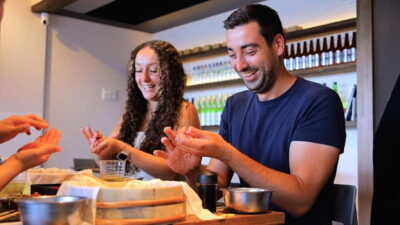
Hands-on cooking beats watching every time, and this one does both. You’ll learn how to make home-style creamy ramen broth and build the toppings from scratch, then finish with gyoza skin, filling, wrapping, and grilling in a small home-kitchen group led by Seiki at Japanese Cooking Studio -WA-.
I especially like that the lessons are built for real life back home: you practice the steps, not just the visuals, and Seiki creates recipes you can recreate easily. I also like the focus on ingredient reality, including which substitutions work if you struggle to find specific Japanese items abroad.
The main drawback to consider is the setup: you meet at Senri-Chuo Station and then walk a few minutes to a private kitchen, so it’s not a quick hop from the most central Osaka sightseeing areas.
In This Review
- Key things that make this class worth your time
- Why this Osaka ramen class feels like a home skill, not a demo
- From Senri-Chuo Station to Seiki’s kitchen: the flow you’ll follow
- The ramen broth lesson: creamy chicken ramen in about 30 minutes
- Building toppings like grilled pork and a seasoned egg
- Gyoza from scratch: skin, filling, wrapping, and grilling
- Ingredient substitutions: the most useful advice for cooking outside Japan
- Group size, timing, and price: is $78 fair value?
- Who should book this Osaka ramen and gyoza class
- What you’ll leave with: skills you’ll use for months
- Should you book this Cook Homestyle Ramen and Gyoza from scratch class?
- FAQ
- Where is the meeting point for this class?
- What time does the class start?
- How long is the experience?
- How much does it cost?
- How many people are in the group?
- Is the ticket mobile?
- What dishes will you make?
- Do you use instant soup stock for the ramen broth?
- Does the class include eating what you cooked?
- What if I cancel my booking?
Key things that make this class worth your time
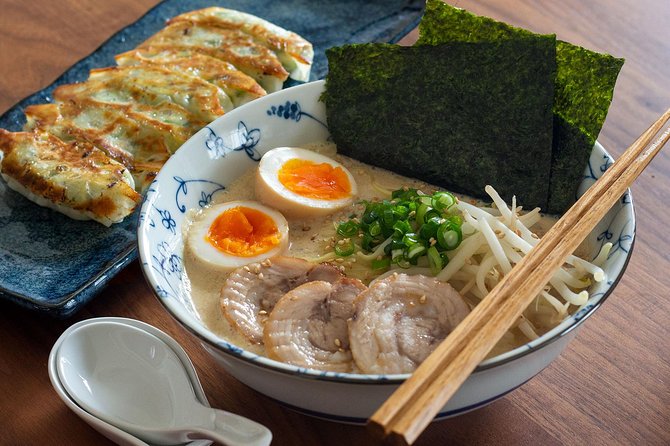
- Ramen broth without instant stock: learn a chicken-based method that gets you to a good broth in about 30 minutes
- Toppings from scratch: grilled pork and seasoned egg-style elements, plus other garnishes, all made during the class
- Gyoza from zero: you make the skin and the filling, then wrap and grill
- Small group size (max 5): more hands-on time and easier help when you get stuck
- Home-kitchen pacing: welcome tea, ingredient walkthrough first, then cooking together, then you eat and chat
- Practical substitutions: guidance on better ingredient swaps if you can’t find the same Japanese products at home
Flour on your hands, more Osaka kitchens to try
Why this Osaka ramen class feels like a home skill, not a demo
Osaka is packed with food experiences, but this one has a cleaner goal: help you cook home-style ramen and gyoza the way you’d do it for your own dinner. That means you’re not just learning “what ramen is.” You’re learning how to handle ingredients, how to control flavor, and how to put steps in a sensible order.
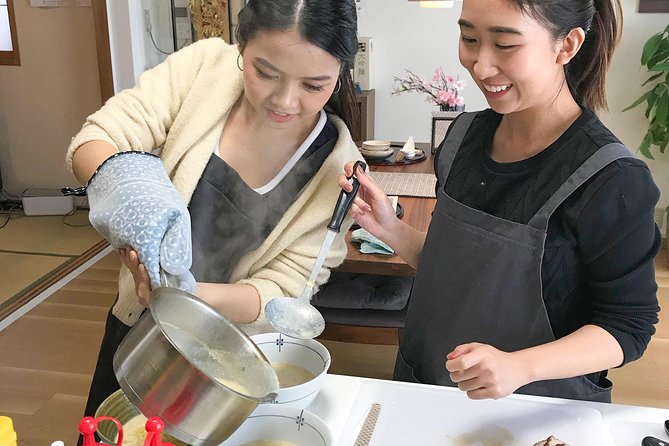
The class happens in Seiki’s home kitchen. That matters more than it sounds. In a home setup, you often get closer to the real logic of cooking: what you can prep ahead, how you sequence hot items, and how you adjust when something is too thick, too salty, or not quite there yet. You start with a welcome tea, then go through ingredients first, which is a simple but smart way to keep everyone grounded before hands start flying.
I also like that the class is designed around practice. You’re not just watching someone else wrap gyoza while you stand there hoping it makes sense. You cook together so the method sticks.
One more practical point: the group is small, capped at 5 people. For a hands-on food class, that’s the difference between getting quick help and struggling in silence. It also means you can ask specific questions as you go.
From Senri-Chuo Station to Seiki’s kitchen: the flow you’ll follow
You meet at Senri-Chuo Station (listed start location includes 1 Chome-3 Shinsenri Higashimachi, Toyonaka, Osaka 560-0082). Then you walk a few minutes to the kitchen. It’s short, but build in a little buffer if you’re arriving around rush times on Osaka trains.
The start time is 10:00 am, and the experience runs about 3 hours. That duration is ideal for ramen and gyoza because both take multiple steps. You’ll have time to do the work without feeling like everything is rushed at the end.
Once you arrive:
- You get welcome tea.
- Seiki explains the ingredients first so you understand what each one is doing.
- Then you follow demonstrations and cook together.
- Finally, you eat what you made and enjoy chatting after finishing.
The end point is back at the meeting point. So you’re not left figuring out a complicated return route late at day.
If you’re the type who likes a clear plan, you’ll appreciate this flow. If you hate walking even a few minutes after transit, just keep the “meet at Senri-Chuo + short walk” detail in mind.
The ramen broth lesson: creamy chicken ramen in about 30 minutes
Ramen often sounds like a long, secret-process project. This class is the opposite approach. You learn how to make a chicken-based ramen broth that reaches the goal in about 30 minutes, and it’s done without instant soup stock.
That detail is a big value point for you if you want to cook at home. Instant products can be fine, but they don’t teach you the underlying flavor-building. Learning a scratch method helps you understand how to adjust later. And if you’ve ever made ramen at home and wondered why it didn’t taste like the shop version, this kind of lesson is where you start correcting the basics.
You’ll learn:
- how to think about the broth base,
- how to move through steps efficiently,
- and how the “creamy” style comes from how you treat the components during cooking.
Seiki also mentions that all recipes were created by her to recreate easily at home. That’s key. Some classes teach a dish you can only cook in that exact kitchen. Here, you’re being set up for repeat success.
I’d come away from this type of lesson knowing what to do even if you’re missing one specific ingredient. Not because you’re guessing, but because you learned substitutes that make sense.


Building toppings like grilled pork and a seasoned egg
A lot of ramen at home fails because the broth isn’t the only thing. The toppings are part of the flavor story, texture, and balance. In this class, you learn to prepare ramen garnishes from scratch, including elements like grilled pork and a seasoned egg, plus other toppings.
What I like about teaching toppings inside a class like this is that you don’t treat them as store-bought add-ons. You see how the topping flavor is built and how it interacts with the broth.
As you cook, you’ll also get a feel for timing. In real ramen, it matters whether your topping is ready at the same time as the broth—or whether it sits and loses the texture you wanted. In a 3-hour format, Seiki can guide you so everything comes together for the shared meal at the end.
If you’re cooking for family later, this is the part you’ll use most. “Make ramen broth” is useful, but “make the topping that gives it that satisfying bite” is what turns it into a dinner, not a soup project.
And because Seiki creates the recipes to be practical, you’re not just copying an ideal version. You’re learning approaches that you can keep consistent.
Gyoza from scratch: skin, filling, wrapping, and grilling
Then comes the part people always want to get right: gyoza.
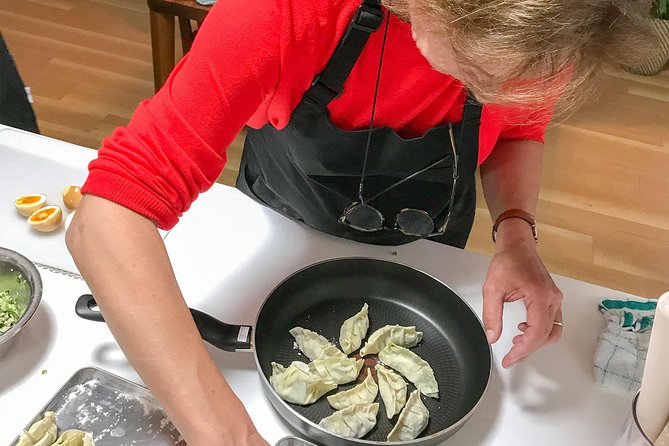
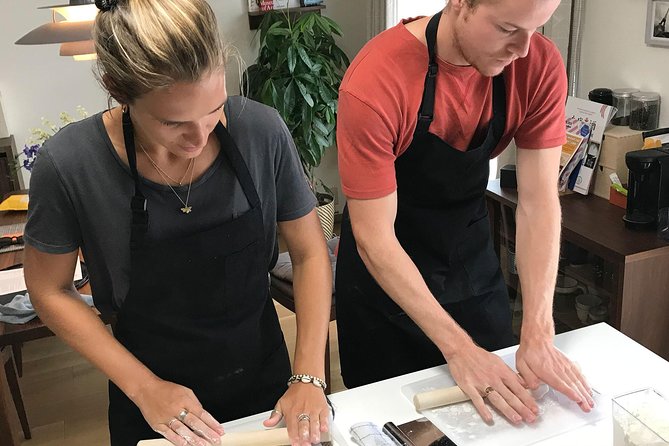
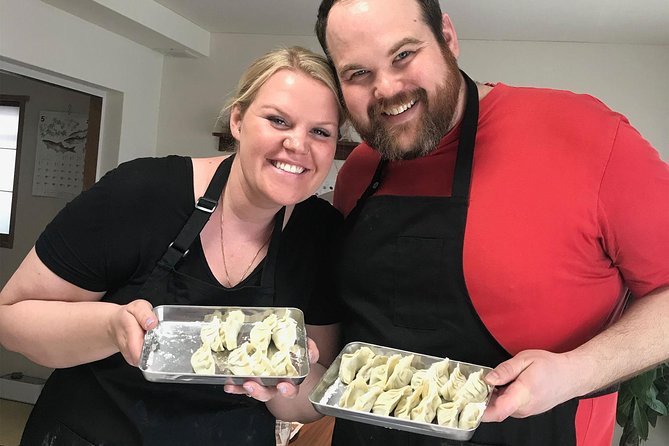
What makes this class strong is that you don’t just assemble dumplings. You make the gyoza skin and the filling yourself. Then you wrap, and you grill them as the finishing step.
That whole chain matters. Gyoza is easy to mess up if you skip one link:
- If the skin handling is off, your dumplings tear or won’t seal.
- If the filling balance is wrong, the inside tastes flat even if the wrapper looks good.
- If wrapping is inconsistent, cooking can leave you with uneven texture.
- If the grilling isn’t timed right, you lose the crisp edge effect.
This class covers all of that. The result is that you’ll leave with a repeatable method for making gyoza rather than a one-time “I assembled dumplings” win.
Seiki also teaches so you can do it again when you return home. That’s not a generic promise; you can see it in the structure: ingredient explanation first, demonstration, then you do the work.
Ingredient substitutions: the most useful advice for cooking outside Japan
One of the most practical parts of the class is the ingredient guidance for people who don’t have easy access to Japanese products. Seiki notes that she struggled to find the ingredients while living abroad, and that experience shapes how she teaches now.
For you, this is the difference between a fun class and a usable recipe plan. If you’ve ever tried to recreate Japanese dishes overseas, you know the frustration:
- a key item isn’t available,
- the substitute you find behaves differently,
- or it throws off the flavor target.
Here, you get suggestions for better alternatives, so you’re not stuck after the class ends. You’ll learn which substitutions make sense instead of doing guesswork. That means you can keep cooking ramen and gyoza at home without constantly hunting for specialty items.
Group size, timing, and price: is $78 fair value?
The price is $78 for about 3 hours in a group of up to 5 people, with a mobile ticket. On paper, it’s not a cheap activity. But food classes work differently than museum tickets.
This isn’t one dish. It’s ramen broth (from scratch), ramen toppings (multiple components), and gyoza (skin + filling + wrapping + grilling). The class also includes ingredient explanations, hands-on cooking, and then you eat together at the end.
So the value depends on what you want:
- If you want a hands-on ramen and gyoza method you can repeat, this is strong value.
- If you only want to taste Osaka food with minimal cooking, you might find it more work than you expected.
I also think the location and meeting flow matter. Senri-Chuo is doable, and the walk is short. But if you’re staying far away, factor in transit time so you don’t feel rushed.
For the money, the best part is the focus on repeat cooking. A class that gives you “technique + substitutions + home-ready recipes” can pay off fast if you actually cook at home afterward.
Who should book this Osaka ramen and gyoza class
This class fits best if you’re one of these types of people:
- You like learning methods you can repeat, not just eating a meal.
- You want to improve your home ramen beyond instant stock.
- You’re interested in gyoza made properly, including skin and filling.
- You enjoy small-group instruction where you can ask questions as you cook.
- You might be cooking outside Japan and want practical substitute guidance.
It may not be ideal if you strongly dislike structured cooking steps. This is hands-on. You’ll be wrapping, mixing, grilling, and moving between tasks.
One note from the class style: it’s taught in a patient, supportive way. That’s a big plus if you’re new to Japanese cooking. It’s also a fun choice if you’re traveling with kids who actually like helping in the kitchen—this class runs like a workshop, not a lecture.
What you’ll leave with: skills you’ll use for months
The best outcome isn’t just a good meal today. It’s the ability to cook at home and fix what usually goes wrong.
From this class, the practical “take-home” items are:
- A chicken broth approach that avoids instant soup stock and reaches the right goal fast
- A way to build toppings like grilled pork and seasoned egg-style components
- Gyoza method coverage: skin, filling, wrapping, and grilling
- A substitution mindset so you don’t stall if an ingredient is hard to find
- A home-ready structure—Seiki’s recipes are designed for easy repetition
That’s why the class feels like it’s about cooking, not just tourism. You leave with technique, and you can use it again and again.
Should you book this Cook Homestyle Ramen and Gyoza from scratch class?
Yes, if you want hands-on ramen and gyoza instruction in Osaka and you care about making it again at home. The standout value is the full workflow: scratch chicken broth, toppings, and gyoza from skin to grill, taught in a small group by Seiki with practical ingredient guidance for non-Japan kitchens.
I’d skip it only if you’re looking for a purely sightseeing-style experience, or if the Senri-Chuo meet-up doesn’t fit your schedule and you don’t want to manage transit.
If you’re already planning to eat Japanese food in Osaka, this is the one upgrade that turns food from something you consume into something you can cook.
FAQ
Where is the meeting point for this class?
The start location is Senri-Chuo Station area in Osaka Prefecture, listed as 1 Chome-3 Shinsenri Higashimachi, Toyonaka, Osaka 560-0082, Japan. You’ll walk a few minutes to the home kitchen.
What time does the class start?
The class starts at 10:00 am.
How long is the experience?
It runs for about 3 hours.
How much does it cost?
The price is $78.
How many people are in the group?
The class has a maximum of 5 travelers.
Is the ticket mobile?
Yes, it includes a mobile ticket.
What dishes will you make?
You’ll make home-style creamy ramen broth and ramen garnishes, then make gyoza from scratch (gyoza skin and filling), and wrap and grill the gyoza.
Do you use instant soup stock for the ramen broth?
No. You learn how to make a chicken-based ramen broth without instant soup stock, and you make it within about 30 minutes.
Does the class include eating what you cooked?
Yes. After cooking, you eat the dishes together and enjoy chatting afterward.
What if I cancel my booking?
This experience is non-refundable and cannot be changed for any reason. If you cancel or ask for an amendment, the amount you paid is not refunded.
More Tour Reviews in Osaka Prefecture
- Full Day Tour of Kyoto with Private Transportation★ 5.0 · 130 reviews
- Sakai – Knife Factory and Craft Walking Tour★ 5.0 · 44 reviews
- Kyoto private tour (Shore excursion available from Osaka or Kobe port)★ 5.0 · 39 reviews
- Private arrival Transfer from Kansai airport to Osaka city★ 4.5 · 36 reviews
- Private Transfer by Sedan from Itami Airport ITM to Kyoto City★ 4.5 · 31 reviews
Cook It Yourself in Osaka
- Osaka Sushi Cooking Class★ 5.0 · 3 reviews
The Newest Osaka Write-Ups
- Private Day Tour in Osaka and Kyoto with charter car
★ 5.0 · 3 reviews - Shared Arrival Transfer: Osaka Itami Airport to Osaka City
★ 5.0 · 3 reviews - Osaka Sushi Cooking Class
★ 5.0 · 3 reviews - Private Transfer Between Kyoto and Kansai Airport KIX
★ 5.0 · 3 reviews - Osaka : Cycling Tour Private Seaside Ride Near Kansai Airport
★ 5.0 · 3 reviews
Osaka Cooking Classes, compared.
 ★ 5.0Sushi Making Osaka Roll and Authentic Japanese Sushi ClassFrom $311,220 reviews
 ★ 4.7Five Must-See Highlights Walking Tour & Ramen LunchFrom $56411 reviews
 ★ 5.0Osaka Sushi Making ExperienceFrom $29400 reviews
 ★ 5.0Ramen and Gyoza Cooking Class in DotonboriFrom $70378 reviews
 ★ 4.3Sumo Stage Show with Bento or Snack + Fight & PhotoFrom $93364 reviews
 ★ 4.9Traditional Mochi Pounding Experience with TastingFrom $31306 reviews
 ★ 5.0Osaka Cooking Class: Okonomiyaki &Japanese cuisines experienceFrom $104261 reviews
 ★ 4.9Roll and Authentic Sushi Making Class in DotonboriFrom $45239 reviews
Browse the lists this tour appears in