
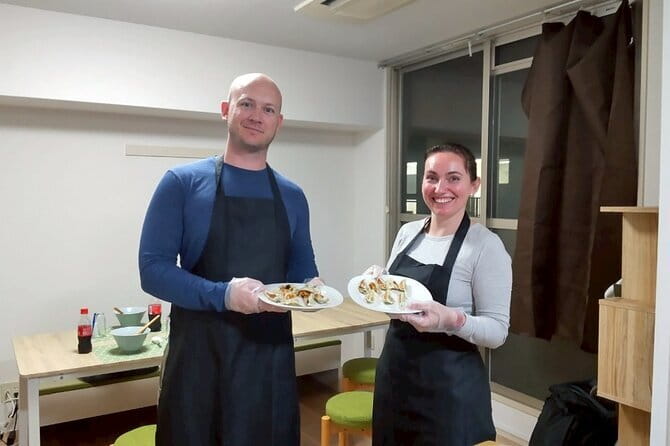
Reviewed · OSAKA COOKING CLASSES
Osaka Ramen Cooking Class “Learn here and make it at home”
Ramen made by hand beats takeout every time. In Osaka’s WashokuYanen kitchen, you learn ramen and fried gyoza step-by-step, with instructors fluent in English, Japanese, and Spanish. It’s equal parts lesson and dinner, and the kind of activity that leaves you with skills you can actually use later.
I love the simple rhythm: a short orientation, then hands-on cooking time, and finally a relaxed tasting where you eat what you made. I also like the location near Shinsaibashi and Honmachi, so you can fit the class into a normal Osaka day without long transfers.
One consideration: if you’re vegetarian, pescatarian, vegan, or have allergies, you’ll need to contact the operator after booking, since options and ingredient swaps aren’t listed as automatic.
In This Review
- Key things to know before you go
- A central Osaka cooking kitchen, close to Shinsaibashi and Honmachi
- The 3-hour flow: prep first, then ramen and gyoza cooking, then tasting
- Orientation and preparation (about 30 minutes)
- Cooking time (about 1.5 hours)
- Tasting with drinks (about 1 hour)
- Ramen skills you can repeat at home
- The broth and toppings idea that sticks
- A small drawback to keep in mind
- Fried gyoza: getting the crisp-one-side finish right
- Why the one-side crisp matters
- Tools, gloves, and the mess factor
- Instructors and languages: step-by-step help without the confusion
- Value check: is $70 for ramen and gyoza worth it?
- Why it feels like good value
- Who should book this Osaka ramen cooking class?
- Who should double-check before booking
- Should you book it or skip it?
- FAQ
- How long is the Osaka ramen cooking class?
- What will I make during the class?
- Do I need to bring ingredients or cooking tools?
- Are sake and beer included, and is there an age requirement?
- Where is the meeting point, and how close is it to public transport?
- Can you accommodate vegetarian, vegan, or allergy needs?
- How big is the group?
Key things to know before you go
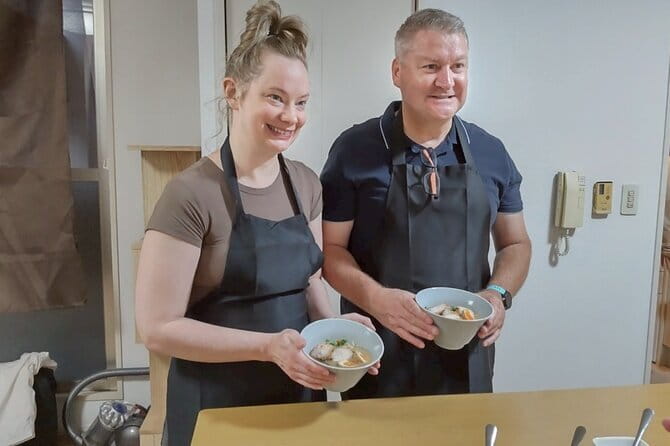
- Small group (max 8) keeps the lesson practical, not like a demo where you only watch.
- Central Osaka location: about a 5-minute walk from both Shinsaibashi and Honmachi Metro stations.
- Real meal included: you taste the ramen and fried gyoza you make, with drinks (sake/beer for 20+).
- Hands-on prep and cooking: you get an orientation and then cook for about 1.5 hours.
- All tools provided: aprons, disposable gloves, and kitchen tools are included, so you just bring yourself.
Flour on your hands, more Osaka kitchens to try


A central Osaka cooking kitchen, close to Shinsaibashi and Honmachi
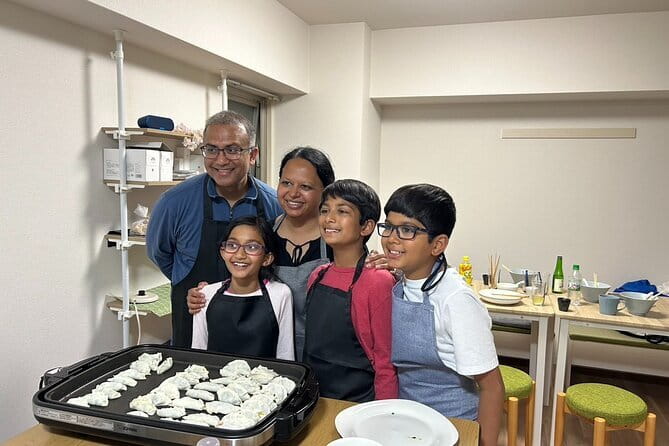
This class takes place in a working kitchen in central Osaka, and the big practical win is how easy it is to reach. Your start point is at ディアコート船場 (Bakurōmachi area, Chuo Ward). From there, the kitchen is described as about a 5-minute walk from both Shinsaibashi and Honmachi stations on the Osaka Metro.
That matters because Osaka is packed with neighborhoods that feel like a different city block in every direction. Being near major stations means you can plan your day around sights or shopping, then still make it to a cooking class without stress. And the kitchen is described as in a quiet neighborhood, which is a nice contrast to how loud and neon-heavy parts of Osaka can be outside.
You’ll also have an easy ticket experience. The class uses a mobile ticket, so you don’t need to hunt for paper instructions.
Finally, group size is capped at 8 travelers, which is a comfort factor if you worry about cooking with strangers. Smaller groups tend to mean more attention during the tricky bits, like shaping dumplings and managing stovetop timing.
The 3-hour flow: prep first, then ramen and gyoza cooking, then tasting
This is a compact, well-paced session designed to get you cooking fast. The total time is about 3 hours, split into three clear phases:
Orientation and preparation (about 30 minutes)
You start with a short orientation. This is where you get the baseline: what you’ll make, how the stations work, and how to handle the tools and ingredients safely. It’s also your chance to ask questions before you’re in the thick of it.
Even if you’ve never touched ramen or gyoza dough before, this intro helps you avoid that common cooking class problem: everyone scrambling because nobody explained the flow.
Put this one next to a few other Osaka options first:

Cooking time (about 1.5 hours)
After the prep session, the main work starts. You’ll be guided step-by-step as you make:
- Ramen (Japanese noodle soup), including toppings such as pork, chicken, egg, and vegetables
- Fried gyoza, filled with meat and vegetables
The class format is interactive. You’re not just learning recipes on a card; you’re learning techniques with your hands. And because the group is small, you’re more likely to get quick corrections if something looks off.
Tasting with drinks (about 1 hour)
Then comes the best part: eating. Your tasting includes what you cooked—ramen and gyoza—plus drinks such as sake, beer, and soft drinks.
Important note for planning: alcoholic drinks (sake and beer) are served only to travelers age 20 and above. If you’re under 20, you’ll be served non-alcoholic drinks.
One more practical detail: you’ll likely enjoy the meal more than a typical restaurant dinner because you understand what you did and what you’re tasting. That changes the flavor experience in a real way.
Ramen skills you can repeat at home
Ramen is one of those foods people either think is too complex—or assume it’s just noodles and seasoning. This class pushes you toward the right mindset: ramen is a set of components that come together into a bowl.
Here’s what you’ll actually be making in the class:
- Ramen: Japanese noodle soup with a rich broth
- Toppings: pork, chicken, egg, and vegetables
The value is not only that you’ll eat a bowl, but that you’ll learn how the different elements are assembled and handled. Cooking classes often stop at mixing and heating. This one is structured so you do the steps and practice the techniques while an instructor guides you.
From a home-cooking point of view, that’s where the class pays off. You’ll be able to think in components rather than chasing a single secret ingredient. Even if your exact ingredients differ later at home, you’ll know what to aim for: broth depth, the toppings balance, and a serving style that resembles what you prepared.
The broth and toppings idea that sticks
Because ramen toppings like pork, chicken, egg, and vegetables are part of your class experience, you get exposure to a common ramen approach: start with a flavorful base, then build the bowl. That’s useful if you ever want to make ramen for friends and customize toppings to your preferences.
A small drawback to keep in mind
If you’re expecting a lecture-style explanation of ramen history or noodle chemistry, this is not that kind of class. It’s hands-on, kitchen-first learning. If that’s what you want, you’ll probably have a great time. If you want theory, you might have to supplement with what you observe during cooking and ask during the orientation.
Fried gyoza: getting the crisp-one-side finish right
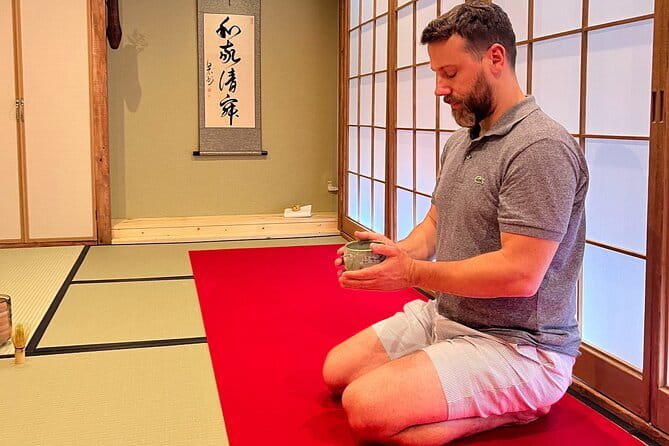
Gyoza has a reputation for being finicky. The class addresses that by treating it like a technique exercise, not just a recipe. You’ll make fried gyoza with a filling of vegetables and pork, then cook them until you get the characteristic texture.
What you’ll learn to produce:
- Japanese dumplings filled with meat and vegetables
- Fried so they’re crispy on one side
- Served with a dipping sauce
Even if you’ve eaten gyoza a hundred times, the difference here is that you’ll form and handle the dumplings yourself. That’s the part that gives you usable confidence later when you try making them again.
Why the one-side crisp matters
The “crispy on one side” detail is more than a description. It’s a cooking target. When you get it right, you understand the balance between heat and time. That knowledge is transferable to future dumpling experiments, even if your home pan and burner are different.
Tools, gloves, and the mess factor
You’ll get aprons and disposable plastic gloves, plus kitchen tools. That setup is there for a reason. Gyoza dough and fillings get hands-on fast, and having protection helps you focus on technique rather than worrying about cleanup.
Instructors and languages: step-by-step help without the confusion
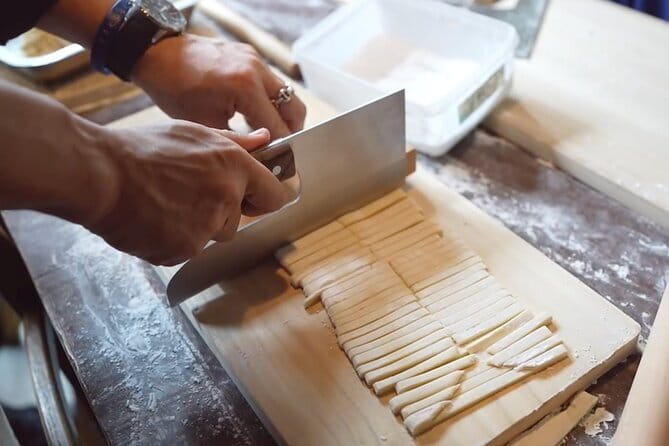
The instructor team is a major part of why this experience works. The class is taught by instructors fluent in English, Japanese, and Spanish, and a Spanish-speaking instructor is available upon request.
A cooking class can be stressful when language barriers exist. Here, the guidance is built into the experience. Even if your Japanese is limited, you should still be able to follow what to do next, because the class is structured around steps you’re performing.
And based on the overall feedback tone for this class, the teaching style leans friendly and welcoming. That kind of atmosphere matters when you’re doing something new. You want an instructor who corrects mistakes quickly and calmly, not someone who makes you feel like you’re behind.
The small group size also supports this. With fewer people, it’s easier for the instructor to notice what’s happening at your station and help you adjust.
Value check: is $70 for ramen and gyoza worth it?
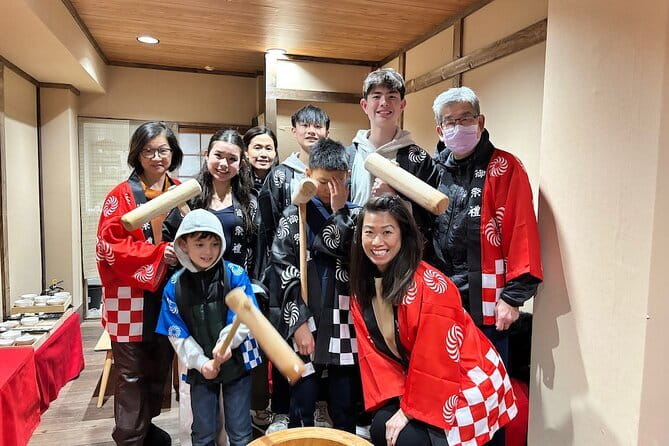
At $70 per person, you’re paying for more than a meal. You’re buying instruction, ingredients, tools, and the full “eat what you made” experience, all within about three hours.
Here’s what’s included:
- All ingredients for the class
- Kitchen tools
- Aprons and disposable gloves
- Instructor guidance in English/Japanese (and Spanish upon request)
- Drinks during tasting: sake, beer, and soft drinks
- The ramen and fried gyoza tasting
What’s not included is private transportation, but that’s common for city-based classes.
Why it feels like good value
You’d likely spend money anyway on dinner while you’re in Osaka. The class adds the “learning” component and makes your meal into a takeaway skill. You don’t walk out with a souvenir only—you walk out with the confidence to cook ramen and gyoza components at home.
Also, the group is small. That’s part of the pricing logic: you’re not paying for a big assembly line.
If you care about hands-on experiences and want something more memorable than a restaurant meal, this is one of the clearer “value-for-fun” activities in Osaka.
Who should book this Osaka ramen cooking class?
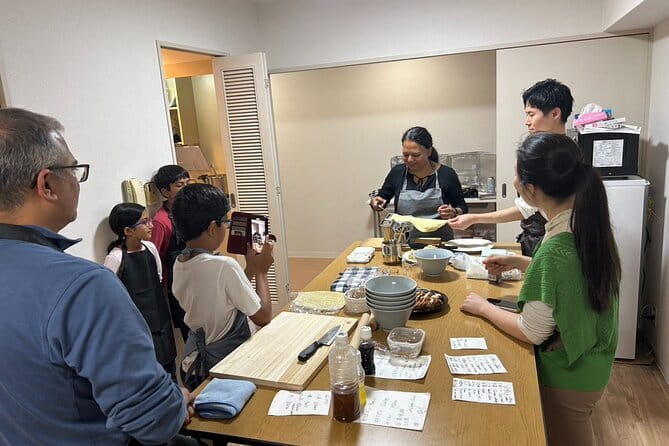
This experience is a strong fit if you want:
- A fun, interactive activity that results in dinner
- A beginner-friendly introduction to ramen and gyoza techniques
- A structured way to learn without prepping ingredients yourself
- A small-group cooking experience (max 8)
It also works well for solo travelers, because the class is designed to start from scratch and you don’t need a partner to make it go smoothly.
Who should double-check before booking
If you have dietary needs—vegetarian, pescatarian, vegan, or allergies—you should contact the operator after booking. Availability isn’t described as guaranteed, and the class note specifically says to message after you’ve booked. That means you’ll want to do that early so you’re not close to your travel dates.
Also note the class requires good weather. If it’s canceled due to weather, you’ll be offered a different date or a full refund.
Should you book it or skip it?
Book it if you want a genuinely practical Osaka experience: make ramen and fried gyoza with step-by-step help, eat your creations right away, and leave with techniques you can use again. The small group limit, included ingredients/tools, and the tasting with drinks make it feel complete for the price.
Skip it only if you’re mainly looking for a sightseeing-style tour or you’re not interested in hands-on cooking. This is kitchen time first. If you’re happy getting a little messy and following instructions, you’ll likely have a memorable meal and a new home-cooking project.
FAQ
How long is the Osaka ramen cooking class?
The class runs for about 3 hours total: 30 minutes of orientation and preparation, 1.5 hours of cooking, and about 1 hour to taste the ramen and gyoza with drinks.
What will I make during the class?
You’ll make ramen (Japanese noodle soup with rich broth and toppings such as pork, chicken, egg, and vegetables) and fried gyoza (dumplings filled with vegetables and pork, cooked crispy on one side and served with dipping sauce).
Do I need to bring ingredients or cooking tools?
No. The class provides all ingredients and tools. You just bring yourself. Aprons and disposable plastic gloves are included.
Are sake and beer included, and is there an age requirement?
Yes, the tasting includes alcohol such as sake and beer, plus soft drinks. Alcohol is only served to travelers age 20 and above; under 20 is non-alcoholic drinks.
Where is the meeting point, and how close is it to public transport?
The meeting point is ディアコート船場 (Bakurōmachi, Chuo Ward, Osaka). The kitchen is about a 5-minute walk from both Shinsaibashi and Honmachi stations on the Osaka Metro.
Can you accommodate vegetarian, vegan, or allergy needs?
You’ll need to contact the operator after booking to discuss vegetarian, pescatarian, vegan options, or allergies. The class notes say to message them after your booking is complete.
How big is the group?
The class has a maximum group size of 8 travelers.
Take Home Something You Made
- Sushi Making Osaka Roll and Authentic Japanese Sushi Class★ 5.0 · 1,220 reviews
- Matcha Making Class in Osaka with Authentic Japanese Sweets Set★ 5.0 · 509 reviews
- Osaka: Ramen and Gyoza Cooking Class in Dotonbori★ 5.0 · 378 reviews
- Osaka Cooking Class: Okonomiyaki &Japanese cuisines experience★ 5.0 · 261 reviews
- Osaka: Roll and Authentic Sushi Making Class in Dotonbori★ 4.9 · 239 reviews
More Tour Reviews in Osaka
- Osaka Go Karting Tour with Funny Costume★ 5.0 · 2,658 reviews
- Osaka Castle: Museum and Tower Entry Ticket★ 4.5 · 2,380 reviews
- Osaka: Shinsekai Food Tour with 13-15 Dishes at 5 Eateries★ 4.8 · 2,204 reviews
- Osaka Food Tour: 13 Dishes at 5 Local Eateries★ 5.0 · 2,149 reviews
- Hungry Osaka Street Food Tour:15 Tastings & 3 Drinks with a Local★ 5.0 · 1,727 reviews
Cook It Yourself in Osaka
- Sushi Making Osaka Roll and Authentic Japanese Sushi Class★ 5.0 · 1,220 reviews
- Osaka: Five Must-See Highlights Walking Tour & Ramen Lunch★ 4.7 · 411 reviews
- Osaka Sushi Making Experience★ 5.0 · 400 reviews
- Osaka: Ramen and Gyoza Cooking Class in Dotonbori★ 5.0 · 378 reviews
- Osaka: Sumo Stage Show with Bento or Snack + Fight & Photo★ 4.3 · 364 reviews
The Newest Osaka Write-Ups
- Private Photoshoot in Osaka with a Professional Photographer
★ 5.0 · 3 reviews - Osaka Early Morning Osaka Castle Tour Avoid Crowds
★ 5.0 · 3 reviews - Nara Private Tour with Pick and Drop and English Speaking Driver
★ 3.5 · 3 reviews - Osaka: Modern Vegetarian Sushi Cooking Class
★ 5.0 · 3 reviews - Nara Day Trip from Osaka with a Licensed Guide
★ 5.0 · 3 reviews
Osaka Cooking Classes, compared.
 ★ 5.0Sushi Making Osaka Roll and Authentic Japanese Sushi ClassFrom $311,220 reviews
 ★ 4.7Five Must-See Highlights Walking Tour & Ramen LunchFrom $56411 reviews
 ★ 5.0Osaka Sushi Making ExperienceFrom $29400 reviews
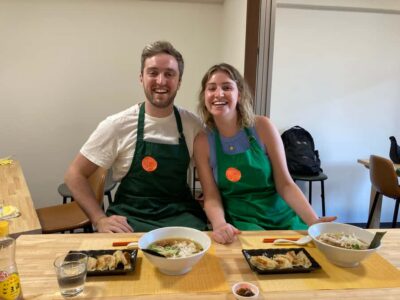 ★ 5.0Ramen and Gyoza Cooking Class in DotonboriFrom $70378 reviews
 ★ 4.3Sumo Stage Show with Bento or Snack + Fight & PhotoFrom $93364 reviews
 ★ 4.9Traditional Mochi Pounding Experience with TastingFrom $31306 reviews
 ★ 5.0Osaka Cooking Class: Okonomiyaki &Japanese cuisines experienceFrom $104261 reviews
 ★ 4.9Roll and Authentic Sushi Making Class in DotonboriFrom $45239 reviews
Browse the lists this tour appears in