
Reviewed · OSAKA COOKING CLASSES
Osaka: Gluten-Free Ramen and Gyoza Cooking Class
Fresh noodles change everything. In Osaka, you’ll learn to make gluten-free ramen noodles and gyoza wrappers from scratch with a local chef in a small home kitchen. I love how practical the class feels, since you’re not just tasting—you’re doing the steps that make ramen and dumplings work.
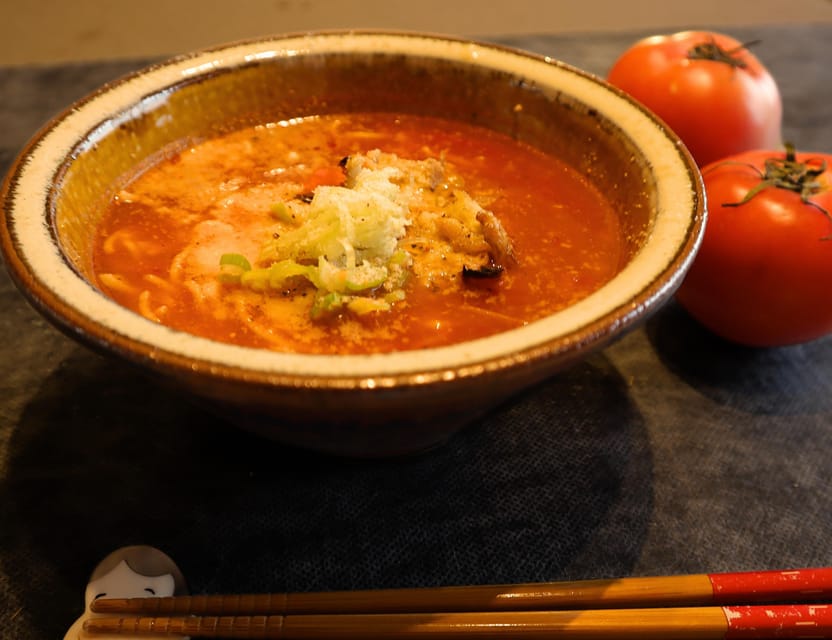
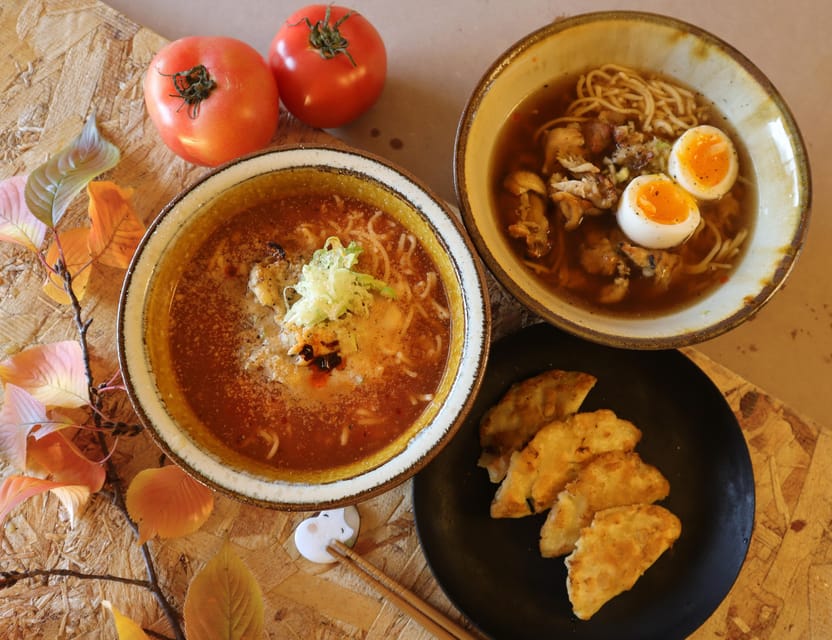
The upside for you is clear: you build both a classic soy sauce ramen version and a tomato ramen twist, then finish by folding and pan-frying crisp gyoza. One consideration: because it’s hands-on in a residential setting, plan for comfortable cooking clothes and some time on your feet, even though prior experience isn’t required.
In This Review
- Key things that make this class worth your time
- Handmade Gluten-Free Ramen and Gyoza in Osaka’s Residential Neighborhood
- Price and timing: what $103 buys you in real skills
- Your ramen starts with rice flour noodles, not shortcuts
- Soy sauce ramen broth: classic comfort with real technique
- Tomato ramen: the tangy twist you’ll remember
- Gyoza wrappers from rice flour: the step many classes skip
- Filling and folding: how to get crisp, not just cooked
- Sake pairing option: chilled and warm Junmai with your meal
- What you eat: a full meal you built with your own hands
- The small-group feel: patient teaching in English (and Japanese)
- Practical tips so your cooking goes smoothly
- Should you book this Osaka gluten-free ramen and gyoza class?
- FAQ
- Where is the meeting point for the class?
- How long is the cooking class?
- Is this a small group experience?
- What language is the instructor teaching in?
- What dishes will I make during the class?
- Is sake pairing included?
- What’s included in the price?
- What should I wear?
- Do I need prior cooking experience?
- Is transportation provided, and what about cancellations?
Key things that make this class worth your time
- Make ramen noodles and gyoza wrappers from scratch using rice flour techniques
- Two ramen styles: classic soy sauce ramen plus tomato ramen (a rarer Japanese take)
- Gyoza folding practice aimed at that crisp outside and tender inside balance
- Small group size (up to 4) with a single instructor for plenty of attention
- Optional sake pairing with chilled and warm Junmai servings
- You eat what you make as a full meal, not a quick bite
Flour on your hands, more Osaka kitchens to try

Handmade Gluten-Free Ramen and Gyoza in Osaka’s Residential Neighborhood
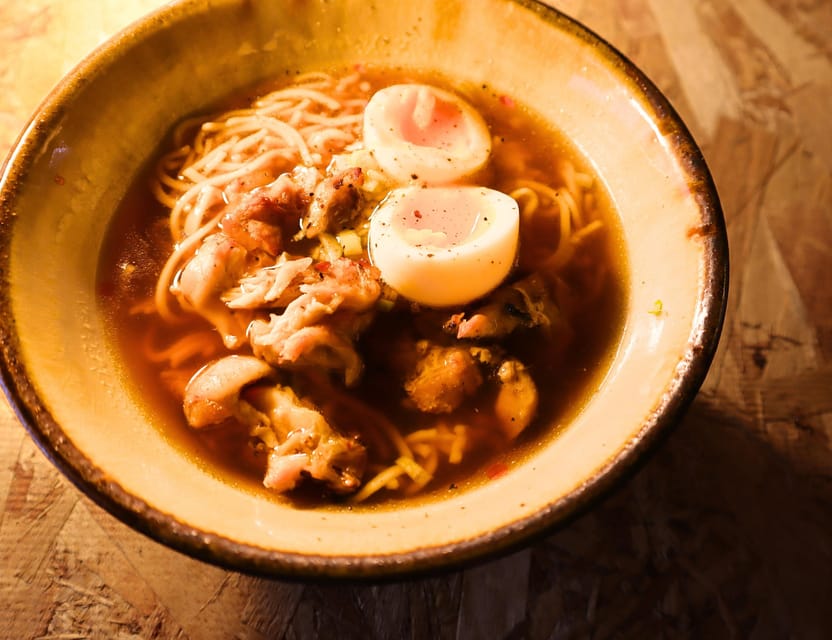
This is the kind of Osaka experience that feels like a friend invited you over to cook, not a mass-production show. The class is hosted in a Japanese-style home in Honshu, in a quiet neighborhood where you can actually hear yourself think while you roll, fold, and stir.
Your meeting point is 4-19 Nukata-cho, a short 5-minute walk from Nukata Station. You’ll find it with a welcoming sign at the entrance, in a clean residential-style building. After booking, you get detailed directions so you can find it without doing detective work.
The best part for me is that the cooking isn’t treated like a science experiment you can fail. The chef’s whole approach is step-by-step, which matters when you’re working gluten-free and trying to get the right chew and texture.
Price and timing: what $103 buys you in real skills
At $103 per person for 3 hours, you’re paying for ingredients, equipment, and—most importantly—guided, hands-on teaching from a chef. With a small group limited to 4 participants, you’re not stuck waiting your turn while someone else does the hard part.
This class is also good timing if you want something more meaningful than a standard meal. Three hours gives enough time to actually make noodles, prep broth, fold dumplings, and cook them properly—without rushing through the steps.
Who it fits best:
- You care about gluten-free cooking and want techniques you can repeat at home.
- You like cooking classes where you leave with both recipes and a mental map of what to do next time.
- You’re traveling with someone and want a shared activity that ends in a real meal.
One thing to note: transportation to the venue isn’t included. If you’re staying far from Nukata Station, factor in local transit time (and a quick buffer so you arrive with time to settle in).
Your ramen starts with rice flour noodles, not shortcuts
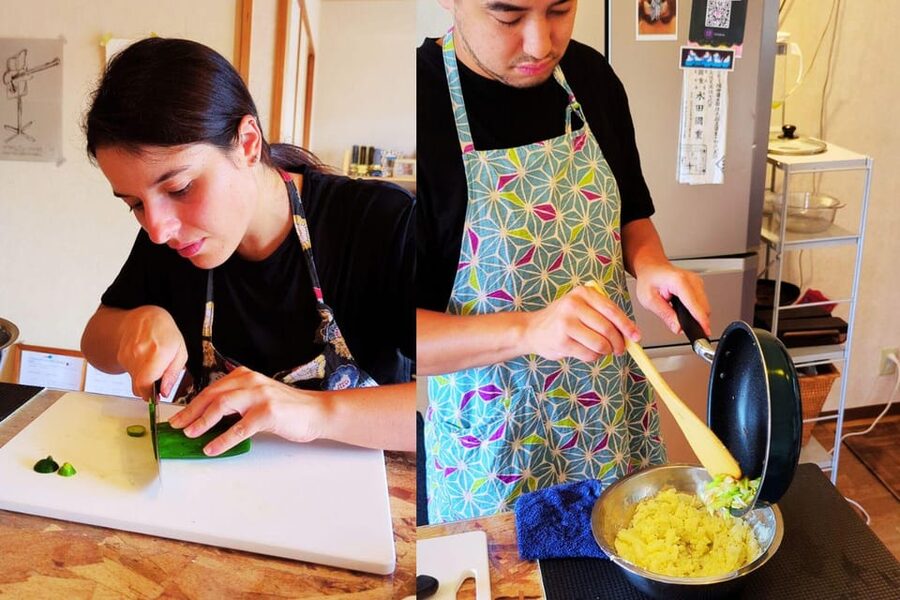
Most ramen is built on wheat noodles, so going gluten-free changes the whole texture conversation. Here, you start by making ramen noodles using rice flour, with guidance on how to get that chewy feel instead of a brittle or gummy result.
You’ll work through the steps needed to shape the dough and portion it, then you’ll learn how to think about texture while cooking. That mindset is useful for you even after class, because gluten-free noodles behave differently than wheat-based ones—you learn what to watch for, not just what to follow.
One reason this section is so valuable: ramen is where gluten-free recipes often disappoint. A good gluten-free noodle needs the right structure, moisture balance, and cooking timing. The chef’s instruction is designed to help you avoid the two common failures: noodles that break and noodles that turn too soft too fast.
If you’re a total beginner, you’ll still be able to participate. The class is set up so you’re not required to know knife skills like a pro—your job is to follow steps, ask questions, and keep moving.
Put this one next to a few other Osaka options first:

Soy sauce ramen broth: classic comfort with real technique
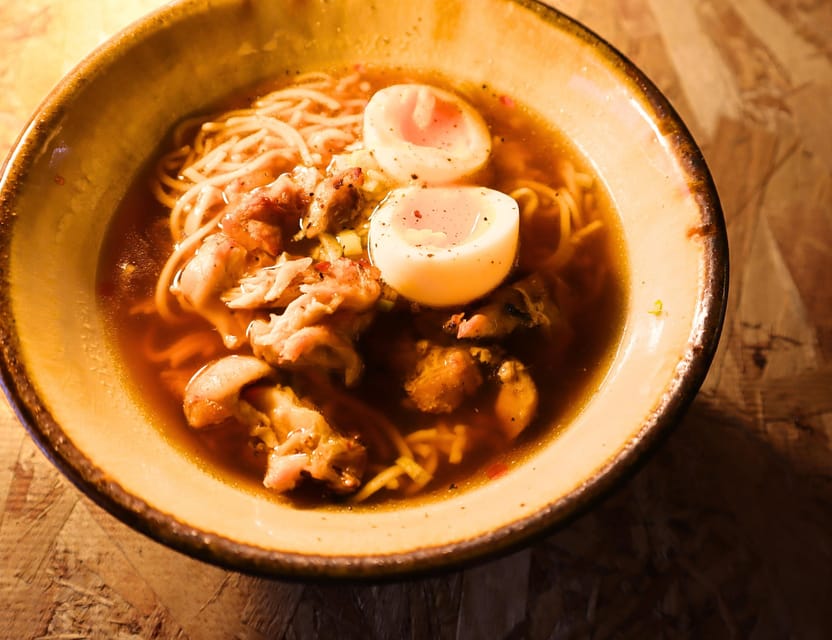
After the noodles, you’ll make a soy sauce-based ramen broth—savory, warm, and built around a classic Japanese flavor profile. This is the part that makes your ramen taste like ramen, not just noodles in hot liquid.
You’ll learn what goes into the broth and how to build that deep soy flavor in a way that pairs with gluten-free noodles. You also get the practical lesson that ramen isn’t only about noodles—it’s about how the broth clings, balances, and carries flavor to every bite.
I like that this class doesn’t treat soy sauce ramen as the only option. It gives you a baseline you can understand, then you can compare it to the tomato version that comes next.
Tomato ramen: the tangy twist you’ll remember
Then comes the modern twist: tomato ramen. In Japan, this style is less common than soy sauce ramen, which means you’ll likely be trying something that feels familiar but new.
The important thing for you is not just the flavor. It’s learning how to take a ramen format and swap the flavor direction without breaking the overall harmony. Tomato ramen also trains your palate to notice how acidity changes what the noodles and toppings need.
If you love variety in your cooking, this is the section that will stick with you. You get a classic reference point, then you see how the same ramen framework can shift dramatically just by changing the broth style.
Gyoza wrappers from rice flour: the step many classes skip
Gyoza tastes simple until you try making it. The class takes it seriously by having you craft gluten-free gyoza wrappers from rice flour. That’s not a minor tweak—it’s the foundation of how the dumplings seal and crisp.
You’ll work the wrapper process step-by-step, learning how to handle dough and how to keep it workable. This matters because gluten-free dough can dry out or behave differently than wheat dough, so technique changes the result.
I also appreciate how this part builds confidence. Wrapping dumplings sounds tricky, but you’re guided through the practical motions until your hands understand what the chef means.
Filling and folding: how to get crisp, not just cooked
Next you’ll make a savory filling and then fold gyoza into dumplings. This is where you learn the fold, the seal, and the key details that keep dumplings intact during pan-frying.
You’ll get instruction on how to shape the dumplings and handle them so they don’t open up. And since the class is small—limited to 4 participants—you can get help when you get stuck, instead of waiting for a late-stage rescue.
The cooking goal is clear: pan-fry until golden while keeping the inside tender. You’ll learn how crisping works in practice, including the balance between browning and cooking through.
When the gyoza hit that crispy outside and tender inside combo, you’ll understand why chefs obsess over tiny steps. Your brain will start mapping what you smell and see to what’s happening in the pan.
Sake pairing option: chilled and warm Junmai with your meal
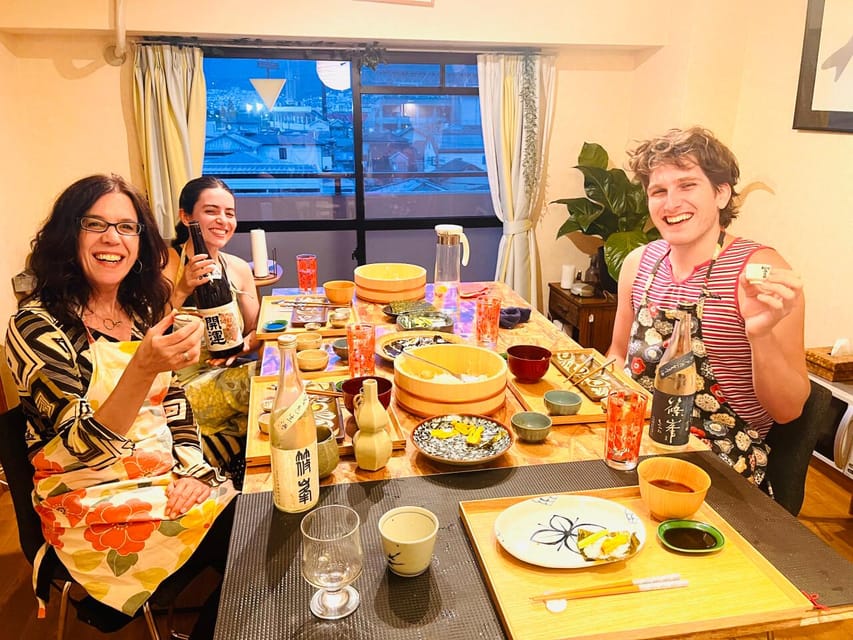
If you choose the optional sake pairing, you’ll get three 45ml servings: two chilled sakes (Junmai and Junmai Ginjo) plus one warm Junmai. The point isn’t fancy drinking. It’s learning how different styles react with your ramen and gyoza flavors.
Chilled Junmai and Junmai Ginjo tend to feel cleaner and sharper, which can help cut through rich soy broth and fried dumpling edges. Warm Junmai usually brings a softer, rounder tone that can sit nicely with comforting soups.
This is a fun add-on if you already like sake, but it’s also educational even if you’re not a big drinker. You’ll notice how temperature changes taste and how pairing isn’t random—it’s about matching intensity.
What you eat: a full meal you built with your own hands
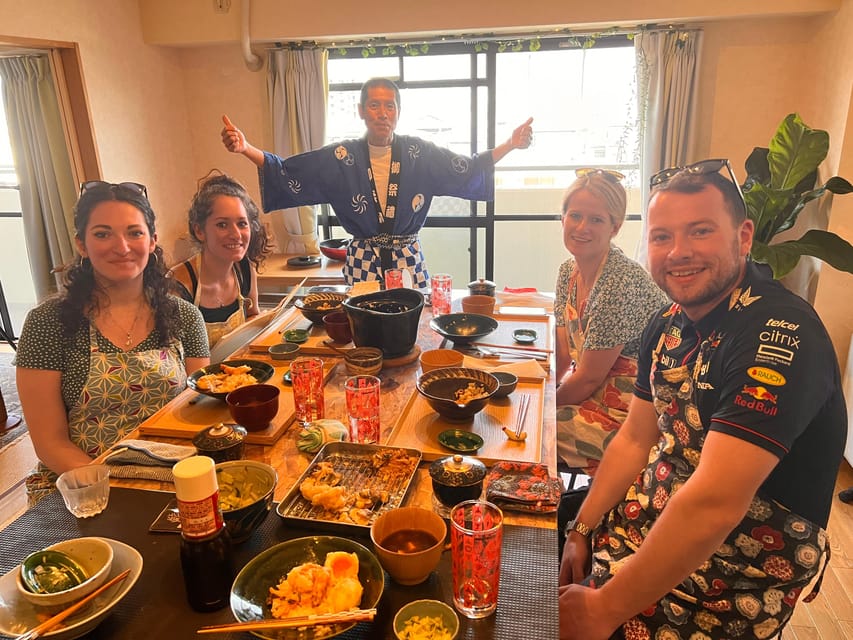
Once cooking is done, you sit down for the meal of your creations. This is one of those classes where the food isn’t an afterthought. Your ramen and gyoza are the main event.
The chef guides you through how the flavors work together and how the sake pairing fits in, so you can actually understand what you’re tasting. That turns the meal into a lesson, not just a reward.
And because you made both noodle and dumpling components, you’ll likely eat more slowly and notice details. That makes the whole experience stick longer in your memory.
The small-group feel: patient teaching in English (and Japanese)
This class is taught by a single instructor, and the teaching style shows up in the way the group stays relaxed. Reviews highlight that Yuki is patient and kind, with clear explanations that work for different skill levels.
Language support is practical: the instructor teaches in English. You might also hear Japanese cues and terms as part of the instruction, but the main goal is that you can follow every step.
I love that the chef is the kind of teacher who answers questions instead of rushing past them. When you’re making gluten-free versions of wheat-based classics, you’ll have plenty of moments where you need reassurance about texture and timing.
Also, the setting is intimate. It’s not a factory kitchen, and that can be a plus. You’re more likely to get personal feedback on your noodle shape, wrapper handling, or dumpling sealing.
Practical tips so your cooking goes smoothly
Come ready to work. This is hands-on, so your clothes matter.
- Wear comfortable clothes that can handle kitchen activity.
- Come hungry for knowledge and food. You’ll be tasting while you go, and you’ll want the final meal to feel like a reward.
- You don’t need prior cooking experience, so focus on following steps rather than trying to be impressive.
Logistics that help:
- Plan to arrive a little early. The meeting point is easy—5 minutes from Nukata Station—but residential buildings mean you’ll want time to find the right entrance.
- Transportation isn’t provided, so decide your transit plan before you head out.
If you’re gluten-free due to allergy rather than preference, this class’s gluten-free focus is a big deal. The chef’s approach is built specifically for gluten-free cooking, which generally makes the experience feel safer and more straightforward than ordering food and hoping it’s handled correctly.
Should you book this Osaka gluten-free ramen and gyoza class?
Yes, you should book it if you want more than a meal—you want real technique. The combination of handmade gluten-free ramen noodles, two ramen styles, and gyoza wrappers plus dumplings gives you skills you can actually bring home.
It’s especially worth it if you’ve ever tried gluten-free ramen at a restaurant and felt it was missing chew, structure, or that true ramen satisfaction. Here, you learn how to create the core components yourself.
I’d skip it if you’re looking for a quick tasting experience with zero work. This class is built for doing the cooking. Also, it isn’t suitable for people over 95 years, so check that if you’re traveling with someone older.
If you want an Osaka day that mixes Japanese home cooking, small-group attention, and a finished plate that’s truly yours, this is a smart choice.
FAQ
Where is the meeting point for the class?
The meeting point is 4-19 Nukata-cho, Osaka, about a 5-minute walk from Nukata Station. It’s in a quiet residential neighborhood and marked with a welcoming sign at the entrance.
How long is the cooking class?
The class lasts 3 hours.
Is this a small group experience?
Yes. It’s limited to 4 participants, so you’ll get more personal guidance.
What language is the instructor teaching in?
The class is taught in English.
What dishes will I make during the class?
You’ll make gluten-free ramen noodles, soy sauce ramen broth, tomato ramen, gluten-free gyoza wrappers, and gyoza dumplings.
Is sake pairing included?
An optional sake pairing is available. If you choose it, you’ll have three 45ml servings (two chilled and one warm Junmai).
What’s included in the price?
The included items are the hands-on cooking class, a personal instructor, recipes and tips, and a full meal of your creations.
What should I wear?
Wear comfortable clothes suitable for cooking, and come ready to work with your hands.
Do I need prior cooking experience?
No. No prior cooking experience is required.
Is transportation provided, and what about cancellations?
Transportation to the venue is not included. You can cancel up to 24 hours in advance for a full refund.
Take Home Something You Made
- Sushi Making Osaka Roll and Authentic Japanese Sushi Class★ 5.0 · 1,220 reviews
- Matcha Making Class in Osaka with Authentic Japanese Sweets Set★ 5.0 · 509 reviews
- Osaka: Ramen and Gyoza Cooking Class in Dotonbori★ 5.0 · 378 reviews
- Osaka Cooking Class: Okonomiyaki &Japanese cuisines experience★ 5.0 · 261 reviews
- Osaka: Roll and Authentic Sushi Making Class in Dotonbori★ 4.9 · 239 reviews
More Tour Reviews in Osaka
- Osaka Go Karting Tour with Funny Costume★ 5.0 · 2,658 reviews
- Osaka Castle: Museum and Tower Entry Ticket★ 4.5 · 2,380 reviews
- Osaka: Shinsekai Food Tour with 13-15 Dishes at 5 Eateries★ 4.8 · 2,204 reviews
- Osaka Food Tour: 13 Dishes at 5 Local Eateries★ 5.0 · 2,149 reviews
- Hungry Osaka Street Food Tour:15 Tastings & 3 Drinks with a Local★ 5.0 · 1,727 reviews
Cook It Yourself in Osaka
- Sushi Making Osaka Roll and Authentic Japanese Sushi Class★ 5.0 · 1,220 reviews
- Osaka: Five Must-See Highlights Walking Tour & Ramen Lunch★ 4.7 · 411 reviews
- Osaka Sushi Making Experience★ 5.0 · 400 reviews
- Osaka: Ramen and Gyoza Cooking Class in Dotonbori★ 5.0 · 378 reviews
- Osaka: Sumo Stage Show with Bento or Snack + Fight & Photo★ 4.3 · 364 reviews
The Newest Osaka Write-Ups
- Private Photoshoot in Osaka with a Professional Photographer
★ 5.0 · 3 reviews - Osaka Early Morning Osaka Castle Tour Avoid Crowds
★ 5.0 · 3 reviews - Nara Private Tour with Pick and Drop and English Speaking Driver
★ 3.5 · 3 reviews - Osaka: Modern Vegetarian Sushi Cooking Class
★ 5.0 · 3 reviews - Nara Day Trip from Osaka with a Licensed Guide
★ 5.0 · 3 reviews
Osaka Cooking Classes, compared.
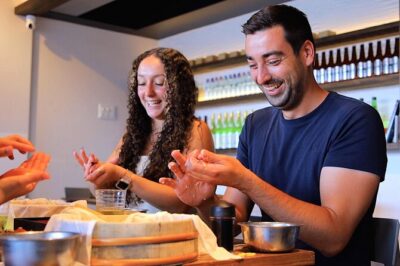 ★ 5.0Sushi Making Osaka Roll and Authentic Japanese Sushi ClassFrom $311,220 reviews
 ★ 4.7Five Must-See Highlights Walking Tour & Ramen LunchFrom $56411 reviews
 ★ 5.0Osaka Sushi Making ExperienceFrom $29400 reviews
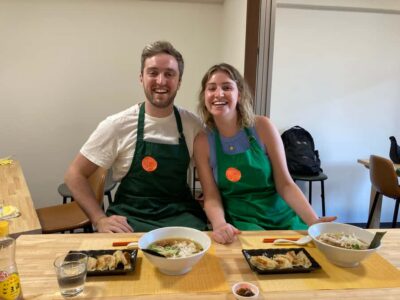 ★ 5.0Ramen and Gyoza Cooking Class in DotonboriFrom $70378 reviews
 ★ 4.3Sumo Stage Show with Bento or Snack + Fight & PhotoFrom $93364 reviews
 ★ 4.9Traditional Mochi Pounding Experience with TastingFrom $31306 reviews
 ★ 5.0Osaka Cooking Class: Okonomiyaki &Japanese cuisines experienceFrom $104261 reviews
 ★ 4.9Roll and Authentic Sushi Making Class in DotonboriFrom $45239 reviews
Browse the lists this tour appears in