
Reviewed · OSAKA TEA CEREMONY & MATCHA
Tea ceremony experience in Osaka with a small group
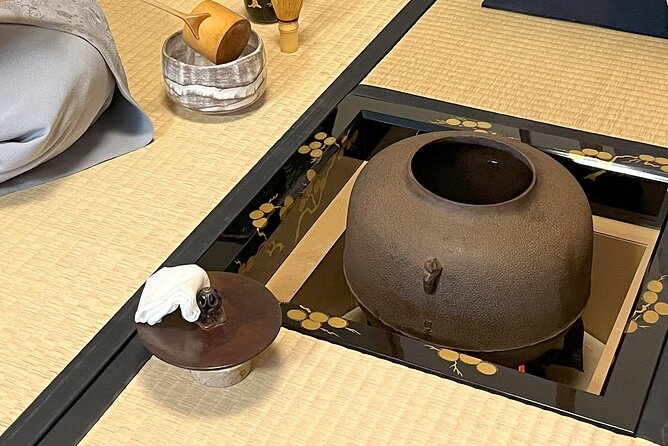
A tea ceremony makes time slow down. In a small group of up to four, you get a guided tatami room session with matcha, sweets, and clear instruction that brings the etiquette to life. I especially like the hands-on focus on making matcha yourself and the calm, attentive teaching style that keeps the whole experience relaxing. One thing to consider: it’s only about 1 hour 30 minutes, so you’ll want to plan your day if you’re hoping to cram in lots of extra stops right before or after.
This is a great culture experience even if Japanese tea traditions feel intimidating. You start with how to enter the tatami room, watch the tea ceremony explained, then move into a table-style flow where you make your own matcha with traditional sweets. If you’re the type who enjoys learning by doing, you’ll leave with something practical you can remember next time you taste matcha.
In This Review
- Key highlights to notice
- Tea ceremony basics in Osaka: what this session feels like
- Where you meet and how to get there without stress
- Entering the tatami room: etiquette you can actually use
- Matcha and sweets: tasting the ceremony, not just drinking tea
- Ryurei table-style tea: why the format helps first-timers
- Making matcha yourself: the hands-on part that sticks
- Timing: what a 1 hour 30 minutes slot means for your day
- Osaka vs Kyoto planning: using this location well
- Price and value: is $67.11 worth it?
- Who should book this tea ceremony in Osaka
- Should you book this tea ceremony? My take
- FAQ
- How long is the tea ceremony experience?
- Is it a small group or private?
- What’s included in the price?
- Where is the meeting point?
- What train station should I use?
- What is the cancellation window?
Key highlights to notice
- Small group of up to four means more personal attention and less waiting around
- Tatami-room tea setting gives you the real feel of a Japanese-style space
- You make matcha yourself instead of just watching
- Matcha + traditional sweets are part of the rhythm, not just an add-on
- Table-style (Ryurei) format helps you understand tea ceremony in a more casual setting
- Between Osaka and Kyoto makes it easy to add to either city without stress
Not sold yet? See how this one holds up next to these Osaka picks.
Tea ceremony basics in Osaka: what this session feels like
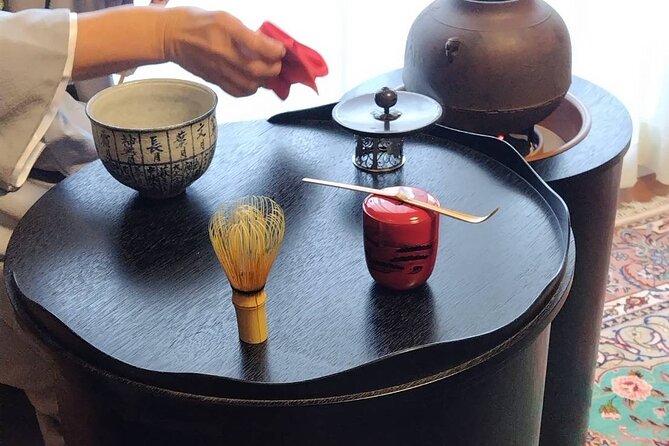
Walking into a tea ceremony setup, you quickly learn it’s not about being fancy. It’s about doing small, careful actions on purpose. That’s why I think this particular format works well for first-timers: you’re guided step-by-step, not thrown into a performance.
This experience takes place in Osaka Prefecture, and it’s designed for people who don’t know much about Japanese culture. The goal is simple: you spend time in a Japanese tatami room, taste matcha and sweets, and learn how to make tea yourself. Even better, the group is private and limited to just your group, up to four people, so the pace stays comfortable.
The “small and calm” part matters more than it sounds. Tea ceremony is about timing and attention. When a group is large, you spend more time waiting. With a small group, you can follow along and actually practice what you’re learning.
Where you meet and how to get there without stress
You’ll meet at Repark Ibaraki Oike 1-Chome, in Ibaraki, Osaka. The nearest train station is Ibaraki-shi Station (Hankyu Kyoto Line), and it’s about a 10–15 minute walk.
That walk is the main moving piece in your logistics. The good news is the location is described as near public transportation, so you’re not stuck planning a complicated route. After you book, you’ll be contacted with detailed information including the address and a phone number. On the day of the experience, use that contact info if you get turned around.
If you’re the type who likes a buffer, arrive a little early and take the walk at a relaxed pace. This is one of those activities where being rushed can ruin the mood.
Entering the tatami room: etiquette you can actually use
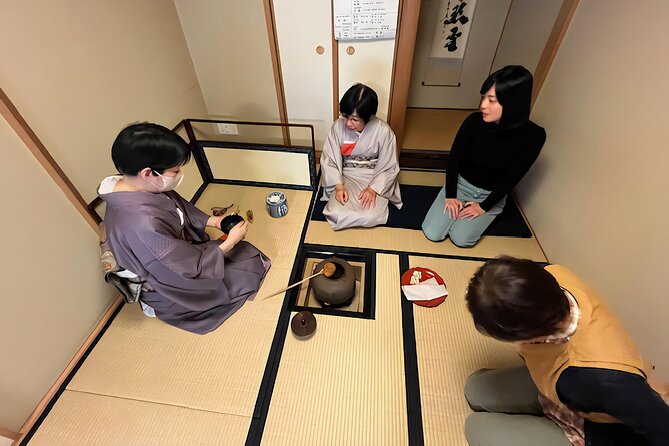
The session starts with instruction on how to enter a tatami room. That’s a big deal, because tatami isn’t just flooring. It’s part of the atmosphere and the respect built into the space.
You’ll get a demonstration and a clear explanation before anything “official” happens. The goal is that you understand the actions, not just copy them. For a first-time tea guest, that makes the ceremony feel welcoming instead of intimidating.
Then you watch a ceremony demonstration with matcha tea and Japanese traditional sweets. This early stage helps you connect what you’re seeing to what you’ll do later. It’s also where you start to notice that the flow matters: there’s a rhythm to preparing, serving, tasting, and moving through the steps.
A practical tip: wear clothing that lets you sit comfortably for a while. You don’t need special clothes, but you do want to avoid anything that makes kneeling or sitting uncomfortable. Tea ceremony is relaxing when your body feels okay.

Matcha and sweets: tasting the ceremony, not just drinking tea
Tea ceremony isn’t only about matcha. It’s about how matcha and sweets work together as a set. In this session, you’ll have Japanese traditional sweets alongside the matcha, and both are part of the guided experience.
That pairing is useful for beginners because sweets give you an easy entry point to the flavors and the pace of tasting. Then the matcha follows with its own character. You’re not just chasing a beverage. You’re experiencing how Japanese culture treats small moments as meaningful.
You’ll see the demonstration first, then you’ll move into a format where you can taste as part of the process rather than at the end. That helps your brain understand what you’re doing with the tea—why the sequence matters.
If you like food experiences that teach you something, this part delivers. Matcha taste can range depending on how it’s prepared, and having it in a ceremony setting helps you notice the difference between a quick drink and a carefully made cup.
Ryurei table-style tea: why the format helps first-timers
After the initial tatami-room segment and demonstration, you’ll learn the Ryurei style (table style tea ceremony) and how to make matcha. This is a smart choice for many visitors because table-style can feel less formal than a full traditional setup, while still giving you the core concepts.
I like this because it reduces the pressure. You’re still learning real tea-ceremony actions, but the environment is more accessible for first-timers. It’s easier to focus on the steps of preparing matcha when you’re not also trying to manage a highly formal layout.
In this segment, you’ll enjoy the matcha you make yourself with the Japanese sweets. That’s the payoff: you don’t just understand the theory, you taste what you prepared. It turns a cultural show into a skill you can repeat later in your memory.
Making matcha yourself: the hands-on part that sticks
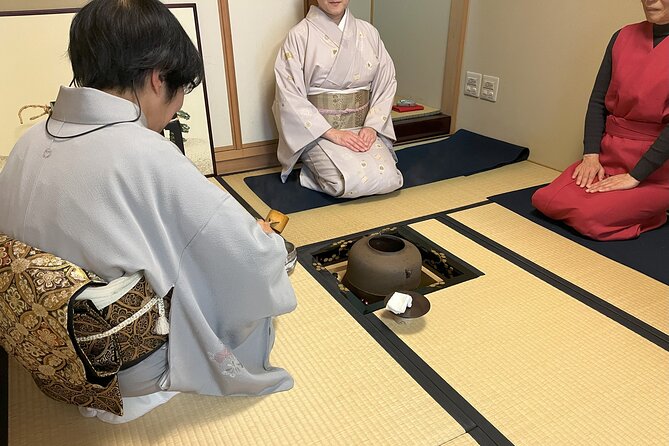
One of the most praised aspects of this experience is that you’re taught how to perform the ceremony yourself. The session includes tools and materials needed for the activity, so you’re not trying to guess how matcha preparation works with random supplies.
You’ll learn the matcha-making process, then drink the matcha you made. That’s what makes this feel more valuable than a standard “watch and leave” activity. You get to practice the motions, understand the flow, and build a personal reference point for the flavor.
This is also where attentive teaching matters. If someone shows you a step and you can’t quite get it, you need quick correction. The experience is set up so your tea master and assistant can guide you through the process, keeping the session smooth and comfortable.
If you’re worried about messing up: don’t. The point is learning. Tea ceremony is detail-oriented, but the atmosphere is meant to help you succeed, not to judge you.
Timing: what a 1 hour 30 minutes slot means for your day
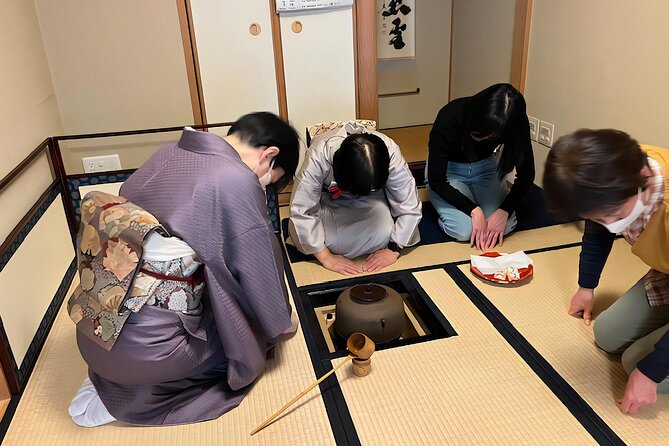
The total session is about 60–90 minutes. That makes it easy to fit into a travel day without sacrificing half of your afternoon.
You’ll start with instructions for entering the tatami room, then move into demonstration and the Ryurei/table-style portion. You’ll have time for tea and sweets as part of the experience, and you’ll get hands-on matcha-making.
Because it’s a shorter experience, you’ll get the benefit of a focused cultural activity without the fatigue that comes from longer classes. The tradeoff is you won’t leave with hours of practice. But for most visitors, 60–90 minutes is the sweet spot.
Osaka vs Kyoto planning: using this location well
This tea ceremony experience is described as located between Osaka and Kyoto. That’s genuinely helpful, because it means you can treat it as a “culture block” whether you base yourself more in Osaka or more in Kyoto.
In practical terms, you can still explore both cities while keeping this as a dedicated, low-stress activity. You don’t have to treat it like a full-day detour.
If you’re choosing which day to schedule it, I’d aim for a time when you’re not already overloaded. Tea ceremony works best when you can arrive calm and fully present.
Price and value: is $67.11 worth it?
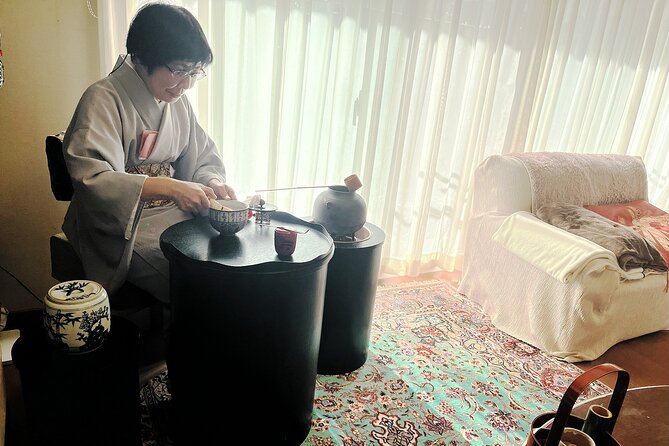
At $67.11 per person, the price might look steep if you compare it to a basic museum ticket. But tea ceremony is closer to a guided, taught experience with multiple components: tatami-room etiquette guidance, a demonstration, traditional sweets, matcha tea, and a chance to make matcha yourself.
Here’s what you’re really paying for:
- Personalized instruction in a private group setting of up to four
- Tools and materials included, so you’re not bringing or renting anything
- Food and drink included (Japanese sweets and matcha)
- A teaching format that works for first-timers, with explanation rather than performance-only viewing
You’re not buying a souvenir-like photo opportunity. You’re paying for a short lesson you can repeat in your mind later: the steps, the feel, and the taste.
Another value point: group discounts are mentioned, and the booking is typically made around a month in advance on average. In other words, it’s not the kind of activity you randomly stumble into last minute. Booking ahead can help you lock in a time that fits your schedule.
Who should book this tea ceremony in Osaka
This is a strong match if you want:
- A first-time friendly intro to Japanese tea culture
- A calm, guided experience with attentive help
- A chance to do more than watch, specifically making matcha yourself
- A short cultural break you can blend with Osaka or Kyoto sightseeing
It’s also good if you’re traveling with someone who’s not a deep Japan-history person. The experience is explicitly set up for people who may not know much about Japanese culture, and it stays enjoyable through tea and sweets.
Who might find it less perfect: if you’re looking for a long, multi-course tea program or a deep, hours-long practice session, this one is likely too short. Think of it as a high-impact starter session.
Should you book this tea ceremony? My take
If you like hands-on cultural experiences, I’d book this. The combination of a small group, tatami-room etiquette guidance, and the chance to make matcha yourself is exactly the kind of “practice what you learn” travel moment that tends to stick.
Book it when you want a relaxing hour-and-a-half that teaches you something real without turning into a stress test. If you’re arranging a day between Osaka and Kyoto, it’s also an easy fit because the location is designed for that kind of touring rhythm.
One last nudge: keep your arrival time in mind. This experience starts with getting you settled and teaching you how to enter and participate. If you show up rushed, you’ll miss part of what makes it calm.
FAQ
How long is the tea ceremony experience?
The session lasts about 1 hour 30 minutes (approximately 60–90 minutes).
Is it a small group or private?
It’s private for your group, with a small group size up to four people.
What’s included in the price?
Tools and materials needed for the activity, Japanese sweets, and matcha green tea are included.
Where is the meeting point?
The meeting point is Repark Ibaraki Oike 1-Chome (address listed as Ōike, Ibaraki, Osaka 567-0826). The experience ends back at the meeting point.
What train station should I use?
Ibaraki-shi Station (Hankyu Kyoto Line) is the nearest station, and it’s about a 10–15 minute walk.
What is the cancellation window?
Free cancellation is available up to 24 hours before the experience starts for a full refund.
More Tour Reviews in Osaka Prefecture
- Full Day Tour of Kyoto with Private Transportation★ 5.0 · 130 reviews
- Sakai – Knife Factory and Craft Walking Tour★ 5.0 · 44 reviews
- Kyoto private tour (Shore excursion available from Osaka or Kobe port)★ 5.0 · 39 reviews
- Private arrival Transfer from Kansai airport to Osaka city★ 4.5 · 36 reviews
- Private Transfer by Sedan from Itami Airport ITM to Kyoto City★ 4.5 · 31 reviews
The Newest Osaka Write-Ups
- Private Day Tour in Osaka and Kyoto with charter car
★ 5.0 · 3 reviews - Shared Arrival Transfer: Osaka Itami Airport to Osaka City
★ 5.0 · 3 reviews - Osaka Sushi Cooking Class
★ 5.0 · 3 reviews - Private Transfer Between Kyoto and Kansai Airport KIX
★ 5.0 · 3 reviews - Osaka : Cycling Tour Private Seaside Ride Near Kansai Airport
★ 5.0 · 3 reviews
Osaka Tea Ceremony & Matcha, compared.
 ★ 4.9Tea Ceremony ExperienceFrom $251,426 reviews
 ★ 5.0Tea Ceremony Experience in Osaka DoutonboriFrom $20754 reviews
 ★ 5.0Matcha Making Class in Osaka with Authentic Japanese Sweets SetFrom $21509 reviews
 ★ 5.0Matcha Making Experience with Japanese SweetsFrom $22146 reviews
 ★ 4.9Tea Ceremony, Calligraphy, and Kimono ExperienceFrom $96130 reviews
 ★ 4.7Japanese Traditional Sweets Making and Tea CeremonyFrom $18118 reviews
 ★ 4.9Osaka Temple Cool Foot Bath & Matcha Experience〈45min〉From $3482 reviews
 ★ 5.0Samurai Show, Tea Ceremony, Japanese Traditional ActivitiesFrom $4456 reviews
Browse the lists this tour appears in