
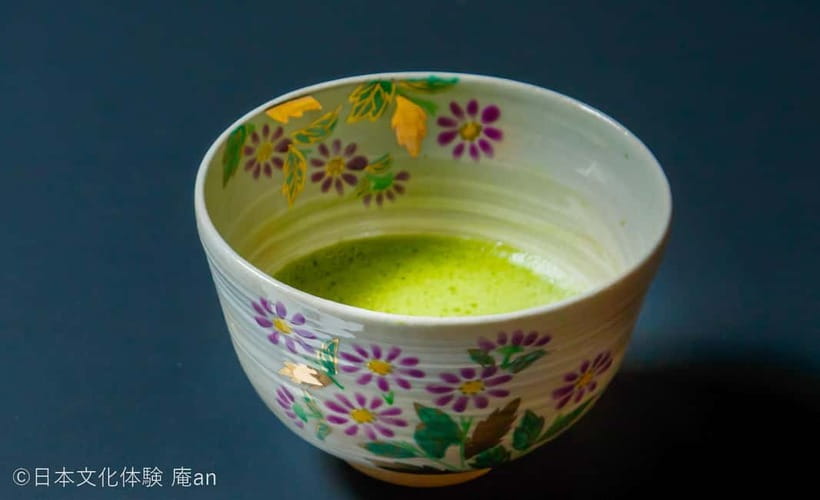
Reviewed · OSAKA TEA CEREMONY & MATCHA
Osaka: Traditional Tea Ceremony Experience
Matcha becomes fun in under an hour. In 30 minutes, you grind matcha, learn the basics of OTE-MAE, and drink what you made, which is a lot more satisfying than just watching. I also love the single-origin special matcha and the fact that the instructor tries to explain clearly in English when possible. One consideration: this is a Japanese-led experience, and the room has stairs only.
This is the kind of break that works perfectly mid-sightseeing in Osaka. You’ll get a short lecture, a matcha-grinding demonstration, then your turn to do the steps, eat Japanese sweets (Ohigashi), and sip your tea at a relaxed pace.
In This Review
- Key highlights you’ll feel right away
- A 30-minute Osaka reset with matcha you can make
- Single-origin matcha and Ohigashi: what you’re really tasting
- Entering the flow: lecture, grinding, and your own OTE-MAE steps
- The first part: getting set up
- Then: matcha grinding and how it changes the cup
- Your turn: tea ceremony experience
- Photos, then drinking and eating
- Where it is in Osaka: quick access near Higobashi, Yodoyabashi, and Osaka Station
- Price and value: why $7 feels fair for 30 minutes
- English support and class tone: what to expect if your Japanese is basic
- Timing: how to fit it between Osaka sights
- Who should book this tea ceremony (and who might pass)
- Should you book this Osaka tea ceremony?
- FAQ
- How long is the Osaka tea ceremony experience?
- Where do I meet for the tea ceremony?
- Is English translation provided?
- What’s included in the price?
- What is not included?
- Are there any rules about participation?
- Are children allowed?
Key highlights you’ll feel right away
- You make the matcha yourself in a short, hands-on format
- Single-origin special matcha for a cleaner, more focused flavor
- Ohigashi sweets included, so the tea isn’t a solo act
- Mostly English support when available, plus extra help if you request it
- A small, friendly class vibe with patient, humorous instruction
- Fast Osaka location near multiple train lines, so you can slot it in easily
Another bowl whisked slowly in Osaka
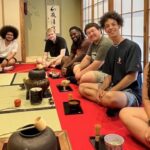
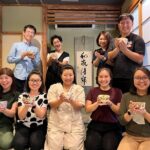
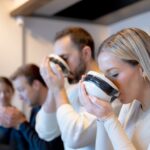
A 30-minute Osaka reset with matcha you can make
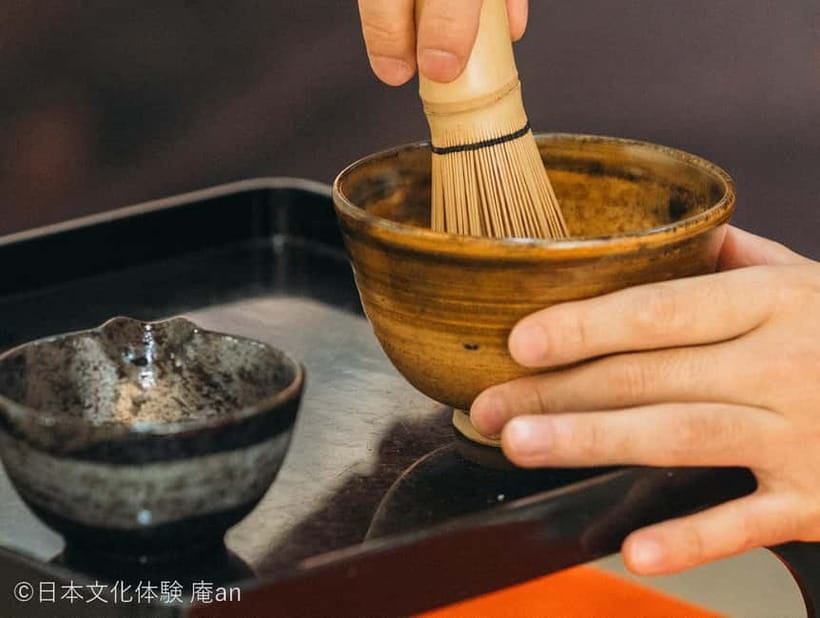
If your Osaka day feels like a constant scroll of temples, trains, and photos, this experience is a real pause button. You’re not just tasting matcha from a menu. You’re learning how it’s prepared, then doing it yourself while everything is still easy enough to enjoy.
The session is built to fit into a busy itinerary. Plan on about 30 minutes total, with a structured flow and a clear start-to-finish rhythm. That matters because tea ceremony can sound formal and intimidating. Here, it’s explained in a way that helps you actually follow along.
You’ll also like that it’s designed for different group sizes. It’s available from a single person up through a group setting, so you won’t feel trapped waiting for a “minimum number” to make it worth your time.
Single-origin matcha and Ohigashi: what you’re really tasting
The headline item is the matcha. You don’t just get any green powder. You’re using a single-origin special Matcha, which tends to taste more straightforward and distinctive than blends. Translation: you’re more likely to notice differences in aroma and bitterness because the flavor isn’t diluted into a general profile.
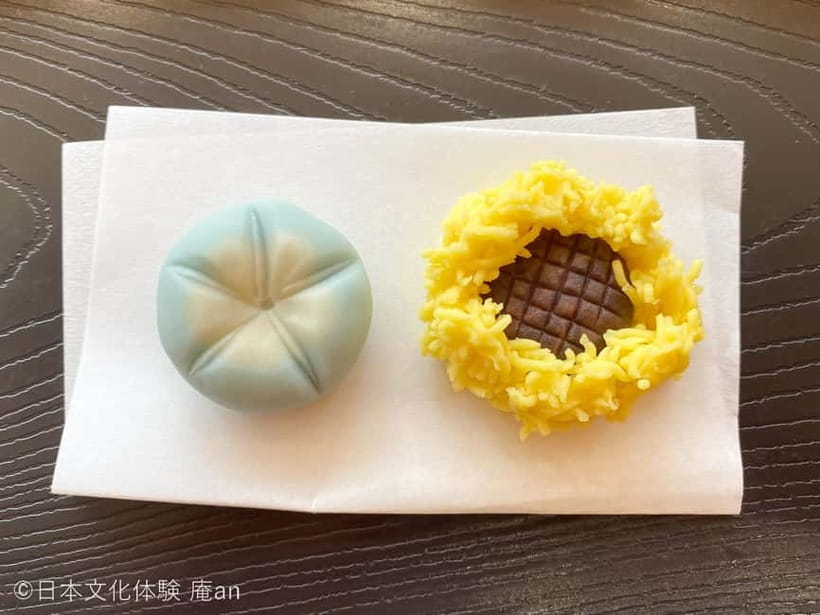
Then comes the sweet part. You get Japanese sweets called Ohigashi. This is more than a snack break. In tea ceremony, the sweets help balance the tea’s structure—especially the way matcha can move from creamy to slightly bitter as you taste. Even if you’re not chasing tradition trivia, the combo makes the experience feel complete.
One practical tip: approach the sweetness as part of the tasting, not as an afterthought. Take a moment before you drink. You’ll get more out of the pairing that way.
Entering the flow: lecture, grinding, and your own OTE-MAE steps
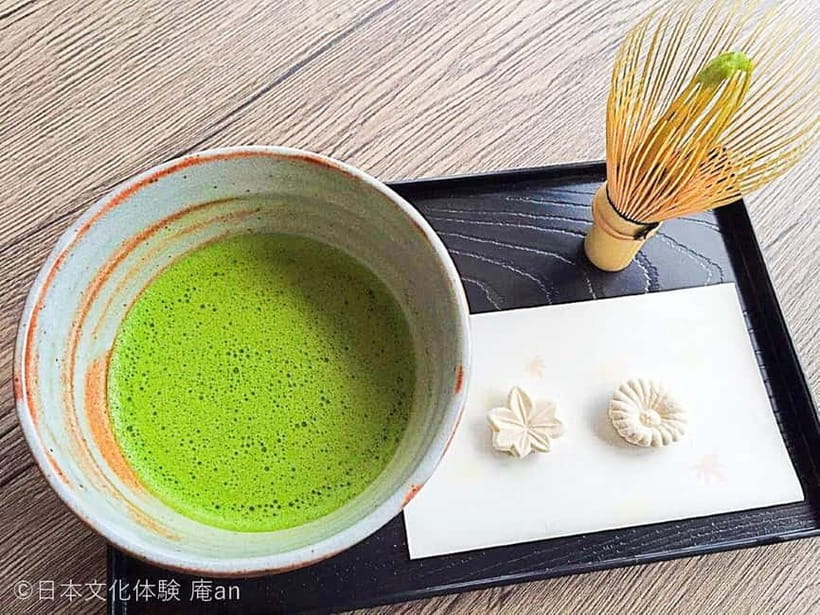
The best way to understand this experience is to picture it as three clean phases: learn, practice, and enjoy.

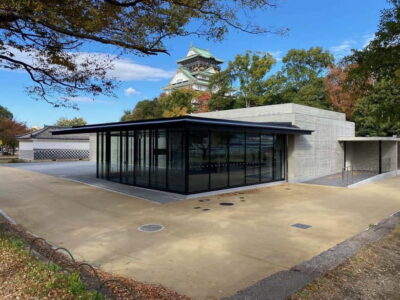

The first part: getting set up
You’ll start with the session itself and a quick explanation of tea. Expect a brief, guided overview so the movements make sense instead of looking like a ritual you’re supposed to guess.
This is also where the instructor’s style matters. The instruction is run by a Japanese teacher, and the experience is designed to include English translation as much as possible. In real-world terms, that means you can focus on doing the steps correctly instead of translating everything in your head.
Then: matcha grinding and how it changes the cup
Next comes the demonstration of grinding matcha. Seeing the process helps you understand why matcha tastes the way it does. It’s not about making perfect foam for Instagram. It’s about mixing and texture—something you’ll notice more once you actually do it.
If you’ve only ever had matcha from bottled drinks, this is where you’ll feel the difference the most. Powder that becomes properly mixed tea tastes smoother and more intentional.
Your turn: tea ceremony experience
After the demo, you’ll do the tea ceremony steps yourself. That’s the core value here. You go from spectator to participant, and the tea shifts from a product to a small skill you can repeat later if you want.
During this part, remember that the experience is structured and timed. It’s not a loose hangout, so follow the guidance and you’ll stay comfortable. If you’re unsure, ask. The instruction is built to be patient and helpful.
Photos, then drinking and eating
There’s a picture time during the experience. Then you’ll get your time to drink and eat—tea first or sweets first depends on how you’re guided, but either way you’ll end with the best part: tasting what you made.
Finally, you’ll head out. The whole session moves like a tidy clock: start, learn, practice, taste, leave.
Where it is in Osaka: quick access near Higobashi, Yodoyabashi, and Osaka Station
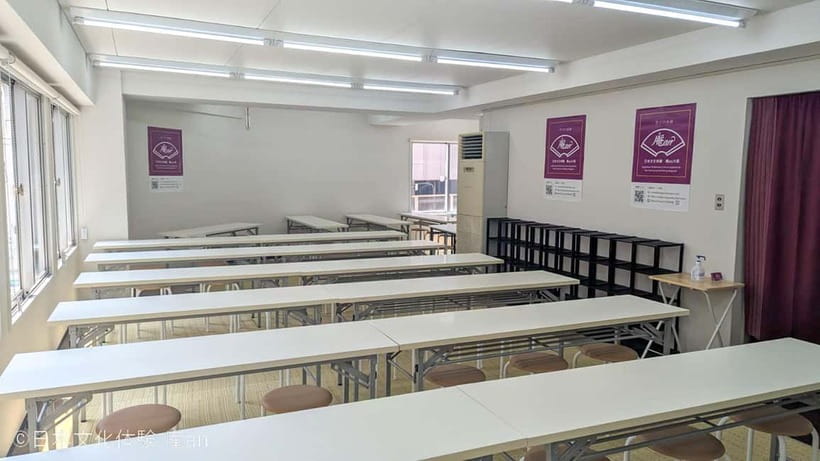
Location is one of the underrated reasons to book this. You’re not trekking across the city for a 30-minute activity.
Here’s where to anchor yourself:
- 1 minute walk from Exit 10 of Osaka Metro Yotsubashi Line Higobashi Station
- 5 minutes walk from Exit 7 of Keihan Nakanoshima Line Watanabebashi Station
- 7 minutes walk from Exit 10 of Osaka Metro/Keihan Line Yodoyabashi Station
- 10 minutes walk from Exit 11-5 of JR Tozai Line Kitashinchi Station
- 15 minutes walk from the South Central Gate of Osaka Station
So you can pick the station that matches your current Osaka route. If you’re already around Osaka Station, walking won’t kill your day, but it is easier when you pick the nearest line.
A small-but-important logistics note: there’s no elevator in the building. You’ll take stairs to reach the venue. It’s manageable for most people, but it’s worth knowing in advance if you’re carrying bags or have mobility limitations.
If you like to plan precisely, the meeting point is also pinned on Google Maps at the coordinates 34.6911523, 135.4958628.
Price and value: why $7 feels fair for 30 minutes
At $7 per person, this is priced like a casual activity, not a premium workshop. And that’s the point: it gives you a taste of ceremony without turning your day into a half-day project.
What you’re paying for is not just the cup. The value includes:
- A prepared experience set for OTE-MAE (Japanese tea ceremony)
- Instructor-led guidance
- Time to grind, prepare, and drink your matcha
- Ohigashi sweets with the tea
There’s also a completion certificate available for an extra 300 JPY, but it’s not included in the base price. If you don’t need the paperwork souvenir, you can skip it.
So is it worth it? For me, the “yes” is simple: you’re not spending much money to gain a very specific Osaka memory—something you actively do. If you’re the type who likes learning by hands-on practice, the cost-to-time ratio is hard to beat.
English support and class tone: what to expect if your Japanese is basic
The experience languages are Japanese, and English translation is provided as much as possible. If you want to add or request translation help, you can contact in advance.
This matters because the difference between a fun cultural activity and a frustrating one is usually language coverage. Here, the format is short and practical, so you aren’t thrown into complicated instructions with no support.
The instructor approach seems to be a big part of the positive reviews you’ll find around this activity. You should expect a calm pace, explanations that aim to be clear, and a bit of personality. That combination keeps the session comfortable even when you’re hearing mostly Japanese.
What you should do:
- If you can, show up with a smile and a willingness to follow steps
- Ask simple questions if you’re unsure
- Don’t worry about doing it “perfectly.” The point is to learn and taste
Timing: how to fit it between Osaka sights
Operating hours run from 10:00 to 17:00. If your reservation lands after 17:00, it’s processed next day.
The experience starts at set times based on availability, and the session is designed to end cleanly so you can move on. That’s helpful because you don’t have to guess how long it will take once you’re inside.
Plan your day with buffer time. The experience is not set up to wait for delays: the event won’t be held to accommodate late arrivals. So I recommend you build in a little margin after you arrive at the station and before you enter.
Who should book this tea ceremony (and who might pass)
This is a strong fit if:
- You want a short, hands-on cultural activity during an Osaka sightseeing day
- You enjoy matcha and want to understand how it’s made
- You like structured experiences where you learn the “why” and then do it
- You’re traveling solo or as a small group and want something that still feels personal
You might choose something else if:
- You’re looking for a long, in-depth ceremony with lots of extended tradition and quiet formality
- You strongly prefer fully English-led experiences with no Japanese at all
- Stairs are a problem for you (because there’s no elevator)
Should you book this Osaka tea ceremony?
Book it if you want a practical, enjoyable cultural stop that doesn’t eat half your day. The mix of single-origin matcha, included Ohigashi, and the chance to grind and make your own tea gives you more payoff than most “watch and taste” activities.
Skip or rethink if your schedule is tight enough that you can’t comfortably arrive on time, or if stairs are a dealbreaker. Also, if you need an entirely English experience start-to-finish, you should consider that the session is Japanese-led with translation provided as much as possible.
In my view, this one is a smart, low-risk booking. You walk out with a real action under your belt and a matcha cup you’ll remember.
FAQ
How long is the Osaka tea ceremony experience?
It lasts about 30 minutes.
Where do I meet for the tea ceremony?
You’ll meet near Higobashi Station (Osaka Metro Yotsubashi Line) Exit 10, with other nearby options including Watanabebashi Station, Yodoyabashi Station, Kitashinchi Station, and Osaka Station. The exact walking times are listed for each station.
Is English translation provided?
English translation is provided as much as possible. If you want to add English support, contact the provider in advance.
What’s included in the price?
The experience includes an OTE-MAE tea ceremony set experience.
What is not included?
An experience completion certificate is not included and costs 300 JPY if you want it.
Are there any rules about participation?
People who do not participate in the experience are not allowed to enter.
Are children allowed?
Children who sit on their parents’ lap are free of charge if they are under 2 years old.
More Tour Reviews in Osaka
- Osaka Go Karting Tour with Funny Costume★ 5.0 · 2,658 reviews
- Osaka Castle: Museum and Tower Entry Ticket★ 4.5 · 2,380 reviews
- Osaka: Shinsekai Food Tour with 13-15 Dishes at 5 Eateries★ 4.8 · 2,204 reviews
- Osaka Food Tour: 13 Dishes at 5 Local Eateries★ 5.0 · 2,149 reviews
- Hungry Osaka Street Food Tour:15 Tastings & 3 Drinks with a Local★ 5.0 · 1,727 reviews
Matcha, Whisked and Poured
- Osaka: Tea Ceremony Experience★ 4.9 · 1,426 reviews
- Tea Ceremony Experience in Osaka Doutonbori★ 5.0 · 754 reviews
- Matcha Making Class in Osaka with Authentic Japanese Sweets Set★ 5.0 · 509 reviews
- Osaka: Matcha Making Experience with Japanese Sweets★ 5.0 · 146 reviews
- Osaka: Tea Ceremony, Calligraphy, and Kimono Experience★ 4.9 · 130 reviews
The Newest Osaka Write-Ups
- Private Photoshoot in Osaka with a Professional Photographer
★ 5.0 · 3 reviews - Osaka Early Morning Osaka Castle Tour Avoid Crowds
★ 5.0 · 3 reviews - Nara Private Tour with Pick and Drop and English Speaking Driver
★ 3.5 · 3 reviews - Osaka: Modern Vegetarian Sushi Cooking Class
★ 5.0 · 3 reviews - Nara Day Trip from Osaka with a Licensed Guide
★ 5.0 · 3 reviews
Osaka Tea Ceremony & Matcha, compared.
 ★ 4.9Tea Ceremony ExperienceFrom $251,426 reviews
 ★ 5.0Tea Ceremony Experience in Osaka DoutonboriFrom $20754 reviews
 ★ 5.0Matcha Making Class in Osaka with Authentic Japanese Sweets SetFrom $21509 reviews
 ★ 5.0Matcha Making Experience with Japanese SweetsFrom $22146 reviews
 ★ 4.9Tea Ceremony, Calligraphy, and Kimono ExperienceFrom $96130 reviews
 ★ 4.7Japanese Traditional Sweets Making and Tea CeremonyFrom $18118 reviews
 ★ 4.9Osaka Temple Cool Foot Bath & Matcha Experience〈45min〉From $3482 reviews
 ★ 5.0Samurai Show, Tea Ceremony, Japanese Traditional ActivitiesFrom $4456 reviews
Browse the lists this tour appears in