
Reviewed · OSAKA CRAFT & CULTURE WORKSHOPS
Osaka: Traditional Japanese Ikebana Flower Art Experience
Few cities teach art this hands-on.
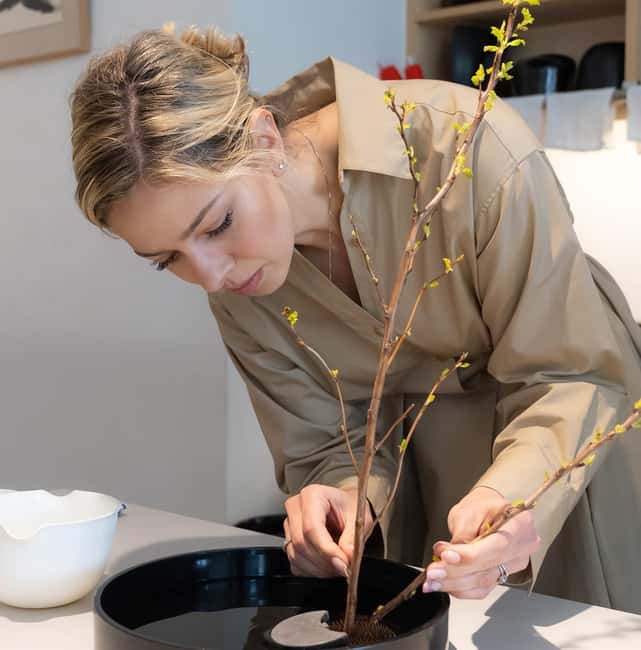
An Osaka Ikebana workshop is a quick way to feel Japanese culture without the museum fog. You’ll learn from Fooraku, a senior Sogetsu Ikebana master with 30+ years of experience, then build an arrangement guided by clear principles like balance and line.
I also really liked the practical side: all the tools are provided, and you get a commemorative photo of what you made. One thing to consider is the plant angle: if you have plant allergies, you’ll need to tell them in advance.
In This Review
- Key highlights worth circling
- Ikebana in Osaka: What You Actually Learn in 2 Hours
- Meeting Fooraku at VADE MECVM Showroom #2 in Kyomachibori
- The Ikebana Lesson: Balance, Line, Form, and Space
- Your Hands-On Arrangement: Materials, Creativity, and a Keepsake Photo
- A Modern Gallery Setting That Fits the Art
- Cultural Exchange After the Session: Easy Conversation, Real Contact
- Price and Value: Is $103 Worth It?
- Who This Is Best For in Osaka (and Who Might Want a Different Plan)
- Should You Book This Osaka Ikebana Workshop?
- FAQ
- How long is the Ikebana workshop in Osaka?
- Where does the workshop take place?
- What language is the class taught in?
- Do I need to bring any tools or materials?
- Who teaches the workshop?
- Is the experience suitable for beginners?
- Will I create an arrangement myself?
- Do I get a photo of my arrangement?
- Is there a cultural exchange after the workshop?
- Is the class accessible for wheelchair users?
- Are private or custom sessions available?
- What should I do if I have plant allergies?
- What’s the cancellation window and payment options?
Key highlights worth circling
- Learn from Fooraku (Sogetsu master, 30+ years)
- Hands-on Ikebana in a quiet Osaka gallery
- Make your own arrangement using provided flowers, container, and scissors
- Focus on core ideas: balance, line, form, and space
- Commemorative photo to take home the moment
- Small group of up to 6, plus an easy cultural exchange after
Make the souvenir yourself at more workshops
Ikebana in Osaka: What You Actually Learn in 2 Hours
This is not a passive art lecture. You’re shown the ideas, then you’re doing the work—hands on, thinking as you go. In about 1 hour 45 minutes (the class runs around 2 hours total), you’ll learn enough fundamentals to understand why Ikebana feels calmer than typical flower arranging.
The biggest learning payoff is not that you’ll copy a perfect style. It’s that you’ll get a framework you can reuse later at home. Balance, line, form, and space sound simple, but they’re what turn flowers into composition. Even if your result is imperfect, you’ll know what to adjust next time.
There’s also a reset built into the format. The venue is a modern showroom, so you’re not stuck in loud streets. Instead, you’re in a quiet room where space matters—which is basically half of Ikebana.
Meeting Fooraku at VADE MECVM Showroom #2 in Kyomachibori
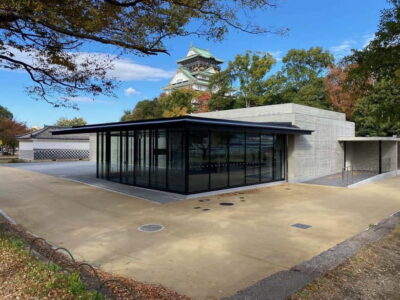
The class takes place at VADE MECVM Showroom #2 in Kyomachibori, Osaka. It’s described as a simple, modern gallery space with a serene atmosphere, which matters more than you’d think. Ikebana is minimal by nature, so the setting can help you see what’s going on.
Your instructor is Fooraku, an English-speaking senior master of the Sogetsu School with 30+ years of experience. That combination is a big deal: you’re not just hearing traditions, you’re getting explanations you can actually follow if you don’t read Japanese.
Also, the group stays small—up to 6 participants. That size usually means less waiting around and more time for guidance, especially when you’re deciding how to place stems or where to leave empty space.
Practical tip: wear something comfortable you can move in. You’ll be working close to materials and shaping your arrangement.
The Ikebana Lesson: Balance, Line, Form, and Space
The teaching centers on core Ikebana principles: balance, line, form, and space. This is the heart of the experience, because it reframes what you think flower arrangement is.
- Balance is not just symmetry. It’s the visual weight of stems and how the arrangement holds together.
- Line is where the composition gets its direction. A stem isn’t only part of the design; it’s a guide for your eye.
- Form is the overall shape you’re building, whether it feels upright, angled, or curved.
- Space is the secret sauce. Empty areas aren’t leftovers. They’re part of the artwork.
You don’t need previous experience. The workshop is open to complete beginners and art lovers. That matters because Ikebana can feel intimidating at first, mainly because it’s so minimal. The class helps you understand that minimal doesn’t mean complicated. It means intentional.
You’ll also learn about the deeper idea: Ikebana is more than arranging flowers. It’s treated as a living art that connects nature, design, and expression. You’ll be guided through the philosophy while still working in a practical way—so the theory doesn’t float away.



Your Hands-On Arrangement: Materials, Creativity, and a Keepsake Photo
Here’s where you get real value: you end with something you made, not just notes.
All the necessary supplies are provided. That includes flowers, a container, and scissors, plus whatever else is needed for the class. You won’t have to hunt down tools or bring anything special. If you’re traveling light, this is a relief.
Your arrangement will be unique. Even though you’re learning the principles, each participant’s design reflects the materials and their own decisions. That’s part of why the workshop is worth doing as an activity, not just a culture stop.
Then you get a commemorative photo of your arrangement. This is a small thing that turns into a big one later. In Japan, memories blur fast, especially when you’re juggling food stops and trains. A photo of your actual work gives you something concrete to remember what you felt in that moment.
One caution: tell them about plant allergies ahead of time. The instructions say to inform them if you have plant allergies, which suggests they can plan accordingly.
A Modern Gallery Setting That Fits the Art
You might expect Ikebana to happen in a traditional room. Instead, it happens in a modern, quiet gallery. That’s not a mismatch—it fits how contemporary Japanese culture often works. Clean design and careful space align well with minimalist flower art.
The venue is described as serene and simple, with a clean atmosphere that helps you focus on the arrangement. Since Ikebana relies heavily on negative space, a cluttered environment would fight against the lesson. This setting supports the craft instead of distracting from it.
If you like experiences where the environment is part of the teaching, you’ll appreciate this one. The modern gallery vibe also makes it easy to picture bringing the idea home. You’re not just learning a technique; you’re learning how to translate the look into a normal life setting.
Cultural Exchange After the Session: Easy Conversation, Real Contact
After the workshop, there’s time for a cultural exchange. The tone is casual and friendly—people can relax and talk freely. The conversation can cover Japanese traditions, food, daily life, and more.
This isn’t a staged performance. The idea is that the class can also work as a human connection moment: you share your culture too, not only theirs. In practice, the small group format helps with this. With fewer people, conversation feels more natural than crowded.
I like activities that do more than check a box. This one gives you a quiet art moment first, then a social part that helps you connect the art to real life.
Price and Value: Is $103 Worth It?
At $103 per person, this isn’t the cheapest thing on an Osaka day. But the value is pretty clear if you look at what’s included.
You’re paying for:
- instruction by Fooraku, a senior Sogetsu master with 30+ years of experience
- a structured workshop with a small group size (up to 6)
- all materials (flowers, container, scissors)
- a commemorative photo
- and time for cultural exchange afterward
So you’re not just buying a demo. You’re buying guided coaching and the chance to leave with a completed arrangement. For a traveler, that’s a high satisfaction format because the experience ends with a tangible result.
If you’re the type who likes crafts with clear instructions and a clear finish line, it tends to feel worth it fast. If you only want to watch from afar or you expect a long-form multi-session art training, this may feel short—which leads me to who this fits best.
Who This Is Best For in Osaka (and Who Might Want a Different Plan)
This workshop is ideal if you:
- want a hands-on cultural activity that doesn’t require previous art skills
- like learning a concept you can reuse at home
- enjoy quiet, focused settings more than big group sightseeing
- want an experience in English with an instructor who can guide you clearly
- appreciate small group interaction and relaxed cultural chat afterward
It may be less ideal if you:
- want a full day deep dive (this is roughly 1 hour 45 minutes)
- have serious restrictions related to plants and haven’t informed them in advance
- prefer activities that involve lots of walking and city views (this is mainly a studio-style class)
For most people, though, it’s a satisfying change of pace. Osaka can be a lot—food, noise, crowds. This gives your brain a calmer job.
Should You Book This Osaka Ikebana Workshop?
If you’re on the fence, I’d book it if you want something practical and meaningful—an art skill with structure, taught by Fooraku, finished with your own arrangement and a photo. The modern VADE MECVM Showroom #2 setting also makes it feel like a thoughtful pause in the middle of a Japan itinerary.
Book it especially if you’re traveling with the kind of curiosity that goes beyond photos of landmarks. Ikebana teaches you how to see space, proportion, and intention. Even after the stems dry out, the lesson tends to stick.
If you’re allergy-sensitive, make the call to inform them ahead of time. And if you’re expecting a long course, remember the timing: it’s an introduction, not an apprenticeship.
FAQ
How long is the Ikebana workshop in Osaka?
The workshop runs for about 1 hour 45 minutes, and the activity is listed as 2 hours total for timing purposes.
Where does the workshop take place?
It is held at VADE MECVM Showroom #2 in Kyomachibori, Osaka.
What language is the class taught in?
The workshop instruction is in English.
Do I need to bring any tools or materials?
No. All necessary materials are included, including flowers, a container, and scissors.
Who teaches the workshop?
The instructor is Fooraku, a senior master of the Sogetsu Ikebana school with 30+ years of experience.
Is the experience suitable for beginners?
Yes. The workshop is open to complete beginners and art lovers, and it does not require special prior knowledge or tools.
Will I create an arrangement myself?
Yes. You’ll make your own Ikebana arrangement during the hands-on session.
Do I get a photo of my arrangement?
Yes. There is a commemorative photo included.
Is there a cultural exchange after the workshop?
Yes. After the session, there’s a cultural exchange time where participants can talk freely.
Is the class accessible for wheelchair users?
Yes. The workshop is wheelchair accessible.
Are private or custom sessions available?
Private sessions are available upon request, and custom sessions are also mentioned as available upon request.
What should I do if I have plant allergies?
You should inform them in advance about any plant allergies.
What’s the cancellation window and payment options?
You can cancel up to 24 hours in advance for a full refund, and you can reserve now & pay later.
More Tour Reviews in Osaka
- Osaka Go Karting Tour with Funny Costume★ 5.0 · 2,658 reviews
- Osaka Castle: Museum and Tower Entry Ticket★ 4.5 · 2,380 reviews
- Osaka: Shinsekai Food Tour with 13-15 Dishes at 5 Eateries★ 4.8 · 2,204 reviews
- Osaka Food Tour: 13 Dishes at 5 Local Eateries★ 5.0 · 2,149 reviews
- Hungry Osaka Street Food Tour:15 Tastings & 3 Drinks with a Local★ 5.0 · 1,727 reviews
Made in Osaka, by You
- Osaka: Tea Ceremony, Calligraphy, and Kimono Experience★ 4.9 · 130 reviews
- 1.5〜2 Hours Traditional Kintsugi Work Shop in Namba Osaka★ 5.0 · 75 reviews
- Osaka: Private Japanese Calligraphy Experience★ 5.0 · 66 reviews
- From Osaka: Sakai Knife Maker or Blacksmith Walking Tour★ 4.9 · 64 reviews
- Calligraphy Workshop in Namba, Dotonbori★ 5.0 · 57 reviews
The Newest Osaka Write-Ups
- Private Photoshoot in Osaka with a Professional Photographer
★ 5.0 · 3 reviews - Osaka Early Morning Osaka Castle Tour Avoid Crowds
★ 5.0 · 3 reviews - Nara Private Tour with Pick and Drop and English Speaking Driver
★ 3.5 · 3 reviews - Osaka: Modern Vegetarian Sushi Cooking Class
★ 5.0 · 3 reviews - Nara Day Trip from Osaka with a Licensed Guide
★ 5.0 · 3 reviews
Osaka Craft & Culture Workshops, compared.
 ★ 4.9Tea Ceremony, Calligraphy, and Kimono ExperienceFrom $96130 reviews
 ★ 5.01.5〜2 Hours Traditional Kintsugi Work Shop in Namba OsakaFrom $12575 reviews
 ★ 5.0Private Japanese Calligraphy ExperienceFrom $5166 reviews
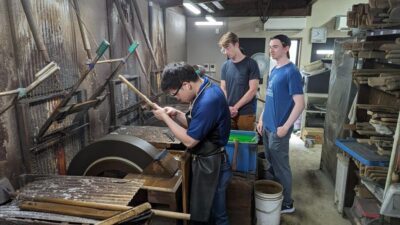 ★ 4.9From Osaka: Sakai Knife Maker or Blacksmith Walking TourFrom $6464 reviews
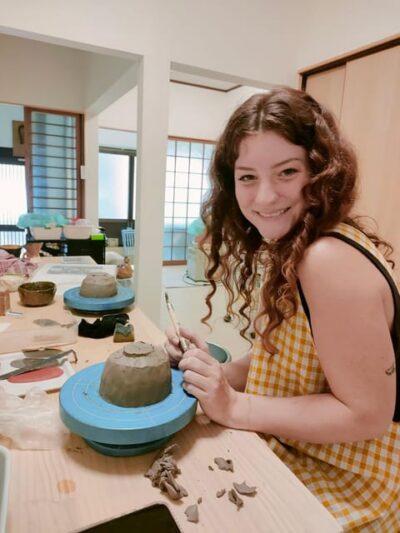 ★ 5.0Traditional Japanese Ceramics Private ExperienceFrom $9657 reviews
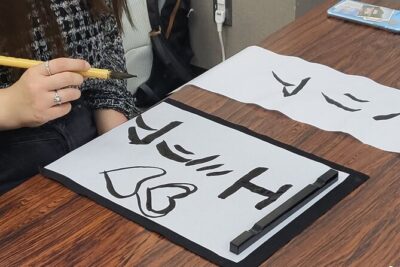 ★ 5.0Calligraphy Workshop in Namba, DotonboriFrom $4957 reviews
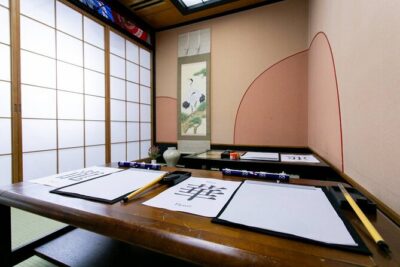 ★ 4.5Learning Zen of Japanese Calligraphy in kimono near Osaka CastleFrom $4353 reviews
 ★ 5.0Private Tea Ceremony and Calligraphy ExperienceFrom $6450 reviews
Browse the lists this tour appears in