
Reviewed · OSAKA COOKING CLASSES
Osaka Sushimaking Experience
Sushi class in Osaka, but make it hands-on. This Shin-Imamiya workshop lets you learn directly from a sushi chef, not just watch from the sidelines. You’ll wear a happi coat, get guidance step by step, and finish by eating what you make.
I especially like the mix of an English-friendly intro and calm, practical coaching. The lesson starts with a video with English subtitles, then the master shows you what to do, including key steps like preparing the rice and forming your sushi.
One thing to plan around: bottled water and drinks aren’t included. So if you want soda or water with your meal, you’ll need to budget for that on your own.
In This Review
- Key Highlights You’ll Care About
- Why This Osaka Sushi Class Feels Like a Real Shop
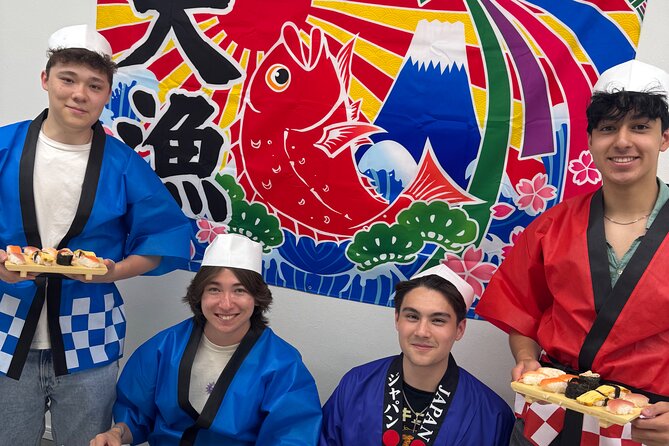
- Happi Coats, Masks, and the Photo Moment
- The 90-Minute Flow: Video, Rice Prep, Shaping Sushi
- What You Learn About Sushi Making (Beyond the Basics)
- Shin-Imamiya Location: How to Plan Your Day Around It
- Price and Value: Why $22.80 Makes Sense
- Meals Included: What the End of Class Is Really For
- Who This Osaka Sushi-Making Experience Fits Best
- Possible Downsides You Should Know
- Should You Book This Osaka Sushimaking Experience in Shin-Imamiya?
- FAQ
- How long is the Osaka sushi-making experience?
- What is included in the ticket price?
- What is not included?
- Where does the experience start?
- How big are the groups?
- Can I get a full refund if I cancel?
Key Highlights You’ll Care About
- English-subtitled video to get you oriented fast
- Rice prep and sushi shaping taught clearly by the chef
- Happi coats and masks make it feel like a real mini-restaurant
- Photo-friendly setup, plus a souvenir corner
- Small group size (max 16) keeps the pace comfortable
- Plenty of hands-on practice, with more sushi than you might expect
Flour on your hands, more Osaka kitchens to try


Why This Osaka Sushi Class Feels Like a Real Shop
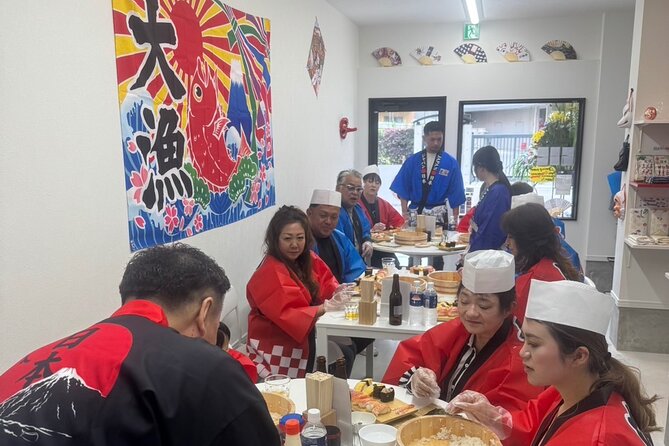
Osaka is great for food experiences, but this one stands out because it’s built around learning. You’re not just ordering and eating. You’re standing at the work surface and making sushi with a chef teaching you in real time.
The setting matters. You get the sense it’s a clean, orderly little shop where the focus stays on technique. That’s a big deal when you’re trying to understand how sushi comes together, because most of it is skill plus repetition, not magic. This is exactly the kind of activity that turns “I like sushi” into “I get how sushi is made.”
Another reason it’s a good fit for many trip styles: the class is short. At about 1 hour 30 minutes, you can slot it into your Osaka day without wrecking your schedule. And because it’s hands-on, you leave with an experience you can’t download or read about later.
Happi Coats, Masks, and the Photo Moment
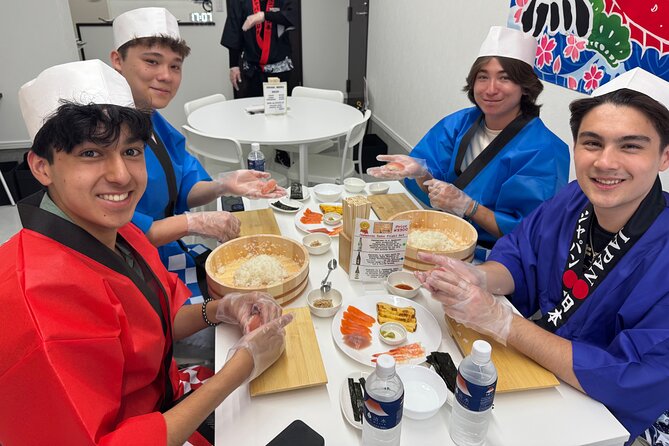
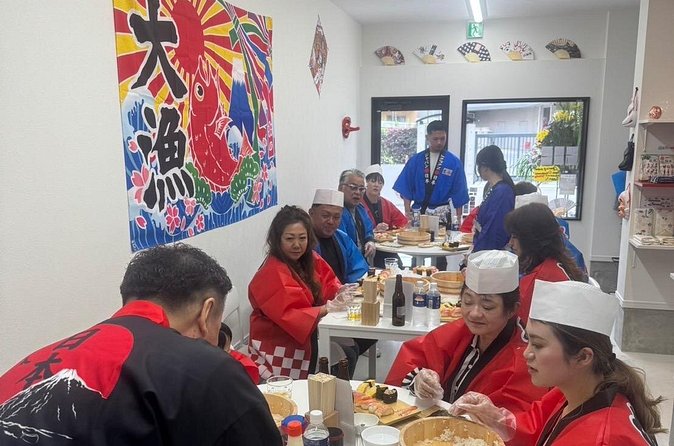
One of the easiest ways to make a food class feel memorable is letting you dress the part. Here, they provide happi coats and masks, so you can step into the role of sushi maker for the session. It’s fun, but it also helps you relax. You’re not worrying about looking awkward in a cooking class. You’re already part of the scene.
You also get time for photos. The shop is designed so visitors can take pictures during the experience. That matters if you want more than just a memory in your head. The cost is mostly about instruction and the meals, but the atmosphere is part of the value too.
If you’re traveling with kids, the costumes can make the whole thing feel like an activity game. A child-friendly vibe shows up in the way instructions are handled, and the photo moment makes it easier for families to enjoy the process without rushing.
The 90-Minute Flow: Video, Rice Prep, Shaping Sushi
Here’s the practical rhythm you should expect. It’s not a long lecture. It’s a guided sequence designed to keep you moving forward.
First, you get an introduction through a video with English subtitles. This is a smart start. When you understand the steps before you touch the ingredients, the hands-on part becomes less stressful and more satisfying. You’ll have context for what the chef will show next, especially around the rice.
Then the master teaches the core actions. Based on the experience details, that includes preparing the rice, and then moving into shaping your sushi. This is where sushi classes usually win or lose. The best ones slow down enough for beginners, and you’ll want a class that does that.
From what you can expect in practice, the staff guides you politely and carefully, at a pace that feels manageable. You’re learning technique, not just following random motions. The goal is that you can actually finish your own sushi, not just assemble something that looks right for a second.
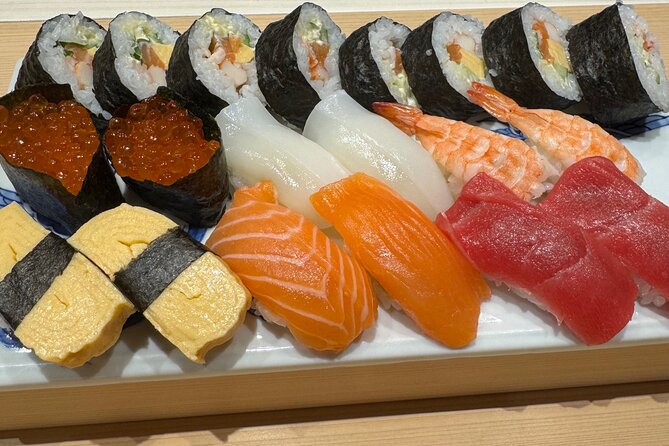
Finally, you eat the sushi you make. Meals are included in the price, and the experience is clearly meant to end with you tasting your work. That’s the payoff: you learn by doing, then you confirm what you learned with your first bite.


What You Learn About Sushi Making (Beyond the Basics)
Sushi is often treated like a single dish. In reality, it’s a set of small skills that have to work together. This workshop teaches those skills in a beginner-friendly order.
The big one is rice. Even if you’re already a sushi eater, sushi rice is where a lot of the character comes from. When you learn the rice step yourself, you start understanding why good sushi feels different. You also see the effort that goes into getting rice to the right texture and handling it without turning it into a sticky mess.
Then comes shaping. Sushi isn’t just about taste. It’s about structure. The way the chef shows forming and portioning helps you see how sushi holds together and why it looks the way it does. It’s also where patience pays off. You’ll likely notice that rushing is the enemy of good form.
One of the best signs for this type of class is that it can be meaningful even if you already know Japanese food. The experience is described as something where even Japanese participants found the difficulty and the fun of making sushi. That tells you it’s not just a tourist demo. It’s real technique, explained in a way you can use.
Shin-Imamiya Location: How to Plan Your Day Around It
This workshop meets at 3-chōme-15-8 Ebisunishi, Naniwa Ward, Osaka, 556-0003, Japan. It’s in the Shin-Imamiya area, which is handy if you’re already spending time in that part of Osaka.
The exact start and end is straightforward: the activity ends back at the meeting point. Duration is listed at about 1 hour 30 minutes, which helps you plan dinners and other activities.
Because the class is near public transportation, you don’t need a taxi plan. That’s important for value. Time is money when you’re moving around a busy city, and sushi-making that’s easy to reach makes it easier to fit into your route.
Group size is limited to 16 travelers maximum. That tends to make instruction feel more personal, and it’s also a reason the pace can stay controlled. In a bigger group, sushi classes can turn chaotic. Here, the limit suggests they’re set up to teach rather than churn.
Price and Value: Why $22.80 Makes Sense
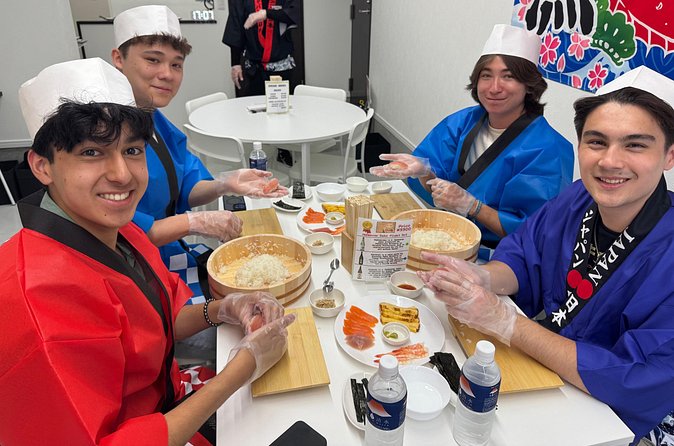
The price is $22.80 per person, and it includes key parts you’d otherwise pay for or arrange yourself.
Included items:
- Meals
- Happi coats and masks
- Admission fee
Not included:
- Bottled water
- Soda/Pop
- Alcoholic beverages
That means your main value comes from instruction plus the meal experience, not from an open bar or extra drinks. For many people, that’s fine. In a Japanese food setting, you can often treat water as a separate purchase and still come out ahead compared with longer, more expensive cooking tours.
Also, the experience is frequently booked in advance, with an average booking time of about 7 days. In practice, that’s a good hint: this isn’t a last-minute-only activity. If you’re traveling during a busy period, booking earlier helps you lock in a convenient time.
If you’re counting dollars, compare this to doing sushi-making at home. You save the sourcing of ingredients and the uncertainty of technique. Plus, you get a chef explaining what matters, in person, in a short session.
Meals Included: What the End of Class Is Really For
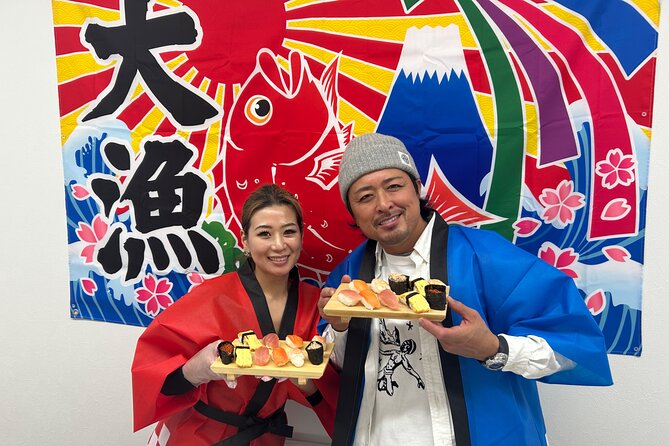
You don’t just make sushi and pack it away. The experience includes meals, and the experience is clearly set up to let you eat what you’ve made at the end.
This is a practical detail that affects how you should schedule. After the class, you’ll likely want something lighter if you’re also eating dinner later, or you can use the class meal as your main meal. Since the class is about 90 minutes, it’s easy to position it earlier in the day as a lunch-like anchor.
Also, if you’re traveling with kids, eating immediately after making the sushi often turns a technical task into a celebration. The experience is described as a hands-on activity children can enjoy together, with careful teaching so a child can understand what’s happening.
Who This Osaka Sushi-Making Experience Fits Best
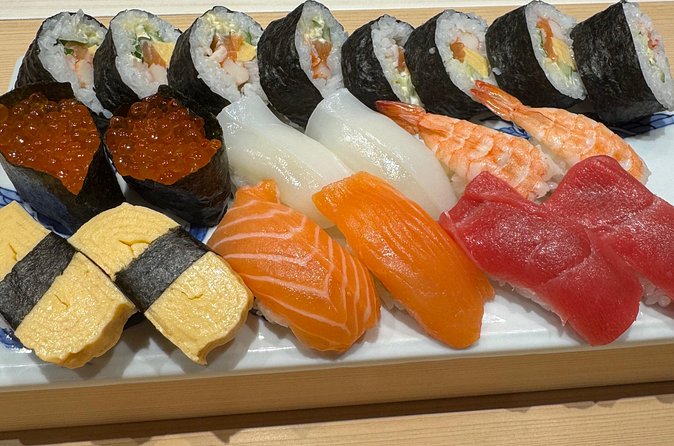
This is a strong choice if you want an authentic food activity that doesn’t require cooking skills. Sushi making is one of those things people feel they should try once in Japan, but many classes are more performance than teaching. Here, you’re guided through rice prep and shaping, and you leave with edible results.
It’s also ideal if you like structure. The English-subtitled video intro gives you a clear starting point. Then the chef instruction turns that into action. You’ll feel like you know what you’re doing before you’re deep in the process.
I’d also point this out for families. The experience is described as enjoyable for children, with staff guidance that keeps the learning accessible. Kids still get real sushi-making moments, not just pretend participation.
If you’re a solo traveler, this is a good way to meet people without being forced into heavy conversation. You’re busy making sushi, so social pressure stays low. And if you love photos, the costume and photo-friendly setup makes it easy to capture the moment.
Possible Downsides You Should Know
Nothing is perfect, so here are the trade-offs that matter.
First, drinks aren’t included beyond the meal. Bottled water and soda/pop aren’t part of the package, and alcohol isn’t included either. If you’re someone who always wants a drink with your meal, you’ll want to plan that cost.
Second, it’s a short class. About 1 hour 30 minutes means you’ll learn the fundamentals and make some sushi, but you won’t get hours of advanced training. If your dream is to master sushi rice on a professional level, this won’t replace long-term study.
Third, it’s a group experience with up to 16 participants. That limit helps, but you still share attention with others. The upside is pacing; the downside is you may not get infinite one-on-one correction.
Should You Book This Osaka Sushimaking Experience in Shin-Imamiya?
Book it if you want a hands-on Osaka food memory that feels like learning real technique. You’ll get a clear start with English subtitles, then guided practice with the chef, including rice prep and shaping. Add the happi coat, mask, photo time, and included meal, and the value stacks up nicely.
Skip it (or look for a different class) if you mainly want a long, relaxed restaurant-style meal or if you’re hoping the package includes unlimited drinks. Also, if you dislike group activities and need absolute quiet, you might prefer a different kind of food experience.
If you’re building an Osaka day and want something that’s both practical and genuinely fun, this sushi-making workshop checks a lot of boxes. It’s the kind of activity that turns food curiosity into hands-on confidence.
FAQ
How long is the Osaka sushi-making experience?
The experience lasts about 1 hour 30 minutes.
What is included in the ticket price?
Meals, happi coats and masks, and the admission fee are included.
What is not included?
Bottled water, soda/pop, and alcoholic beverages are not included.
Where does the experience start?
It starts at 3-chōme-15-8 Ebisunishi, Naniwa Ward, Osaka, 556-0003, Japan, and ends back at the same meeting point.
How big are the groups?
The experience has a maximum of 16 travelers.
Can I get a full refund if I cancel?
Yes, you can cancel for free up to 24 hours in advance of the experience start time for a full refund.
More Tour Reviews in Osaka
- Osaka Go Karting Tour with Funny Costume★ 5.0 · 2,658 reviews
- Osaka Castle: Museum and Tower Entry Ticket★ 4.5 · 2,380 reviews
- Osaka: Shinsekai Food Tour with 13-15 Dishes at 5 Eateries★ 4.8 · 2,204 reviews
- Osaka Food Tour: 13 Dishes at 5 Local Eateries★ 5.0 · 2,149 reviews
- Hungry Osaka Street Food Tour:15 Tastings & 3 Drinks with a Local★ 5.0 · 1,727 reviews
Cook It Yourself in Osaka
- Sushi Making Osaka Roll and Authentic Japanese Sushi Class★ 5.0 · 1,220 reviews
- Osaka: Five Must-See Highlights Walking Tour & Ramen Lunch★ 4.7 · 411 reviews
- Osaka Sushi Making Experience★ 5.0 · 400 reviews
- Osaka: Ramen and Gyoza Cooking Class in Dotonbori★ 5.0 · 378 reviews
- Osaka: Sumo Stage Show with Bento or Snack + Fight & Photo★ 4.3 · 364 reviews
The Newest Osaka Write-Ups
- Private Photoshoot in Osaka with a Professional Photographer
★ 5.0 · 3 reviews - Osaka Early Morning Osaka Castle Tour Avoid Crowds
★ 5.0 · 3 reviews - Nara Private Tour with Pick and Drop and English Speaking Driver
★ 3.5 · 3 reviews - Osaka: Modern Vegetarian Sushi Cooking Class
★ 5.0 · 3 reviews - Nara Day Trip from Osaka with a Licensed Guide
★ 5.0 · 3 reviews
Osaka Cooking Classes, compared.
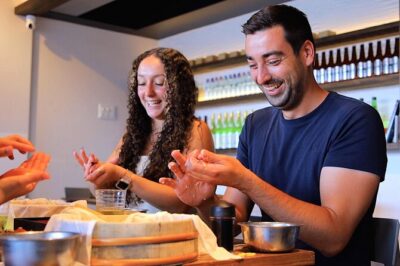 ★ 5.0Sushi Making Osaka Roll and Authentic Japanese Sushi ClassFrom $311,220 reviews
 ★ 4.7Five Must-See Highlights Walking Tour & Ramen LunchFrom $56411 reviews
 ★ 5.0Osaka Sushi Making ExperienceFrom $29400 reviews
 ★ 5.0Ramen and Gyoza Cooking Class in DotonboriFrom $70378 reviews
 ★ 4.3Sumo Stage Show with Bento or Snack + Fight & PhotoFrom $93364 reviews
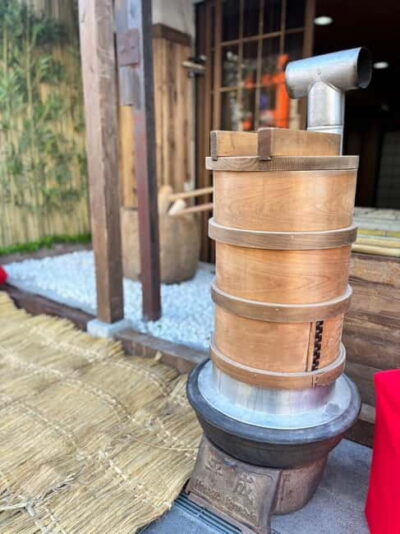 ★ 4.9Traditional Mochi Pounding Experience with TastingFrom $31306 reviews
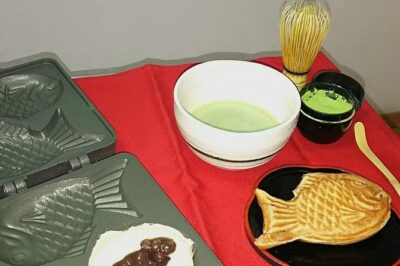 ★ 5.0Osaka Cooking Class: Okonomiyaki &Japanese cuisines experienceFrom $104261 reviews
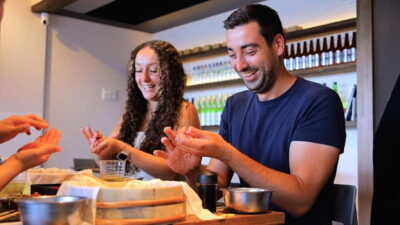 ★ 4.9Roll and Authentic Sushi Making Class in DotonboriFrom $45239 reviews
Browse the lists this tour appears in