
Reviewed · DOTONBORI & NAMBA TOURS
Osaka: Sushi Class in Dotonbori
Three sushi styles, one class, big payoff. This 3-hour Osaka class in Dotonbori teaches you salad roll, nigiri, and Kansai oshizushi, so the lesson is built into what you eat. I love the hands-on rhythm and the English guidance that walks you from vinegared rice to the final bite.
I also love the small group setup, capped at 8, where instructors like Yoshi and Ami can correct your technique while sharing stories about how Japanese food is preserved and prepared. The only snag is finding the place: Cooking Sun Osaka, room 202 can take a minute to locate, so use the entrance instructions and call with the button marked 呼出.
In This Review
- Key highlights worth your time
- Finding Cooking Sun Osaka: Room 202 and the 呼出 button
- The 3-hour flow: from prep basics to your final plate
- Salad Roll: the calm starter that teaches nori and filling balance
- Nigiri: placing toppings on vinegared rice with confidence
- Oshizushi (pressed box sushi): Osaka’s square signature
- English-led teaching that feels personal in a group of 8
- Price and value: why $67 works for real food learning
- Vegetarian and gluten-free needs: note it before you arrive
- Who should book this sushi class in Osaka
- Should you book? My straight answer
- FAQ
- How long is the sushi class?
- What sushi types will I make?
- Is the class taught in English?
- Is the group small?
- What’s the meeting point address and how do I enter?
- Are ingredients included?
- Can I request a vegetarian or gluten-free option?
- Is wheelchair accessible?
- What are the cancellation and payment options?
Key highlights worth your time
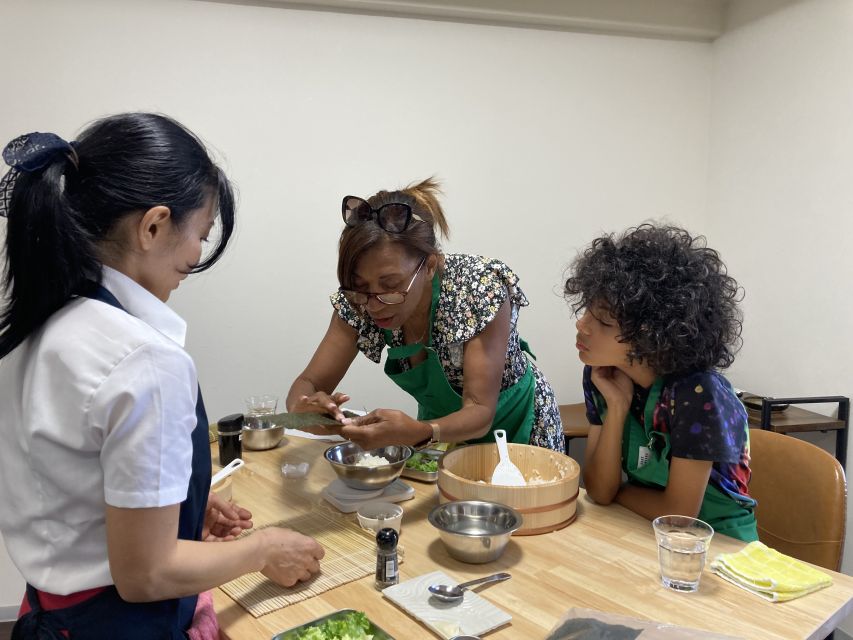
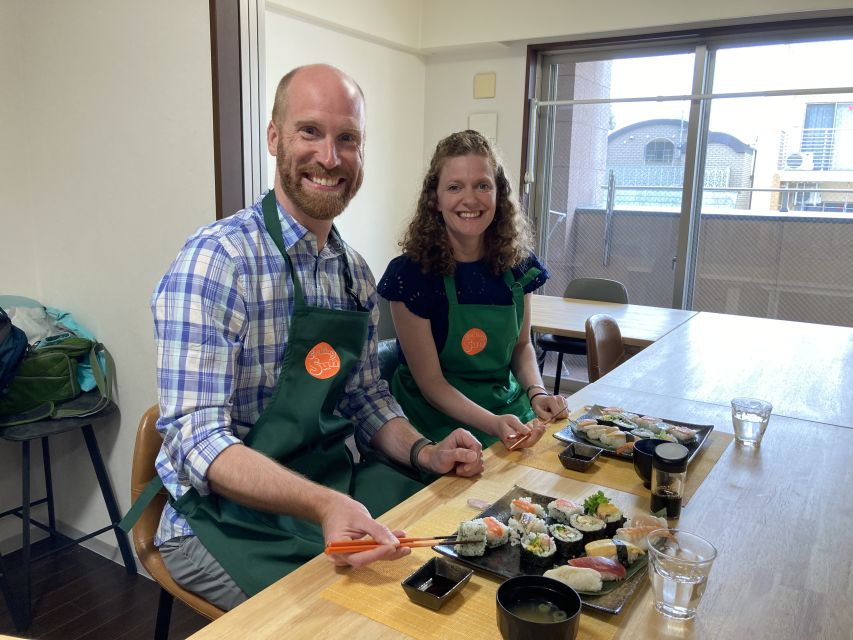
- Hands-on trio of sushi types: salad roll, nigiri, and Oshizushi box sushi
- Oshizushi the Kansai way: press in a square wooden frame, then cut right before eating
- Nigiri build confidence: top vinegared rice with classic ingredients like fish and omelet
- English-led coaching: instructors like Yoshi, Yoko, Ami, Eriko, and Naomi teach step-by-step
- You eat a real amount of sushi: the class ends with plenty of what you make
Back under the Glico sign: more Dotonbori runs


Finding Cooking Sun Osaka: Room 202 and the 呼出 button
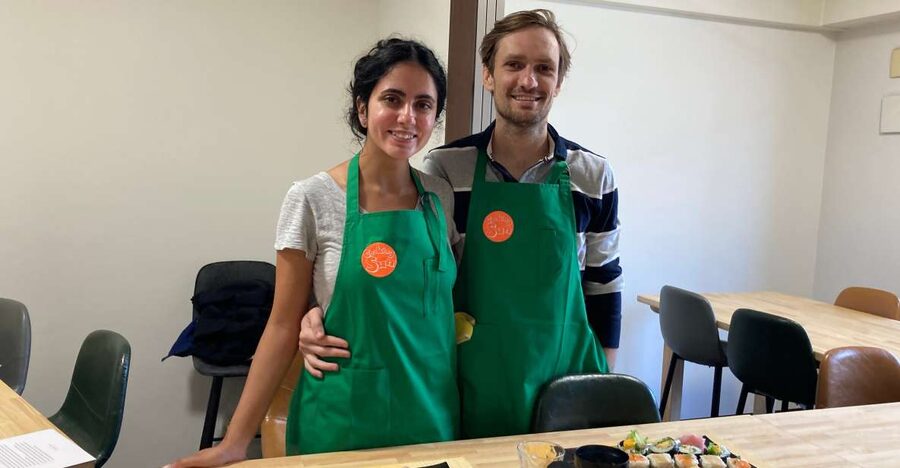
The experience starts before you ever touch rice. Your meeting point is Cooking Sun Osaka, room 202. When you arrive, press 202 and the entrance 呼出 (call) button. If you’re thinking, I’ll just ask someone, plan a little extra time. A few people have had trouble with taxi drivers finding the location.
Once you’re inside, the vibe is exactly what you want for a sushi class: practical, clean, and set up for hands-on cooking. And since it’s a wheelchair-accessible venue, it’s built to be straightforward for more than one kind of visit.
If you’re doing this on a day when you’re also wandering around Dotonbori, I suggest treating the class as a fixed anchor. You’ll want to arrive calm, not sprinting. Cooking with your hands is hard enough without stress.
The 3-hour flow: from prep basics to your final plate
This isn’t a “watch and hope” class. You’re actively making three types of sushi over the full session, with ingredient help included. The pacing is built for beginners, but it still feels real—like you’re learning a technique, not just assembling lunch.
In practice, that means you’ll move through rice-handling and rolling/pressing stages, then finish by eating what you made. A big theme here is feedback: small steps, then corrections, then another attempt. That’s how people leave feeling proud of their own sushi, even if it’s their first time.
Also, the class uses English instruction, so you won’t get stuck translating basic cooking steps. You’ll hear guidance in a clear “do this, then do that” rhythm, with plenty of room to ask questions.
Salad Roll: the calm starter that teaches nori and filling balance
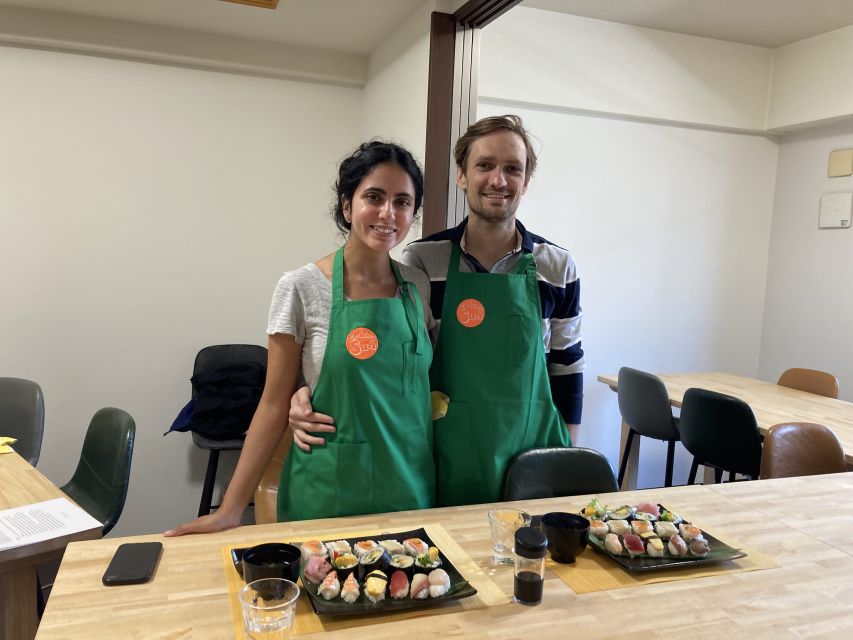
The salad roll is your warm-up, but it’s not just filler. It’s a useful training tool because it combines several key sushi skills in one go: nori handling, even distribution of filling, and getting a neat structure without overstuffing.
Here’s what goes into it:
- Crab-flavored kamaboko
- Lettuce and cucumber
- Tuna mixed with mayonnaise
- Nori seaweed wrapping
- A tamagoyaki (egg roll) core
Why this matters for you: salad-roll sushi is forgiving in a way nigiri isn’t. You’ll learn how to keep the roll tight, how to align the filling, and how to roll without tearing the nori. Those are the same muscle moves you’ll use later when you press or place toppings.
If you’re health-minded, this part also gives you a different angle on sushi than the classic fish-on-rice story. You’re getting fresh vegetable crunch inside, and that keeps the lesson from feeling one-note.
Flour on your hands, more Osaka kitchens to try
Nigiri: placing toppings on vinegared rice with confidence
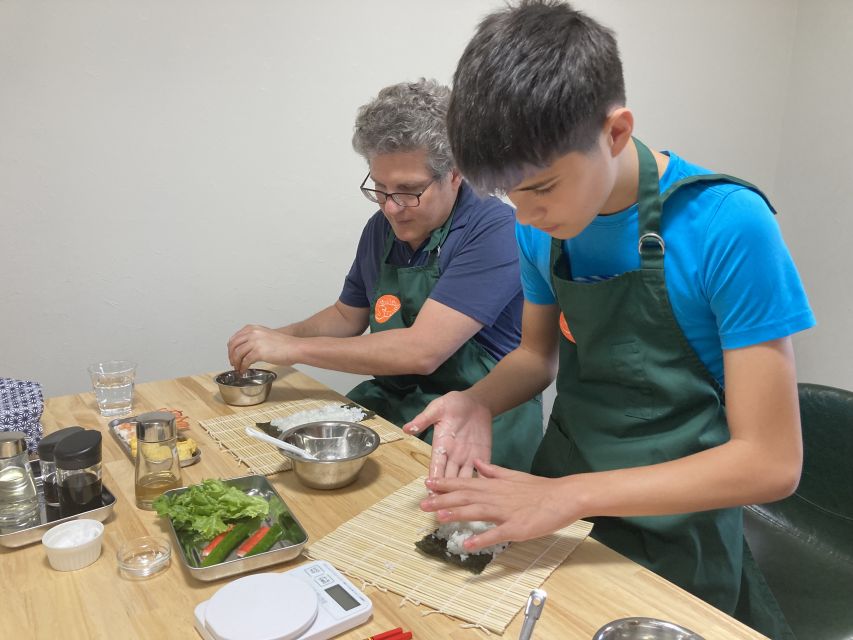
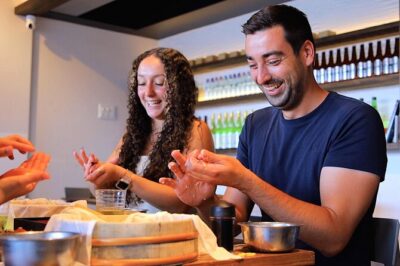
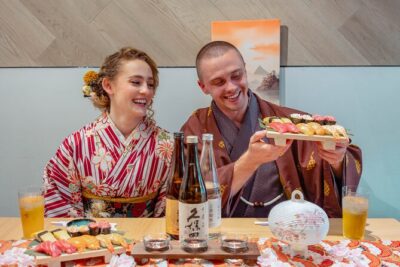
Nigiri is the headline sushi for a reason. It’s simple on paper—vinegared rice with toppings—but it teaches real technique. The core concept is placing sushi ingredients directly on top of bite-sized vinegared rice.
In the class, you’re not just eating nigiri; you’re building it. The method follows the classic definition:
- Vinegared rice shaped into a bite-sized base
- Sushi ingredients placed on top—examples include fish, shellfish, and omelet
What you learn here is how to “finish” the sushi so it looks and eats right. The topping has to sit properly on the rice, not slide off or drown the rice’s flavor. That’s not only aesthetic. It affects every bite.
And if you’re worried you’ll feel clumsy, don’t. The teaching style is hands-on and supportive. The pattern in the class is clear instructions plus quick corrections, which is exactly what you need when you’re learning something as precise as nigiri.
Oshizushi (pressed box sushi): Osaka’s square signature
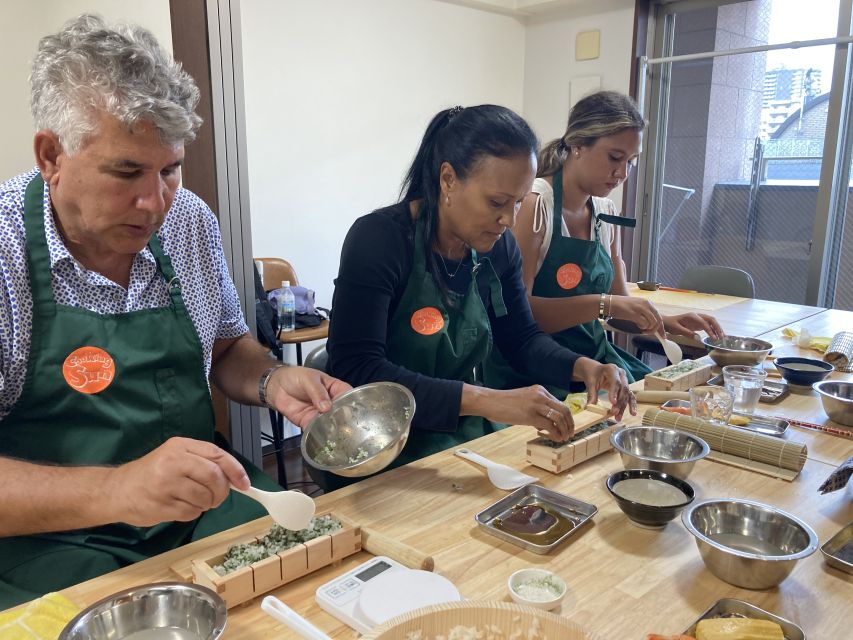
Now for the Osaka-focused part: Oshizushi, the Kansai region’s traditional pressed sushi. In Osaka, you’ll often hear it called “box sushi,” and the method is the point.
Here’s how it’s described and practiced:
- Fill a square wooden frame with sushi rice and toppings
- Press the rice so it sticks to the toppings
- The finished result is a square
- Cut it into pieces just before eating
That “cut right before eating” detail is more than tradition. It keeps the texture crisp where you want it and helps the sushi feel fresh at the moment you eat it.
Why Oshizushi is a great learning experience for you: it teaches a different problem than nigiri and rolling. Instead of shaping and placing, you’re learning pressure, timing, and how to trust the finished form. When it comes out cleanly, it feels like you earned the sushi—not just assembled it.
This is also the part that makes the class feel unmistakably Osaka. If you’re already planning time around the city’s food culture, Oshizushi gives you a local technique you can’t easily copy from a generic sushi demo.
English-led teaching that feels personal in a group of 8
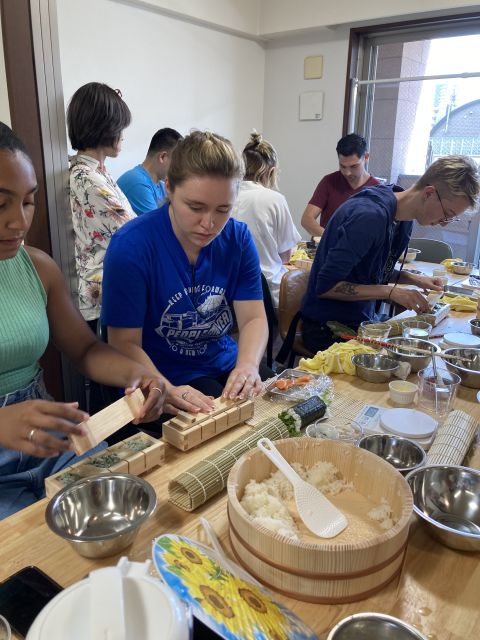
The class is limited to 8 participants, which changes everything. You’re not competing for attention, and you’re not just hoping the instructor notices your technique. Instructors like Yoshi, Ami, Yoko, Eriko, Naomi, and others are involved across sessions, and the consistent theme is active, friendly guidance.
A big plus: the teaching doesn’t stop at “how.” You’ll also hear context about Japanese cooking methods—how certain foods are preserved, how flavors are built, and why sushi has the structure it does. That kind of explanation makes the techniques stick in your brain because you understand the purpose, not just the steps.
You’ll also get interaction beyond the counter. One of the strengths of the instructors is being chatty in a useful way—sharing advice tied to your trip and the foods you might want to try next. It’s not random small talk. It’s food-centered.
This class also works well if you’re traveling with someone. Two people can learn side-by-side without getting separated, and the end result is a plate of sushi you can genuinely compare and enjoy.
Price and value: why $67 works for real food learning
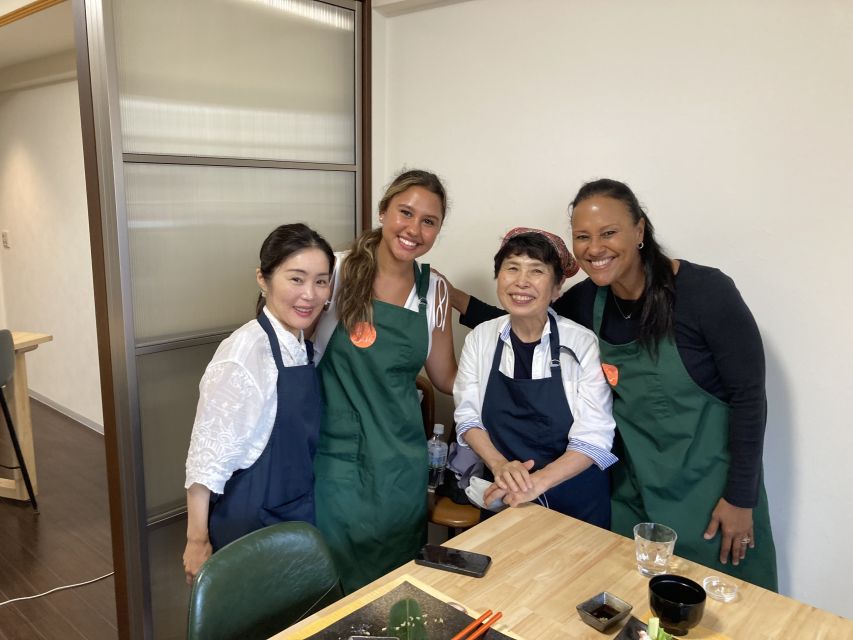
Let’s talk money without guessing. The price is $67 per person for a 3-hour class. You’re paying for four things:
- Instruction in English
- Hands-on time to make multiple sushi types
- Ingredients included
- A finished meal at the end of class
The value is strongest because you leave with a lot of what you made. People consistently note that the quantity is substantial, enough to satisfy big appetites. That turns the class into more than a snack stop—it becomes a real part of your Osaka day.
You’re also paying for precision help. Sushi falls apart when you miss small details: how you handle rice, how toppings sit, how rolling pressure works, how pressed sushi sets. With only 8 people and focused coaching, you’re getting the correction you’d otherwise need from practice or a second lesson.
And with a 4.9 average rating across 160 bookings, the pattern is clear: people strongly praise instruction quality, interaction, and the sheer amount of delicious sushi at the end.
Vegetarian and gluten-free needs: note it before you arrive
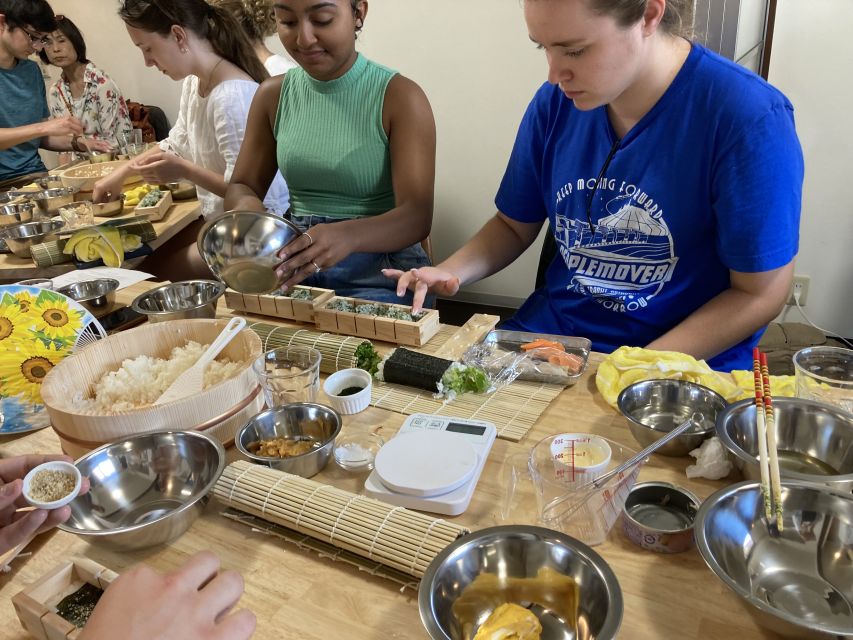
If you need vegetarian or gluten-free sushi options, you should flag it during booking. There’s a clear instruction to leave a note upon booking for vegetarian or gluten-free needs.
What I like about this approach is that it pushes the responsibility earlier—before you’re standing in front of a counter. It gives the team time to prepare ingredients that match your needs and helps you avoid awkward substitutions.
If you have specific allergy concerns beyond gluten, the data doesn’t detail ingredient-level handling. Your best move is to use the booking note to state your needs clearly, so the instructors can respond appropriately.
Who should book this sushi class in Osaka
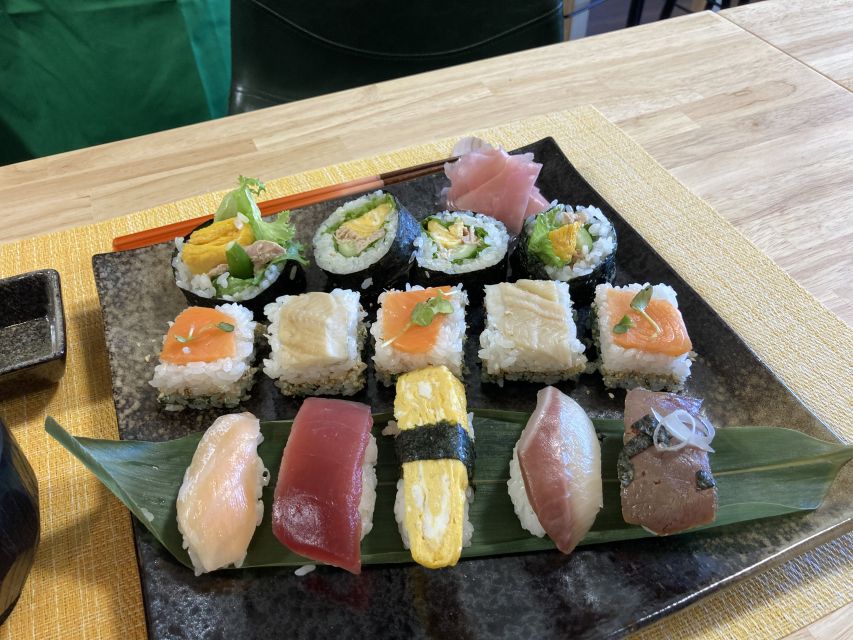
This is a great pick if:
- You love sushi and want to learn techniques, not just order it
- You’re a beginner who wants step-by-step guidance
- You want an Osaka-flavored lesson with Oshizushi in the mix
- You enjoy food culture context alongside cooking
It may be less ideal if:
- You’re only interested in eating sushi and not making it
- You’re expecting advanced chef-level preparation skills from scratch (this class is built for guided learning, not professional knife work)
- You want a very fast, minimalist experience—this is a 3-hour hands-on session with teaching time
Should you book? My straight answer
Yes, book it if you want a satisfying mix of hands-on fun and Osaka-specific sushi technique. The core reason is simple: you don’t just learn one thing. You make three sushi types—salad roll, nigiri, and Oshizushi—and you eat a generous amount of what you produced.
The second reason is the teaching setup: English instruction with a small group of up to 8, plus instructors who actively guide and explain. If you’ve ever felt sushi lessons were too vague, this one is built to fix that.
The one caution is logistics. Plan time to find Cooking Sun Osaka, room 202, and use the 呼出 call button at the entrance. Once you’re there, the rest is smooth.
FAQ
How long is the sushi class?
It lasts 3 hours.
What sushi types will I make?
You’ll make three types: a salad roll, nigiri, and Oshizushi (pressed box sushi).
Is the class taught in English?
Yes, the instruction is in English.
Is the group small?
Yes. It’s limited to a small group of up to 8 participants.
What’s the meeting point address and how do I enter?
The meeting point is Cooking Sun Osaka, room 202. On arrival, press 202 and the 呼出 button at the entrance.
Are ingredients included?
Yes. All ingredients for sushi making are included.
Can I request a vegetarian or gluten-free option?
Yes. You should leave a note upon booking for vegetarian or gluten-free needs.
Is wheelchair accessible?
Yes, the venue is wheelchair accessible.
What are the cancellation and payment options?
You can cancel up to 24 hours in advance for a full refund, and you can reserve now and pay later.
More Tour Reviews in Osaka
- Osaka Go Karting Tour with Funny Costume★ 5.0 · 2,658 reviews
- Osaka Castle: Museum and Tower Entry Ticket★ 4.5 · 2,380 reviews
- Osaka: Shinsekai Food Tour with 13-15 Dishes at 5 Eateries★ 4.8 · 2,204 reviews
- Osaka Food Tour: 13 Dishes at 5 Local Eateries★ 5.0 · 2,149 reviews
- Hungry Osaka Street Food Tour:15 Tastings & 3 Drinks with a Local★ 5.0 · 1,727 reviews
Cook It Yourself in Osaka
- Sushi Making Osaka Roll and Authentic Japanese Sushi Class★ 5.0 · 1,220 reviews
- Osaka: Five Must-See Highlights Walking Tour & Ramen Lunch★ 4.7 · 411 reviews
- Osaka Sushi Making Experience★ 5.0 · 400 reviews
- Osaka: Ramen and Gyoza Cooking Class in Dotonbori★ 5.0 · 378 reviews
- Osaka: Sumo Stage Show with Bento or Snack + Fight & Photo★ 4.3 · 364 reviews
Dotonbori and Namba, Round Two
- Osaka Local Foodie Walking Tour in Dotonbori and Shinsekai★ 5.0 · 985 reviews
- Osaka: Dotonbori District River Cruise with Drink Discount★ 4.2 · 876 reviews
- Ultimate Osaka Walking Tour: Castle, Dotonbori & Hidden Gems★ 5.0 · 862 reviews
- Tea Ceremony Experience in Osaka Doutonbori★ 5.0 · 754 reviews
- Osaka: Namba Pub Bar Crawl with a Local Guide★ 4.9 · 424 reviews
The Newest Osaka Write-Ups
- Private Photoshoot in Osaka with a Professional Photographer
★ 5.0 · 3 reviews - Osaka Early Morning Osaka Castle Tour Avoid Crowds
★ 5.0 · 3 reviews - Nara Private Tour with Pick and Drop and English Speaking Driver
★ 3.5 · 3 reviews - Osaka: Modern Vegetarian Sushi Cooking Class
★ 5.0 · 3 reviews - Nara Day Trip from Osaka with a Licensed Guide
★ 5.0 · 3 reviews
Dotonbori & Namba Tours, compared.
 ★ 5.0Osaka Local Foodie Walking Tour in Dotonbori and ShinsekaiFrom $111985 reviews
 ★ 4.2Dotonbori District River Cruise with Drink DiscountFrom $12876 reviews
 ★ 5.0Ultimate Osaka Walking Tour: Castle, Dotonbori & Hidden GemsFrom $73862 reviews
 ★ 5.0Tea Ceremony Experience in Osaka DoutonboriFrom $20754 reviews
 ★ 4.9Namba Pub Bar Crawl with a Local GuideFrom $30424 reviews
 ★ 5.0Ramen and Gyoza Cooking Class in DotonboriFrom $70378 reviews
Dotonbori River Cruise with Glico Sign & Neon ViewsFrom $12376 reviews
★ 5.0Ramen and Gyoza Cooking Class in DotonboriFrom $70378 reviews
Dotonbori River Cruise with Glico Sign & Neon ViewsFrom $12376 reviews
 ★ 3.9Dotonbori’s Bridges 20-Minute CruiseFrom $12303 reviews
Browse the lists this tour appears in