
Reviewed · OSAKA FOOD & TASTING TOURS
Osaka Home Feast Cooking and Sake Experience
Cooking in someone’s home-style Osaka rhythm? That’s the hook. This 3-hour Osaka Home Feast experience pairs a real supermarket ingredient hunt with hands-on izakaya cooking and handpicked sake (plus an option for beer or soft drinks), all in a small group. I love that it’s practical and food-first, not just a demo, and I also like that the English-speaking local guide brings Japan context while you cook. One thing to consider: the whole event runs about 3 hours from a late-afternoon start, so it’s not a slow, leisurely multi-course dinner.
You’ll begin at FamilyMart Minamimorimachi station South side, then move straight into planning takoyaki fillings for an Osaka-style outcome. From there, you cook an izakaya spread in a cozy studio while you snack as you go, and you finish by eating what you made in a relaxed taku-nomi vibe. Guides such as Chie and Nina (from past guests) have a way of mixing good cooking with helpful answers, which makes the experience feel less scripted.
In This Review
- Key things I’d focus on
- Osaka supermarket to takoyaki pan: the real reason this works
- Where to meet for a smooth 4:30 pm start
- The grocery run: takoyaki fillings and ingredient spotting
- The cooking studio setup: aprons on, pans ready
- The menu you’ll actually make (and why it’s a good mix)
- Mugen cabbage early bites
- Wasabi tuna salad with a sharp edge
- Crispy Osaka-style takoyaki
- Chicken with green onion, mayo, and ponzu
- Tasting as you cook: more than just food, it’s workflow
- Sake pairing without the stuffy vibe
- Small group size: up to 7 people, and that changes the feel
- Value check: is $91.04 worth it?
- The recipe pack you take home
- Who this Osaka feast is best for
- Should you book this Osaka Home Feast cooking and sake experience?
- FAQ
- How long is the Osaka Home Feast experience?
- What time does the experience start?
- Where do I meet the guide?
- Is this experience near public transportation?
- How big is the group?
- Do I receive a ticket on my phone?
- What do we cook and eat?
- Is there sake involved?
- Is there free cancellation?
Key things I’d focus on
- Supermarket run first: you shop for ingredients and ideas before you ever heat a pan
- Osaka-style takoyaki planning: you brainstorm fillings, not just follow a template
- Hands-on cooking with snack pacing: early bites while you learn the workflow
- Sake pairing style: you sip handpicked sake alongside the dishes, in a casual drinking-at-home mood
- Small group cap: up to 7 people means more attention and less waiting around
Come hungry: more eating your way through Osaka


Osaka supermarket to takoyaki pan: the real reason this works
Most cooking classes in Japan stop at the kitchen. This one starts one step earlier, in a nearby Japanese supermarket, which changes the whole feel. You’re not just learning recipes. You’re learning how ingredients actually look and get picked in daily life.
That matters for your results later. When you’ve walked the aisles, checked labels, compared shapes and textures, and discussed fillings for takoyaki, the dishes stop being random instructions. They become something you can recreate without guessing what the cook meant.
I also like the tone: it’s home-feast style, izakaya-style, and friend-like. You’re not being judged on technique. You’re being guided through a fun, realistic flow of cooking, tasting, and adjusting.
Where to meet for a smooth 4:30 pm start
The experience starts at 4:30 pm, so plan to be there early enough to find the exact spot without stress. Your meeting point is:
FamilyMart Minamimorimachi station South side
Osaka, 530-0041, Kita Ward, Tenjinbashi, 2-chōme, 310 1F
It ends back at the meeting point, which is handy if you want to keep your evening flexible after the class. This is also close to public transportation, so you’re not fighting long transfers with a hungry stomach.
Practical tip: because it’s a late-afternoon start, I’d treat this as your early dinner plan. You’ll eat what you make, so try not to fill up too heavily beforehand.
The grocery run: takoyaki fillings and ingredient spotting
The first big segment is a stroll to a local supermarket with your English-speaking guide. The goal isn’t just buying. It’s learning how to build a dish from real ingredients you can point to.
You’ll look for items tied to Osaka-style takoyaki ideas. The class includes brainstorming fun takoyaki fillings, which is a simple but powerful way to personalize the outcome. Even if you’ve had takoyaki before, this kind of planning helps you understand what makes different fillings behave in the batter—salty, creamy, spicy, savory, or tangy.
A big plus here is how normal it feels. One helpful thing you’ll notice in Japan: how shopping is handled. Past guests have noted that everyone carries their own purchases, which is just how it works day to day. It’s a small cultural moment, but it makes the experience feel more authentic and less touristy.
Possible consideration: supermarket time can be a little fast, especially if you love browsing. The event has to fit into a roughly 3-hour total window, so use any extra time you get to ask questions rather than trying to shop independently.
Flour on your hands, more Osaka kitchens to try
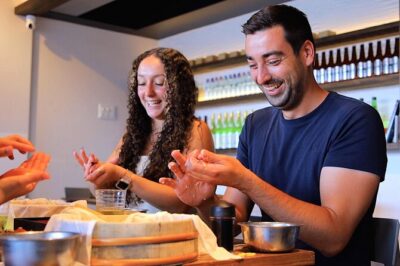


The cooking studio setup: aprons on, pans ready
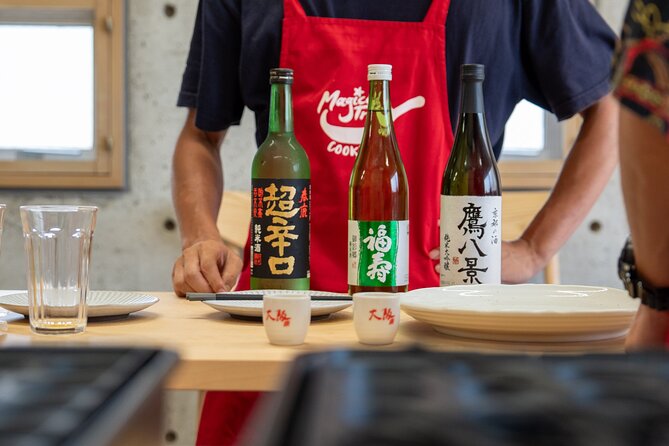
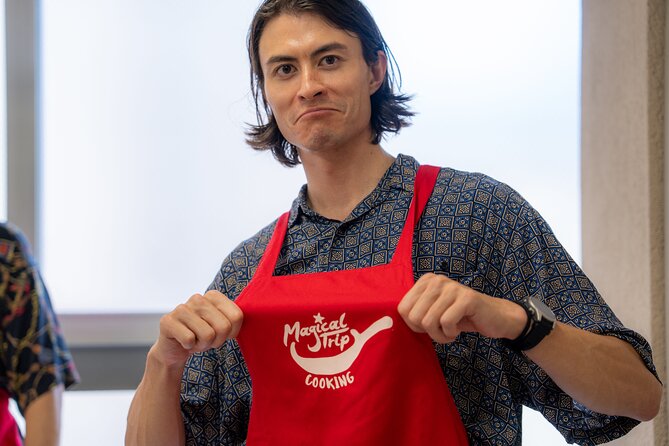
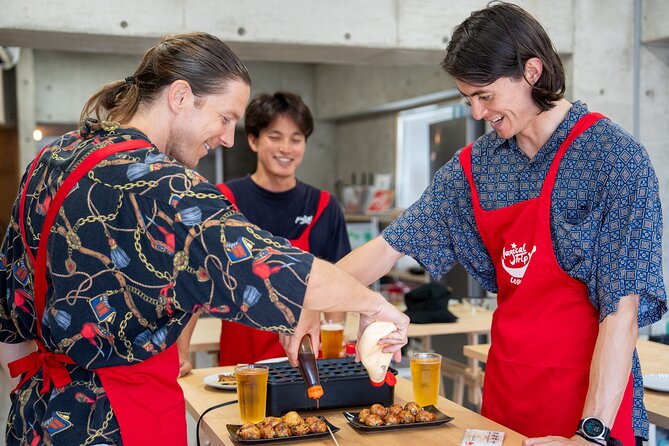
Next, you head to a cozy cooking studio where you slip into a MagicalTrip apron. That little detail sounds trivial, but it signals the shift from sightseeing to cooking. You settle into a work rhythm and get ready to make several dishes rather than one.
The cooking approach is izakaya style, meaning you’re not dealing with fancy plating. You’re building flavor and texture. Think crispy edges, juicy fillings, and sauces that taste like they belong with drinks. That’s why the class includes tasting along the way—early bites like Mugen cabbage and wasabi-marinated tuna salad help you calibrate your seasoning and understand what each dish is trying to do.
In real life, this is what makes it easier to repeat at home. You’re not stuck with one finished plate that you only taste at the end.
The menu you’ll actually make (and why it’s a good mix)
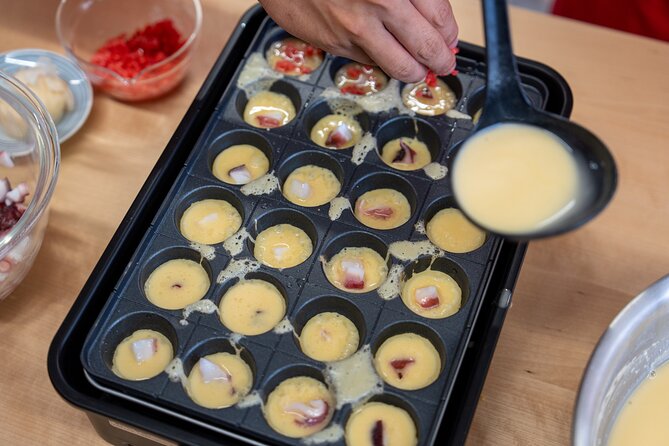
This experience is built around a well-chosen set of dishes that teach different techniques while still fitting an izakaya evening.
Mugen cabbage early bites
You’ll start tasting early bites like Mugen cabbage. Even if you’ve never heard the term, the concept is simple: it’s part of the meal that brings crunch, freshness, and balance. Early bites also help you feel comfortable in the kitchen before the main dishes hit.
Wasabi tuna salad with a sharp edge
You’ll also work with wasabi-marinated tuna salad. Wasabi changes everything—aroma, bite, and how your palate reacts to the rest of the flavors. This dish teaches you how to handle ingredients that are meant to be bold, not subtle.
Crispy Osaka-style takoyaki
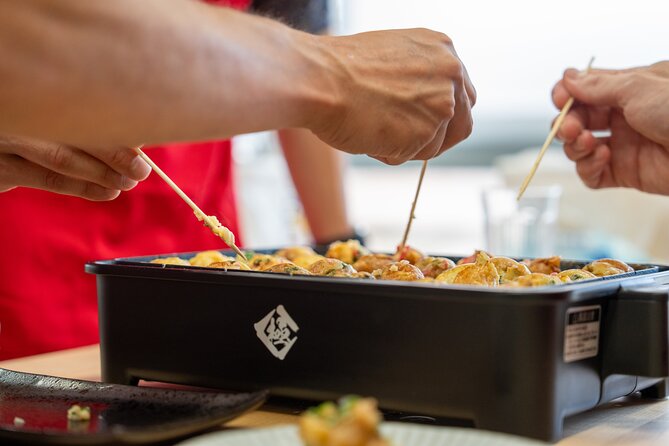
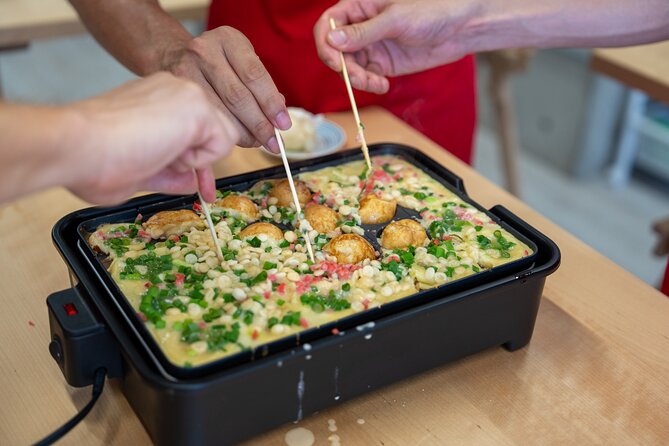
Then comes the centerpiece: crispy takoyaki. Takoyaki is a fun target because you can see progress quickly: batter cooks, fills firm up, and you can adjust while learning the shape and texture. The class focuses on Osaka-style takoyaki, including the fillings you brainstormed during shopping.
The big win isn’t just the taste. It’s learning how to think about the batter-to-filling ratio. At home, that’s what separates good takoyaki from flat, greasy ones.
Chicken with green onion, mayo, and ponzu
Finally, you’ll make chicken with green onion, mayo, and ponzu. This dish is a practical lesson in balancing richness and brightness. Mayo brings smoothness. Ponzu brings citrusy salt and tang. Green onion ties it all together and adds aroma.
Why this matters for value: you’re not only learning one Japanese dish. You’re learning a flavor logic you can apply—creamy + tangy + fresh.
Tasting as you cook: more than just food, it’s workflow
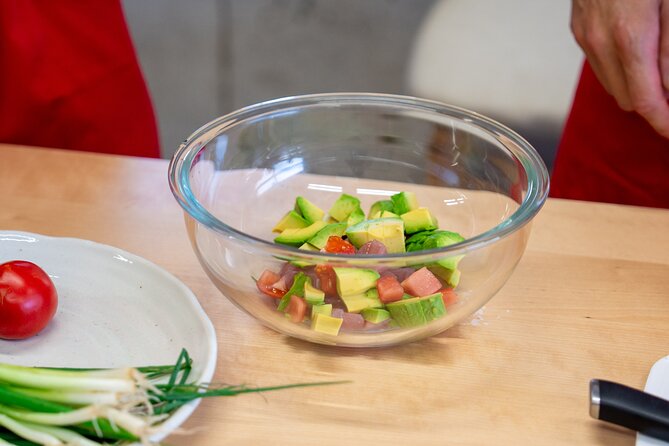
One reason this class feels different from a strict “watch and repeat” format is the pacing. You’ll taste early items like Mugen cabbage and wasabi tuna while you cook, then you build toward the main takoyaki and chicken.
That pacing helps in two ways:
- You get feedback mid-process, not just at the end
- You stay engaged, even if some steps take a bit of time
It’s also part of why the final meal feels relaxed. You’re not waiting for food to appear. You’re tasting along the way, then eating a finished spread you helped make.
Sake pairing without the stuffy vibe
The experience includes sake pairing as part of the meal. You’ll sip handpicked sakes while cooking and eating, and the format sits in a casual “home drinking” mode (taku-nomi).
You can also have beer or soft drinks as part of the experience. That’s important because it keeps the focus on the food and the pairing style rather than forcing alcohol as the main event.
Practical advice if you’re not a big sake drinker: focus on the dish you’re eating right then. Pairing works best when you taste the food first, then take a sip and see how the flavors change. If you skip the tasting rhythm, sake can blur everything together.
If you’re the type who likes asking questions, this is also a good setting. Past guests have specifically praised guides like Chie for answering Japan questions and weaving in context while you cook.
Small group size: up to 7 people, and that changes the feel
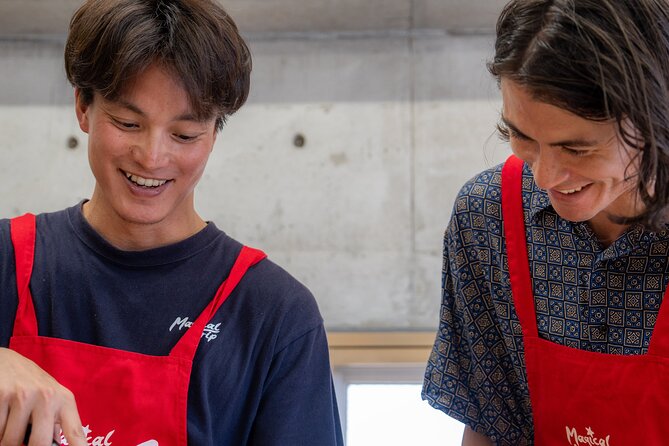
This activity has a maximum of 7 travelers. That size is a sweet spot. You get interaction without feeling like you’re in a private cooking show with no energy around you.
With a small group, you’re more likely to:
- get help quickly when a step feels confusing
- have your questions answered without waiting
- move at a pace that fits the class, not the fastest cook
And because the event includes both shopping and cooking, group size matters for logistics. If the group were bigger, supermarket time and kitchen time would likely feel rushed. Here, the structure stays manageable.
Value check: is $91.04 worth it?
At $91.04 per person, you’re paying for more than a meal. You’re paying for:
- guided grocery shopping and ingredient planning
- hands-on cooking instruction
- multiple dishes (not just one)
- sake pairing (plus beer or soft drinks as offered)
- a downloadable recipe pack so the experience doesn’t end when you leave
Is it expensive? In Japan, cooking classes vary a lot. What makes this one feel like a fair deal is the combo. You get both the shopping story and the actual skills transfer—plus you eat what you make.
If you’re the kind of traveler who likes food but hates generic, cookie-cutter tours, this price can feel very reasonable. The biggest value comes when you’ll use the recipe pack and want to recreate the flavors later.
If you mainly want a casual dinner with minimal instruction, you might find it less worth it. This is still a cooking experience, with learning and steps built into it.
The recipe pack you take home
Before you leave, you get a downloadable recipe pack. This is one of the best parts to look for in any cooking class, because it determines whether you’ll remember the dishes correctly or just remember the fun.
Since the class includes a grocery run and multiple dishes, the recipe pack can be your bridge back home. I’d use it like this: choose one dish you want to cook first, shop for the key ingredients, and follow the method while referencing the pack. Start simple, then scale up.
Even if you don’t recreate everything perfectly, you’ll at least get the core flavor pattern: what to season, how to balance tang and richness, and how takoyaki-style cooking should feel.
Who this Osaka feast is best for
This experience fits you if:
- you enjoy hands-on cooking more than watching
- you like food-focused travel with local guidance
- you want an izakaya-style evening plan at a clear start time
- you’re interested in sake pairing but still want options
It’s also a strong pick for solo travelers because small-group energy can be welcoming. One past guest described joining as the only person signed up and having a fun experience with their guide—private attention is possible depending on turnout.
It may be less ideal if:
- you dislike alcohol pairing and would rather skip that entirely (soft drinks are included, but sake is part of the program)
- you want a longer, slower meal that goes beyond one evening course
Should you book this Osaka Home Feast cooking and sake experience?
I’d book it if you want a practical Osaka food memory you can use. The best reason is the structure: supermarket shopping plus cooking plus eating, all in a small group, with a recipe pack after. That’s the kind of format that turns a fun night into repeatable skills.
I’d think twice if you’re short on time or you only want a meal, not instruction. But if you’re excited by takoyaki, ponzu flavors, and learning how ingredients translate into real cooking, this is a strong use of your evening.
If you do book, come hungry, ask questions during the grocery run, and taste intentionally during the sake pairing. That’s how you get the most out of the 3 hours.
FAQ
How long is the Osaka Home Feast experience?
It runs for approximately 3 hours.
What time does the experience start?
The start time is 4:30 pm.
Where do I meet the guide?
You meet at FamilyMart Minamimorimachi station South side, Osaka, 530-0041, Kita Ward, Tenjinbashi, 2-chōme, 310 1F.
Is this experience near public transportation?
Yes, it’s near public transportation.
How big is the group?
The maximum group size is 7 travelers.
Do I receive a ticket on my phone?
Yes, it’s a mobile ticket.
What do we cook and eat?
You’ll cook izakaya-style dishes including takoyaki, wasabi-marinated tuna, and chicken with green onion, mayo, and ponzu, with early bites like Mugen cabbage and wasabi tuna salad as you cook.
Is there sake involved?
Yes. The experience includes sake pairing with handpicked sakes, and you can also have beer or soft drinks as part of the experience.
Is there free cancellation?
Yes. You can cancel for a full refund up to 24 hours before the experience starts.
Kanpai: More Osaka Tastings
- Osaka Sake Tasting with Takoyaki Cooking★ 5.0 · 156 reviews
- Osaka Sake Tasting & Takoyaki Cooking Experience★ 5.0 · 149 reviews
- Osaka Cooking Class and Sake Tasting with Local Supermarket Visit★ 5.0 · 79 reviews
- Osaka: Cooking Class & Sake Tasting with Local Market Visit★ 4.8 · 31 reviews
- 3.5h Osaka Night guided Local Bar Hopping, Sake & Karaoke★ 5.0 · 27 reviews
Cook It Yourself in Osaka
- Sushi Making Osaka Roll and Authentic Japanese Sushi Class★ 5.0 · 1,220 reviews
- Osaka: Five Must-See Highlights Walking Tour & Ramen Lunch★ 4.7 · 411 reviews
- Osaka Sushi Making Experience★ 5.0 · 400 reviews
- Osaka: Ramen and Gyoza Cooking Class in Dotonbori★ 5.0 · 378 reviews
- Osaka: Sumo Stage Show with Bento or Snack + Fight & Photo★ 4.3 · 364 reviews
The Kuidaore List: Eat More of Osaka
- Osaka: Shinsekai Food Tour with 13-15 Dishes at 5 Eateries★ 4.8 · 2,204 reviews
- Osaka Food Tour: 13 Dishes at 5 Local Eateries★ 5.0 · 2,149 reviews
- Hungry Osaka Street Food Tour:15 Tastings & 3 Drinks with a Local★ 5.0 · 1,727 reviews
- Deep Backstreet Osaka Tours (Option to add Dinner)★ 5.0 · 1,290 reviews
- Osaka Local Foodie Walking Tour in Dotonbori and Shinsekai★ 5.0 · 985 reviews
The Newest Osaka Write-Ups
- Private Photoshoot in Osaka with a Professional Photographer
★ 5.0 · 3 reviews - Osaka Early Morning Osaka Castle Tour Avoid Crowds
★ 5.0 · 3 reviews - Nara Private Tour with Pick and Drop and English Speaking Driver
★ 3.5 · 3 reviews - Osaka: Modern Vegetarian Sushi Cooking Class
★ 5.0 · 3 reviews - Nara Day Trip from Osaka with a Licensed Guide
★ 5.0 · 3 reviews
Osaka Food & Tasting Tours, compared.
 ★ 4.8Shinsekai Food Tour with 13-15 Dishes at 5 EateriesFrom $532,204 reviews
 ★ 5.0Osaka Food Tour: 13 Dishes at 5 Local EateriesFrom $732,149 reviews
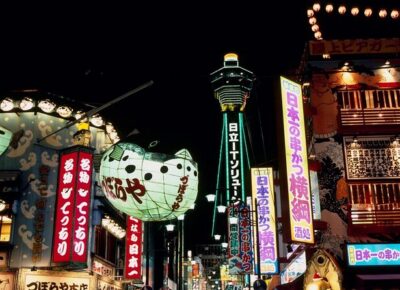 ★ 5.0Hungry Osaka Street Food Tour:15 Tastings & 3 Drinks with a LocalFrom $731,727 reviews
 ★ 5.0Deep Backstreet Osaka Tours (Option to add Dinner)From $531,290 reviews
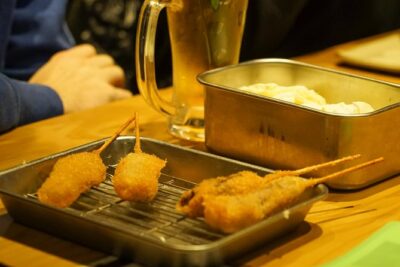 ★ 5.0Osaka Local Foodie Walking Tour in Dotonbori and ShinsekaiFrom $111985 reviews
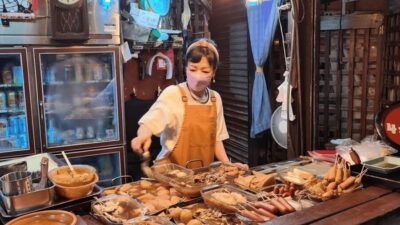 ★ 4.9Deep Backstreets Walking Tour with Dinner OptionFrom $40902 reviews
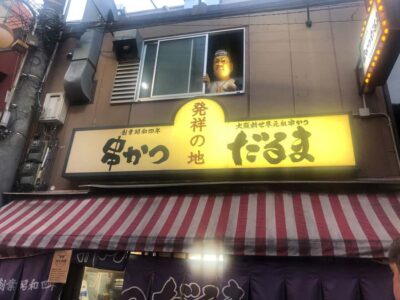 ★ 4.9Hungry Osaka Street Food Tour: 15 Dishes & 3 DrinksFrom $79694 reviews
 ★ 5.0Kuromon Market Food Walking Tour in Osaka (6 stops, 6 tastes)From $50550 reviews
Browse the lists this tour appears in