
Reviewed · OSAKA FOOD & TASTING TOURS
Osaka Cooking Class and Sake Tasting with Local Supermarket Visit
Japanese cooking starts with what you buy. This 4-hour Osaka small-group class pairs a local supermarket ingredient hunt with hands-on cooking and sake tasting, so you learn the why, not just the how. You’ll make iconic dishes like niku-sui (beef soup), okonomiyaki, and gyoza, then sit down to enjoy what you cooked with local sake, beer, or soft drinks.
I especially like the step-by-step live coaching that keeps even total beginners moving confidently at the stove. I also like the supermarket stop, where you learn what to look for and what ingredients matter in Osaka-style cooking. One watch-out: four hours is fast, so if you want lots of extra practice or slow pacing, you may feel a bit rushed.
In This Review
- What Makes This Osaka Class a Two-for-One Winner
- The Supermarket Stop: How You Learn to Shop Like You Cook
- Cooking the Osaka Favorites: Technique You Can Repeat
- Okonomiyaki (Savory Pancake) the Osaka Way
- Gyoza (Dumplings) and the Folding Practice
- Niku-sui (Beef Soup) for Comfort and Flavor
- Sake Tasting and the End-of-Class Meal
- Pricing and Value: Is $92.50 Worth It?
- Logistics That Matter (Meeting Point, Timing, Small Group)
- Who Should Book This Class (and Who Might Skip)
- Tips to Get More Out of the Cooking and Sake Tasting
- Should You Book This Osaka Cooking Class and Sake Tasting?
- FAQ
- FAQ
- How long is the Osaka cooking class and sake tasting?
- What dishes will I cook during the class?
- Do I need any cooking experience?
- Is there a supermarket visit, or is it just cooking in a studio?
- What’s included at the end with the food?
- How many people are in the group?
- Where do I meet for the tour?
- Is there free cancellation?
- Do I get a ticket on my phone?
What Makes This Osaka Class a Two-for-One Winner
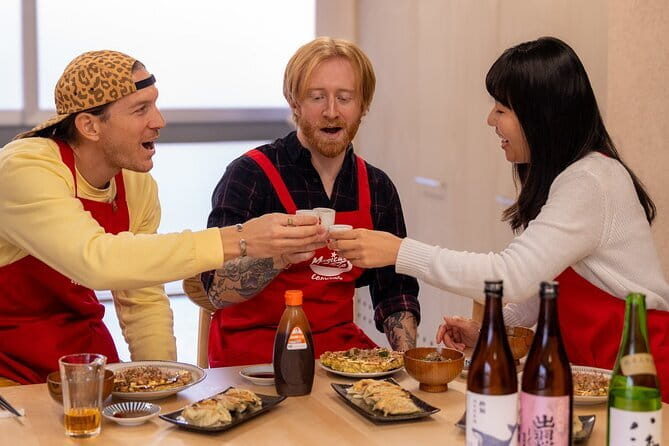
This experience is built around a simple idea: good Japanese home cooking starts before you ever turn on the heat. You start in a local supermarket environment where ingredients are easy to see, compare, and actually pick yourself. Then you move to the studio and turn those choices into real food, with an instructor guiding you through technique and timing.
It’s also not just “cook and leave.” You finish your meal with a sake tasting experience, which connects the flavors you made to the drinks Osaka people actually pair with food. That pairing piece is what makes it feel more like a culture lesson and less like a cooking workshop.
Small group sizes (up to 7) matter here. You get enough attention to fix small mistakes—like folding gyoza without them sticking, or adjusting how okonomiyaki cooks through—without waiting around for the instructor to finish with everyone else.
Come hungry: more eating your way through Osaka

The Supermarket Stop: How You Learn to Shop Like You Cook
The supermarket part is where the class becomes more useful at home. Instead of just being told which ingredients to buy later, you practice spotting them in a real Osaka store setting. That means you learn what to look for, not just what the recipe names.
Here’s the practical value: when you understand ingredient choices, you can recreate the dish even when brands look different. Japanese cooking can be picky about things like sauces, aromatics, and the right pantry staples. Seeing them in person helps you translate what you learned into your own grocery trips.
A nice bonus from the way the guides teach: they explain what you’re choosing and why it matters for the dish you’re making next. In feedback from the class, guides like Yuka were praised for showing and explaining lots of ingredients at the supermarket, not just rushing past shelves.
One thing to consider: the supermarket stop can move at a good pace. If you love lingering and browsing for fun, keep your expectations focused on “ingredient education,” not leisurely shopping.
Cooking the Osaka Favorites: Technique You Can Repeat
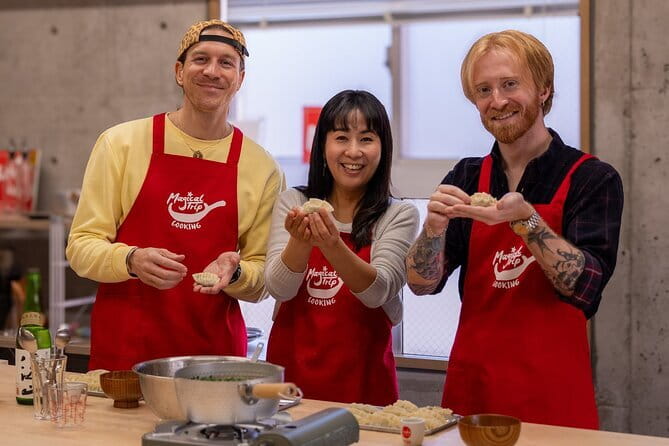
Once you’re back at the studio, the class shifts from choosing ingredients to using technique. The pacing is set up so you’re hands-on from the start, not stuck watching someone else cook.
Okonomiyaki (Savory Pancake) the Osaka Way
Okonomiyaki sounds simple until you’re actually cooking it. In this class format, you learn how to build it and how to manage heat so it cooks through without turning into a sad, undercooked mess.
The key skill isn’t fancy equipment—it’s understanding texture and timing. You get live guidance as you cook, which helps you get that classic balance: set enough to flip, cooked enough to eat while still tasting fresh. This is also where the “beginner-friendly” part really shows, since you’re learning the technique step-by-step.
In the feedback I’ve seen, Mari was specifically praised for explaining what to shop for for the different recipes, which tends to make the studio cooking go smoother because you already know what each ingredient is supposed to do.
Flour on your hands, more Osaka kitchens to try
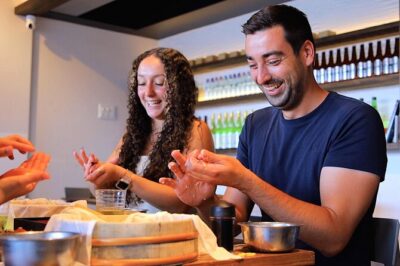

Gyoza (Dumplings) and the Folding Practice
Gyoza is the dish people often think they can wing. Don’t. The magic is in the fold and the closure, which affects whether they cook evenly.
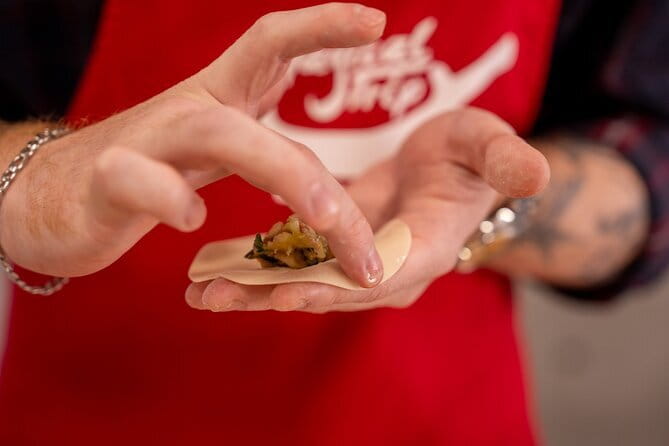
In this class, you learn to fold and work with the dumplings directly, with guidance that helps you avoid the most common issues—like dumplings falling apart, or not sealing properly. The benefit for you later is big: once you can fold confidently, you can make gyoza again without constantly referring back to a video for every step.
Niku-sui (Beef Soup) for Comfort and Flavor
Niku-sui is a comfortable, savory dish, and it’s a great counterpoint to the more hands-on, technique-heavy tasks like okonomiyaki and gyoza. Cooking soup tends to reward patience and attention to flavor.
Even if you’re new, the structure of this class supports you with instruction as you go. You learn how the dish should look and smell as it develops, and you end up with something you can actually recreate at home without special skills.
Sake Tasting and the End-of-Class Meal
After cooking, you eat what you made. That might sound basic, but it’s a huge part of why this experience sticks with you. When your hands are involved in the whole process, you taste with a different kind of attention. You notice how the seasoning behaves, how ingredients connect, and what you want to adjust next time.
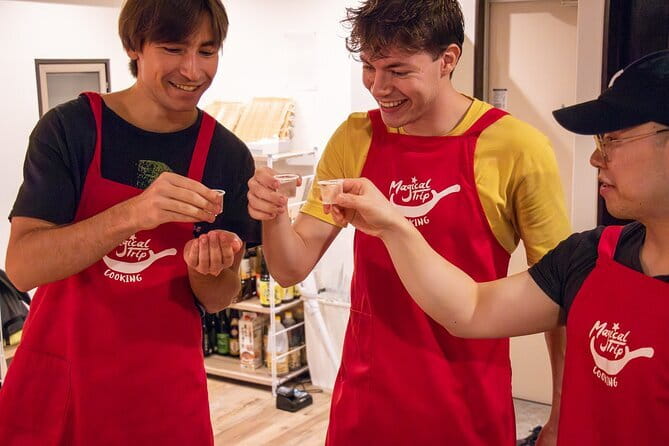
Then comes the drink pairing moment: you enjoy your dishes with local sake, beer, or soft drinks. That’s practical for mixed groups, including people who don’t want alcohol. It also gives you a real-world feel for what Osaka-style food sessions include beyond just the cooking itself.
The sake tasting adds context to the flavors. You’re not asked to be an expert; you’re guided to enjoy the pairing and learn a little along the way. And if you’ve ever struggled to understand how sake fits into Japanese meals, this helps because you experience it alongside food you made with your own ingredient choices.
Pricing and Value: Is $92.50 Worth It?
At $92.50 per person for about 4 hours, this class is priced like a true small-group workshop rather than a casual demo. You’re paying for three things at once:
- A local supermarket ingredient stop, which adds real learning value (and not just time).
- Hands-on instruction for multiple dishes, including technique-focused tasks like gyoza.
- A sake tasting and shared meal, meaning the experience ends with food and pairing, not just “see you later.”
For the money, the strongest value is the combination. A lot of cooking classes only teach you recipes. Here, you learn ingredient decisions first, then cooking skills second, then you finish with the tasting experience that makes everything click.
If you’re the kind of person who wants to leave with skills you can repeat at home (not just a full stomach), this pricing can feel fair—especially given the consistently strong satisfaction signals (a 5/5 rating with a high recommendation rate).
Logistics That Matter (Meeting Point, Timing, Small Group)
The class starts at 10:00 am, and it’s set up to run about 4 hours. You’ll meet at FamilyMart Minamimorimachi station South side, Japan, 530-0041 Osaka, Kita Ward, Tenjinbashi, 2-chōme310 1F and you’ll end back at the same meeting point.
This “start and end in the same place” format is worth something in Osaka, where navigating by neighborhood can be simple but time-consuming. The meeting point being near public transportation also reduces stress.
Group size is capped at 7 people, which directly supports the teaching style. You’re less likely to be stuck waiting for the instructor while others take their turns, and that matters when you’re folding dumplings or trying to time a pancake.
You’ll also get a mobile ticket, which is a small convenience but helpful when you’re moving through the city.
Who Should Book This Class (and Who Might Skip)
This is a great fit if you:
- Want a hands-on cooking experience, not a lecture
- Are curious about Osaka ingredients and what matters in real recipes
- Enjoy eating what you cook, with an actual drink pairing element at the end
- Travel in small groups (solo, couples, and families are a natural match)
It may not be ideal if:
- You need a very slow pace or lots of downtime. Four hours moves, and cooking requires focus.
- You’re only interested in watching cooking rather than doing it. This class expects participation.
Also, keep in mind the drink portion offers options beyond sake, including beer and soft drinks, so you don’t have to be a sake person to enjoy the experience.
Tips to Get More Out of the Cooking and Sake Tasting
If you want this class to pay off long after Osaka, do these simple things:
- Take mental notes on what ingredients you picked at the supermarket. When you repeat the recipes later, that’s what will help you improvise when brands differ.
- Pay attention to instructor cues during flipping and timing steps. Those are the skills that transfer best to your kitchen at home.
- During tasting, focus on pairing—how the drink changes what you notice in the food. You’re not studying; you’re building a personal sense for what works.
One more practical point: wear comfortable shoes and expect some standing while cooking. Even when the teaching is friendly, you’ll be active for the whole session.
Should You Book This Osaka Cooking Class and Sake Tasting?
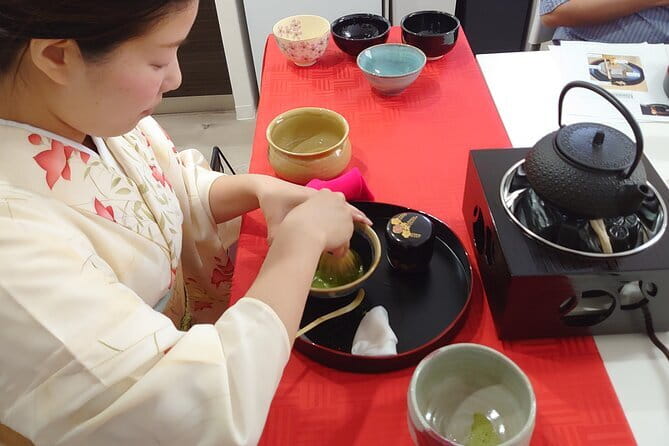
I’d book it if you want an experience that ties together ingredient shopping, real cooking technique, and a finish with sake/beer/soft drinks. The format is strong because it teaches you the “chain”—buy smart, cook well, then taste with context.
Skip it if you’re looking for something mainly scenic or purely relaxing. This is a do-it-yourself food class, so you’ll get the most from it when you’re ready to participate and learn.
FAQ
FAQ
How long is the Osaka cooking class and sake tasting?
The experience runs for about 4 hours.
What dishes will I cook during the class?
You’ll make niku-sui (beef soup), okonomiyaki (savory pancake), and gyoza (dumplings).
Do I need any cooking experience?
No cooking experience is needed. The class is suitable for beginners and also works well for people with more cooking skills.
Is there a supermarket visit, or is it just cooking in a studio?
You start with a visit to a local supermarket where you pick ingredients and learn about them before cooking.
What’s included at the end with the food?
After cooking, you enjoy what you made with local sake, beer, or soft drinks.
How many people are in the group?
The tour/activity has a maximum of 7 travelers.
Where do I meet for the tour?
You meet at FamilyMart Minamimorimachi station South side, Osaka (530-0041), Kita Ward, Tenjinbashi, 2-chōme, building 310 1F.
Is there free cancellation?
Yes. You can cancel for a full refund up to 24 hours in advance of the experience start time.
Do I get a ticket on my phone?
Yes, it’s listed as a mobile ticket.
Kanpai: More Osaka Tastings
- Osaka Sake Tasting with Takoyaki Cooking★ 5.0 · 156 reviews
- Osaka Sake Tasting & Takoyaki Cooking Experience★ 5.0 · 149 reviews
- Osaka: Cooking Class & Sake Tasting with Local Market Visit★ 4.8 · 31 reviews
- 3.5h Osaka Night guided Local Bar Hopping, Sake & Karaoke★ 5.0 · 27 reviews
- Osaka Winery Tour with Wine Tasting & Vineyard Walk★ 4.9 · 12 reviews
Cook It Yourself in Osaka
- Sushi Making Osaka Roll and Authentic Japanese Sushi Class★ 5.0 · 1,220 reviews
- Osaka: Five Must-See Highlights Walking Tour & Ramen Lunch★ 4.7 · 411 reviews
- Osaka Sushi Making Experience★ 5.0 · 400 reviews
- Osaka: Ramen and Gyoza Cooking Class in Dotonbori★ 5.0 · 378 reviews
- Osaka: Sumo Stage Show with Bento or Snack + Fight & Photo★ 4.3 · 364 reviews
The Kuidaore List: Eat More of Osaka
- Osaka: Shinsekai Food Tour with 13-15 Dishes at 5 Eateries★ 4.8 · 2,204 reviews
- Osaka Food Tour: 13 Dishes at 5 Local Eateries★ 5.0 · 2,149 reviews
- Hungry Osaka Street Food Tour:15 Tastings & 3 Drinks with a Local★ 5.0 · 1,727 reviews
- Deep Backstreet Osaka Tours (Option to add Dinner)★ 5.0 · 1,290 reviews
- Osaka Local Foodie Walking Tour in Dotonbori and Shinsekai★ 5.0 · 985 reviews
The Newest Osaka Write-Ups
- Private Photoshoot in Osaka with a Professional Photographer
★ 5.0 · 3 reviews - Osaka Early Morning Osaka Castle Tour Avoid Crowds
★ 5.0 · 3 reviews - Nara Private Tour with Pick and Drop and English Speaking Driver
★ 3.5 · 3 reviews - Osaka: Modern Vegetarian Sushi Cooking Class
★ 5.0 · 3 reviews - Nara Day Trip from Osaka with a Licensed Guide
★ 5.0 · 3 reviews
Osaka Food & Tasting Tours, compared.
 ★ 4.8Shinsekai Food Tour with 13-15 Dishes at 5 EateriesFrom $532,204 reviews
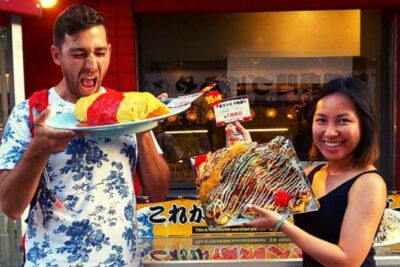 ★ 5.0Osaka Food Tour: 13 Dishes at 5 Local EateriesFrom $732,149 reviews
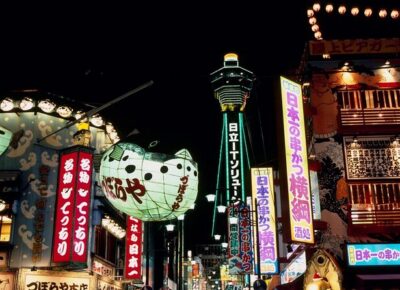 ★ 5.0Hungry Osaka Street Food Tour:15 Tastings & 3 Drinks with a LocalFrom $731,727 reviews
 ★ 5.0Deep Backstreet Osaka Tours (Option to add Dinner)From $531,290 reviews
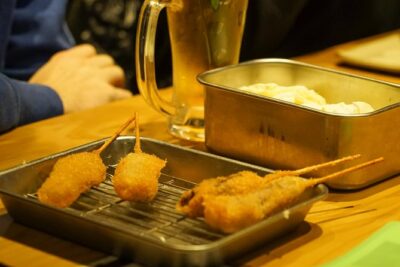 ★ 5.0Osaka Local Foodie Walking Tour in Dotonbori and ShinsekaiFrom $111985 reviews
 ★ 4.9Deep Backstreets Walking Tour with Dinner OptionFrom $40902 reviews
 ★ 4.9Hungry Osaka Street Food Tour: 15 Dishes & 3 DrinksFrom $79694 reviews
 ★ 5.0Kuromon Market Food Walking Tour in Osaka (6 stops, 6 tastes)From $50550 reviews
Browse the lists this tour appears in