
Reviewed · DOTONBORI & NAMBA TOURS
Osaka Dotonbori: Sushi Making Experience
Sushi class in Dotonbori, with real technique.
This experience is set right in the buzz of Dotonbori, but it stays hands-on and practical: you learn the steps, shape sushi yourself, then eat what you make with Japanese sake.
What I like most is the way the instructors break sushi into simple actions. You get step-by-step guidance in English from English-speaking sushi masters (names you may hear include Mako, Saki, and Mika), and you leave with a tangible result: 12 pieces of sushi. The other big win is the extra fun layer—sushi cosplay, a photo session, and small gifts—so it feels like both a class and an Osaka moment.
One drawback to consider: one review noted that the seafood was not extremely fresh, though it was still good. If you’re picky about the absolute freshest fish, that’s worth keeping in mind.
In This Review
- Key things that make this class worth your time
- Why this Osaka Dotonbori sushi class feels like more than a cooking demo
- The 90-minute rhythm: shari, topping, shape, eat
- Learning the technique that makes sushi rice behave
- Neta, wasabi, and the logic of pairing
- Cosplay, photos, and the Osaka-style fun factor
- Sake tasting with your own nigiri
- Options for vegans, halal eaters, and allergy concerns
- Instructor quality: why many people rate this nearly perfect
- Price and value: why $45 can feel like a bargain
- Getting there in Dotonbori: small navigation tip
- Who should book this sushi making experience
- Should you book the Osaka Dotonbori sushi class
- FAQ
- FAQ
- How long is the Osaka Dotonbori sushi making experience?
- How many pieces of sushi will I make?
- Is the instructor available in English?
- Is Japanese sake included?
- Do I get sushi cosplay and photos?
- Is a sushi master certificate included?
- Are vegan or halal options available?
- Does it include all the ingredients?
- Is there free cancellation?
- Can I pay later?
Key things that make this class worth your time
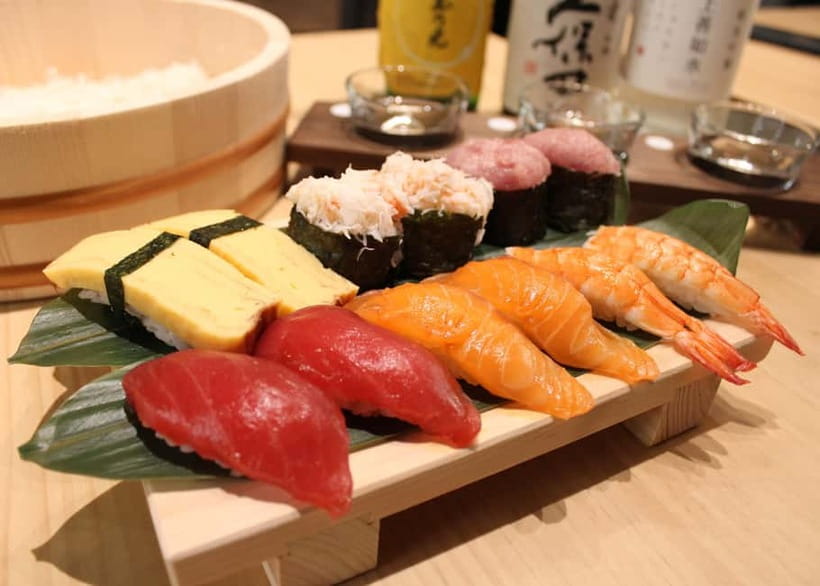
- 12 pieces of sushi made by you, so you’re not just watching
- English instruction with step-by-step shari and nigiri shaping guidance
- Sushi cosplay + photo session, which makes the experience feel more like Osaka than a demo
- Sake with your meal, adding a real Japanese-food pairing moment
- Vegan and halal options available, so more people can join in
- Sushi master certification, plus the pride of eating what you crafted
Back under the Glico sign: more Dotonbori runs


Why this Osaka Dotonbori sushi class feels like more than a cooking demo
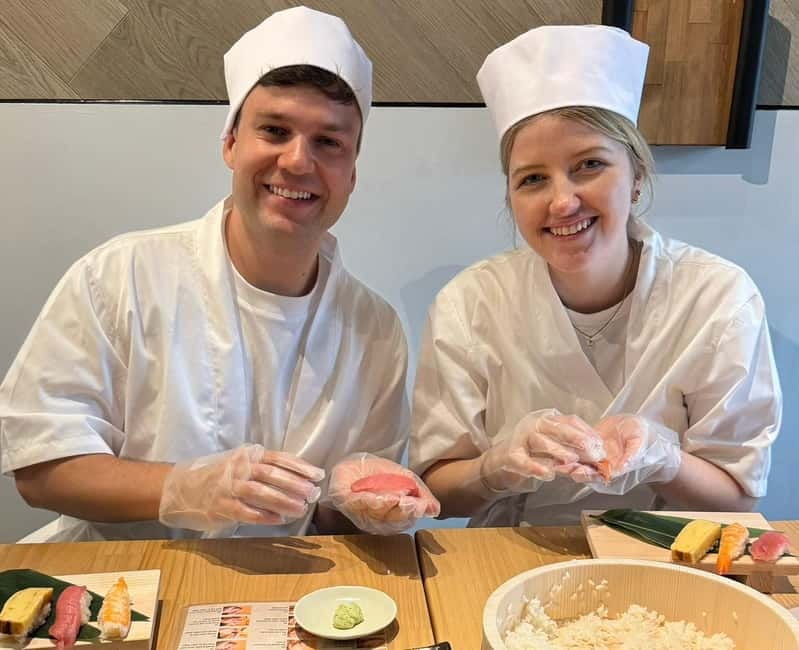
Osaka is famous for food. Dotonbori is famous for food and theater. This class lands in the middle: it’s serious about sushi technique, but it doesn’t take itself too seriously.
You’re not just learning theory. You’re making sushi in a structured flow: rice first, then topping, then the final shape. That structure matters because sushi fails in predictable ways—sticky rice, lopsided nigiri, too much wasabi. The instructors help you avoid those common mistakes.
Expect the session to move at a comfortable pace. Many recent participants described the hosts as fun and funny, and the class as calm and friendly, not chaotic. Even better, when class slots are quieter, the experience can feel close to a small-group or nearly private lesson.
The 90-minute rhythm: shari, topping, shape, eat
The class follows a clear sequence, and that’s a big part of why it works for beginners. You’ll do four main steps:
- Making shari (sushi rice)
You pour sushi vinegar over the rice. This isn’t just mixing—your goal is evenly seasoned rice that holds together without turning into glue.
- Shaping the sushi rice
Next comes forming the rice ball. This is where you learn how to handle the rice so it’s compact enough for nigiri but not packed like a brick.
- Putting neta (topping) together
You prepare the topping (neta) and use wasabi on the neta, then bring it together with the shari. The goal is balance: not too aggressive with wasabi, and not sliding toppings around like they’re on ice.
- Shaping the final sushi
Using fingers, you shape the sushi. This is the moment where you learn how nigiri should look—clean lines, gentle pressure, and a finish that holds.
Even if you’ve never touched sushi rice before, this step order keeps you from feeling lost. Several reviews singled out instructors who made the steps easy to follow and simplified the process so you could actually succeed.
Learning the technique that makes sushi rice behave
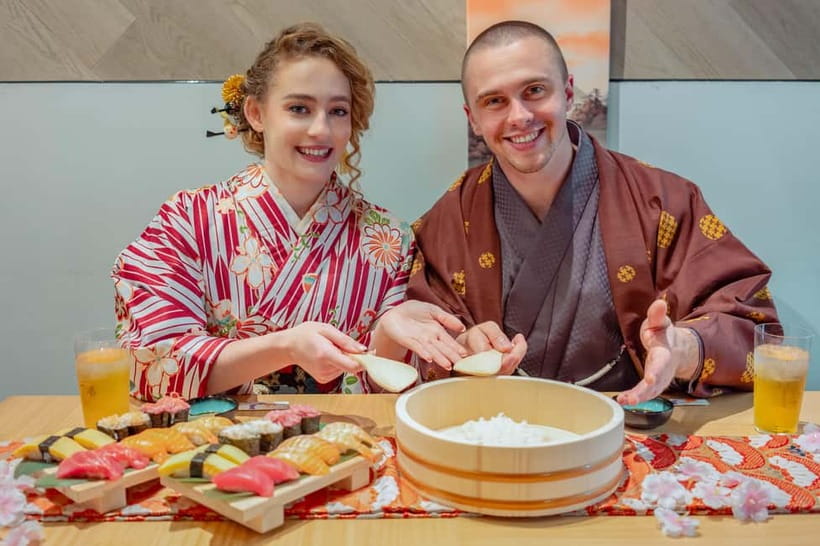
Sushi rice is its own beast. A good nigiri starts with rice that tastes right and also acts right.
Here’s what you’ll be practicing: getting sushi vinegar mixed in properly, then shaping rice that stays cohesive. That means you learn how to work with slightly cooled rice and how to handle it without overworking it.
One practical benefit for you: once you understand the rice step, it becomes easier to correct problems during class. If your rice is too sticky, or you’re having trouble forming it, the instructor can usually nudge your technique fast—before you commit that flaw to all 12 pieces.
Also, since the class teaches more than just do-this/then-that, you may pick up small culture notes as you go—how sushi is eaten, why certain ingredients are paired, and how sushi is traditionally presented.
Flour on your hands, more Osaka kitchens to try
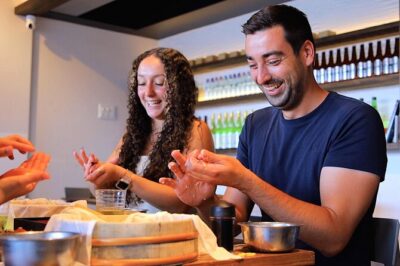


Neta, wasabi, and the logic of pairing
The neta step is where sushi becomes more than “rice plus something.” You’ll put wasabi on the topping and then join it with the shari.
Why this matters: wasabi placement changes the bite. Too much pushes heat into every mouthful; too little makes it feel flat. Even if you’re not a spice person, learning this placement helps you build a sushi mindset—balance first, not just flavor.
Some participants also pointed out that the teachers explained not only what to do, but what to look for when your sushi is right. That kind of feedback is gold when you’re making food you’ll actually eat right after.
Cosplay, photos, and the Osaka-style fun factor
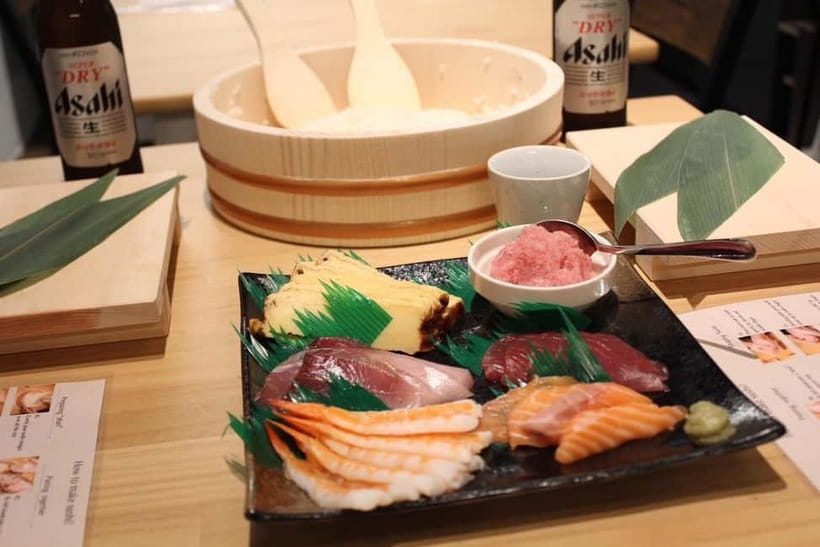
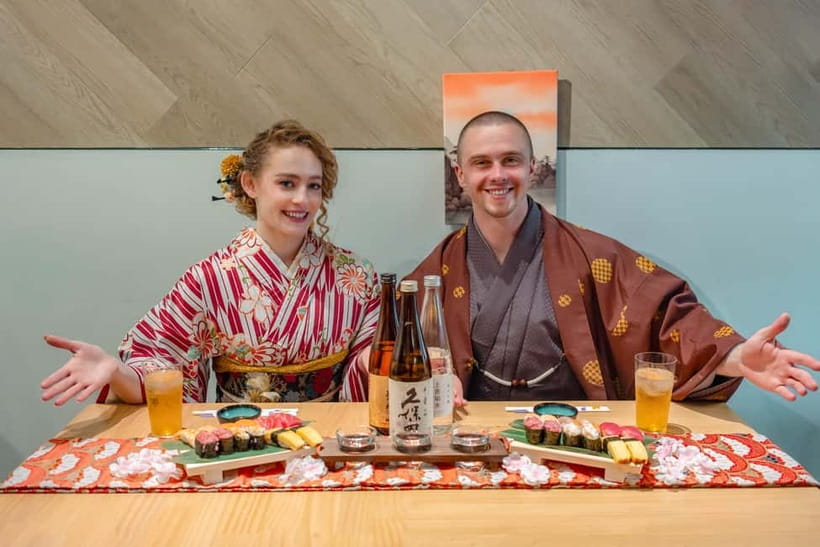
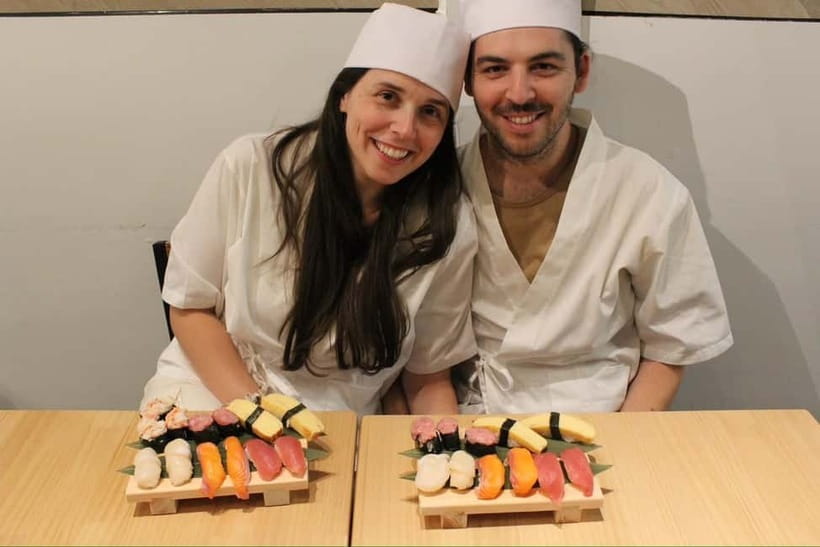
Not every cooking class gives you a costume and a photo. This one does. You’ll do sushi cosplay, then enjoy a photo session tied to the experience.
For me, that’s not a gimmick. It lowers the pressure. When you’re laughing while you learn, you’re more likely to remember the steps later. And it turns your finished sushi into a story you’ll want to share.
You’ll also receive some special gift at the end. Exact items aren’t listed here, but the presence of gifts shows the organizers are thinking about the full experience, not only the meal.
Sake tasting with your own nigiri
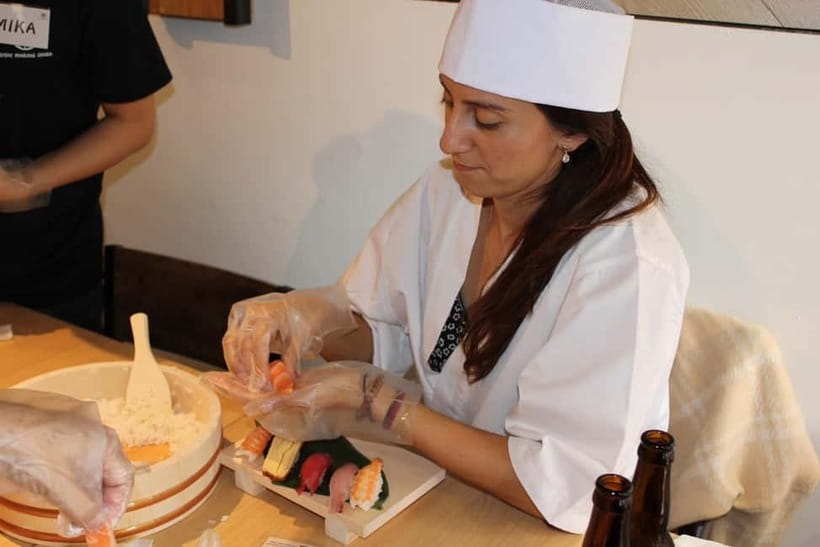
You make 12 pieces, and you get to enjoy them. Japanese sake is included alongside your sushi, which turns your class into a mini food-and-drink experience.
A couple reviews also praise the host conversation—sushi talk mixed with Japan and Osaka notes. If you like asking questions, this format usually rewards you. You’re standing right there with the ingredients and the person who knows what those ingredients are supposed to do.
One practical angle for you: treat sake as part of the meal, not a separate event. Since it’s paired to the sushi you made, it helps you taste the flavors in context.
Options for vegans, halal eaters, and allergy concerns
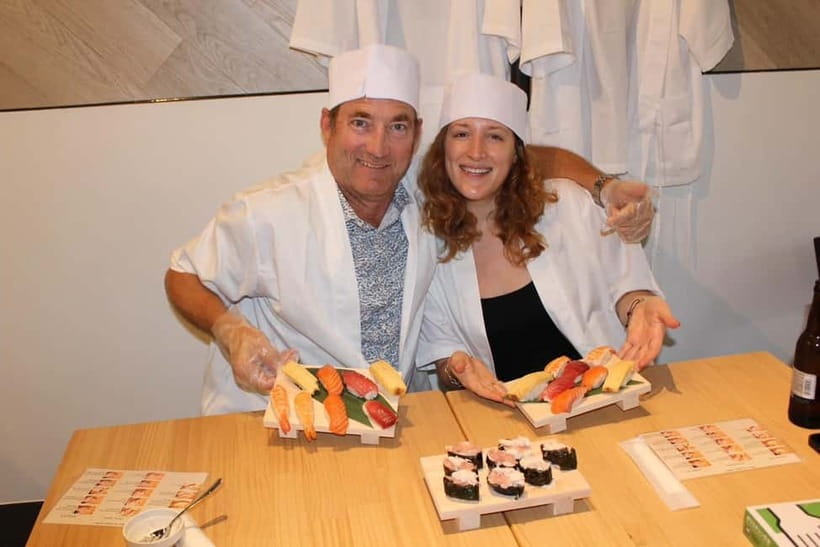
Good news: vegan and halal sushi are available. That’s a real quality-of-life detail if you’re traveling with mixed diets.
There’s also at least one mention from a past participant about gluten-free soy sauce for a gluten allergy. That suggests the staff may be willing to help with certain requests, but the only safe way to handle this is to tell the operator your needs when you book and confirm what substitutions are possible.
If you’re coming with strong dietary requirements, I’d plan to communicate clearly up front rather than assume standard soy sauce or standard toppings.
Instructor quality: why many people rate this nearly perfect
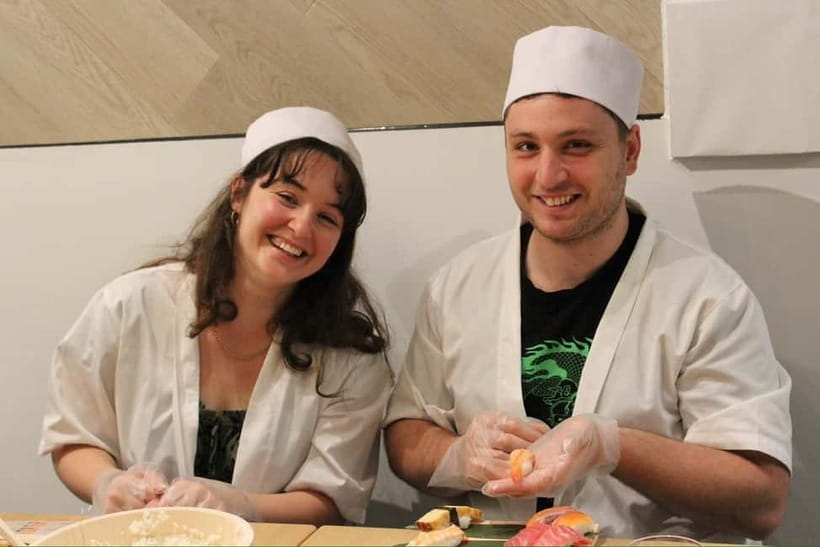
The standout pattern in the feedback is how upbeat and helpful the hosts are. Names that come up include Mako and Saki, Mika, Marko, Kosei, Toshiki, Makoto, Yumiko, Yui, and Anri.
Beyond friendliness, the best reviews describe instruction that feels organized:
- clear explanations
- easy-to-follow steps
- ongoing help while you’re shaping
- guidance on what correct sushi should look like
There’s also a practical review note about technique correction—one person wanted slightly more direct attention to hand details. That’s a fair point, especially if you want someone to physically check your shaping style. Still, the overall feedback suggests you’ll get support when you need it.
Price and value: why $45 can feel like a bargain
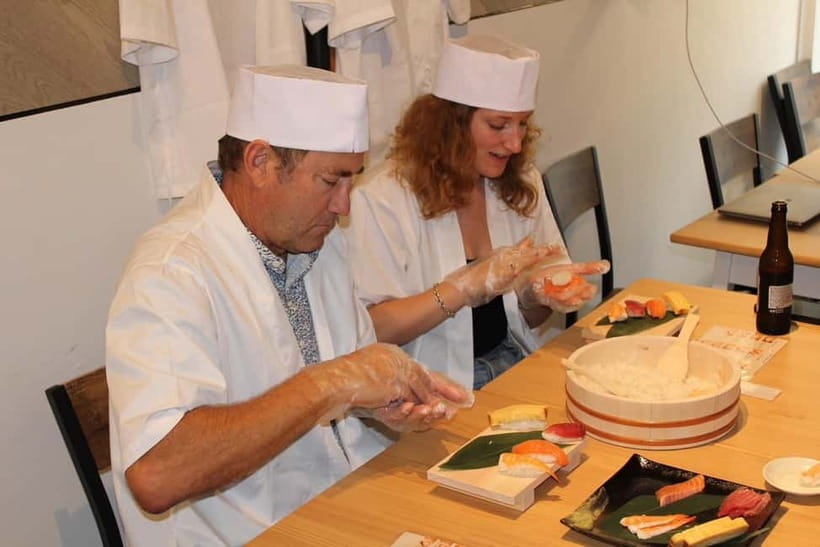
At $45 per person for 90 minutes, you’re paying for more than a food photo and a quick demo.
You’re getting:
- ingredients for 12 pieces
- English instruction
- sushi cosplay and a photo session
- Japanese sake with your meal
- a sushi master certification
Value depends on your priorities. If you’re the type who wants to learn a repeatable skill—rice handling, wasabi placement, and shaping—this price starts to look very reasonable. You’re also leaving with food you made yourself, not just snacks.
And if you’re traveling as a couple or small group, this tends to work well because it creates a shared activity with an outcome. You can eat what you made, then wander Dotonbori after with full bellies and a new skill in your pocket.
Getting there in Dotonbori: small navigation tip
This class is in the Dotonbori area, and one review mentioned the location can be a little hard to navigate. Do yourself a favor: check the map pin ahead of time and give yourself extra minutes for the walk.
Since this is a short 90-minute experience, arriving early helps you settle in before the rice starts going. You also get the benefit of skipping the ticket line, which reduces waiting once you arrive.
Who should book this sushi making experience
Book it if you want:
- a hands-on sushi lesson
- sushi cosplay and photos
- a short, efficient activity in Osaka
- vegan or halal options
- an instructor-led class in English
It’s also a solid family option. One review describes doing it with a 15-year-old, and they said it worked well for all ages. That makes sense: the steps are structured, the end product is immediate, and the atmosphere is friendly.
You might think twice if you’re hyper-focused on ultra-fresh seafood as your top priority. One participant noted freshness wasn’t extremely high, even though it was still good.
Should you book the Osaka Dotonbori sushi class
Yes, if you want a satisfying Osaka food activity that teaches real technique and still feels fun. The combo of 12 homemade pieces, English support, sake, and cosplay is hard to beat for a 90-minute slot.
I’d especially recommend it if you’re traveling with dietary needs, since vegan and halal sushi are available. And if you like learning by doing, this format is made for you: shari, topping, shape, then eat.
If you want a very quiet, no-frills cooking class, this may feel too playful. But for most people, that balance is the point.
FAQ
FAQ
How long is the Osaka Dotonbori sushi making experience?
It lasts 90 minutes.
How many pieces of sushi will I make?
You’ll make 12 pieces of sushi.
Is the instructor available in English?
Yes, the instructor is English-speaking.
Is Japanese sake included?
Yes. You can enjoy Japanese sake with your sushi.
Do I get sushi cosplay and photos?
Yes. Sushi cosplay and a photo session are included.
Is a sushi master certificate included?
Yes. You receive certification of sushi master.
Are vegan or halal options available?
Yes. Vegan and halal sushi are available.
Does it include all the ingredients?
Yes, the class includes all ingredients for the 12 pieces of sushi.
Is there free cancellation?
Yes. You can cancel up to 24 hours in advance for a full refund.
Can I pay later?
Yes. It offers a reserve now & pay later option, with pay nothing today.
More Tour Reviews in Osaka
- Osaka Go Karting Tour with Funny Costume★ 5.0 · 2,658 reviews
- Osaka Castle: Museum and Tower Entry Ticket★ 4.5 · 2,380 reviews
- Osaka: Shinsekai Food Tour with 13-15 Dishes at 5 Eateries★ 4.8 · 2,204 reviews
- Osaka Food Tour: 13 Dishes at 5 Local Eateries★ 5.0 · 2,149 reviews
- Hungry Osaka Street Food Tour:15 Tastings & 3 Drinks with a Local★ 5.0 · 1,727 reviews
Cook It Yourself in Osaka
- Sushi Making Osaka Roll and Authentic Japanese Sushi Class★ 5.0 · 1,220 reviews
- Osaka: Five Must-See Highlights Walking Tour & Ramen Lunch★ 4.7 · 411 reviews
- Osaka Sushi Making Experience★ 5.0 · 400 reviews
- Osaka: Ramen and Gyoza Cooking Class in Dotonbori★ 5.0 · 378 reviews
- Osaka: Sumo Stage Show with Bento or Snack + Fight & Photo★ 4.3 · 364 reviews
Dotonbori and Namba, Round Two
- Osaka Local Foodie Walking Tour in Dotonbori and Shinsekai★ 5.0 · 985 reviews
- Osaka: Dotonbori District River Cruise with Drink Discount★ 4.2 · 876 reviews
- Ultimate Osaka Walking Tour: Castle, Dotonbori & Hidden Gems★ 5.0 · 862 reviews
- Tea Ceremony Experience in Osaka Doutonbori★ 5.0 · 754 reviews
- Osaka: Namba Pub Bar Crawl with a Local Guide★ 4.9 · 424 reviews
The Newest Osaka Write-Ups
- Private Photoshoot in Osaka with a Professional Photographer
★ 5.0 · 3 reviews - Osaka Early Morning Osaka Castle Tour Avoid Crowds
★ 5.0 · 3 reviews - Nara Private Tour with Pick and Drop and English Speaking Driver
★ 3.5 · 3 reviews - Osaka: Modern Vegetarian Sushi Cooking Class
★ 5.0 · 3 reviews - Nara Day Trip from Osaka with a Licensed Guide
★ 5.0 · 3 reviews
Dotonbori & Namba Tours, compared.
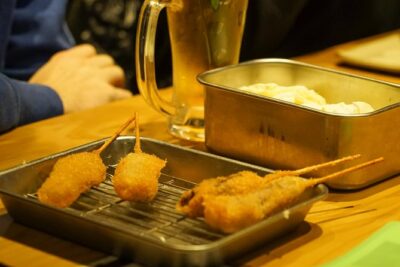 ★ 5.0Osaka Local Foodie Walking Tour in Dotonbori and ShinsekaiFrom $111985 reviews
 ★ 4.2Dotonbori District River Cruise with Drink DiscountFrom $12876 reviews
 ★ 5.0Ultimate Osaka Walking Tour: Castle, Dotonbori & Hidden GemsFrom $73862 reviews
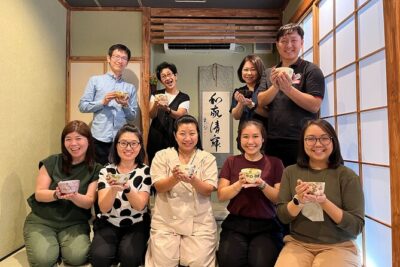 ★ 5.0Tea Ceremony Experience in Osaka DoutonboriFrom $20754 reviews
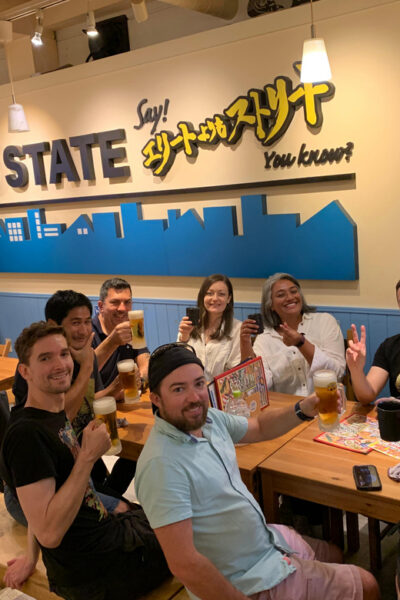 ★ 4.9Namba Pub Bar Crawl with a Local GuideFrom $30424 reviews
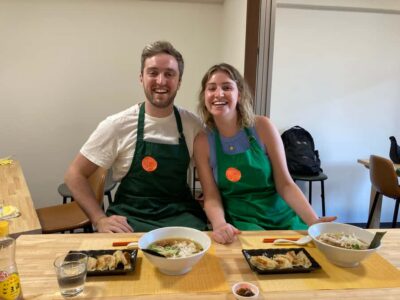 ★ 5.0Ramen and Gyoza Cooking Class in DotonboriFrom $70378 reviews
Dotonbori River Cruise with Glico Sign & Neon ViewsFrom $12376 reviews
★ 5.0Ramen and Gyoza Cooking Class in DotonboriFrom $70378 reviews
Dotonbori River Cruise with Glico Sign & Neon ViewsFrom $12376 reviews
 ★ 3.9Dotonbori’s Bridges 20-Minute CruiseFrom $12303 reviews
Browse the lists this tour appears in