
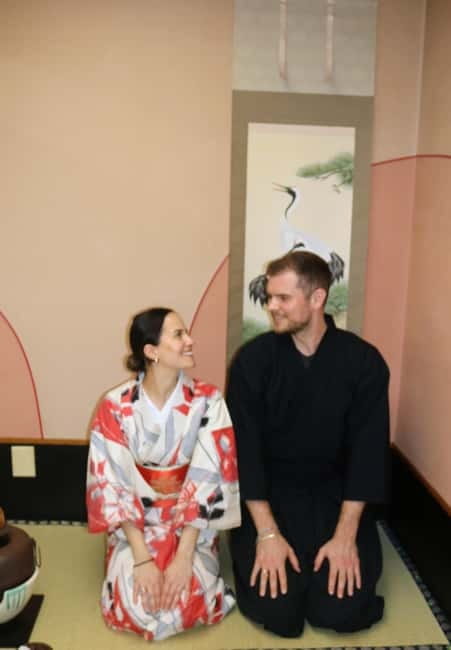
Reviewed · OSAKA CASTLE TOURS & TICKETS
Learn Zen in a class of making Matcha tea near Osaka Castle
Step into a tea room and everything quiets down.
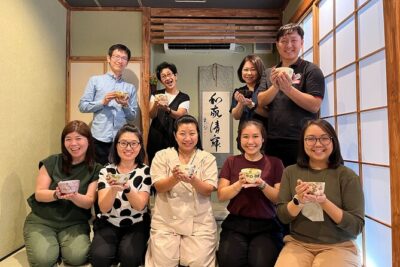
This small class near Osaka Castle lets you experience chanoyu in costume, learn the manners behind every movement, and taste matcha and wagashi in a setting designed for equality. I like that you get more than a demo: you practice the etiquette, including how tea is served and how to move respectfully. I also like the focus on Japanese aesthetics through wagashi, the sweets that carry ideas like wabi-sabi and the four seasons. One thing to consider: it’s short (about 1 hour), so if you’re hoping for an all-day cultural deep-dive, this won’t be that.
Kimono time is the hook, but the real value is what the room teaches you. You’re guided through how to sit, bow, and serve in the tea ceremony spirit, and the crossing from “outside world” to “tea room world” is the memorable part. I also like the added touch of photo shooting where you can capture the whole experience properly. The drawback is simple: it’s not built for toddlers—children under 10 aren’t suitable—so plan accordingly for families.
In This Review
- Key Highlights You Should Know
- Entering The Samurai Tea Room at Samurai Honor
- Kimono, Hakama, and Looking the Part Near Osaka Castle
- Matcha Making and the Etiquette You Actually Practice
- Wagashi, Wabi-Sabi, and the Four Seasons in Dessert Form
- The Two-Way Meaning of Hospitality in Chanoyu
- English Support, Small Groups, and What It’s Like to Learn
- Price and Value: Is $40 for 1 Hour Worth It?
- Who This Matcha Zen Class Suits Best
- Should You Book It?
- FAQ
- What is included in the Learn Zen matcha class?
- How long is the experience?
- Is this activity offered in English?
- Where do I meet for the class?
- How early should I arrive?
- What should I bring?
- Is it suitable for children?
- Can I request a different language besides English?
Key Highlights You Should Know
- A true tea-room entrance ritual: once you pass through the nijiriguchi, everyone is treated equally, no matter age or status.
- Costume that changes how you move: men wear hakama and dogi as samurai; women dress as Yamato Nadeshiko in kimono.
- Wagashi connects manners to meaning: sweets are used to explain wabi-sabi, the four seasons, and Japanese beauty.
- Practice, not just watching: you learn etiquette and rehearse the gestures—serving, sitting, bowing, and walking.
- Small group size (up to 6): you get more personal attention than in big group sessions.
More ways into Osaka Castle and its keep



Entering The Samurai Tea Room at Samurai Honor
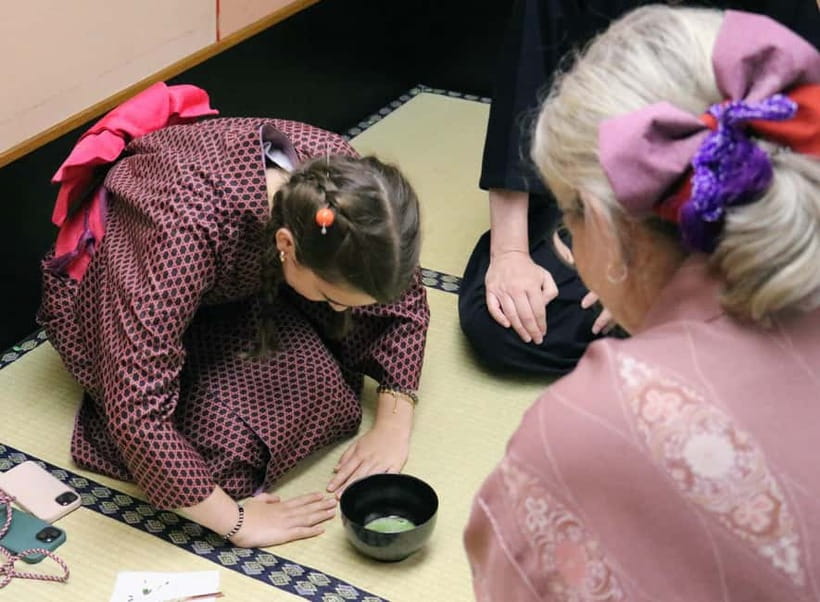
This experience takes place at Bushi no Homare (Samurai Honor), a tea-ceremony-focused setting in Osaka. The meeting point is easy to spot if you follow the signs: look for a wooden marker that says Honor of the Samurai, plus pamphlets in front of the store and kimono/hakama hanging nearby.
The moment that matters comes right after you step inside. The tea room has an entrance called the nijiriguchi, and when you pass through it, the ceremony’s rule kicks in: everyone is treated equally. That idea isn’t just a slogan. It changes the tone immediately—you go from tourist mode to participant mode. The staff guide you through proper manners so you’re not guessing while everyone else is being respectful and calm.
You should also plan your timing. Arrive 30 minutes early so you have time for instructions and changing into the traditional clothing without rushing. With only an hour total for the class, that head start really helps.
Kimono, Hakama, and Looking the Part Near Osaka Castle
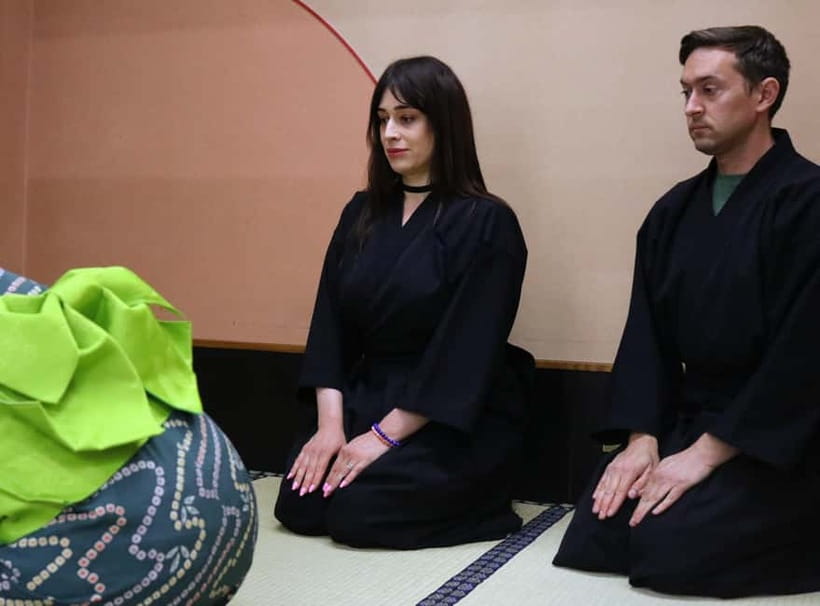
You don’t just wear a costume for photos. You wear it because it affects how the ceremony works—posture, sitting, gesture style, all of it. Men are dressed in hakama and dogi and take on the samurai role. Women wear kimono and are dressed as Yamato Nadeshiko, which is a traditional ideal associated with grace and poise.
This is one of the most enjoyable parts for visitors because it feels like stepping into a real role with real boundaries. And you’re not alone—you’ll be grouped with a small set of people, so the atmosphere stays focused.
Photo shooting is included, and that’s a smart inclusion for a short experience. You’re handed guidance for how to pose and how to look natural while doing ceremony movements, not awkwardly stopping every minute to take selfies. One participant specifically praised the way the staff styled hair beautifully and even added floral touches without an extra charge, so there’s a good chance they’ll help you look polished end-to-end—but if you care about exact hair accessories (like kanzashi), confirm what’s included for your specific booking.
Practical note: the listed item to bring is simply a T-shirt. That makes sense because you’ll change on site. Wear something comfortable that you can take off and put on easily.
Matcha Making and the Etiquette You Actually Practice
The heart of the class is matcha preparation and the etiquette around serving and receiving it. You’re not just shown how matcha works. You learn the sequence, the manners, and the spirit of hospitality that sits behind every movement.
Here’s what you can expect during the ceremony portion:
- The host welcomes you and follows traditional manners.
- The tea ceremony master serves matcha to the group.
- You practice the key etiquette steps—how to sit, how to bow, how to stand, and how to walk in the tea-room space.
- You learn what guests should do to respond properly so the atmosphere stays harmonious.
This is where the experience earns its Zen framing. Chanoyu etiquette isn’t only “rules.” It’s a structured way to slow your body down and focus your attention. Even if you’ve never done anything like this before, the instructors guide you through the gestures so you’re not left to interpret.
Also, don’t assume you’ll be watching silently the entire time. The activity is designed so you participate as a guest in the room—an intentional setup where you learn how to receive tea with the right posture and attitude.
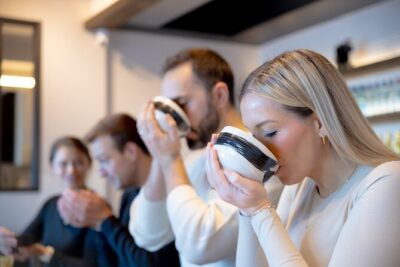
Another bowl whisked slowly in Osaka

Wagashi, Wabi-Sabi, and the Four Seasons in Dessert Form
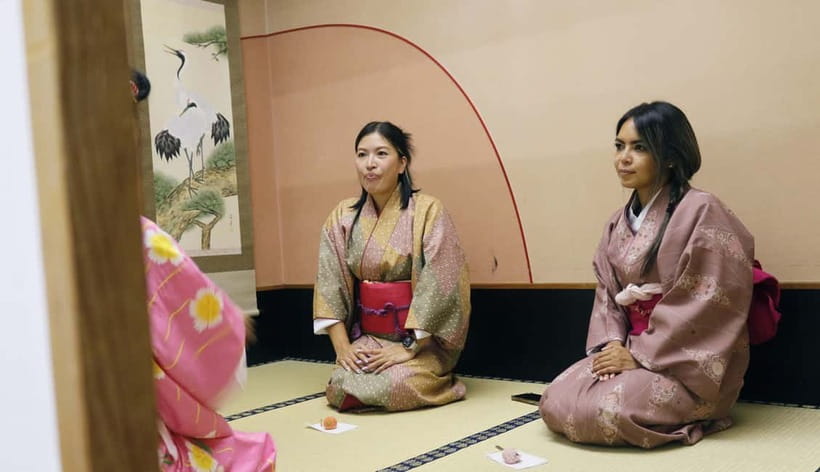
One of the most distinctive parts here is how wagashi is used as a teaching tool. Wagashi aren’t just a snack. They’re part of the ceremony’s language—color, shape, and seasonal theme give you a way to understand Japanese aesthetics without needing a lecture that turns into homework.
You’ll learn how wagashi connects to:
- wabi and sabi, the idea of beauty in simplicity, imperfection, and timeworn charm
- the four seasons, which are often expressed through seasonal ingredients and motifs
Wagashi also has a long history tied to the development of tea ceremony culture, with its evolution noted as far back as the Kamakura period. In plain terms, it means the sweets are part of the same worldview as the ceremony itself: respect for seasonality, careful crafting, and gratitude for what’s served.
If you care about detail, wagashi is a feast for the eyes first. You’ll likely hear the point that they’re too beautiful to rush. Many people experience that exact feeling when the sweets arrive: delicate design, hand-crafted look, and the sense that someone made it with time and patience.
This is also one reason the experience holds up for people who don’t usually care about tea. You still get value from the cultural lesson embedded in the food.
The Two-Way Meaning of Hospitality in Chanoyu
A lot of “culture experiences” talk at you. This one tries to shift the relationship.
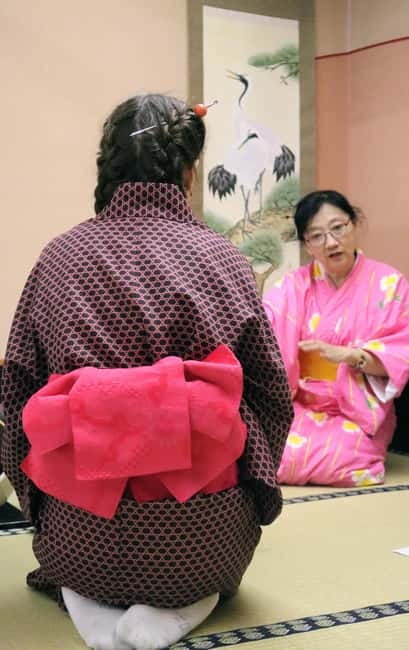
The tea ceremony idea of hospitality isn’t one-way. In chanoyu, the host prepares the space and the tea with care—but the guests must respond with proper awareness too. The ceremony becomes a shared atmosphere, where the master entertains and the guests help create the harmony that makes everything work.
You’ll feel that in how the class is managed. You’re guided through etiquette so your role matters. When you do the gestures correctly, you’re not just being “polite.” You’re supporting the whole rhythm of the tea room.
This is also where the setting’s equality rule matters again. When you pass through the nijiriguchi entrance, status falls away. That sets up a kind of respectful calm that can feel surprising at first—especially if you’re used to being just another visitor in a picture-taking line.
And if you’re coming with kids, this has potential as a memorable family moment. One of the highlights emphasized sharing experiences and memories together with children, but remember the stated suitability: children under 10 aren’t suitable here, so the best fit is families with older kids.
English Support, Small Groups, and What It’s Like to Learn
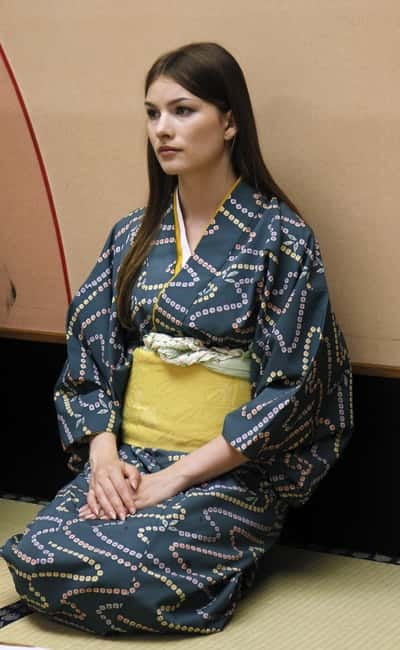
The class includes an English interpreter guide staff, with English as the default language. If you need another language (Italian, Spanish, French, Chinese, Thai, Indonesian), you’ll need to ask about the staff schedule before booking. That matters because language support can be limited based on availability.
Group size is also a big deal. This is limited to 6 participants, which keeps the pacing gentle and helps you get personal corrections. Small-group formats are often where you benefit most from etiquette classes, because instructors can see your posture and timing.
One additional detail worth noting: the tea ceremony involves a “host entertains” rhythm plus the master serving tea. That means you get both explanation and demonstration, not just one long script.
In a recent experience, Kaori was mentioned as taking time to explain historical and cultural context and stepping through preparation clearly. You might not get the exact same instructor, but it’s a good sign that the staff are oriented toward clear, friendly explanations—not just silent instruction.
Price and Value: Is $40 for 1 Hour Worth It?
At $40 per person for about 1 hour, the value depends on what you want out of your Osaka stop.
Here’s what’s included, which is the real value math:
- Kimono clothing
- matcha and wagashi
- a certified professional instructor
- English interpreter guide staff (English default)
- tax and tips
- photo shooting with data sent to a designated email address
That package matters because kimono experiences can easily balloon in cost once you factor in extras, and many “see the tea room” activities don’t include hands-on etiquette practice.
What’s not included is also important:
- transportation or pickup/drop-off
- a paid option for movie shooting
- paid options like outdoor photo shooting
- wagami (collected hair + kanzashi) is listed as not included
So the best way to judge the value is this: if you want the whole experience—the costume, the tea, the dessert lesson, and photos—$40 looks like solid value for a focused hour. If you only want to watch tea being made, this may feel like more involvement than you need.
Either way, it’s close to the Osaka Castle area, so you can treat it like a concentrated cultural stop rather than a long detour.
Who This Matcha Zen Class Suits Best
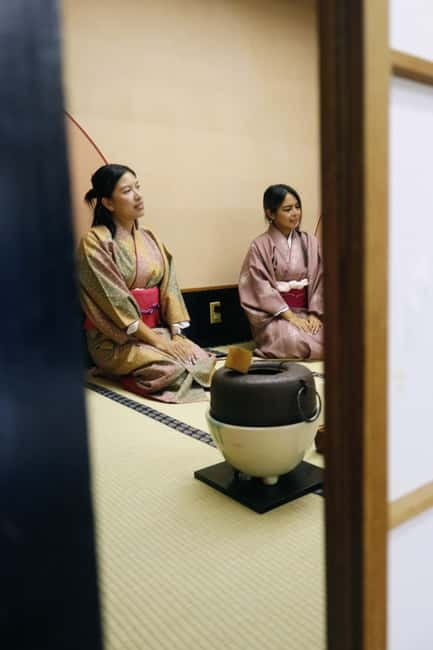
This class fits best if you like structured cultural activities with clear instruction.
You’ll likely enjoy it if:
- you want hands-on etiquette and don’t mind practicing a few gestures carefully
- you’re excited by costume and photos, not just a tasting
- you enjoy Japanese aesthetics like wabi-sabi and seasonal motifs
- you want a short activity that’s easier to fit into a day near Osaka Castle
You should reconsider if:
- you’re traveling with children under 10 (not suitable)
- you have altitude sickness concerns or need to avoid specific physical constraints (altitude sickness and people over 95 are listed as not suitable)
- you want a long, slow-paced multi-hour deep dive
Also note what’s not allowed: pets, alcohol and drugs, and nudity. If you’re sensitive about costume rules, the staff will guide you, but you should plan to follow the ceremony’s etiquette.
Should You Book It?
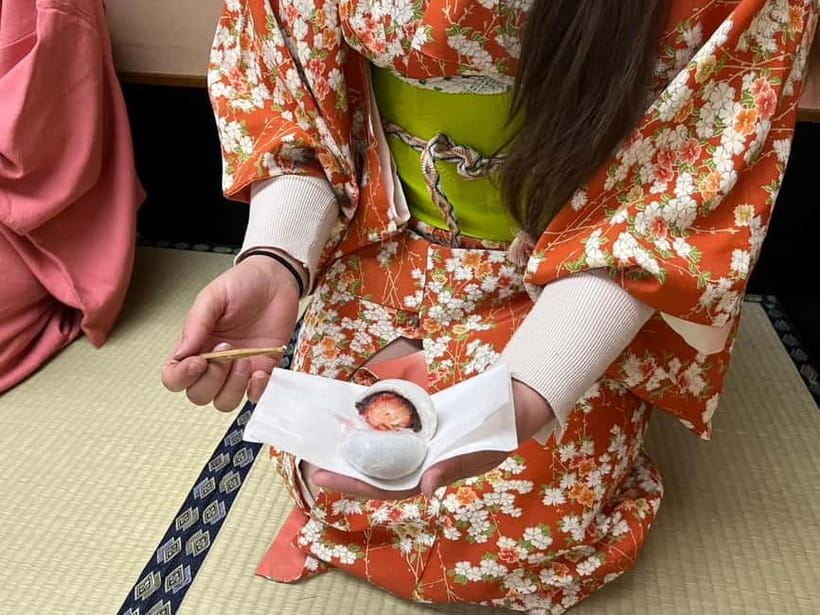
I’d book this class if you want a compact, memorable experience where you leave with more than photos. The strongest reason to choose it is the way the ceremony teaches through action: you practice etiquette, learn why wagashi matters, and get the sense that hospitality is a shared exchange.
You might skip it if your main goal is sightseeing or if you prefer activities without dress-up. And if you’re a family traveler, double-check ages: children under 10 aren’t suitable, so bring kids who can handle the length and the ceremony’s quieter pace.
If you do book, arrive early, wear your T-shirt for easy changing, and treat the nijiriguchi equality rule like a real reset. That mindset is where the class feels most special.
FAQ
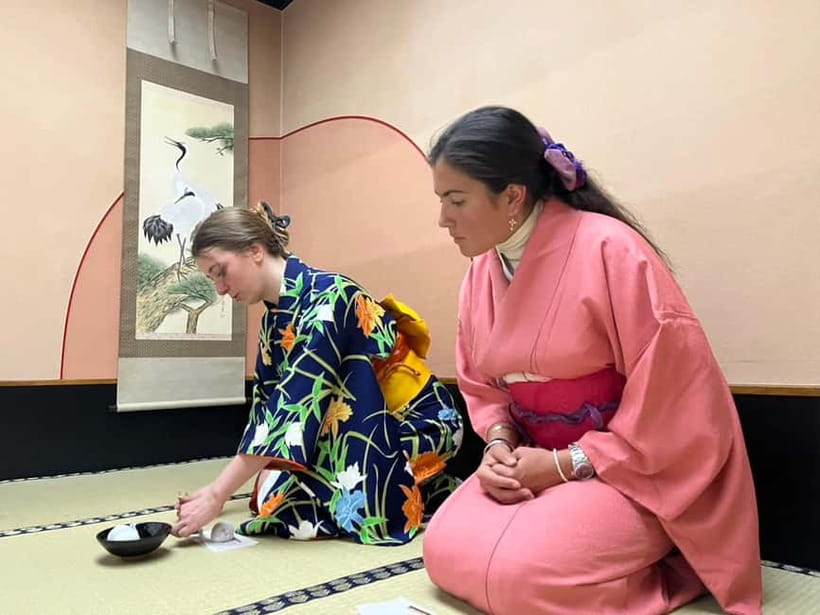
What is included in the Learn Zen matcha class?
Kimono clothing, matcha, wagashi, a certified professional instructor, an English interpreter guide staff, tax and tips, and photo shooting with the photo data sent to a designated email address.
How long is the experience?
The duration is 1 hour.
Is this activity offered in English?
Yes. The default interpreter language is English, and Japanese is also available.
Where do I meet for the class?
Meet at Samurai Honor using the landmark: a wooden sign that reads Honor of the Samurai. There are also activity pamphlets and traditional clothing visible near the store.
How early should I arrive?
Arrive 30 minutes before your reserved time so you can receive instructions and change into the traditional clothing.
What should I bring?
Bring a T-shirt.
Is it suitable for children?
Children under 10 are not suitable.
Can I request a different language besides English?
You can inquire about other languages (Italian, Spanish, French, Chinese, Thai, Indonesian), but availability depends on staff schedules, and it may not always be possible to accommodate.
More Tour Reviews in Osaka
- Osaka Go Karting Tour with Funny Costume★ 5.0 · 2,658 reviews
- Osaka Castle: Museum and Tower Entry Ticket★ 4.5 · 2,380 reviews
- Osaka: Shinsekai Food Tour with 13-15 Dishes at 5 Eateries★ 4.8 · 2,204 reviews
- Osaka Food Tour: 13 Dishes at 5 Local Eateries★ 5.0 · 2,149 reviews
- Hungry Osaka Street Food Tour:15 Tastings & 3 Drinks with a Local★ 5.0 · 1,727 reviews
Matcha, Whisked and Poured
- Osaka: Tea Ceremony Experience★ 4.9 · 1,426 reviews
- Tea Ceremony Experience in Osaka Doutonbori★ 5.0 · 754 reviews
- Matcha Making Class in Osaka with Authentic Japanese Sweets Set★ 5.0 · 509 reviews
- Osaka: Matcha Making Experience with Japanese Sweets★ 5.0 · 146 reviews
- Osaka: Tea Ceremony, Calligraphy, and Kimono Experience★ 4.9 · 130 reviews
Osaka Castle, Seen Properly
- Osaka Castle: Museum and Tower Entry Ticket★ 4.5 · 2,380 reviews
- Osaka Castle Walking Tour and Castle Tower Admission★ 5.0 · 561 reviews
- 5-Hour Osaka Bike Tour to the Neighborhood of Osaka Castle★ 5.0 · 319 reviews
- Osaka Castle Guided Tour★ 4.7 · 249 reviews
- Osaka: Castle History Walking Tour / Castle Tower Admission★ 4.9 · 230 reviews
The Newest Osaka Write-Ups
- Private Photoshoot in Osaka with a Professional Photographer
★ 5.0 · 3 reviews - Osaka Early Morning Osaka Castle Tour Avoid Crowds
★ 5.0 · 3 reviews - Nara Private Tour with Pick and Drop and English Speaking Driver
★ 3.5 · 3 reviews - Osaka: Modern Vegetarian Sushi Cooking Class
★ 5.0 · 3 reviews - Nara Day Trip from Osaka with a Licensed Guide
★ 5.0 · 3 reviews
Osaka Castle Tours & Tickets, compared.
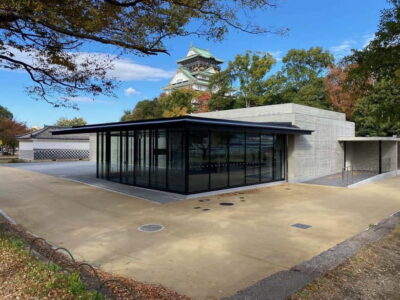 ★ 4.5Osaka Castle: Museum and Tower Entry TicketFrom $72,380 reviews
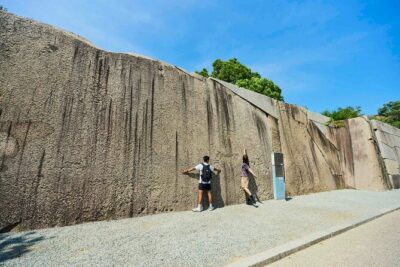 ★ 5.0Osaka Castle Walking Tour and Castle Tower AdmissionFrom $23561 reviews
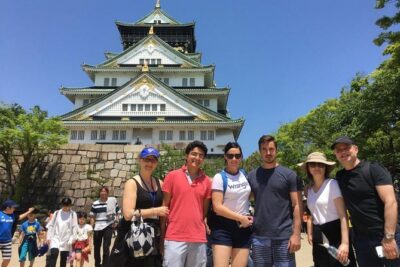 ★ 5.05-Hour Osaka Bike Tour to the Neighborhood of Osaka CastleFrom $87319 reviews
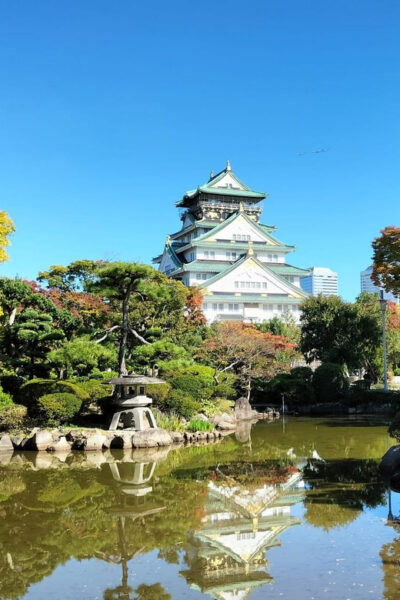 ★ 4.7Osaka Castle Guided TourFrom $43249 reviews
 ★ 4.9Castle History Walking Tour / Castle Tower AdmissionFrom $33230 reviews
 ★ 4.7Osaka Castle Guided Tour with Local GuideFrom $4878 reviews
 ★ 5.0PRIVATE 6hr, Food tour from Osaka Castle, Kuromon, Dotonbori.From $15568 reviews
 ★ 4.5A Tour to Explore the Symbol of Osaka: Osaka CastleFrom $8356 reviews
Browse the lists this tour appears in