
Reviewed · OSAKA CASTLE TOURS & TICKETS
A Tour to Explore the Symbol of Osaka: Osaka Castle
Osaka Castle clicks into place with a guide. This private outing strings together the meaning of the site with story-driven stops that make the grounds feel like a living place, not just a photo backdrop. You’ll also get practical tips on where to look and what to prioritize.
What I like most is the undivided attention. On tours like this, I’ve seen guides such as Fuji, Masa, and Kate adjust to the pace of the group and explain how Osaka grew into the city it is today. Second, I love the way the route starts with context: Osaka Museum of History sets you up to understand what you’re seeing before you reach the castle tower.
One drawback to keep in mind: the experience depends heavily on the guide’s English level and on finding the meeting point smoothly. A few accounts flagged communication gaps, and if you’re even slightly late, you can lose time fast on a route that runs through multiple fixed stops.
In This Review
- Key things to know before you go
- Osaka Castle is more than walls: what a private guide changes
- How the 4-hour timing actually works (and why it matters)
- Osaka Museum of History: the best prequel before Osaka Castle
- Ōte-mon Gate: a short stop with real visual payoff
- Hokoku Shrine: Toyotomi Hideyoshi’s shadow at the castle
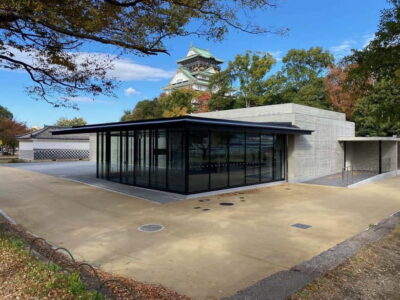
- Miraiza Osaka-Jo: a practical pause in front of the tower area
- Osaka Castle: reconstructed exhibits and smart viewing time
- Price and value: why $83.56 can make sense for Osaka Castle
- Who should book this private Osaka Castle tour
- The small practical stuff that can make or break the day
- Should you book this Osaka Castle private tour?
- FAQ
- How long is the Osaka Castle private tour?
- Where does the tour start and where does it end?
- Is this tour private or shared?
- What’s included in the tour price?
- What admission costs should I expect?
- Is there a mobile ticket?
- Do I need cash?
- Is the tour walking-heavy?
- What happens if the weather is bad?
- Can I cancel for a full refund?
Key things to know before you go
- Private guide, private pace: you won’t be herded into the same rhythm as a big group.
- Museum-to-castle flow: Osaka Museum of History gives background before the main grounds.
- Landmark stops with meaning: Ōte-mon Gate and Hokoku Shrine add historical anchors between photos.
- Quick break at Miraiza Osaka-Jo: a nearby, reopened (2017) spot in front of the tower area.
- Bring cash for some stops: at least some places don’t accept credit cards.
- Different start and end points: the tour begins at Osaka Museum of History and ends at Temmabashi Station.
More ways into Osaka Castle and its keep
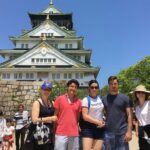
Osaka Castle is more than walls: what a private guide changes
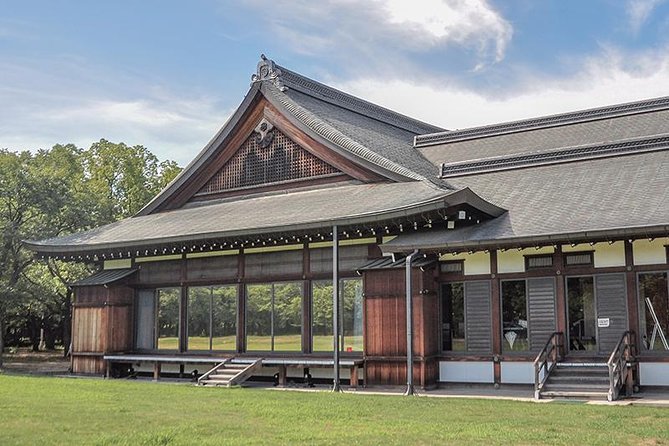
Osaka Castle is one of those places where you can walk the grounds in a hurry and still miss the point. With a private guide, you get the context that turns “cool building” into “I understand why this mattered.” The tour’s focus is less about racing through and more about making the castle’s story intelligible as you move.
You’ll also get help with the small, high-impact stuff. During hot weather, guides like Kate have helped visitors figure out ticketing and the best way to see the museum area. That’s the kind of support that makes a short visit feel longer—without wasting your time.
Finally, because it’s private, the guide can direct your attention. If you care about the architecture, you’ll likely get pointers for what to look at. If you care about the human side—samurai, military figures, power shifts—you’ll get stories tied to the places you stand in.
How the 4-hour timing actually works (and why it matters)
The route runs about 4 hours, with specific time blocks that keep it from dragging. In a tight window, order matters: you start at Osaka Museum of History, then move through the castle approach points (gate and shrine), pause near Miraiza Osaka-Jo, and finish at Osaka Castle itself for the main on-site time.
Here’s the basic flow you should expect:
- Osaka Museum of History: about 1 hour (this is where the ticket cost comes in)
- Ōte-mon Gate: about 10 minutes (quick landmark stop)
- Hokoku Shrine: about 10 minutes (short, focused context)
- Miraiza Osaka-Jo: about 15 minutes (shops and food area in front of the tower vicinity)
- Osaka Castle: about 1 hour 10 minutes (reconstructed exhibits and castle highlights)
This timing is great if you want a complete hit of the essentials without getting stuck in lines for an entire day. It’s less great if you want to linger in just one part—like only the museum or only the outside views—because the tour is built to cover multiple stops.
Osaka Museum of History: the best prequel before Osaka Castle
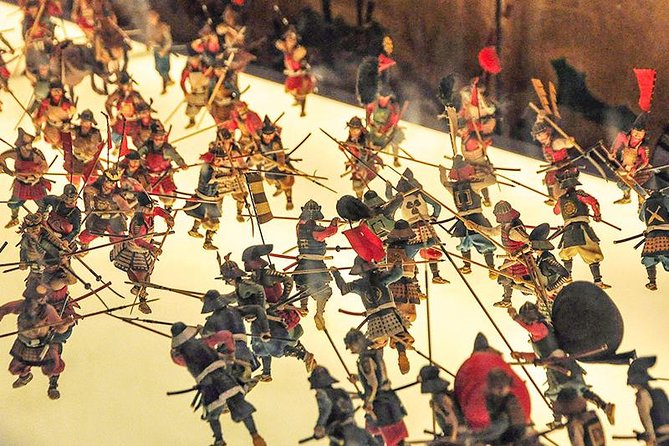
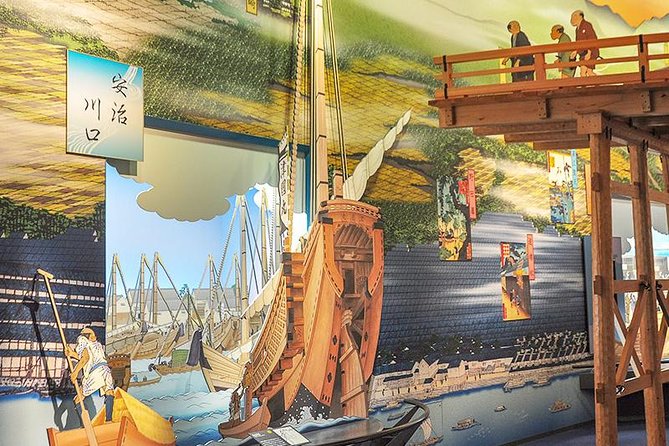
Your first stop is Osaka Museum of History. The tour frames it as a place that makes you feel like you’re part of history, not just reading labels. A standout feature of the museum (mentioned as part of the experience) is a floor reproduction connected to the great council hall of Naniwanomiya palace, which gives you a sense of scale and layout before you ever see the castle grounds.
Why this matters for your visit: without a primer, Osaka Castle can feel like a big structure with impressive angles. With the museum first, you arrive with a story in your head. Then when the route shifts to the castle approach points, the place feels more intentional.
Practical notes:
- Plan on about 1 hour here.
- This is the stop that typically drives the added admission cost: the museum fee is listed as ¥1,000 per person.
- You’ll be walking, so comfortable shoes matter right away, not “later.”
One more thing: Osaka Museum of History is also a good reset moment. If you’re traveling in the heat, this indoor start can help you start the castle portion with better energy.

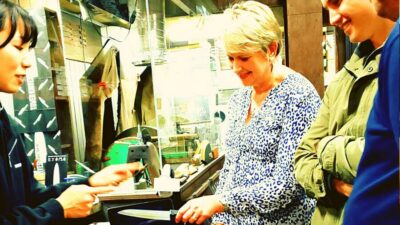

Ōte-mon Gate: a short stop with real visual payoff
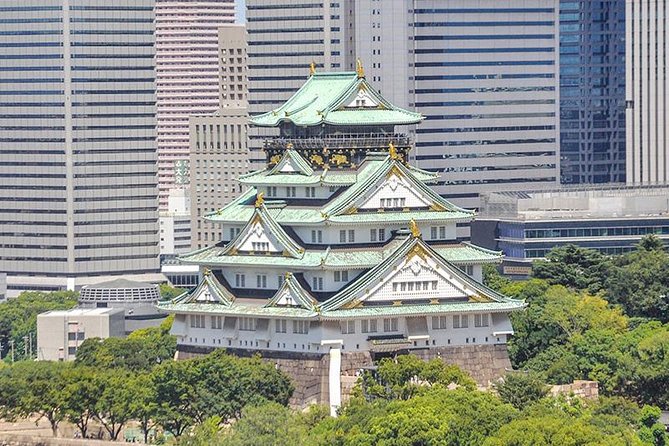
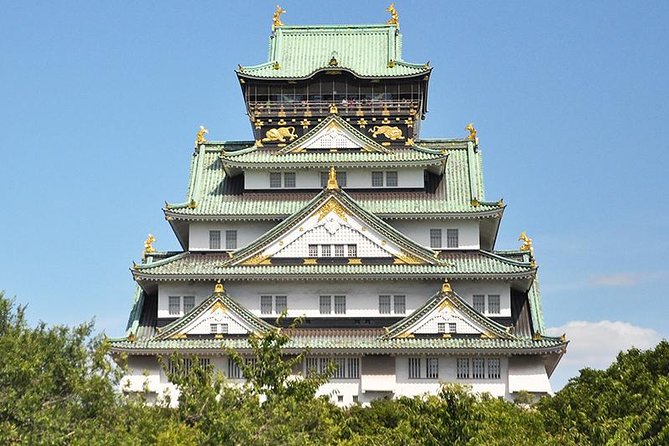
Next up is Ōte-mon Gate, the main gate of Osaka Castle. You’ll spend about 10 minutes here, so think of it as a quick but important waypoint rather than a full exploration.
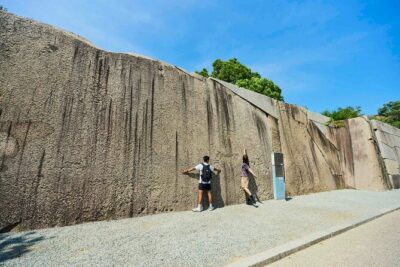
The value of this stop is that it helps you orient. The gate connects you visually to the massive stonework and the feel of how fortress space is structured. The tour description specifically highlights stone walls made from gigantic stones—much larger than a human scale—so your attention is steered toward the weight and permanence of the defenses.
If you’re the kind of visitor who likes photos, this is also a smart place to pause. Even in a rushed itinerary, gates and fortress walls create the kind of frames that actually communicate “castle” to people who weren’t there.
Hokoku Shrine: Toyotomi Hideyoshi’s shadow at the castle
Hokoku Shrine is a free 10-minute stop. It’s enshrined to Toyotomi Hideyoshi, one of Japan’s most famous military commanders, and the tour ties Hideyoshi to Osaka Castle’s use as his stronghold.
You’re not here to spend a long time meditating or reading every inscription. You’re here to connect names and eras to the physical space. That’s why the shrine belongs on a short itinerary: it gives you a human anchor at one of the key castle-adjacent points.
If you’ve heard Hideyoshi’s name before, this stop helps you connect that history to where you are. If you haven’t, it gives you just enough foundation that Osaka Castle doesn’t float in the air as an isolated attraction.
Miraiza Osaka-Jo: a practical pause in front of the tower area
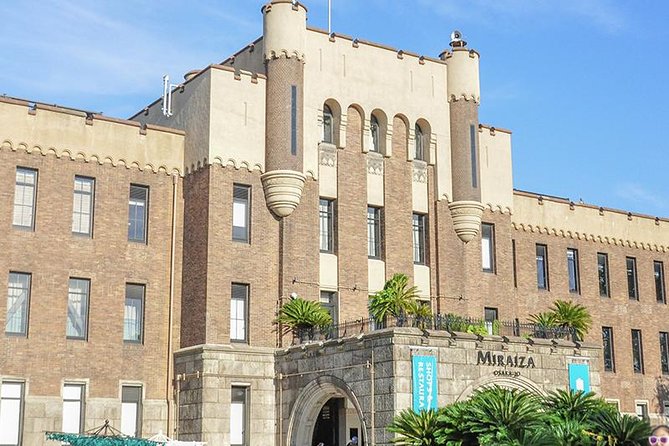
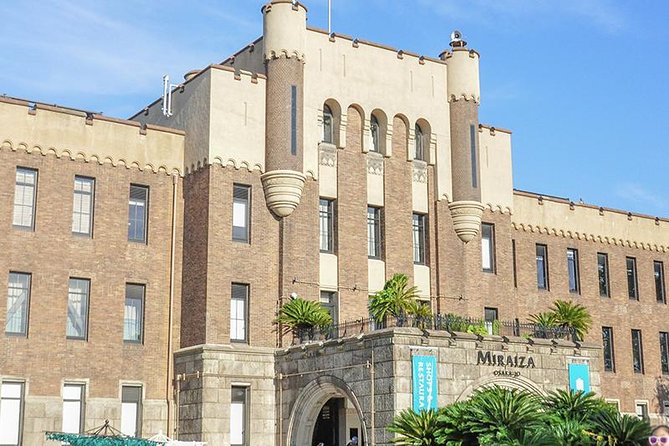
The tour then moves to Miraiza Osaka-Jo for about 15 minutes. This is described as a facility reopened in 2017, with restaurants and shops, and it was originally built in 1931 as the Osaka City Museum.
Even if you don’t shop, this stop is useful. It’s the kind of place that helps you reset between outdoor points and the main castle exhibition area. It also gives you options: grab a drink, take a breath, and refuel before you commit your time to the castle interior.
Because the tour keeps this short, don’t expect a long meal here. Think of it as orientation and comfort. If you’re sensitive to crowds or heat, it’s also a chance to catch your timing—especially if you’re visiting on a busy day.
Osaka Castle: reconstructed exhibits and smart viewing time
Now you reach the main attraction: Osaka Castle. The tour allots 1 hour 10 minutes here, and it’s framed around the reconstructed castle experience and exhibitions inside.
Two details are called out in the tour description:
- there’s an exhibition in the reconstructed castle
- you can also take a look at a reproduced golden traditional tea ceremony room
Even if you’re not a tea-ceremony person, that tea-room detail gives you a different angle on the castle. It pushes beyond “military fortress” into “status, culture, and power.” That mix is one reason Osaka Castle can feel richer than a purely military monument.
How to use your time inside
- If lines or crowds are heavy, you’ll rely on your guide’s timing tips to make the most of your hour-plus.
- If you’re a first-time visitor, ask your guide to point out where the best views are within your limited window—this tour is designed to provide that kind of guidance.
One extra tip, based on common planning logic: try to aim earlier in the day if you’re trying to reduce time lost to waiting. The castle can be popular, and a morning visit helps you stay in control of the schedule.
Price and value: why $83.56 can make sense for Osaka Castle
At $83.56 per person, this isn’t a budget “walk-by” experience. It’s a private tour, which means you’re paying for something you can’t easily replicate on your own: a guide who can translate the site into a story while adjusting in real time.
Value comes from three places:
- Time efficiency: your total visit is about four hours, already organized with a museum prelude and key outdoor points.
- Interpretation: instead of only admiring architecture, you get context about samurai, military figures, and why the castle mattered.
- Attention and support: several guides were praised for being helpful with hot-day logistics and for guiding where and how to see the museum best.
What you should budget for separately
- Osaka Museum of History admission is listed as ¥1,000 per person.
- Some places don’t accept credit cards, so keep some cash on hand even if your tour portion uses mobile tickets.
When it feels worth it
- If you’re short on time in Osaka and want a focused hit of the main castle experience
- If you want the story to make sense without piecing together multiple guidebooks yourself
- If you’re visiting with kids, a small group of friends, or anyone who benefits from direct answers on the spot
Who should book this private Osaka Castle tour
This tour fits best if you want a guided overview that doesn’t consume your entire day. You’ll likely enjoy it if you:
- are visiting Osaka for the first time and want an efficient, meaningful route
- care about historical context tied directly to the grounds
- prefer a private pace over large group logistics
- appreciate practical guidance like where to go first and how to handle ticket moments
It may be less satisfying if you’re expecting a long, slow museum-style tour where you can linger freely at every stop. The schedule is structured, so you’ll follow the guide’s rhythm rather than choosing your own every step.
Also, if English is a must for you, it’s smart to set your expectations around communication. Some experiences have been praised for excellent communication and clarity (with guides like Fuji, Masa, Ito-san, and Michi specifically called out), but there have been a few negative notes where understanding was limited. If you’re concerned, consider booking with a guide known for strong language support when that option is available.
The small practical stuff that can make or break the day
A few details matter more than they sound:
- Comfortable clothing: the tour involves a lot of walking, so wear shoes that won’t punish you.
- Cash: some spots don’t accept credit cards, so bring it.
- Start and end are different: you meet at Osaka Museum of History and end at Temmabashi Station. Plan your next move around that.
- Weather can change plans: if conditions are bad, routes and destinations may shift.
Finally, confirm you can reach the meeting point on time. When your guide is waiting at a fixed starting location, being late can shorten your experience—fast.
Should you book this Osaka Castle private tour?
Yes, I think you should book it if you want a short, high-signal Osaka Castle experience with a guide who can connect the dots. The combination of Osaka Museum of History first, then Ōte-mon Gate, Hokoku Shrine, and a focused Osaka Castle visit is a smart way to see the essentials without wasting time figuring things out.
Skip or reconsider if you’re expecting a relaxed self-guided day, or if you strongly rely on very clear English explanations and you’re worried about language barriers. In that case, you might prefer a different format that offers more flexibility—or you might wait for a guide profile with consistently strong communication.
If you’re in that sweet spot—time-limited, story-hungry, and ready to walk—this private tour is a solid way to make Osaka Castle feel personal instead of just impressive.
FAQ
How long is the Osaka Castle private tour?
It’s about 4 hours, with time split across Osaka Museum of History, Ōte-mon Gate, Hokoku Shrine, Miraiza Osaka-Jo, and the Osaka Castle visit.
Where does the tour start and where does it end?
You meet at Osaka Museum of History (4-chōme-1-32 Ōtemae, Chuo Ward, Osaka). The tour ends at Temmabashi Station (1 Chome-2 Tanimachi, Chuo Ward, Osaka).
Is this tour private or shared?
This is a private tour. Only your group participates.
What’s included in the tour price?
The tour includes a private tour, a tour guide, and the necessary expenses for the guide during the tour.
What admission costs should I expect?
Osaka Museum of History admission is listed as ¥1,000 per person. The tour also notes an estimated tour cost of about 1,000 JPY per person for admission fees.
Is there a mobile ticket?
Yes, the tour features a mobile ticket.
Do I need cash?
Yes. Some spots on the day may not accept credit cards, so bring cash to be safe.
Is the tour walking-heavy?
Yes. The tour notes that comfortable clothing is recommended because it involves a lot of walking.
What happens if the weather is bad?
If weather is poor, transportation, destinations, and routes may be changed.
Can I cancel for a full refund?
Free cancellation is available up to 24 hours before the experience start time for a full refund.
More Tour Reviews in Osaka
- Osaka Go Karting Tour with Funny Costume★ 5.0 · 2,658 reviews
- Osaka Castle: Museum and Tower Entry Ticket★ 4.5 · 2,380 reviews
- Osaka: Shinsekai Food Tour with 13-15 Dishes at 5 Eateries★ 4.8 · 2,204 reviews
- Osaka Food Tour: 13 Dishes at 5 Local Eateries★ 5.0 · 2,149 reviews
- Hungry Osaka Street Food Tour:15 Tastings & 3 Drinks with a Local★ 5.0 · 1,727 reviews
Osaka Castle, Seen Properly
- Osaka Castle: Museum and Tower Entry Ticket★ 4.5 · 2,380 reviews
- Osaka Castle Walking Tour and Castle Tower Admission★ 5.0 · 561 reviews
- 5-Hour Osaka Bike Tour to the Neighborhood of Osaka Castle★ 5.0 · 319 reviews
- Osaka Castle Guided Tour★ 4.7 · 249 reviews
- Osaka: Castle History Walking Tour / Castle Tower Admission★ 4.9 · 230 reviews
The Newest Osaka Write-Ups
- Private Photoshoot in Osaka with a Professional Photographer
★ 5.0 · 3 reviews - Osaka Early Morning Osaka Castle Tour Avoid Crowds
★ 5.0 · 3 reviews - Nara Private Tour with Pick and Drop and English Speaking Driver
★ 3.5 · 3 reviews - Osaka: Modern Vegetarian Sushi Cooking Class
★ 5.0 · 3 reviews - Nara Day Trip from Osaka with a Licensed Guide
★ 5.0 · 3 reviews
Osaka Castle Tours & Tickets, compared.
 ★ 4.5Osaka Castle: Museum and Tower Entry TicketFrom $72,380 reviews
 ★ 5.0Osaka Castle Walking Tour and Castle Tower AdmissionFrom $23561 reviews
 ★ 5.05-Hour Osaka Bike Tour to the Neighborhood of Osaka CastleFrom $87319 reviews
 ★ 4.7Osaka Castle Guided TourFrom $43249 reviews
 ★ 4.9Castle History Walking Tour / Castle Tower AdmissionFrom $33230 reviews
 ★ 4.7Osaka Castle Guided Tour with Local GuideFrom $4878 reviews
 ★ 5.0PRIVATE 6hr, Food tour from Osaka Castle, Kuromon, Dotonbori.From $15568 reviews
 ★ 4.5Learning Zen of Japanese Calligraphy in kimono near Osaka CastleFrom $4353 reviews
Browse the lists this tour appears in