
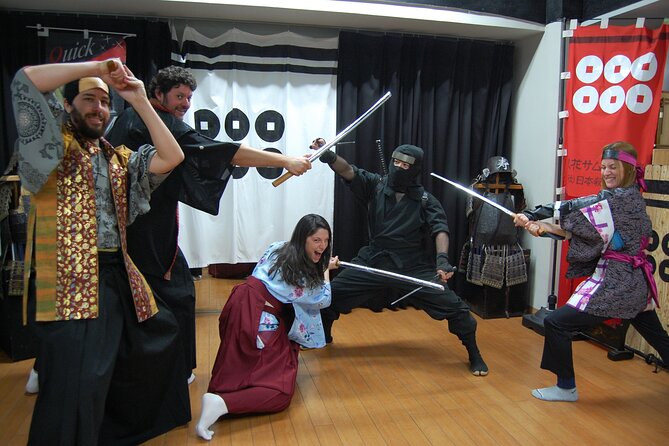
Reviewed · OSAKA SAMURAI & NINJA EXPERIENCES
Learn The Katana ‘Sword’ Technique of Samurai and Ninja
Sword practice, but make it theatrical. You start with inspiration from a fighting performance, then jump into hands-on training with a real instructor and a full warrior makeover. I love the focus on the tate sword technique, and I like how the class turns into a fun, do-it-with-us experience through costume practice.
One heads-up: if you want serious, grinding martial-arts training, this isn’t built like sparring or a hardcore dojo session. The format is performance-friendly and stage-trained, so expect teaching that feels theatrical, not gym-level combat conditioning.
That said, the small group size (max 10) and the hands-on cut practice make it easy to feel involved fast. You’ll also get video and photo time, which helps you remember what your stance and kata felt like.
In This Review
- Quick highlights
- Katana and Ninja Training at Japan Tatedo Association in Osaka
- Costumes and Kimono Hakama: Wearing the Part Changes How You Move
- The Katana Setup: How You Hold It and Learn the 8 Katas
- Entering the Tate Experience: Posture, Balance, and Focus in Motion
- Shuriken Throwing and the Ninja Scene Finale
- Price and Logistics: Is $162.59 Worth It?
- Who Should Book This Samurai and Ninja Class (and Who Might Not)
- Should You Book? My Simple Take
- FAQ
- FAQ
- Where is the class meeting point in Osaka?
- How long is the experience?
- How much does it cost?
- What’s included with the ticket?
- What isn’t included?
- How many people are in the group?
- What do you learn during the sword training?
- Do you throw shuriken in the class?
- Is there a performance element?
- When will I get confirmation after booking?
- What is the cancellation window?
Quick highlights
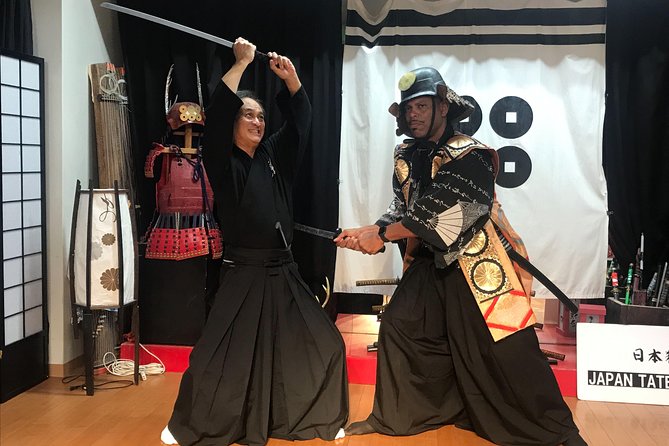
- Tate sword technique: posture, balance, and mental focus, taught step by step
- Costume changes: kimono hakama, ninja-style gear, and samurai armor options
- Katana training basics: how to hold, plus practice of 8 katas (with video)
- Shuriken throwing: rubber ninja stars at the end
- Group finale: a ninja scene where you’re part of the show
- Small class: up to 10 people, with rental costume and an instructor included
Pick the sword back up with these sessions



Katana and Ninja Training at Japan Tatedo Association in Osaka
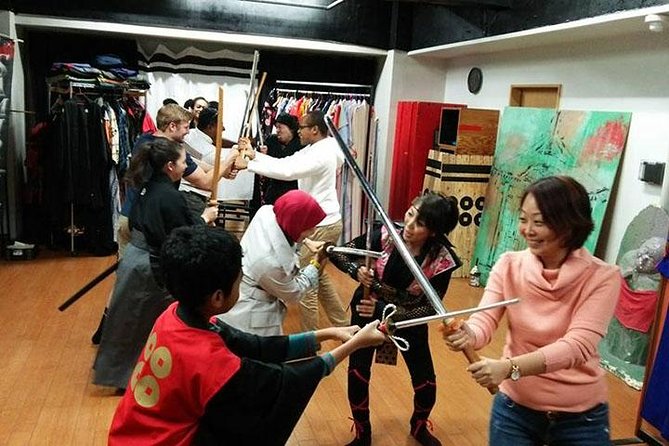
This experience happens at the Japan Tatedo Association, with the session centered around learning traditional sword and ninja-inspired skills in a guided, structured format. You meet at the Imai Building in Nishi Ward (Osaka), and the activity runs as a class that’s meant to be both instructional and entertaining.
What makes it appealing for visitors is the pacing. You’re not just watching a demo and leaving. You learn, suit up, practice repeatable basics, then finish with a moment that feels like you’re in the middle of a story. That mix is why this works well even if you don’t know the first thing about samurai or ninja arts.
You also get to see how “warrior training” shows up in Japanese pop culture and performance traditions, not just in textbook history. The class includes a fighting performance by three Samurai and a ninja to set the mood. It gives you a visual reference before you start standing in your own stance and taking your own swings.
The tradeoff is style. This is not presented as a long, physically punishing martial-arts curriculum. It’s more like a coached performance class with real technique foundations, so you’ll likely leave feeling confident and amused rather than exhausted and battle-scarred.
Costumes and Kimono Hakama: Wearing the Part Changes How You Move
Before you touch the katana, the class leans hard into the transformation. You’ll learn how to wear kimono hakama, and you’ll also get a chance to dress in a kimono, ninja costume, and/or samurai armor depending on the session flow.
This matters more than it sounds. When clothing is part of the movement, your posture and foot placement change automatically. You’ll feel your stance get taller or more grounded because the outfit encourages how your hips and legs align. If you’ve ever tried to copy a pose in a regular T-shirt and then in proper traditional clothing, you already know the difference—this class builds that effect into the training.
You’re also getting the visual experience right away. One of the easiest ways to understand samurai and ninja aesthetics is through what you’re wearing while you practice. It turns learning into something you can laugh about later, especially with the photo time built into the experience.
What to expect practically: you won’t be doing this in your own clothes. Rental costume is included, and the instructor guides you through it. So you don’t have to arrive with any special knowledge, or worry about fit or wrapping details.
If you’re traveling with someone who might think they’re “not into costumes,” this is still often a win. The lesson isn’t just cosplay. It’s costume-assisted technique practice.
The Katana Setup: How You Hold It and Learn the 8 Katas
Once you’re dressed and ready, the training moves to katana basics. The class covers how to use the katana, including how to hold the sword and how to work through the kata sequence.
The standout here is that you don’t just hear instructions—you practice. You learn the “tate” battle experience and you’re guided through posture and balance while you perform the moves. There’s also mention of practicing 8 katas and taking video, which is a big deal for visitors. When you can rewatch your stance, you can correct small things immediately rather than just hoping you remembered the lesson right.
The “tate” part is central. “Tate” training emphasizes stable posture and mental focus while you execute. Even if you don’t fully understand the historical context, you can feel the mechanics: feet planted, weight managed, and a controlled upper body. That’s usually where beginners notice improvement first—your cuts look cleaner because your body is doing its job.
A practical tip: treat the first few kata rounds as calibration, not performance. Your goal is consistency. If you’re thinking about your footing and grip, you’re already using the class the way it’s intended.
Also, don’t ignore the video/photo time. People often skip recording because they feel awkward. Here, the recording supports the whole point—so you can compare how you moved earlier versus later.



Entering the Tate Experience: Posture, Balance, and Focus in Motion
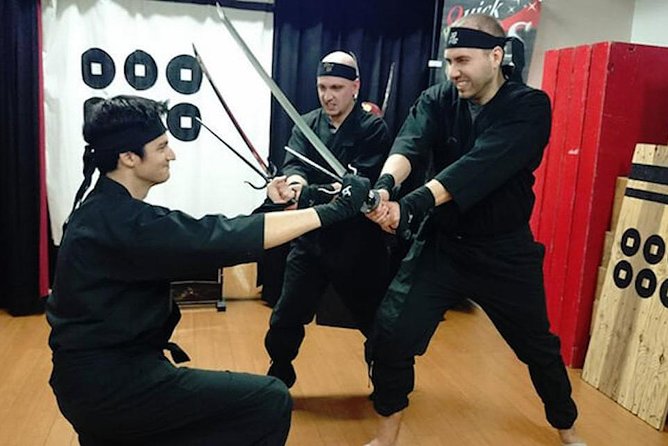
The heart of the class is learning the tate sword technique, described as combining posture, balance, and mental focus. This is where the experience separates itself from a generic “try a sword” moment.
In practice, this style of teaching tends to look like repeat-after-me structure with corrections on stance. You’re likely coached on where your weight sits, how your shoulders align, and how your cutting motion connects to your body instead of just your arms. It’s the difference between swinging and cutting with intention.
The emphasis on mental focus is not just poetic. When an instructor wants you to stay balanced during the move, you can’t rush. You end up training control—pausing at the right moment, keeping your line steady, then finishing the cut. That’s also why this can feel surprisingly satisfying. You’re not doing chaos; you’re doing measured action.
Remember: this is still a visitor class. You’re not expected to already be a swordsman. The value is that you’re guided through the foundations in a short time window—so you leave with something tangible.
One more thing I appreciate about this format: it’s easier to stay calm when your goal is a sequence. You aren’t trying to outfight anyone. You’re building the ability to execute a small set of movements cleanly, which is a win for beginners.
If you’re the kind of traveler who loves learning “how things work,” this is the part to lean into. Ask questions about stance and grip if you can. You’ll get more out of the session that way than just focusing on speed.
Shuriken Throwing and the Ninja Scene Finale
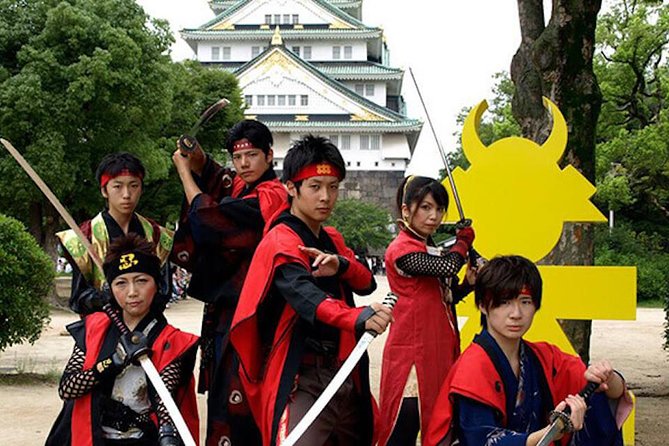
After the sword portion, the session finishes with ninja-themed fun: shuriken throwing and a final scene.
The shuriken part uses rubber versions of ninja stars. That detail matters for safety and comfort. You get to practice the throwing idea without the sharp edges and without the same kind of risk you’d face with real weapons. For most visitors, it’s the perfect “I can actually do this” activity.
Then comes the finale: a ninja scene. Everyone becomes part of the show and performs a scene together. This is also where the earlier stage performance by three Samurai and a ninja pays off. You’ve already seen how the dramatic movement looks, so you’re not guessing what the class is aiming for.
This ending is a big reason to pick this experience even if you’re unsure about sword training. It turns technique into theater, and it gives you a story to take home. The class doesn’t just teach you a move—it gives you a role.
If you’re worried about being shy, this might still work. The group size is small, and the instructor’s presence usually keeps everyone moving together. Even if you’re not a performer by nature, the scene is likely paced to help you get through it.
Price and Logistics: Is $162.59 Worth It?
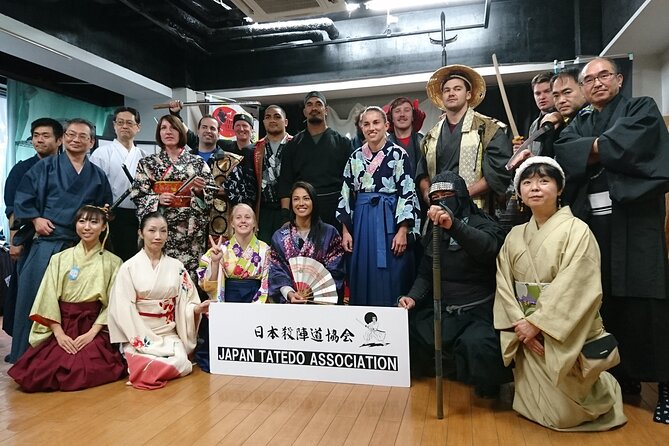
At $162.59 per person, you’re paying for an instructor-led class plus rental costume, with a small group limit of up to 10 people. You’re also getting performance elements, video and photo time, and a hands-on sword and shuriken practice session.
Is it pricey? Compared to a basic walking tour, yes. Compared to a structured, taught activity with gear, costumes, and guided technique practice, it feels more reasonable. The key is that you’re not just watching—you’re participating across multiple parts: dressing, stance work, katana katas, shuriken throwing, and the finale scene.
You’ll want to plan for what isn’t included. Transportation to and from the area is not included, and there’s no hotel pickup/drop-off. The meeting point is clearly stated at Imai Building in Nishi Ward, and it’s near public transportation. That means you should be able to reach it without a private taxi, but you’ll still handle your own getting there.
Also, keep an eye on timing. The duration is listed as about 1 hour, but the training description uses a longer framing too. Either way, it’s a short block—plan to arrive early enough to settle in and get ready without rushing through the costume process.
One more practical detail: the experience is offered with a mobile ticket and group discounts. If you’re traveling with friends or family, it’s often worth booking together so you can take advantage of those rates.
Who Should Book This Samurai and Ninja Class (and Who Might Not)
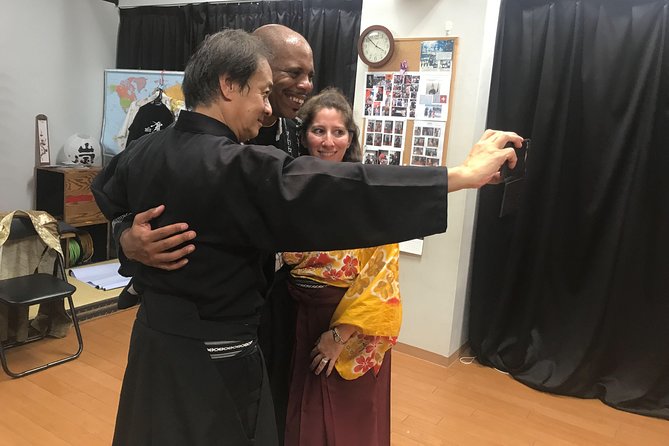
This workshop is best if you want a fun mix of Japanese warrior visuals and real, coached technique. You’ll enjoy it most if you like hands-on learning and you don’t mind a stage-like atmosphere.
It’s a good fit for:
- Beginners who want a guided introduction to katana basics, posture, and balance
- Travelers who enjoy costume moments and want them tied to practice
- Groups who want a shared memory—especially because of video/photo time and the final scene
- Families, since the experience is designed to be entertaining without being complicated
It’s less ideal if you want:
- Serious, hardcore martial arts training focused on sparring, conditioning, or a strict dojo routine
- A pure combat curriculum without theatrical elements
That last point is important. This class is run by stage actors with a background in kendo. You’ll still get instruction, but the overall feel leans toward performance teaching rather than tournament-style martial arts progression.
My take: if your goal is authenticity-through-practice and you want to experience how these arts feel in motion for a beginner, it’s a strong choice. If you want to become a swordsman, you’ll likely want to pair it with longer training elsewhere later.
Should You Book? My Simple Take
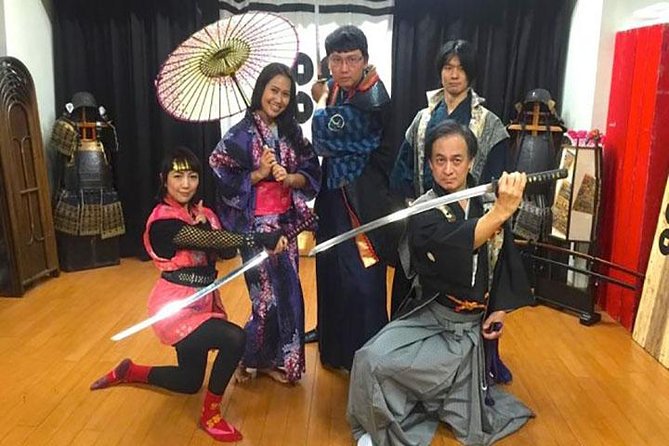
Book it if you want a short Osaka experience that mixes katana basics, dressing up properly, rubber shuriken throwing, and a group finale you’ll remember. The class is structured for participation, and the small group setup makes it easier to stay involved.
Skip it if your main goal is a hardcore martial arts workout or serious sparring. The stage-led nature is part of the package, for better or worse.
If you’re on the fence, here’s the deciding question: do you want to learn a repeatable stance and kata basics in a fun setting—and leave with video and photos? If yes, this is a great way to spend an hour in Osaka.
FAQ
FAQ
Where is the class meeting point in Osaka?
The meeting point is Imai Building, 1-chōme-1-27 Kitahorie, Nishi Ward, Osaka, 550-0014, Japan.
How long is the experience?
It’s listed as about 1 hour (approx.), though the training description talks about a longer lesson flow.
How much does it cost?
The price is $162.59 per person.
What’s included with the ticket?
Included are a rental costume and a local instructor.
What isn’t included?
Transportation to and from the attraction, plus hotel pickup and drop-off, are not included.
How many people are in the group?
The experience has a maximum of 10 travelers.
What do you learn during the sword training?
You’ll learn how to use a katana, how to hold it, and practice the tate sword technique and 8 katas. There’s also video time.
Do you throw shuriken in the class?
Yes. You’ll have a shuriken throwing experience using rubber ninja stars.
Is there a performance element?
Yes. You’ll be inspired by a fighting performance featuring three Samurai and a ninja, and you’ll also take part in a ninja scene at the end.
When will I get confirmation after booking?
Confirmation is received within 48 hours of booking, subject to availability.
What is the cancellation window?
You can cancel up to 6 days in advance for a full refund, with partial refunds if you cancel 2–6 days before the start time, and no refund if you cancel less than 2 days before.
More Tour Reviews in Osaka
- Osaka Go Karting Tour with Funny Costume★ 5.0 · 2,658 reviews
- Osaka Castle: Museum and Tower Entry Ticket★ 4.5 · 2,380 reviews
- Osaka: Shinsekai Food Tour with 13-15 Dishes at 5 Eateries★ 4.8 · 2,204 reviews
- Osaka Food Tour: 13 Dishes at 5 Local Eateries★ 5.0 · 2,149 reviews
- Hungry Osaka Street Food Tour:15 Tastings & 3 Drinks with a Local★ 5.0 · 1,727 reviews
Blades Out: More Samurai Sessions
- Samurai Training Experience KENDO in Osaka★ 5.0 · 515 reviews
- OSAKA NIGHT FUSION Japanese Taiko Kabuki Samurai Dance Show★ 4.8 · 155 reviews
- Osaka: Samurai Training Experience KENDO in Osaka★ 5.0 · 111 reviews
- Osaka: A Modern Samurai, Kabuki, Taiko, & Dance Show★ 4.5 · 66 reviews
- Osaka 2-Hour Genuine Kendo / Samurai Experience In Japan★ 5.0 · 65 reviews
The Newest Osaka Write-Ups
- Private Photoshoot in Osaka with a Professional Photographer
★ 5.0 · 3 reviews - Osaka Early Morning Osaka Castle Tour Avoid Crowds
★ 5.0 · 3 reviews - Nara Private Tour with Pick and Drop and English Speaking Driver
★ 3.5 · 3 reviews - Osaka: Modern Vegetarian Sushi Cooking Class
★ 5.0 · 3 reviews - Nara Day Trip from Osaka with a Licensed Guide
★ 5.0 · 3 reviews
Osaka Samurai & Ninja Experiences, compared.
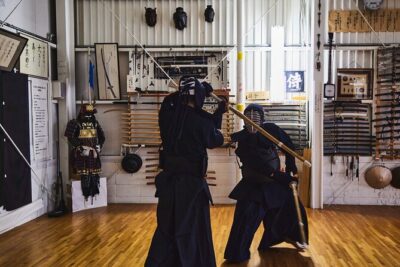 ★ 5.0Samurai Training Experience KENDO in OsakaFrom $131515 reviews
 ★ 4.8OSAKA NIGHT FUSION Japanese Taiko Kabuki Samurai Dance ShowFrom $40155 reviews
 ★ 5.0Samurai Training Experience KENDO in OsakaFrom $127111 reviews
 ★ 4.5A Modern Samurai, Kabuki, Taiko, & Dance ShowFrom $1966 reviews
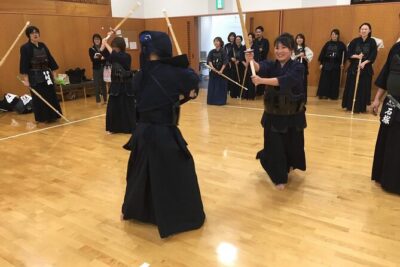 ★ 5.0Osaka 2-Hour Genuine Kendo / Samurai Experience In JapanFrom $11865 reviews
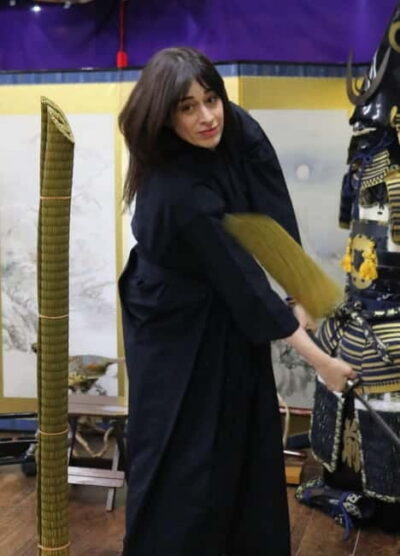 ★ 4.9Learn Bushido – Trial Slashing with Samurai SwordFrom $9259 reviews
 ★ 5.0Samurai Show, Tea Ceremony, Japanese Traditional ActivitiesFrom $4456 reviews
 ★ 5.0Private Samurai Experience – Train with Sword MasterFrom $15836 reviews
Browse the lists this tour appears in