
Reviewed · OSAKA CASTLE TOURS & TICKETS
Samurai Armor & Sword experience with phot near Osaka Castle
Samurai honor in 90 minutes feels real. At Bushi no Homare (Samurai Honor), you’ll handle sword techniques with real-sword training moments and wear samurai armor, right after Osaka Castle sightseeing. I love the hands-on pacing, with clear instruction from an English-speaking professional instructor, and I especially like that the class teaches why samurai did things, not just how to swing. The main catch is simple: you need to arrive early to change, and it’s not suitable for kids under 10 or anyone over 80 or with altitude sickness.
This is also a neat value play because you get the outfit, armor (indoors), instruction, and the photo package as part of the session price. You’re not stuck figuring out details at random. Just plan to get to the meeting point on time near the Excellence Takayama building, since there’s no included pick-up.
In This Review
- Key highlights worth aiming for
- Finding Samurai Honor at Excellence Takayama (near Osaka Castle)
- What happens when you arrive: changing, instructions, and a proper start
- Becoming a samurai in the dojo: bowing to the shrine
- Samurai sword manners and the logic of carrying a blade
- Iai basics: battou, chiburui, and nottou
- Kata, stances, and learning the swing that makes hi-nari
- Trying the cut: real sword technique and the controlled challenge
- Samurai armor and helmet: the moment you’ll remember later
- Price and value: what $106 buys you for 90 minutes
- Who this experience fits best (and who should rethink)
- Book it or skip it: my decision guide
- FAQ
- FAQ
- What is the duration of the Samurai Armor & Sword experience?
- Where do I meet for the activity?
- What languages are available for instruction?
- What should I bring?
- Is transportation or hotel pick-up included?
- Are there age limits?
- Can I bring food or alcohol?
Key highlights worth aiming for
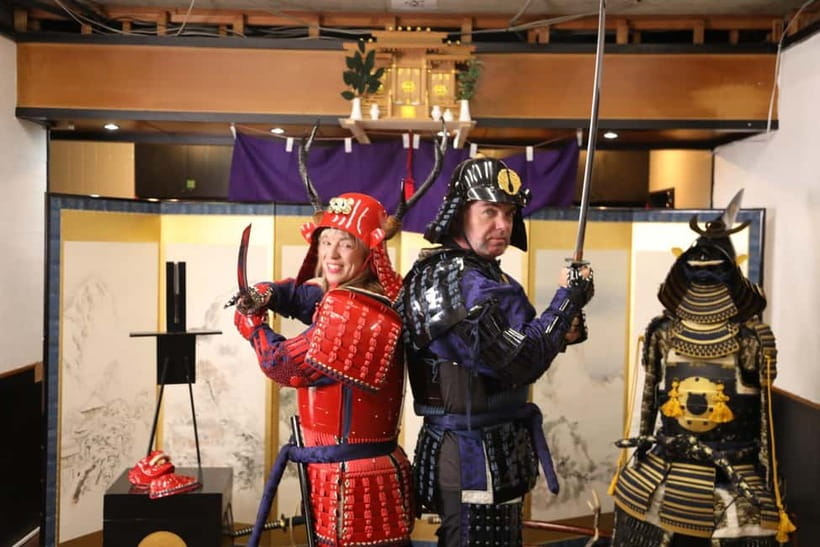
- Armor that actually goes on you: samurai clothing plus armor and helmet, indoors
- Hands-on iai practice: battou, chiburui, and nottou with a practice sword
- Sword cutting practice with a real samurai sword: a controlled, high-impact try-it moment
- Dojo etiquette first: you bow to start and bow to end at the shrine in the training room
- Technique taught through feel: proper swings can produce a hi-nari sound from the sword
- Photo shooting included: your commemorative shots are sent to your email
More ways into Osaka Castle and its keep
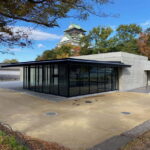


Finding Samurai Honor at Excellence Takayama (near Osaka Castle)
Your stop is called Bushi no Homare, operated under Samurai Honor, at Excellence Takayama 1F, 2-3-19 Shiginonishi, Joto-ku, Osaka-shi, Osaka 536-0014. The activity also goes by Honor of the Samurai as the sign you’ll look for.
Logistics here are straightforward, but you should plan time carefully. You’ll meet at a wooden sign that reads Honor of the Samurai, positioned in front of the store area. There’s also a rack with activity pamphlets, plus kimonos and hakama hanging up to dry, so you’ll have visual cues besides just the sign.
One important detail: the address shown in Apple Maps is incorrect. Use Google Maps for the right pin, so you’re not standing there with a wrong building.
No pick-up or drop-off is included, so treat this as a “you handle your own transport” add-on to your Osaka Castle day. That said, this can work nicely as a bookend. You can see Osaka Castle first, then come here when you want something physical and memorable rather than just walking and looking.
What happens when you arrive: changing, instructions, and a proper start
The session runs 90 minutes, and you should arrive 30 minutes early. That extra time matters because you’ll get instructions and change into costume. What to bring is minimal: a T-shirt is what they ask for.
When you arrive early, don’t treat it like “hurry up and go.” That lead time is part of the experience. You’re going from normal traveler mode into samurai mode, and the class flow depends on getting ready properly.
Also note the group format: it’s a private group. That usually means you get more direct attention when you’re learning the basics, especially for movements like drawing, returning, and stance work.
In terms of language, English is standard. They also offer Japanese instruction, with English-speaking staff included. If you need another language (Italian, Spanish, French, Chinese, Thai, Indonesian), you have to ask ahead because staffing is limited.
Becoming a samurai in the dojo: bowing to the shrine
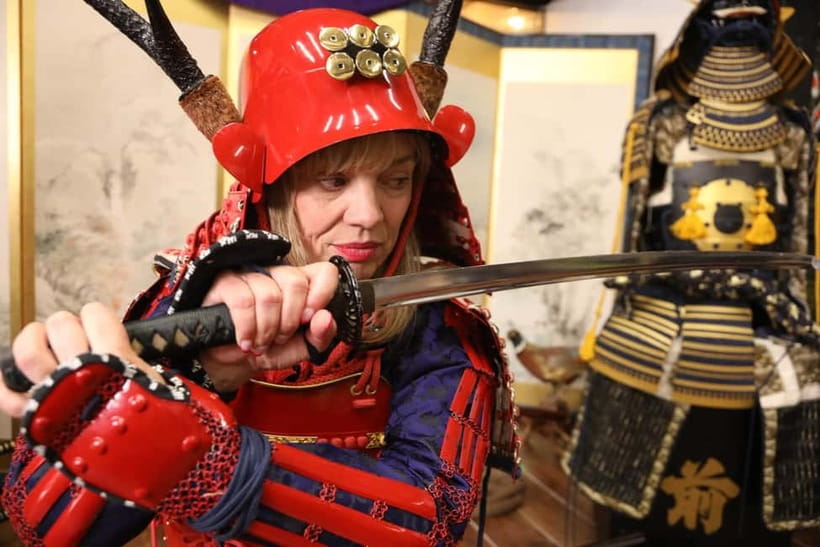
The session begins with preparation: you change into samurai costume (dogi and hakama) and enter the role of a samurai. This part isn’t just cosplay. It sets the tone for manners and discipline, which is where the training starts.
Then you begin with a bow. The dojo has a shrine enshrined inside the training space, and training begins and ends with a bow before that shrine. This is one of those details that’s easy to skip in a tourist class, but it’s central here. The point is respect for the space and the craft, not just learning a trick.
You’ll also get explanations about samurai etiquette and how sword carrying fit into daily life. The training emphasizes responsibility. You’re not told this to sound dramatic; you’re taught how the culture treated the sword as something serious.
Pick the sword back up with these sessions
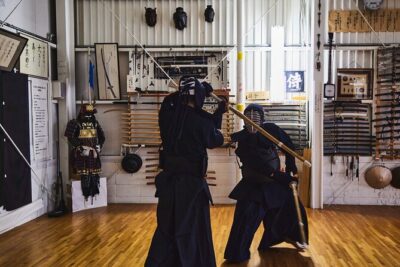



Samurai sword manners and the logic of carrying a blade
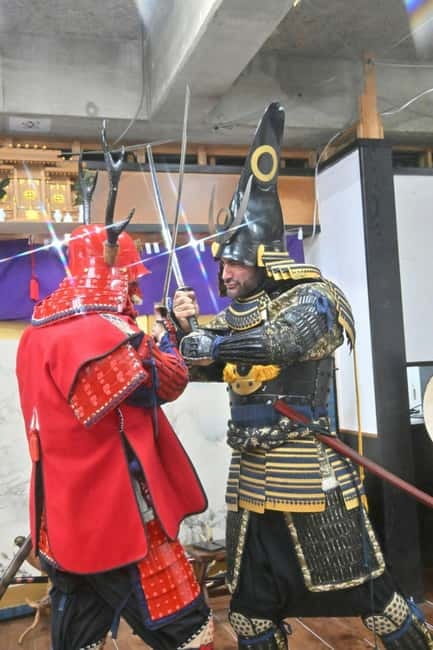
One of the best parts is that the training covers the “why,” not only the movement. You learn how samurai viewed sword responsibility and how their relationship with the sword shaped everyday behavior.
The program explains that samurai boys learned with a wooden sword early, and that at around age 15 they were allowed to carry a more serious sword. The lesson you’re supposed to take away is the same one you’d take away from any serious discipline: carrying something dangerous means carrying responsibility in public.
The class also describes how samurai lived with swords inseparable from them, keeping them close even in peaceful times. The idea is quick readiness if trouble ever arrived. For you, it helps the training feel grounded and intentional. You’re not just doing “movements,” you’re learning a mindset and habits that were meant to keep a warrior prepared.
Then comes a practical detail: walking with a sword belt. You learn how to insert the sword into the belt at the waist with the blade side facing up, and there’s a specific walking rule. Samurai walk on the left side of the road so the sheaths don’t come into contact. That’s the kind of detail that makes the culture feel real, and it connects directly to the larger point about keeping the sword’s fit and readiness correct.
Iai basics: battou, chiburui, and nottou
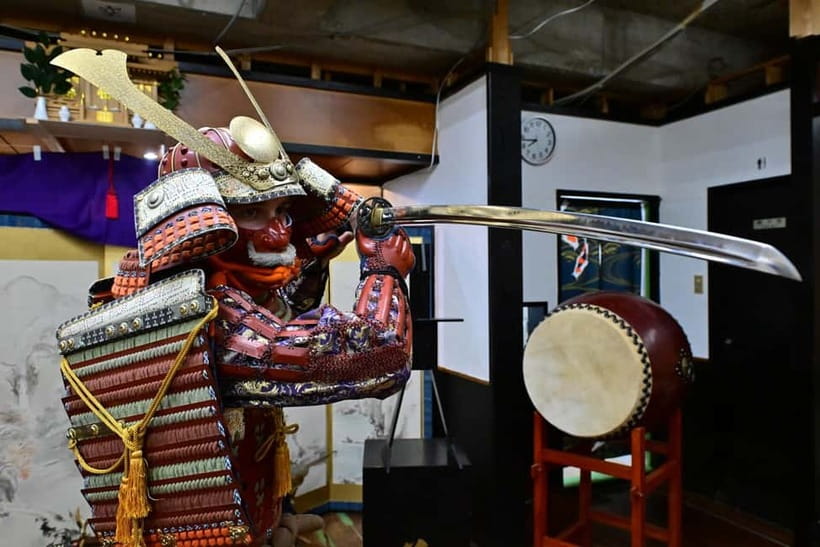
Now you move into the core swordwork basics: iai practice. This is traditional draw-and-cut training, taught step by step so you can build correct form without rushing.
They start you with the stance work and then break down the sequence into key actions:
- Battou: pulling the sword out of the scabbard to cut
- Chiburui: symbolically removing blood from the blade after a cutting action
- Nottou: returning the sword to its sheath after the blood removal step
Even if these terms are new to you, the structure helps. It turns a complicated skill into something you can repeat, adjust, and understand. Safety also benefits from this approach. You’re practicing a defined sequence rather than improvising.
Also, pay attention to the idea that you’re not just moving your arm. The training stresses correct body use and weight transfer as the foundation for real technique later.
If you’ve done other “martial arts demo” style activities in Japan, this should feel more like instruction than performance. It’s still a tour experience, but the training logic is there.
Kata, stances, and learning the swing that makes hi-nari
After iai basics, the instructor works with you on basic kata and stances, plus sword swings from the proper starting positions.
A crucial teaching point here: when you swing, you should be aware that you’re swinging with the weight of the sword, not simply throwing it with your arm strength. That’s a subtle instruction, but it makes a big difference. If you rely on your arm, your form falls apart fast. If you use the sword’s weight and correct mechanics, the swing feels controlled.
There’s also a specific performance sign they mention: if you’re swinging correctly, you can hear a hi-nari sound from the sword. You might not get it right away, and you might not even hear it every time depending on your room setup and timing, but the point is useful. It gives you feedback tied directly to technique.
This section is also where the “English-speaking staff + professional instructor” factor really matters. You want clear, precise coaching for safety and accuracy. The instruction is part of why people rate this so highly as an actual learning experience rather than a quick photo stop.
Trying the cut: real sword technique and the controlled challenge
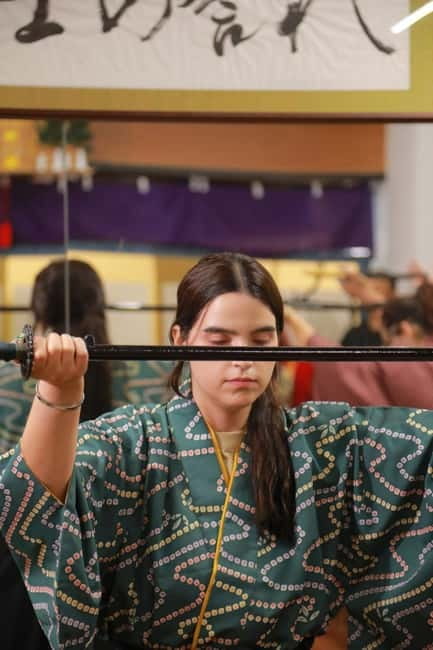
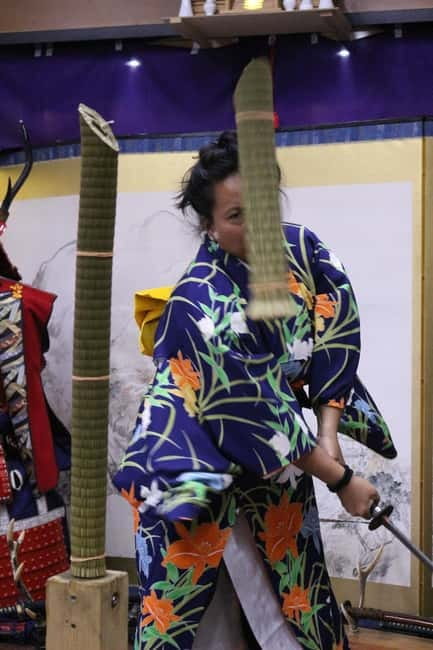
The experience culminates in a try-it moment: you get to attempt sword cutting with a real samurai sword, in the context of the Bushido mindset.
This is the “wow” part, but it’s not random. It’s built on the preparation you did first: bowing, manners, stance basics, iai fundamentals, and controlled swings. If you rush ahead, you miss why the cutting matters. If you take the process seriously, you get the sense of what “cutting performance” is supposed to mean in this tradition.
They frame it as the world’s best cutting performance. I’d interpret that as an emphasis on the cutting capability of the sword and training method, not as some universal ranking claim you have to believe. Either way, the value is that you’re not only wearing the armor. You’re also doing the skill that made the armor matter.
From a safety perspective, you’re in a guided, instructor-led setting with a structured sequence. Still, be mentally ready. This isn’t a gentle craft workshop. You’re using a sword. Follow instructions tightly and don’t treat it like a casual prop session.
Samurai armor and helmet: the moment you’ll remember later
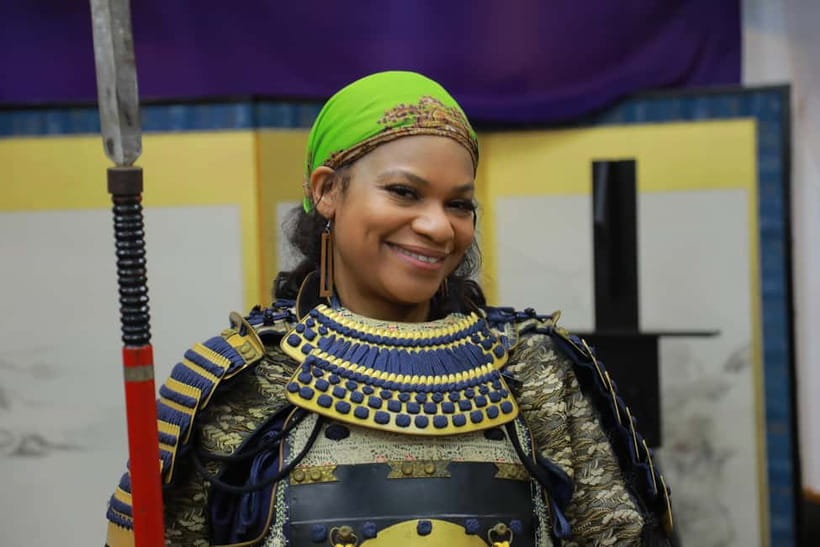
After the swordwork basics and cutting practice, you shift into the armor segment.
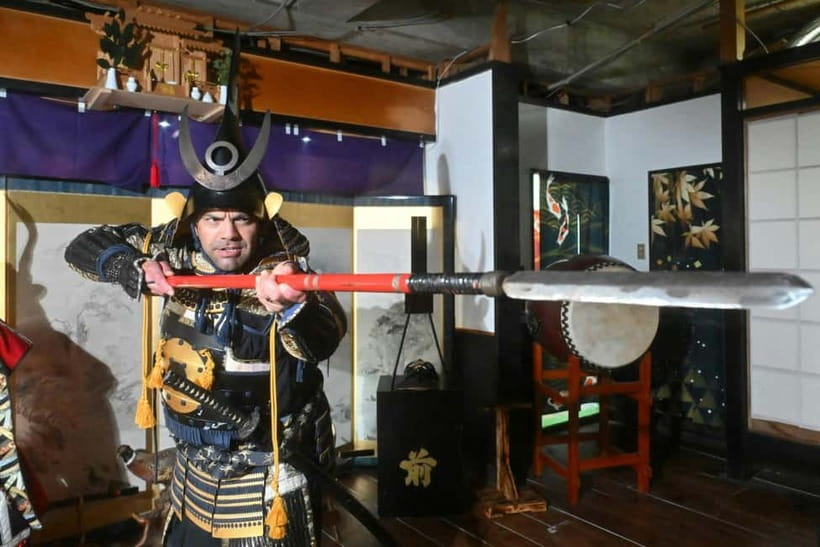
You’ll try on samurai armor and helmet. The highlight notes that you’ll be clad in armor with a sword at the waist, and a spear (naginata) kept at the ready. The program also notes armor is worn indoors, which helps with comfort and keeps the focus on training and photos rather than weather.
Even if you’ve seen samurai armor in museums, the body experience is different. In photos, armor looks dramatic. On you, it becomes weight, position, and movement limits. That’s why this part tends to stick in people’s minds: it makes the history feel physical.
Then you get commemorative photography. A photo is taken with the armor as part of the experience, and the included photo shooting package means you’ll have the images sent to your designated email afterward.
The photo timing is also part of the value. If you’ve ever tried to take your own photos while dressed for a theme activity, you know it can get messy fast. Having them handle the shot is convenient and reduces stress when you’d rather be learning.
Price and value: what $106 buys you for 90 minutes
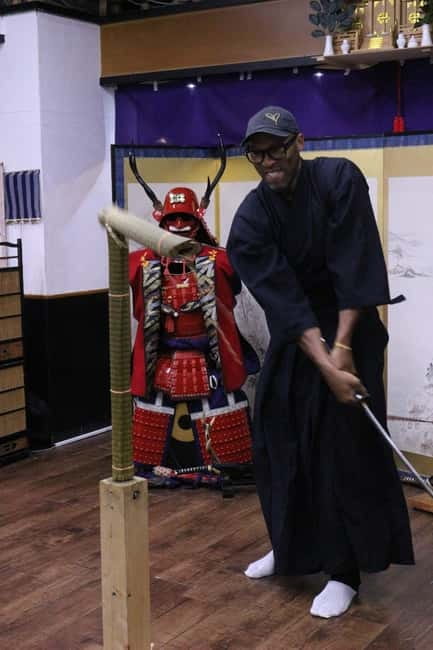
At $106 per person for 90 minutes, this isn’t the cheapest thing on an Osaka day. But the value is fairly strong for what’s included.
Here’s what you do get in the package:
- Samurai clothing (dogi and hakama)
- Samurai armor indoors
- Wear the armor as part of the activity, not just view it
- Certified professional instructor
- English-speaking staff
- Tax and tips included
- Photo shooting, with images sent by email
What you don’t get:
- No pick-up or drop-off from your hotel or station
- No transportation provided
- No extra add-on filming (movie shooting is listed as a paid option)
So the math is less “you pay for a costume” and more “you pay for instruction + equipment + photography + staff time.” The time commitment is concentrated, and because tips and tax are included, you don’t end up with surprise costs at the end.
If you’re traveling in a small group and you want real instruction (not just a photo moment), the price starts to look more reasonable. If you’re mainly chasing a costume photo, you might feel it’s pricey. But if you care about discipline, sword basics, and armor you actually wear, it can feel like a good use of a single day segment near Osaka Castle.
Who this experience fits best (and who should rethink)
This is best for people who want something more active than museum time.
You’ll probably enjoy it if:
- you like hands-on instruction and want to learn real terminology like battou, chiburui, and notttou
- you’re interested in samurai manners and how sword carrying influenced daily life
- you want a memorable Osaka Castle add-on that feels different from walking streets
It’s not a match if:
- you’re looking for a low-movement activity
- you’re traveling with children under 10
- you’re over 80 (not suitable)
- you have altitude sickness
- you need strollers or you plan to bring pets (pets aren’t allowed; assistance dogs are allowed)
Also, practical comfort matters. They ask you to wear a T-shirt for your outfit base, and the program does not allow food or alcohol in the experience area.
Book it or skip it: my decision guide
If your Osaka itinerary includes Osaka Castle, this is the kind of companion activity that turns sightseeing into a story you can feel. The training focuses on etiquette, sword fundamentals, and a real samurai sword cutting try-it moment, then tops it off with armor + helmet and photo shooting you don’t have to organize yourself.
I’d book it if you want a short, focused class with clear instruction and a “I learned something” feeling—not just a costume stop. I’d think twice if you’re sensitive to age limits, want long lounging time, or you’d rather spend your money on food, views, or museums instead of a physically guided training session.
FAQ
FAQ
What is the duration of the Samurai Armor & Sword experience?
The experience lasts 90 minutes.
Where do I meet for the activity?
Meet at the wooden sign that reads Honor of the Samurai. It’s the landmark in front of the store area near the Excellence Takayama building.
What languages are available for instruction?
English-speaking staff are included, and the default interpreter language is English. Japanese instruction is also listed. Other languages may be possible by inquiry before reserving, depending on staff availability.
What should I bring?
Bring a T-shirt.
Is transportation or hotel pick-up included?
No. Pick up and drop off at the train station or hotel is not included, and transportation is not included.
Are there age limits?
Yes. It is not suitable for children under 10, and it is also listed as not suitable for people over 80 and for those with altitude sickness.
Can I bring food or alcohol?
No. Food and alcohol are not allowed, along with other restricted items like pets and drugs.
More Tour Reviews in Osaka
- Osaka Go Karting Tour with Funny Costume★ 5.0 · 2,658 reviews
- Osaka Castle: Museum and Tower Entry Ticket★ 4.5 · 2,380 reviews
- Osaka: Shinsekai Food Tour with 13-15 Dishes at 5 Eateries★ 4.8 · 2,204 reviews
- Osaka Food Tour: 13 Dishes at 5 Local Eateries★ 5.0 · 2,149 reviews
- Hungry Osaka Street Food Tour:15 Tastings & 3 Drinks with a Local★ 5.0 · 1,727 reviews
Blades Out: More Samurai Sessions
- Samurai Training Experience KENDO in Osaka★ 5.0 · 515 reviews
- OSAKA NIGHT FUSION Japanese Taiko Kabuki Samurai Dance Show★ 4.8 · 155 reviews
- Osaka: Samurai Training Experience KENDO in Osaka★ 5.0 · 111 reviews
- Osaka: A Modern Samurai, Kabuki, Taiko, & Dance Show★ 4.5 · 66 reviews
- Osaka 2-Hour Genuine Kendo / Samurai Experience In Japan★ 5.0 · 65 reviews
Osaka Castle, Seen Properly
- Osaka Castle: Museum and Tower Entry Ticket★ 4.5 · 2,380 reviews
- Osaka Castle Walking Tour and Castle Tower Admission★ 5.0 · 561 reviews
- 5-Hour Osaka Bike Tour to the Neighborhood of Osaka Castle★ 5.0 · 319 reviews
- Osaka Castle Guided Tour★ 4.7 · 249 reviews
- Osaka: Castle History Walking Tour / Castle Tower Admission★ 4.9 · 230 reviews
The Newest Osaka Write-Ups
- Private Photoshoot in Osaka with a Professional Photographer
★ 5.0 · 3 reviews - Osaka Early Morning Osaka Castle Tour Avoid Crowds
★ 5.0 · 3 reviews - Nara Private Tour with Pick and Drop and English Speaking Driver
★ 3.5 · 3 reviews - Osaka: Modern Vegetarian Sushi Cooking Class
★ 5.0 · 3 reviews - Nara Day Trip from Osaka with a Licensed Guide
★ 5.0 · 3 reviews
Osaka Castle Tours & Tickets, compared.
 ★ 4.5Osaka Castle: Museum and Tower Entry TicketFrom $72,380 reviews
 ★ 5.0Osaka Castle Walking Tour and Castle Tower AdmissionFrom $23561 reviews
 ★ 5.05-Hour Osaka Bike Tour to the Neighborhood of Osaka CastleFrom $87319 reviews
 ★ 4.7Osaka Castle Guided TourFrom $43249 reviews
 ★ 4.9Castle History Walking Tour / Castle Tower AdmissionFrom $33230 reviews
 ★ 4.7Osaka Castle Guided Tour with Local GuideFrom $4878 reviews
 ★ 5.0PRIVATE 6hr, Food tour from Osaka Castle, Kuromon, Dotonbori.From $15568 reviews
 ★ 4.5A Tour to Explore the Symbol of Osaka: Osaka CastleFrom $8356 reviews
Browse the lists this tour appears in