
Reviewed · OSAKA LIVE SHOWS
Osaka: Noh Performance with English Subtitles and Workshop
Noh feels old, and somehow it clicks fast. This Osaka experience at Yamamoto Noh Theater pairs a clear pre-show intro with an actual Noh performance, plus hands-on time with the props after. If you are new to Japanese traditional theatre and want it explained in real time, this format is built for you.
I especially like two things. First, the English subtitles make the performance much less intimidating. Second, you get to try on Noh masks and costumes and look at the musical instruments used in the show, so it stops being just passive watching.
One consideration: the theatre rules are strict—there is no photography or video inside. That means you will experience it live, not through a phone screen, which is great for focus, but not ideal for people who want lots of social posts.
In This Review
- Key points before you go
- Yamamoto Noh Theater: a historic room near Osaka Castle
- The pre-show explanation that turns confusion into clarity
- The Noh performance with English subtitles: what you will actually notice
- After the show: trying on Noh masks, costumes, and instruments
- Where this fits in your Osaka day plan
- Price and value: is $32 worth it?
- Who should book this Noh experience in Osaka
- Things to know before you sit down
- Should you book this Noh performance at Yamamoto Noh Theater?
- FAQ
- Where is the Noh performance held?
- How long is the experience?
- Is the performance available in English?
- What can I do after the show?
- Can I take photos or record video inside the theatre?
- What languages are supported by the host or greeter?
- Is it suitable for children?
- How close is the theatre to Osaka Castle?
- Can I cancel or pay later?
Key points before you go
- English subtitles help first-timers follow along
- Pre-show explanation gives you the basics before the curtain
- Try-on time with Noh masks, costumes, and musical instruments
- A historic venue: Yamamoto Noh Theater opened in 1927 and is Osaka’s oldest Noh theatre
- Near Osaka Castle: about a 10-minute walk in the former samurai residence area
More curtains going up around Osaka

Yamamoto Noh Theater: a historic room near Osaka Castle
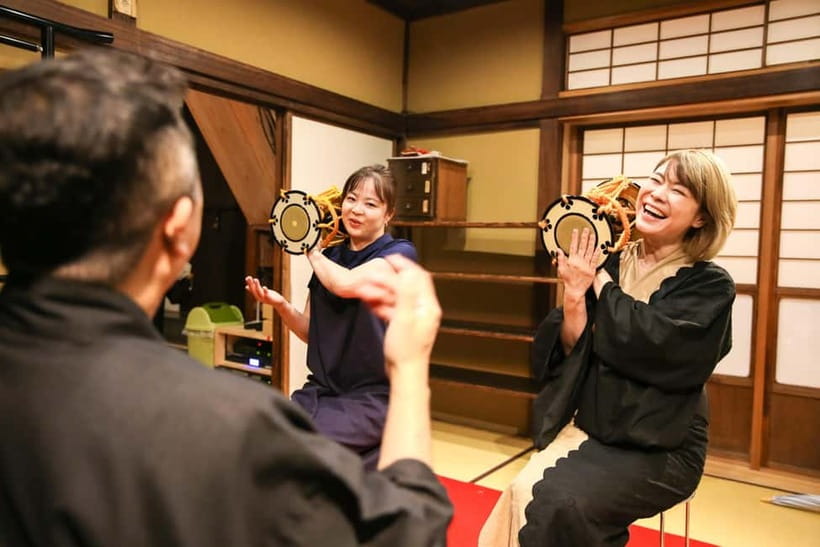
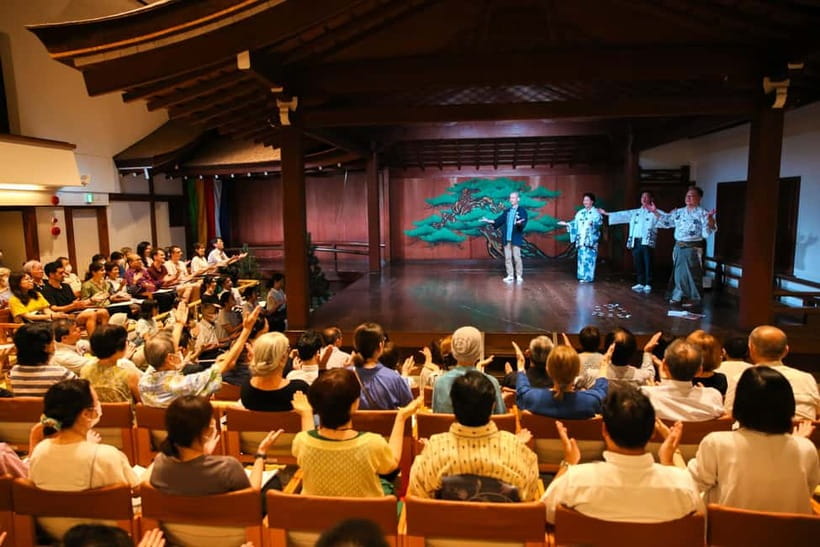
Yamamoto Noh Theater is in the former samurai residence area near Osaka Castle, and that location matters more than you might think. You are not hopping between far-flung sites. You are stepping into a specific neighborhood where the past is part of the walking map—then getting inside an old theatre designed for Noh.
The theatre itself opened in 1927 and is the oldest Noh venue for Noh in Osaka. It was registered as a Japanese Tangible Heritage in 2006, which is a fancy way of saying the place is protected because it has real historical value. For me, that context adds weight to the performance. You are not just consuming an art show; you are visiting the kind of venue where the art has been practiced and kept alive.
The pre-show explanation that turns confusion into clarity
This experience is designed for beginners, and you can feel it in the pacing. Before the performance, you get an explanation intended to help you understand what you are about to see. Noh can feel abstract at first—slow, stylized, and quietly intense—and that is exactly why the intro helps.
You do not need to study Noh beforehand. The point is to give you a simple mental framework so you can recognize patterns while the performance is happening. It is also a good reminder that Noh is not about fast plot twists; it is about mood, gesture, rhythm, and storytelling through performance choices.
The theatre provides English subtitles for the performance. That is hugely practical. You will still need to watch the body language and listen for musical cues, but you are not stuck guessing what the characters are saying.
The Noh performance with English subtitles: what you will actually notice
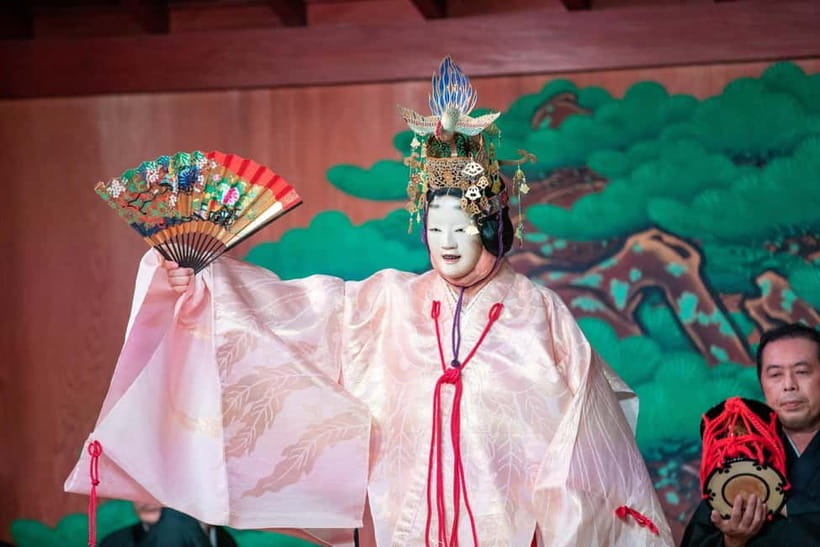
Here is what you can expect from the show itself: a traditional Noh performance presented with English subtitles, so non-Japanese speakers can follow along. In practice, the subtitles do not replace the performance. They support it.
When you watch Noh with subtitles, you start noticing the layers. You catch the words, but you also see how the performance uses repetition, controlled movement, and music to build meaning. The English words help you anchor the story. The stage action helps you feel the rhythm.
I like that the subtitles are paired with a beginner-friendly setup. Without that, Noh can turn into a guessing game. With it, you can focus on the craft: the way performers hold still, the way the atmosphere shifts, and how the music supports what you are seeing.
One small practical note: you cannot record video and you cannot take photos inside. It helps the room stay respectful and quiet, and it also keeps you from living behind a screen.
Put this one next to a few other Osaka options first:

After the show: trying on Noh masks, costumes, and instruments
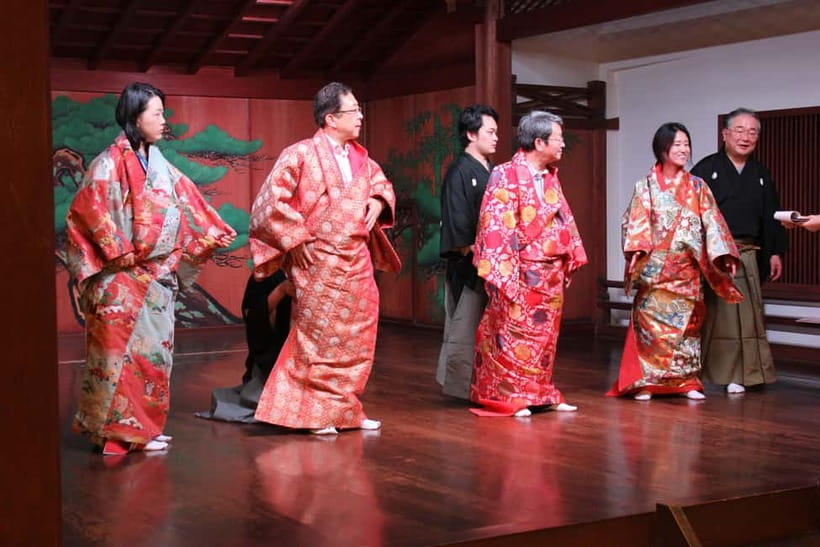
The best part for many people is what happens once the performance ends. After the show, you get hands-on time to try on Noh masks and costumes, and you can also explore the musical instruments used in the performance.
This is not a random souvenir stop. You are learning the art through the tools. Masks in particular change everything about how you stand and move. When you wear one, you immediately feel how Noh expression is shaped by design and angle, not just facial emotion. Even if you only wear it for a short time, you come away with a new respect for the performers’ control.
Costumes work the same way: they teach you how movement is part of the design. And the instrument portion matters because Noh music is not background noise. It is part of the performance language. You will get to look at and interact with the instruments used in the show, which helps you connect the sound you heard earlier to the physical objects producing it.
One comment I found especially helpful: people appreciated the theatre’s kindness and the way questions were handled afterward. That question-and-answer energy is a big deal in cultural shows. It turns your curiosity from a private thought into something you can ask directly.
Where this fits in your Osaka day plan
The total experience time is 2 hours. That is a sweet spot. It is long enough to do more than watch a show, but short enough that it does not hijack your whole day.
Location-wise, you are about a 10-minute walk from Osaka Castle. That makes it easy to combine with an afternoon plan: visit the castle area first, then head to the theatre when it fits your schedule. Because start times can vary, check availability and choose the slot that matches your pace.
In terms of timing flow, the structure is straightforward: explanation first, performance next, then the try-on and instrument portion after. You will leave with more than memories—you will leave with a clearer understanding of what you just saw.
Price and value: is $32 worth it?
At about $32 per person for a 2-hour cultural experience, the value comes from what is included. You are getting: a performance, an explanation before the show, English subtitles, and hands-on time with Noh masks, costumes, and musical instruments.
If you were only paying for a performance, $32 would already be reasonable for a unique traditional show in an old theatre. But the real value here is the beginner support. The pre-show explanation plus subtitles reduces the usual risk of paying for a show you cannot follow. Then the try-on portion turns understanding into something physical.
You also get interaction potential. The theatre team handles questions in a way that helps non-Japanese speakers feel comfortable. That turns the experience from a one-way lecture into something more like a guided introduction to the art.
Who should book this Noh experience in Osaka
This is a strong fit if you are:
- Seeing Noh for the first time and want it explained
- Non-Japanese speaking and you value English subtitles
- Curious about the craft side of theatre—masks, costumes, and instruments—not just the final performance
- Looking for a smaller, focused cultural activity near a major landmark
It is also the right kind of activity if you want something calm and thoughtful rather than loud and crowded. The setting inside a theatre near Osaka Castle feels like a concentrated cultural moment.
Not suitable for children under 7 years. That age guidance matters here because the experience is theatre-focused and rule-based (including no photography/video inside), so it is better for kids old enough to sit through and engage.
Things to know before you sit down
A few ground rules can help you enjoy the experience more smoothly:
- No video recording and no photography inside the theatre
- The hosts and greeters support English and Japanese
- Plan on a full 2 hours on-site, since the hands-on time is part of the point
- The venue is wheelchair accessible
If you care about having a script or language support beyond subtitles, here is the realistic take: the performance includes English subtitles in the theatre, but the data does not say there is a mobile-friendly multi-language option. If that matters to you, it is worth asking at booking time.
Should you book this Noh performance at Yamamoto Noh Theater?
Yes, I think you should book it if you want a beginner-friendly way to experience Noh in Osaka. The combination of English subtitles, a pre-show explanation, and hands-on try-on time is a rare three-part setup. It is not just watching; it is learning by doing.
I would skip it only if you strongly dislike sitting through traditional theatre with strict phone rules, or if your group includes children under 7. Otherwise, it is one of the more practical and memorable cultural activities you can fit into an Osaka itinerary—especially because it sits close to Osaka Castle.
FAQ
Where is the Noh performance held?
It is held at Yamamoto Noh Theater in Osaka, in the former samurai residence area near Osaka Castle.
How long is the experience?
The duration is 2 hours.
Is the performance available in English?
Yes. English subtitles are provided for the Noh performance.
What can I do after the show?
After the performance, you can try on Noh masks and costumes and explore the musical instruments used in the performance.
Can I take photos or record video inside the theatre?
No. Video recording and photography inside are not allowed.
What languages are supported by the host or greeter?
The host or greeter supports English and Japanese.
Is it suitable for children?
It is not suitable for children under 7 years.
How close is the theatre to Osaka Castle?
It is about a 10-minute walk from Osaka Castle.
Can I cancel or pay later?
Free cancellation is allowed up to 24 hours in advance for a full refund, and you can reserve now and pay later to keep your plans flexible.
Take Home Something You Made
- Sushi Making Osaka Roll and Authentic Japanese Sushi Class★ 5.0 · 1,220 reviews
- Matcha Making Class in Osaka with Authentic Japanese Sweets Set★ 5.0 · 509 reviews
- Osaka: Ramen and Gyoza Cooking Class in Dotonbori★ 5.0 · 378 reviews
- Osaka Cooking Class: Okonomiyaki &Japanese cuisines experience★ 5.0 · 261 reviews
- Osaka: Roll and Authentic Sushi Making Class in Dotonbori★ 4.9 · 239 reviews
More Tour Reviews in Osaka
- Osaka Go Karting Tour with Funny Costume★ 5.0 · 2,658 reviews
- Osaka Castle: Museum and Tower Entry Ticket★ 4.5 · 2,380 reviews
- Osaka: Shinsekai Food Tour with 13-15 Dishes at 5 Eateries★ 4.8 · 2,204 reviews
- Osaka Food Tour: 13 Dishes at 5 Local Eateries★ 5.0 · 2,149 reviews
- Hungry Osaka Street Food Tour:15 Tastings & 3 Drinks with a Local★ 5.0 · 1,727 reviews
Showtime in Osaka
- Osaka: Sumo Show & Experience w/ Optional Kimono & Hot Pot★ 4.5 · 609 reviews
- Osaka: Sumo Stage Show with Bento or Snack + Fight & Photo★ 4.3 · 364 reviews
- Osaka: English Stand Up Comedy Show at Osaka Comedy Club★ 4.7 · 203 reviews
- Osaka: UTAGE Japanese Taiko Live Show★ 4.9 · 167 reviews
- Osaka Sumo Experience with Live Show and Audience Challenge★ 5.0 · 162 reviews
The Newest Osaka Write-Ups
- Private Photoshoot in Osaka with a Professional Photographer
★ 5.0 · 3 reviews - Osaka Early Morning Osaka Castle Tour Avoid Crowds
★ 5.0 · 3 reviews - Nara Private Tour with Pick and Drop and English Speaking Driver
★ 3.5 · 3 reviews - Osaka: Modern Vegetarian Sushi Cooking Class
★ 5.0 · 3 reviews - Nara Day Trip from Osaka with a Licensed Guide
★ 5.0 · 3 reviews
Osaka Live Shows, compared.
 ★ 4.5Sumo Show & Experience w/ Optional Kimono & Hot PotFrom $77609 reviews
 ★ 4.3Sumo Stage Show with Bento or Snack + Fight & PhotoFrom $93364 reviews
 ★ 4.7English Stand Up Comedy Show at Osaka Comedy ClubFrom $19203 reviews
 ★ 4.9UTAGE Japanese Taiko Live ShowFrom $40167 reviews
 ★ 5.0Osaka Sumo Experience with Live Show and Audience ChallengeFrom $55162 reviews
 ★ 4.8OSAKA NIGHT FUSION Japanese Taiko Kabuki Samurai Dance ShowFrom $40155 reviews
 ★ 5.0UTAGE Modern Japanese Taiko Live ShowFrom $1981 reviews
 ★ 4.5A Modern Samurai, Kabuki, Taiko, & Dance ShowFrom $1966 reviews
Browse the lists this tour appears in