
Osaka hits different from 170 meters up. This day tour strings together the best views in Umeda with landmark time at Osaka Castle and a river cruise for a different angle on the city. I really like how it’s guided end to end, so you’re not just hopping between stops—you’re getting context as you go, and the guide I met heard great things too, like MoMo’s calm, friendly style and strong English.
Two things I especially like: the Kuchu Teien Observatory viewpoint is a real wow moment (you get wide Osaka views fast), and the Aqua Liner cruise adds variety when you’re done with streets and buildings. One possible drawback: it relies on public transportation with non-reserved seats, so you should be comfortable with a bit of crowding and a set walking plan.
In This Review
- Key points before you go
- Umeda Sky Building views: the quick win that sets the tone
- Lunch options at Hotel Hankyu Respire Osaka: decent convenience, not a food mission
- Osaka Castle with a guide: why the inside matters
- Aqua Liner cruise around Nakanoshima: the photo stop with motion
- The walking + transit reality: what the 6 km feels like
- Price and value: when $119.54 makes sense
- Who should book this Osaka one-day plan
- Should you book this tour?
- FAQ
- Where do I meet the guide if I choose the Kyoto departure option?
- Where do I meet if I choose the Osaka departure option?
- How much walking is involved in the tour?
- Is lunch included, and are there vegetarian options?
- What happens if the Aqua Liner can’t operate due to weather?
- Does the tour use public transportation, and are seats reserved?
Key points before you go
- Kuchu Teien Observatory puts you at 170 meters with an open-air sky bridge connecting towers
- Osaka Castle gives you guided time at one of Japan’s most recognizable fortresses
- Aqua Liner cruise circles the area by the Ogawa River and Nakanoshima for photo-friendly city views
- About 6 km of walking means solid shoes matter, even if the pace feels manageable
- Small group cap (25 people) helps the guide keep things moving and answer questions
- Backup plan: if the Aqua Liner can’t run, you’ll visit the Osaka Museum of History
Osaka block by block, more routes on foot


Umeda Sky Building views: the quick win that sets the tone
The day starts with a viewpoint that does the heavy lifting for your first impressions of Osaka. After you meet your group at either the Hotel Hankyu Respire Osaka (Osaka meeting option) or the JTB Sunrise Tours Desk in B1F of KYOTO AVANTI (Kyoto meeting option), you head to the Umeda Sky Building.
Then it’s elevator up to the Floating Garden Observatory, officially called the Kuchu Teien Observatory, sitting 170 meters above the city. The open-air sky bridge connecting the building’s towers is the kind of detail you can’t replicate from street level. Your guide also points out sights you might otherwise miss—things like Mt. Ikoma and Awaji Island—so the skyline becomes more than a pretty background. You’re learning what you’re actually seeing.
You’ll also get a stretch of time to walk around Umeda after the main viewpoint stop. This is useful because Umeda is where Osaka’s modern “today” shows up: you can grab a quick snack, reset your bearings, and keep the day from feeling like a nonstop museum loop.
The value here is simple: a guided panoramic overview can turn the rest of the day into a story instead of a checklist.
Lunch options at Hotel Hankyu Respire Osaka: decent convenience, not a food mission
If you select the With Lunch option, the tour includes a Western-style set menu at Hotel Hankyu RESPIRE OSAKA. It’s scheduled for about 50 minutes, so you’re not stuck in a long meal. Lunch is timed to keep you on track for Osaka Castle and the river cruise.
Vegetarian meals are available, but you have to request them at booking. Also, important for planning: the tour does not offer allergy-friendly meals like gluten-free on request. If you need that kind of flexibility, choose the without-lunch plan and eat on your own.
If you choose without lunch, you’ll have free time for lunch around Osaka Station. That sounds less structured, but it’s often more flexible for picky eaters or anyone with dietary needs that aren’t covered by the tour’s set menu.
My take: this meal is there to keep your day smooth. It’s not trying to be a gourmet highlight, and that’s okay. It lets you buy time back for sightseeing.
Osaka Castle with a guide: why the inside matters
Next comes Osaka Castle, and this is the stop where the guide really earns their keep.
You’ll walk from the lunch area toward the castle by local train and short walk (public transportation is part of the plan), then spend about an hour at the castle itself. Osaka Castle is set on stone ramparts above the city, and it’s known as a symbol of power linked to Toyotomi Hideyoshi. What you get from guided time is not just knowing the name—your guide helps connect the castle’s architecture and exhibits to the bigger picture.
Inside, there are displays and relics tied to old Osaka and the Toyotomi family. Even if you’ve seen castles before, this tends to feel more like an interpretive museum than a quick photo stop. There are also cool museum-style exhibits rather than just rooms and walls.
After the castle building, the tour adds a short stretch at Osaka Castle Park—about 30 minutes—so you can take in the stone walls, turrets from the Edo period (1603–1868), and seasonal flowers (like cherry blossoms if you’re in season). That park time is brief, but it helps you shift from indoor history to outdoor Osaka.
One practical note: the day includes walking and transit. The castle stop is structured time, but your overall comfort still depends on footwear and pace.
Back on the water between the bridges
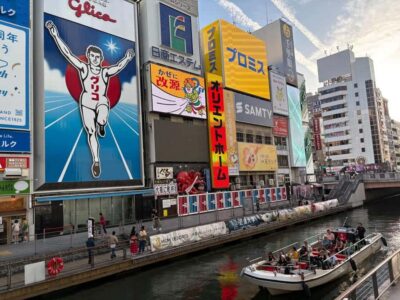
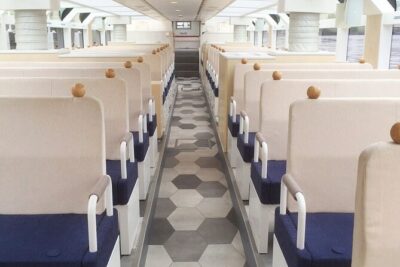
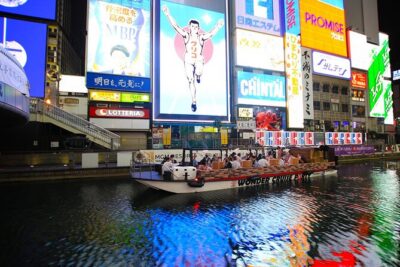
Aqua Liner cruise around Nakanoshima: the photo stop with motion
Then the day pivots to the water. A short stroll brings you to the boarding site at the Osaka Castle Pier for the Aqua Liner. The cruise runs along the Ogawa River and is designed to show Osaka from the water—great for photos because buildings look different across the river.
The scheduled time is about 50 minutes, and the tour frames it as a way to see famous places and historic spots from the river. Cameras help here; even without fancy gear, your angles will look new compared to what you photographed from Umeda and the castle grounds.
There’s also a key contingency plan: if the Aqua Liner is out of service due to bad weather or operational concerns, the tour visits the Osaka Museum of History instead. And if the Aqua Liner is unavailable on a Tuesday (because the museum is closed), you’ll receive refunds on the spot (JPY 2,000 adult, JPY 1,000 child).
This matters because river cruises can be weather-sensitive. The backup option means your day doesn’t collapse—it just changes focus from the water to history.
About the cruise itself: some people will feel it’s a simple add-on, and if you’re the type who thinks you can do everything solo, you might compare it to a DIY plan. But the practical value of a guided day here is timing. You’re not figuring out pier logistics mid-day, and you’re getting a structured swap if conditions change.
The walking + transit reality: what the 6 km feels like
The tour is labeled a walking tour, and it includes about 6 km (3.7 miles) of walking total. It’s not an all-day hike, but it also isn’t “barely any walking.” Bring the right shoes and plan for foot comfort.
The pace is guided and the itinerary is set, but the day uses public transportation with non-reserved seats, and seating isn’t guaranteed. If your group is sensitive to crowds or standing, that’s a real consideration.
The tour group size is capped at 25 people, which helps keep things from turning into a slow-moving parade. Still, Osaka trains can be busy, so I’d expect a typical large-city experience: you’ll move efficiently, but you may not always sit.
If you’re going with someone who wants total freedom to wander or skip steps, this might feel too structured. If you want an efficient “one day, three big Osaka moments” plan, it fits nicely.
Price and value: when $119.54 makes sense
At $119.54 per person, this tour isn’t a budget DIY deal—but it also isn’t a fancy luxury day. The value comes from bundled inclusions:
- Admissions: Kuchu Teien Observatory, Osaka Castle (and other included entry fees)
- Guided interpretation: a national government-licensed English guide interpreter
- Transportation components: the tour covers included transportation costs (and for Kyoto departure options, round-trip train transportation is included)
- A cruise: Aqua Liner time is part of the scheduled experience
- Small group: up to 25 people
If you planned to do this day on your own, you’d likely spend money on tickets anyway—plus you’d spend time coordinating transit and the order of sights. The biggest “value win” is that you’re paying for a smooth sequence and explanation, not just access.
Where the value can feel weaker is if you’re purely “photo and go” and don’t care about guided context. Also, the cruise is the step that may not feel worth it to everyone, depending on how you like river cruising in general.
I’d judge this tour as a good fit if you want structure, you care about Osaka Castle context, and you like the idea of a planned cruise with a weather backup.
Who should book this Osaka one-day plan
This is a strong match if you:
- want major highlights without doing transportation math all day
- like learning as you move (not just “stand here, take photo”)
- are comfortable with about 6 km of walking and public transit crowds
- want a guided experience that can handle disruptions (Aqua Liner backup)
It might be less ideal if you:
- want total freedom to customize the route
- hate non-reserved seating and prefer only private transit
- are very sensitive about dietary restrictions beyond the tour’s lunch options
If you’re flexible, it’s a solid way to see Osaka in one long, satisfying day.
Should you book this tour?
I’d book it if you want a practical, well-timed Osaka highlight run: Umeda viewpoint, Osaka Castle, and a river cruise that changes the angle on the city. The guide quality seems to be a real selling point—MoMo in particular came across as enthusiastic, careful with safety, and genuinely helpful with questions.
Skip it or DIY it if you already know you can handle the sights independently and you don’t think you’ll value interpretation. In that case, the day can start to feel like a simple routing exercise.
FAQ
Where do I meet the guide if I choose the Kyoto departure option?
You meet at the JTB Sunrise Tours Desk in B1F of KYOTO AVANTI.
Where do I meet if I choose the Osaka departure option?
You meet at Hotel Hankyu Respire Osaka.
How much walking is involved in the tour?
The total walking distance is approximately 6 km (3.7 miles).
Is lunch included, and are there vegetarian options?
Lunch is included only if you choose the With Lunch option. Vegetarian meals are available, but you must request them at the time of booking.
What happens if the Aqua Liner can’t operate due to weather?
If the Aqua Liner is out of service, the tour visits the Osaka Museum of History instead.
Does the tour use public transportation, and are seats reserved?
Yes. It uses public transportation with non-reserved seats, so seating is not guaranteed.
Kyoto, Just Up the Line
- Osaka/Kyoto: Hiroshima Miyajima Bus Tour & Shinkansen Ticket★ 4.7 · 919 reviews
- From Kyoto/Osaka: Kyoto Top Highlights 1-Day Guided Bus Tour★ 4.5 · 714 reviews
- Ancient Capital Tour: Kyoto and Nara Highlights from Kyoto/Osaka★ 4.5 · 332 reviews
- Osaka/Kyoto: Amanohashidate & Miyama Tour with Boat & Lunch★ 4.6 · 207 reviews
- Kyoto and Nara Day Trip from Osaka★ 4.0 · 175 reviews
Between the Bridges: More Cruises
- Osaka: Dotonbori District River Cruise with Drink Discount★ 4.2 · 876 reviews
- Osaka: Dotonbori River Cruise with Glico Sign & Neon Views★ 4.7 · 376 reviews
- Osaka: Dotonbori’s Bridges 20-Minute Cruise★ 3.9 · 303 reviews
- Osaka Afternoon Walking Tour with Osaka River Cruise★ 3.5 · 42 reviews
- Osaka Dotonbori Wonder Cruise★ 4.0 · 28 reviews
Osaka at Street Level
- Osaka Local Foodie Walking Tour in Dotonbori and Shinsekai★ 5.0 · 985 reviews
- Osaka: Deep Backstreets Walking Tour with Dinner Option★ 4.9 · 902 reviews
- Ultimate Osaka Walking Tour: Castle, Dotonbori & Hidden Gems★ 5.0 · 862 reviews
- Osaka: Main Sights and Hidden Spots Guided Walking Tour★ 4.9 · 702 reviews
- Private Osaka Walking Tour: Highlights & Hidden Gems★ 5.0 · 569 reviews
The Newest Osaka Write-Ups
- Private Photoshoot in Osaka with a Professional Photographer
★ 5.0 · 3 reviews - Osaka Early Morning Osaka Castle Tour Avoid Crowds
★ 5.0 · 3 reviews - Nara Private Tour with Pick and Drop and English Speaking Driver
★ 3.5 · 3 reviews - Osaka: Modern Vegetarian Sushi Cooking Class
★ 5.0 · 3 reviews - Nara Day Trip from Osaka with a Licensed Guide
★ 5.0 · 3 reviews
Osaka Walking Tours, compared.
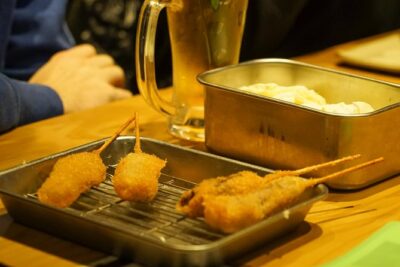 ★ 5.0Osaka Local Foodie Walking Tour in Dotonbori and ShinsekaiFrom $111985 reviews
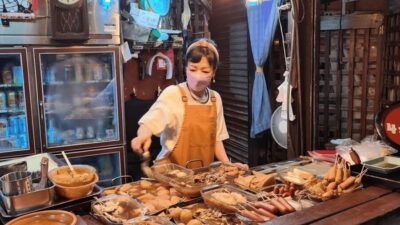 ★ 4.9Deep Backstreets Walking Tour with Dinner OptionFrom $40902 reviews
 ★ 5.0Ultimate Osaka Walking Tour: Castle, Dotonbori & Hidden GemsFrom $73862 reviews
 ★ 4.9Main Sights and Hidden Spots Guided Walking TourFrom $59702 reviews
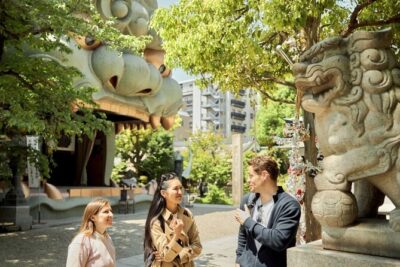 ★ 5.0Private Osaka Walking Tour: Highlights & Hidden GemsFrom $81569 reviews
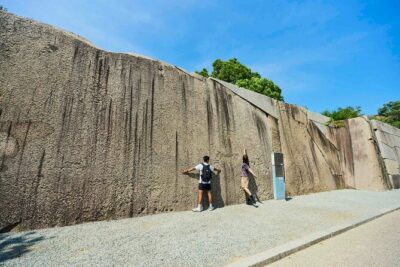 ★ 5.0Osaka Castle Walking Tour and Castle Tower AdmissionFrom $23561 reviews
 ★ 5.0Kuromon Market Food Walking Tour in Osaka (6 stops, 6 tastes)From $50550 reviews
 ★ 4.7Five Must-See Highlights Walking Tour & Ramen LunchFrom $56411 reviews
Browse the lists this tour appears in