
Reviewed · KYOTO DAY TRIPS FROM OSAKA
Ancient Capital Tour: Kyoto and Nara Highlights from Kyoto/Osaka
Kyoto and Nara in one smooth day? That’s the hook, with a guided bus plan that keeps you off the complicated public-transport grind. I like how the day stacks Arashiyama’s seasonal scenery, Kinkaku-ji’s gold-gloss drama, and Nara’s deer-and-Buddha contrast into a single, doable route.
Two things I’d bet you’ll like: the air-conditioned ride with free Wi‑Fi and the fact that temple entry is included on most options (so you’re not hunting tickets mid-day). The main drawback to plan for is pace: this is a highlights sampler with a lot of walking and a schedule that can feel rushed if you’re the type who likes to linger.
In This Review
- Key things to know before you go
- Why This Kyoto–Nara Day Trip Works Without Transit Stress
- Price and What You Really Get for $90.75
- The Morning Pickup: Osaka vs Kyoto, and How Not to Miss the Bus
- Arashiyama in Two Hours: Bamboo, Togetsukyo, and Seasonal Moments
- Kinkaku-ji Golden Pavilion: Fast Access to a UNESCO Star
- Nara Park and Todai-ji: Deer Feeding Plus the Great Buddha
- Lunch Options: Should You Add the Set Meal or Eat on Your Own?
- Pacing, Walking, and Photo Timing: The Trade-Off You’re Buying
- Guide Quality: What You Can Hope to Get From the Group Experience
- Who This Tour Suits Best (and Who Might Want a Different Plan)
- Should You Book the Ancient Capital Tour?
- FAQ
- How long is the Kyoto and Nara highlights tour?
- Where do I meet if I’m starting from Osaka?
- Where do I meet if I’m starting from Kyoto?
- What’s included in the tour price?
- Is lunch included?
- Are Kinkaku-ji and Todai-ji entry tickets always included?
- Do I need to bring entry tickets or pay extra at the temples?
- How many people are on the tour?
- What should I do about timing on the day of the tour?
- What should I wear or bring?
Key things to know before you go
- Arashiyama first, when the light and crowds can be your friend
- Kinkaku-ji included on most options, but not on the last-minute ticket choice
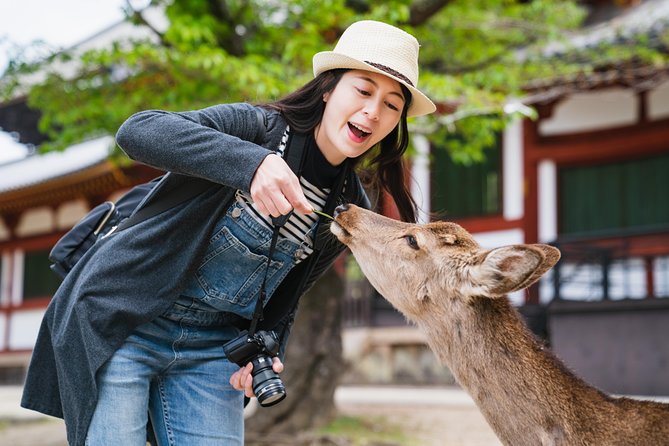
- Nara Park deer feeding with shika-senbei (and yes, they bow)
- Todai-ji Great Buddha stop is bundled into the Nara time
- Up to 42 people, so expect a group rhythm more than free-roaming
Kyoto sits thirty minutes away, more ways there

Why This Kyoto–Nara Day Trip Works Without Transit Stress
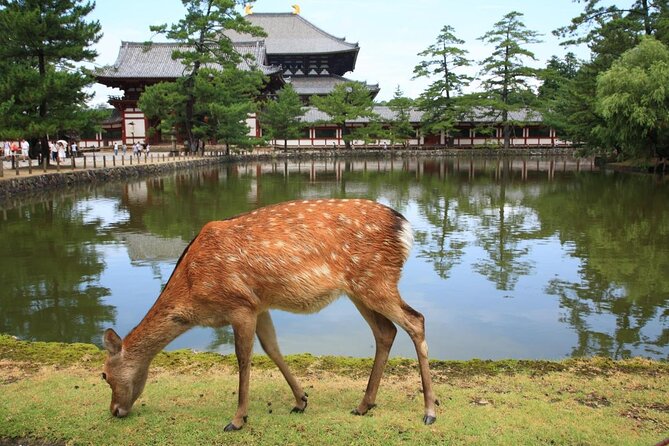
This tour is built for one big problem: getting between Kyoto and Nara without doing a whole day of station math. You meet your group, then ride in an air-conditioned bus while the guide handles timing and transfers.
In practical terms, that means you spend more energy on sights and less on decoding platforms, ticket machines, and which line actually goes where. Kyoto and Nara can be easy to plan badly if you’re limited on time, so the guided structure is the point.
Price and What You Really Get for $90.75
At $90.75 per person, you’re paying for a guided day that includes:
- An English-speaking guide
- Air-conditioned transport with free Wi‑Fi
- Kinkaku-ji entry on most package options
- Todai-ji entry on most package options
- A lunch option only if you select it
That’s the value story: the included temple tickets remove one of the most annoying “gotchas” on day trips—extra lines, extra payments, and trying to match your timing with ticket availability. If you skip a lunch upgrade, you’ll also have more freedom to eat where you like, rather than matching a set restaurant plan.
One consideration: the last-minute option may exclude Kinkaku-ji and Todai-ji tickets, and meals too. Before you book, double-check which package choice you’re getting.
The Morning Pickup: Osaka vs Kyoto, and How Not to Miss the Bus
You’ll choose your departure point carefully because the tour runs from Osaka or Kyoto on different dates.
If you start in Osaka, you meet at Namba (OCAT 1F, near Daiso) at 8:50 AM. If you start in Kyoto, it’s Kyoto Station (Hachijo Exit), in the tourist bus parking area at 9:05 AM.
Two small rules matter a lot:
- Check in 10 minutes early, because late arrivals can mean you miss departure.
- The bus leaves on schedule, and late arrivals are non-refundable.
Also, do yourself a favor and stand where your group will actually form—not where you hope the guide will be. Several reviews talk about meeting-point confusion and clearer signage being needed, so your best move is early arrival and active confirmation.
The deer will still bow: more Nara days
Arashiyama in Two Hours: Bamboo, Togetsukyo, and Seasonal Moments
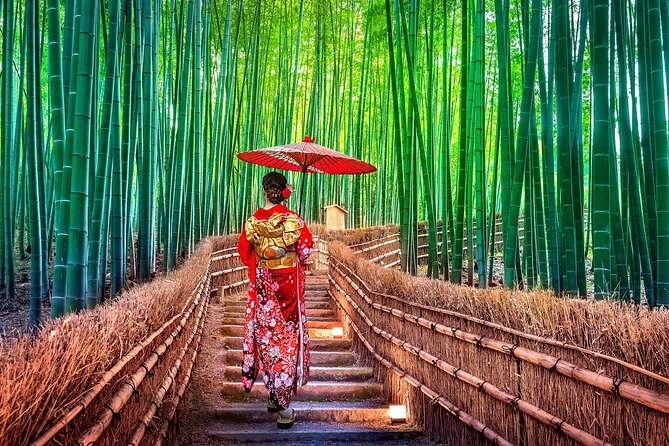
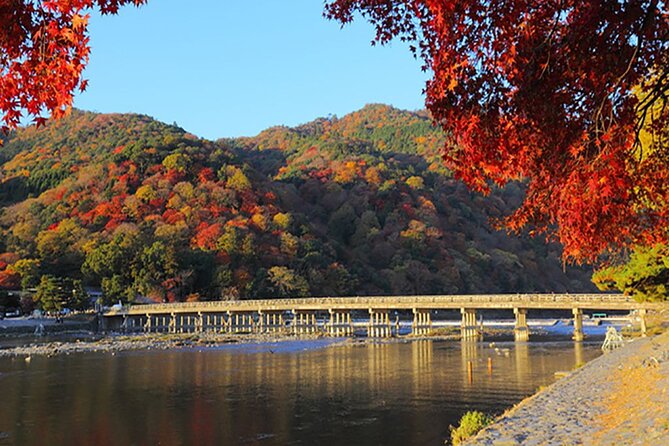
Arashiyama is the opening act, and it’s a great choice for a short schedule. You get about 2 hours that mix nature, a famous bridge view, and a chance to walk at a human pace instead of racing through indoor sites.
Here’s what the guide route typically highlights:
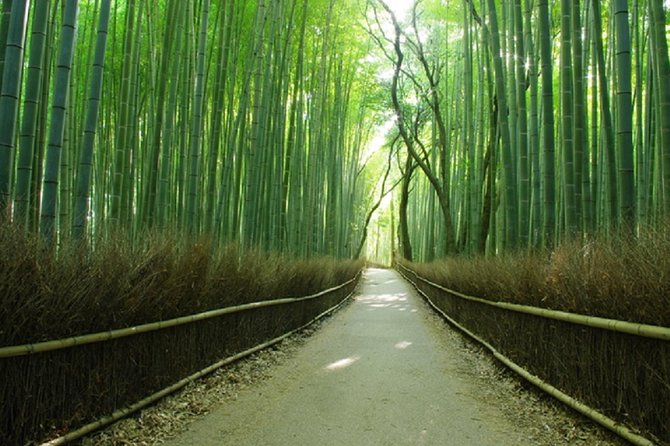
- Sagano Bamboo Forest: the popular bamboo path near Tenryuji-area grounds.
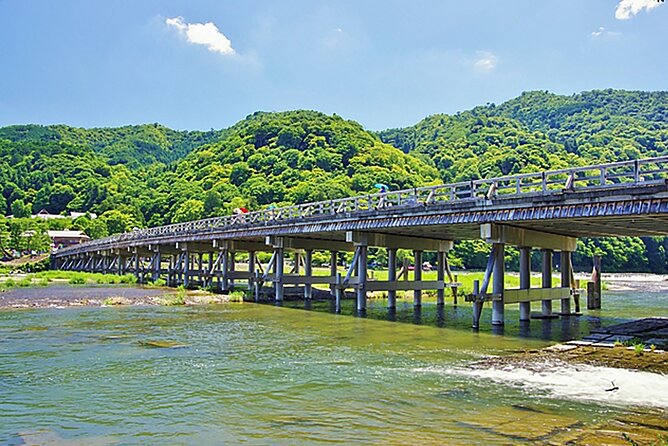
- Togetsukyo (the Moon-crossing Bridge): you’ll see it while walking near the Katsura River.
The seasonal details are worth noting because they affect the feel of the walk:
- April can bring cherry blossoms.
- November can bring vivid fall colors.
- Summer may include the distinctive sight of cormorant fishing.
What you should be ready for: bamboo areas can get crowded, and photos are popular. If you want more quiet, keep your camera moving and don’t expect “empty” viewpoints.
Kinkaku-ji Golden Pavilion: Fast Access to a UNESCO Star
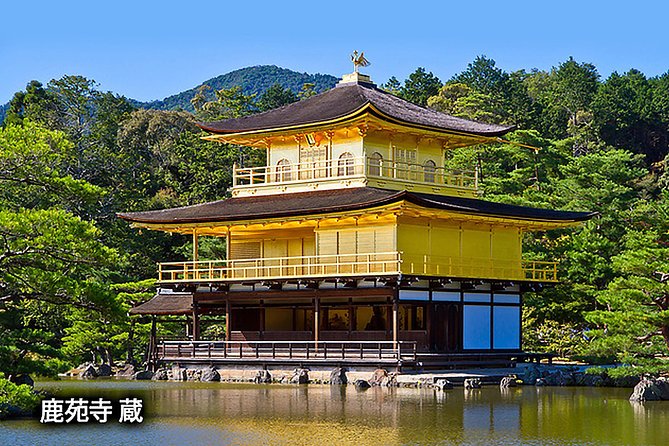
From Arashiyama, you’ll head into Kyoto proper for Kinkaku-ji (the Golden Pavilion). You get about 45 minutes, which is short—but it’s a temple where you can understand a lot in a short time if you focus.
You’ll see:
- The gold-leaf-covered buildings, shining in sunlight
- The mirror-like pond view
- A stroll through the garden grounds, described as preserving the original 14th-century design
If you book the version where entry is included, you won’t lose time arranging tickets. If you’re on the last-minute package that doesn’t include entry, you’ll need to plan that cost and time yourself.
A practical photo tip: the reflection shots can be finicky. Bring patience, pick one or two angles, and don’t burn the whole 45 minutes chasing perfect lighting.
Nara Park and Todai-ji: Deer Feeding Plus the Great Buddha
Then the day flips from Kyoto’s refined gardens to Nara’s animal energy.
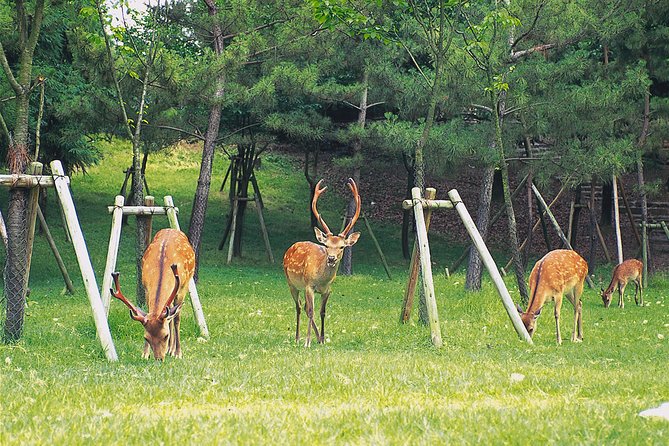
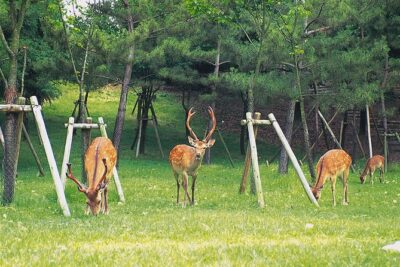
In Nara, you’ll spend around 1 hour 30 minutes in Nara Park. The headline is the ~1,200 wild deer roaming freely. You can buy shika-senbei snacks to feed them, and the deer are known for bowing—which turns this stop into a fun, slightly chaotic photo opportunity.
Next, you connect to Todai-ji Temple, home to one of Japan’s three major Great Buddha statues. This is one of those “big scale” moments where you instantly feel why it’s famous, even if you only have a limited timeframe.
One drawback to plan for: deer crowds and feeding lines can slow things down. If you want your best experience, watch what’s happening at the edge of the group feed area, then step in for a quick moment rather than trying to stay in the thick of it.
Lunch Options: Should You Add the Set Meal or Eat on Your Own?
Lunch is offered as an optional upgrade, and it’s not vegan or halal. Vegetarian requests are possible, but you have to contact the operator at least 3 days in advance.
The tour also includes a “traditional lunch” style when you choose the lunch option. Some reviews were positive about included structure, but others suggested skipping the lunch add-on because there are many good places to eat around main streets.
So here’s the decision rule I’d use:
- If you want zero planning and a predictable midday rhythm, choose lunch.
- If you like flexibility and cost control, skip lunch and eat near where you are between stops.
Either way, wear shoes you can walk in without thinking about it. This day is not about sitting.
Pacing, Walking, and Photo Timing: The Trade-Off You’re Buying
This is a full day—about 9 hours—with three major stops. That structure is great for first-timers and people with limited time, but it does create a trade-off: you won’t get a slow, deep study of each place.
Some reviews praise guides for keeping things on schedule and even giving tips for what to do after the tour. Others felt things were a bit rushed and wanted more history earlier. That tells me the guide experience can shape how satisfying the “highlight sprint” feels.
My practical advice: treat this as a highlights day, not a replacement for a full Kyoto or Nara day. If you want extra time, save it for your return—especially in Arashiyama or around Todai-ji, where a little lingering changes everything.
Guide Quality: What You Can Hope to Get From the Group Experience
The tour runs with an English-speaking guide, and guide quality shows up as a major factor in satisfaction.
Several named guides were praised for:
- giving clear restaurant advice after the tour
- keeping the group on track
- sharing background and context that makes the sights click fast
- showing pictures ahead of time so you know what you’re walking toward
If you’re the type who learns by storytelling (not just sightseeing), that’s the big value you’re buying. If you prefer silence and self-exploration, you can still enjoy the sites, but you’ll have less control over pacing.
Who This Tour Suits Best (and Who Might Want a Different Plan)
This tour makes the most sense if you:
- want Kyoto and Nara highlights in one day
- prefer a guided bus plan over figuring out transit
- like iconic stops: Arashiyama, Kinkaku-ji, Nara deer, and Todai-ji
It’s also a good fit if you’re traveling with limited time and want a reliable overview. One theme from the experience feedback is that people feel it’s worthwhile when you view it as a “see the key things” day.
You might want to skip this option if:
- you hate walking and tight schedules
- you want long, detailed lectures at each site
- you’re traveling with dietary needs beyond what’s explicitly supported (vegan/halal meals aren’t provided)
Should You Book the Ancient Capital Tour?
Book it if you want a high-efficiency, guided highlights day with major Kyoto and Nara icons, and you’d rather spend your energy on the sights than on route planning. At $90.75, the included temple entry on most options and the guided transport make it a solid value for time-crunched visitors.
Don’t book if you want a slow, reflective pace or you’re sensitive to crowds and walking. In that case, you’ll probably get more satisfaction with separate Kyoto and Nara days where you can breathe.
FAQ
How long is the Kyoto and Nara highlights tour?
It’s about 9 hours.
Where do I meet if I’m starting from Osaka?
Meet at Namba (OCAT 1F, near Daiso) at 8:50 AM.
Where do I meet if I’m starting from Kyoto?
Meet at Kyoto Station (Hachijo Exit) in the tourist bus parking area at 9:05 AM.
What’s included in the tour price?
An English-speaking guide, an air-conditioned vehicle with free Wi‑Fi, and entry tickets to Kinkaku-ji and Todai-ji on most package options. Lunch is included only if you choose the lunch option.
Is lunch included?
Lunch is included only if you select the lunch option. Vegan or halal meals can’t be provided.
Are Kinkaku-ji and Todai-ji entry tickets always included?
They are included on most options, but not included if you choose the last-minute option.
Do I need to bring entry tickets or pay extra at the temples?
If you selected an option where tickets are included, you won’t need to purchase them for Kinkaku-ji and Todai-ji. If you booked the last-minute option, you may need to handle tickets yourself.
How many people are on the tour?
The tour has a maximum of 42 travelers.
What should I do about timing on the day of the tour?
Check in about 10 minutes before the booked start time. The bus departs on schedule, and late arrivals are non-refundable.
What should I wear or bring?
Comfortable walking shoes are strongly recommended, since you’ll be walking between stops.
More Tour Reviews in Osaka
- Osaka Go Karting Tour with Funny Costume★ 5.0 · 2,658 reviews
- Osaka Castle: Museum and Tower Entry Ticket★ 4.5 · 2,380 reviews
- Osaka: Shinsekai Food Tour with 13-15 Dishes at 5 Eateries★ 4.8 · 2,204 reviews
- Osaka Food Tour: 13 Dishes at 5 Local Eateries★ 5.0 · 2,149 reviews
- Hungry Osaka Street Food Tour:15 Tastings & 3 Drinks with a Local★ 5.0 · 1,727 reviews
A Day Among the Nara Deer
- Kyoto and Nara Day Trip from Osaka★ 4.0 · 175 reviews
- Full Day Guided Tour to Kyoto and Nara from Osaka by Van★ 5.0 · 144 reviews
- Discover Himeji, Kobe and Nara from Osaka★ 5.0 · 101 reviews
- Kyoto & Nara Private customized tour with English speaking Guide★ 4.5 · 99 reviews
- OSAKA-KYOTO-NARA Highlight Customized Trip With Hotel Pickup★ 4.7 · 50 reviews
Kyoto, Just Up the Line
- Osaka/Kyoto: Hiroshima Miyajima Bus Tour & Shinkansen Ticket★ 4.7 · 919 reviews
- From Kyoto/Osaka: Kyoto Top Highlights 1-Day Guided Bus Tour★ 4.5 · 714 reviews
- Osaka/Kyoto: Amanohashidate & Miyama Tour with Boat & Lunch★ 4.6 · 207 reviews
- Kyoto and Nara Day Trip from Osaka★ 4.0 · 175 reviews
- Sagano Romantic Train & Arashiyama, Kiyomizudera, Fushimi Inari Taisha Day Tour★ 4.5 · 171 reviews
The Newest Osaka Write-Ups
- Private Photoshoot in Osaka with a Professional Photographer
★ 5.0 · 3 reviews - Osaka Early Morning Osaka Castle Tour Avoid Crowds
★ 5.0 · 3 reviews - Nara Private Tour with Pick and Drop and English Speaking Driver
★ 3.5 · 3 reviews - Osaka: Modern Vegetarian Sushi Cooking Class
★ 5.0 · 3 reviews - Nara Day Trip from Osaka with a Licensed Guide
★ 5.0 · 3 reviews
Kyoto Day Trips from Osaka, compared.
 ★ 4.7Osaka/Kyoto: Hiroshima Miyajima Bus Tour & Shinkansen TicketFrom $277919 reviews
 ★ 4.5From Kyoto/Osaka: Kyoto Top Highlights 1-Day Guided Bus TourFrom $51714 reviews
 ★ 4.6Osaka/Kyoto: Amanohashidate & Miyama Tour with Boat & LunchFrom $71207 reviews
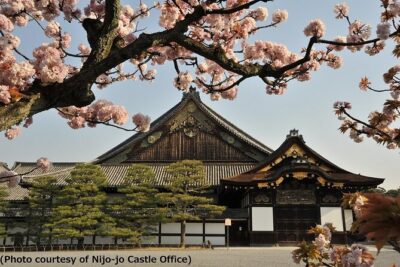 ★ 4.0Kyoto and Nara Day Trip from OsakaFrom $198175 reviews
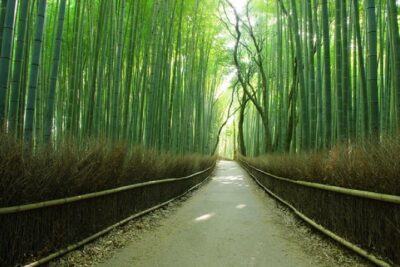 ★ 4.5Sagano Romantic Train & Arashiyama, Kiyomizudera, Fushimi Inari Taisha Day TourFrom $82171 reviews
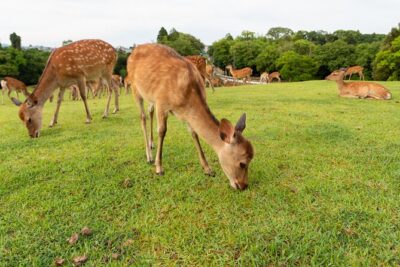 ★ 5.0Full Day Guided Tour to Kyoto and Nara from Osaka by VanFrom $96144 reviews
 ★ 4.8Volleyball in Osaka, Kobe & Kyoto with locals!From $6131 reviews
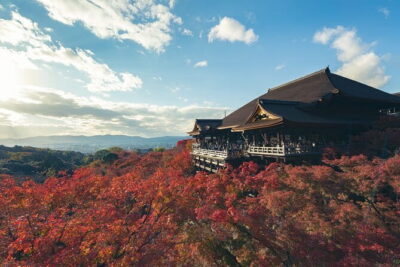 ★ 5.0Full Day Tour of Kyoto with Private TransportationFrom $247130 reviews
Browse the lists this tour appears in