
Reviewed · OSAKA TEMPLES & SHRINES
Making Soba noodles at Temple
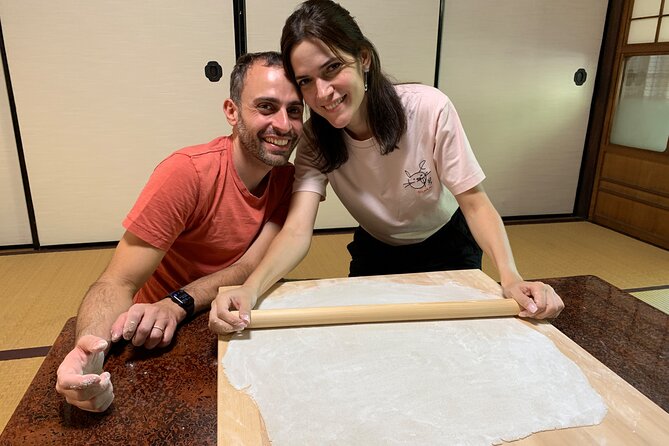
Making soba in a temple feels different. You’ll learn the basics, shape the noodles, and then eat what you made in a calm setting tied to everyday Japanese culture. What I like most is the hands-on, small-team teaching and the way the experience stays quiet and personal, not staged or crowded.
Two more things I value: you’re not just watching. You’re working the dough and buckwheat into something you can actually taste, which makes the whole trip feel more real. One drawback to consider is that soba is buckwheat-based, so if you have a buckwheat allergy, this won’t work for you.
In This Review
- Key highlights worth planning for
- A Calm Temple Classroom for Real Soba Skills
- What Happens During the 2-Hour Soba-Making Session
- The teaching style that makes it feel private
- Eating the Noodles You Made, Then Seeing the Temple
- Why the temple visit is more than decoration
- Price and Value: Is $68 Worth It?
- Who This Soba Class Fits Best (and Who Should Skip It)
- Allergy warning you should treat seriously
- Consider comfort if you don’t like hands-on food work
- Practical Tips for Osaka: Meeting Point, Mobile Tickets, and Timing
- What to bring
- How to Get the Most Out of Your Temple Soba Lesson
- Should You Book Making Soba at Temple?
- FAQ
- What is the duration of Making Soba noodles at Temple?
- How much does Making Soba noodles at Temple cost?
- Is this experience private?
- Where is the meeting point?
- What’s included in the price?
- Is transportation included?
- Can people with buckwheat allergies join?
- What else will I see besides making soba?
- Do I get a ticket on my phone?
- What happens if the weather is bad?
- What is the cancellation window?
Key highlights worth planning for
- Private lesson vibe in a temple setting: you stay in your own group for a more relaxed pace.
- Learn soba making, then eat your noodles: snack time is part of the lesson, not an afterthought.
- See the main hall and Buddha statue: it adds cultural context beyond the cooking.
- Guide Hiro’s hands-on coaching: from the way he teaches to the photos he sends at the end.
- Weather-sensitive outdoor/temple timing: plan for a flexible date if conditions are poor.
Quieter corners: more Osaka temples and shrines
A Calm Temple Classroom for Real Soba Skills
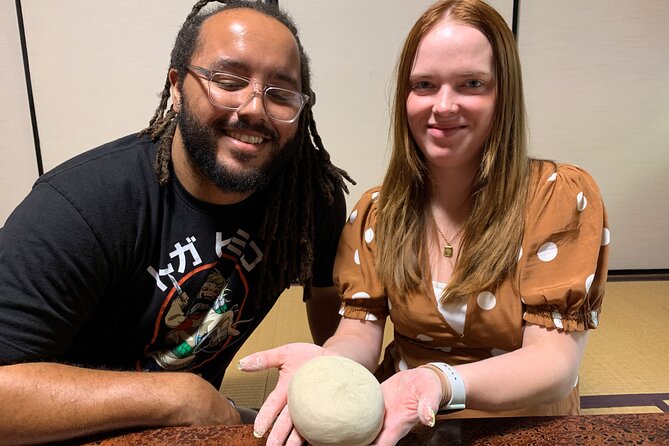
Osaka has plenty of food tours, but this one leans into something quieter and more old-school: making Japanese soba inside a historic temple. The setting matters. In a busy city, the chance to slow down in a calm space changes how you experience the food. It feels less like a performance and more like you’re temporarily part of a traditional routine.
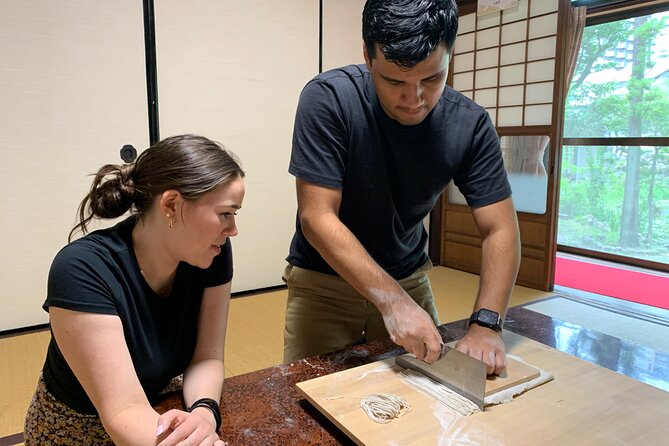
The other big win is that you’re not just learning technique. You’re learning why the technique matters. Soba is simple on paper, but the “feel” of shaping and cutting is the difference between noodles that are satisfying and noodles that are messy. In a guided session, you get feedback while you’re still making mistakes you can fix.
And yes, you get to take in temple sights too. You’ll visit the main hall and see the Buddha statue, which helps you connect the cooking to a broader sense of Japanese culture—less “food content,” more “cultural moment.”
What Happens During the 2-Hour Soba-Making Session
This class runs about two hours, which is a sweet spot if you want something hands-on without wiping out your whole afternoon. You’ll start at 1-chōme-3-68 Shitaderamachi in Tennoji Ward, and the experience finishes back at the meeting point.
Inside, you’ll focus on making soba noodles from buckwheat flour. That part is important to understand going in: buckwheat behaves differently than wheat flour. The dough can be trickier, and that’s why having a real teacher matters. A guide can help you adjust as you go, instead of you guessing and hoping.
You’ll also get a chance to sample what you made. The tour includes snacks of soba noodles, served so you can eat your own work rather than just taking pictures and leaving. From the reviews, the soba comes out tasting genuinely good, not just “cute for photos.” That’s the kind of payoff you want from a short class.
The teaching style that makes it feel private
This is set up as a private tour/activity for only your group, so the class doesn’t turn into a mass workshop. That usually makes the difference: you get the time you need to ask questions and get help. In the best versions of this kind of class, the teacher can adjust pacing for you instead of forcing everyone through the same steps.
One guide name shows up again and again: Hiro. In feedback, Hiro is described as an amazing instructor who teaches in a way that’s both fun and focused. There’s also a practical touch: he takes pictures of your group and shares them afterward by air transfer, so you don’t have to scramble for perfect photos while your hands are covered in dough.
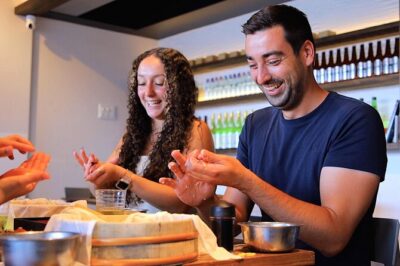
Flour on your hands, more Osaka kitchens to try
Eating the Noodles You Made, Then Seeing the Temple
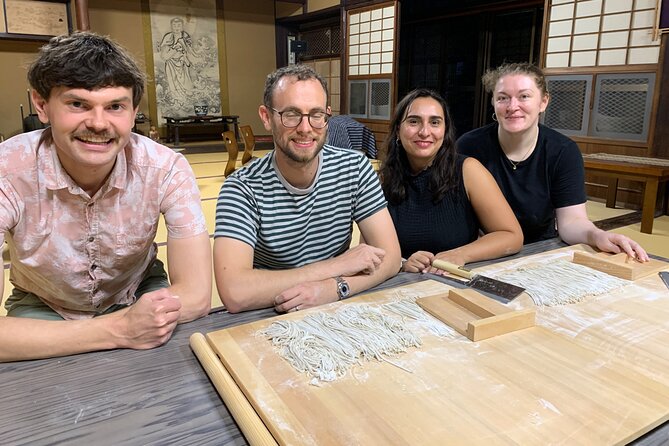
A lot of cooking classes stop at technique. This one keeps going by connecting the cooking to a proper pause for food and reflection.
After you make the soba, you’ll sample it at a Japanese-style table, where the meal feels like part of the ritual instead of a quick snack. Even if your noodles aren’t restaurant-perfect, you’ll still get that satisfying moment of eating something you made with your own hands.
Then the experience widens out a bit. You’ll have time to visit the main hall and the Buddha statue. It’s not a long temple tour, and it’s not meant to replace a full day of sightseeing. But it’s a meaningful add-on: you come in for noodle-making, and you leave with a clearer sense of where this kind of calm, traditional space fits into Japanese life.
Why the temple visit is more than decoration
Cooking classes can feel oddly disconnected from culture. Here, the temple stop helps bridge the gap. You’re not just consuming a dish; you’re learning in a place that reflects a different pace. If you like activities that feel grounded and respectful, this format tends to land well.
Also, temple spaces often make it easier to drop your normal tour-mode. You’ll likely find yourself acting a bit more slowly, and that’s a good thing when you’re concentrating on dough and cutting.
Price and Value: Is $68 Worth It?
At $68.29 per person, it’s not a bargain in the same way a street-food crawl can be. But it also isn’t trying to be. This price buys you a private, hands-on lesson that happens in a historic setting, plus snacks from your own soba and access to temple highlights like the main hall and Buddha statue.
Here’s how I think about value for classes like this:
- You’re paying for guidance while you’re working, not just a final dish.
- You’re paying for the setting, which is part of the experience, not an accessory.
- You’re paying for the time structure. Two hours is a focused window where you can learn, eat, and still keep your day intact.
If your Osaka itinerary is packed, this is a rare activity that gives you a calm block of time. If your itinerary is light, this still works because it gives you structure and a satisfying endpoint: you finish where you started, with noodles you made and temple sights you saw.
A practical note: booking typically happens about 47 days in advance on average. That’s a good sign of demand, so if you’re traveling at popular times, it’s smart to lock in early.
Who This Soba Class Fits Best (and Who Should Skip It)
This tour is ideal if you want something more personal than a typical cooking show. It’s also great for travelers who like learning craft skills. If you enjoy food experiences where technique matters, you’ll probably find soba-making extra satisfying.
It also fits families well. The feedback highlights it as fun for families, with the setting described as tranquil and private. With a private group setup, kids and adults can often take the experience at their own pace, especially with a supportive guide like Hiro.
Allergy warning you should treat seriously
The one clear “no” is buckwheat allergies. The tour notes that buckwheat is used in soba making, and some people may not be able to eat it due to allergies. If there’s any doubt about allergy risk, don’t gamble. Choose another activity.
Consider comfort if you don’t like hands-on food work
If you strongly dislike getting messy, you might find the noodle-making steps a bit uncomfortable. This is a cooking class, not a tasting-only experience. Most people enjoy it because it’s active, but it isn’t for everyone.
Practical Tips for Osaka: Meeting Point, Mobile Tickets, and Timing
You’ll meet at 1-chōme-3-68 Shitaderamachi, Tennoji Ward, Osaka, 543-0076. The activity is described as near public transportation, which matters because Osaka neighborhoods can be a patchwork of short walks and train stops. A nearby station usually makes it easier to show up calm instead of sprinting.
You’ll receive a mobile ticket, and the tour ends back at the meeting point. That’s convenient for planning the rest of your afternoon. You’re not stuck figuring out how to travel after a class while you’re hungry and tired.
The experience is also tied to good weather. If it’s canceled due to poor weather, you’ll be offered a different date or a full refund. So check conditions as your date gets closer. If your schedule is tight and you only have one day available, consider building in flexibility.
What to bring
The data doesn’t list a specific packing list, so I’ll keep this practical:
- wear clothes you don’t mind getting slightly doughy
- bring a small towel if you have one
- keep your phone handy for photos, though your guide will also handle group pictures
Because the guide takes pictures and sends them afterward by air transfer, you don’t have to stress about taking every shot yourself. You can focus on the noodles in your hands.
How to Get the Most Out of Your Temple Soba Lesson
This is one of those activities where small choices make a big difference.
First, go in with the right mindset: you’re learning. If your noodles don’t look exactly like store-bought soba on the first try, that’s normal. The point is the skill and the taste, and you’ll get both because the lesson is structured with a real teacher.
Second, ask questions early. If you wait until the hardest steps, you’ll lose time. The class is only about two hours, so early questions help you avoid repeating mistakes.
Third, treat the temple visit as part of the experience, not an extra task. People sometimes rush the cultural stop after a workshop. Slow down. Take a moment in the main hall area. Even brief quiet time makes the noodle-making feel more connected.
Finally, if you’re with family or friends, take advantage of the private group feel. It’s a better setup for conversation and shared learning than a large group format. And if Hiro is your guide, the photo-and-sharing touch is a nice souvenir that doesn’t require you to spend your whole time behind your camera.
Should You Book Making Soba at Temple?
I’d book it if you want a break from the usual Osaka rhythm. This is a calm, tradition-flavored class with real participation, not just a pass-through “see and leave” experience. The most praised parts from participant feedback are the peaceful temple setting and the fun, effective teaching by Hiro, plus the fact that you get to eat the soba you make.
Skip it if you have a buckwheat allergy concern, full stop. Also skip if you want a low-interaction activity. This is hands-on, and you’ll be working.
If you’re on the fence, here’s my quick decision checklist:
- You want something traditional and hands-on
- You like calm settings over noisy group tours
- You’re okay paying for a private, guided experience
- You can be flexible if weather affects the schedule
If those boxes are mostly yes, this soba-making experience is the kind of activity that gives your trip texture. You’ll leave with noodles in your memory, a temple visit in your day, and a small skill you can’t easily copy at home without a guide.
FAQ
What is the duration of Making Soba noodles at Temple?
It runs for about 2 hours.
How much does Making Soba noodles at Temple cost?
The price is $68.29 per person.
Is this experience private?
Yes. It’s private for your group only.
Where is the meeting point?
You’ll start at 1-chōme-3-68 Shitaderamachi, Tennoji Ward, Osaka, 543-0076, Japan, and the activity ends back at the meeting point.
What’s included in the price?
Snacks of soba noodles are included.
Is transportation included?
No, private transportation is not included.
Can people with buckwheat allergies join?
The experience notes that buckwheat is used and some people may not be able to eat it due to allergies. If you have a buckwheat allergy, you should be cautious.
What else will I see besides making soba?
You can visit the main hall of the temple and the Buddha statue.
Do I get a ticket on my phone?
Yes, it uses a mobile ticket, and confirmation is received at booking.
What happens if the weather is bad?
If it’s canceled due to poor weather, you’ll be offered a different date or a full refund.
What is the cancellation window?
You can cancel up to 24 hours in advance for a full refund. Canceling less than 24 hours before the start time isn’t refundable.
More Tour Reviews in Osaka
- Osaka Go Karting Tour with Funny Costume★ 5.0 · 2,658 reviews
- Osaka Castle: Museum and Tower Entry Ticket★ 4.5 · 2,380 reviews
- Osaka: Shinsekai Food Tour with 13-15 Dishes at 5 Eateries★ 4.8 · 2,204 reviews
- Osaka Food Tour: 13 Dishes at 5 Local Eateries★ 5.0 · 2,149 reviews
- Hungry Osaka Street Food Tour:15 Tastings & 3 Drinks with a Local★ 5.0 · 1,727 reviews
Cook It Yourself in Osaka
- Sushi Making Osaka Roll and Authentic Japanese Sushi Class★ 5.0 · 1,220 reviews
- Osaka: Five Must-See Highlights Walking Tour & Ramen Lunch★ 4.7 · 411 reviews
- Osaka Sushi Making Experience★ 5.0 · 400 reviews
- Osaka: Ramen and Gyoza Cooking Class in Dotonbori★ 5.0 · 378 reviews
- Osaka: Sumo Stage Show with Bento or Snack + Fight & Photo★ 4.3 · 364 reviews
Temple Gates and Shrine Paths
- Osaka: Minoh, Katsuoji Temple, & Minoh Falls Full-day Tour★ 4.9 · 172 reviews
- Full Day Kyoto Tour : Bamboo Forest, Golden Temple, Fushimi Inari★ 5.0 · 84 reviews
- Osaka Temple Cool Foot Bath & Matcha Experience〈45min〉★ 4.9 · 82 reviews
- Osaka: Mind & Spirit Balance Temple Reiki Healing★ 5.0 · 41 reviews
- Katsuo-ji Temple, Arashiyama Forest, & Nara Park★ 4.0 · 37 reviews
The Newest Osaka Write-Ups
- Private Photoshoot in Osaka with a Professional Photographer
★ 5.0 · 3 reviews - Osaka Early Morning Osaka Castle Tour Avoid Crowds
★ 5.0 · 3 reviews - Nara Private Tour with Pick and Drop and English Speaking Driver
★ 3.5 · 3 reviews - Osaka: Modern Vegetarian Sushi Cooking Class
★ 5.0 · 3 reviews - Nara Day Trip from Osaka with a Licensed Guide
★ 5.0 · 3 reviews
Osaka Temples & Shrines, compared.
 ★ 4.9Minoh, Katsuoji Temple, & Minoh Falls Full-day TourFrom $135172 reviews
Full Day Kyoto Tour : Bamboo Forest, Golden Temple, Fushimi InariFrom $10584 reviews
★ 4.9Minoh, Katsuoji Temple, & Minoh Falls Full-day TourFrom $135172 reviews
Full Day Kyoto Tour : Bamboo Forest, Golden Temple, Fushimi InariFrom $10584 reviews
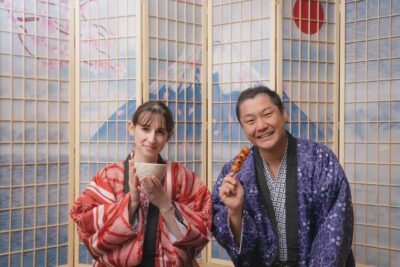 ★ 4.9Osaka Temple Cool Foot Bath & Matcha Experience〈45min〉From $3482 reviews
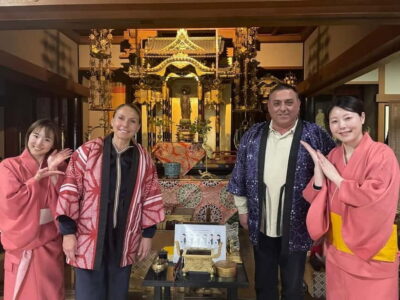 ★ 5.0Mind & Spirit Balance Temple Reiki HealingFrom $16141 reviews
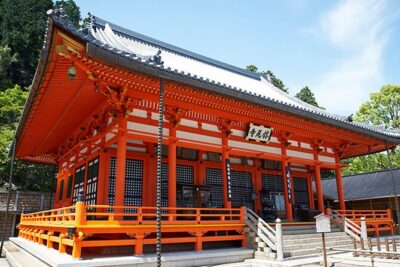 ★ 4.0Katsuo-ji Temple, Arashiyama Forest, & Nara ParkFrom $9137 reviews
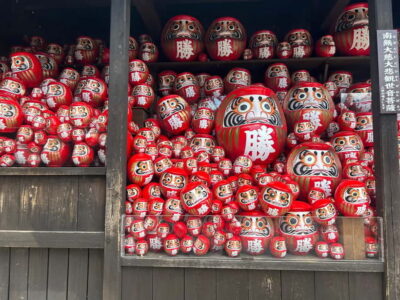 ★ 4.7Minoh Waterfall & Katsuo-ji Temple Half-Day TourFrom $4727 reviews
 ★ 5.0Osaka Half-day E-bike Adventure: Minoh Falls & Katsuoji TempleFrom $3425 reviews
 ★ 4.9Temple Tour and Traditional Calligraphy LessonFrom $2024 reviews
Browse the lists this tour appears in