

Reviewed · DOTONBORI & NAMBA TOURS
Osaka Highlights Walking Tour: Castle, Dotonbori & Hidden Gems
Neon, shrimp, and samurai walls in four hours. I like the way this route mixes big-name Osaka with smaller lanes you’d normally miss. I also appreciate that your included food moment is real Osaka comfort: takoyaki plus a drink. The only drawback: you do not enter Osaka Castle, so history buffs who want museum time may need a separate visit.
This is the kind of tour that helps you get your bearings fast without turning your feet into dust. You’ll move through Osaka’s famous districts—Dotonbori, Shinsaibashi-suji, and Kuromon Market—then shift into older-feeling backstreets and retro Shinsekai.
Because it’s a max 12-person group, you can usually slow down for photos or ask quick questions without the whole crowd dragging you forward. On the flip side, each stop is time-boxed, so if you’re the type who wants to linger for ages in one market corner, you’ll have to save that for later.
In This Review
- Key points worth knowing before you go
- Osaka in motion: what you’ll actually get in four hours
- Osaka Castle grounds (not inside): the history stop that sets the tone
- Dotonbori’s neon riverfront: how Osaka shows off
- Shinsaibashi-suji arcade: shopping streets with personality
- Hozenji Yokocho: narrow cobblestone lanes and lantern-light mood
- Kuromon Market: where food culture is the entertainment
- Tsutenkaku and Shinsekai: retro Osaka with real photo energy
- Price and value: what $84.70 buys you (and what it doesn’t)
- Tips for getting the most from each stop (without overthinking it)
- Who should book this Osaka highlights walk
- Should you book this tour or build your own route?
- FAQ
- How long is the Osaka Highlights Walking Tour?
- What’s included in the price?
- Do you enter Osaka Castle during the tour?
- What areas of Osaka does the tour cover?
- How big is the group?
- What’s the start time and where does it end?
Key points worth knowing before you go
- Guided photo and storytelling moments: A guide like Ben (named in past feedback) brings energy and clear English, plus smart photo angles.
- Osaka highlights without museum lines: Osaka Castle is shown from the outside—no ticket hustle.
- A true food stop included: You get a box of takoyaki and one drink, which helps you start the day without hunting.
- Old Osaka atmosphere in the middle of modern streets: Hozenji Yokocho’s narrow cobblestone lanes feel like a time pocket.
- Market viewing, not just sightseeing: Kuromon Market includes hands-on food culture you can watch up close.
- Retro finale in Shinsekai: You end in a district built for neon, nostalgia, and easy post-tour wandering.
Back under the Glico sign: more Dotonbori runs



Osaka in motion: what you’ll actually get in four hours
This walking tour is designed as an efficient introduction to Osaka, and I like that it doesn’t pretend you can see everything. You’re scheduled for about four hours, starting at 10:30 am. The pace is built around walking between districts, stopping long enough to absorb the vibe, and then moving on.
The route balances famous “you have to see it” places with streets that feel more local. Dotonbori and Shinsaibashi-suji give you the big-city Osaka energy—bright signs, shopping, and people watching. Then Hozenji Yokocho and Shinsekai slow the mood down into something older and more retro.
Group size matters here. With a maximum of 12 travelers, the guide can steer you around crowds and adjust pacing when someone wants an extra minute for a photo. If you’re traveling with mixed interests—history one minute, snacks the next—this structure tends to work.
One more practical note: it’s a mobile ticket, and the meeting point is close to public transport. That makes morning logistics smoother, especially if you’re hopping between subway lines before the walk.
Osaka Castle grounds (not inside): the history stop that sets the tone
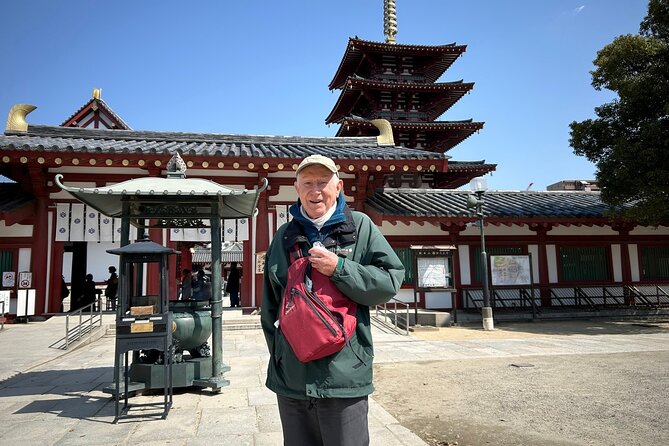
Your first stop is Osaka Castle, the famous symbol tied to the Kansai region and the samurai-era push to unify Japan in the 1500s. Here’s the key detail: you do not enter Osaka Castle. Instead, the value is in the framing—your guide sets context so the exterior views and castle-town feeling make sense.
This works well for first-time visitors because castles in Japan aren’t only buildings. They’re also about power, geography, and city identity. Even without museum access, you still get the visual anchor of the city and a story that helps you understand why Osaka became Osaka.
If you’re the type who always wants to go inside—gardens, displays, artifacts—then plan a separate day ticket. But if you want to connect the dots between different Osaka neighborhoods, starting here is a smart move.
Dotonbori’s neon riverfront: how Osaka shows off
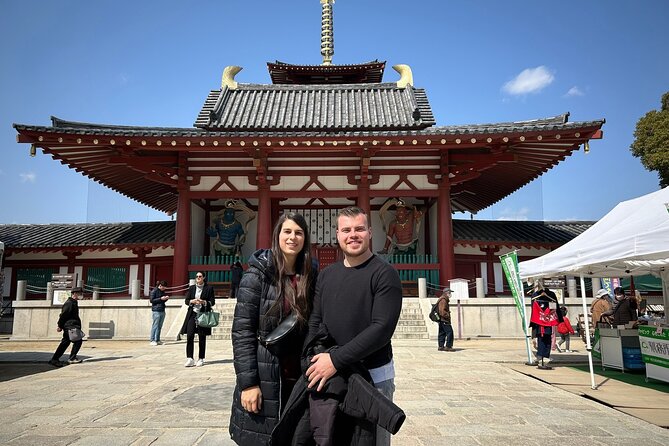
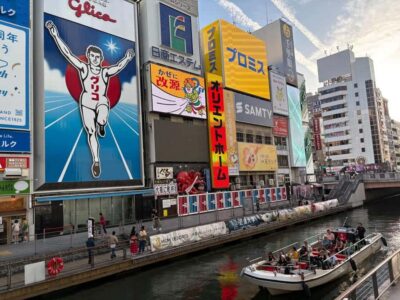
Next comes Dotonbori, and this is where Osaka leans into its reputation. Expect neon signage, lively streets, and that riverfront energy where you can almost feel the city feeding on attention. This is the district that turns walking into a constant stream of photo opportunities.
I like Dotonbori for two reasons. First, it teaches you Osaka’s rhythm: busy, playful, and heavy on food culture. Second, it gives you a baseline for what you’ll see later—when you spot the same brands, textures, and snack culture in smaller areas, it clicks faster.
The main consideration is crowd density. Dotonbori attracts people all day, and some streets get packed. Your guide can help you find calmer viewing points without missing the big visuals.
Osaka block by block, more routes on foot
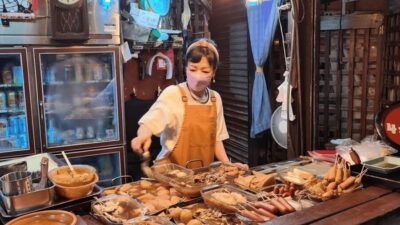

Shinsaibashi-suji arcade: shopping streets with personality
After the riverfront spectacle, you’ll walk through Shinsaibashi-suji, one of Osaka’s best-known shopping arcades. This is less about one landmark and more about experiencing daily Osaka: fashion, quirky gadgets, and an energetic street atmosphere.
Think of this stop as a reset. Dotonbori is loud and electric; Shinsaibashi-suji is lively but more structured—an enclosed or semi-enclosed shopping experience where you can browse without constantly reorienting.
If you like shopping but hate getting lost, this helps. You get a clear route through a major corridor, and you can pop in and out of shops based on what catches your eye. If you’re not a shopper, you can still enjoy the visual variety—billboards, storefronts, and people moving with purpose.
Time is limited here, so don’t expect a full retail day. Use it to sample the vibe and grab one or two items, then save deeper browsing for another afternoon.
Hozenji Yokocho: narrow cobblestone lanes and lantern-light mood
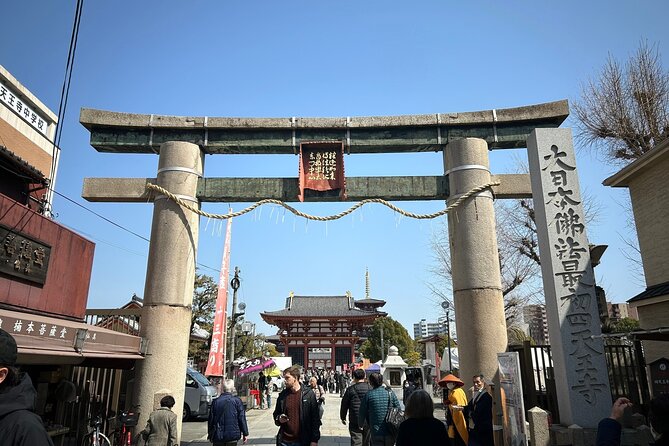
Then you’ll step into Hozenji Yokocho, a hidden-feeling network of narrow, cobblestone backstreets. This is where Osaka slows down into something more atmospheric—older lanes, lantern light, and that tucked-away feeling you can’t recreate by accident.
I love this kind of contrast. Osaka is so much more than neon billboards, and Hozenji Yokocho helps prove it. You’ll notice the difference in street width, pacing, and even how people move—less rushing, more wandering.
The downside is that these lanes can be popular photo spots. If you’re sensitive to tight spaces, just keep your group close and let the guide manage where you stand for pictures.
Kuromon Market: where food culture is the entertainment
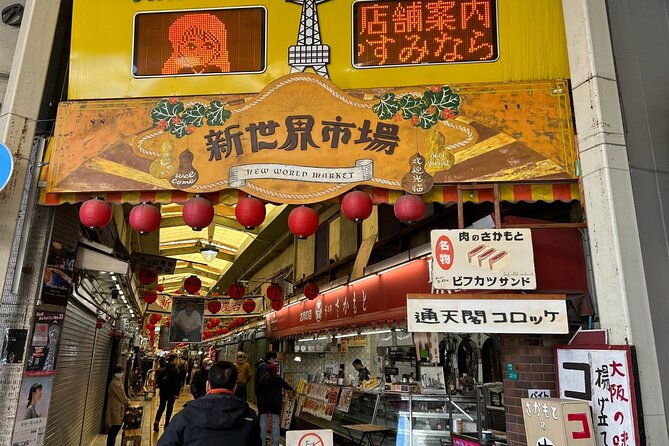
Next is Kuromon Market, and this stop is a big reason the tour is worth the price. Markets in Japan can look modest from the outside, but inside they often operate like a stage: fish counters, chefs at work, and constant motion.
You’ll see seafood shops up close, including demonstrations and food prep culture. The tour description points out examples like chefs preparing fugu (pufferfish) and how tuna is cut. You may not be sampling every item on display, but watching the process gives you an education you can’t get from a brochure.
This is also a practical moment. Markets are one of the easiest places to understand local ingredients and cooking styles. Even if you don’t buy a lot, you’ll learn what to look for—cuts, freshness cues, and the kind of food stalls that are doing steady business.
One consideration: Kuromon can get crowded. You’ll still have time to walk and look, but if you want maximum elbow room, keep your expectations realistic.
Tsutenkaku and Shinsekai: retro Osaka with real photo energy
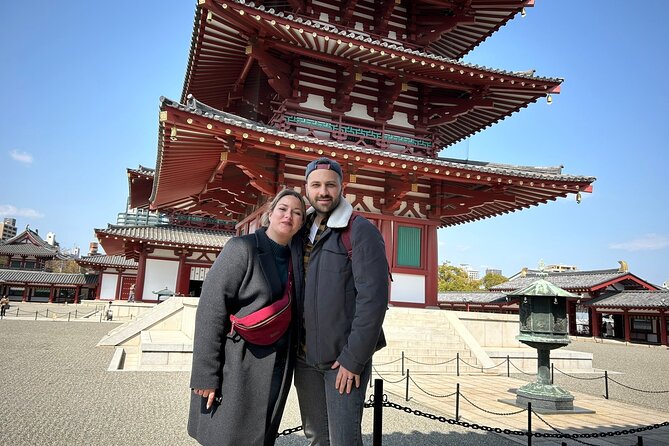
The tour finishes with Tsutenkaku and Shinsekai, and the change is noticeable. Tsutenkaku is Osaka’s iconic landmark tied to the Shinsekai district, first built in 1912 and inspired by Paris’s Eiffel Tower. That connection matters because it explains why this area leans so hard into a certain style of aspiration and spectacle.
From there you’ll enter Shinsekai, described as a mix of retro charm and modern city vibes. Expect neon, photogenic streets, and that unmistakable sense of old-school entertainment Osaka used to be known for.
I like this ending because it’s a neighborhood you can extend. You finish at Shinsekai, so it’s natural to keep walking, grab extra snacks, or just soak up the lights after your guided portion ends.
The main consideration is weather and time of day. If you’re visiting in hot or rainy conditions, keep an eye on comfort and plan for short shelter moments while still enjoying the neon energy.
Price and value: what $84.70 buys you (and what it doesn’t)
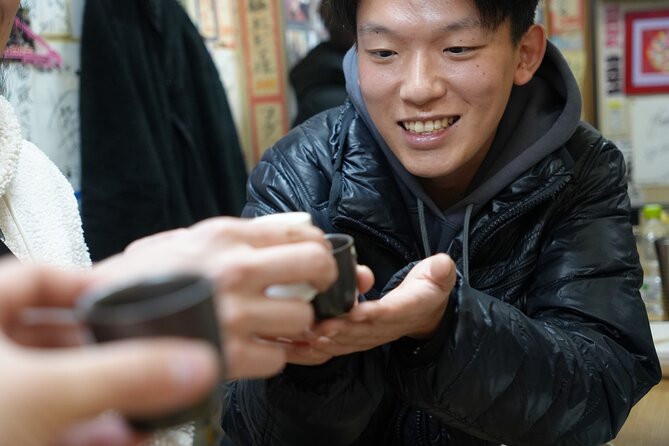
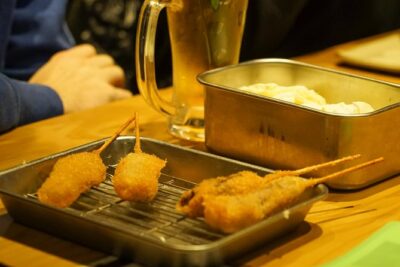
At $84.70 per person, this tour isn’t a budget bargain—but it does include meaningful value. You’re paying for a guide, a planned route, and two built-in “start eating” items: a box of takoyaki and one drink.
Why that matters: it saves you time during the busiest parts of the day. You don’t have to decide where to eat the moment you arrive. You get a consistent food moment that fits Osaka’s identity and keeps your energy steady for the walking portion.
What’s not included is any extra food and drinks beyond that takoyaki box and drink. That’s normal for a walking highlights tour. If you know you’ll want more snacks—market bites, dessert, or drinks—plan a separate budget and keep some yen handy.
Also note the tour duration is about four hours. For many visitors, that’s a sweet spot: enough time to see key districts without feeling like you need to commit your whole day.
Tips for getting the most from each stop (without overthinking it)
This kind of tour rewards people who travel with light expectations. You’re not trying to master Osaka in one walk. You’re getting the map in your head—where things are, what they feel like, and how they connect.
Wear comfortable shoes. You’ll be on your feet for the full route, and Osaka’s crowded areas can mean slow steps and detours.
Bring a phone with decent battery. The neon districts and retro lanes are made for photos, and you’ll pass plenty of spots where you’ll want one quick shot before moving on.
Finally, pay attention to timing. Some stops are only about 20 minutes, so your best strategy is to choose what you want at each one: one photo angle, a quick look around, then move with the group. You’ll end up with more memorable variety.
Who should book this Osaka highlights walk
This tour fits best if you want a clear overview and don’t want to spend your first day figuring out where to go. It’s especially good for:
- First-time visitors who want Dotonbori + Kuromon coverage without a self-made itinerary
- Travelers who like food culture, shopping streets, and photo-friendly neighborhoods
- People who want a small group experience and flexible pacing
It may be less ideal if you specifically need “inside” access to major sites, because Osaka Castle isn’t entered. Also, if you hate crowds, you’ll still encounter busy districts like Dotonbori and a crowded market—just at a guided pace.
Should you book this tour or build your own route?
Book it if you value structure. The guide helps you connect the stories, keeps the walking efficient, and gets you to the right mix of places—castle grounds, neon riverfront, shopping arcade, backstreet atmosphere, market culture, and retro Shinsekai.
Build your own route if you’re the type who wants long stays in one area, or you already know exactly how you’ll move through Osaka. Also, if you strongly prefer museum-grade castle visiting, you’ll probably want to add that separately anyway.
If you’re on your first trip, this tour is a fast way to learn Osaka’s “personality.” And once you’ve got that, your independent exploration gets a lot easier.
FAQ
How long is the Osaka Highlights Walking Tour?
It lasts about 4 hours.
What’s included in the price?
You get a box of takoyaki, 1 drink, and a walking tour with a local guide.
Do you enter Osaka Castle during the tour?
No. The tour includes Osaka Castle as a stop, but you do not enter the castle.
What areas of Osaka does the tour cover?
It includes stops at Osaka Castle grounds, Dotonbori, Shinsaibashi-suji, Hozenji Yokocho, Kuromon Market, Tsutenkaku, and Shinsekai.
How big is the group?
The maximum group size is 12 travelers.
What’s the start time and where does it end?
It starts at 10:30 am at 3-1 Ōsakajō, Chuo Ward, Osaka and ends in Shinsekai2 Chome-5 Ebisuhigashi, Naniwa Ward, Osaka.
More Tour Reviews in Osaka
- Osaka Go Karting Tour with Funny Costume★ 5.0 · 2,658 reviews
- Osaka Castle: Museum and Tower Entry Ticket★ 4.5 · 2,380 reviews
- Osaka: Shinsekai Food Tour with 13-15 Dishes at 5 Eateries★ 4.8 · 2,204 reviews
- Osaka Food Tour: 13 Dishes at 5 Local Eateries★ 5.0 · 2,149 reviews
- Hungry Osaka Street Food Tour:15 Tastings & 3 Drinks with a Local★ 5.0 · 1,727 reviews
Osaka at Street Level
- Osaka Local Foodie Walking Tour in Dotonbori and Shinsekai★ 5.0 · 985 reviews
- Osaka: Deep Backstreets Walking Tour with Dinner Option★ 4.9 · 902 reviews
- Ultimate Osaka Walking Tour: Castle, Dotonbori & Hidden Gems★ 5.0 · 862 reviews
- Osaka: Main Sights and Hidden Spots Guided Walking Tour★ 4.9 · 702 reviews
- Private Osaka Walking Tour: Highlights & Hidden Gems★ 5.0 · 569 reviews
Dotonbori and Namba, Round Two
- Osaka Local Foodie Walking Tour in Dotonbori and Shinsekai★ 5.0 · 985 reviews
- Osaka: Dotonbori District River Cruise with Drink Discount★ 4.2 · 876 reviews
- Ultimate Osaka Walking Tour: Castle, Dotonbori & Hidden Gems★ 5.0 · 862 reviews
- Tea Ceremony Experience in Osaka Doutonbori★ 5.0 · 754 reviews
- Osaka: Namba Pub Bar Crawl with a Local Guide★ 4.9 · 424 reviews
The Newest Osaka Write-Ups
- Private Photoshoot in Osaka with a Professional Photographer
★ 5.0 · 3 reviews - Osaka Early Morning Osaka Castle Tour Avoid Crowds
★ 5.0 · 3 reviews - Nara Private Tour with Pick and Drop and English Speaking Driver
★ 3.5 · 3 reviews - Osaka: Modern Vegetarian Sushi Cooking Class
★ 5.0 · 3 reviews - Nara Day Trip from Osaka with a Licensed Guide
★ 5.0 · 3 reviews
Dotonbori & Namba Tours, compared.
 ★ 5.0Osaka Local Foodie Walking Tour in Dotonbori and ShinsekaiFrom $111985 reviews
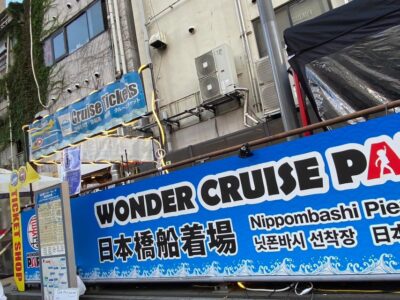 ★ 4.2Dotonbori District River Cruise with Drink DiscountFrom $12876 reviews
 ★ 5.0Ultimate Osaka Walking Tour: Castle, Dotonbori & Hidden GemsFrom $73862 reviews
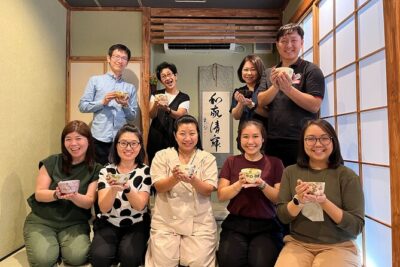 ★ 5.0Tea Ceremony Experience in Osaka DoutonboriFrom $20754 reviews
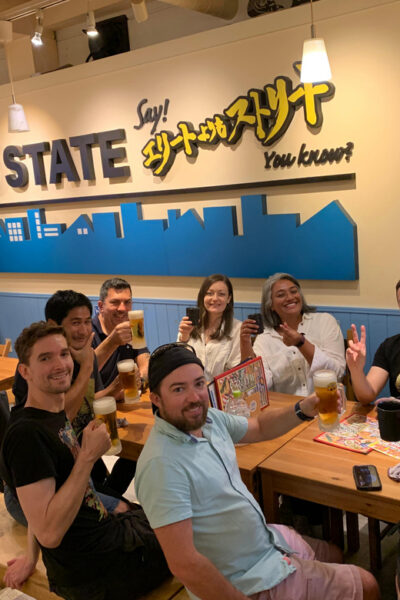 ★ 4.9Namba Pub Bar Crawl with a Local GuideFrom $30424 reviews
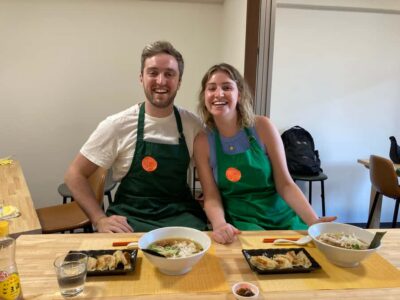 ★ 5.0Ramen and Gyoza Cooking Class in DotonboriFrom $70378 reviews
Dotonbori River Cruise with Glico Sign & Neon ViewsFrom $12376 reviews
★ 5.0Ramen and Gyoza Cooking Class in DotonboriFrom $70378 reviews
Dotonbori River Cruise with Glico Sign & Neon ViewsFrom $12376 reviews
 ★ 3.9Dotonbori’s Bridges 20-Minute CruiseFrom $12303 reviews
Browse the lists this tour appears in