
Reviewed · DOTONBORI & NAMBA TOURS
Nostalgic Osaka, walk in totally different from Dotonbori
Osaka can look totally different when you step off the main drag. This 2-hour Karahori walk trades Dotonbori neon for old merchant lanes, 100–200 year houses, and maze-like alleyways you only find with a local guide.
What I like most is the sense of everyday Osaka you actually see in the street—market rhythm, quiet side lanes, and small shops tucked between traditional buildings. I also love the pacing: you get planned photo stops plus enough time for breaks and browsing, and the guide can point you toward cozy cafes if you need a breather. One drawback to plan for: the “hidden alley” part includes areas where people live, and some passageways are private or not clearly marked, so you have to stay respectful and quiet.
This tour is built for small groups (up to 6). It’s English or Korean, wheelchair accessible, and it starts at Osaka Metro Tanimachi-6Chome (Exit No. 3, street level). If you show up late by more than 15 minutes, it can be hard for the group to join smoothly—so set a reminder and arrive a bit early.
In This Review
- Key highlights at a glance
- Karahori Instead of Dotonbori: Why this Osaka feels “older”
- Meeting at Tanimachi-6Chome and the first refreshment
- Local market street: where the tour starts feeling real
- Into hidden alleys: the maze part (and the manners part)
- Traditional mercantile houses turned into cafés and shops
- Tatami mat shop: a hands-on cultural stop
- Food market time: tasting without turning the tour into a meal marathon
- Ruin of Osaka Castle moat (no water) and tiny shrines in an alley
- Photo stops and break time: why the pacing works
- Price and logistics: what $35 buys you (and what it doesn’t)
- Rules you should take seriously in residential alleys
- Who should book Nostalgic Osaka in Karahori?
- Should you book this tour or skip it?
- FAQ
- How long is the Nostalgic Osaka walk in Karahori?
- How much does it cost?
- What’s included in the tour price?
- Are meals and shopping included?
- What languages is the live guide available in?
- Is this tour wheelchair accessible and what group size should I expect?
- What time rules apply if I’m running late?
Key highlights at a glance
- Karahori’s WWII-surviving atmosphere: a different Osaka than downtown, shaped by what remained after the fire.
- Hidden alleys with a local guide: you’ll navigate maze-like lanes that don’t show up on the main tourist routes.
- 100–200 year traditional mercantile houses: older merchant buildings still standing, some with living spaces and some remade as shops.
- A tatami-mat shop stop: practical, tactile culture you can see up close.
- Osaka Castle moat ruins in an alley: a small, specific remnant tucked away with tiny shrines.
- Food market time plus optional café breaks: you can taste along the way, but meals are on you.
Back under the Glico sign: more Dotonbori runs



Karahori Instead of Dotonbori: Why this Osaka feels “older”
Dotonbori is fun, fast, and loud. Karahori is something else. This area sits about three subway stops from Namba, but the vibe changes quickly once you’re walking through older lanes.
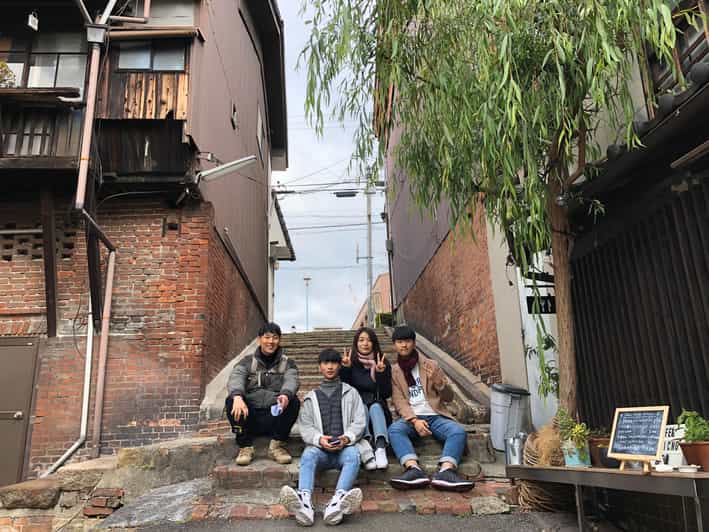
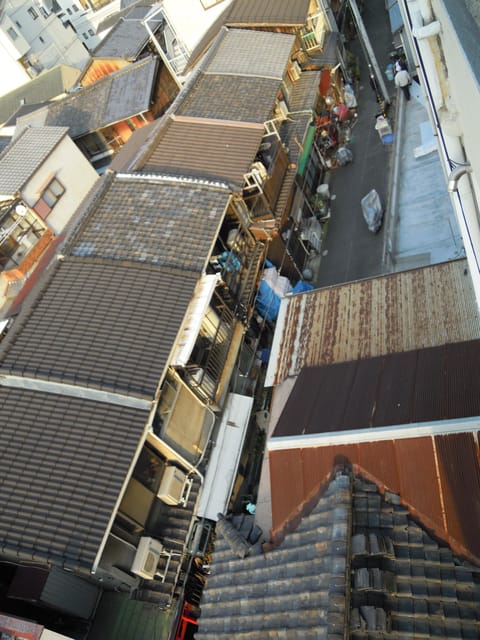
Karahori has a lived-in feel that comes from survival. The neighborhood endured the World War II fires in a way that helped it keep more of its old-town character. As you go, you’ll notice the streets tighten and bend, with traditional mercantile houses lining the path. These buildings are old—often described as around 100 to 200 years—and that age shows in the architecture and the way shopfronts and back entrances meet the street.
Even the “hidden” aspect is more than a sightseeing gimmick. You’re not just chasing Instagram corners. You’re walking routes that function like they always have, which is why the guide’s map knowledge matters. A good local guide helps you find passages that feel natural to residents but confusing to outsiders.
Meeting at Tanimachi-6Chome and the first refreshment
You meet at Osaka Metro Tanimachi-6Chome Station, Exit No. 3 at street level. It’s on the Tanimachi Line side, and it’s a cross-connection station where you’ll likely see multiple lines nearby—so double-check you’re heading to the right exit before you surface.
The tour begins with a small welcome refreshment, plus a bottle of water and a small snack are included. That may sound minor, but on a walking tour it’s practical. You’ll start fueled, not scrambling for vending machines five minutes in.
Then you’ll do an early photo stop with guided context. Think of this as your “get your bearings fast” moment. You’ll learn what to pay attention to—street width, building styles, and how the lanes connect—so the rest of the walk makes sense instead of feeling random.
Local market street: where the tour starts feeling real
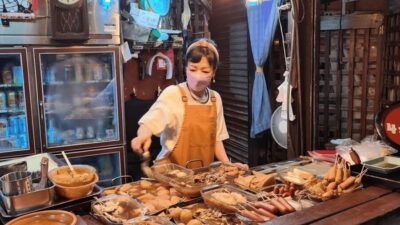
A full hour on the walk is devoted to an area-focused experience, and a key piece is the local market street stop. This is where the tour becomes less about famous sights and more about daily life.
You’ll see the kind of everyday Osaka you rarely catch when you only base yourself in the downtown corridors. Market lanes change over time, of course, but the pattern—shop counters, small storefronts, foot traffic tied to errands—stays consistent. The guide helps you understand what you’re looking at without turning it into a lecture.
This segment also sets you up for the next shift: from main lanes into off-the-beaten paths. Once you’re used to the market rhythm, the quiet alleys feel even more surprising. The contrast is the whole point.
Osaka block by block, more routes on foot

Into hidden alleys: the maze part (and the manners part)
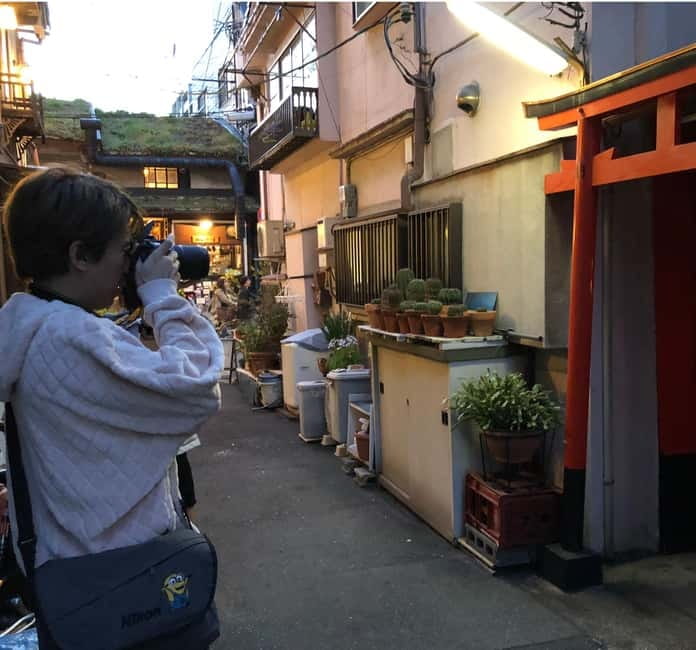
Now you’ll move into the real standout: alleyways that feel like a maze. Some are easy to walk into, and some are private or not clearly marked. The tour is very careful about this—your job is to be respectful and not disturb the people who live there.
That means quiet voices, slow steps, and no crowding at thresholds. Even when an alley feels like a public shortcut, the note is clear: some “hidden” paths are inside living areas. There may be no obvious sign telling you it’s private, so treat every side lane like it’s someone’s home front.
This is also where the guide earns their fee. She knows the local map well and directs you through lanes the way residents do. You’re not just walking; you’re learning the neighborhood’s logic—how one narrow corridor connects to another, and where the old merchant houses open up into small pocket spaces.
Traditional mercantile houses turned into cafés and shops
As you pass through Karahori, you’ll see traditional mercantile houses that have lasted for generations. Some still have inhabitants. Others have been remodeled into café spots or cute specialty shops.
This stop is one of the best ways to understand “old” in Japan that isn’t frozen in time. Buildings don’t just become museums. They adapt—sometimes with a gentle renovation, sometimes with shop counters that feel like they’ve always belonged.
You’ll also find a charming rhythm to it: one old storefront becomes a café, then you turn again and another merchant house becomes a small shop. The surprise of those transitions is part of the fun, because it breaks the typical sightseeing pattern where everything looks curated and separate.
And if you want a break, the guide can point you toward cozy cafés or restaurants. It’s one of those practical touches that keeps the walk enjoyable instead of exhausting.
Tatami mat shop: a hands-on cultural stop
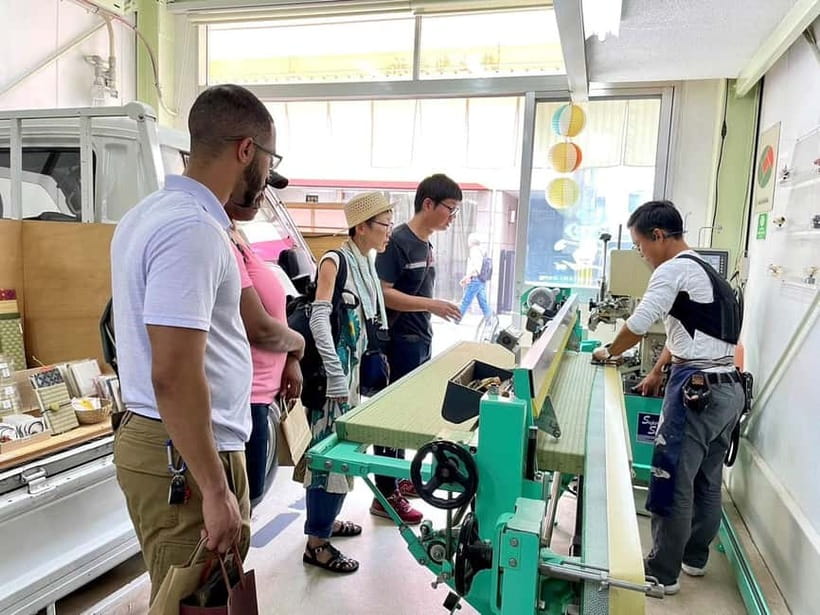
One of the planned highlights is a Japanese tatami mat shop. You don’t have to be an interior design nerd to appreciate this stop. Tatami is one of those everyday things in Japanese homes that people from overseas mostly only see in photos or hotels.
Here, you get to see it in a shop setting, which makes it more tangible. You can also ask questions through the English or Korean guide—especially about how tatami fits into daily life and why materials and craft matter.
Even if you don’t buy anything, this is a good “pause” stop. After the alley maze and market walking, it gives your feet a reset while your brain still feels engaged.
Food market time: tasting without turning the tour into a meal marathon
There’s a major food market visit built into the schedule—about an hour. That’s the time to snack, browse, and try a few things if you want.
Here’s the budget reality: meals and drinks are not included. You’ll need to pay your own food and anything you pick up in shops or cafés. That might sound like a drawback, but it also means you’re not locked into someone else’s idea of what you should eat.
My advice: go into the market hour with a loose plan. If you want to taste 2–3 items, do that early, then leave room for a second round. If you’re the type who only wants one proper meal, skip heavy snacking and save your appetite for a sit-down option the guide can recommend during break times.
Either way, the guide’s role stays helpful: she can steer you toward places that fit your pace, instead of you wandering and second-guessing menus in a rush.
Ruin of Osaka Castle moat (no water) and tiny shrines in an alley
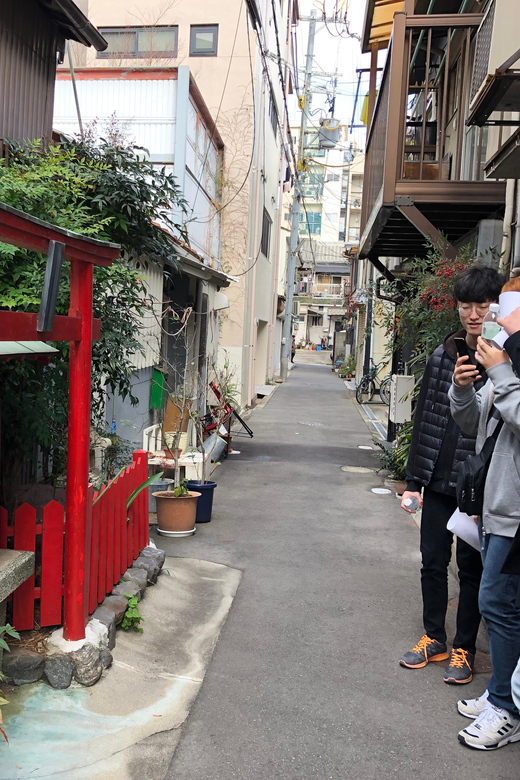
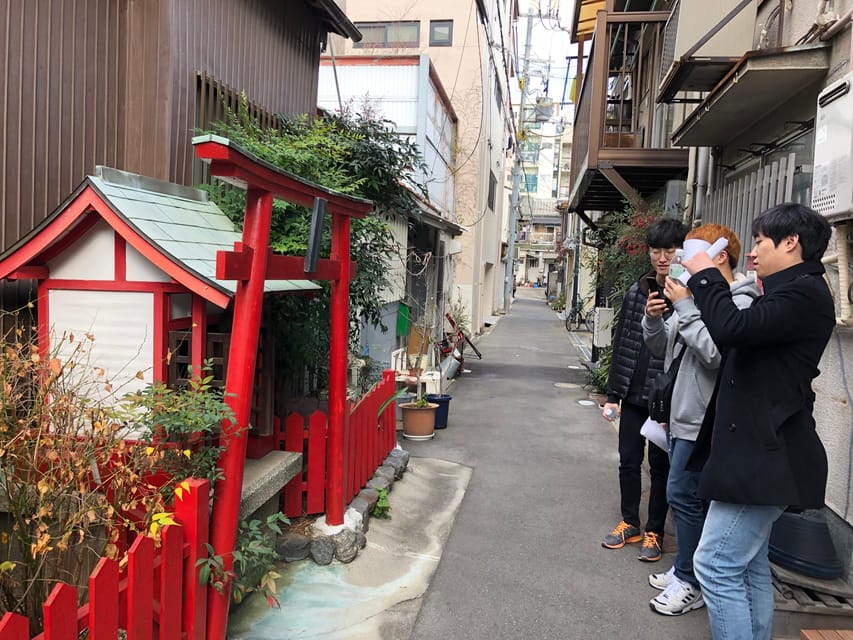
One of the most interesting details on this tour is that a ruin of the Osaka Castle moat is hidden inside the alley network. The note specifically mentions the moat ruin of 15D, and it’s accompanied by tiny shrines.
This kind of stop is valuable because it connects Osaka’s big story to something small and walkable. You’re not just hearing about a castle from a distance. You’re seeing a remnant that survived in a neighborhood texture that still functions for everyday people.
Also, tiny shrines in side lanes have a way of slowing you down. You notice details you’d miss if you were only looking at large landmarks. Even if you’re not religious, it gives you perspective on how history is kept in place—not as a single monument, but as many small, everyday points.
Photo stops and break time: why the pacing works
The tour includes multiple photo stops—early on, then mid-walk—and a break time later. That structure sounds basic, but it matters, especially on a 2-hour schedule.
Photo stops help you capture the architecture and alley angles while the guide is pointing out what to look for. They also give you a moment to regroup—feet tired, brain re-centered.
The break time segment also connects to the food and shopping reality. You might want to browse a shop longer or need a quick sit. The guide can steer you toward cozy cafés or yummy restaurants if you want rest, and you still stay within the tour flow.
For me, this is the difference between a “walk fast, see quickly” tour and one that feels like a real neighborhood stroll.
Price and logistics: what $35 buys you (and what it doesn’t)
The price is $35 per person for a 2-hour walk with a small group of up to 6. I think it’s fair value because you’re paying for access and navigation: hidden alley routes, interpretation of the old merchant houses, and guidance through places that don’t make sense without local knowledge.
You’re also getting water and a small snack included. That’s a real practical win on a short walk.
What’s not included is also clear: if you eat or drink at shops and cafés, you pay yourself. Shopping is also your cost. To me, that’s reasonable. It keeps the tour flexible, so you can taste lightly or shop only if something truly interests you.
Logistics-wise, the key points are simple: meet at Tanimachi-6Chome Exit No. 3, be on time (late by more than 15 minutes can be difficult), and plan for a short but continuous walk with narrow lanes.
Rules you should take seriously in residential alleys
This tour has a clear set of behavior rules, and they make sense given the neighborhood context. No drones, no intoxication, no smoking indoors, and no feeding animals. You should also avoid skateboards and keep noise low—especially since the tour may pass through areas where older residents still live.
This is one of those tours where the “how” matters as much as the “where.” If you treat it like a standard tourist march, you’ll feel stressed and you risk bothering residents. If you treat it like a respectful neighborhood walk, it feels smooth and even charming.
Also note the age rule: participation by people under 18 is not permitted unless they have a guardian. So check that before booking.
Who should book Nostalgic Osaka in Karahori?
This experience is a great fit if you want Osaka that feels lived-in, not only photographed. I’d especially recommend it if you:
- Want to see an area different from Dotonbori, with old streets and merchant houses.
- Like walking tours led by locals who can guide you through narrow passages.
- Enjoy practical culture stops (like a tatami mat shop) more than big-ticket monuments.
- Prefer small-group pacing over a crowded bus experience.
If you’re looking for a highlights-only checklist of famous sights, this may feel too neighborhood-based. But if you want that “I understand the city better now” feeling, Karahori is a strong choice.
Should you book this tour or skip it?
I’d book it if you’re excited by old neighborhoods, hidden lanes, and the kind of Osaka you can’t “accidentally” find on your own. The small group size, bilingual guide support (English and Korean), and the clear focus on Karahori’s surviving atmosphere make it a good use of two hours.
Skip it if you dislike tight spaces, don’t want to follow strict quiet rules, or you’re arriving late and can’t guarantee on-time entry. Also, if you hate paying separately for food and shopping, budget accordingly before you join.
Overall, for $35 you’re buying something simple and rare: a guided path through older Osaka that still feels like a real place people live.
FAQ
How long is the Nostalgic Osaka walk in Karahori?
The tour duration is 2 hours.
How much does it cost?
The price is $35 per person.
What’s included in the tour price?
Water and a small snack are included, along with guided portions of the walk and welcome refreshments.
Are meals and shopping included?
No. If you eat or drink at shops or cafés, you pay yourself. Shopping is also paid separately.
What languages is the live guide available in?
The live tour guide offers English and Korean.
Is this tour wheelchair accessible and what group size should I expect?
Yes, it is wheelchair accessible. The group is small, limited to 6 participants.
What time rules apply if I’m running late?
If you’re late by over 15 minutes, it can be difficult to join the tour and keep things on schedule for other guests.
More Tour Reviews in Osaka
- Osaka Go Karting Tour with Funny Costume★ 5.0 · 2,658 reviews
- Osaka Castle: Museum and Tower Entry Ticket★ 4.5 · 2,380 reviews
- Osaka: Shinsekai Food Tour with 13-15 Dishes at 5 Eateries★ 4.8 · 2,204 reviews
- Osaka Food Tour: 13 Dishes at 5 Local Eateries★ 5.0 · 2,149 reviews
- Hungry Osaka Street Food Tour:15 Tastings & 3 Drinks with a Local★ 5.0 · 1,727 reviews
Osaka at Street Level
- Osaka Local Foodie Walking Tour in Dotonbori and Shinsekai★ 5.0 · 985 reviews
- Osaka: Deep Backstreets Walking Tour with Dinner Option★ 4.9 · 902 reviews
- Ultimate Osaka Walking Tour: Castle, Dotonbori & Hidden Gems★ 5.0 · 862 reviews
- Osaka: Main Sights and Hidden Spots Guided Walking Tour★ 4.9 · 702 reviews
- Private Osaka Walking Tour: Highlights & Hidden Gems★ 5.0 · 569 reviews
Dotonbori and Namba, Round Two
- Osaka Local Foodie Walking Tour in Dotonbori and Shinsekai★ 5.0 · 985 reviews
- Osaka: Dotonbori District River Cruise with Drink Discount★ 4.2 · 876 reviews
- Ultimate Osaka Walking Tour: Castle, Dotonbori & Hidden Gems★ 5.0 · 862 reviews
- Tea Ceremony Experience in Osaka Doutonbori★ 5.0 · 754 reviews
- Osaka: Namba Pub Bar Crawl with a Local Guide★ 4.9 · 424 reviews
The Newest Osaka Write-Ups
- Private Photoshoot in Osaka with a Professional Photographer
★ 5.0 · 3 reviews - Osaka Early Morning Osaka Castle Tour Avoid Crowds
★ 5.0 · 3 reviews - Nara Private Tour with Pick and Drop and English Speaking Driver
★ 3.5 · 3 reviews - Osaka: Modern Vegetarian Sushi Cooking Class
★ 5.0 · 3 reviews - Nara Day Trip from Osaka with a Licensed Guide
★ 5.0 · 3 reviews
Dotonbori & Namba Tours, compared.
 ★ 5.0Osaka Local Foodie Walking Tour in Dotonbori and ShinsekaiFrom $111985 reviews
 ★ 4.2Dotonbori District River Cruise with Drink DiscountFrom $12876 reviews
 ★ 5.0Ultimate Osaka Walking Tour: Castle, Dotonbori & Hidden GemsFrom $73862 reviews
 ★ 5.0Tea Ceremony Experience in Osaka DoutonboriFrom $20754 reviews
 ★ 4.9Namba Pub Bar Crawl with a Local GuideFrom $30424 reviews
 ★ 5.0Ramen and Gyoza Cooking Class in DotonboriFrom $70378 reviews
Dotonbori River Cruise with Glico Sign & Neon ViewsFrom $12376 reviews
★ 5.0Ramen and Gyoza Cooking Class in DotonboriFrom $70378 reviews
Dotonbori River Cruise with Glico Sign & Neon ViewsFrom $12376 reviews
 ★ 3.9Dotonbori’s Bridges 20-Minute CruiseFrom $12303 reviews
Browse the lists this tour appears in