
Reviewed · OSAKA CASTLE TOURS & TICKETS
Full Day Walking Tour in Osaka Castle Temples and Ukiyoe
Osaka’s highlights, paced for real walking. This full-day tour strings together Osaka Castle and landmark temple history, then shifts gears to the city’s everyday side with markets and Dotonbori lights. You get a locally based, English-speaking guide and a route built for a relaxed flow through central Osaka.
I really like the mix of big cultural sights plus something you do with your hands. The ukiyo-e experience adds a creative break right in the Minami area, not stuck at the end of a museum stop.
One consideration: food and drinks are not included, so you will want to budget for lunch and snacks at Kuromon Market and around Dotonbori.
In This Review
- Quick reasons this tour works well
- Osaka in one day: castle, temple, markets, and ukiyo-e
- Osaka Castle Museum: from 1597 to the 1995 rebuild
- Shitennoji Temple: where Buddhism’s path lands in Japan
- Kuromon Market hour: food street energy without the pressure
- Dotonbori Tsuribori and Shinsaibashi: big signs, old art, and real street Osaka
- Guide style and group size: small enough to feel personal
- Price and what you truly get for $165.19
- Getting there with mobile tickets: what helps on a walking day
- Who should book this tour (and who should skip it)
- Should you book this full-day Osaka walking tour?
- FAQ
- How long is the tour?
- What does the tour cost?
- What is included in the price?
- Is food included?
- Are any stops free?
- Is the ticket mobile?
- How big is the group?
- Where does the tour start and end?
- What happens if I cancel?
- Do I need to speak Japanese?
Quick reasons this tour works well
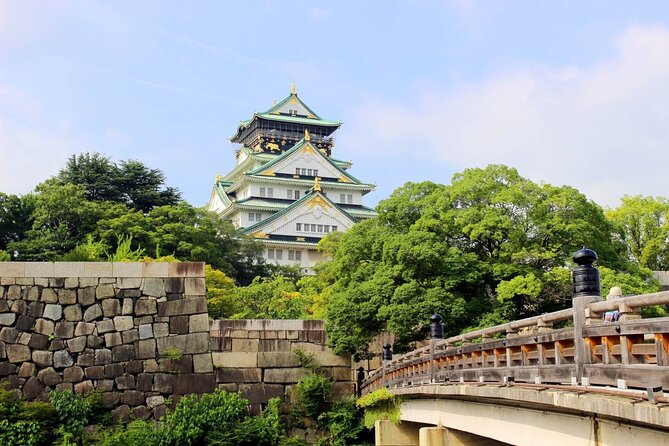
- Osaka Castle Museum with real context, from the 1597 build to the 1995 government rebuild
- Shitennoji Temple with a clear story of how Buddhism moved from India to China to Japan
- Kuromon Market focused time for tasting and browsing, with admission not required
- Dotonbori + Shinsaibashi walk where the huge 3D billboards set the tone for Minami
- Hands-on ukiyo-e guided in English, tied to the art’s 17th–19th century heyday
- Small group (max 20) and a guide who can adjust when plans go sideways; Wingki in particular is known for being accommodating
More ways into Osaka Castle and its keep
Osaka in one day: castle, temple, markets, and ukiyo-e
Osaka can feel like two cities at once. This tour handles both: the formal, historic Osaka (castle and Shitennoji), and the grounded Osaka (Kuromon and Dotonbori/Minami). You are not just checking boxes—you are moving between settings that teach you how the city thinks and eats.
The pacing is built around time blocks that make sense for walking days. You spend about two hours at Osaka Castle, two hours at Shitennoji, then an hour in Kuromon Market before finishing with a longer stretch through Dotonbori and back toward Shin-Osaka. That structure helps you avoid the classic full-day problem: rushing through everything while still feeling hungry and tired.
Osaka Castle Museum: from 1597 to the 1995 rebuild
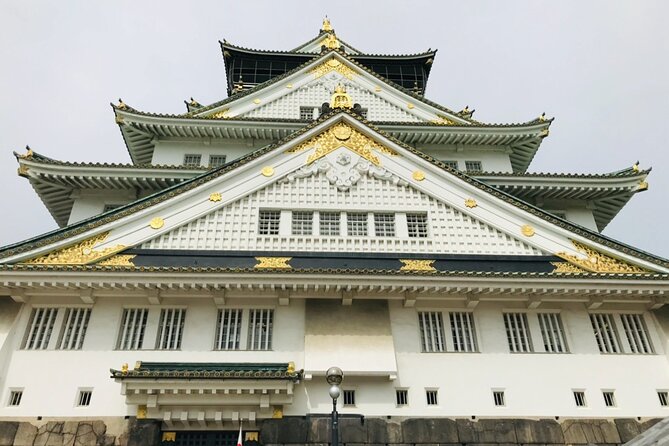
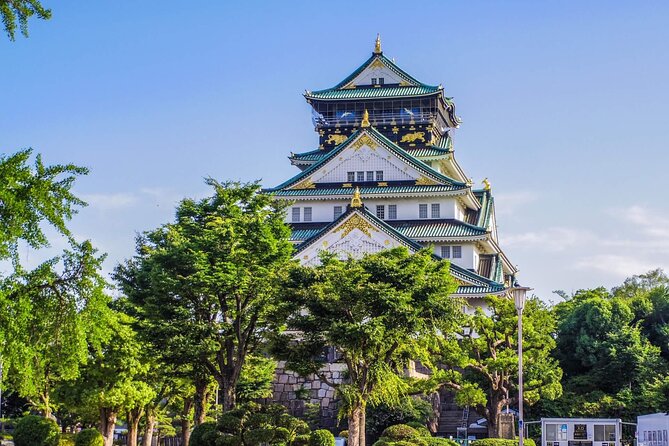
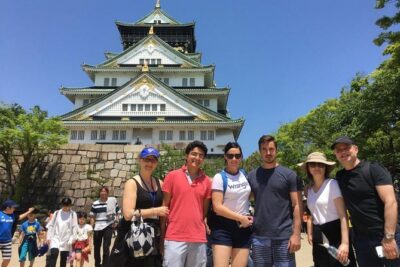
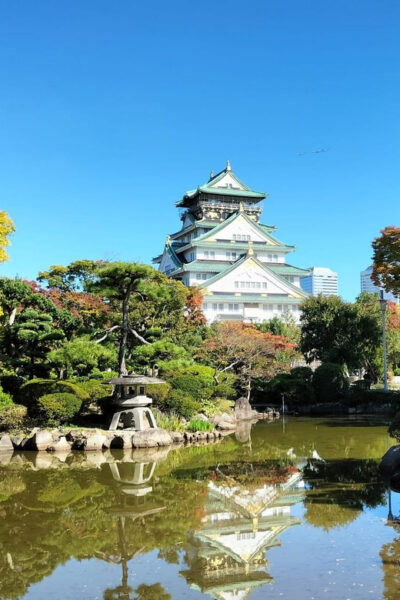
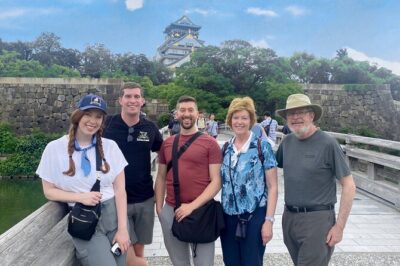
Osaka Castle is one of those places where the building matters, but the story matters more. In the museum, you learn that the castle was completed in 1597, suffered multiple destructions over the years, and was finally rebuilt by the Japanese government in 1995. That detail is more than trivia—it explains why the castle you see today feels both historical and rebuilt.
It also sets you up for how to look at the site. When you know it has been rebuilt, you stop expecting a perfect time capsule. Instead, you start reading the castle as a living symbol that Japan has preserved and re-created as tastes, politics, and cities changed.
Plan for about two hours here. That is long enough to read and absorb, but not so long that you lose momentum before heading to the next stop.
Shitennoji Temple: where Buddhism’s path lands in Japan
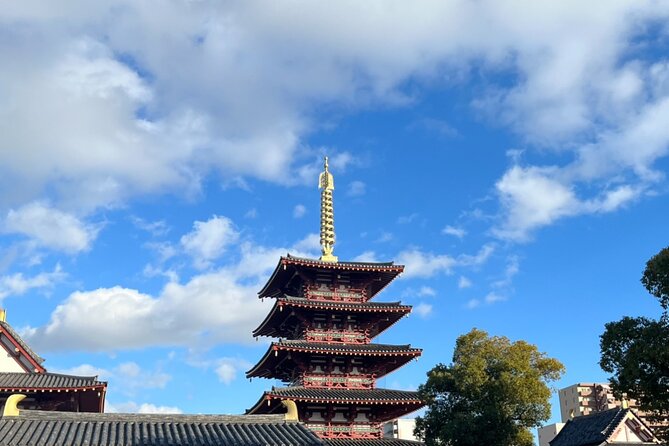
After the castle, the tone shifts quickly—in a good way. Shitennoji is described as the first Japanese Buddhist temple in Japan, and the guide uses that fact to explain the larger movement of ideas. You learn how Buddhism traveled from India to China and eventually arrived in Japan thousands of years ago.
What I like about this stop is that it is not only about architecture or scenery. It is about cultural travel: the human story of transmission, adaptation, and arrival. That makes the temple feel bigger than a single landmark.
You also get about two hours at Shitennoji, which is useful because temples benefit from unhurried looking. You want time to slow down, notice details, and take in the setting without feeling like you have one minute per thing.
Quieter corners: more Osaka temples and shrines
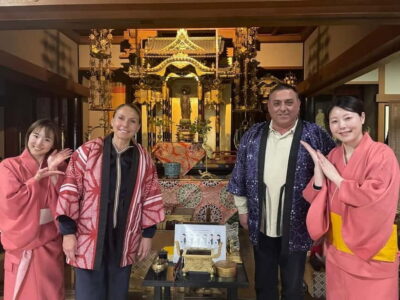
Kuromon Market hour: food street energy without the pressure
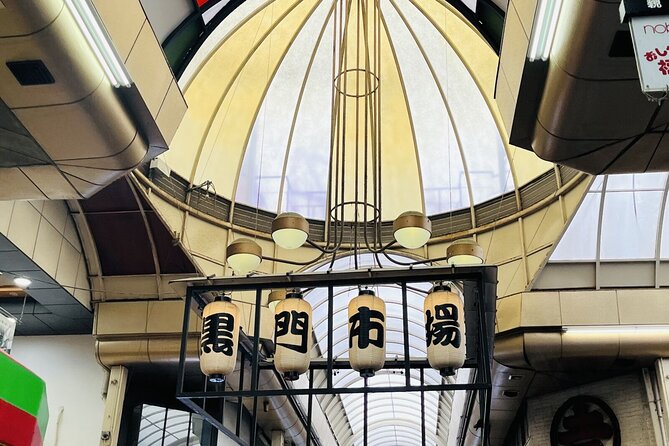
Then you hit the sensory zone: Kuromon Market. This is one of Osaka’s leading food markets, with roughly 150 stores in the area south of Sennichimae, selling things like seafood, vegetables, fruit, and other goods. Admission is free, so your cost here is mostly what you choose to eat and drink.
Even if you are not a hardcore foodie, Kuromon Market is a good way to understand Osaka’s day-to-day rhythm. You see variety, you see speed, and you see how people shop for snacks and meals. It is also a smart reset after temple time—your senses wake up again.
Only one hour is scheduled, though. That can be perfect if you want to sample and keep walking, but it means you should keep your expectations realistic. If you love markets, you may want to come back on your own later for a longer browse after the tour.
Dotonbori Tsuribori and Shinsaibashi: big signs, old art, and real street Osaka
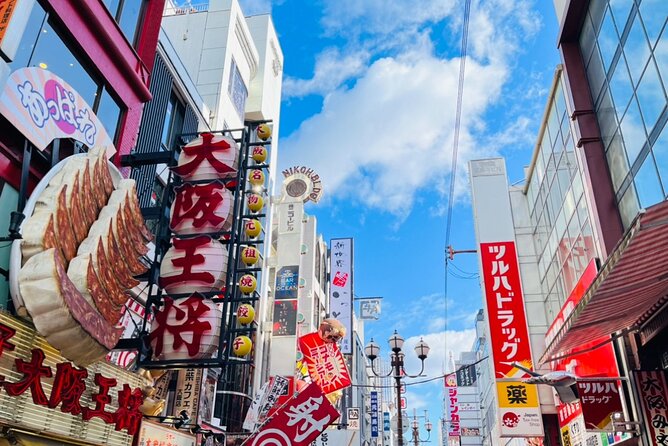
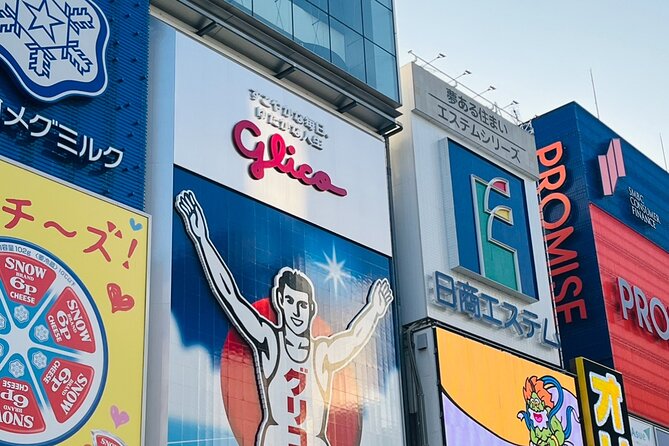
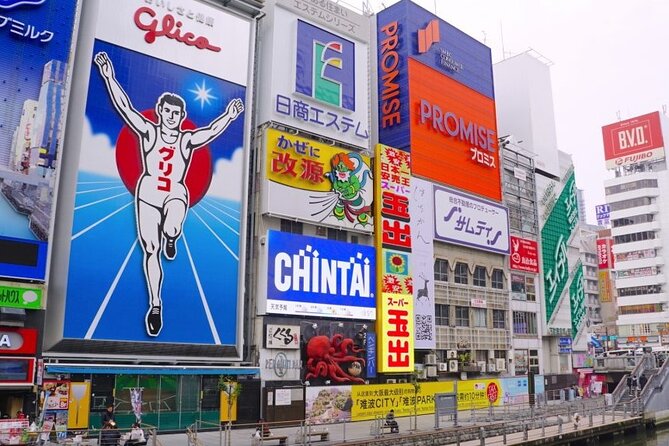
Dotonbori is where Minami’s attitude becomes visible. You spend time around the Dotonbori Tsuribori area and then walk through Shinsaibashi, the city’s main shopping area. The tour description focuses on the symbolic business and downtown feel of Minami, including huge three-dimensional billboards that turn the street into a living billboard gallery.
This part of Osaka is also where the guide connects the modern street scene to the older art tradition of ukiyo-e. Ukiyo-e works date back to the 1670s and flourished from the 17th to the 19th century. The point is not to turn this into an art history lecture. It is to show how images and storytelling shape what people see, collect, and remember.
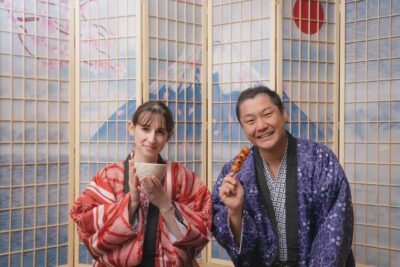
You also get a traditional Japanese art experience here. The tour includes the ukiyo-e experience fee, so you are not left hunting down a separate workshop. For many visitors, this is the best kind of souvenir: something you make, understand, and can take home.
Time-wise, this final stretch is about three hours. That is enough for the street atmosphere, the art activity, and a steady return toward Shin-Osaka without the day feeling like it is ending too early.
Guide style and group size: small enough to feel personal
This tour caps at 20 travelers, which matters more than most people think. A smaller group makes navigation easier and keeps the day from turning into a cattle-line situation. You also move at the speed of a real walking tour rather than a rush-rush bus transfer rhythm.
The most consistent praise attached to this experience is the guide’s attitude and responsiveness. Wingki is specifically mentioned as knowledgeable, friendly, and enthusiastic, and also as accommodating when someone showed up late because they got lost. That kind of flexibility is gold on a walking day, especially in a city where station exits can be confusing.
You should also expect a lot of Q-and-A energy. If you are traveling solo or you are new to Japan, this style helps you feel oriented fast. The guide is English-speaking, and you will get practical context between stops rather than only facts at the sites.
Price and what you truly get for $165.19
At $165.19 per person for about 8 hours, the real question is not the sticker price—it is what is bundled. This tour includes:
- entrance fees for each spot on the route
- train tickets required for the tour
- the ukiyo-e experience fee
- an English-speaking guide
Food and drinks are not included, so your personal spending will depend on how much you snack at Kuromon and whether you sit down for lunch. But even so, the bundled items reduce the common DIY costs: you are paying a single price instead of juggling entry fees, transit fares, and a separate art booking.
Averages can be misleading, but there is one helpful planning clue: it tends to sell out when booked about 65 days in advance on average. If your dates are fixed, earlier booking gives you more control.
Getting there with mobile tickets: what helps on a walking day
You will get a mobile ticket, and the tour starts near public transportation. That combination usually means less stress at the beginning of the day: you can show the ticket on your phone and spend more energy focusing on where you are going next.
Bring a charged phone even if you are confident. Walking days add small problems—missed turns, wrong exit, quick question at a station. A guide-led route is forgiving, but you still want your key tech ready so you can coordinate smoothly if anything shifts.
Also, pack for comfort. Even though the itinerary is time-boxed, you are still walking for most of the day. Wear shoes you trust, and plan to take water breaks when you can. Since food and drinks are not included, having a simple snack or water strategy helps you avoid getting stuck hungry during transitions.
Who should book this tour (and who should skip it)
This tour is a strong fit if you want:
- a guided day that connects major landmarks to street-level Osaka
- a balance of museum/temple time and modern city walking
- an included art activity through ukiyo-e, not just viewing from afar
- a smaller group with a guide who adjusts when people are running late
You might skip it if:
- you already know you prefer fully independent sightseeing and you want maximum flexibility on timing
- you have a very tight budget for everything, since food and drinks are on you
- long walking days are a struggle for you, since the schedule is built for an active 8-hour outing
Should you book this full-day Osaka walking tour?
If you want one organized day that shows both the famous Osaka and the day-to-day Osaka, I think this is a smart booking. The best value comes from the bundling: entrance fees, transit, and the ukiyo-e experience are all included, which makes your cost easier to predict.
The tone is also practical. You are not trapped in a single museum room all day, and you are not only eating and shopping with no context. You get history, you get culture, then you end in the kind of street scene that makes Osaka feel like Osaka.
If you like having a plan but still want breathing room, this is the right type of full-day tour.
FAQ
How long is the tour?
The tour is about 8 hours.
What does the tour cost?
It costs $165.19 per person.
What is included in the price?
Entrance fees for the tour stops, train tickets required for the tour, the ukiyo-e experience fee, and an English-speaking guided tour are included.
Is food included?
No. Food and drinks are not included.
Are any stops free?
Kuromon Market and the Dotonbori Tsuribori/shopping area portion are listed as admission ticket free.
Is the ticket mobile?
Yes, the tour uses a mobile ticket.
How big is the group?
The tour has a maximum of 20 travelers.
Where does the tour start and end?
The tour returns to Osaka and Shin-Osaka Station after the Dotonbori and Shinsaibashi portion.
What happens if I cancel?
You can cancel for a full refund if you cancel up to 24 hours in advance of the experience start time.
Do I need to speak Japanese?
No. The tour is guided by an English-speaking guide.
Osaka at Street Level
- Osaka Local Foodie Walking Tour in Dotonbori and Shinsekai★ 5.0 · 985 reviews
- Osaka: Deep Backstreets Walking Tour with Dinner Option★ 4.9 · 902 reviews
- Ultimate Osaka Walking Tour: Castle, Dotonbori & Hidden Gems★ 5.0 · 862 reviews
- Osaka: Main Sights and Hidden Spots Guided Walking Tour★ 4.9 · 702 reviews
- Private Osaka Walking Tour: Highlights & Hidden Gems★ 5.0 · 569 reviews
Temple Gates and Shrine Paths
- Osaka: Minoh, Katsuoji Temple, & Minoh Falls Full-day Tour★ 4.9 · 172 reviews
- Full Day Kyoto Tour : Bamboo Forest, Golden Temple, Fushimi Inari★ 5.0 · 84 reviews
- Osaka Temple Cool Foot Bath & Matcha Experience〈45min〉★ 4.9 · 82 reviews
- Osaka: Mind & Spirit Balance Temple Reiki Healing★ 5.0 · 41 reviews
- Katsuo-ji Temple, Arashiyama Forest, & Nara Park★ 4.0 · 37 reviews
Osaka Castle, Seen Properly
- Osaka Castle: Museum and Tower Entry Ticket★ 4.5 · 2,380 reviews
- Osaka Castle Walking Tour and Castle Tower Admission★ 5.0 · 561 reviews
- 5-Hour Osaka Bike Tour to the Neighborhood of Osaka Castle★ 5.0 · 319 reviews
- Osaka Castle Guided Tour★ 4.7 · 249 reviews
- Osaka: Castle History Walking Tour / Castle Tower Admission★ 4.9 · 230 reviews
The Newest Osaka Write-Ups
- Private Photoshoot in Osaka with a Professional Photographer
★ 5.0 · 3 reviews - Osaka Early Morning Osaka Castle Tour Avoid Crowds
★ 5.0 · 3 reviews - Nara Private Tour with Pick and Drop and English Speaking Driver
★ 3.5 · 3 reviews - Osaka: Modern Vegetarian Sushi Cooking Class
★ 5.0 · 3 reviews - Nara Day Trip from Osaka with a Licensed Guide
★ 5.0 · 3 reviews
Osaka Castle Tours & Tickets, compared.
 ★ 4.5Osaka Castle: Museum and Tower Entry TicketFrom $72,380 reviews
 ★ 5.0Osaka Castle Walking Tour and Castle Tower AdmissionFrom $23561 reviews
 ★ 5.05-Hour Osaka Bike Tour to the Neighborhood of Osaka CastleFrom $87319 reviews
 ★ 4.7Osaka Castle Guided TourFrom $43249 reviews
 ★ 4.9Castle History Walking Tour / Castle Tower AdmissionFrom $33230 reviews
 ★ 4.7Osaka Castle Guided Tour with Local GuideFrom $4878 reviews
 ★ 5.0PRIVATE 6hr, Food tour from Osaka Castle, Kuromon, Dotonbori.From $15568 reviews
 ★ 4.5A Tour to Explore the Symbol of Osaka: Osaka CastleFrom $8356 reviews
Browse the lists this tour appears in