
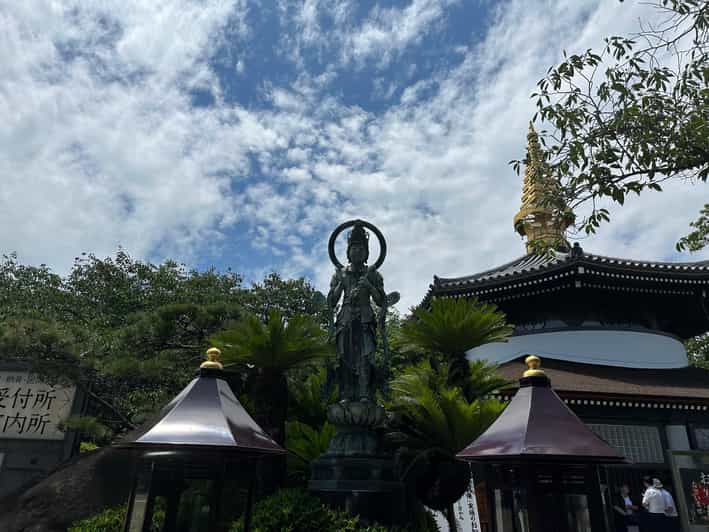
Reviewed · OSAKA TEMPLES & SHRINES
Osaka: Japan’s Oldest Temple & Bone Buddha Walking Tour
A quiet Osaka story starts at an old stone gate. This 2-hour walking tour pairs Shitennoji, founded in 593, with Isshinji, famous for its Bone Buddhas made from cremated ashes. You’ll come away seeing early Buddhism as something practical that shaped early and urban Japan, not just something you read about.
I really like the contrast between the two temples. At Shitennoji, you get that classic early Buddhist symmetrical layout and a look at how the site endured fires, wars, and reconstruction. At Isshinji, the modern main gate designed by the current head priest sets you up for something emotionally specific: ancestors’ ashes turned into statues.
One drawback to consider: this isn’t a quick photo-and-walk sightseeing loop. It’s a meaning-first tour, so if you only want street-food stops or nightlife energy, you may find it a bit too contemplative and information-heavy.
In This Review
- Key things I’d circle before you go
- Why Shitennoji and Isshinji Make a Great Osaka Pair
- Shitennoji’s Central Precinct: Symmetry, Guardians, and Rebuilding
- The Pure Land Garden: Amida, Rebirth, and Sunset Logic
- Isshinji Temple’s Modern Gate and the Bone Buddha Tradition
- How the 2-Hour Walk Fits Together (Without Feeling Rushed)
- Price and Value: What $65 Really Buys
- Practical Tips That Actually Help
- Who This Tour Suits Best
- Should You Book This Osaka Oldest Temple & Bone Buddha Walk?
- FAQ
- Where do I meet the guide?
- How long is the tour?
- What’s included in the ticket price?
- What is the tour’s main focus?
- Is food included?
- Is the tour private, and what languages are offered?
Key things I’d circle before you go
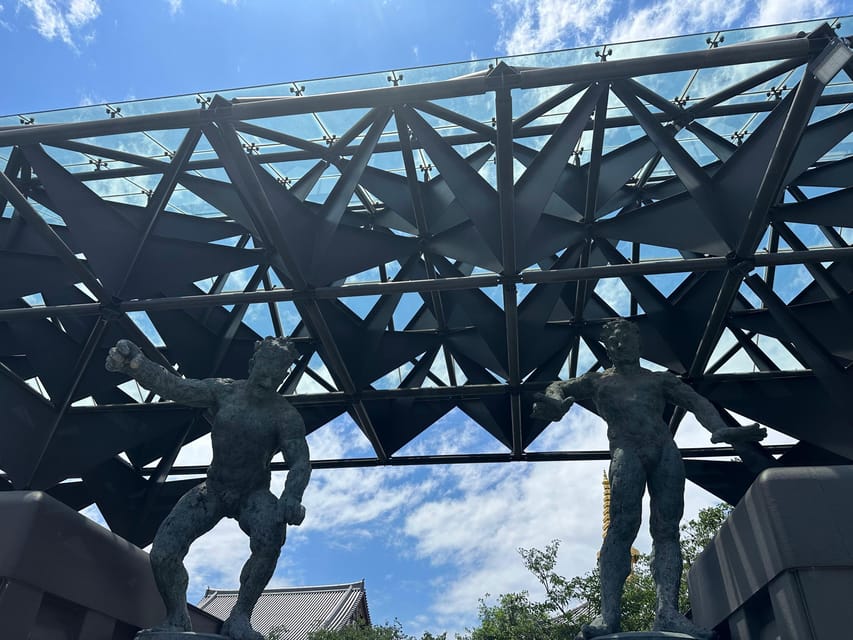
- Prince Shotoku’s Shitennoji: learn how Buddhism became part of society as early as 593
- Shitennoji’s Pure Land Garden: understand the idea of Amida’s Western Paradise and how sunset symbolism fits
- Isshinji’s modern main gate: a striking design by the current head priest that changes your first impression fast
- Bone Buddhas (Kotsubotoke): see how cremated remains of more than two million ancestors become statues of remembrance
- A guide who connects dots: a top-rated experience focused on explaining Japanese religion and culture clearly
Quieter corners: more Osaka temples and shrines
Why Shitennoji and Isshinji Make a Great Osaka Pair
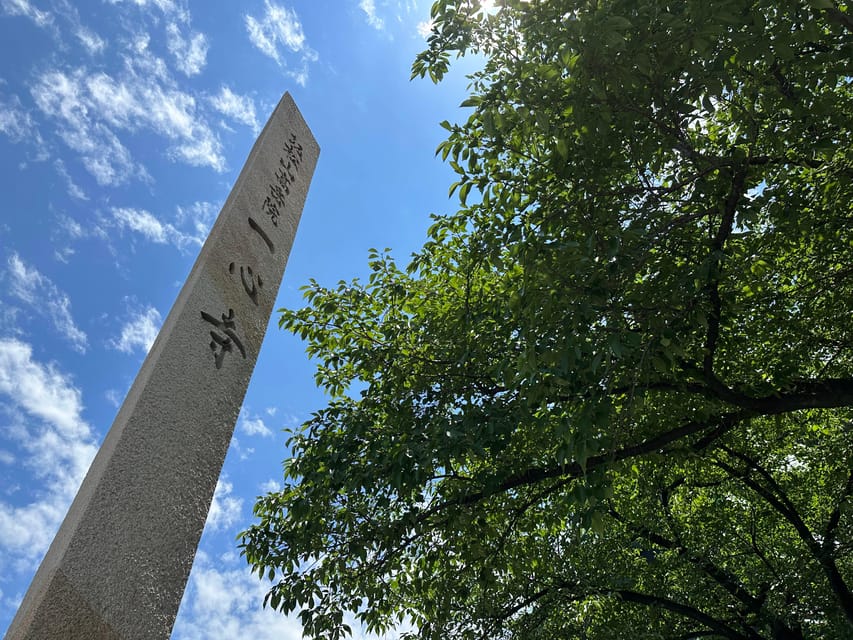
Osaka gets branded for food lines and neon streets, but the city also has deep roots. This tour quietly shows you the religious backbone running under daily life. You’re walking between two places that represent very different stages and styles of Buddhist practice.
What makes the pair work is how clearly it tells a story. Shitennoji anchors you in the early spread of Buddhism in Japan, tied to Prince Shotoku. Isshinji shows how faith adapted to a dense city, where remembrance becomes communal and ongoing.
The format also helps. You get a professional English-speaking guide (with Japanese support too), and the tour focuses on what each space means, not just what you can photograph.
Shitennoji’s Central Precinct: Symmetry, Guardians, and Rebuilding
Your start point is right at Shitennoji’s main entrance, in front of the stone torii gate (Ishidori). If you’re using public transit, the meeting area is a short walk from Shitennoji-mae Yuhigaoka Station. The guide will hold a sign with your name, which makes it easier if you’re navigating in a new city.
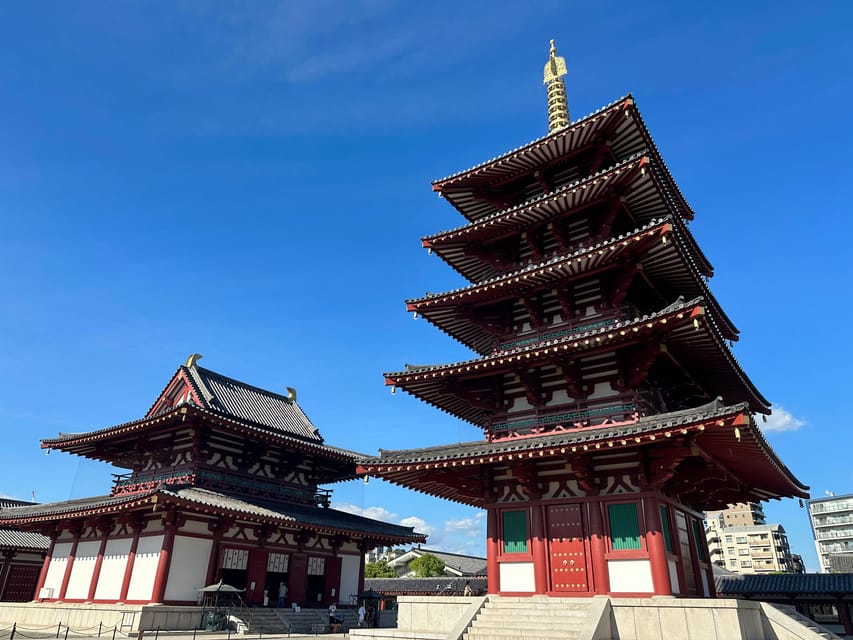
Shitennoji is special because it’s described as Japan’s oldest officially established Buddhist temple. It traces back to 593 and Prince Shotoku, a key figure in promoting Buddhism in early Japan. That connection matters: you’re not just visiting an old building, you’re stepping into a chapter of how an idea became part of everyday culture.
Inside the central precinct, you’ll hear about the temple’s symmetrical layout. Early Buddhist design often used strict balance to communicate order and stability. Your guide will explain how that geometry isn’t random decoration—it’s part of the spiritual language.
You’ll also learn how Shitennoji has survived repeated destruction. The site endured fires and wars and then rebuilt again and again. That repeated reconstruction is a theme in Japanese religious sites, but here it’s part of the point: faith is shown as something carried forward, not something stuck in one moment.
The Pure Land Garden: Amida, Rebirth, and Sunset Logic
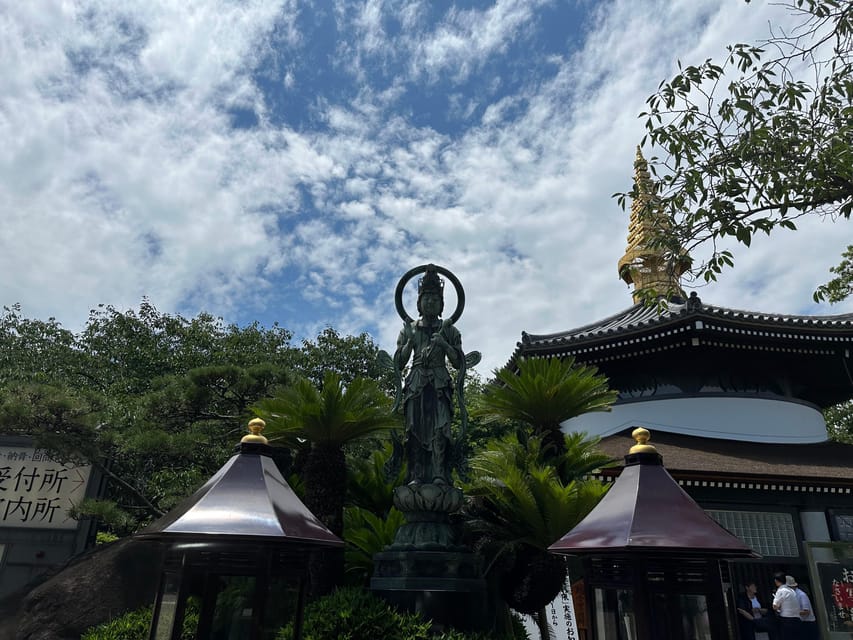
After the central complex, the tour includes the Pure Land Garden. This isn’t just a scenic pause. It’s tied to Pure Land Buddhism, which centers on visions of a Western Paradise and the promise of rebirth.
Your guide explains the symbolic relationship between the setting sun and the idea of Amida’s paradise. That might sound poetic, but the logic is practical: religious ideas often connect to daily sensory moments, like light near dusk, because that’s when people naturally reflect.
The value here is understanding how belief shapes design. Gardens in the Pure Land tradition are made to help you think in images—how the environment supports the teaching. Even if you don’t read Japanese religion in detail, you can still follow the meaning when it’s explained step-by-step.
Also, Shitennoji’s Pure Land Garden fits the tour’s overall theme: Buddhism’s story in Osaka isn’t only about grand halls. It’s about how ideas get translated into gardens, rituals, and the rhythm of urban life.
Osaka block by block, more routes on foot


Isshinji Temple’s Modern Gate and the Bone Buddha Tradition
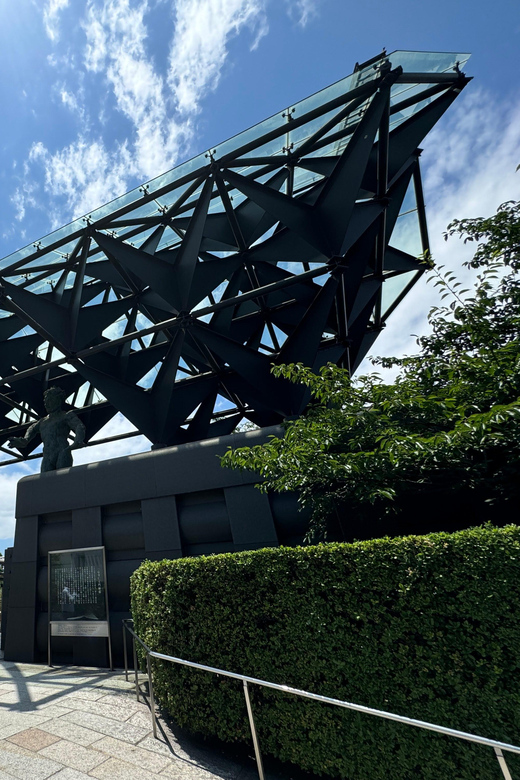
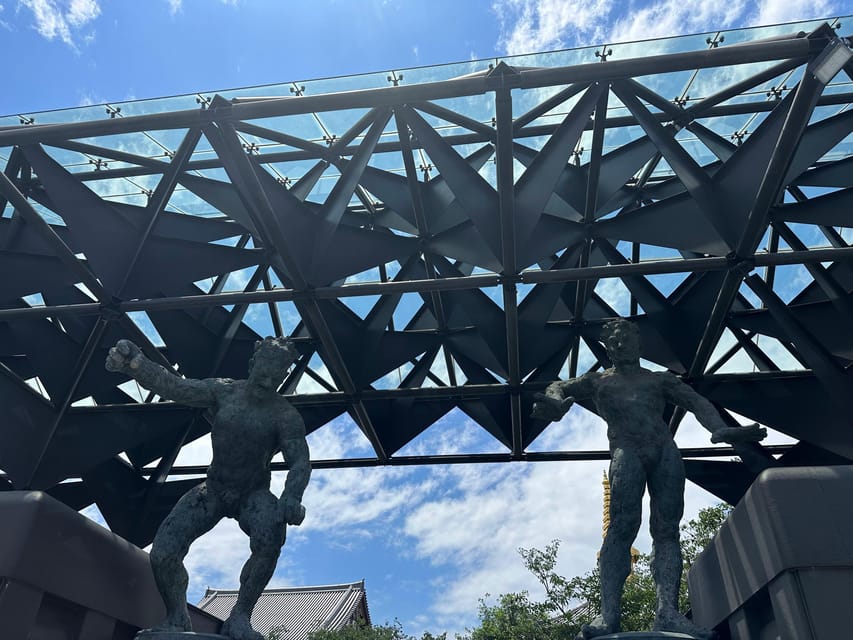
After Shitennoji, you shift to a very different kind of sacred space. Approaching Isshinji, the first thing you notice is the modern main gate. It was designed by the current head priest, which makes the contrast with older temple architecture feel immediate.
That modern gate is more than a visual trick. It signals something important: faith doesn’t freeze in time. Isshinji has nearly 900 years of history, and yet its public face embraces modern design by a current religious leader.
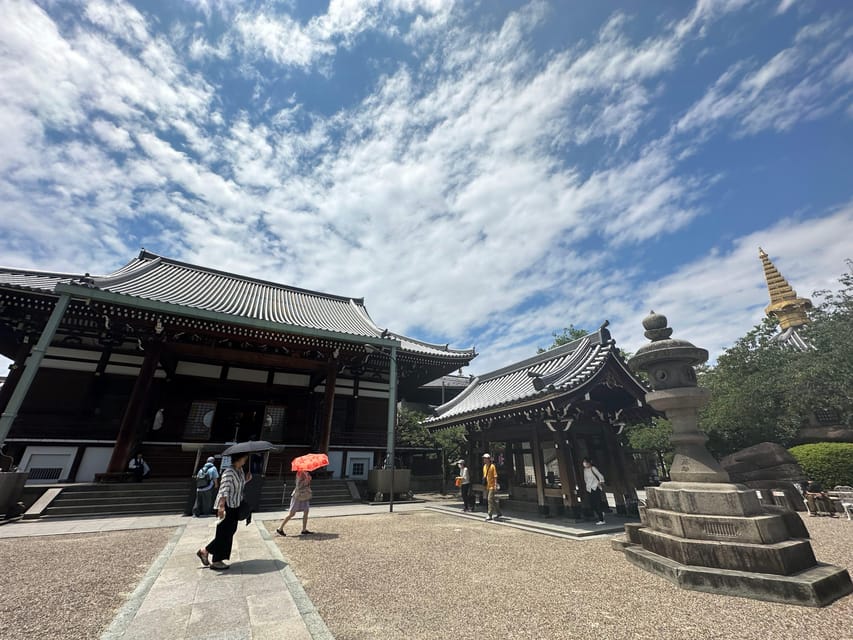
Then you get to the emotional center of the tour: the Bone Buddhas (Kotsubotoke). Isshinji is home to the ashes of more than two million ancestors of Osaka residents. The remains are respectfully combined and shaped into statue-form Buddhas made from cremated ashes.
What I like about learning this is the way it turns a sensitive subject into a structured ritual of remembrance. This isn’t “a weird artifact.” It’s a communal practice that families connect to across generations. Your guide will explain how the tradition began and how it continues to support remembrance for families in the city.
If you’re the kind of traveler who cares about how religion actually works for real people, this stop lands. It shows Buddhism as something urban and communal—built for the long-term memory of communities.
How the 2-Hour Walk Fits Together (Without Feeling Rushed)
This tour is scheduled for 2 hours, which is a sensible length. You’re seeing two temples and still getting time for guided explanations, not just wandering on your own. Because it’s a walking tour, you’ll want comfortable shoes and a pace that doesn’t depend on slow museum-style breaks.
The flow makes sense. Start at Shitennoji for the foundations: Prince Shotoku, guardian deities, early design, and the Pure Land Garden. Then move to Isshinji for the contrast: modern gate first, then the Bone Buddha practice and how it reflects an urban faith.
A private group format also changes the experience. You’ll get a more interactive guide-led walk rather than being one voice in a crowd. It’s listed as a private group, with English (and Japanese) language support from the guide.
The finish is at Isshinji Temple. That means you can plan a nearby meal or further sightseeing afterward, rather than backtracking immediately.
Price and Value: What $65 Really Buys
At $65 per person, this isn’t the cheapest activity in Osaka, but it’s also not priced like a luxury day tour. You’re paying for three main things that matter on a cultural visit.
First, you get a professional guide and clear explanations. A 5/5 review specifically praised an awesome guide for teaching a lot about Japanese culture and religion and helping the experience make sense. That kind of interpretation is what turns temple sightseeing into learning you can actually use.
Second, you get paid entry to Shitennoji’s main temple complex and the Pure Land Garden. That alone can turn a “free temple visit” assumption into a better value calculation. You’re also guided through the sites, so you’re not trying to piece together meaning alone.
Third, the tour gives you a structured contrast. Many temple visits only show you one style. Here you get early Buddhist design and Pure Land symbolism at Shitennoji, then the modern gate and Bone Buddha tradition at Isshinji. The $65 buys you a guided storyline, not just two stops.
If you’re short on time and want depth without stacking multiple tickets and audio guides, this is a strong match.
Practical Tips That Actually Help
Since the tour is focused on meaning, come in ready to listen. Wear shoes that handle walking for a couple hours, and don’t plan it as a tight sprint between other activities.
At the meeting point, look for the guide holding a sign with your name in front of the stone torii gate (Ishidori). If you’re coming from Shitennoji-mae Yuhigaoka Station, the location is a short walk, but it still helps to arrive a little early so you can get your bearings fast.
You’ll also want to plan food around the tour. Meals and drinks aren’t included, so either eat before you go or have something lined up after you finish at Isshinji.
One more consideration: this tour is cultural and religious. It’s not designed to be chaotic, loud, or designed around entertainment zones. If you want quiet and context, that’s exactly what you’re buying.
Who This Tour Suits Best
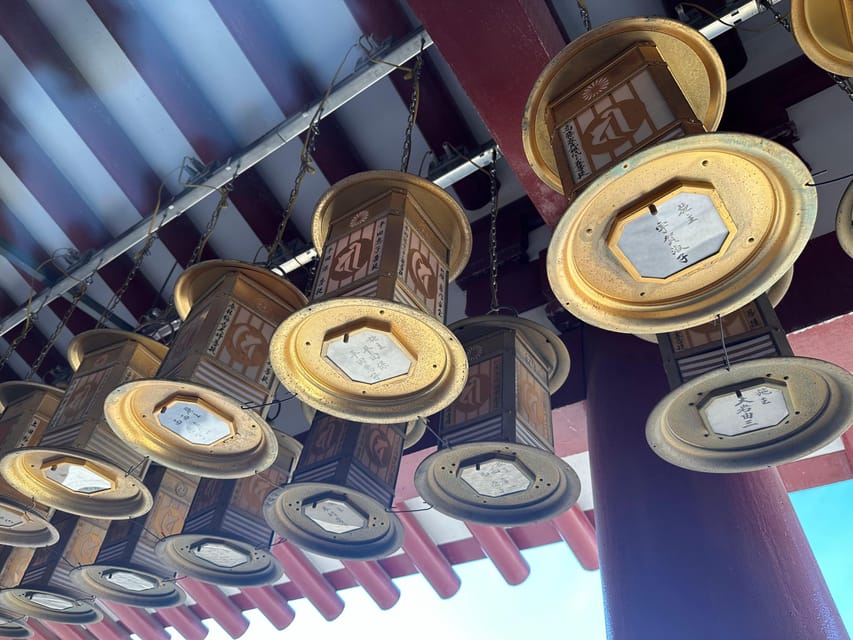
This is a great pick if you like history with a human scale. You’re learning how Buddhism shaped early and urban Japan, and you see that idea through specific places and practices. The Bone Buddhas part alone will appeal to anyone interested in how communities handle grief, memory, and tradition.
It also suits travelers who want more than surface facts. The tour doesn’t just point out buildings—it explains why features like symmetry and Pure Land symbolism matter. If you’re traveling with someone who loves culture but not crowds, the private group format can feel calmer.
If you prefer fast-paced city wandering, you might feel it’s too structured. But if you’re the type who enjoys guided context and spiritual design, you’ll likely find this is the kind of Osaka experience that sticks.
Should You Book This Osaka Oldest Temple & Bone Buddha Walk?
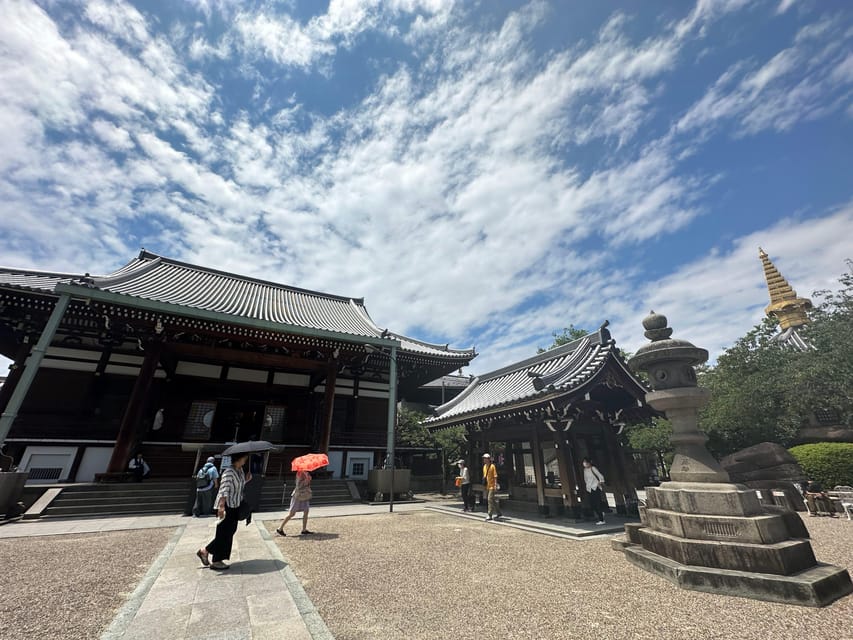
If you want Osaka beyond street food and nightlife, I’d book it. The combination of Shitennoji’s early foundation and Isshinji’s Bone Buddha tradition gives you a focused, meaningful look at how Buddhism actually evolved in a real city.
I’d especially recommend it if you value guides who explain culture and religion in a way that connects ideas—one standout review highlighted exactly that kind of teaching and clarity. At $65 for two guided temple visits with included admissions, the value is solid, particularly if you’d otherwise spend time trying to decode temple symbolism on your own.
Book it if you want quiet depth, good storytelling, and a unique, respectful look at remembrance in Osaka.
FAQ
Where do I meet the guide?
Meet in front of the stone torii gate (Ishidori) at the main entrance of Shitennoji Temple. The guide will be holding a sign with your name.
How long is the tour?
The tour lasts 2 hours.
What’s included in the ticket price?
You get a professional English-speaking guide, guided visits to Shitennoji and Isshinji Temples, admission to Shitennoji’s main temple complex, and admission to the Pure Land Garden.
What is the tour’s main focus?
It focuses on the origins and development of Japanese Buddhism, using Shitennoji and Isshinji as the main stops. You’ll learn how Buddhism influenced early and urban Japan.
Is food included?
No. Food and drinks are not included.
Is the tour private, and what languages are offered?
It’s listed as a private group. The live guide offers English and Japanese.
More Tour Reviews in Osaka
- Osaka Go Karting Tour with Funny Costume★ 5.0 · 2,658 reviews
- Osaka Castle: Museum and Tower Entry Ticket★ 4.5 · 2,380 reviews
- Osaka: Shinsekai Food Tour with 13-15 Dishes at 5 Eateries★ 4.8 · 2,204 reviews
- Osaka Food Tour: 13 Dishes at 5 Local Eateries★ 5.0 · 2,149 reviews
- Hungry Osaka Street Food Tour:15 Tastings & 3 Drinks with a Local★ 5.0 · 1,727 reviews
Osaka at Street Level
- Osaka Local Foodie Walking Tour in Dotonbori and Shinsekai★ 5.0 · 985 reviews
- Osaka: Deep Backstreets Walking Tour with Dinner Option★ 4.9 · 902 reviews
- Ultimate Osaka Walking Tour: Castle, Dotonbori & Hidden Gems★ 5.0 · 862 reviews
- Osaka: Main Sights and Hidden Spots Guided Walking Tour★ 4.9 · 702 reviews
- Private Osaka Walking Tour: Highlights & Hidden Gems★ 5.0 · 569 reviews
Temple Gates and Shrine Paths
- Osaka: Minoh, Katsuoji Temple, & Minoh Falls Full-day Tour★ 4.9 · 172 reviews
- Full Day Kyoto Tour : Bamboo Forest, Golden Temple, Fushimi Inari★ 5.0 · 84 reviews
- Osaka Temple Cool Foot Bath & Matcha Experience〈45min〉★ 4.9 · 82 reviews
- Osaka: Mind & Spirit Balance Temple Reiki Healing★ 5.0 · 41 reviews
- Katsuo-ji Temple, Arashiyama Forest, & Nara Park★ 4.0 · 37 reviews
The Newest Osaka Write-Ups
- Private Photoshoot in Osaka with a Professional Photographer
★ 5.0 · 3 reviews - Osaka Early Morning Osaka Castle Tour Avoid Crowds
★ 5.0 · 3 reviews - Nara Private Tour with Pick and Drop and English Speaking Driver
★ 3.5 · 3 reviews - Osaka: Modern Vegetarian Sushi Cooking Class
★ 5.0 · 3 reviews - Nara Day Trip from Osaka with a Licensed Guide
★ 5.0 · 3 reviews
Osaka Temples & Shrines, compared.
 ★ 4.9Minoh, Katsuoji Temple, & Minoh Falls Full-day TourFrom $135172 reviews
Full Day Kyoto Tour : Bamboo Forest, Golden Temple, Fushimi InariFrom $10584 reviews
★ 4.9Minoh, Katsuoji Temple, & Minoh Falls Full-day TourFrom $135172 reviews
Full Day Kyoto Tour : Bamboo Forest, Golden Temple, Fushimi InariFrom $10584 reviews
 ★ 4.9Osaka Temple Cool Foot Bath & Matcha Experience〈45min〉From $3482 reviews
 ★ 5.0Mind & Spirit Balance Temple Reiki HealingFrom $16141 reviews
 ★ 4.0Katsuo-ji Temple, Arashiyama Forest, & Nara ParkFrom $9137 reviews
 ★ 4.7Minoh Waterfall & Katsuo-ji Temple Half-Day TourFrom $4727 reviews
 ★ 5.0Osaka Half-day E-bike Adventure: Minoh Falls & Katsuoji TempleFrom $3425 reviews
 ★ 4.9Temple Tour and Traditional Calligraphy LessonFrom $2024 reviews
Browse the lists this tour appears in