
Reviewed · OSAKA BY NIGHT
Osaka: Dark Side of Osaka Night Walking Tour
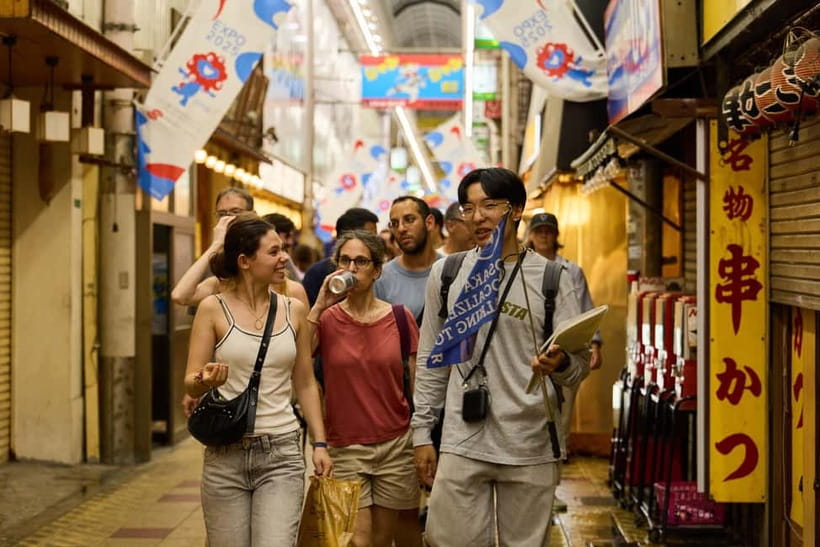
Osaka gets real after dark. This night walking tour turns the spotlight on the harder-to-see parts of urban Japan, moving through Shinsekai, Nishinari, and ending near Tsutenkaku Tower. I especially like the way the guide connects street scenes to real everyday life, with clear explanations and sharp, practical observations. And I also like the strong sense of place, from the retro Shinsekai vibe to the long-running atmosphere of Tobita Shinchi.
One heads-up: this tour includes areas tied to Japan’s red-light culture and the quieter rules that come with it, so you’ll want a respectful mindset—and a little thicker skin.
In This Review
- Key things you’ll notice on this Osaka dark-side walk
- Osaka after dark: what this tour teaches you that day trips don’t
- Meeting at MEGA Don Quijote Shinsekai: find the penguin, then start walking
- Shinsekai: the “New World” district designed like a Western fairground
- Nishinari at night: gritty origins, shifting crowds, real local energy
- Jyanjyan Yokocho: a narrow alley with mid-century nostalgia
- Tobita Shinchi: Osaka’s largest red-light district, explained with care
- Tsutenkaku Tower: the finish line that anchors the whole evening
- What makes the guides stand out on this tour (and why that affects your experience)
- Price and value: $25 for 2 hours is a good deal if you care about context
- Practical tips so you enjoy it (instead of just surviving it)
- Who this tour fits best (and who should skip it)
- Should you book Osaka’s Dark Side Night Walking Tour?
- FAQ
- How long is the Osaka Dark Side Night Walking Tour?
- How much does it cost?
- Where do I meet the guide?
- Where does the tour end?
- Is the tour in English?
- What’s included in the price?
- Are food and drinks included?
- Are smoking or alcohol allowed during the tour?
- Is this tour suitable for children or wheelchair users?
Key things you’ll notice on this Osaka dark-side walk
- A guided, English-first night route: you’re not left to guess what you’re seeing
- Shinsekai’s Western-style design roots: Paris on one side, New York’s Coney Island on the other
- Nishinari’s working-class past and present change: the area’s tone has shifted in recent years
- Jyanjyan Yokocho by Tsutenkaku: a narrow, old-school alley feel for food and browsing
- Tobita Shinchi’s rules and architecture: history over a century, with a tightly managed environment
- Guides who handle sensitive topics politely: names like Jay, Rico, and Matt show up often in the tour experience
Osaka once the neon takes over

Osaka after dark: what this tour teaches you that day trips don’t
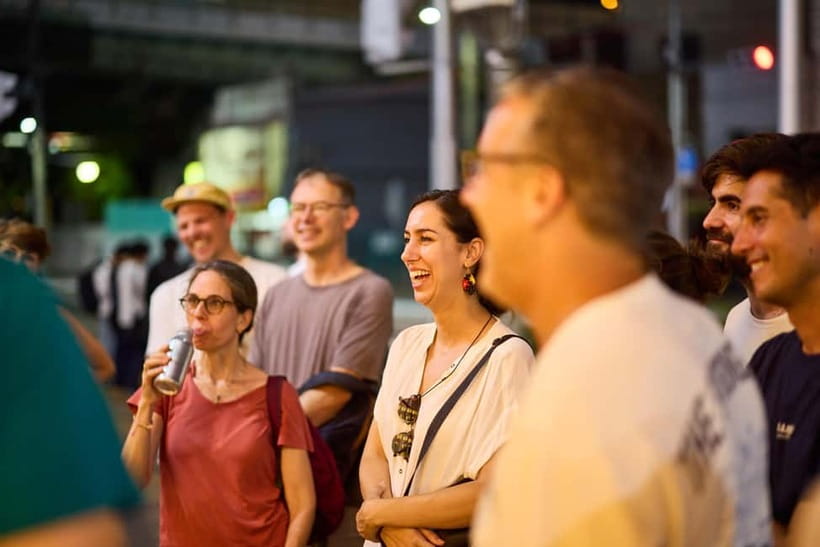
Daytime Osaka is easy to love. Nighttime Osaka is where you start noticing how societies actually work. This 2-hour walk is built for that moment when the street feels alive but the explanations matter. You’re not just passing storefronts. You’re learning what shaped these neighborhoods—and what still shapes them.
The tour’s focus is the side of Japan that’s often skipped in guidebooks. That can sound heavy, and it can be. But the payoff is real context: you learn how history, money, labor, entertainment, and privacy all sit side by side in a place that looks casual on the surface.
I also like that the experience stays practical. You get directions for where to look, what certain areas are known for, and how to stay respectful while you’re there.
Meeting at MEGA Don Quijote Shinsekai: find the penguin, then start walking
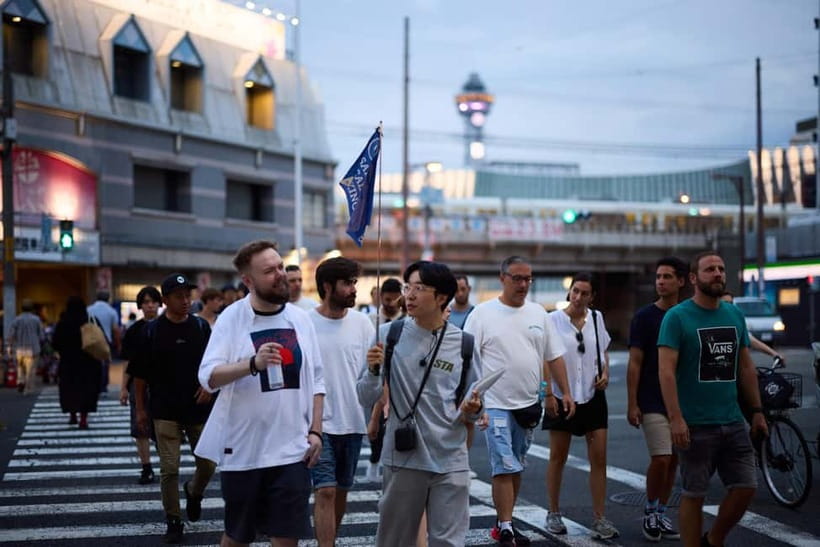
Your start point is simple, which matters at night: the guide waits at Under the Giant Penguin of MEGA Don Quijote Shinsekai. You’ll know it’s your guide because they’re holding a sign that says GetYourGuide.
This kind of meeting spot is useful because you don’t need a map duel before the tour begins. Once you’re together, you can focus on the streets instead of the logistics.
Wear comfortable shoes. This is a walking tour, and the itinerary is paced as a steady evening stroll rather than a sit-down museum style experience.
Shinsekai: the “New World” district designed like a Western fairground
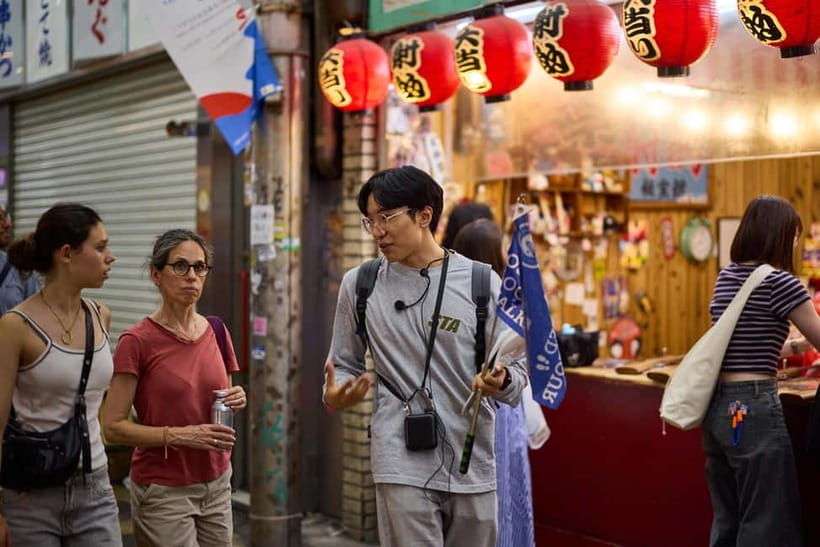
Shinsekai literally means New World, and that name fits the vibe. The area traces back to 1912, when it was built as an entertainment district with Western influence. The details you get from your guide make it more than a “pretty neighborhood” stop.
Here’s the key point: the southern half was modeled after Paris, and the northern half after New York’s Coney Island. That’s not just trivia. It helps you understand why Shinsekai still feels like a time capsule of fun-first urban design—even if the big, original glamour has faded.
On the street, you’ll see that retro tone again and again: signs, facades, and that old entertainment-district rhythm. Shinsekai may feel nostalgic rather than polished, but that’s part of the charm. The guide helps you read what you’re seeing, instead of just taking photos of neon and moving on.
Also, keep your eyes open for the kinds of small etiquette tips guides mention. One guide example from this tour experience: you may hear an explanation for odd wall markings, like a painted torii that effectively means please do not pee here. It’s funny in the moment, but it also tells you something important—Japan has rules, and they often show up in very direct ways.
Osaka block by block, more routes on foot

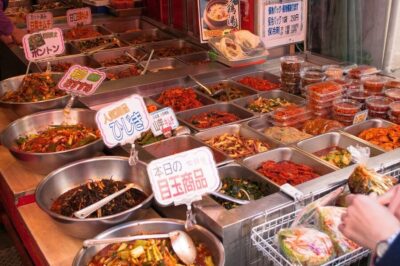
Nishinari at night: gritty origins, shifting crowds, real local energy
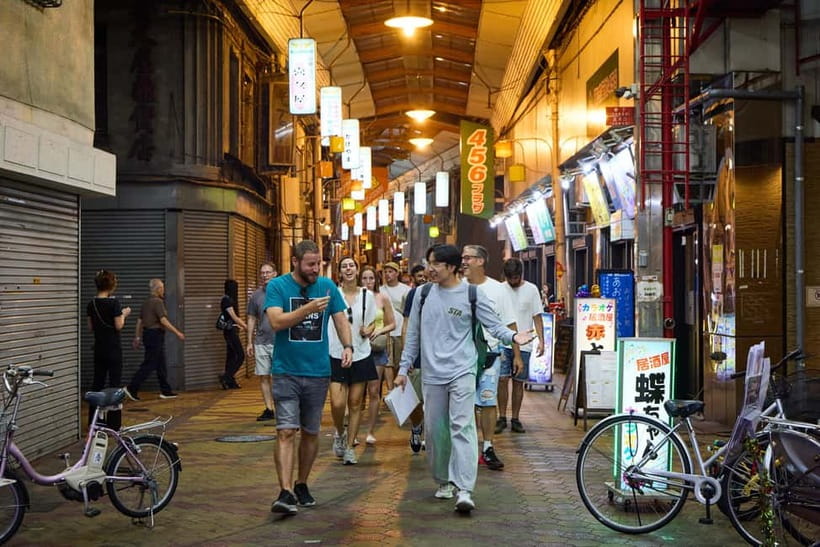
After Shinsekai, the tour heads toward Nishinari, in southern Osaka. This is where the tone gets sharper. Nishinari is known for its working-class roots, including a past tied to day laborers and everyday people who lived closer to the economic edge.
In recent years, Nishinari has been changing. Budget travelers and urban explorers have found it, drawn in by the area’s raw, authentic feel and its evolving street life. Your guide’s job here is to connect the past and the present without turning it into an “only misery” story.
That balance is exactly why this tour can be worthwhile. You get context for why the streets look the way they do, and you get a sense of how the area is being reshaped—by who comes, what gets sold, and how people move through at night.
One practical note: this is the part of the walk where you’ll want to slow down mentally. It’s easy to react to scenes emotionally. A good guide helps you stay respectful and curious.
Jyanjyan Yokocho: a narrow alley with mid-century nostalgia
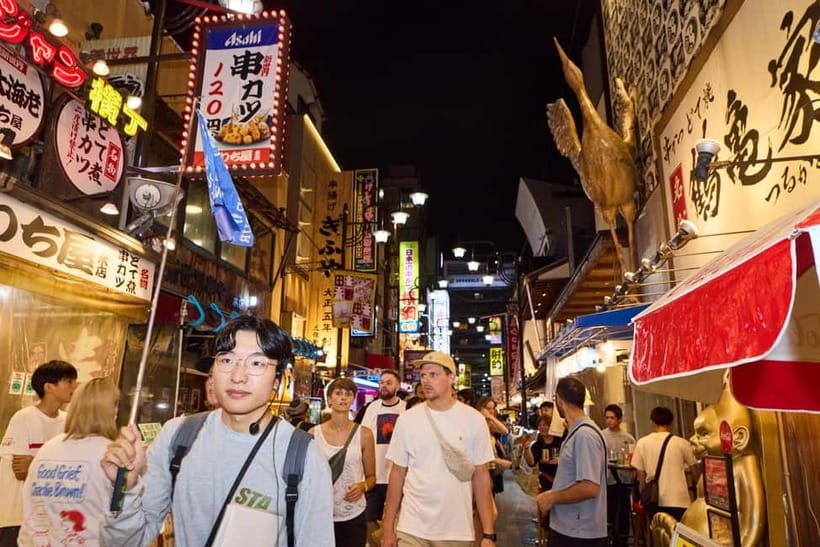
Next comes Jyanjyan Yokocho, a small shopping and dining street in Shinsekai, right near Tsutenkaku Tower. If you like old Osaka vibes, this is the pocket you want.
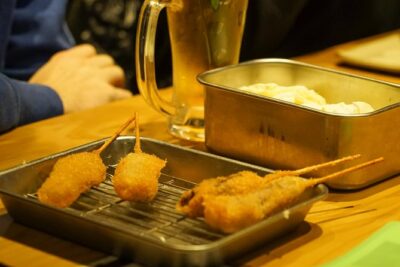
Jyanjyan Yokocho is known for a narrow, old-school atmosphere—think mid-20th-century feel—with eateries, bars, and shops tucked along a tight route. Even if you’re not eating as part of the tour, you’ll likely enjoy the browsing. It’s the kind of place where you notice details quickly: menus, lighting, and the way people drift between doorways.
Two things to remember so you don’t feel caught off guard:
- Food isn’t included in the tour price, so treat Jyanjyan Yokocho as a chance to snack on your own budget.
- The alley feel is closer and more “in the mix” than big streets. Stay aware of foot traffic and keep your pace smooth.
Tobita Shinchi: Osaka’s largest red-light district, explained with care
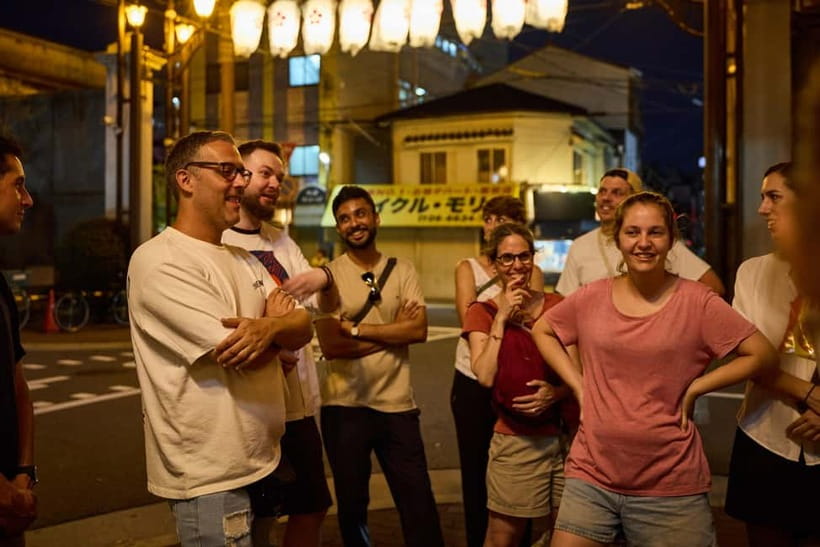
The emotional weight of the tour comes later, when you reach Tobita Shinchi, described as Osaka’s most famous and largest red-light district. The area’s history goes back over a century, and the atmosphere isn’t just old—it’s structured.
Your guide explains it as more than a scandal headline. The tour focuses on what the environment is like and why it’s different from casual nightlife zones. You’ll hear about the area’s unique architectural style and its tightly regulated environment. That combination—distinct buildings plus strict management—is what makes the place feel both theatrical and controlled.
This is also where your guide’s tone matters most. Multiple named guides tied to this tour—people like Jay, Rico, and Matt—are praised for being respectful and diplomatic when discussing sensitive subjects. That’s not small talk. It’s the difference between an information session and a situation that feels exploitative.
If you have a low tolerance for uncomfortable topics, you’ll likely feel it here. If you want real insight into how urban Japan deals with privacy, entertainment, and regulation, it’s a strong stop.
Tsutenkaku Tower: the finish line that anchors the whole evening
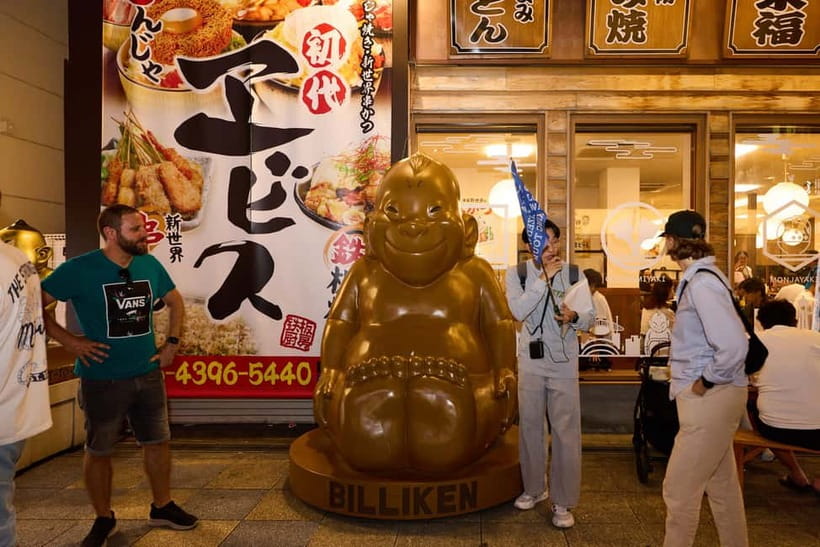
The tour ends at Tsutenkaku. Even if you don’t climb or linger long afterward, Tsutenkaku works as a kind of punctuation mark for the night.
Why? Because the tower isn’t just a landmark. It’s part of the Shinsekai identity, tying together the retro design mood and the evening movement patterns around the district. Finishing there also gives you an easy way to continue your Osaka night without needing extra planning.
What makes the guides stand out on this tour (and why that affects your experience)
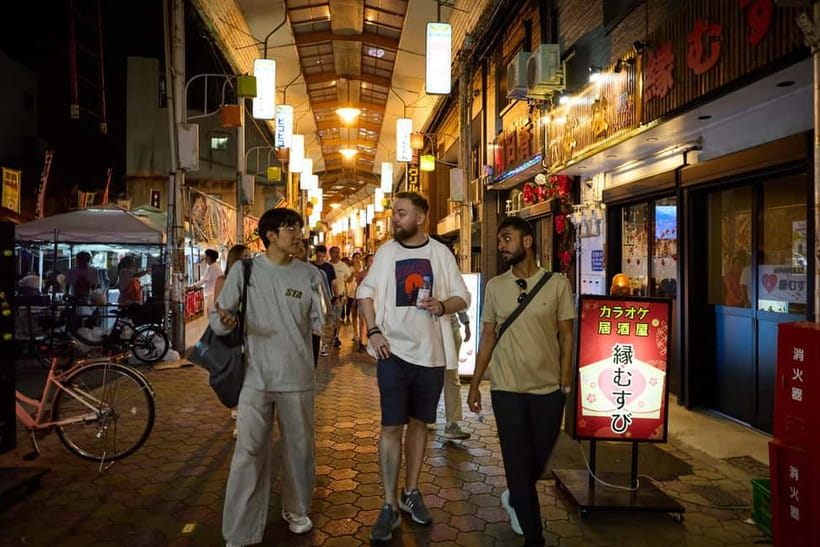
This walk is only as good as the person leading it. What I like here is the consistent theme: the guides are careful with wording, they handle sensitive parts with respect, and they don’t rush.
Guides connected with this experience include Jay, Rico, and Matt—and each gets credit for history + practical street observations. One big compliment shows up again and again: guides can connect what you’re seeing to both past context and modern-day reality, including recent anecdotes.
Another point that’s genuinely helpful for you: the pace leaves room for questions. You’re on foot, in close quarters with a group, so if you have curiosity—like how a neighborhood changed, or why certain places operate the way they do—you can ask instead of guessing.
Some groups have also been quite small in practice (one example given was a group of six). A smaller group matters because it makes it easier for the guide to tailor explanations and keep you comfortable when the conversation gets more serious.
Price and value: $25 for 2 hours is a good deal if you care about context

At $25 per person for about 2 hours, you’re paying for one main thing: a live English guide who can translate the street into meaning.
Food and drinks aren’t included, so don’t plan on this as a meal. But you are getting multiple neighborhood stops in one compact block of time, with explanations built around the areas people often skip. If you want a normal Osaka night, you can do that on your own. If you want the story behind the streets, a guide at this price is solid value.
Also, the tour’s focus means you’re not just paying for walking. You’re paying to understand how Shinsekai’s Western-inspired design, Nishinari’s labor roots, and Tobita Shinchi’s regulated nightlife all fit into Osaka’s bigger picture.
Practical tips so you enjoy it (instead of just surviving it)
A few basics will make this night walk easier:
- Shoes: wear comfortable walking shoes. The route is on foot and the time adds up.
- Weather: Osaka nights change fast. Bring a light layer and be ready for rain.
- Respect local rules: you’re told smoking isn’t allowed. Alcoholic drinks aren’t allowed in the vehicle, so keep things sensible if you’re in any short transport segment.
- Bring water or a small snack outside the tour plan: food isn’t included, so plan your own needs.
- Distance and comfort: this isn’t a sit-and-stare experience. You’ll be moving for most of the tour.
One more thought: if you’re the type who likes quiet observation, tell yourself ahead of time that you’re visiting neighborhoods with real people living and working nearby. That mindset helps you stay respectful and grounded.
Who this tour fits best (and who should skip it)
This isn’t a kids’ tour. It’s not suitable for children under 18, and it’s not suitable for wheelchair users.
Who will enjoy it most:
- Adults who want more than neon and restaurants
- People interested in how cities manage entertainment and labor spaces
- Travelers who like history explained through actual streets, signs, and daily behavior
Who might struggle:
- Anyone uncomfortable with red-light culture topics
- Anyone who prefers only cheerful, postcard scenes
If you’re unsure, go with your instinct. This is designed for honesty, not comfort.
Should you book Osaka’s Dark Side Night Walking Tour?
If you want Osaka that goes beyond the usual photos, I’d say yes—with the right expectations. This tour is about context, explanation, and a respectful look at parts of the city that many people avoid. The guides linked to this experience—people like Jay, Rico, and Matt—are praised for handling sensitive material in a careful, diplomatic way and answering questions.
But if you’re easily shaken by discussions tied to red-light districts, or if you’re traveling with someone who needs a gentler theme, you might choose another evening walk in Osaka instead.
Bottom line: book it if you want a guided, adult-focused night story you can actually use to understand Osaka. Skip it if you’re only here for light entertainment and you don’t want the shadowy side of the city as part of your itinerary.
FAQ
How long is the Osaka Dark Side Night Walking Tour?
The tour lasts 2 hours.
How much does it cost?
It costs $25 per person.
Where do I meet the guide?
Meet your guide at Under the Giant Penguin of MEGA Don Quijote Shinsekai. The guide is holding a sign that says GetYourGuide.
Where does the tour end?
The tour finishes at Tsūtenkaku.
Is the tour in English?
Yes, the live guide provides the tour in English.
What’s included in the price?
The price includes a live tour guide and a walking tour through Osaka’s historic getto area and red-light district.
Are food and drinks included?
No. Food and drinks are not included.
Are smoking or alcohol allowed during the tour?
Smoking is not allowed. Alcoholic drinks are not allowed in the vehicle.
Is this tour suitable for children or wheelchair users?
No. It’s not suitable for children under 18 and not suitable for wheelchair users.
More Tour Reviews in Osaka
- Osaka Go Karting Tour with Funny Costume★ 5.0 · 2,658 reviews
- Osaka Castle: Museum and Tower Entry Ticket★ 4.5 · 2,380 reviews
- Osaka: Shinsekai Food Tour with 13-15 Dishes at 5 Eateries★ 4.8 · 2,204 reviews
- Osaka Food Tour: 13 Dishes at 5 Local Eateries★ 5.0 · 2,149 reviews
- Hungry Osaka Street Food Tour:15 Tastings & 3 Drinks with a Local★ 5.0 · 1,727 reviews
Osaka at Street Level
- Osaka Local Foodie Walking Tour in Dotonbori and Shinsekai★ 5.0 · 985 reviews
- Osaka: Deep Backstreets Walking Tour with Dinner Option★ 4.9 · 902 reviews
- Ultimate Osaka Walking Tour: Castle, Dotonbori & Hidden Gems★ 5.0 · 862 reviews
- Osaka: Main Sights and Hidden Spots Guided Walking Tour★ 4.9 · 702 reviews
- Private Osaka Walking Tour: Highlights & Hidden Gems★ 5.0 · 569 reviews
Osaka Under Neon
- Osaka Nighttime tour★ 5.0 · 270 reviews
- Osaka After Dark: Small-Group Night Food Tour (Max 6)★ 4.5 · 245 reviews
- OSAKA NIGHT FUSION Japanese Taiko Kabuki Samurai Dance Show★ 4.8 · 155 reviews
- Osaka: Bar-Hopping Night Tour in Namba★ 4.7 · 117 reviews
- Osaka: Private Vibrant Nighttime Photoshoot (Dotonbori)★ 4.9 · 80 reviews
The Newest Osaka Write-Ups
- Private Photoshoot in Osaka with a Professional Photographer
★ 5.0 · 3 reviews - Osaka Early Morning Osaka Castle Tour Avoid Crowds
★ 5.0 · 3 reviews - Nara Private Tour with Pick and Drop and English Speaking Driver
★ 3.5 · 3 reviews - Osaka: Modern Vegetarian Sushi Cooking Class
★ 5.0 · 3 reviews - Nara Day Trip from Osaka with a Licensed Guide
★ 5.0 · 3 reviews
Osaka by Night, compared.
 ★ 5.0Osaka Nighttime tourFrom $198270 reviews
 ★ 4.5Osaka After Dark: Small-Group Night Food Tour (Max 6)From $116245 reviews
 ★ 4.8OSAKA NIGHT FUSION Japanese Taiko Kabuki Samurai Dance ShowFrom $40155 reviews
 ★ 4.7Bar-Hopping Night Tour in NambaFrom $112117 reviews
 ★ 4.9Private Vibrant Nighttime Photoshoot (Dotonbori)From $10980 reviews
 ★ 5.0Osaka Night Walk : Discover Umeda Food and PubFrom $11234 reviews
 ★ 5.0Hidden Gems and Bustling Districts of Osaka Night TourFrom $8833 reviews
 ★ 5.0Night Soul Food Tour in Shinsekai with a local guideFrom $8528 reviews
Browse the lists this tour appears in