
Reviewed · OSAKA FOOD & TASTING TOURS
Osaka After Dark: Small-Group Night Food Tour (Max 6)
Osaka night food feels like a cheat code. This small-group evening tour sends you through the local streets of Tenma and Kyobashi, avoiding the most obvious tourist lanes while keeping the pace easy enough to enjoy it. You’ll get a guided look at how Osaka eats after dark, not just where to point your camera.
I like two things a lot. First, the group stays tight (max six), which makes it feel like you’re tagging along with someone who actually knows the neighborhood. Second, the tour is built around dinner plus three drinks, with public transit included while you hop between areas.
One drawback to plan for: the night includes moderate walking and some culture/history context, so it’s not a nonstop gourmet marathon where you only chase the most famous dishes.
In This Review
- Key highlights worth planning for
- Entering Tenma and Kyobashi after dark (and why it matters)
- Group size, pace, and what max six really changes
- Price and value: what you get for $116.93
- Stop 1: Pulala Tenma and the 35-minute neighborhood intro
- Stop 2: Ogimachi Park for a quick breather and seasonal charm
- Stop 3: Tenjimbashisuji’s covered street energy (without the shopping trap)
- Stop 4: Kyobashi Station and the Tokaido connection
- What you actually eat and drink (and why it can be more than one style)
- Alcohol and drink expectations
- Guide impact: why names like Hugo and Ferdinand keep showing up
- Practical tips so the night feels easy, not stressful
- Who should book this, and who should skip it
- Should you book Osaka After Dark (max 6)?
- FAQ
- What time does the tour start, and how long is it?
- Where do I meet the guide, and where does the tour end?
- How big is the group?
- Is dinner included?
- What about drinks—are alcoholic options included?
- How does transportation work during the tour?
- How much walking is involved?
- What happens if the tour is canceled due to weather?
Key highlights worth planning for
- Max six people keeps conversations going and reduces the usual walking-stampede problem.
- Dinner and three drinks are included, so you’re not doing mental math at every stop.
- Tenma and Kyobashi, not the obvious tourist route gives you a more local Osaka at night.
- A real pace break at Ogimachi Park makes the evening feel less rushed.
- Covered shopping streets plus a train hop mix “see the city” with “eat the city.”
- Drink choice is flexible (alcoholic or non-alcoholic options are part of the package).
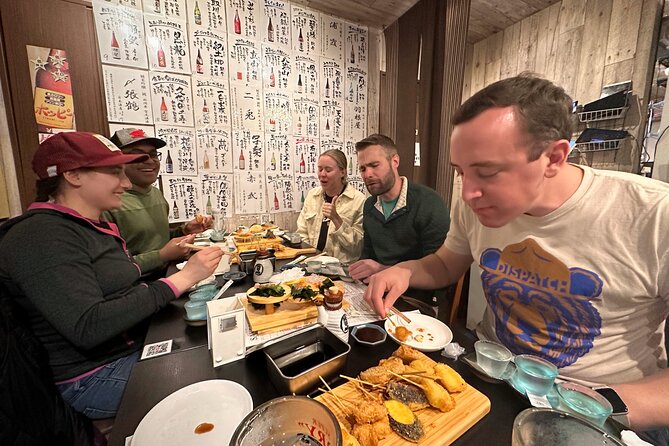
Come hungry: more eating your way through Osaka

Entering Tenma and Kyobashi after dark (and why it matters)
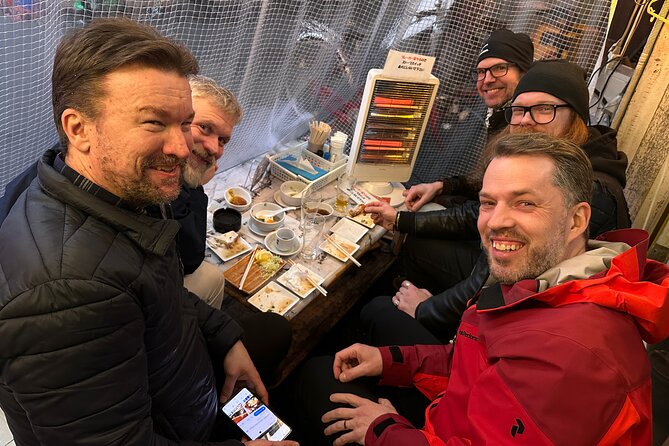
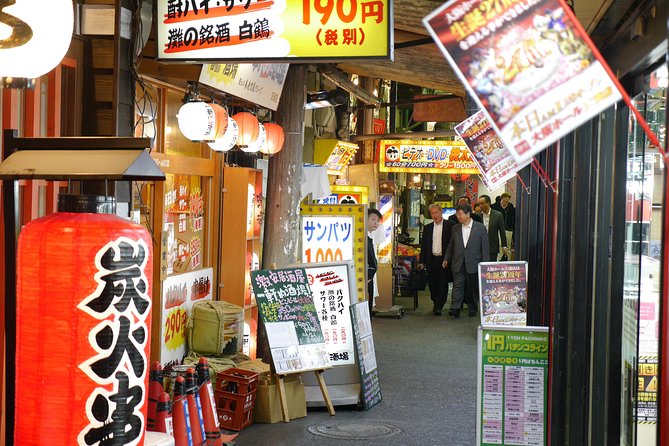
Osaka at night can feel like a menu of neighborhoods. What this tour does well is place you in two districts where you can watch daily life continue—people eating, chatting, and moving between alleys—without you feeling like you’re stuck in a theme park.
Tenma and Kyobashi are a smart pair. Tenma gives you that older, residential-feeling Osaka texture, with side streets that reward slow walking. Then you shift over to Kyobashi by train, so the second half doesn’t feel like the first half with the volume turned up.
I also appreciate that the tour’s focus is local food culture, not just snack hopping. Osaka food isn’t only about the dish; it’s about the rhythm—how you order, how you share, how night streets change what you notice.
Group size, pace, and what max six really changes
The tour caps the group at six (and the experience can run up to eight, but the promise is still small). That size matters more than you’d think. When you’re in a larger group, guides end up doing traffic control. Here, the guide can slow down, answer questions, and help you understand what you’re looking at—especially in izakaya-style spots where the menu can be less straightforward for non-Japanese speakers.
Pacing is also built into the plan. You’re not sprinting from one place to the next. The schedule includes walking blocks and a short park pause, then a train ride between districts. Expect the walking to be moderate, so plan on comfortable shoes and an easy attitude. This tour is designed for an evening stroll that happens to include tastings.
Price and value: what you get for $116.93
At $116.93 per person for about three hours, this isn’t a bargain meal. But it’s also not “just pay for dinner and a guide.”
Here’s the value math that matters:
- You’re included for dinner.
- You get three alcoholic or non-alcoholic drinks as part of the package.
- Public transportation fees are included while you’re on tour, including the train transfer.
- You’re getting a guide to steer you into local-area choices and help you order in a way that fits what you’re about to experience.
If you were to recreate this on your own, you’d spend money on dinner, drinks, and transit anyway—and you’d still be paying the guide’s job: finding the right place, timing it, and explaining what to look for once you’re there. The price starts to feel fair if you want the local “how” as much as the local “what.”
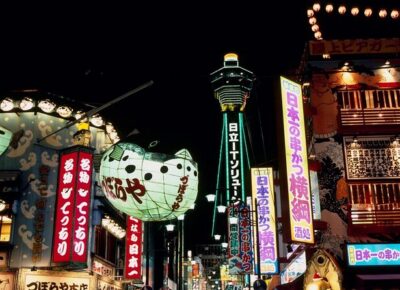
Osaka once the neon takes over
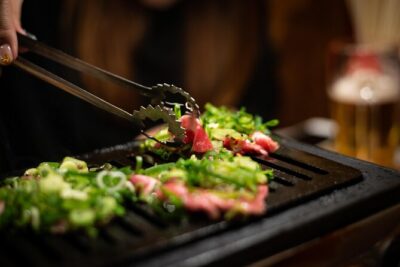
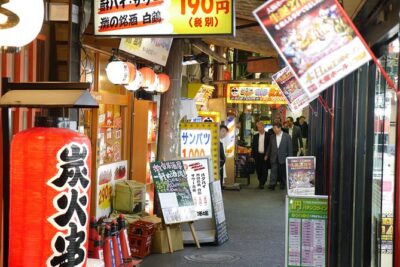
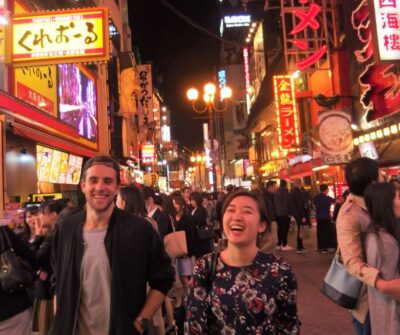
Stop 1: Pulala Tenma and the 35-minute neighborhood intro
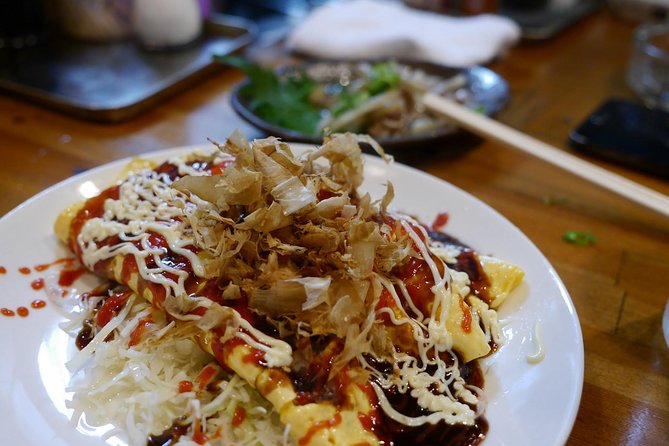
Pulala Tenma is your first real dose of Osaka’s everyday texture. You’re in a historic neighborhood zone, and the tour doesn’t only treat it as a food corridor. You get a guided walk that’s about 35 minutes, built to give you context for what you’ll see next—history, how the area functions now, and why this part of town feels the way it does at night.
This is also the longest block on the schedule (about 1 hour 30 minutes total). That usually means more than just passing through. You can expect the dinner and tastings to be folded into this Tenma portion, along with the guide explanations that help you make sense of the menu choices.
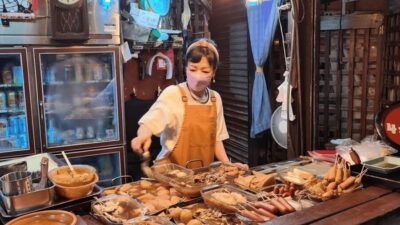
What I like here: you’re learning while you walk, so the food stops feel less random. What to watch for: Tenma’s side streets are where you’ll notice the “standing counter” culture. Some venues in this style can mean less seating. If you’re the type who likes a full table meal, you might want to mentally prepare for counter-style dining as part of the authentic mix.
Stop 2: Ogimachi Park for a quick breather and seasonal charm
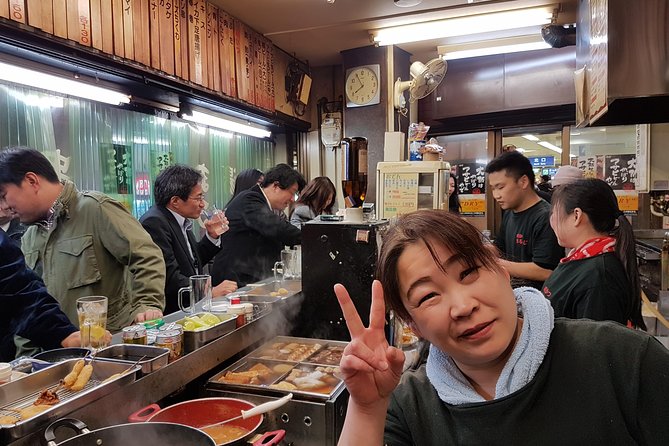
You get a short pause at Ogimachi Park (about 15 minutes). The point isn’t sightseeing for hours; it’s to break the walking rhythm. Even on a food tour, that pause matters. It lets you reset your appetite and gives you a moment outside the alley-to-alley motion.
The park also has a seasonal draw: cherry blossoms can make this stop especially pretty in spring. Even if the season isn’t peak, the value is the breathing room.
Stop 3: Tenjimbashisuji’s covered street energy (without the shopping trap)
Tenjimbashisuji is the famous covered shopping street, and you’ll spend about 15 minutes on a portion of it. The tour frames it as a “feel the scene” stop, not a shopping push. So you’ll be using it like a stage—watching the flow of locals moving along a roofed corridor—rather than hunting for souvenirs.
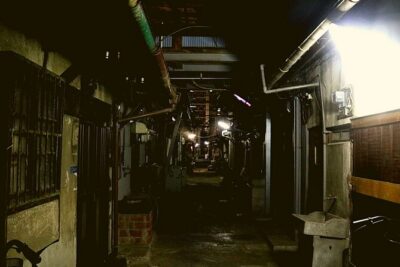
This stop is useful because it anchors you in Osaka’s in-between zones. Even when you’re off the major tourist lines, the covered streets create that same comfortable nighttime atmosphere: lights overhead, smells drifting out of small food places, and a sense that this is where daily life happens.
The only consideration: if you’re traveling with a strict plan to maximize pure eating minutes, a short “walk-and-look” stop can feel like a breather you didn’t ask for. Here, though, it’s short enough that it usually balances out.
Stop 4: Kyobashi Station and the Tokaido connection
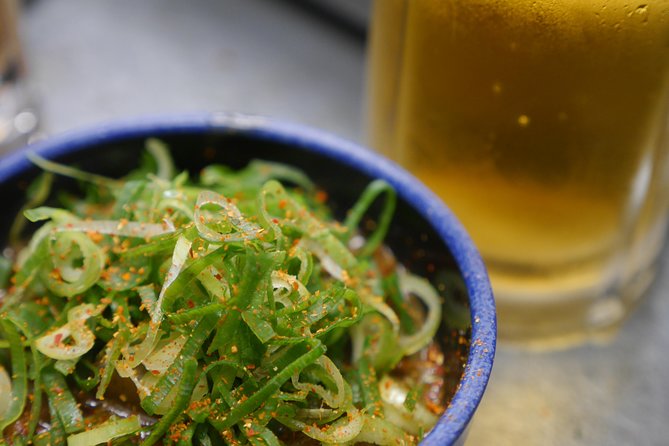
After Tenma, you take a short train ride to Kyobashi with the fare included (about 1 hour on the Kyobashi side in the schedule). The meeting/end point is Kyobashi Station, which links easily onward—JR/subway access plus the Keihan line for Kyoto.
Kyobashi is where you start to feel the route’s logic. You don’t just repeat the same street style for the entire night. You shift neighborhoods, and that helps keep the food culture from feeling one-note.
The area is connected to the Tokaido road—the historic route between Tokyo and the Kansai region. Your guide uses that connection to paint a picture of how major routes shape city life. It’s one of those details that turns a station-area stop into something you can actually understand, instead of just using it as a transit point.
What you actually eat and drink (and why it can be more than one style)
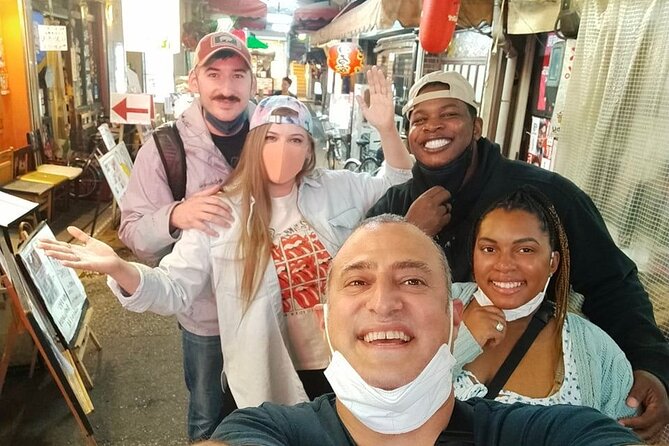
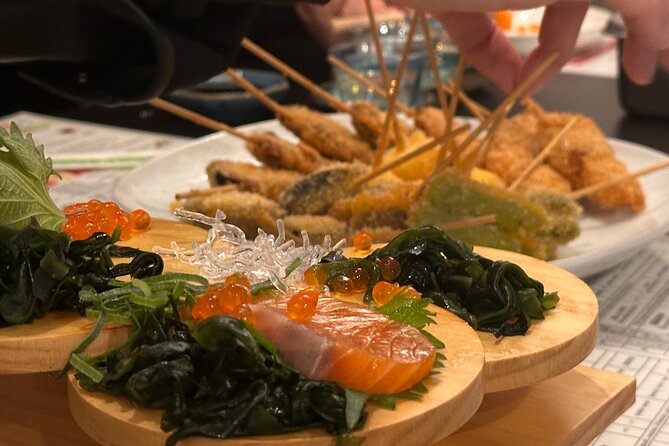
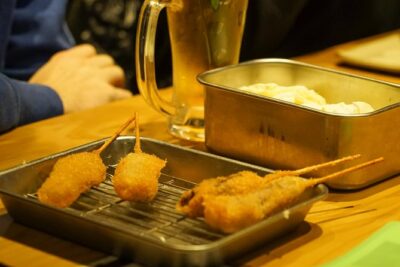
This is a night food tour with three restaurant stops built into the evening, plus dinner and three drinks. You’re tasting across different styles of Osaka night eating, which is a big part of what people seem to love.
A frequent theme in the guide experience: the tastings are described as varied, with dishes that surprise people—in a good way for most. One common high praise angle is that the places chosen aren’t the usual obvious circuit, and the guide helps you understand what’s going on so you can enjoy it instead of guessing.
Also, the menu plan is meant to accommodate different tastes. The operator states they aim for at least 15 dishes across the evening. That’s why many people end up feeling stuffed by the second stop, even when they’re not trying to “eat everything.”
Now, the balanced part: some people go into these tours expecting only familiar favorites and end up less happy if the menu leans adventurous. There’s also a comment from one unhappy experience about food feeling unusual or not great. That doesn’t mean the tour is low quality—it means if you’re very picky, you need a heads-up style of communication before the night starts.
If you have food restrictions, do tell the guide what you avoid right away. One review noted that substitutions were arranged for a couple items. Not every tour can guarantee swaps for every ingredient, but early clarity helps.
Alcohol and drink expectations
The package includes three alcoholic or non-alcoholic drinks. Japan’s legal drinking age is 20, and serving of alcohol is handled based on that rule. If you’re not drinking, you still get the same count of drinks—just non-alcoholic options. Either way, it’s smart to pace yourself, especially with counter-style dining where you’re tasting multiple things close together.
Guide impact: why names like Hugo and Ferdinand keep showing up
The tour experience tends to rise or fall on the guide, and the guide line-up here is repeatedly praised for being lively and informative. In the data you provided, guides named Hugo, Kevin, Levy, Ferdinand, Alejandro, Lito, Damian, Joshua, Matthew, Bryan, Brent, and Damien are all mentioned positively, often for being fun, social, and able to explain both food and local customs.
What you should look for when you meet your guide is how they handle ordering and pacing. A strong guide does three jobs:
- Explains what you’re eating in plain language.
- Helps the group move smoothly between spots.
- Keeps the tour from turning into a long walk with occasional bites.
That last point matters because one review criticized the tour as not being purely food-focused. The best guides lean into the balance: enough storytelling to make the streets meaningful, without making the food feel like an afterthought.
Practical tips so the night feels easy, not stressful
Here’s how to set yourself up for success.
- Wear comfortable shoes. Moderate walking is part of the design.
- Have a light plan for your stomach. With multiple dishes and drinks, you’ll likely be quite full by the end.
- Bring a flexible appetite. Osaka night eating can include flavors that feel new. If you’re adventurous, you’ll love the variety.
- Ask quick questions. If you don’t understand a dish or want context, the small group helps you get answers.
- Expect some walking between “looks” and “tastes.” The park and the covered street are short, but they’re there for pacing.
If you’re the kind of person who wants only top-tier, sit-down, restaurant-quality meals back-to-back, this might not be your exact match. If you want an authentic nighttime route with local ordering help and a decent variety of dishes, it’s a strong choice.
Who should book this, and who should skip it
You should book it if:
- You want a local-feeling Osaka night without jumping into the most obvious tourist-heavy areas.
- You like guided explanations that help you understand what you’re eating and why.
- You’re happy with a mix of walking, short breaks, and multiple tastings.
You might skip it if:
- You’re expecting a strict gourmet tasting where every course is a guaranteed crowd-pleaser with familiar flavors.
- You dislike any food that feels experimental.
- You prefer longer seated dining time and fewer walking blocks.
Should you book Osaka After Dark (max 6)?
My take: this is a good bet if you want Osaka at night to feel lived-in. The small-group size, the focus on Tenma and Kyobashi, and the fact that dinner plus three drinks are built into a timed evening all point to solid value for people who want more than a list of places.
Book it if you’re curious. Bring comfortable shoes and a willingness to try what you’ve never ordered before. Pass if you want a purely restaurant-driven food festival with minimal walking and zero surprises.
FAQ
What time does the tour start, and how long is it?
It starts at 6:00 pm and runs for about 3 hours.
Where do I meet the guide, and where does the tour end?
You start at McDonald’s in front of Temma Station and end at Kyobashi Station (front plaza area).
How big is the group?
The tour is listed as a small-group experience with a maximum of six guests (and the experience notes it can have a maximum of eight travelers).
Is dinner included?
Yes. Dinner is included as part of the tour.
What about drinks—are alcoholic options included?
You get three alcoholic or non-alcoholic drinks. The tour notes Japan’s legal drinking age is 20, and alcohol service follows that age rule.
How does transportation work during the tour?
You pay nothing extra for the transit used during the experience. Public transportation fees are included, including a train ride between areas.
How much walking is involved?
The tour includes a moderate amount of walking, so comfortable shoes are recommended.
What happens if the tour is canceled due to weather?
This tour requires good weather. If it’s canceled for poor weather, you’ll be offered a different date or a full refund.
More Tour Reviews in Osaka
- Osaka Go Karting Tour with Funny Costume★ 5.0 · 2,658 reviews
- Osaka Castle: Museum and Tower Entry Ticket★ 4.5 · 2,380 reviews
- Osaka: Shinsekai Food Tour with 13-15 Dishes at 5 Eateries★ 4.8 · 2,204 reviews
- Osaka Food Tour: 13 Dishes at 5 Local Eateries★ 5.0 · 2,149 reviews
- Hungry Osaka Street Food Tour:15 Tastings & 3 Drinks with a Local★ 5.0 · 1,727 reviews
Osaka Under Neon
- Osaka Nighttime tour★ 5.0 · 270 reviews
- OSAKA NIGHT FUSION Japanese Taiko Kabuki Samurai Dance Show★ 4.8 · 155 reviews
- Osaka: Bar-Hopping Night Tour in Namba★ 4.7 · 117 reviews
- Osaka: Dark Side of Osaka Night Walking Tour★ 4.9 · 89 reviews
- Osaka: Private Vibrant Nighttime Photoshoot (Dotonbori)★ 4.9 · 80 reviews
The Kuidaore List: Eat More of Osaka
- Osaka: Shinsekai Food Tour with 13-15 Dishes at 5 Eateries★ 4.8 · 2,204 reviews
- Osaka Food Tour: 13 Dishes at 5 Local Eateries★ 5.0 · 2,149 reviews
- Hungry Osaka Street Food Tour:15 Tastings & 3 Drinks with a Local★ 5.0 · 1,727 reviews
- Deep Backstreet Osaka Tours (Option to add Dinner)★ 5.0 · 1,290 reviews
- Osaka Local Foodie Walking Tour in Dotonbori and Shinsekai★ 5.0 · 985 reviews
The Newest Osaka Write-Ups
- Private Photoshoot in Osaka with a Professional Photographer
★ 5.0 · 3 reviews - Osaka Early Morning Osaka Castle Tour Avoid Crowds
★ 5.0 · 3 reviews - Nara Private Tour with Pick and Drop and English Speaking Driver
★ 3.5 · 3 reviews - Osaka: Modern Vegetarian Sushi Cooking Class
★ 5.0 · 3 reviews - Nara Day Trip from Osaka with a Licensed Guide
★ 5.0 · 3 reviews
Osaka Food & Tasting Tours, compared.
 ★ 4.8Shinsekai Food Tour with 13-15 Dishes at 5 EateriesFrom $532,204 reviews
 ★ 5.0Osaka Food Tour: 13 Dishes at 5 Local EateriesFrom $732,149 reviews
 ★ 5.0Hungry Osaka Street Food Tour:15 Tastings & 3 Drinks with a LocalFrom $731,727 reviews
 ★ 5.0Deep Backstreet Osaka Tours (Option to add Dinner)From $531,290 reviews
 ★ 5.0Osaka Local Foodie Walking Tour in Dotonbori and ShinsekaiFrom $111985 reviews
 ★ 4.9Deep Backstreets Walking Tour with Dinner OptionFrom $40902 reviews
 ★ 4.9Hungry Osaka Street Food Tour: 15 Dishes & 3 DrinksFrom $79694 reviews
 ★ 5.0Kuromon Market Food Walking Tour in Osaka (6 stops, 6 tastes)From $50550 reviews
Browse the lists this tour appears in