
Reviewed · OSAKA FOOD & TASTING TOURS
【For adult】Traditional Mochi Pounding Experience with Tasting
Mochi gets serious when you pound it yourself. This one-hour Osaka class centers on a hands-on tradition: you steam glutinous rice, use traditional tools to pound it into mochi, and then eat what you made with five seasonings/ingredients and tea. I like the fact that you start with a short 10-minute history talk, so the pounding has meaning beyond snack time. I also like the energy of the small group, with friendly staff such as Aiko, Grace, Seina, Runa, Mao, and Riki keeping everyone included.
In This Review
- The one thing to plan for
- Key moments that make this worth your time
- Mochi pounding in Osaka: what you’re really doing
- The 10-minute history talk: short, practical context
- Steamed rice to mochi: the active step you’ll remember
- Traditional tools and “turn taking”: how the class keeps you involved
- Mochi toppings and tea: how you build a bite
- What it costs and why the value makes sense
- Location near Dotonbori: convenient, but arrive ready
- Who should book this mochi pounding class
- Should you book this mochi class?
- FAQ
- Where is the meeting point for this mochi pounding experience?
- How long does the experience take?
- What do I do during the class?
- What toppings and drinks are included?
- Do they offer English or other language support?
- Is it a small-group experience?
- Is this experience suitable for vegans, vegetarians, or families?
The one thing to plan for
The room can get warm during the active pounding part, so wear something light and breathable. And if you’re bringing older folks, keep portions small since rice cakes can pose a choking risk.
Come hungry: more eating your way through Osaka



Key moments that make this worth your time
- Small-group instruction (max 10 travelers) so you actually get to take a turn at the mortar and pestle
- A short history briefing that connects mochi pounding to Japanese culture before you start working the dough
- Fresh mochi made on-site rather than tasting prepackaged sweets
- Tasting with tea plus multiple topping choices like kinako and sweet red bean paste
- English support and Chinese help through slides or interpretation, so you can follow along easily
Mochi pounding in Osaka: what you’re really doing
This isn’t a passive food show. You’re participating in a craft that Japanese people associate with everyday eating and special occasions. The class is built around three stages: learn the context, make the mochi with traditional tools, then taste it immediately while it’s at its best.
What makes it feel authentic in Osaka is the pacing. You begin with a quick talk about why mochi pounding matters, then you jump into the process right away. You’re not just learning facts; you’re using your hands, reacting to the texture as it changes, and getting guidance so you don’t feel lost.
And because it’s a small group, the instructor can keep an eye on everyone’s technique. The best part is that the tools don’t just sit there for show—you’ll take a turn pounding. Even in the short time you have, the experience feels complete: rice becomes mochi, and then you get to eat it.
The 10-minute history talk: short, practical context
The class kicks off with a 10-minute talk on the history and cultural significance of mochi pounding. You should expect this to be clear and focused, not a lecture that runs long. It’s designed to give you something to hang on to while you’re working.
I like this format because it changes how you experience the pounding. Once you understand mochi as a tradition people recognize, the steam, the pounding rhythm, and the texture shift feel purposeful. It also helps if you’re pairing this with other Osaka food stops—suddenly you’re not just collecting sweets, you’re understanding a food tradition.
Also, the staff in this class are big on explaining what you’re doing in plain language. English is supported, and Chinese support is provided via slides or interpretation, which makes the history portion easier to follow even if your Japanese is limited.
Flour on your hands, more Osaka kitchens to try


Steamed rice to mochi: the active step you’ll remember
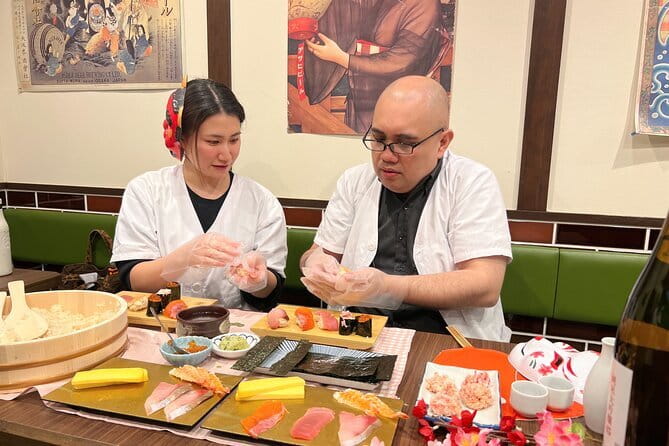
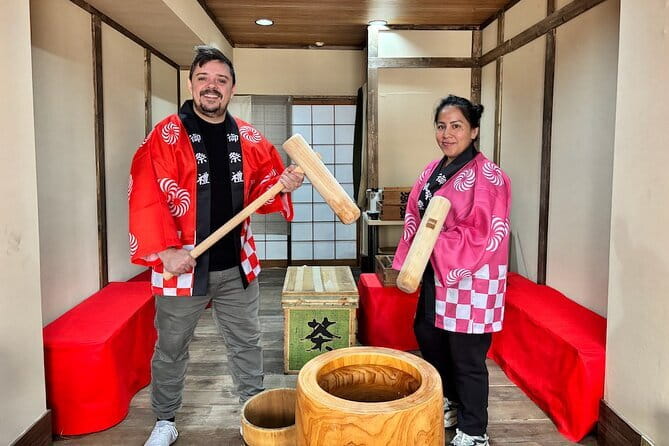
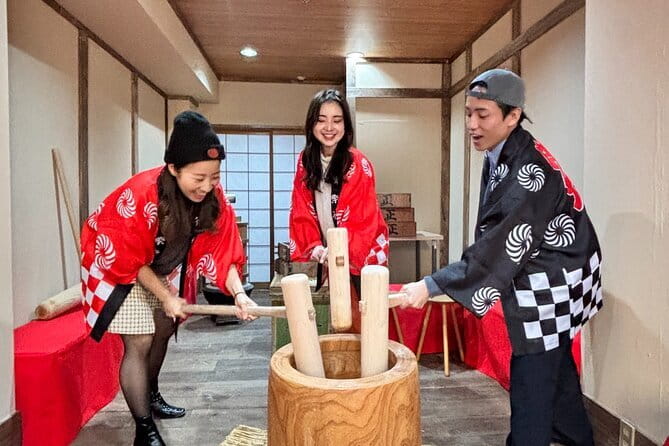
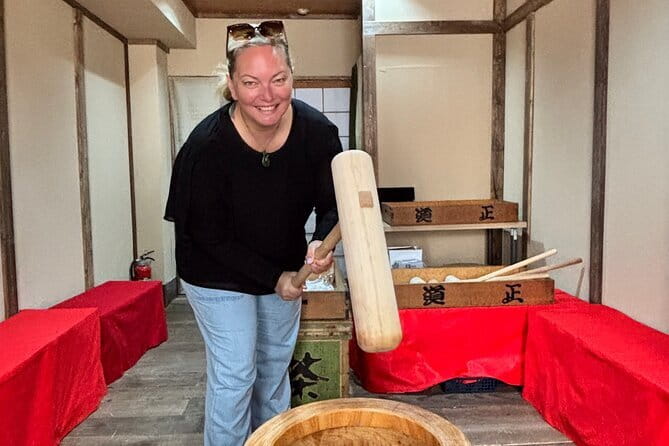
After the talk, you join the hands-on work. The process starts with steaming glutinous rice. Then comes the part most people came for: pounding the steamed rice into mochi using traditional tools—typically a mortar and pestle style setup.
This is where the class becomes fun, fast, and slightly workout-ish. You’ll feel the pace shift as the rice turns from fluffy and separate into sticky and unified. In a group setting, that transformation is surprisingly satisfying because you’re doing the work at the same time as everyone else.
A couple practical notes that matter here:
- The room can get warm during the pounding stage, so choose lightweight clothing.
- The staff will guide you, but you’re still handling something hot and sticky. If you’re the type who worries about messing up, don’t. The whole activity is built around learning-by-doing.
One more nice detail: the class setup supports participation for different ages. For kids, there’s mention of smaller mallets so they can join in, not just watch from the side.
Traditional tools and “turn taking”: how the class keeps you involved
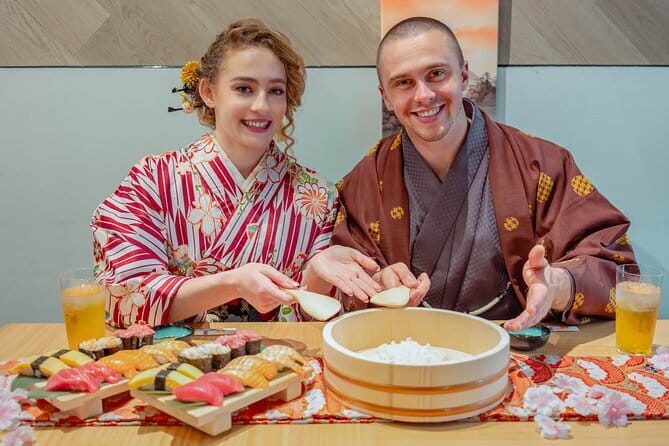
With a maximum of 10 travelers, you’re unlikely to get stuck waiting while everyone else goes first. The instructors keep things moving and make sure participants take turns pounding. That turn-taking is more than fairness—it’s how the class stays lively and social.
From the staff names shared in feedback, it’s clear the team makes an effort to keep everyone comfortable. People highlight that the hosts are welcoming and that they help participants join in right from the start, including getting everyone ready to participate.
If you care about photos and video, plan to capture some of the pounding moments. Staff are set up to help with pictures, so you can focus on the experience rather than constantly worrying about where your phone should go.
Mochi toppings and tea: how you build a bite
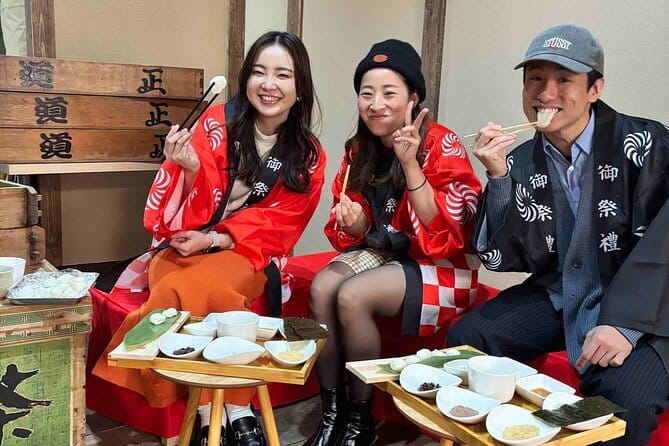
Once the mochi is pounded, it’s portioned out for tasting, alongside tea. The class includes freshly pounded mochi served with five beloved Japanese seasonings and ingredients, and tea to round out the flavors.
You can expect options like kinako (roasted soybean powder) and sweet red bean paste. That mix matters because it covers two classic mochi directions:
- nutty, lightly sweet flavors from kinako
- smooth, sweet filling from bean paste
The tasting is also where the class becomes a little more than a single dessert. Instead of one flavor, you’re sampling combinations. That gives you a quick way to learn what you actually like—because mochi is best when the texture and the topping match.
One practical tip: mochi is filling. Even though it’s only one hour, you may end up eating more than you think you will. If you have another meal planned right after, keep your schedule light or bring an appetite.
What it costs and why the value makes sense
The price is $32.37 per person for about one hour, with a mobile ticket and everything tied to the experience: history talk, steaming and pounding, and tasting with tea and multiple seasonings.
Here’s how I see the value:
- You’re not just buying a snack. You’re paying for instruction, tools, and an activity where you personally create the food.
- Fresh mochi is the key selling point. Store-bought mochi is often fine, but it doesn’t offer the same just-made texture experience.
- The group limit helps justify the cost. You’re more likely to participate fully than in a bigger class where you watch most of the time.
If you like food experiences that are hands-on and not overly long, this price can feel fair for what you get. If you only want one flavor tasting with no making involved, a cooking show might be more your style—but for mochi fans, this hits the sweet spot.
Location near Dotonbori: convenient, but arrive ready
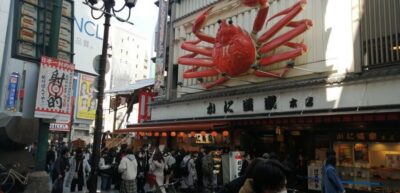
The meeting point is Mochi Pounding Experience Osaka Oh Mochi, 2-chōme-4-11 Dōtonbori, Chuo Ward, Osaka. It’s near public transportation, which matters because Dotonbori is one of those areas where getting around is easy—but walking routes can still surprise you if you arrive late.
Plan to arrive a bit early so you can settle in before the pounding begins. Once the active part starts, there’s little downtime, and you don’t want to miss the first instructions or the steam-to-mochi transition.
Also, Dotonbori is lively, so if you’re coming from another attraction, give yourself a buffer for crowds and street crossings.
Who should book this mochi pounding class
This class is a good fit if you fall into any of these categories:
- Mochi lovers who want the fresh texture you only get when it’s made right there
- People who want a unique Osaka activity that’s not another tea ceremony or sake tasting
- Anyone who enjoys interactive cultural workshops over museum-style learning
- Families, since the activity is described as welcome for children and the team helps with participation
It also includes dietary accommodations. The class explicitly accommodates vegans and vegetarians, so you should feel comfortable asking ahead if you have specific dietary needs. (The details of what changes for each diet aren’t listed here, so it’s worth confirming what’s included when you book.)
One more caution: elderly participants should have smaller portions because mochi is a choking risk for those who have trouble with chewy foods. If you’re traveling with older family members, it’s wise to plan this snack as a careful, shared moment rather than a large portion right away.
Should you book this mochi class?
I’d book it if you want an Osaka food experience with real participation: steaming rice, pounding it into mochi, and then tasting what you made with tea and multiple flavor choices. It’s short, structured, and guided, and the small-group size keeps it from feeling like you’re watching someone else work.
I’d skip it if you prefer low-effort activities, or if you’re sensitive to warm indoor spaces and sticky food textures. Otherwise, this is one of the more memorable ways to experience Japanese food culture without needing hours or a big budget.
If you’re choosing between an easy afternoon stop and a hands-on workshop, this mochi class is the one where you leave with both flavor in your mouth and a skill you can describe later.
FAQ
Where is the meeting point for this mochi pounding experience?
You meet at Mochi Pounding Experience Osaka Oh Mochi, 2-chōme-4-11 Dōtonbori, Chuo Ward, Osaka, 542-0071, Japan. The activity ends back at the meeting point.
How long does the experience take?
It lasts about 1 hour.
What do I do during the class?
You get a short talk about the history and cultural significance of mochi pounding, then you help with steaming the glutinous rice and pounding it into mochi using traditional tools. The experience ends with a tasting.
What toppings and drinks are included?
You’ll taste freshly pounded mochi served with five Japanese seasonings and ingredients, along with a cup of tea.
Do they offer English or other language support?
Yes. The class offers English and Chinese support, with Chinese provided through slides or interpreted by ChatGPT.
Is it a small-group experience?
Yes. The maximum group size is 10 travelers.
Is this experience suitable for vegans, vegetarians, or families?
The experience accommodates vegans and vegetarians. It is also described as welcome for families with children.
More Tour Reviews in Osaka
- Osaka Go Karting Tour with Funny Costume★ 5.0 · 2,658 reviews
- Osaka Castle: Museum and Tower Entry Ticket★ 4.5 · 2,380 reviews
- Osaka: Shinsekai Food Tour with 13-15 Dishes at 5 Eateries★ 4.8 · 2,204 reviews
- Osaka Food Tour: 13 Dishes at 5 Local Eateries★ 5.0 · 2,149 reviews
- Hungry Osaka Street Food Tour:15 Tastings & 3 Drinks with a Local★ 5.0 · 1,727 reviews
Cook It Yourself in Osaka
- Sushi Making Osaka Roll and Authentic Japanese Sushi Class★ 5.0 · 1,220 reviews
- Osaka: Five Must-See Highlights Walking Tour & Ramen Lunch★ 4.7 · 411 reviews
- Osaka Sushi Making Experience★ 5.0 · 400 reviews
- Osaka: Ramen and Gyoza Cooking Class in Dotonbori★ 5.0 · 378 reviews
- Osaka: Sumo Stage Show with Bento or Snack + Fight & Photo★ 4.3 · 364 reviews
The Kuidaore List: Eat More of Osaka
- Osaka: Shinsekai Food Tour with 13-15 Dishes at 5 Eateries★ 4.8 · 2,204 reviews
- Osaka Food Tour: 13 Dishes at 5 Local Eateries★ 5.0 · 2,149 reviews
- Hungry Osaka Street Food Tour:15 Tastings & 3 Drinks with a Local★ 5.0 · 1,727 reviews
- Deep Backstreet Osaka Tours (Option to add Dinner)★ 5.0 · 1,290 reviews
- Osaka Local Foodie Walking Tour in Dotonbori and Shinsekai★ 5.0 · 985 reviews
The Newest Osaka Write-Ups
- Private Photoshoot in Osaka with a Professional Photographer
★ 5.0 · 3 reviews - Osaka Early Morning Osaka Castle Tour Avoid Crowds
★ 5.0 · 3 reviews - Nara Private Tour with Pick and Drop and English Speaking Driver
★ 3.5 · 3 reviews - Osaka: Modern Vegetarian Sushi Cooking Class
★ 5.0 · 3 reviews - Nara Day Trip from Osaka with a Licensed Guide
★ 5.0 · 3 reviews
Osaka Food & Tasting Tours, compared.
 ★ 4.8Shinsekai Food Tour with 13-15 Dishes at 5 EateriesFrom $532,204 reviews
 ★ 5.0Osaka Food Tour: 13 Dishes at 5 Local EateriesFrom $732,149 reviews
 ★ 5.0Hungry Osaka Street Food Tour:15 Tastings & 3 Drinks with a LocalFrom $731,727 reviews
 ★ 5.0Deep Backstreet Osaka Tours (Option to add Dinner)From $531,290 reviews
 ★ 5.0Osaka Local Foodie Walking Tour in Dotonbori and ShinsekaiFrom $111985 reviews
 ★ 4.9Deep Backstreets Walking Tour with Dinner OptionFrom $40902 reviews
 ★ 4.9Hungry Osaka Street Food Tour: 15 Dishes & 3 DrinksFrom $79694 reviews
 ★ 5.0Kuromon Market Food Walking Tour in Osaka (6 stops, 6 tastes)From $50550 reviews
Browse the lists this tour appears in