
Reviewed · OSAKA WALKING TOURS
The Dark Side of Osaka Walking Tour
Osaka can feel all neon and sightseeing. Then this night walk takes you into the city’s shadowy corners, where social history shows up in everyday street life. You’ll cover Shinsekai and move into the area best known for its centuries-long red-light district.
What I like most is the focus on how Osaka works at street level—working-class neighborhoods, shifting “entertainment zones,” and the rules locals live by. I also really value the guide-led storytelling; guides like Jay, Matt, and RICO are praised for answering questions and keeping the pace easy to follow.
The only thing to consider is that this is a gritty, adult-adjacent theme. If you’re looking for postcard Osaka or you hate uncomfortable neighborhoods, you may find parts of the route less fun than you hoped.
In This Review
- Key takeaways before you go
- Why a night walk in Shinsekai changes how you see Osaka
- Price and logistics: what the $25 covers
- From MEGA Don Quijote to Shinsekai: getting oriented fast
- First stop: Shinsekai and the meaning behind the neon nostalgia
- Nishinari Dobutsuen-mae Deep Osaka Street: the working-class edge
- Jan Jan Yokocho (Nanyodori Shopping District): a nostalgic alley break
- Tobita Shinchi: Osaka’s red-light district, explained with boundaries
- Tsutenkaku Hondori Shopping Street: arcade life and the end-of-walk payoff
- How the guides make the walk worth it
- What to wear, bring, and expect during the 2-hour route
- Who should book the Dark Side of Osaka tour
- Should you book this tour or skip it?
- FAQ
- FAQ
- What is the duration of the Dark Side of Osaka Walking Tour?
- How much does the tour cost?
- Where do I meet for the tour, and what time does it start?
- Where does the tour end?
- How many people are in the group?
- Is admission included at the stops?
- Are snacks included?
- Do I need a paper ticket?
- What if the weather is bad or I need to cancel?
Key takeaways before you go
- Small group size (up to 15): easier questions and a better sense of the streets as you move.
- Focused 2-hour route: you get multiple stops without feeling stuck all evening.
- Shinsekai + Tobita Shinchi combo: entertainment geography in one walk, not a random scatter of sights.
- Respectful context: the tour frames the areas as social spaces, not just shock value.
- Mobile ticket and included fees: simple start, and you’re not paying extra at each stop.
- Bring your walking shoes: you’ll be on your feet most of the time.
Osaka block by block, more routes on foot



Why a night walk in Shinsekai changes how you see Osaka
This tour hits at the time of day Osaka feels most like itself: streets turning on their lights, people flowing to dinner, shops and arcades calling you in. By walking after 5:30 pm, you get a better feel for how the city’s entertainment districts function when they’re actually doing their thing—ordering, selling, socializing, and moving people around.
The big idea here is that “the dark side” isn’t just spooky alleyways. It’s about how a city organizes its behavior—where certain services grew, how rules kept things managed, and why some districts stay on the map for generations. If you like understanding a place beyond temples and towers, this style of storytelling can be a real eye-opener.
Price and logistics: what the $25 covers
At $25 per person, you’re buying a guided walk plus the basic costs tied to running it. The tour lists all fees and taxes included, and each stop shows admission ticket free, so you’re not paying surprise entry fees at the sights along the way.
Two more practical wins: you get a mobile ticket, so you don’t need to track paper, and the group caps at 15 travelers, which usually means fewer delays and more direct conversation with the guide. The tour also notes it’s near public transportation, which matters if you want an easy start from your hotel.
One thing to plan around: snacks aren’t included. If you tend to get hungry while walking, grab something beforehand or keep a small plan for later. Also, the experience requires good weather, so if rain is in the forecast, expect the operator may adjust your date.
From MEGA Don Quijote to Shinsekai: getting oriented fast
You’ll start at MEGA Don Quijote Shinsekai (3-chōme-4-36 Ebisuhigashi) at 5:30 pm, and the walk ends near Tsutenkaku (1-chōme-18-6 Ebisuhigashi). That end point is handy: Tsutenkaku is an easy anchor to regroup, grab a drink, or continue on your own afterward.
The route is about 2 hours (approx.), with time carved out for multiple neighborhoods and streets. Even if you’re not fluent in Japanese, this kind of tour works because the guide’s job is to turn what you see into something meaningful—why the streets look the way they do, and what social life is happening in the spaces you’re walking through.

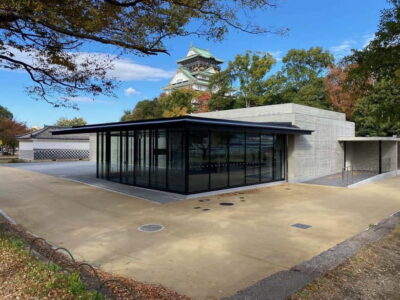


First stop: Shinsekai and the meaning behind the neon nostalgia
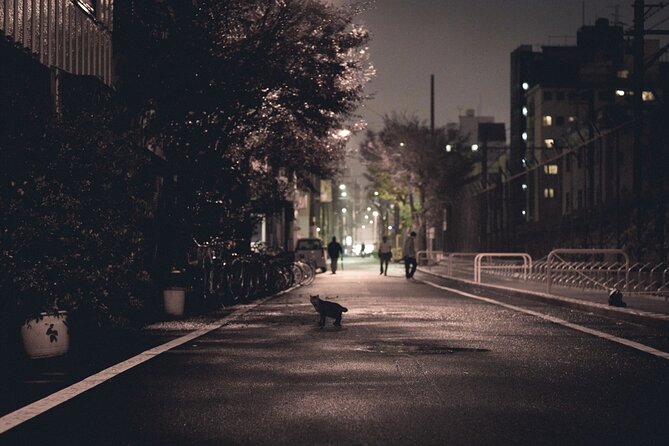
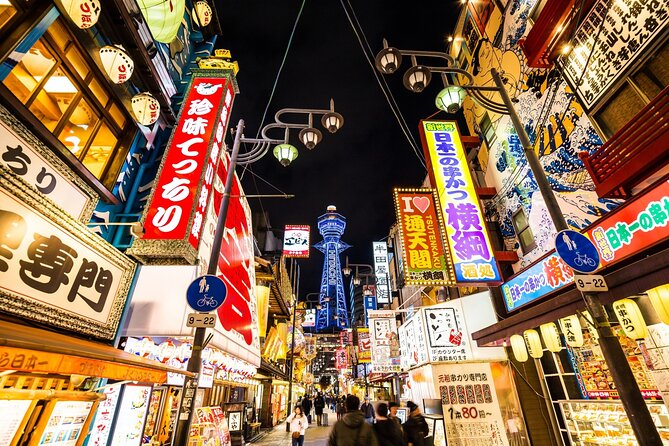
Stop 1: Shinsekai (about 30 minutes) is where the tour sets the emotional tone. Shinsekai means New World, and the district leans into retro atmosphere while still acting like a lived-in neighborhood. It was established in 1912, and the guide uses that long arc to explain why certain districts keep reinventing themselves instead of disappearing.
You’ll also get a sense of how Shinsekai functions as a “gateway” district—people come in for games, food, and nightlife, but locals also use the area for ordinary routines. This is important because the tour isn’t only about sex work or nightlife. It’s also about the everyday edges of urban life: cheap eats, crowd behavior, and how entertainment districts rely on regular foot traffic.
What to watch for here is contrast. Shinsekai can look like a theme, but it’s also real. Let the guide connect what feels old-school with what’s actually happening right now.
Nishinari Dobutsuen-mae Deep Osaka Street: the working-class edge
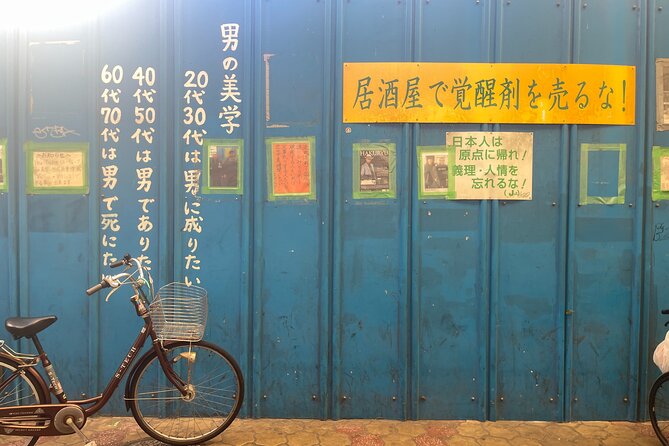
Stop 2: Nishinari Dobutsuen-mae Deep Osaka Street (about 30 minutes) takes you into a part of southern Osaka known for a raw, authentic feel. The tour frames Nishinari as a community with history tied to day laborers and the working-class, which helps you understand why the streets can feel more lived-in and less curated.
This is the kind of stop that changes how you look at a city. Instead of treating neighborhoods as backdrops, you start noticing infrastructure: where people gather, how storefronts serve local needs, and how sidewalks and building facades reflect everyday routines. If you’ve spent your Osaka time hopping between famous landmarks, this stop is your reality check—and it’s also where the tour’s “dark side” theme makes more sense.
A practical consideration: some parts of these areas can feel crowded, and the streets may be tighter or more uneven than what you’re used to in major tourist zones. Keep your attention on footing and give space when you’re filming or pausing for pictures.
Jan Jan Yokocho (Nanyodori Shopping District): a nostalgic alley break
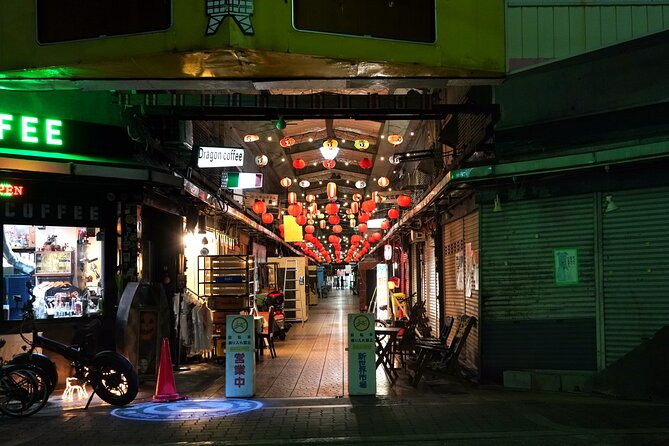
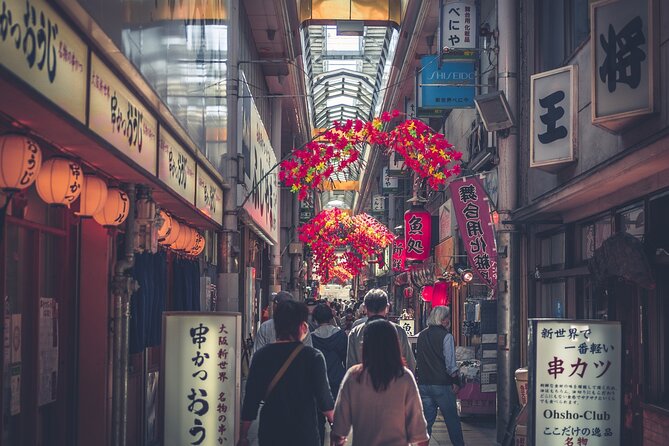
Stop 3: Jyanjyan Yokocho / Jan Jan Yokocho (about 20 minutes) is right by Tsutenkaku and it’s all about the alley experience. This narrow lane is known for a retro atmosphere, which makes it a good place to slow down without losing momentum.
What I like about this stop is that it gives you a human scale of the area. You’re not just walking past something; you’re seeing how people actually move through a shopping-and-dining street—how many small businesses cluster together, how the alley layout shapes foot traffic, and how night street life turns ordinary dining into part of the district’s identity.
Even though snacks aren’t included, this is the perfect spot to decide what you’ll do afterward. If you want something sweet, salty, or just a quick taste, you’re usually at the right kind of place for it.
Tobita Shinchi: Osaka’s red-light district, explained with boundaries
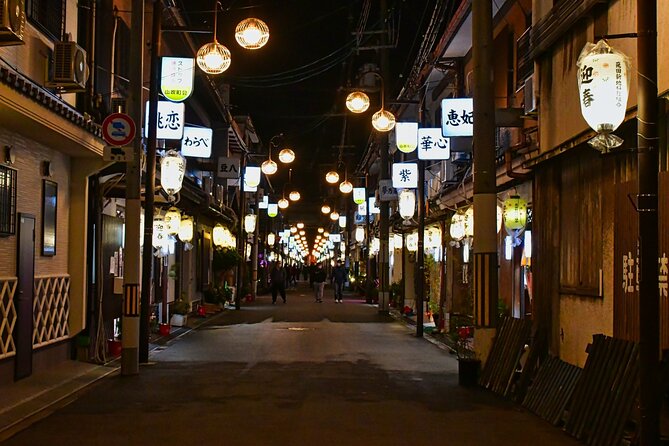
Stop 4: Tobita Shinchi (about 20 minutes) is the highlight—and also the most sensitive. Tobita Shinchi is described as Osaka’s most famous and largest red-light district, with history going back over a century. The tour also notes a tightly regulated environment and unique architectural feel.
This stop is where a good guide matters most. The difference between an uncomfortable experience and a respectful learning moment is how the story is told. The best part of this tour style is that it doesn’t treat the district like a spectacle. It connects what you see to how regulation and social norms shaped the area.
Here’s how you can keep it comfortable for yourself:
- Keep your curiosity respectful and avoid staring or intrusive filming.
- Listen for the guide’s framing about rules and boundaries.
- If you’re sensitive to adult content, understand that the tour theme will likely make you aware of it even if you don’t seek details.
This isn’t a tour built to shock you. It’s built to explain why these districts exist—and why cities tolerate, control, and shape them.
Tsutenkaku Hondori Shopping Street: arcade life and the end-of-walk payoff
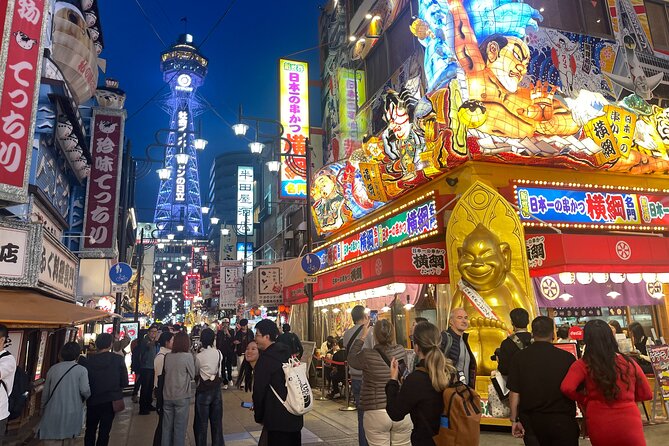
Stop 5: Tsutenkaku Hondori Shopping Street (about 20 minutes) brings you back to a lively arcade at the base of Tsutenkaku Tower. This is a good wrap-up because you can compare what the tour showed you earlier with how entertainment districts present themselves when you’re just trying to have dinner or pass the time.
The Hondori street gives you an easier tone after Tobita Shinchi. Shops and arcades create a less heavy feel, but it still sits in the same neighborhood map. That’s useful because it helps you understand the district ecosystem: entertainment doesn’t exist in one isolated block. It leaks into nearby streets through shopping, food, and social routines.
If you want a clean transition to the rest of your evening, Tsutenkaku is a smart exit point. You’ll end near a major landmark, so getting home is straightforward.
How the guides make the walk worth it
The guide is the product here, and the praise in the feedback makes that clear. Guides such as Jay and Matt are specifically credited for being thoughtful, knowledgeable about social history, and good at answering questions. Another guide name that shows up is RICO, praised for showing people practical local areas and good recommendations.
What that means for you: you’re not stuck reading signs or guessing meanings from your phone. The guide’s job is to tie together the street scenes into a single story about how Osaka organized certain kinds of life over time.
The best guide behavior you should expect:
- A pace that doesn’t rush you through sensitive neighborhoods.
- Clear explanations when you spot something you don’t understand.
- Tips that help you navigate the area even after the tour ends.
If you’re the type who likes asking follow-up questions, a small group helps. You’ll usually get more time for your curiosities.
What to wear, bring, and expect during the 2-hour route
This is a night walking tour, so plan like it’s a small city hike. Wear comfortable shoes with grip. The route includes multiple districts and alleys, and you’ll be walking for close to two hours.
Bring:
- A water bottle or plan to buy one nearby (snacks aren’t included).
- A charged phone for maps, translations, and the mobile ticket.
- A light layer if the evening feels cool.
Also, the tour runs best in good weather. If the forecast looks bad, it may be rescheduled or refunded depending on conditions, so don’t leave the tour as the sole plan on your last evening.
Who should book the Dark Side of Osaka tour
I think this tour is a great fit if you:
- Want street-level Osaka, not only famous sights.
- Like social history and human stories more than photo scavenger hunts.
- Are curious about how cities manage entertainment and behavior in defined zones.
- Appreciate a respectful, guide-led approach in uncomfortable themes.
It may not be the right match if you want:
- A purely family-friendly, upbeat itinerary with zero adult-adjacent topics.
- A “see monuments, take pictures, done” evening.
- A heavily structured museum-style tour where you never need to deal with gritty streets.
Should you book this tour or skip it?
Book it if you want Osaka to surprise you in a smart way—through Shinsekai’s retro street life and Tobita Shinchi’s social context—with a guide who can explain what you’re actually looking at. The combination of a small group, a tight 2-hour format, and a price that doesn’t pile on extra admission fees makes it strong value for a night out.
Skip it only if your idea of fun excludes neighborhoods tied to adult nightlife. Otherwise, go with the right mindset: respectful curiosity, comfortable shoes, and a willingness to see the city beyond its best angles.
FAQ
FAQ
What is the duration of the Dark Side of Osaka Walking Tour?
The tour lasts about 2 hours.
How much does the tour cost?
It costs $25.00 per person.
Where do I meet for the tour, and what time does it start?
You meet at MEGA Don Quijote Shinsekai (3-chōme-4-36 Ebisuhigashi, Naniwa Ward, Osaka) and the start time is 5:30 pm.
Where does the tour end?
The tour ends near Tsutenkaku (1-chōme-18-6 Ebisuhigashi, Naniwa Ward, Osaka).
How many people are in the group?
The tour has a maximum of 15 travelers.
Is admission included at the stops?
The stops listed show admission ticket free, and the tour includes all fees and taxes.
Are snacks included?
No. Snacks are not included.
Do I need a paper ticket?
No. The tour uses a mobile ticket.
What if the weather is bad or I need to cancel?
The tour requires good weather. If it’s canceled due to poor weather, you’ll be offered a different date or a full refund. You can also cancel for free up to 24 hours before the experience’s start time.
More Tour Reviews in Osaka
- Osaka Go Karting Tour with Funny Costume★ 5.0 · 2,658 reviews
- Osaka Castle: Museum and Tower Entry Ticket★ 4.5 · 2,380 reviews
- Osaka: Shinsekai Food Tour with 13-15 Dishes at 5 Eateries★ 4.8 · 2,204 reviews
- Osaka Food Tour: 13 Dishes at 5 Local Eateries★ 5.0 · 2,149 reviews
- Hungry Osaka Street Food Tour:15 Tastings & 3 Drinks with a Local★ 5.0 · 1,727 reviews
Osaka at Street Level
- Osaka Local Foodie Walking Tour in Dotonbori and Shinsekai★ 5.0 · 985 reviews
- Osaka: Deep Backstreets Walking Tour with Dinner Option★ 4.9 · 902 reviews
- Ultimate Osaka Walking Tour: Castle, Dotonbori & Hidden Gems★ 5.0 · 862 reviews
- Osaka: Main Sights and Hidden Spots Guided Walking Tour★ 4.9 · 702 reviews
- Private Osaka Walking Tour: Highlights & Hidden Gems★ 5.0 · 569 reviews
The Newest Osaka Write-Ups
- Private Photoshoot in Osaka with a Professional Photographer
★ 5.0 · 3 reviews - Osaka Early Morning Osaka Castle Tour Avoid Crowds
★ 5.0 · 3 reviews - Nara Private Tour with Pick and Drop and English Speaking Driver
★ 3.5 · 3 reviews - Osaka: Modern Vegetarian Sushi Cooking Class
★ 5.0 · 3 reviews - Nara Day Trip from Osaka with a Licensed Guide
★ 5.0 · 3 reviews
Osaka Walking Tours, compared.
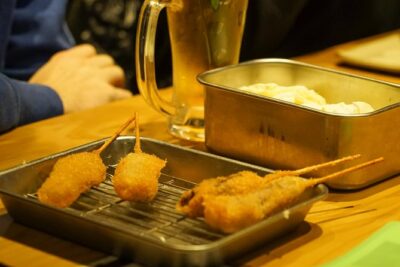 ★ 5.0Osaka Local Foodie Walking Tour in Dotonbori and ShinsekaiFrom $111985 reviews
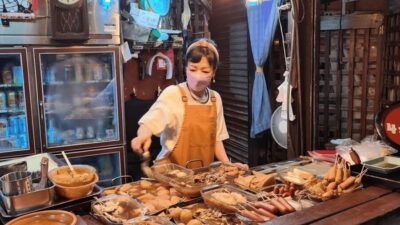 ★ 4.9Deep Backstreets Walking Tour with Dinner OptionFrom $40902 reviews
 ★ 5.0Ultimate Osaka Walking Tour: Castle, Dotonbori & Hidden GemsFrom $73862 reviews
 ★ 4.9Main Sights and Hidden Spots Guided Walking TourFrom $59702 reviews
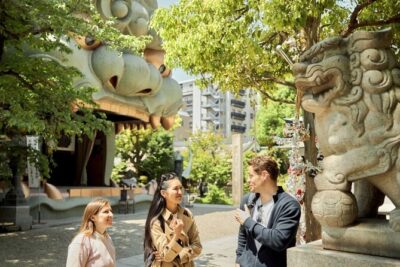 ★ 5.0Private Osaka Walking Tour: Highlights & Hidden GemsFrom $81569 reviews
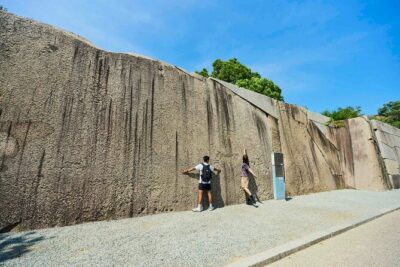 ★ 5.0Osaka Castle Walking Tour and Castle Tower AdmissionFrom $23561 reviews
 ★ 5.0Kuromon Market Food Walking Tour in Osaka (6 stops, 6 tastes)From $50550 reviews
 ★ 4.7Five Must-See Highlights Walking Tour & Ramen LunchFrom $56411 reviews
Browse the lists this tour appears in