
Reviewed · OSAKA PRIVATE TOURS
Private Tour to Nara from Osaka with English speaking Driver
Nara is easy when you skip transit stress. This private Osaka-to-Nara day trip hands you a private vehicle and an English-speaking driver, so you can focus on the sights instead of figuring out trains and transfers. It is also a smart way to sample classic Nara without committing to a multi-day stay.
I love the control you get during the day: you can visit major highlights and still have time to wander on your own. A big plus is the English-speaking driver experience—especially with Kazunori Maeda, who comes up in standout feedback for being calm, helpful, and on top of timing.
One consideration: it is priced per group (up to 5), so the value is best when you have multiple people. Also, entrance fees and lunch are not included, even though many temple and park stops are listed as free.
In This Review
- Key things that make this Osaka-to-Nara private tour work
- Why a private English-speaking driver from Osaka makes Nara easier
- Price and group value: when $848.72 feels reasonable
- The rhythm of an 8-hour Nara day: how to choose your 3–4 stops
- Todai-ji Temple: start with Nara’s Great Eastern Temple icon
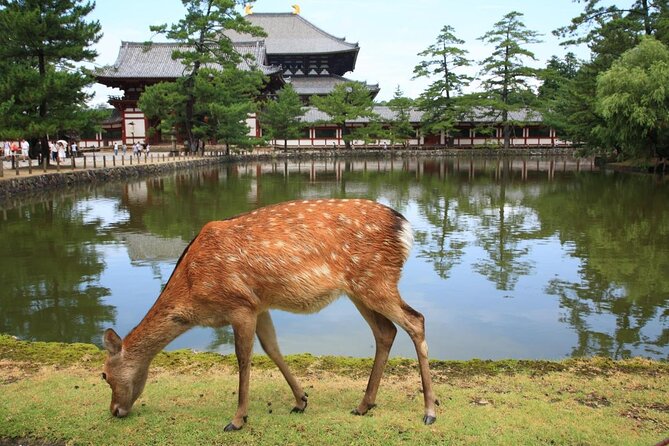
- Nara Park and the sacred deer area: a classic, practical break
- Kasuga Taisha Shrine and Wakakusayama hill views
- Horyu-ji Temple: one of Japan’s oldest temple experiences
- Naramachi: merchant-town lanes for texture and local flavor
- Kofuku-ji and how to connect the dots between power and faith
- Yakushiji and Shin-Yakushiji: symmetric layouts and medicine connections
- Nara National Museum and the Heijō Palace Site for context
- Toshodaiji, Isuien Garden, and Yoshikien for a calm ending
- What you can expect from your driver, based on real experiences
- Practical notes that can affect your day
- Should you book this private Nara day trip from Osaka?
- FAQ
- How long is the private tour to Nara from Osaka?
- How many people are in a group?
- What language do you get during the tour?
- Is pickup from Osaka included?
- Are tickets handled digitally?
- Do I need to pay entrance fees?
- Is this tour private?
- Can I cancel for a refund?
Key things that make this Osaka-to-Nara private tour work
- Private vehicle, English-speaking driver: less hassle, easier conversation, and fewer navigation headaches
- Flexible day design: you can choose 3–4 sites from the Nara highlights list
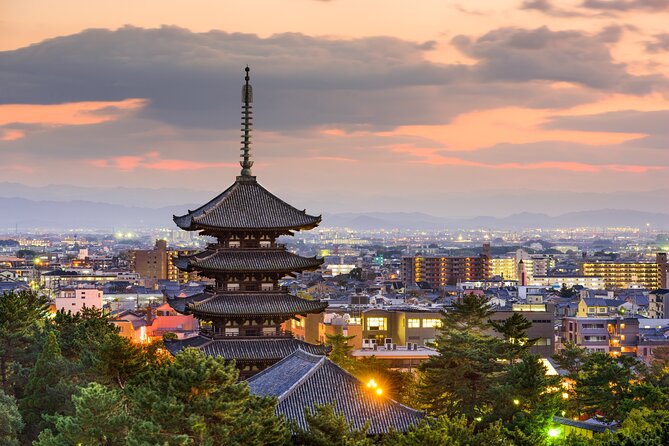
- Classic must-sees with smart stops: Todai-ji, Kasuga Taisha, Horyu-ji, Nara Park, plus temples and gardens
- Time management that respects your day: praised for avoiding a rushed feeling
- Excellent for port days: one review notes smooth return timing even while in port in Osaka
- Mobile tickets included: less paperwork stress once you arrive
A guide to yourselves, more private days out

Why a private English-speaking driver from Osaka makes Nara easier
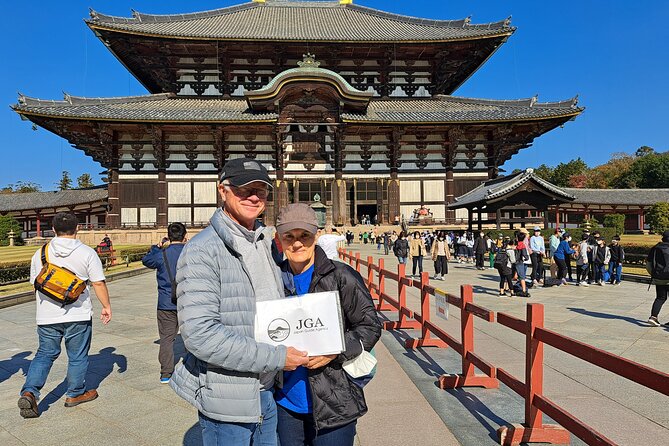
Nara’s top sights are close together in a way that tempts you to try public transit. But close together is not the same thing as easy—stations, walking routes, and bus connections can turn a relaxing day into a schedule puzzle.
This is built to solve that. You get a private vehicle and an English-speaking driver, so you can go door-to-door from Osaka (pickup is offered) and then travel between temples and parks without second-guessing anything. It is especially helpful if you want to keep your day flowing while also taking short breaks whenever you need one.
The other hidden win is conversation. Even when the day is mostly self-paced inside each site, having a driver who can explain what you are seeing helps you connect the dots faster. In feedback tied to this experience, Kazunori Maeda is specifically praised for making history and culture feel clear rather than like a blur of names on signs.
Price and group value: when $848.72 feels reasonable
The price is listed as $848.72 per group (up to 5). That sounds steep if you are traveling solo. But split across a small group, it starts to behave like a practical way to buy time and comfort.
Here is the simple math: with the full group size of 5, you are looking at roughly $170 per person for a full-day private vehicle ride and an English-speaking driver. For many visitors, that is the trade: you pay more than a bus or train ticket, but you reduce the friction that eats up your day—finding the right stop, hauling luggage or bags (if you have them), and losing momentum to transit confusion.
It also matters that this is a private tour. You are not sharing the vehicle with strangers, and you cannot combine tour groups. That keeps the day feeling more like your trip rather than a group scramble.
The rhythm of an 8-hour Nara day: how to choose your 3–4 stops
The tour runs about 8 hours. That is enough time to hit major highlights, but it is not enough to do everything perfectly if you load up your plan with every single temple, museum, and garden.
That is why the customization matters: you can design your day around 3–4 sites from the tour’s highlight list. My practical advice is to think in themes:
- If you want the biggest icons, start with Todai-ji and pair it with Nara Park or Kasuga Taisha.
- If you like older, distinct temples, add Horyu-ji.
- If you want calmer atmosphere and visual beauty, build in one or two gardens like Isuien or Yoshikien.
Also, keep your expectations realistic about transitions. Even when stops are close, temples and parks often involve walking, and some sites have rules about where you can go and how you move through spaces. A private driver helps because you are not spending that time coordinating transport.
The deer will still bow: more Nara days
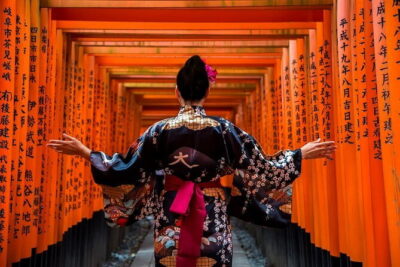
Todai-ji Temple: start with Nara’s Great Eastern Temple icon
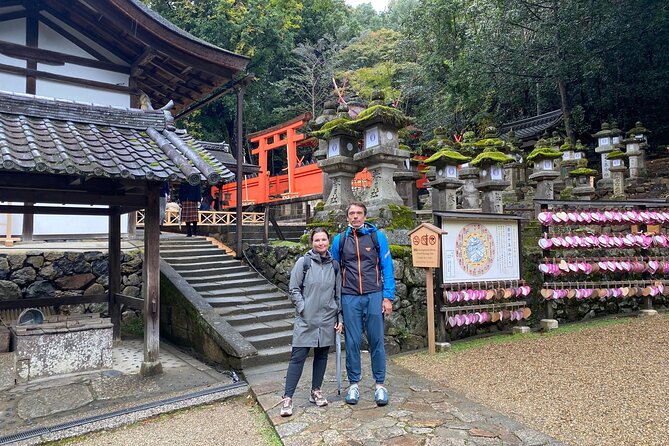
Todai-ji is the anchor sight for many Nara days. It was constructed in 752 and is known as a landmark temple in Nara. If you have limited time, this is the one I would treat as non-negotiable.
What you will appreciate here is scale and significance. Even without turning every moment into a history lesson, the fact that it has such a long legacy makes the experience feel weighty. You also get an easy jump-off into the rest of Nara’s central attractions, because it sits right near the park area that connects to other highlights.
Timing is the only trade. You only get about an hour in the plan for this stop, so go in knowing you are not trying to see everything in perfect detail. Instead, plan to look around, take a few slower moments where it feels right, and then move on while your energy is still high.
Nara Park and the sacred deer area: a classic, practical break
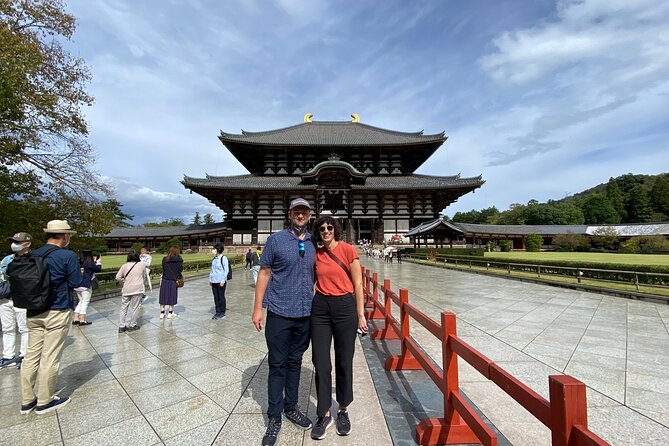
Nara Park is large and central, and it is where several key attractions cluster. One quick stop here can turn your day from temple-heavy into something more playful, because the park setting is part of what makes Nara feel like Nara.
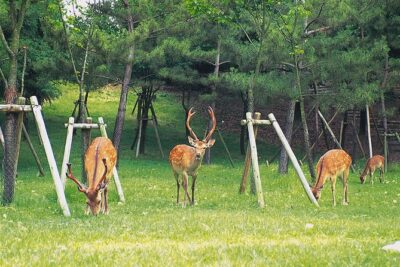
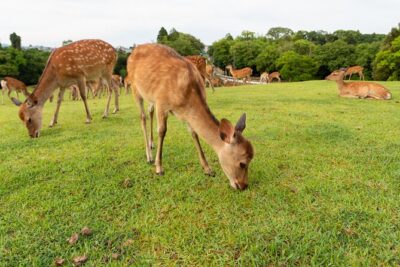
You are also here for the deer connection. The deer are treated as sacred in the area, and you will see them around the park. This is one of those moments where a little patience goes a long way. Keep your belongings secure, watch your footing, and treat the park as a shared space rather than a photo backdrop that belongs to you alone.
In the schedule, this stop is short—about 20 minutes. That can feel perfect if you want to soak in the vibe, see the deer, and then continue toward Kasuga Taisha or other temple sights without losing the day.
Kasuga Taisha Shrine and Wakakusayama hill views
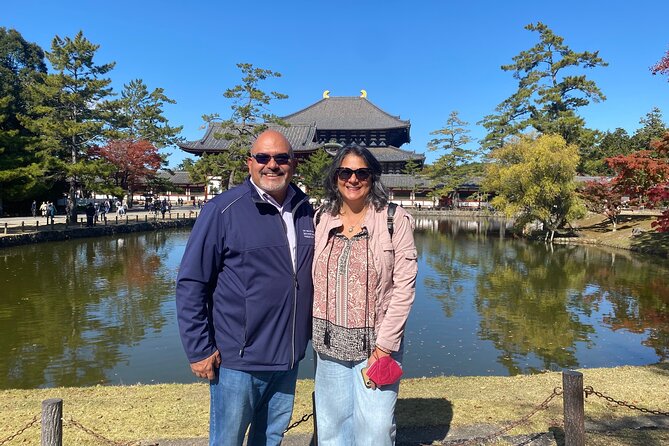
Kasuga Taisha is one of Nara’s most celebrated shrines. It was established around the same era as the capital’s rise and is dedicated to the deity believed to protect the city. If you like religious architecture and a shrine atmosphere that feels grounded rather than staged, this is a strong choice.
The plan gives you about an hour here, which is enough to slow down. You can also use this stop as a reset point in your day: step away from the biggest spectacle sights and spend time with details and the calm rhythm of shrine grounds.
Then comes Wakakusayama, a grass-covered hill behind Nara Park between Todai-ji and Kasuga Shrine. You get about 20 minutes, and the main draw is the view. When you walk up or look out from a hill like this, you quickly understand why Nara’s sights feel so connected—temple, park, and surrounding terrain all work together visually.
Horyu-ji Temple: one of Japan’s oldest temple experiences
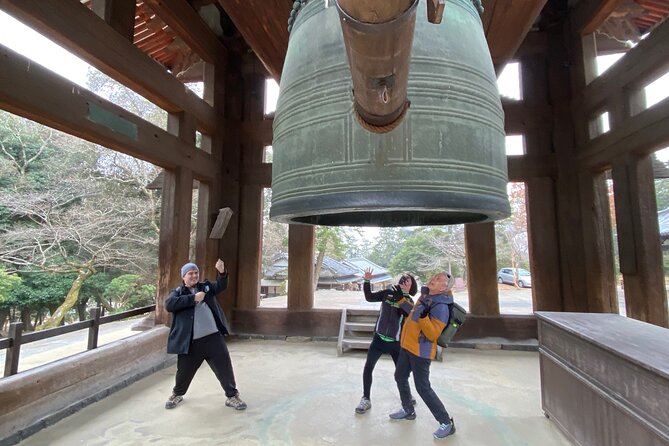
Horyu-ji is famous for its early Buddhism roots. It was founded in 607 by Prince Shotoku, and it is often recognized as one of the oldest temple complexes in Japan. The schedule allocates around an hour for this stop, which is a good chunk for a site that may feel more historically focused than the park-based attractions.
This is a great counterbalance to the day’s other major highlights. Todai-ji and Kasuga Taisha help you understand Nara’s central role, while Horyu-ji gives you a sense of how early Buddhist influence took shape in Japan.
Practical note: older temples can mean lots of walking and indoor-outdoor movement. If you are sensitive to long stretches, pace yourself early. A private driver can reduce stress because you are not managing transit in between.
Naramachi: merchant-town lanes for texture and local flavor
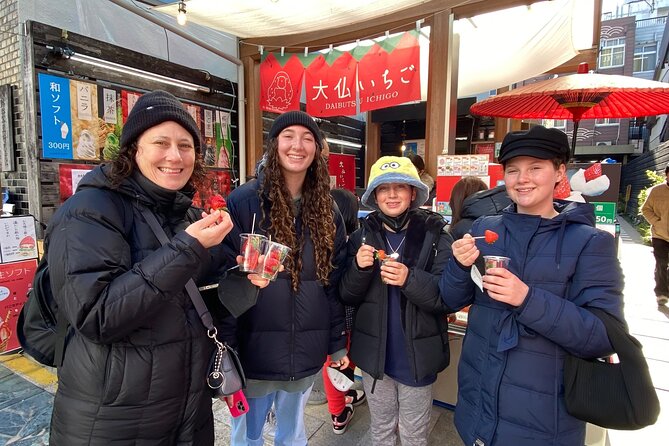
Naramachi is the former merchant district of Nara. It features preserved traditional residential buildings and warehouses that are open to the public. This is where you can get a different kind of Nara—less grand temple spectacle and more lived-in, historic neighborhood atmosphere.
Your stop here is short—around 20 minutes—but it is a useful add-on because it breaks up the day. You can pop into shops or take photos where the streets feel photogenic without committing to a full extra half-day.
If your group likes small discoveries, this is also one of the best places to slow down and do a little wandering. Just keep an eye on your meeting time with the driver, since the day is designed as a timed loop.
Kofuku-ji and how to connect the dots between power and faith
Kofuku-ji is tied to the Fujiwara clan, which was powerful during the Nara and Heian periods. The temple was established in Nara around the same time as the city’s growing status, which makes Kofuku-ji more than a pretty stop—it helps explain how religion and politics intertwined.
You get about 30 minutes for Kofuku-ji in the plan. That time limit works well because Kofuku-ji can be a “pick your focus” site: you might spend more time around key halls and viewpoints, and less time reading every sign.
This is also a good site to include if your group likes variety. It gives you a different flavor than Todai-ji and Kasuga Taisha, while keeping the day anchored in central Nara.
Yakushiji and Shin-Yakushiji: symmetric layouts and medicine connections
Yakushiji was constructed in the late 7th century by Emperor Tenmu for the recovery of his sick wife. It is noted for its strictly symmetric layout, with the main hall as a central focus. Even with a short visit of about 30 minutes, the symmetry is the kind of detail you can notice quickly and enjoy.
Shin-Yakushiji is another Nara Period temple founded by an empress for the sake of the ailing emperor. It is devoted to Yakushi Buddha, the patron of medicine in Japanese Buddhism.
If you are building a 3–4 stop day, these two temples are a good pairing. They offer a thematic thread: compassion, healing, and careful design. You do not need a deep academic background to appreciate the vibe. The story of medicine and recovery is built into the purpose of the sites.
Nara National Museum and the Heijō Palace Site for context
The Nara National Museum is focused on Japanese Buddhist art. It is established in 1889 and is located in Nara Park. Your time block is about 30 minutes. A museum stop can be a lifesaver if you want to understand what you are seeing at the temples without needing a live guide.
If you skip it, you might still enjoy the day—but if you do add it, it can add depth to your temple photos. You’ll start noticing recurring styles and themes.
Then there is Heijō Palace Site Historical Park. During most of the Nara Period (710–794), Nara served as Japan’s capital. The palace extended in a large area, and this park helps you place Nara in a bigger national story rather than just a collection of temples.
This stop is about an hour in the plan. It is a good buffer if your group includes at least one person who likes history context, because it turns the day from “see and move” into “see and understand.”
Toshodaiji, Isuien Garden, and Yoshikien for a calm ending
Toshodaiji (Tōshōdaiji) was founded in 759 by Ganjin, a Chinese priest invited to Japan to train priests and improve Japanese Buddhism. You get about 30 minutes here, which is enough to appreciate the site’s place in the bigger Buddhism story.
Then the gardens come in: Isuien Garden and Yoshikien. These are listed as admission-free in the plan and are a great way to end the day without rushing through another major religious complex.
- Isuien uses borrowed scenery, with Todaiji’s Nandaimon Gate and Mount Wakakusayama mentioned as part of the visual concept. That means the garden is not only about what is inside the fence.
- Yoshikien is named after the Yoshikigawa River and built on the site of Kofuku-ji’s former priests’ quarters. It keeps the day grounded in Nara’s everyday geography and past uses.
In general, gardens are where you get your best “walking pace” moments—time to exhale, take photos without feeling like you are cutting through a queue, and just enjoy how the place feels.
What you can expect from your driver, based on real experiences
The driver component is a big reason this works. In the best feedback tied to this experience, Kazunori Maeda stands out for being outstanding and for making the day flow smoothly. One review notes the tour happened while the group was in port in Osaka and still returned on time by 3:30, with no problems. That kind of reliability matters a lot when you are working around ship or strict departure windows.
Another strong theme: no feeling of being rushed. The day is private, so the pace is more humane. You get time to explore on your own while still having someone manage the bigger picture—driving between sites, staying on schedule, and keeping the plan realistic.
If you want a day that feels organized but not boxed in, this is a good match.
Practical notes that can affect your day
A few things can change how smooth your day feels:
- Entrance fees: entrance fees are not listed as included. The itinerary also shows many stops as free, so you might pay little or nothing depending on what you choose, but you should still plan for possible paid items.
- Lunch: lunch is not included, so you will want to plan where you eat in Nara or bring a simple option for your group.
- Time at each stop: the plan gives short blocks (often 20–30 minutes) for many sites. That is ideal for seeing highlights, but not for long, deep study.
- Car seats: there are limited car seats/booster seats, and rear-facing car seats are not available. If you need them, you must contact the provider directly.
If you build your choices around what your group actually wants—icons, temples, gardens, or context—you’ll get a day that feels like Nara, not like a checklist.
Should you book this private Nara day trip from Osaka?
Book it if you want a stress-light day. A private vehicle, an English-speaking driver, and a schedule that lets you move between major Nara highlights make this a smart fit for couples and small groups who hate transit hassle.
Skip it if you are traveling solo on a tight budget or if your dream Nara day is long, detailed temple exploring with deep guided explanation at every step. This tour is designed for comfortable touring and flexible site selection, not for a full-on guided lecture for every corner.
If you can split the group cost and you value smooth timing—especially if you are on a port schedule—this is the kind of day trip that feels worth the money.
FAQ
How long is the private tour to Nara from Osaka?
The duration is about 8 hours.
How many people are in a group?
The price is per group for up to 5 people.
What language do you get during the tour?
The tour includes an English-speaking driver.
Is pickup from Osaka included?
Pickup is offered.
Are tickets handled digitally?
Mobile ticketing is included.
Do I need to pay entrance fees?
Entrance fees are not included. Some stops are listed as free, but additional admission costs may still apply depending on what you choose.
Is this tour private?
Yes. It is a private tour/activity, and only your group participates.
Can I cancel for a refund?
Yes, you can cancel for free up to 24 hours in advance for a full refund.
More Tour Reviews in Osaka
- Osaka Go Karting Tour with Funny Costume★ 5.0 · 2,658 reviews
- Osaka Castle: Museum and Tower Entry Ticket★ 4.5 · 2,380 reviews
- Osaka: Shinsekai Food Tour with 13-15 Dishes at 5 Eateries★ 4.8 · 2,204 reviews
- Osaka Food Tour: 13 Dishes at 5 Local Eateries★ 5.0 · 2,149 reviews
- Hungry Osaka Street Food Tour:15 Tastings & 3 Drinks with a Local★ 5.0 · 1,727 reviews
A Day Among the Nara Deer
- Ancient Capital Tour: Kyoto and Nara Highlights from Kyoto/Osaka★ 4.5 · 332 reviews
- Kyoto and Nara Day Trip from Osaka★ 4.0 · 175 reviews
- Full Day Guided Tour to Kyoto and Nara from Osaka by Van★ 5.0 · 144 reviews
- Discover Himeji, Kobe and Nara from Osaka★ 5.0 · 101 reviews
- Kyoto & Nara Private customized tour with English speaking Guide★ 4.5 · 99 reviews
Your Osaka, at Your Pace
- Private Osaka Walking Tour: Highlights & Hidden Gems★ 5.0 · 569 reviews
- Osaka 4hr Private Tour with Government-Licensed Guide★ 5.0 · 314 reviews
- 3/4/5 Hours Private Tour in Osaka with Local Guide★ 5.0 · 189 reviews
- Osaka’s Best and Brightest: Private Full-Day Tour by Vehicle★ 5.0 · 147 reviews
- Kyoto & Nara Private customized tour with English speaking Guide★ 4.5 · 99 reviews
The Newest Osaka Write-Ups
- Private Photoshoot in Osaka with a Professional Photographer
★ 5.0 · 3 reviews - Osaka Early Morning Osaka Castle Tour Avoid Crowds
★ 5.0 · 3 reviews - Nara Private Tour with Pick and Drop and English Speaking Driver
★ 3.5 · 3 reviews - Osaka: Modern Vegetarian Sushi Cooking Class
★ 5.0 · 3 reviews - Nara Day Trip from Osaka with a Licensed Guide
★ 5.0 · 3 reviews
Osaka Private Tours, compared.
 ★ 5.0Private Osaka Walking Tour: Highlights & Hidden GemsFrom $81569 reviews
 ★ 5.0Osaka 4hr Private Tour with Government-Licensed GuideFrom $105314 reviews
 ★ 5.03/4/5 Hours Private Tour in Osaka with Local GuideFrom $95189 reviews
 ★ 5.0Osaka’s Best and Brightest: Private Full-Day Tour by VehicleFrom $600147 reviews
 ★ 5.0Full Day Tour of Kyoto with Private TransportationFrom $247130 reviews
 ★ 4.5Kyoto & Nara Private customized tour with English speaking GuideFrom $54999 reviews
 ★ 4.6Private Custom Walking Tour with a Local GuideFrom $6297 reviews
 ★ 4.93/4/5 Hours Private Tour With Local GuideFrom $11686 reviews
Browse the lists this tour appears in