
Reviewed · OSAKA PRIVATE TOURS
Osaka 4hr Private Tour with Government-Licensed Guide
Osaka in four hours, on your terms. This private, government-licensed walking tour lets you pick a few Osaka must-sees and stitch them together into a route that fits your pace, whether you want food-focused streets or landmark photos in the city center. It also keeps things simple: your guide meets you on foot near where you’ll be starting, so you can spend your energy seeing instead of decoding transit.
I love the flexibility here. On our route examples, guides like Shige and Sachiko shaped the day around what mattered most, including swaps toward the sites you care about most and clear, practical directions as you move between neighborhoods. I also like that the tour packs in both the classic and the modern side of Osaka, from Dotonbori’s food-crowd energy to the height-and-views of the Umeda Sky Building.
One consideration: the walking style is real. It’s best for active legs, and while the guide covers what you choose, entrance tickets and transit costs aren’t included, so your final total can climb if you pick several paid attractions.
In This Review
- Key things that make this Osaka tour worth your time
- How a private, customizable 4-hour format changes everything
- Dotonbori’s neon food street: the Osaka intro you’ll remember
- Shinsekai and Tsutenkaku: nostalgia with real attitude
- Osaka Castle: a landmark photo-op with a ticket you’ll plan for
- Minami (Namba): entertainment district logistics in plain terms
- Sumiyoshi Taisha: old-school shrine architecture with a clear story
- Shitennoji: a temple stop where the paid areas are optional
- Umeda Sky Building: the city view that turns Osaka into a map
- Kuromon Market: street food heaven with real browsing time
- National Museum of Art, Osaka (NMAO): when you want culture without chaos
- Price and what you’re really paying for
- Who this Osaka private walking tour fits best
- Should you book this Osaka tour?
- FAQ
- Is this tour fully private?
- How long is the Osaka tour?
- Do I need to pay entrance fees?
- Is there pickup?
- Can I customize the sites I visit?
- Is food included in the price?
- What happens if the weather is bad?
Key things that make this Osaka tour worth your time
- Government-licensed English-speaking guides who meet you in the Osaka area and keep your day moving.
- Customizable selection of 2–3 sites from a strong Osaka highlights list, so you avoid the one-size-fits-all feeling.
- Food-street immersion starting with Dotonbori, where Takoyaki and Okonomiyaki are part of the soundtrack.
- A smart mix of neighborhoods, including Minami (Namba) and the older shrines/temples side of town.
- Big skyline payoff if you include the Umeda Sky Building with its Floating Garden Observatory.
A guide to yourselves, more private days out

How a private, customizable 4-hour format changes everything
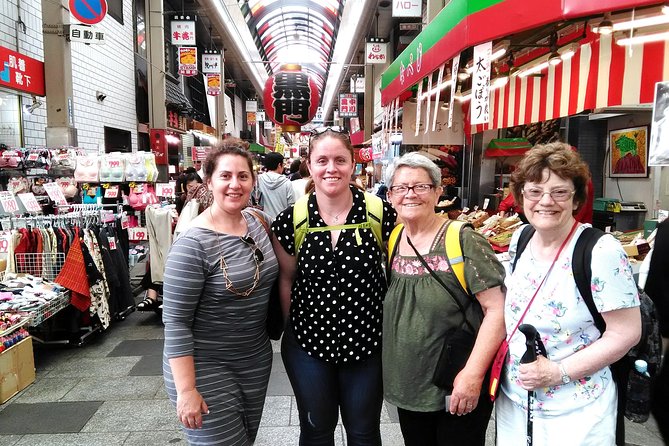
The best part about this tour is the shape of the experience. You’re not signing up for a giant group march where you stop whether everyone else is ready or not. It’s private—so the route can follow your interests, and your guide can adjust when you linger over a snack line or want a slower, photo-heavy pass.
You also get the value of a guide who can translate Osaka’s layout into simple choices. Guides in the reviews repeatedly get praised for practical logistics and calm pacing in a city that can feel like it’s moving at 200 mph. That matters because Osaka is dense—stations are everywhere, but figuring out which exit helps you actually reach your next stop can eat up precious time.
Now the tradeoff: customization only works well if you make a few decisions ahead of time. You’ll have to pick your priorities from the sites available in the tour structure—like Osaka Castle, Shitennoji, the Umeda Sky Building, or Kuromon Market—and accept that paid tickets and local transport are on you.
Dotonbori’s neon food street: the Osaka intro you’ll remember
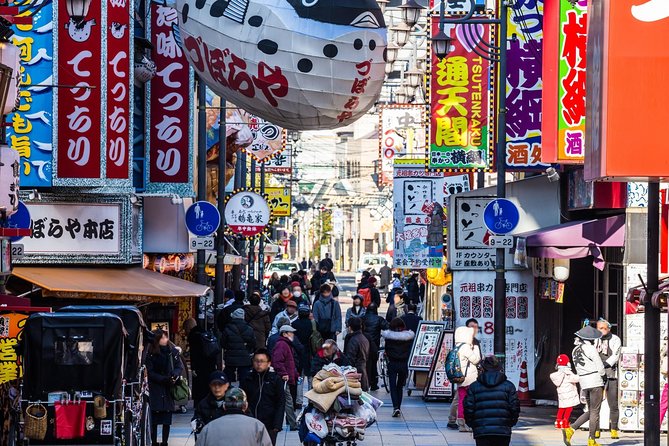
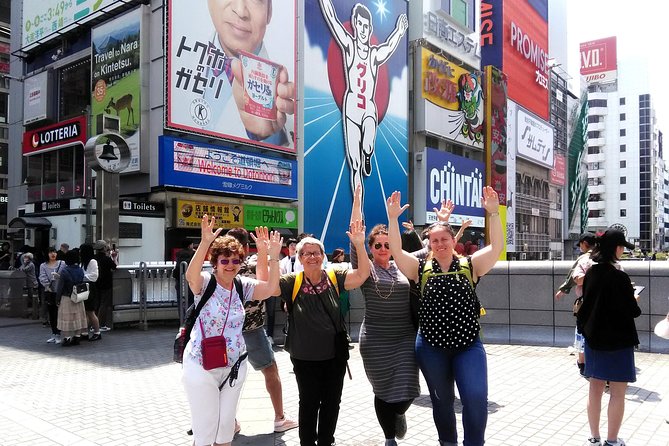
Dotonbori is Osaka’s “arrive and instantly get it” district. You’ll walk along Dotonbori street with its giant billboards, dense restaurant strip, and food stalls that practically pull you forward. This is where Takoyaki and Okonomiyaki aren’t just menu items—they’re the reason people come out here.
Why this stop works in a half-day plan: it’s emotional orientation. After a short walk through Dotonbori, you understand the city’s vibe—loud, friendly, a little theatrical, and deeply food-driven. Even if you don’t eat every local specialty, you’ll learn what to order when you later stumble into a nearby shop on your own.
A small drawback: Dotonbori can be crowded. A private guide helps you choose the best walking rhythm so you don’t spend your limited hours stuck behind foot traffic.
Shinsekai and Tsutenkaku: nostalgia with real attitude
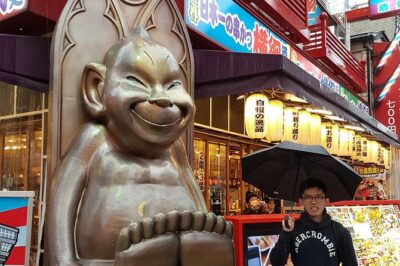
Next up is Shinsekai, also called the New World. The area centers on Tsutenkaku, often described as Osaka’s own Eiffel tower look-alike, plus the local money-and-good-luck figure called Billiken. It’s the kind of neighborhood where you feel like you walked into a themed time capsule—until you realize it’s still very much alive today.
Food is a big part of the Shinsekai experience too. You’ll see the kushikatsu culture right here, with the classic skewered-fry vibe that makes this area famous. If you like eating while you walk, this is an excellent match.
One more detail to know: Spa World is also in this zone. The description notes it’s a huge bath complex with European- and Asian-themed floors, and it includes rules like gender-separated areas and nudity. If that doesn’t sound like your thing, you can still enjoy Shinsekai for the street atmosphere and icon spots.
Time note: your tour plan treats Shinsekai as a short, punchy stop. That’s good for a half-day format, but if you’re a bath-complex person, you may want a separate visit instead of trying to do everything in one afternoon.

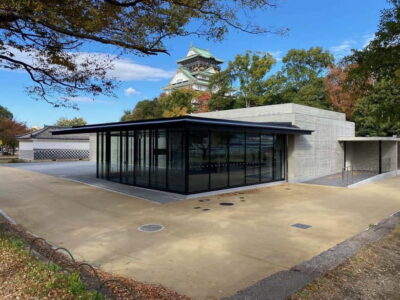


Osaka Castle: a landmark photo-op with a ticket you’ll plan for
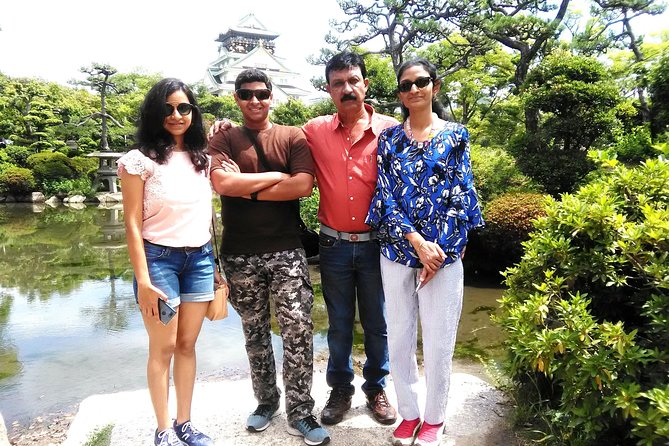
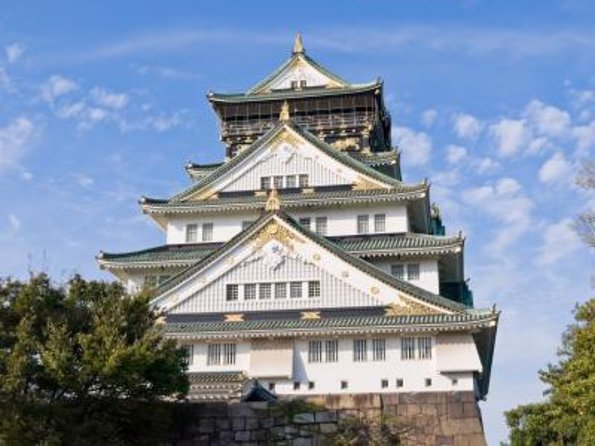
Osaka Castle is the kind of place you recognize instantly, even before you see it. The castle is a five-story structure with history that stretches back close to 450 years, and it’s one of Japan’s most famous visual landmarks for a reason.
In a half-day tour, the castle works best as a focused highlight: you get the exterior impact and the big “I’m really here” payoff quickly. But there’s a catch—entrance tickets aren’t included for this stop.
So if Osaka Castle is on your personal must-do list, budget for the entry fee you’ll pay on the day. If it’s more of a “nice if we have time,” you can still make the most of your time with a quick look and surrounding views, while your paid time goes toward the site you care about most.
Minami (Namba): entertainment district logistics in plain terms
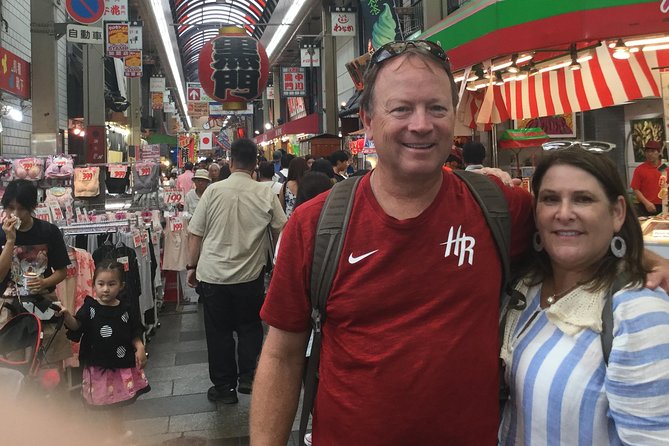
Minami, or Namba, is Osaka’s major entertainment and shopping center, centered around Namba Station. It’s the city’s most famous nightlife-and-dining district, and it’s set up to be easy to access—served by multiple train companies, several subway lines, and even a highway bus terminal.
In a guided format, this stop is less about museums and more about orientation. It helps you understand where to return later when you want dinner choices without thinking too hard. It’s also a practical staging area: your guide can route you so you’re not zig-zagging across Osaka longer than needed.
Your downside here is simple: the area is busy. If you want quiet, you may not love how quickly crowds surround you. But if you want classic Osaka energy, this is a strong place to experience it.
Sumiyoshi Taisha: old-school shrine architecture with a clear story

If you want a calmer, more historically grounded stop, Sumiyoshi Taisha is a great pick. This shrine is described as one of Osaka’s oldest, with roots going back to the 3rd century—before Buddhism arrived in Japan.
What makes it especially interesting is the architecture style: Sumiyoshi-zukuri, presented as uniquely Japanese and not influenced by the Asian mainland. The description even points out that only two other shrine architecture styles are considered purely Japanese: Shinmei-zukuri (seen at Ise Shrines) and Taisha-zukuri (seen at Izumo Taisha).
And the best part: it’s listed as a free admission stop. That means you can include it without worrying about ticket costs, which is a real advantage when your tour includes paid attractions elsewhere.
If you’re sensitive to walking in crowds, shrine grounds can be a helpful reset. You get a different pace, and the setting supports slower looking.
Shitennoji: a temple stop where the paid areas are optional
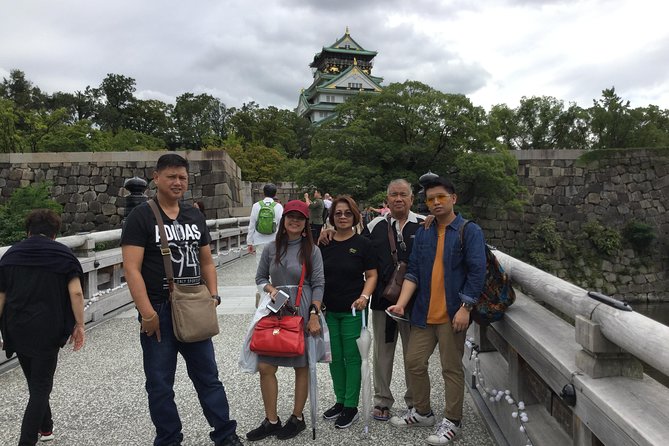
Shitennoji is one of the oldest temples in Japan and the first ever built by the state, founded in 593 by Prince Shotoku. Like many historic sites, it has a long pattern of burning and reconstruction, with efforts to return to the original 6th-century design.
Here’s how the stop is structured in the tour description: the outer temple grounds are free to enter, but paid areas include the inner precinct, the Gokuraku-jodo Garden, and the treasure house. There’s also a five-storied pagoda in a pebble-covered courtyard that you can enter and ascend, plus the Main Hall (Kondo) where Prince Shotoku is enshrined as a statue of Kannon.
This matters for value. Shitennoji is not just a quick photo stop; it can be a choose-your-own-level of depth. If you only want the outer grounds, you can keep costs down. If you want the full experience, you’ll pay tickets—so decide based on what you care about more: gardens and indoor artifacts, or just the exterior feel.
Umeda Sky Building: the city view that turns Osaka into a map
If you want one “wow, I get the city” moment, the Umeda Sky Building is the payoff. It’s a tall complex in the Kita district near Osaka and Umeda Stations, built as two towers connected by the Floating Garden Observatory on the 39th floor.
At about 173 meters up, the observatory offers city views through windows and from an open-air deck. There’s also a restaurant floor in the basement area that replicates a town from the early Showa Period, plus offices on many other floors.
This stop is not included as a free admission item, so plan to pay the entry fee if you choose it. But from a practical standpoint, it’s a smart use of a half-day. From height, Osaka starts to make sense—where the major areas are, how the districts cluster, and why your walking route felt the way it did.
If you hate paying for views, skip it. If you love a good aerial perspective and want your photos to show scale, this is a strong addition.
Kuromon Market: street food heaven with real browsing time
Kuromon Market is a covered public market that stretches around 600 meters parallel to Sakaisujidori Street in Minami. The market contains about 150 shops, with many focusing on fish, meat, and produce, plus additional stores selling traditional sweets and affordable clothes or homeware.
Why it’s worth including: it gives you a local shopping-and-snacking experience that doesn’t require a ticket. The tour description notes it dates back to the Edo Period, so you’re not just walking through something new.
Also, it’s atmospheric. Even when you don’t buy much, you learn what’s typical here—what people are ordering, what products look like, and how to spot good value stalls.
Potential drawback: market aisles can get tight and crowded, especially at peak hours. A good guide pacing you matters. If you’re prone to getting overwhelmed, tell your guide you want a calmer browsing rhythm.
National Museum of Art, Osaka (NMAO): when you want culture without chaos
Not every part of Osaka is about food streets and towers. The National Museum of Art, Osaka (NMAO) is an underground museum on Nakanoshima island with a major art collection. In the tour plan, it’s typically treated as a dedicated stop, with admission not included.
If you’re art-focused, NMAO can be a refreshing contrast to neon streets. Underground spaces can also help on hot or rainy days, since you’re not stuck between stations under weather stress.
The downside is straightforward: museums are time-sensitive. If you only have a half-day and you pick NMAO plus another paid attraction, you’ll want to be decisive about what you want to see so you don’t end up tired and short on the rest of your route.
Price and what you’re really paying for
At $105.35 per person for about four hours, this tour is priced like a true private experience rather than a budget group walk. Entrance fees, lunch, and transportation are extra, which is a common setup—but it’s important to plan it mentally.
Here’s the value logic I think you’ll appreciate: you’re paying for time efficiency and a guide who can make the day flow. Without this, you’d spend extra mental energy figuring out where to meet, how to move, and what order makes sense.
In the reviews, guides are repeatedly praised for staying calm, responding quickly, and tailoring routes. Shige is one example praised for fast responses after becoming the guide, and Miyuki is praised for keeping within the 4-hour frame while still giving space for photos.
That said, there is at least one negative note tied to a guide’s rudeness and English not being great. It’s rare based on the overall ratings, but it’s a reminder: if language clarity is vital for you, ask a couple of key questions at the start and confirm your priorities early in the walk.
Who this Osaka private walking tour fits best
This tour fits best if you:
- Want an Osaka highlight mix in half a day, without planning every turn
- Like walking, photos, and neighborhoods that show local life
- Care more about a curated, flexible route than ticking off a long checklist
- Prefer the reassurance of an English-speaking guide in busy areas
It may be less ideal if you:
- Want a mostly seated experience
- Have mobility limits that make walking a challenge
- Are trying to avoid any paid attractions entirely (because major stops like Osaka Castle, Umeda Sky Building, and paid temple/museum areas require separate tickets)
Should you book this Osaka tour?
Yes, if you’re doing Osaka for the first time and you want a guide to help you pick the best 2–3 stops for your interests. The private, customizable format is the real selling point, especially when you include at least one of the big landmarks (Osaka Castle or Umeda Sky Building) and one neighborhood experience (Dotonbori, Shinsekai, or Kuromon Market).
I’d book it with a clear plan for paid stops. Choose your must-pay attraction first, then build the rest around what’s free or lower-cost. That approach keeps the half-day feeling satisfying instead of financially stressful.
If you want, tell me which 2–3 stops you’re leaning toward (castle, Umeda, Shitennoji, Sumiyoshi, markets, art, etc.). I can help you build an efficient pairing that makes sense for time, walking, and pacing.
FAQ
Is this tour fully private?
Yes. It’s a private tour, so only your group participates.
How long is the Osaka tour?
It’s about 4 hours.
Do I need to pay entrance fees?
Entrance fees are not included. Some stops on the route list entry as paid, including things like Osaka Castle, Umeda Sky Building, and paid parts of Shitennoji and the museum.
Is there pickup?
Pickup is offered, but the guide meeting is described as on foot in the Osaka area within a designated meeting area.
Can I customize the sites I visit?
Yes. The tour is described as customizable, letting you choose 2–3 sites from the options provided.
Is food included in the price?
Lunch and food are not included.
What happens if the weather is bad?
The experience requires good weather. If it’s canceled due to poor weather, you’ll be offered a different date or a full refund.
More Tour Reviews in Osaka
- Osaka Go Karting Tour with Funny Costume★ 5.0 · 2,658 reviews
- Osaka Castle: Museum and Tower Entry Ticket★ 4.5 · 2,380 reviews
- Osaka: Shinsekai Food Tour with 13-15 Dishes at 5 Eateries★ 4.8 · 2,204 reviews
- Osaka Food Tour: 13 Dishes at 5 Local Eateries★ 5.0 · 2,149 reviews
- Hungry Osaka Street Food Tour:15 Tastings & 3 Drinks with a Local★ 5.0 · 1,727 reviews
Your Osaka, at Your Pace
- Private Osaka Walking Tour: Highlights & Hidden Gems★ 5.0 · 569 reviews
- 3/4/5 Hours Private Tour in Osaka with Local Guide★ 5.0 · 189 reviews
- Osaka’s Best and Brightest: Private Full-Day Tour by Vehicle★ 5.0 · 147 reviews
- Kyoto & Nara Private customized tour with English speaking Guide★ 4.5 · 99 reviews
- Osaka: Private Custom Walking Tour with a Local Guide★ 4.6 · 97 reviews
The Newest Osaka Write-Ups
- Private Photoshoot in Osaka with a Professional Photographer
★ 5.0 · 3 reviews - Osaka Early Morning Osaka Castle Tour Avoid Crowds
★ 5.0 · 3 reviews - Nara Private Tour with Pick and Drop and English Speaking Driver
★ 3.5 · 3 reviews - Osaka: Modern Vegetarian Sushi Cooking Class
★ 5.0 · 3 reviews - Nara Day Trip from Osaka with a Licensed Guide
★ 5.0 · 3 reviews
Osaka Private Tours, compared.
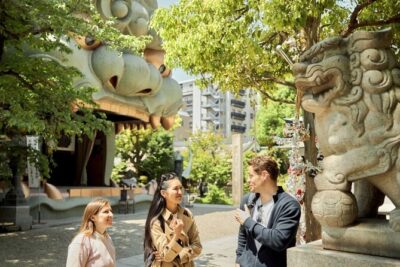 ★ 5.0Private Osaka Walking Tour: Highlights & Hidden GemsFrom $81569 reviews
 ★ 5.03/4/5 Hours Private Tour in Osaka with Local GuideFrom $95189 reviews
 ★ 5.0Osaka’s Best and Brightest: Private Full-Day Tour by VehicleFrom $600147 reviews
 ★ 5.0Full Day Tour of Kyoto with Private TransportationFrom $247130 reviews
 ★ 4.5Kyoto & Nara Private customized tour with English speaking GuideFrom $54999 reviews
 ★ 4.6Private Custom Walking Tour with a Local GuideFrom $6297 reviews
 ★ 4.93/4/5 Hours Private Tour With Local GuideFrom $11686 reviews
 ★ 4.9Private Vibrant Nighttime Photoshoot (Dotonbori)From $10980 reviews
Browse the lists this tour appears in