
Reviewed · OSAKA TEMPLES & SHRINES
Osaka Unveiled Private Tour: Bustling Streets to Serene Shrines
Osaka feels different every few blocks, and this private tour strings the changes together for you. I love the contrast here: Shinsaibashi-suji’s covered shopping street (great people-watching and easy browsing) plus the switch to quiet at Namba Yasaka Jinja. I also like that you’re not stuck reading signs or guessing what matters—you have your own guide to point you toward the right spots. One consideration: at the city’s nightlife stops, expect crowds and bright signage, so this is best if you’re comfortable walking and standing in busy areas.
In This Review
- What you’ll actually do in 2 hours
- Key highlights you’ll feel right away
- Shinsaibashi-suji: start where Osaka shops and snacks
- Ebisu Bridge: a pedestrian stretch that changes the mood
- Osaka nightlife signs: the Osaka Ohsho / Glico-style billboard zone
- Namba Yasaka Jinja: the calm finish and the lion’s mouth belief
- Why a private guide is worth it on this route
- Price and value: what $579.29 per person really buys
- Timing the walking: how to enjoy the busy parts without losing your mind
- Where the tour begins and ends, and why it matters
- Who this Osaka tour suits best
- Should you book the Osaka Unveiled Private Tour?
- FAQ
- How long is the Osaka Unveiled Private Tour?
- Where does the tour start?
- Where does the tour end?
- Is this tour private?
- How much does it cost?
- Do I need to pay for admission at the stops?
- Is there a mobile ticket?
- Is the meeting point near public transportation?
- What’s the cancellation policy?
- Who can participate?
What you’ll actually do in 2 hours
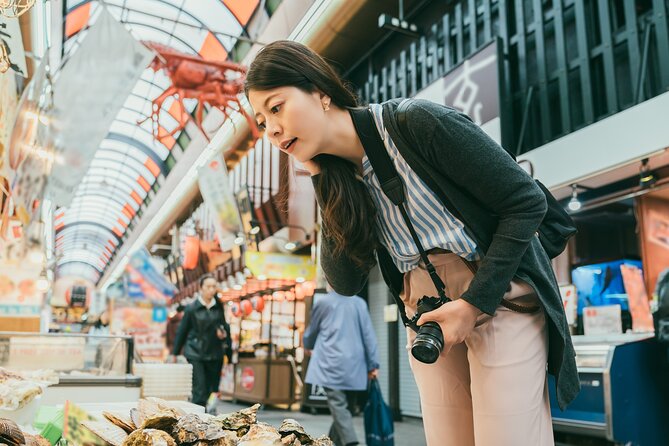
You’ll start near Shinsaibashi-suji, cross the pedestrian-friendly Ebisu Bridge, hit the famous illuminated billboards zone around Dotonbori, and finish at the shrine area for a calmer send-off. The route is built to move you fast through the city’s contrasts without turning your trip into a DIY logistics puzzle.
Quieter corners: more Osaka temples and shrines
Key highlights you’ll feel right away
- A true private tour: only your group, with your own guide’s timing and pacing.
- Shinsaibashi-suji shopping on a covered 600-meter walkway: easy to browse and snack.
- Ebisu Bridge without vehicle traffic: more room to stroll across the action.
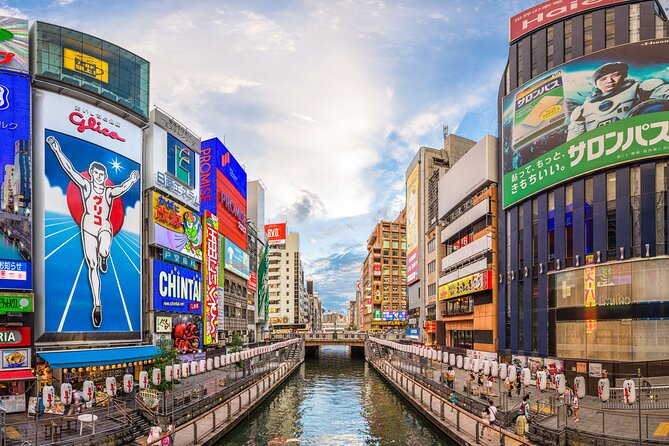
- Dotonbori billboard area (including the Glico sign region): Osaka’s electric street-night look.
- Namba Yasaka Jinja’s lion’s mouth theme: a focused, symbolic stop for calmer energy.
- Mobile ticket + free admission at each stop: fewer surprises during the visit.
Shinsaibashi-suji: start where Osaka shops and snacks
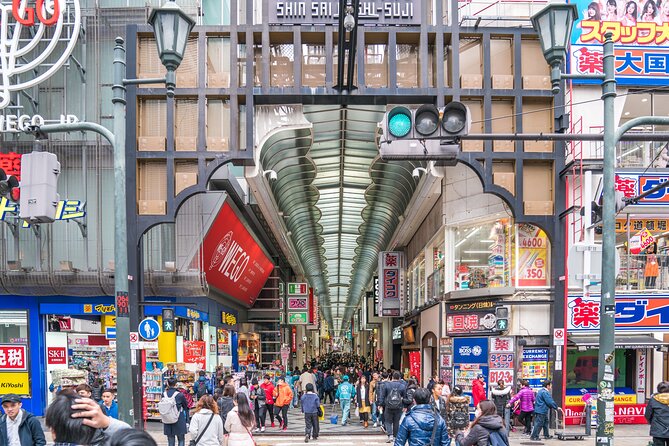
Most first-timers hit Shinsaibashi and then get lost in the sheer number of streets. Here, you begin with Shinsaibashi-suji, a 600-meter covered shopping walkway that’s a practical way to get your bearings fast. The covered setup matters. Rain, heat, or sudden crowds are easier to manage when you’re under a roof.
As you walk, you’ll see shops for different age groups and a mix of Japanese and international options. This is also where you’re most likely to find quick bites and small indulgences—perfect for grabbing something simple before the darker, louder nightlife streets take over. If you like traveling with a plan but still want freedom to browse, this start is a sweet spot.
A small drawback: because it’s a shopping street, there’s plenty to look at and it can feel busy. If you prefer very quiet walking, treat this like a lively warm-up. Your guide can help you choose what to spend time on so you don’t get swept into aimless wandering.
Ebisu Bridge: a pedestrian stretch that changes the mood
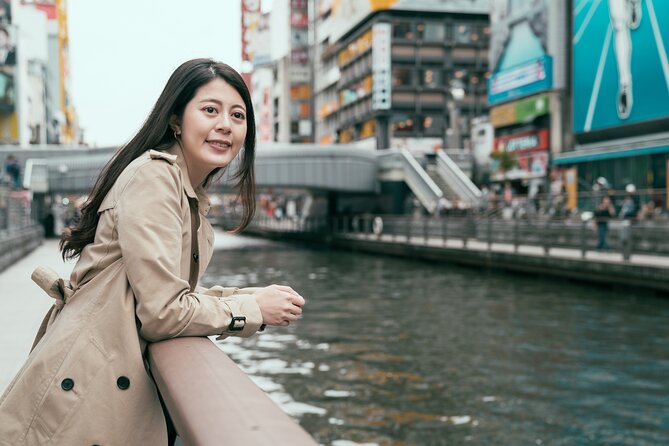
From Shinsaibashi-suji you cross to Ebisu Bridge. This is more than just a photo moment. The key practical detail is that motorized vehicles are prohibited on the footbridge, so it functions like a safe, open viewing walkway over the city energy below.
You’ll connect the Shinsaibashi-suji area to the Ebisubashi-suji side, placing you right into the heart of the Dotonbori zone. The vibe shifts during the crossing: you move from shopping focus into a more street-theater feeling—more people, more motion, and more street-level views lined with signs and activity.
The plus for most people is that the bridge gives you a break from weaving through shops. You can pause, look both ways, and let the city’s layout “click” in your mind. The only caution is timing: if you’re sensitive to crowds, choose your moments to walk steadily rather than stopping suddenly in the middle of the flow.
A guide to yourselves, more private days out
Osaka nightlife signs: the Osaka Ohsho / Glico-style billboard zone
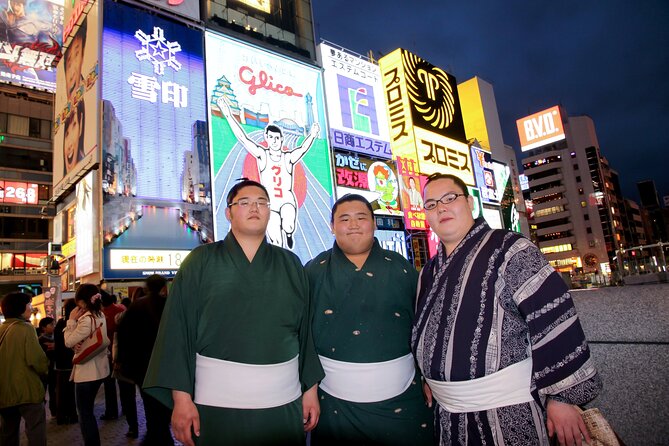
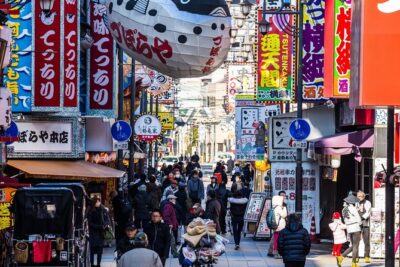
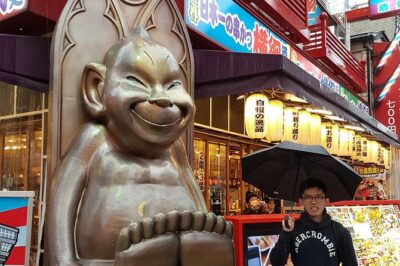
Next comes the district area known for nightlife and giant, bright billboards—often the postcard version of Osaka at street level. The stop centers on Osaka Ohsho, an area that historically ties back to theaters, but today is famous for its loud visual atmosphere and illuminated advertising.
This is where you’ll see the kind of sign Osaka is known for, including the famous Glico running man billboard region. Even if you’ve never studied Osaka branding, your guide can help you notice why these signs became such a recognizable part of the city experience: they’re part wayfinding, part spectacle, and part local identity.
What makes this stop work on a short, guided route is the balance between “look” and “understand.” You’re not just pointing at lights; you’re learning how the area developed into a nightlife magnet and how the energy shifts block to block.
Potential drawback: the lighting is strong and the area can get packed. If you’re traveling with someone who prefers calmer evenings, you may want to pause at the edges rather than staying in the densest center of foot traffic. A good private guide can steer you to better viewpoints for photos without turning it into a standstill.
Namba Yasaka Jinja: the calm finish and the lion’s mouth belief
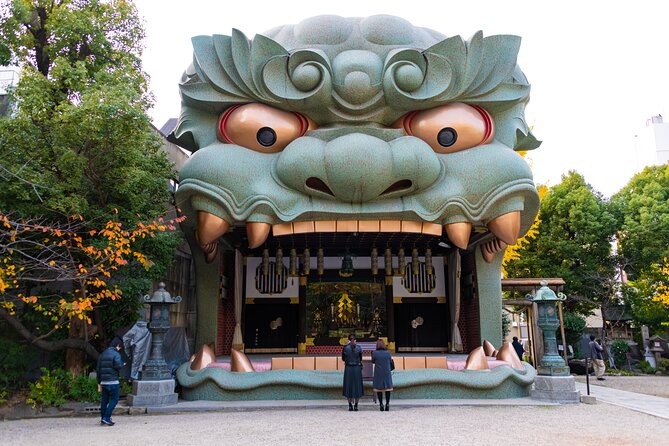
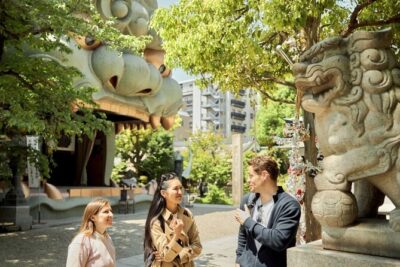
After the bright billboard zone, you end at Namba Yasaka Jinja (Namba Yasaka Jinja / Namba Shrine), and that ending matters. Osaka is famous for this kind of contrast: city noise up front, a quieter spiritual stop at the end.
This shrine has a specific belief tied to a lion’s mouth. In local tradition, the lion’s mouth is said to consume negative energy or spirits that may be around you. The shrine is also linked with wishes for success in academics and business, with extra attention around exam season and at the beginning and ending of certain periods (your guide can point you to what’s relevant during your visit).
Even if you’re not a shrine person, I find this kind of ending useful. It gives your walk a “reset button.” You’ve spent the last stretch in crowds and spectacle, and now you’re stepping into a place with slower pacing, softer focus, and a more reflective mood.
Small consideration: shrines can feel busy too, just in a different way. If you’re visiting during peak times, plan to be patient as people move through and pray. The upside is that it’s a natural place to slow down and let the trip feel complete.
Why a private guide is worth it on this route
The itinerary works on paper. The private guide is what makes it work in real life.
In particular, I’d pay attention to how your guide handles pacing and personal needs. One of the strongest themes from past groups here is the care shown by guide Mayumi. She reached out ahead of time to talk through what the group wanted, and she put together a plan that fit their needs. That kind of pre-trip chat is practical. It can help you avoid spending your first Osaka hour figuring out where to stand and where to go next.
Mayumi’s approach also stood out for how she supported parents in the group. That tells me the tour isn’t just about moving from point A to point B—it’s about making the experience comfortable and manageable. If you’re traveling with family members who may tire easily, a private route is often the difference between a “great on paper” plan and an enjoyable evening.
Another thing you get with private guiding: you can ask questions on the spot. At Shinsaibashi-suji you’ll be surrounded by shopping choices. In Dotonbori you’ll see big signs you may not fully understand. At the shrine you’ll want meaning beyond the obvious. Your guide can connect the dots quickly without turning the tour into a lecture.
Price and value: what $579.29 per person really buys
At $579.29 per person for about 2 hours, this isn’t a budget tour. You’re paying for privacy and for someone to handle sequencing, timing, and on-the-ground explanation across several very different areas.
So the value equation looks like this:
- If you’re the type of traveler who hates logistics stress, you’ll likely feel this as good value. You get a structured route from Shinsaibashi to Dotonbori to Namba Shrine without second-guessing.
- If you’re traveling as a small group or with people who need gentler pacing (like older travelers), privacy can help you get more enjoyment per minute.
- You’re also not paying entrance fees at the stops listed here. Each stop on the route is shown as admission free, which helps offset tour cost a bit. You’re paying mainly for the guide and the time saved.
One more factor: mobile ticket and group discount options. Mobile ticket convenience reduces friction day-of. If your group qualifies for a discount, that can make the per-person cost feel more reasonable.
Who might pause before booking? If you love wandering on your own and don’t need explanation, you could recreate parts of this route independently. But you’d still be spending your time figuring out the “why” at each stop. That’s what you’re buying with a private guide.
Timing the walking: how to enjoy the busy parts without losing your mind
This is a short itinerary with four clear stops: Shinsaibashi-suji, Ebisu Bridge, Osaka Ohsho / the Dotonbori billboard area, and Namba Yasaka Jinja. Each stop has a set visit time, with Shinsaibashi-suji and Ebisu Bridge getting about 35 minutes each, and the nightlife billboard area and the shrine getting about 20–30 minutes depending on the stop.
That timing helps because it prevents the classic problem: spending too long browsing a shopping street and then arriving to the nightlife zone when it’s too crowded—or rushing the shrine just to fit everything in. With a private tour, your guide can keep you moving at a pace that stays comfortable.
My practical suggestion: wear shoes you trust for uneven sidewalks and crowded crossings. The route is mostly walking through urban streets. Also, if you plan to snack in Shinsaibashi-suji, do it early. Once you’re in the Dotonbori lighting zone, it’s harder to pause for a full break.
Photo note: Ebisu Bridge and the billboard area are photo-friendly. The shrine is calmer, so it’s also a great time to slow down and capture a different side of Osaka.
Where the tour begins and ends, and why it matters
The tour starts at the Promotion Association of Shinsaibashi-suji Shopping Street at 2-chōme-2-22 Shinsaibashisuji, Chuo Ward, Osaka. It ends at Namba Yasaka Jinja at 4-chōme-1-3 Bakurōmachi, Chuo Ward, Osaka.
That end point is useful because it places you in a calmer area right after the loudest visual stop. You’re not forced to walk deep into the nightlife again just to call it a day. For many travelers, ending near Namba also makes it easier to connect to the rest of your evening.
If you like clean travel days, this kind of start/end pairing is a win: you finish where you can reset, eat something, or head back without needing to “backtrack” across the entire city center.
Who this Osaka tour suits best
This tour is best for you if:
- You want a 2-hour private walk that covers both shopping energy and a shrine calm moment.
- You like structured sightseeing but still want time to look around at real street-level life.
- You’re traveling with family members who may appreciate a guide keeping things smooth and comfortable.
It may be less ideal if you:
- Prefer quiet neighborhoods and very small crowds most of the time.
- Don’t like bright signage and busy nightlife areas (Dotonbori is part of the plan).
- Want a long, multi-hour deep dive—this is a compact route by design.
Should you book the Osaka Unveiled Private Tour?
I’d book it if you want Osaka’s contrasts in a tight, well-paced experience—shopping street to pedestrian bridge to billboard nightlife to shrine calm—and you value having someone like Mayumi guiding the flow and caring about your group’s comfort. The price is steep, but the tour’s “no entrance fees at the stops” and the private attention help justify the spend, especially for families or small groups who want less planning and more actual enjoyment.
If you’re on a strict budget or you love DIY wandering without explanations, you could probably recreate the route yourself. But if you’d rather spend your energy on the sights instead of map math, this private format is the practical choice.
FAQ
How long is the Osaka Unveiled Private Tour?
The tour is about 2 hours.
Where does the tour start?
It starts at the Promotion Association of Shinsaibashi-suji Shopping Street, 2-chōme-2-22 Shinsaibashisuji, Chuo Ward, Osaka.
Where does the tour end?
It ends at Namba Yasaka Jinja, 4-chōme-1-3 Bakurōmachi, Chuo Ward, Osaka.
Is this tour private?
Yes. It’s a private tour/activity, and only your group participates.
How much does it cost?
The price is $579.29 per person.
Do I need to pay for admission at the stops?
The listed stops show admission ticket free.
Is there a mobile ticket?
Yes, the tour includes a mobile ticket.
Is the meeting point near public transportation?
Yes. The meeting point is near public transportation.
What’s the cancellation policy?
Free cancellation is available. You can cancel up to 24 hours in advance for a full refund. If you cancel less than 24 hours before the start time, the amount paid will not be refunded.
Who can participate?
Most travelers can participate.
More Tour Reviews in Osaka
- Osaka Go Karting Tour with Funny Costume★ 5.0 · 2,658 reviews
- Osaka Castle: Museum and Tower Entry Ticket★ 4.5 · 2,380 reviews
- Osaka: Shinsekai Food Tour with 13-15 Dishes at 5 Eateries★ 4.8 · 2,204 reviews
- Osaka Food Tour: 13 Dishes at 5 Local Eateries★ 5.0 · 2,149 reviews
- Hungry Osaka Street Food Tour:15 Tastings & 3 Drinks with a Local★ 5.0 · 1,727 reviews
Your Osaka, at Your Pace
- Private Osaka Walking Tour: Highlights & Hidden Gems★ 5.0 · 569 reviews
- Osaka 4hr Private Tour with Government-Licensed Guide★ 5.0 · 314 reviews
- 3/4/5 Hours Private Tour in Osaka with Local Guide★ 5.0 · 189 reviews
- Osaka’s Best and Brightest: Private Full-Day Tour by Vehicle★ 5.0 · 147 reviews
- Kyoto & Nara Private customized tour with English speaking Guide★ 4.5 · 99 reviews
Temple Gates and Shrine Paths
- Osaka: Minoh, Katsuoji Temple, & Minoh Falls Full-day Tour★ 4.9 · 172 reviews
- Full Day Kyoto Tour : Bamboo Forest, Golden Temple, Fushimi Inari★ 5.0 · 84 reviews
- Osaka Temple Cool Foot Bath & Matcha Experience〈45min〉★ 4.9 · 82 reviews
- Osaka: Mind & Spirit Balance Temple Reiki Healing★ 5.0 · 41 reviews
- Katsuo-ji Temple, Arashiyama Forest, & Nara Park★ 4.0 · 37 reviews
The Newest Osaka Write-Ups
- Private Photoshoot in Osaka with a Professional Photographer
★ 5.0 · 3 reviews - Osaka Early Morning Osaka Castle Tour Avoid Crowds
★ 5.0 · 3 reviews - Nara Private Tour with Pick and Drop and English Speaking Driver
★ 3.5 · 3 reviews - Osaka: Modern Vegetarian Sushi Cooking Class
★ 5.0 · 3 reviews - Nara Day Trip from Osaka with a Licensed Guide
★ 5.0 · 3 reviews
Osaka Temples & Shrines, compared.
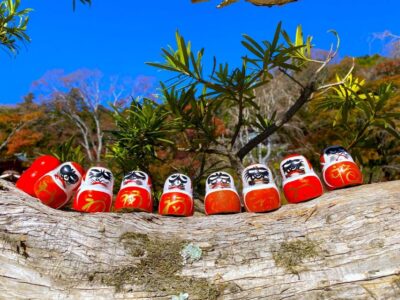 ★ 4.9Minoh, Katsuoji Temple, & Minoh Falls Full-day TourFrom $135172 reviews
Full Day Kyoto Tour : Bamboo Forest, Golden Temple, Fushimi InariFrom $10584 reviews
★ 4.9Minoh, Katsuoji Temple, & Minoh Falls Full-day TourFrom $135172 reviews
Full Day Kyoto Tour : Bamboo Forest, Golden Temple, Fushimi InariFrom $10584 reviews
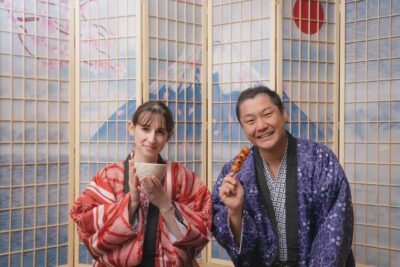 ★ 4.9Osaka Temple Cool Foot Bath & Matcha Experience〈45min〉From $3482 reviews
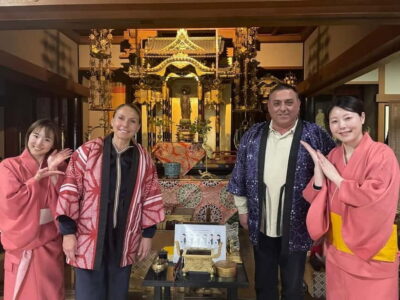 ★ 5.0Mind & Spirit Balance Temple Reiki HealingFrom $16141 reviews
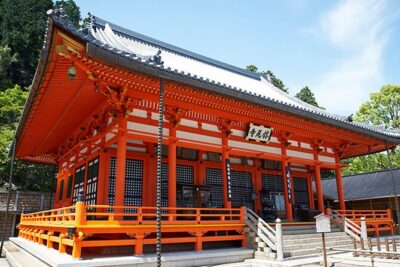 ★ 4.0Katsuo-ji Temple, Arashiyama Forest, & Nara ParkFrom $9137 reviews
 ★ 4.7Minoh Waterfall & Katsuo-ji Temple Half-Day TourFrom $4727 reviews
 ★ 5.0Osaka Half-day E-bike Adventure: Minoh Falls & Katsuoji TempleFrom $3425 reviews
 ★ 4.9Temple Tour and Traditional Calligraphy LessonFrom $2024 reviews
Browse the lists this tour appears in