

Reviewed · OSAKA WALKING TOURS
Osaka 4-Hour Walking Tour: Hotspots and Hidden Gems
Osaka changes fast when you follow the right route. This 4-hour walk pairs Namba Yasaka Shrine’s 12-meter lion head with Den-Den Town gachapon fun, plus you get the kind of street-level explanations that make the city feel personal. One consideration: this tour can be affected by crowd timing at shrines (lines can stretch on big holiday periods), and there has been at least one reported no-show.
I like that the pacing stays realistic. You start at South Hills Namba Sanban-kan around 2:00 pm and end in the Dotonbori food-and-neon zone near Ebisubashi, with plenty of time to keep exploring on your own.
In This Review
- Key things that make this Osaka walk worth your time
- A 4-hour Osaka walking tour that feels like the city itself
- Namba Yasaka Shrine and the lion head that eats bad luck
- Den-Den Town (Nipponbashi): anime streets and the joy of gachapon
- Kuromon Market: Osaka’s Kitchen and how to read a food crowd
- Dōtonbori neon and the lantern-lit switch at Hōzenji Temple
- Price and value: why $40 can be a smart buy
- What the route means for your day (and your feet)
- The guide factor: why stories matter more than you expect
- Small risks to consider before you book
- Should you book this Osaka 4-hour walking tour?
- FAQ
- What is the price for the Osaka 4-Hour Walking Tour?
- How long is the tour?
- What time does the tour start?
- Where does the tour start and where does it end?
- What tour stops are included?
- Do I need a printed ticket?
- How big is the group?
- Is admission included for the main stops?
- Is there free cancellation?
- Where is it in terms of transportation convenience?
Key things that make this Osaka walk worth your time
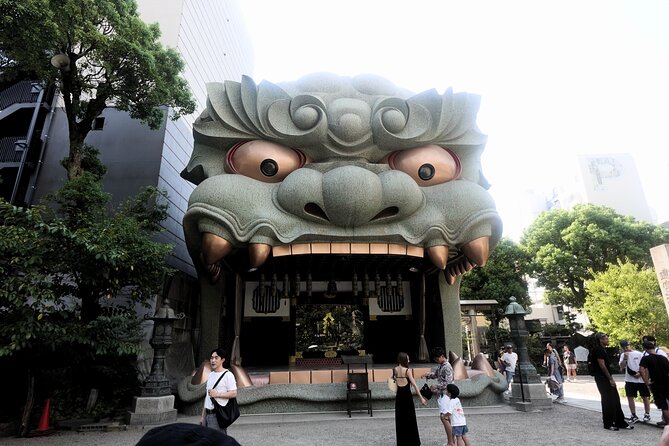
- Namba Yasaka Shrine’s lion head stage: a dramatic photo stop tied to local beliefs about warding off bad luck
- Den-Den Town (Nipponbashi): anime, manga, retro games, and a hands-on gachapon capsule moment
- Kuromon Market stop: you pass the everyday stalls that locals use for ingredients and street meals
- Dotonbori neon + Glico running man: the iconic Osaka scene, done with context rather than just walking past it
- Hōzenji Temple mood shift: a quieter, lantern-lit side of the old city with a moss-covered statue
- Small group size (max 10): easier conversations with your guide and less time stuck behind crowds
Osaka block by block, more routes on foot



A 4-hour Osaka walking tour that feels like the city itself
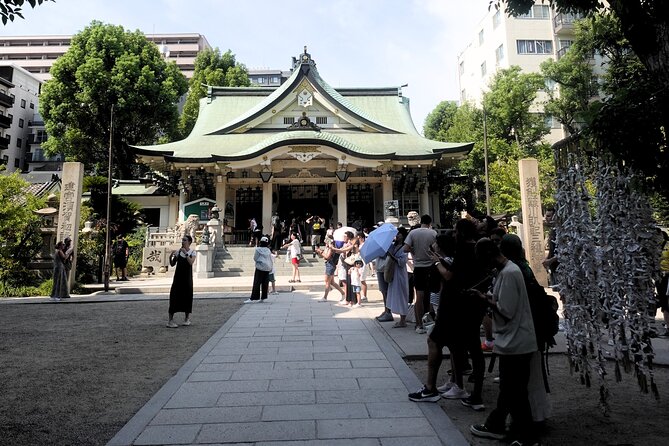
Osaka is not a museum city. It’s a “walk it, snack it, talk to people” city. That’s why this format works so well. Four hours is long enough to cover major neighborhoods, but short enough that you don’t end the day wiped out.
The tour also doesn’t treat Osaka like a checklist. It connects famous landmarks to the everyday habits you see right outside them—what people pray for, what they buy, what they chase for fun, and how the city trades quiet moments for neon energy. You’ll get a better sense of why Osaka jokes around even while it keeps deep spiritual traditions close by.
Price-wise, $40 for about four hours is fair when you factor in guide storytelling and the way the route strings together multiple “must-see” areas with minimal wasted transit time. If you prefer to self-guide, you can still do it on your own—but this path is designed to make sense quickly.
Namba Yasaka Shrine and the lion head that eats bad luck
You begin in the backstreets of Namba at Namba Yasaka Shrine, and the first thing you notice is the scale. The highlight is a giant 12-meter lion head stage. It’s the kind of visual Osaka loves: playful, theatrical, and memorable in one shot.
More than the photo, the charm here is the meaning. The lion head is believed to swallow evil spirits and bring good fortune. That belief matters because it changes how you read the space. Instead of seeing a stage, you notice the prayers, the intention, and how locals treat the shrine like a living part of daily life—not a stop on the way to something bigger.
A few practical notes:
- The shrine can draw crowds around big dates. If you’re traveling during a peak period like New Year, expect extra waiting time.
- Bring time flexibility in your head, even if the tour schedule keeps to its plan. A line at a spiritual site can slow the start.
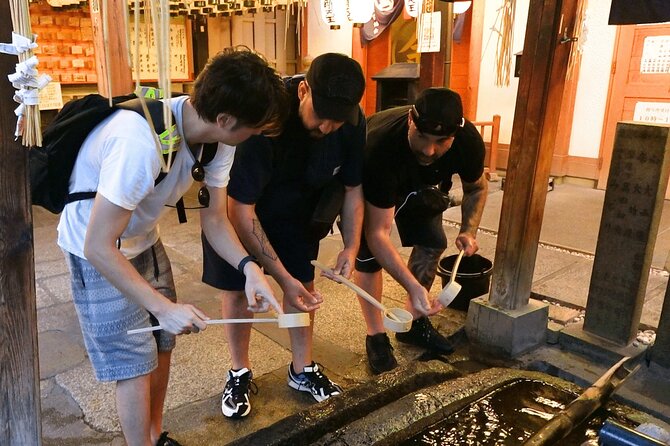
This is also a good moment to slow down and watch people. One of the best things about guided moments like this is that you’re not guessing what to do. Some guides teach you the basics of how to pray at a shrine, so you feel less like a lost tourist and more like a respectful visitor passing through.
Den-Den Town (Nipponbashi): anime streets and the joy of gachapon
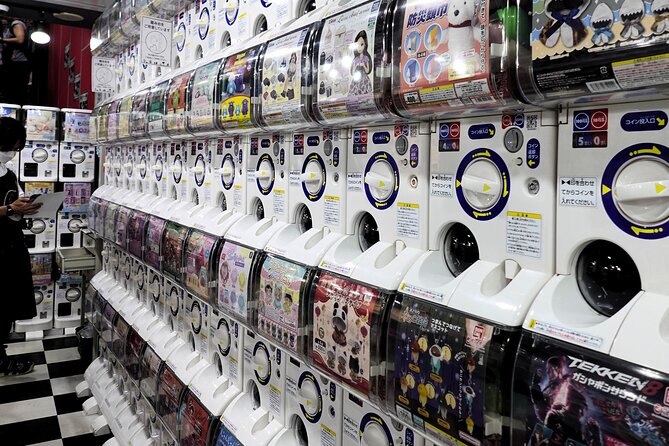
After the shrine, the city flips gears into Nipponbashi, often called Den-Den Town—Osaka’s pop culture zone. Think anime goods, manga, retro games, and quirky collectibles stacked into shop windows like candy shelves.
What I like here is that Den-Den Town can be overwhelming on your own. The guide helps you notice what matters: what kind of shops you’re walking past, why this area feels like a comfort zone for fans, and how these streets work as a playground as much as a shopping district.
The standout activity is the gachapon capsule machine moment. It’s simple, but it hits the sweet spot for a walking tour:
- You drop in a coin
- Twist the knob
- Get a surprise toy inside
It’s the same ritual kids and adults enjoy. And it’s a great way to keep energy up during a city-walk, especially if you’re traveling with a group that has different interests. Even if you’re not chasing anime merch, you’ll still get the fun of the process.
If you’re the kind of traveler who worries about “What if I don’t like anime?”—don’t. Den-Den Town is also electronics and retro game culture, and the walk itself is the point.



Kuromon Market: Osaka’s Kitchen and how to read a food crowd
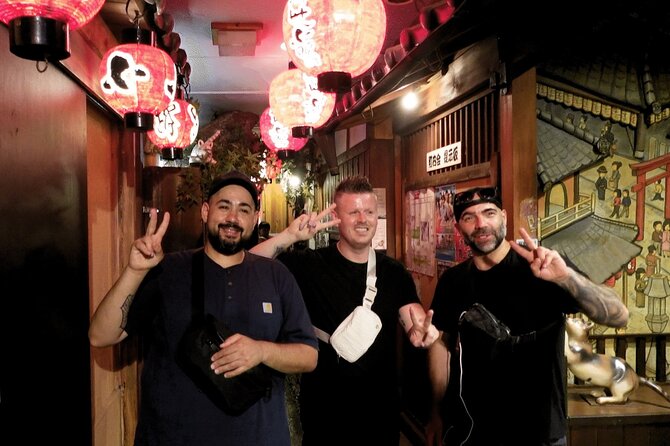
Next comes Kuromon Market, often called Osaka’s Kitchen. This is the part of Osaka that makes you understand the city’s appetite for bold flavor and fast meals.
Even when you’re not buying every bite, you learn a lot just by walking the covered arcades:
- Colorful stalls of seafood and produce
- Vendors calling out to passersby
- A steady flow of people shopping like they’re doing errands
A guided walk helps because the market is sensory chaos if you go in blind. With context, you start to see patterns: what gets attention, how vendors present ingredients, and how the market fits into everyday life rather than acting as a theme park.
Food value tip: if you do choose snacks here, pick one or two things you’ll actually finish and enjoy rather than trying to taste everything. The market makes it easy to over-order, especially when street food smells like a dare.
From the experience described, the guide sometimes helps you try your first local item—takoyaki is one example that has come up. That’s a smart way to do it if you’re unsure what to order. You get a learning experience without the guesswork.
Dōtonbori neon and the lantern-lit switch at Hōzenji Temple
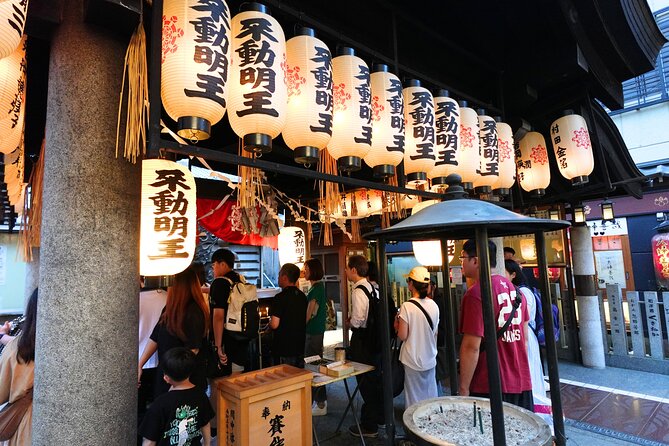
The tour finishes in Dōtonbori, the entertainment district where Osaka shows off. You’ll get the classic scenes: the neon lights, the Glico running man sign, and the canal views that pull you toward the lights instead of away from them.
Dōtonbori is one of those places where it’s easy to waste time just taking photos. The difference with a guided experience is that you see why the area feels this way—how signage, street energy, and nightlife culture make Osaka feel theatrical even in daylight.
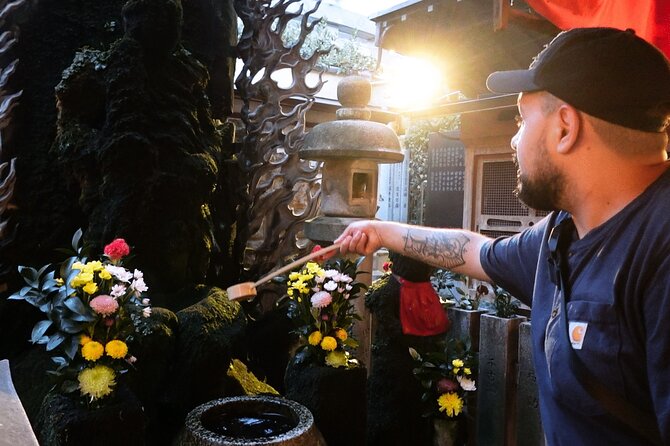
Then the mood changes. The final stop includes Hōzenji Temple, with its moss-covered statue and lantern-lit alleys. That contrast is the whole point. You go from neon spectacle to a quieter, older-feeling pocket where lantern glow and small lanes remind you that Osaka has a spiritual side that never fully leaves.
For me, this ending is a great way to avoid the common tourist pattern: rushing through the famous area, then feeling too tired to notice anything else. Ending with Hōzenji adds a calm landing and makes the Dōtonbori scene feel more like a lived-in neighborhood than a photo backdrop.
Price and value: why $40 can be a smart buy
At $40 per person for about four hours, this tour makes sense if you want:
- A quick overview of multiple neighborhoods
- Explanations that connect the sights
- Help navigating what to notice
- More time enjoying rather than figuring
The best value part is that the “big places” aren’t just walked past. The lion head shrine, Den-Den Town’s pop culture street, Kuromon Market’s everyday food vibe, and the Dōtonbori neon finish all reinforce each other. It’s not four unrelated stops. It’s one flowing story of Osaka’s humor and heart—spiritual belief, playful culture, and food-first daily life.
Also, some of the most praised moments come from guide energy: humor, clear stories, and small practical help (like basic shrine etiquette or pointing you toward a first try of something local). That’s hard to replicate with a map.
Where value can dip: if you don’t enjoy walking or you want fewer photo stops and more time sitting down, the pace may feel like a pass-through. One critique you should keep in mind is that if you’re expecting a deeper focus on major history at every step, the tour can feel lighter than that—more streets and moments than long lectures.
What the route means for your day (and your feet)
You’re walking for around four hours, starting at 2:00 pm. In Osaka, that’s a smart time window: late afternoon energy without the total late-night chaos.
With a maximum group size of 10, it’s not a cattle-car tour. You’ll generally be able to ask questions without yelling.
The tour is also built for real travelers:
- Near public transportation
- Suitable for most travelers
- Mobile ticket format (no printer panic)
Still, it’s a walking tour. Wear shoes you trust. Osaka sidewalks are manageable, but you’ll cover distance across multiple neighborhoods. If you’re prone to blisters, bring a little prevention kit.
One more practical thought: if you’re a picky eater, markets can be intimidating. You don’t have to buy everything. Use Kuromon as a place to observe and pick one or two items you can commit to.
The guide factor: why stories matter more than you expect
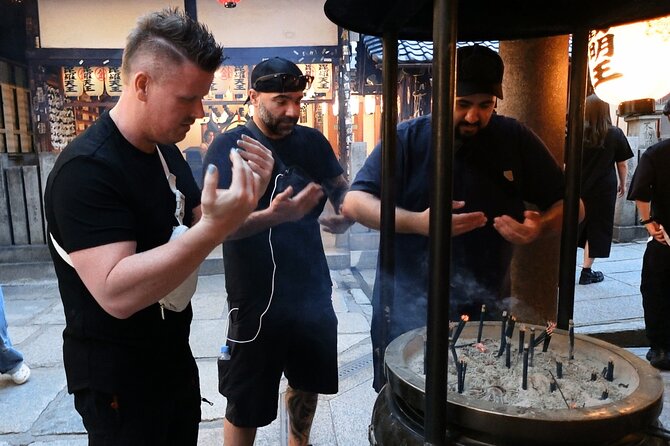
A good guide is what turns a walk into an understanding. In the strongest write-ups, the guide’s style is consistently described as friendly, funny, and story-driven. Some guidance also includes practical cultural tips—like how to pray at a shrine and even a few Osaka dialect words.
Even if you speak zero Japanese, a guide’s explanations give you something better than signage translations:
- You know what you’re looking at (and why it exists)
- You notice details you’d skip alone
- You understand how the city holds older beliefs next to modern entertainment
This is especially true at the shrine and temple. Without context, you might just see pretty buildings and a big lion face. With context, it becomes a place with intention, ritual, and meaning.
And yes, humor comes into it. One memorable style noted is the mix of quiet cultural moments with laughter and street-level character. That’s the Osaka way: reverent when it counts, playful the rest of the time.
Small risks to consider before you book
This tour generally looks like a smooth, fun half-day. But do keep two real-world possibilities in mind:
1) Crowds at spiritual stops
On peak holiday timing, lines can add time. If you plan around fixed dinner reservations, build in a buffer.
2) Schedule reliability
One report mentions a no-show. I can’t predict your day, but I recommend you treat confirmation seriously and stay reachable. If your trip is time-sensitive, have a backup plan for late afternoon if anything slips.
Most likely, you’ll be fine. Still, smart travelers plan for small odds.
Should you book this Osaka 4-hour walking tour?
Book it if you want a fast, fun orientation to Osaka that includes both the famous and the everyday—shrines, pop culture streets, a real food market, and Dōtonbori neon, with a calming temple stop to end the day.
Skip it (or look for a different style) if you prefer:
- Fewer walking stops and more time sitting
- Deep, museum-style history at every location
- A strictly quiet experience with minimal crowds
My take: if you enjoy street scenes, food-watching, and learning through stories, this is a strong value at $40 for about four hours, especially with a max of 10 people and a route that stitches Osaka’s different moods into one afternoon.
FAQ
What is the price for the Osaka 4-Hour Walking Tour?
The tour costs $40.00 per person.
How long is the tour?
It runs for about 4 hours.
What time does the tour start?
The start time is 2:00 pm.
Where does the tour start and where does it end?
It starts at South Hills Namba Sanban-kan (サウスヒルズ難波三番館) in Naniwa Ward. It ends in the Dōtonbori area at Ebisubashi (around 心斎橋筋 / Shinsaibashisuji).
What tour stops are included?
The tour includes Namba Yasaka Shrine, Den-Den Town (Nipponbashi), Kuromon Market, Dōtonbori, and Hōzenji Temple.
Do I need a printed ticket?
No. It uses a mobile ticket.
How big is the group?
The maximum group size is 10 travelers.
Is admission included for the main stops?
Namba Yasaka Shrine and Dōtonbori are listed as free admission for the tour stops.
Is there free cancellation?
Yes, you can cancel for a full refund up to 24 hours before the experience starts.
Where is it in terms of transportation convenience?
It is near public transportation.
More Tour Reviews in Osaka
- Osaka Go Karting Tour with Funny Costume★ 5.0 · 2,658 reviews
- Osaka Castle: Museum and Tower Entry Ticket★ 4.5 · 2,380 reviews
- Osaka: Shinsekai Food Tour with 13-15 Dishes at 5 Eateries★ 4.8 · 2,204 reviews
- Osaka Food Tour: 13 Dishes at 5 Local Eateries★ 5.0 · 2,149 reviews
- Hungry Osaka Street Food Tour:15 Tastings & 3 Drinks with a Local★ 5.0 · 1,727 reviews
Osaka at Street Level
- Osaka Local Foodie Walking Tour in Dotonbori and Shinsekai★ 5.0 · 985 reviews
- Osaka: Deep Backstreets Walking Tour with Dinner Option★ 4.9 · 902 reviews
- Ultimate Osaka Walking Tour: Castle, Dotonbori & Hidden Gems★ 5.0 · 862 reviews
- Osaka: Main Sights and Hidden Spots Guided Walking Tour★ 4.9 · 702 reviews
- Private Osaka Walking Tour: Highlights & Hidden Gems★ 5.0 · 569 reviews
The Newest Osaka Write-Ups
- Private Photoshoot in Osaka with a Professional Photographer
★ 5.0 · 3 reviews - Osaka Early Morning Osaka Castle Tour Avoid Crowds
★ 5.0 · 3 reviews - Nara Private Tour with Pick and Drop and English Speaking Driver
★ 3.5 · 3 reviews - Osaka: Modern Vegetarian Sushi Cooking Class
★ 5.0 · 3 reviews - Nara Day Trip from Osaka with a Licensed Guide
★ 5.0 · 3 reviews
Osaka Walking Tours, compared.
 ★ 5.0Osaka Local Foodie Walking Tour in Dotonbori and ShinsekaiFrom $111985 reviews
 ★ 4.9Deep Backstreets Walking Tour with Dinner OptionFrom $40902 reviews
 ★ 5.0Ultimate Osaka Walking Tour: Castle, Dotonbori & Hidden GemsFrom $73862 reviews
 ★ 4.9Main Sights and Hidden Spots Guided Walking TourFrom $59702 reviews
 ★ 5.0Private Osaka Walking Tour: Highlights & Hidden GemsFrom $81569 reviews
 ★ 5.0Osaka Castle Walking Tour and Castle Tower AdmissionFrom $23561 reviews
 ★ 5.0Kuromon Market Food Walking Tour in Osaka (6 stops, 6 tastes)From $50550 reviews
 ★ 4.7Five Must-See Highlights Walking Tour & Ramen LunchFrom $56411 reviews
Browse the lists this tour appears in