
Reviewed · OSAKA PRIVATE TOURS
Nara 8hr Private Tour – Osaka DEP. with Licensed Guide
Nara can be overwhelming fast, so this guided day is a relief. You get an English-speaking licensed guide who handles directions, context, and pacing while you build a custom plan for your tastes. It’s a great way to see why Nara isn’t just deer selfies and temple photos.
I like two things a lot: first, the guide leads the way, so you spend less time figuring out trains or signs and more time looking at the real details. Second, the tour is flexible, so you can choose highlights like Todai-ji, shrine stops, and even gardens instead of getting shoved into a one-size route.
One consideration: because you’ll pick only 3–4 sights out of the options, you can’t realistically “do everything” in one day without feeling like you’re skipping. Also, several major temples and museums have admission tickets not included, so budget a bit extra on top of the tour price.
In This Review
- Key points worth your time
- Private Nara from Osaka: the day trip that doesn’t feel like a squeeze
- The guide makes the difference: English, pacing, and real-world confidence
- Nara in 8 hours: how to pick 3 to 4 sights
- Todai-ji Temple and Nara Park: start with the headline, then breathe
- Kasuga Taisha and the deer-and-shrine vibe without the confusion
- Mt. Wakakusa for views and a breather
- Temple circuit options: Horyu-ji, Kofuku-ji, Yakushi-ji, and Toshodai-ji
- Naramachi: where Nara feels human, not just monumental
- Museums and gardens when you want a quieter Nara
- Pacing, tickets, and what you’ll actually spend on top
- Price and logistics: is $198.72 worth it for a licensed private tour?
- Who should book this Nara 8-hour private tour from Osaka?
- Should you book this tour?
- FAQ
- How long is the Nara private tour?
- Does the tour include a pickup from Osaka?
- Is this tour private?
- Will I have an English-speaking guide?
- Are admission tickets included?
- Can I customize the itinerary?
- What if I need to cancel?
Key points worth your time
- Licensed English guide means you get meaning, not just landmarks
- Private format with customizable 3–4 sights keeps the day from feeling rushed
- Temple and garden mix lets you balance big icons with quieter spots
- Some key stops are free (like Nara Park and Kasuga Taisha), which helps the budget
- Guides can add thoughtful extras; I’ve seen examples like a tea ceremony or snack stops mentioned
- Mobile ticket helps keep the day simple once you’re on the ground
A guide to yourselves, more private days out

Private Nara from Osaka: the day trip that doesn’t feel like a squeeze
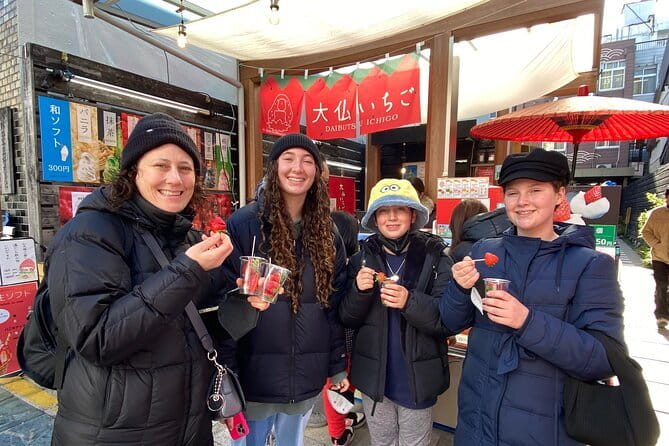
Nara is popular for a reason, but it can also feel like a moving crowd. This 8-hour private setup from Osaka changes the vibe. Your guide handles the “how do we get there and what are we looking at?” part, which keeps your brain free for the fun parts: architecture, stories, and those calm moments when you’re not threading through people.
You’ll start with a meet-up on foot in a designated Osaka area. Pickup is offered, which matters if you want to reduce friction on the front end. Then you head into Nara for a day that’s built around your choices, not a fixed schedule.
The guide makes the difference: English, pacing, and real-world confidence
The headline benefit is obvious: no language barriers. But the deeper win is how much easier Nara becomes when someone translates what you’re seeing into plain language.
I also love the way the guides seem to work with your pace. In past trips, guides such as Noriko, Hiro, and Kaeko were praised for being punctual and organized, with good English and smooth flow. One guide even helped when a phone was left behind, which is the kind of stress you don’t want on a day trip. Another was noted for adding a tea ceremony, which fits Nara well—quiet, reflective, and a nice contrast to the louder temple corridors.
Even if you’re comfortable traveling independently, a licensed guide helps you avoid the common trap: standing in front of a landmark and still not knowing what matters most.
Nara in 8 hours: how to pick 3 to 4 sights
Here’s the decision you’ll make up front: choose 3–4 stops from a strong menu. Each stop is listed with about 30 minutes of time. That’s useful because it gives you a realistic structure, but the guide can adjust based on your interests and how the day feels.
My rule of thumb for this kind of private day: pick a mix of big-name structure plus one or two mood-shift stops.
For example:
- Pair Todai-ji (major scale) with Nara Park (easy roaming) and Kasuga Taisha (sacred atmosphere).
- Or swap one temple for a garden like Isuien or Yoshikien if you want less foot traffic and more stillness.
Also remember: some stops are free and some aren’t. If you care about keeping total costs predictable, build your list accordingly.
The deer will still bow: more Nara days
Todai-ji Temple and Nara Park: start with the headline, then breathe
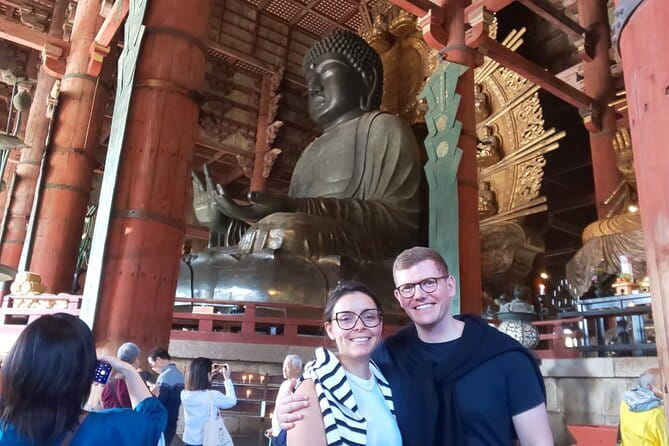
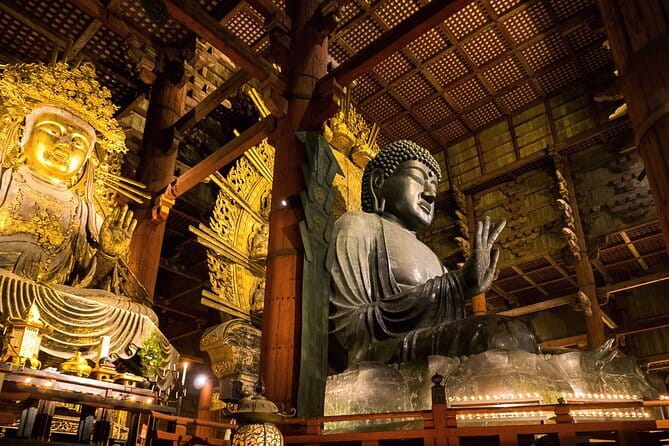
Todai-ji Temple is the kind of sight that makes you slow down. It dates to 752 and is one of Nara’s most famous landmarks, built as the head temple of provincial Buddhist temples. You’ll get a guided walk through the key parts and the background that makes it feel more than just impressive.
A practical note: admission tickets are not included for Todai-ji, so plan for that extra cost.
Next is Nara Park, a large central park established in 1880. This is where Nara’s energy becomes very visible—open space, historic ties, and the area that connects several major attractions. Admission here is marked as free, which is a nice budget win.
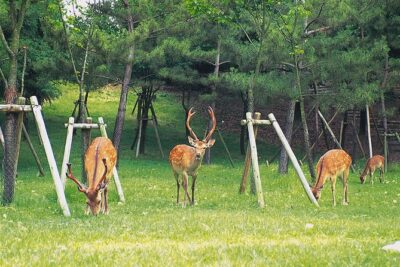
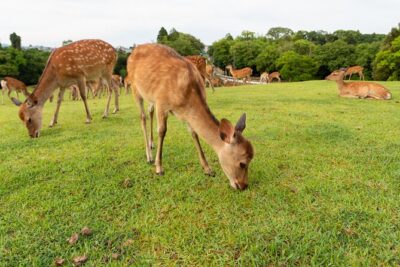
If deer are your focus, this is where you’ll naturally run into them. But even if you’re not, Nara Park works as a decompression stop between big temple moments.
Kasuga Taisha and the deer-and-shrine vibe without the confusion
Kasuga Taisha is Nara’s most celebrated shrine, established around the same time as Japan’s capital moved to Nara. It’s dedicated to the deity seen as protecting the city. This is the kind of place where context helps. With a guide, you’re less likely to miss the meaning behind the setting and the rituals tied to it.
Good news: Kasuga Taisha is free (as listed). That makes it a smart choice if you want a high-impact stop without extra ticket costs.
You’ll spend about 30 minutes here. I like treating it as your “spiritual reset” after the heavy scale of Todai-ji. It’s a different rhythm—more shrine atmosphere, less “wow, how big is that?”
Mt. Wakakusa for views and a breather
If you want your day to include something lighter than temples, Mt. Wakakusayama (Mount Wakakusa) is the option. It’s the grass-covered mountain behind Nara Park, around 350 meters tall, and it offers unobstructed views over Nara.
Admission for Mt. Wakakusa is listed as not included, so budget that in. Also, think of it as the stop that changes the air in your day. You’ll likely enjoy it most if you want a pause from indoor architecture and want a wider sense of where everything sits.
Temple circuit options: Horyu-ji, Kofuku-ji, Yakushi-ji, and Toshodai-ji
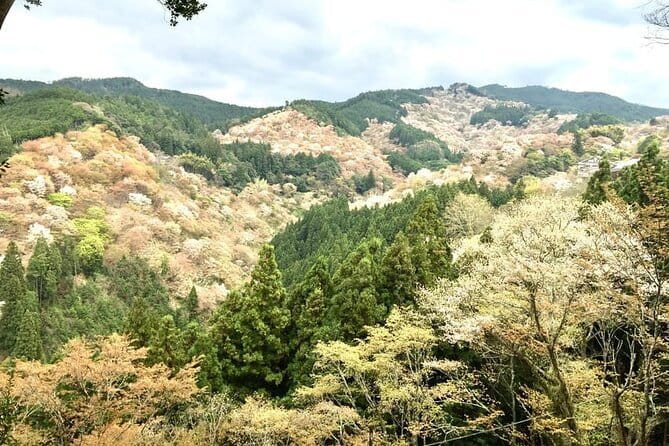
This is where Nara really becomes a museum without walls. You’re picking among different temple personalities, time periods, and architectural styles.
Here’s a clean rundown of what each stop brings:
Horyu-ji Temple
One of Japan’s oldest temples, founded in 607 by Prince Shotoku. If you care about the early spread of Buddhism in Japan, this is the stop that puts that story into place. It’s also listed with admission not included.
Kofuku-ji Temple
This used to be the family temple of the Fujiwara clan, one of the most powerful aristocratic groups during the Nara and Heian periods. That political background matters; it helps explain why certain kinds of temples feel tied to power and state identity. Admission is not included.
Yakushi-ji Temple
Constructed in the late 7th century by Emperor Tenmu for the recovery of his sick wife. What’s striking here is the strictly symmetric layout. That symmetry gives you something very visual to look for, beyond just reading names. Admission is not included.
Shinyakushiji (Shin-Yakushiji)
Also devoted to Yakushi Buddha and associated with medicine in Japanese Buddhism. This can feel like a “companion” stop if you do Yakushi-ji, but it’s its own chapter—built for an empress’s prayers during the Nara Period. Admission is not included.
Toshodai-ji
Founded in 759 by Ganjin, a Chinese priest invited to Japan to train priests and improve Buddhist practice. If you like the cross-cultural thread of how ideas traveled, this is a strong fit. Admission is not included.
Why I like this section for your planning: if your day includes only the most famous sites, you can end up feeling like you saw a “greatest hits list.” Mixing these temples adds variety—early roots, political power, symmetry, devotion to medicine, and international influence.
Naramachi: where Nara feels human, not just monumental
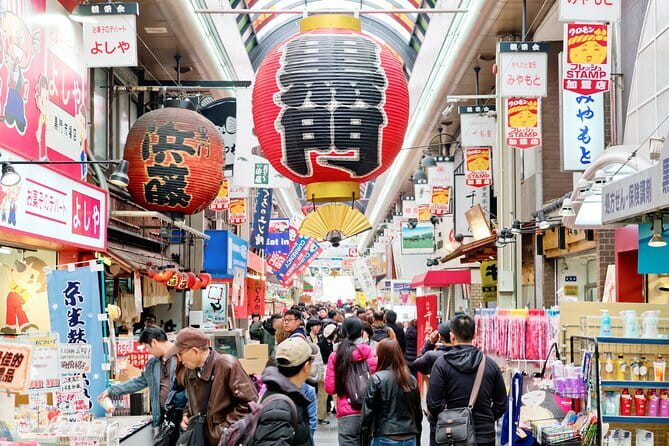
After temple heaviness, Naramachi is the reset button. It’s the former merchant district of Nara, with preserved traditional residential buildings and warehouses that are open to the public. You’ll also find boutiques and cafes here.
Admission is listed as free, which makes Naramachi a smart choice if you want atmosphere without paying another ticket. It’s also a good place to slow down and notice the everyday texture that sits next to the monumental history.
If you’re choosing only a few stops, I’d still consider Naramachi, because it gives you a slice of daily life instead of only ceremonial spaces.
Museums and gardens when you want a quieter Nara
If you love temples but don’t want your entire day to be walking in crowds, the museum-and-garden options are a great pivot.
Nara National Museum
This museum focuses on Japanese Buddhist art. It’s established in 1889 and is located in Nara Park. Admission is listed as not included, but the payoff is depth. It’s a solid option if you want to understand what you saw outside and connect it to objects and art styles.
Heijo Palace Museum
During the Nara Period (710–794), Nara was Japan’s capital, known as Heijo-kyo. This museum deals with the palace area that stretched roughly a kilometer by a kilometer, serving as the seat of power. Admission is not included. If you want the “how big was the state?” perspective, this is a strong pick.
Now the gardens—my kind of break.
Isuien Garden
A Japanese garden that uses borrowed scenery, including parts of Todaiji’s Nandaimon Gate and Mount Wakakusayama. Isuien means a garden found using water from another place, which hints at its design thinking. Admission is not included.
Yoshikien
Another garden option in central Nara, named after the Yoshikigawa River beside it. It’s on the site of Kofukuji Temple’s former priest residence grounds, which links it back to the broader religious landscape. Admission is not included.
If you’re trying to decide between “one more temple” and “one calmer stop,” gardens are usually the move. Even with only 30 minutes, they give your day contrast.
Pacing, tickets, and what you’ll actually spend on top
The tour runs about 8 hours and is designed for 3–4 chosen sights. That time is enough to enjoy a guided route without feeling like you’re sprinting from one entrance to the next.
But tickets can add up. Admission is listed as not included for many stops: Todai-ji, Mt. Wakakusa, Horyu-ji, Kofuku-ji, Yakushi-ji, Shinyakushiji, Nara National Museum, Heijo Palace Museum, Toshodai-ji, Isuien Garden, and Yoshikien. Two notable free items are Nara Park and Kasuga Taisha.
Food and drink are also not included for you. That matters because a private day can still fill up fast. I’d plan for one sit-down or snack stop you personally choose, rather than counting on the tour to handle meals.
Also consider your footwear and stamina. Even when you’re not doing long routes, you’ll still be walking through temple grounds, museum areas, and park paths.
Price and logistics: is $198.72 worth it for a licensed private tour?
At $198.72 per person for an 8-hour private tour, you’re paying for three big things: a licensed guide, the private experience, and the flexibility to pick what matters to you.
If you’re traveling with a small group (or you want the calm of a private pace), this can be strong value. Public transport day trips can feel cheap until you factor in wasted time, misreading signs, and not understanding what you’re looking at. Here, the guide handles the interpretation and the flow.
Two pricing-tweaks to keep in mind:
- Group discounts are mentioned, so your effective cost may drop depending on your group size.
- Several major stops have admission tickets not included, so your real “all-in” cost will be tour price plus tickets for what you select.
One more detail: this experience is often booked about 76 days in advance on average. If you’re traveling around peak seasons or weekends, booking early is a practical way to avoid last-minute stress.
Who should book this Nara 8-hour private tour from Osaka?
This tour fits best if you want:
- a private, English-guided Nara day with minimal navigation effort
- a flexible plan where you pick 3–4 stops instead of chasing a long itinerary
- a mix of major temples plus optional quieter choices like gardens or museums
- a guide who can add context, and in some cases thoughtful extras like a tea ceremony
It’s also a good fit for people who like serenity as much as sights. One guide is specifically praised for generating a calm, peaceful pace while visiting gardens connected to major temples.
If you’re the type who needs to see every famous site no matter what, you’ll likely feel the limits. This is a pick-your-moments day, not a check-the-box marathon.
Should you book this tour?
Yes, if you want Nara without the friction and you care about understanding what you’re seeing. The licensed English guide plus the freedom to choose 3–4 stops is the core value, especially when you’re coming from Osaka and you’d rather not spend your day decoding transit and ticket logic.
If you’re on a strict budget and hate adding extra temple or museum admissions, you’ll want to plan your selected stops carefully. Pick the free options like Nara Park and Kasuga Taisha, then only add a couple paid highlights.
If you’re excited by a day that blends big-name landmarks with quieter art, palace history, or garden calm, this private Nara tour from Osaka is a smart way to get there.
FAQ
How long is the Nara private tour?
It runs about 8 hours.
Does the tour include a pickup from Osaka?
Pickup is offered, and you’ll meet your guide on foot within a designated area of Osaka.
Is this tour private?
Yes. It’s private, and only your group participates.
Will I have an English-speaking guide?
Yes. The tour includes a government licensed guide and an English-speaking guide.
Are admission tickets included?
Not for every stop. Some places are listed as free (like Nara Park and Kasuga Taisha), while many others require admission tickets that are not included.
Can I customize the itinerary?
Yes. You can customize your itinerary by choosing 3–4 sights from the available options.
What if I need to cancel?
Free cancellation is available up to 24 hours in advance for a full refund. If you cancel less than 24 hours before the start time, the amount paid won’t be refunded.
More Tour Reviews in Osaka
- Osaka Go Karting Tour with Funny Costume★ 5.0 · 2,658 reviews
- Osaka Castle: Museum and Tower Entry Ticket★ 4.5 · 2,380 reviews
- Osaka: Shinsekai Food Tour with 13-15 Dishes at 5 Eateries★ 4.8 · 2,204 reviews
- Osaka Food Tour: 13 Dishes at 5 Local Eateries★ 5.0 · 2,149 reviews
- Hungry Osaka Street Food Tour:15 Tastings & 3 Drinks with a Local★ 5.0 · 1,727 reviews
A Day Among the Nara Deer
- Ancient Capital Tour: Kyoto and Nara Highlights from Kyoto/Osaka★ 4.5 · 332 reviews
- Kyoto and Nara Day Trip from Osaka★ 4.0 · 175 reviews
- Full Day Guided Tour to Kyoto and Nara from Osaka by Van★ 5.0 · 144 reviews
- Discover Himeji, Kobe and Nara from Osaka★ 5.0 · 101 reviews
- Kyoto & Nara Private customized tour with English speaking Guide★ 4.5 · 99 reviews
Your Osaka, at Your Pace
- Private Osaka Walking Tour: Highlights & Hidden Gems★ 5.0 · 569 reviews
- Osaka 4hr Private Tour with Government-Licensed Guide★ 5.0 · 314 reviews
- 3/4/5 Hours Private Tour in Osaka with Local Guide★ 5.0 · 189 reviews
- Osaka’s Best and Brightest: Private Full-Day Tour by Vehicle★ 5.0 · 147 reviews
- Kyoto & Nara Private customized tour with English speaking Guide★ 4.5 · 99 reviews
The Newest Osaka Write-Ups
- Private Photoshoot in Osaka with a Professional Photographer
★ 5.0 · 3 reviews - Osaka Early Morning Osaka Castle Tour Avoid Crowds
★ 5.0 · 3 reviews - Nara Private Tour with Pick and Drop and English Speaking Driver
★ 3.5 · 3 reviews - Osaka: Modern Vegetarian Sushi Cooking Class
★ 5.0 · 3 reviews - Nara Day Trip from Osaka with a Licensed Guide
★ 5.0 · 3 reviews
Osaka Private Tours, compared.
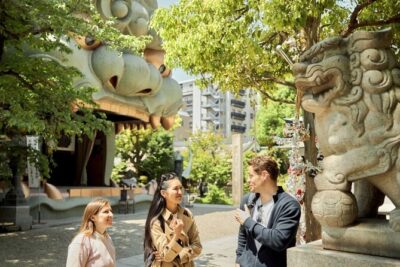 ★ 5.0Private Osaka Walking Tour: Highlights & Hidden GemsFrom $81569 reviews
 ★ 5.0Osaka 4hr Private Tour with Government-Licensed GuideFrom $105314 reviews
 ★ 5.03/4/5 Hours Private Tour in Osaka with Local GuideFrom $95189 reviews
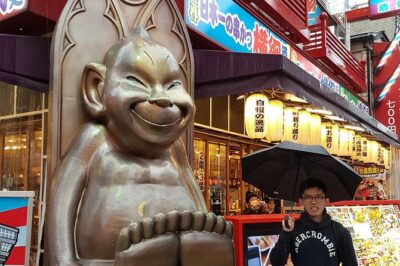 ★ 5.0Osaka’s Best and Brightest: Private Full-Day Tour by VehicleFrom $600147 reviews
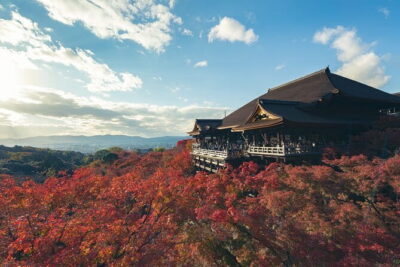 ★ 5.0Full Day Tour of Kyoto with Private TransportationFrom $247130 reviews
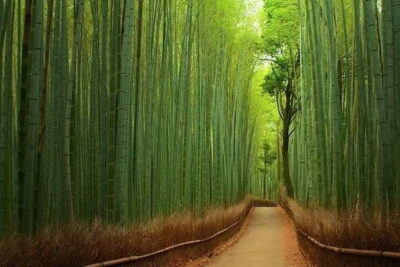 ★ 4.5Kyoto & Nara Private customized tour with English speaking GuideFrom $54999 reviews
 ★ 4.6Private Custom Walking Tour with a Local GuideFrom $6297 reviews
 ★ 4.93/4/5 Hours Private Tour With Local GuideFrom $11686 reviews
Browse the lists this tour appears in