
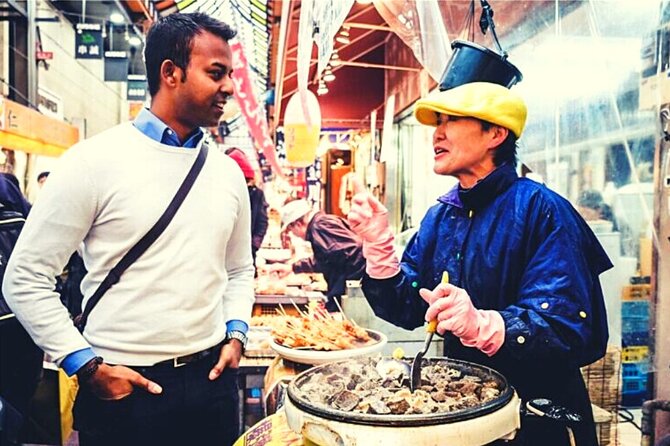
Reviewed · KUROMON MARKET TOURS
Kuromon Market Tour: All inclusive 6~8 Dishes & 3~4 samplings
Kuromon smells like lunch on day one. This small-group food walk turns Osaka’s famous market into a guided tasting, with 6–8 dishes plus 3–4 samplings and Japanese tea in about 2 hours. I also love how guides like Anna and Hikaru help you read what you’re seeing, from seafood counters to street-food stalls, so you don’t get lost in the noise. One catch: it’s not vegetarian/vegan friendly, and the menu leans fish-forward.
You’ll meet at Nippombashi Station (1 Chome-5 Nipponbashi, Chuo Ward, Osaka 542-0073) at 2:00 pm. The tour runs with a maximum of 9 people, which matters because you can actually ask questions, swap preferences, and move at the right pace through a crowded market. It’s also mobile-ticket simple, and it ends back near where you start—handy if you’ve got other plans after lunch.
In This Review
- Key highlights worth caring about
- Why Kuromon Ichiba makes a great food tour
- Nippombashi meeting point and what the 2-hour walk feels like
- The all-in-one tasting menu: 6–8 dishes and 3–4 samplings
- Seafood highlights: otoro, oysters, sea urchin, and fugu
- Osakan comfort food beyond seafood: okonomiyaki and market snacks
- Dessert and Japanese tea: how the tour finishes so you don’t crash
- Guides matter in a market like this: vendor relationships and real explanations
- Pace, planning, and what to do with an empty stomach
- Who this tour is best for (and who should skip it)
- Price and value: is $63.43 a fair deal?
- Practical tips before you book this Kuromon tour
- Should you book this Kuromon Market tasting tour?
- FAQ
- How long is the Kuromon Market tour?
- What food is included in the tour?
- Is the tour suitable for vegetarians or vegans?
- How big is the group?
- Where does the tour start, and when is it?
- What kind of ticket do I get?
Key highlights worth caring about
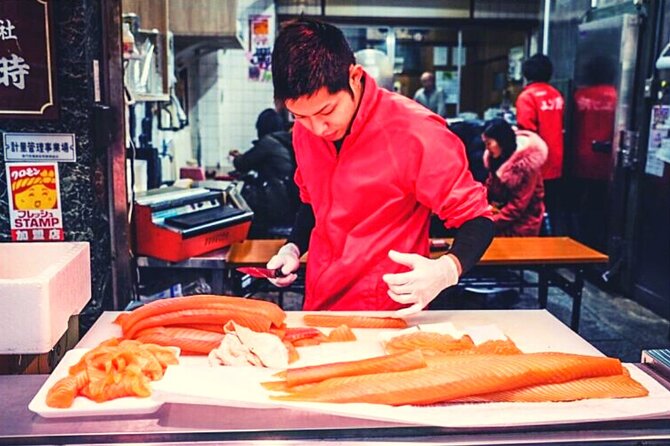
- 6–8 dishes + 3–4 samplings so you get variety, not just one big meal
- Small group (max 9) for easier questions and a smoother market walk
- Vendor relationships help you find what’s authentic and worth your bite
- Seafood-heavy tasting with examples like otoro and fugu-pufferfish
- Japanese tea + dessert to round out the tasting arc
- 2:00 pm, ~2 hours makes it a great mid-day Osaka anchor
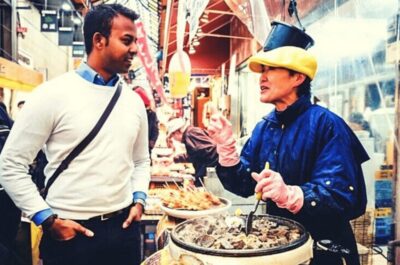
Another lap of the Kuromon stalls

Why Kuromon Ichiba makes a great food tour
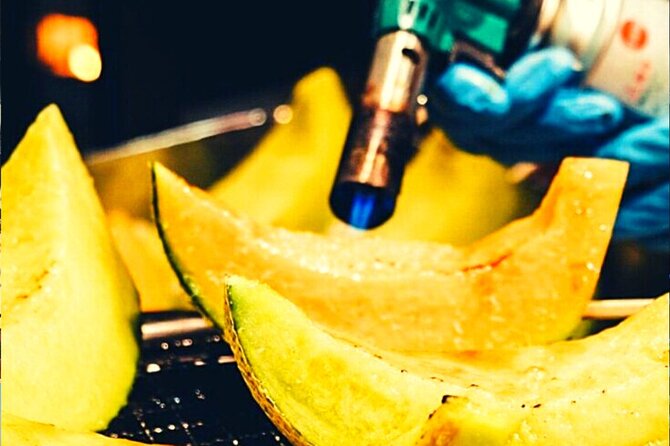
Kuromon Ichiba Market is one of those places where your senses go full throttle. Lots of seafood. Lots of sizzling snacks. Lots of choices that look similar until someone explains what’s different. That’s where this tour shape helps.
Instead of handing you a printed list and sending you off, you follow a guide through the market and eat along the way. In plain terms: you’re sampling your way through the market’s best “yes” items—fresh seafood, Osakan comfort food like okonomiyaki, dessert, and Japanese tea.
The other thing I like is that the tour is designed around variety. You’re not just doing one theme (like only sushi) and you’re not stuck with one “big” stop where you eat a lot of the same flavor. The experience is built to spread your tasting across multiple stalls, so you end up with a clearer sense of Osaka’s food personality.
Nippombashi meeting point and what the 2-hour walk feels like
You start at Nippombashi Station, at 1 Chome-5 Nipponbashi in Chuo Ward. The tour begins at 2:00 pm and ends back at/near the meeting point. It’s scheduled for about 2 hours, which is a sweet spot in a market: long enough to eat and learn, short enough that you’re not stuck when you’d rather go exploring.
A market can feel like controlled chaos. With a group of up to 9, you’re not fighting for space at every stall. You also get the practical benefit of timing: your guide can keep the group moving so you still hit the good vendors, even when a busy stretch slows things down.
One smart way to think about this timing: it’s easy to pair with Osaka plans later the same day. You’re not spending half a day doing food, then realizing you still have to figure out where to go next.
The all-in-one tasting menu: 6–8 dishes and 3–4 samplings
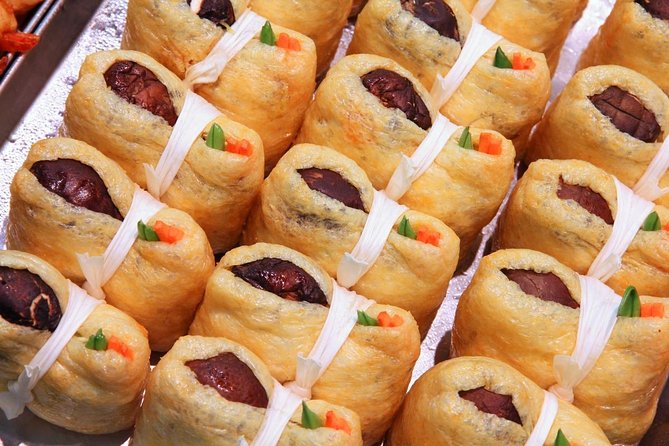
The core promise is simple: 6–8 selected dishes plus 3–4 samplings. That’s what makes the tour feel “all inclusive” in practice. You’re paying once, then eating repeatedly as you go.
The exact lineup can vary, but the tour is consistently framed around a mix of:
- fresh seafood (often first-class picks)
- local Osakan must-tries
- dessert
- Japanese tea
- other small bites that help you understand ingredients and cooking styles
I’d also pay attention to how the guide handles preferences. One recurring theme in the accounts you provided is that guides will adjust—adding extra samples if you’re excited, and offering alternatives if someone in the group doesn’t want a particular dish. So if you’re curious but cautious, say something early.
Come hungry: more eating your way through Osaka
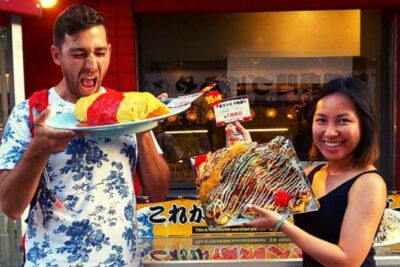

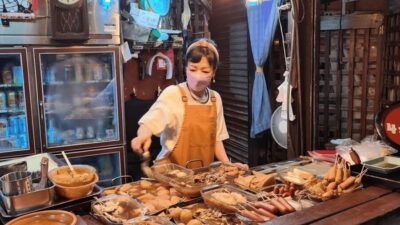
Seafood highlights: otoro, oysters, sea urchin, and fugu
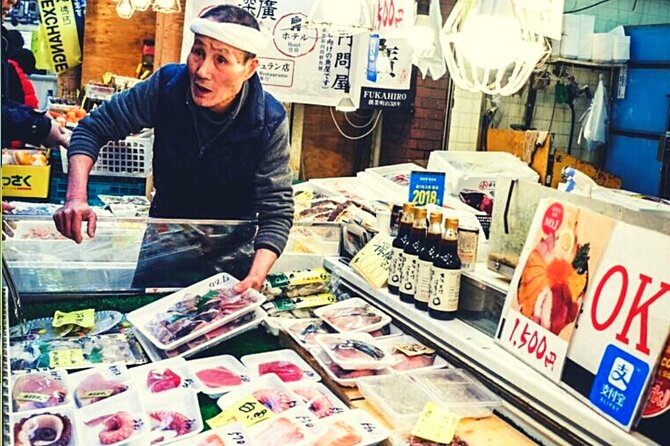
If you like seafood, this is the part that makes Kuromon special. The market is famous for it for a reason, and the tour uses that strength. You’re not just walking past counters—you’re tasting items that represent different levels of richness and preparation.
From the examples in the info you shared, you might encounter:
- otoro tuna, described as buttery and memorable
- oysters
- sea urchin
- fish cakes
- pufferfish (fugu)—handled carefully by the vendors
- even more adventurous items for those who want to go all-in (there were mentions of whale too)
Two practical notes if you’re deciding whether this is for you:
- This isn’t a mild “just try a little” style tour. The seafood tastings can be intense and unfamiliar, especially if you’re sensitive to strong flavors or textures.
- The tour isn’t vegetarian/vegan friendly, so if your diet is plant-based, you’ll be better off looking for a different kind of food experience.
For me, the real value with seafood isn’t only the eating—it’s learning what you’re tasting and why it’s served the way it is. You get context for quality and authenticity cues, not just a shrug-and-try moment.
Osakan comfort food beyond seafood: okonomiyaki and market snacks
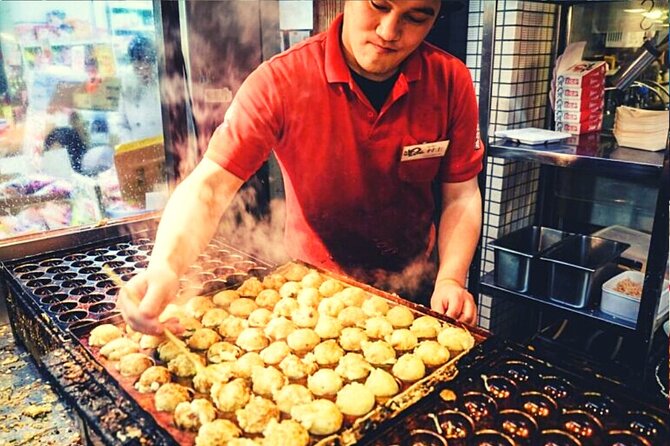
Osaka food isn’t only sushi-shop seafood. It’s street food. It’s griddles. It’s simple flavors done well.
That’s why it helps that the tour explicitly includes local dishes such as okonomiyaki, along with other Osaka snack-style bites. These are the tastes that make you feel like you’ve understood the city—not just consumed it.
In a market setting, the guide’s job is also about reading the stall. Some places look busy but aren’t built for what you’re trying to learn. With the right guidance, you can focus on what’s being made fresh, how it’s portioned, and what’s worth your bite without guessing.
This also matters for first-time Osaka eaters. If you don’t know what you’re ordering (or what a good version looks like), you can waste time. A guided tasting keeps you from turning your hunger into decision fatigue.
Dessert and Japanese tea: how the tour finishes so you don’t crash

A food tour needs a landing. Here, dessert and Japanese tea show up as part of the planned tasting sequence, not as an afterthought.
The dessert component is often where you slow down a bit and process what you’ve already eaten. You also get a softer flavor contrast after seafood-heavy tastings. In the examples you shared, sakura-mochi came up, which is a nice reminder that Japanese sweets can be seasonal and ingredient-driven rather than just “sugar and sugar.”
Japanese tea also helps you reset. It cuts through richness and can make stronger seafood flavors feel more balanced. You’ll likely leave feeling full, not wrecked.
Guides matter in a market like this: vendor relationships and real explanations
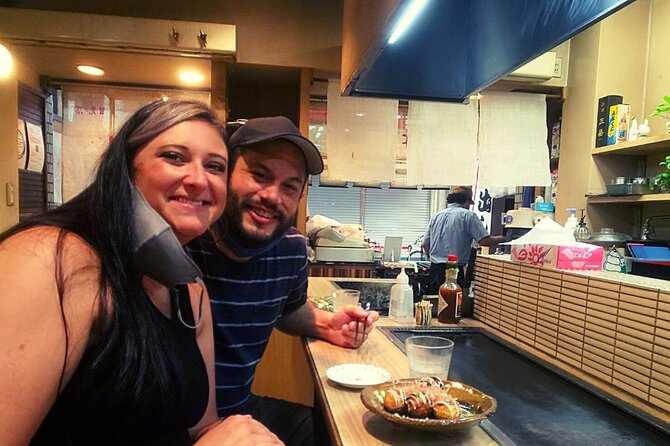
In a place like Kuromon, the difference between a good tour and a random food crawl is the human layer. Your guide is the translator, the filter, and the shortcut.
What stood out in the information you provided is that guides are praised not just for friendliness, but for how they connect with vendors—described like close relationships rather than transactional stops. That relationship piece can affect what you get to try, how confidently you’re steered toward quality, and how smoothly you move through busy aisles.
You also get explanation. Guides described with chef backgrounds (like Hikaru) and guides known for energy and humor (like Anna) show up repeatedly in the accounts you shared. The most useful moments weren’t just what to eat, but how to think about the food:
- what ingredients matter
- what makes a product better quality
- what feels authentic vs what’s more tourist-targeted
- how local customs shape what you’re seeing
If you like learning while you eat, this part is the glue that holds the whole experience together.
Pace, planning, and what to do with an empty stomach
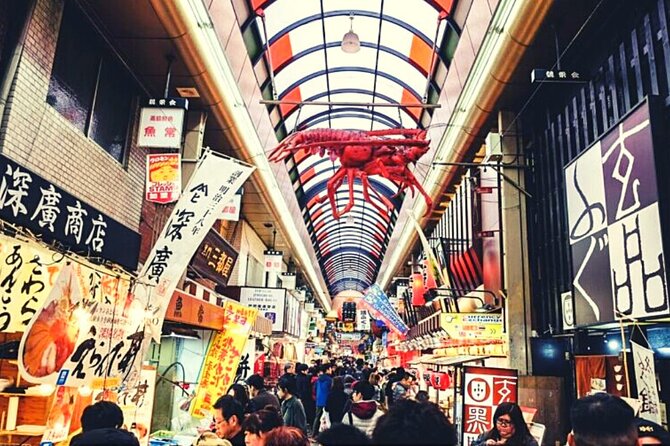
This tour is designed for arriving hungry. One reason people rave about it in the info you shared is that you come out full—like done-dinner full—because you’re sampling multiple dishes and samplings.
So I’d plan your day like this:
- eat lightly beforehand, especially if you’re a smaller eater
- bring a flexible appetite mindset (you’ll be tasting things you might not pick alone)
- wear comfy shoes; you’re walking in a market
Also, remember that markets can shift. One example shared involved Golden Week timing, where some shops were closed or closing early, and the guide adjusted by moving quickly to keep the schedule alive. You can’t control that, but you can control how you arrive—ready to adapt, not rigid about what you think you’ll taste.
Who this tour is best for (and who should skip it)
This is a strong fit for:
- people who want an Osaka food sampler without overplanning
- seafood lovers who are open to learning what makes a dish worth it
- first-timers who feel overwhelmed by a dense market
- families and mixed-age groups (guides were described as patient and accommodating, including with a 2-year-old in one account)
It’s not a fit for:
- vegetarians or vegans (the tour is explicitly not suitable)
- anyone who refuses fish or specific seafood types
If you’re a picky eater, don’t assume you’ll be stuck with one awkward bite. The accounts you provided include examples of guides offering alternatives and adjusting the lineup when needed. Still, it’s not a guarantee for every dish—so talk to your guide at the start and be clear about what you can and can’t do.
Price and value: is $63.43 a fair deal?
The price is $63.43 per person, and the tour runs about 2 hours. For that, you get at least 6–8 dishes plus 3–4 samplings, plus Japanese tea, guided by someone who knows where and what to eat.
Is it “cheap”? No—food tours rarely are. But it’s not just snacks for fun. It’s value in three ways:
- You’re buying convenience. Without a guide, you’d still have to figure out where to eat, what’s good, and what’s worth your money in a crowded market.
- You’re buying variety. The tasting count makes it more like a meal experience than a single stop.
- You’re buying context. Relationships with vendors and explanations about quality help you make better choices later, too.
One more value angle: this is a small group (max 9). That means you’re less likely to get ignored while the guide coordinates multiple people at once.
Practical tips before you book this Kuromon tour
If you want this tour to feel like a highlight instead of a rushed food sprint, do a little prep:
- Arrive on time. The market is busy and the tour timing depends on moving between stalls.
- Bring a curious attitude. Some items (like fugu or sea urchin) are memorable because they’re unfamiliar.
- Tell the guide your limits early. Even when the tour isn’t vegetarian/vegan friendly, guides may still offer options within the menu.
- Don’t overbook your stomach. You’ll likely end up full, so keep a lighter plan for the rest of the afternoon.
If you plan to go during a busy season, book earlier. The average booking window you provided is about 69 days in advance, which suggests this tour sells steadily rather than last-minute.
Should you book this Kuromon Market tasting tour?
Book it if you want the fastest route to understanding Kuromon Ichiba and Osaka food culture through real tastings. The small-group size, the all-in tasting structure (6–8 dishes plus 3–4 samplings), and the repeated praise for guides who connect with vendors and explain what you’re eating make it a smart first-choice market experience.
Skip it if you’re vegan/vegetarian, or if you prefer to choose every bite yourself without guidance. And if you don’t like the idea of fish-forward flavors, this tour may feel like a mismatch.
If your goal is to leave with Osaka tastes in your head—seafood depth, Osakan comfort food like okonomiyaki, plus dessert and tea—this is one of the cleanest ways to do it in about two hours.
FAQ
How long is the Kuromon Market tour?
The tour lasts about 2 hours.
What food is included in the tour?
You’ll get 6–8 selected dishes and 3–4 samplings, with tastings that can include fresh seafood, local Osaka specialties like okonomiyaki, dessert, and Japanese tea.
Is the tour suitable for vegetarians or vegans?
No. The tour is not suitable for vegetarians nor vegans.
How big is the group?
The maximum group size is 9 travelers.
Where does the tour start, and when is it?
The tour starts at Nippombashi Station (1 Chome-5 Nipponbashi, Chuo Ward, Osaka 542-0073, Japan) at 2:00 pm and ends back at the meeting point.
What kind of ticket do I get?
This activity uses a mobile ticket, and confirmation is received at the time of booking.
More Tour Reviews in Osaka
- Osaka Go Karting Tour with Funny Costume★ 5.0 · 2,658 reviews
- Osaka Castle: Museum and Tower Entry Ticket★ 4.5 · 2,380 reviews
- Osaka: Shinsekai Food Tour with 13-15 Dishes at 5 Eateries★ 4.8 · 2,204 reviews
- Osaka Food Tour: 13 Dishes at 5 Local Eateries★ 5.0 · 2,149 reviews
- Hungry Osaka Street Food Tour:15 Tastings & 3 Drinks with a Local★ 5.0 · 1,727 reviews
The Kuidaore List: Eat More of Osaka
- Osaka: Shinsekai Food Tour with 13-15 Dishes at 5 Eateries★ 4.8 · 2,204 reviews
- Osaka Food Tour: 13 Dishes at 5 Local Eateries★ 5.0 · 2,149 reviews
- Hungry Osaka Street Food Tour:15 Tastings & 3 Drinks with a Local★ 5.0 · 1,727 reviews
- Deep Backstreet Osaka Tours (Option to add Dinner)★ 5.0 · 1,290 reviews
- Osaka Local Foodie Walking Tour in Dotonbori and Shinsekai★ 5.0 · 985 reviews
Kuromon, Stall by Stall
- Kuromon Market Food Walking Tour in Osaka (6 stops, 6 tastes)★ 5.0 · 550 reviews
- Osaka: Kuromon Market Food Walking Tour (6 stops, 6 tastes)★ 4.6 · 272 reviews
- PRIVATE 6hr, Food tour from Osaka Castle, Kuromon, Dotonbori.★ 5.0 · 68 reviews
- All Inclusive Kuromon Markets Tour: Flavors Of Osaka★ 4.7 · 31 reviews
- Osaka: Cooking Class & Sake Tasting with Local Market Visit★ 4.8 · 31 reviews
The Newest Osaka Write-Ups
- Private Photoshoot in Osaka with a Professional Photographer
★ 5.0 · 3 reviews - Osaka Early Morning Osaka Castle Tour Avoid Crowds
★ 5.0 · 3 reviews - Nara Private Tour with Pick and Drop and English Speaking Driver
★ 3.5 · 3 reviews - Osaka: Modern Vegetarian Sushi Cooking Class
★ 5.0 · 3 reviews - Nara Day Trip from Osaka with a Licensed Guide
★ 5.0 · 3 reviews
Kuromon Market Tours, compared.
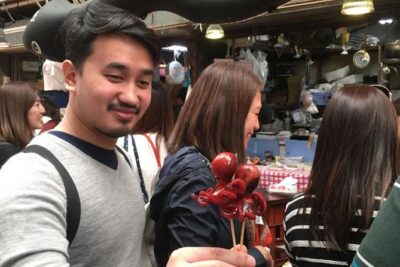 ★ 5.0Kuromon Market Food Walking Tour in Osaka (6 stops, 6 tastes)From $50550 reviews
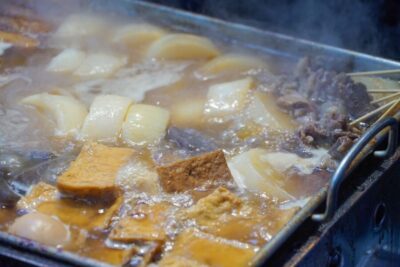 ★ 4.6Kuromon Market Food Walking Tour (6 stops, 6 tastes)From $49272 reviews
 ★ 5.0PRIVATE 6hr, Food tour from Osaka Castle, Kuromon, Dotonbori.From $15568 reviews
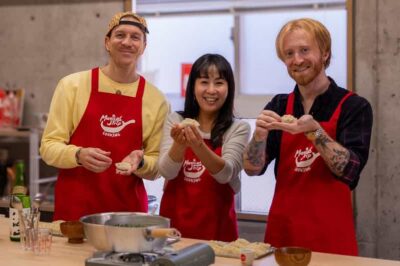 ★ 4.8Cooking Class & Sake Tasting with Local Market VisitFrom $9031 reviews
 ★ 4.7All Inclusive Kuromon Markets Tour: Flavors Of OsakaFrom $6131 reviews
 ★ 3.5Nara, Todaiji Temple & Kuroshio Market Day BUS Tour from OsakaFrom $9918 reviews
 ★ 4.5Food Tour Kuromon Market & Dotonbori with GuideFrom $8415 reviews
 ★ 4.5Osaka Food Walking Tour with Market VisitFrom $13014 reviews
Browse the lists this tour appears in