
Reviewed · OSAKA PRIVATE TOURS
Hidden Gems of Osaka Kyoto Nara – Private Car Tour by Local Guide
A quiet one-day route with real atmosphere starts here. You get temples with fewer crowds and that spellbinding glow of lantern-lit night paths, plus a guide who explains the meaning behind what you’re seeing. I especially liked the stop at Katsuo-ji with thousands of Daruma dolls everywhere, and the way Daiki turns Buddhism and Japanese culture into clear, everyday stories. The one catch: you’ll do some walking and stairs, so plan comfortable shoes and expect a mix of daylight and night.
This is a private car tour out of the Osaka area that works well when you want variety without fighting train transfers. I also like that it’s paced for comfort: the guide drives you between spiritually meaningful places, then gives you time to soak it all in. If you’re trying to do only big, famous sites, this may feel more personal and quieter than you expect.
For value, the price is for your group, and the car experience includes private transportation and parking, while entry fees depend on the temple. It’s not a “buy the ticket, everything is covered” kind of deal, but the focus on off-mainstream spots can make it feel worth it—especially if you want fewer crowds and a calmer day.
In This Review
- Key highlights you’ll actually feel
- Why the 1:00 pm start gives you both day and night magic
- Katsuo-ji Temple: Daruma dolls, mountain air, and Instagram-level photos
- Mitsushima Shrine and Shinto nature worship that feels local
- Hozan-ji on Mount Ikoma: incense smoke and Kangiten’s story
- Shingisan Chogosonshiji on Mt. Shigi: the night lantern mood
- Daiki as your guide: explanations that actually stick
- Price and value: what you’re paying for (and what you aren’t)
- Comfort, walking, and the pacing you should plan for
- Who should book this tour, and who should skip it
- Practical tips to make the day smoother
- Should you book this private car temple day?
- FAQ
- How long is the Hidden Gems of Osaka Kyoto Nara private car tour?
- What time does the tour start?
- Is pickup included?
- Is this tour private?
- What is included in the price?
- Are temple entry fees included?
- How many stops are there?
- Is there walking and stairs?
- Will the route change?
- What is the cancellation policy?
Key highlights you’ll actually feel
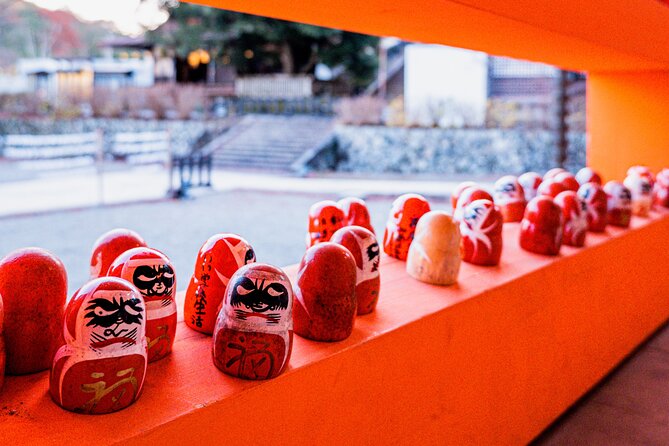
- Daruma-doll wonder at Katsuo-ji: thousands of traditional Daruma figures placed all over the temple grounds.
- Shinto nature worship at Mitsushima Shrine: a small local shrine experience focused on nature itself.
- Incense-and-intrigue Hozan-ji: set partway up Mount Ikoma, with a Buddhist connection to Kangiten.
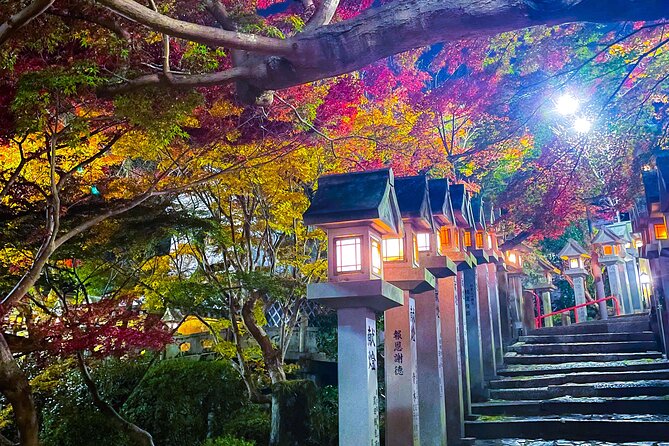
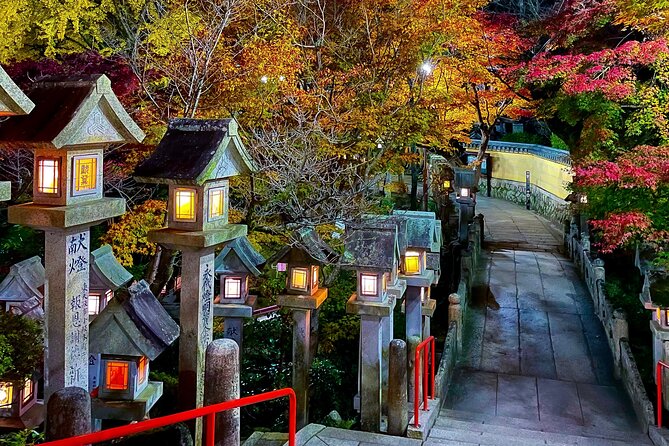
- Night temples on Mt. Shigi: isolated shrines/temples lit with stone lanterns for that nostalgic, otherworldly mood.
- Daiki’s guidance: funny, friendly, and quick to answer questions about religion and what you’re looking at.
- Relaxed logistics: private car ride time means less stress and more time for the places.
A guide to yourselves, more private days out

Why the 1:00 pm start gives you both day and night magic
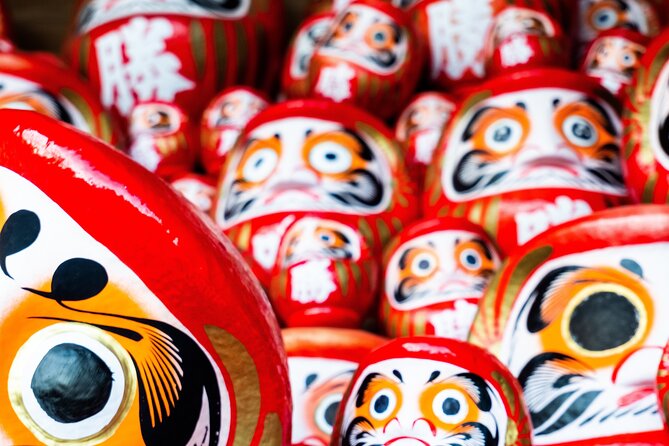
Starting at 1:00 pm changes the feel of a temple day in a good way. You get daylight for the earlier stops, then the best part of the tour leans into evening: lantern light and that slower, quieter tempo.
Because the tour lasts about 6 to 7 hours, you’re not rushing from one landmark to the next. You can watch how the mood shifts—incense smoke and mountain air in the earlier moments, then the stone-lantern glow later on.
If you hate feeling trapped on a timetable, this timing helps. You still stay on schedule, but you’re not sprinting to beat crowds at 8:00 am.
Katsuo-ji Temple: Daruma dolls, mountain air, and Instagram-level photos
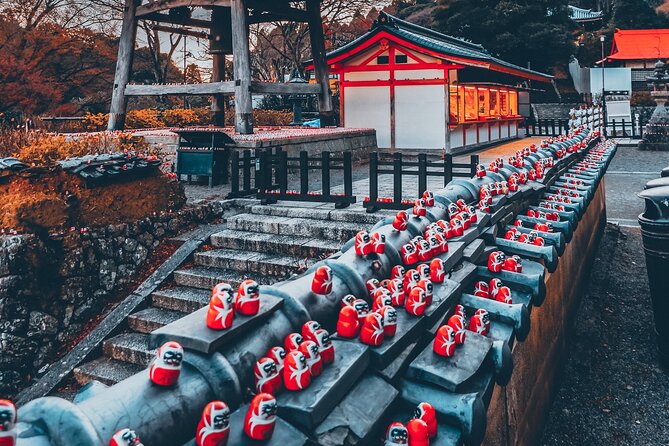
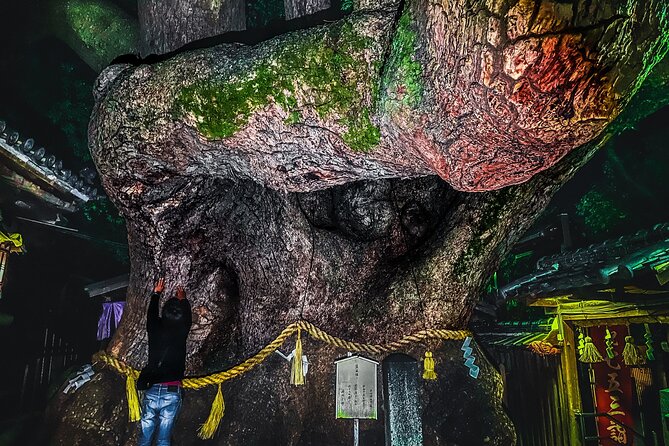
Katsuo-ji is the kind of place where your brain goes, wait… are all these dolls real? The standout is the sheer number of Daruma dolls placed everywhere across the temple grounds, creating a visual field that feels playful but still reverent.
This is a mountain-area temple between Osaka and Kyoto, which means you’re heading out of the flat-city rhythm. Expect scenery that looks good from multiple angles, and plan to wander rather than just snap and leave.
You’ll spend around 2 hours here, which is a solid chunk for taking photos, reading the vibe, and letting it sink in. One practical note: the admission ticket is not included, so factor that extra cost into your day.
If you’re sensitive to crowds, this is one of those places where the setting does some of the crowd-control for you. You still see people, but the focus stays on the dolls, the temple, and the quiet mountain atmosphere.
Mitsushima Shrine and Shinto nature worship that feels local
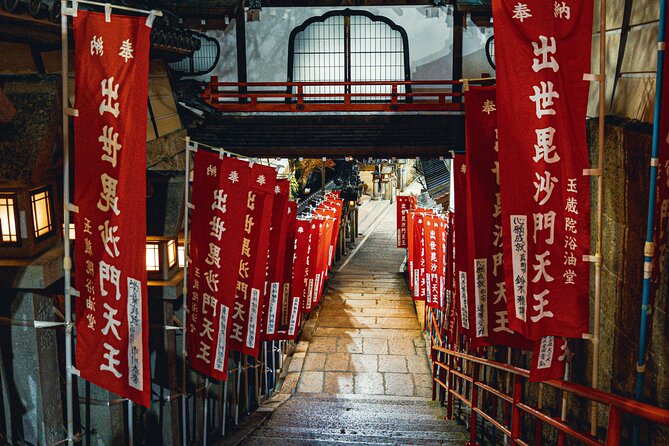
Mitsushima Shrine is shorter on time—about 30 minutes—but that can be a plus. A small local shrine visit works well as a palate cleanser between bigger temple experiences.
What you’ll notice is the focus: Shintoism worshiping nature itself. The shrine’s setting is part of the message, so you’re not just looking at buildings—you’re also looking at the way the place connects to trees, land, and the natural environment around it.
This stop is free of admission, which makes the timing easy on your budget. And because it’s brief, you’re less likely to feel “templed out” halfway through the day.
If you want to understand what Shinto is about without getting lost in complicated terms, this is the right style of stop. The guide can help translate the spiritual purpose into something you can actually recognize while you’re standing there.
Kyoto sits thirty minutes away, more ways there
Hozan-ji on Mount Ikoma: incense smoke and Kangiten’s story
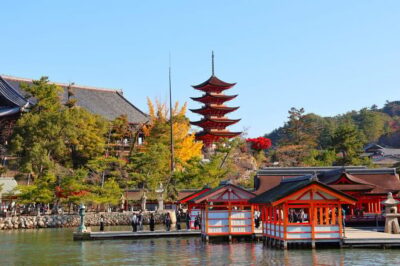
Hozan-ji sits about halfway up Mount Ikoma in Nara prefecture, and the location matters. You get that “up-and-into-the-slope” feeling, with incense smoke and a sense of intrigue that fits the place.
This stop is dedicated to Kangiten, described as a Buddhist god of joy and prosperity. You’ll likely hear how that connection shapes the way people approach the site, so it doesn’t feel like just another temple with random incense.
Admission is free here, and you have about 1 hour. That’s enough time to explore the complex without turning it into a checklist. If there’s smoke in the air, don’t fight it—let it be part of the experience.
A smart way to enjoy Hozan-ji is to slow down for a few minutes at a time. Let the smells and the vertical setting do the work, then ask the guide questions when something doesn’t make sense.
Also, some areas involve walking on slopes, so keep your shoes comfortable. The tour is still manageable, but you’ll want steady footing.
Shingisan Chogosonshiji on Mt. Shigi: the night lantern mood
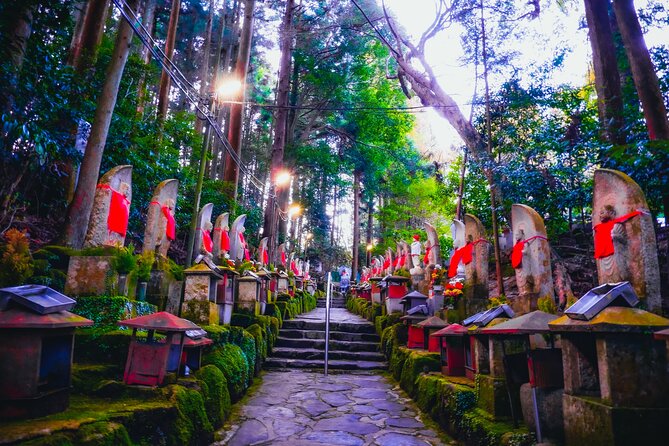
This is where the day turns into something you’ll remember. Shingisan Chogosonshiji is reached on Mt. Shigi, and the temples and shrines there feel more isolated, which is exactly what you want at night.
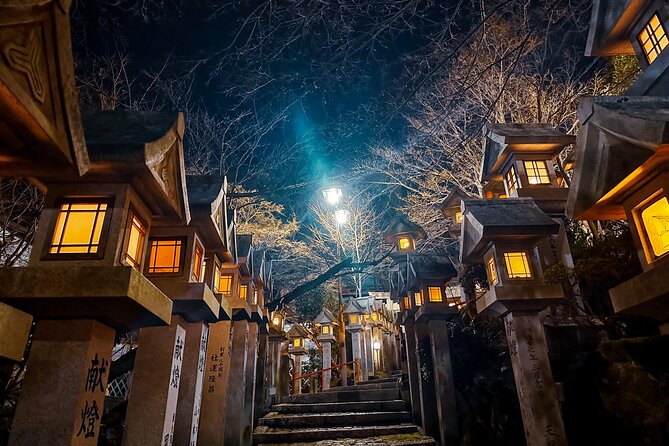
The key detail is the lighting: stone lanterns guide the paths and create a dreamlike, nostalgic feel. That “slow travel” mood shows up here—so you’re not just looking at objects, you’re walking through atmosphere.
You’ll spend about 1 hour 30 minutes at the top area. Admission is free, which makes it even easier to enjoy the night portion without worrying about extra fees.
From what you can expect in practice, this is one of those experiences where the crowd level can drop compared with major tourist circuits. Even when you see people, the lantern-lit paths change how everything feels—less like a rush, more like a quiet scene you stumbled into.
If you don’t love night driving or low light, don’t panic. The guide’s job is to manage timing and help you stay comfortable while you explore the lit areas.
Daiki as your guide: explanations that actually stick
The guide makes a huge difference on this kind of tour, and Daiki is repeatedly praised for how he connects what you see to Japanese culture and Buddhism. People mention his friendly style, his humor, and his ability to explain concepts in ways that don’t feel like a lecture.
In plain terms, you don’t just get a car and a route. You get context—why a shrine looks the way it does, what a deity association might mean, and how local beliefs shaped the atmosphere you’re walking through.
What I appreciate is that questions are handled in real time. If you’re curious about religious practices or why certain objects are placed where they are, you’ll get answers without having to do homework later.
Daiki also helps with pacing and choosing where to spend your time. That matters on a private tour: your day should feel like your experience, not a fixed script.
Price and value: what you’re paying for (and what you aren’t)
The tour is priced at $248.22 per group (listed for up to 1), and that’s for a private car day from the Osaka area. The included items are private transportation and parking fees, while temple entry fees are not included.
That means the value isn’t about “everything is bundled.” It’s about the logistics you save: less commuting stress, more time on the sites, and a route designed to hit specific spiritual places instead of only the big, crowded magnets.
If you’re traveling solo, you’re basically buying a private day without having to share the vehicle with strangers. If you’re traveling in a small group, the per-group structure can still be easier to budget than you might expect for a private driver over 6 to 7 hours.
The one cost variable is admissions (notably Katsuo-ji), plus anything else you choose to buy on the day. So the smart move is to keep a little extra cash or card-ready just in case you hit a paid entry point.
Overall, the pricing makes the most sense if you want a calm, guided day that mixes Shinto and Buddhist sacred spaces with night lantern atmosphere.
Comfort, walking, and the pacing you should plan for
You’re in a comfortable car, and that’s the big advantage. You’ll cover enough ground that you’d likely waste time on transfers by train, and the private route keeps your day from turning into a travel puzzle.
Still, it’s not a sit-everywhere tour. The tour includes walks and some stairs at certain temples, so comfortable shoes are non-negotiable.
Pacing is one of the reasons people love this setup. You get enough time at each location to actually experience it, and then you move when it makes sense, especially before the night lighting portion.
It also helps that it’s a private tour—only your group participates. That means you can take your time when you want photos, or slow down if you’re reading plaques or asking questions.
If you’re sensitive to lots of physical activity, consider that some segments are on sloped mountain areas. You can still do it, but don’t plan to wear slick sandals and then pretend it’s fine.
Who should book this tour, and who should skip it
This tour fits best if you want a temple and shrine day with atmosphere and fewer crowds. It’s also ideal if you care about understanding what you’re seeing, not just collecting photos.
First-time visitors often enjoy this because the guide’s explanations make the sacred places easier to interpret. You’ll get the “why” behind the walk, not only the “where.”
You might want a different option if you only want famous headline sites, because this day leans more toward specific, atmospheric sacred spaces than big-city icons. It’s also not the best choice if you dislike any walking on uneven terrain.
If you’re the type who enjoys night scenes, lantern lighting, and quiet spiritual settings, you’ll likely love the late part of the day.
Practical tips to make the day smoother
Bring comfortable shoes. Even when a stop doesn’t sound long, temple areas can involve stairs, slopes, and uneven ground.
Plan for changing light. You’ll go from daylight into night lantern viewing, so having a light layer can help if the temperature drops.
If you want the best photos, give yourself a minute to reposition before you start shooting. In lantern areas, the best angles often come from walking slowly, not from standing in the same spot.
Come with a few questions. If you’re curious about Shinto practices, Buddhist deities, or why certain offerings appear, ask early. Daiki can tie it to what you’re seeing right in front of you.
If you’re traveling with mobility needs, mention your limits when booking. The tour notes that walks and stairs happen at some temples, so a quick heads-up can help set expectations.
Should you book this private car temple day?
I’d book it if you want a guided day that mixes Shinto and Buddhist sacred spaces, includes a real night lantern experience, and avoids the feeling of being herded through major attractions. The private car format is also a big win for comfort and time.
I’d hesitate if you’re not comfortable with stairs and slopes, or if you’re hoping for only the biggest, most famous sites. This tour is more about mood, meaning, and atmosphere than name recognition.
If your travel style is calm, curious, and a little bit playful, the Daruma-doll stop plus the Mt. Shigi night lantern finale can be a standout day in the Osaka–Kyoto–Nara area.
FAQ
How long is the Hidden Gems of Osaka Kyoto Nara private car tour?
The tour runs about 6 to 7 hours.
What time does the tour start?
It starts at 1:00 pm.
Is pickup included?
Pickup is offered.
Is this tour private?
Yes. It’s a private tour, so only your group will participate.
What is included in the price?
The tour includes private transportation and parking fees.
Are temple entry fees included?
No. Entry fees are not included.
How many stops are there?
There are four main stops: Katsuo-ji Temple, Mitsushima Shrine, Hozan-ji Temple, and Shingisan Chogosonshiji Temple.
Is there walking and stairs?
Yes. There are walks and some stairs at some temples.
Will the route change?
Some of the itinerary may change by the season or other circumstances.
What is the cancellation policy?
You can cancel for a full refund up to 24 hours in advance of the experience’s start time.
A Day Among the Nara Deer
- Ancient Capital Tour: Kyoto and Nara Highlights from Kyoto/Osaka★ 4.5 · 332 reviews
- Kyoto and Nara Day Trip from Osaka★ 4.0 · 175 reviews
- Full Day Guided Tour to Kyoto and Nara from Osaka by Van★ 5.0 · 144 reviews
- Discover Himeji, Kobe and Nara from Osaka★ 5.0 · 101 reviews
- Kyoto & Nara Private customized tour with English speaking Guide★ 4.5 · 99 reviews
Kyoto, Just Up the Line
- Osaka/Kyoto: Hiroshima Miyajima Bus Tour & Shinkansen Ticket★ 4.7 · 919 reviews
- From Kyoto/Osaka: Kyoto Top Highlights 1-Day Guided Bus Tour★ 4.5 · 714 reviews
- Ancient Capital Tour: Kyoto and Nara Highlights from Kyoto/Osaka★ 4.5 · 332 reviews
- Osaka/Kyoto: Amanohashidate & Miyama Tour with Boat & Lunch★ 4.6 · 207 reviews
- Kyoto and Nara Day Trip from Osaka★ 4.0 · 175 reviews
Your Osaka, at Your Pace
- Private Osaka Walking Tour: Highlights & Hidden Gems★ 5.0 · 569 reviews
- Osaka 4hr Private Tour with Government-Licensed Guide★ 5.0 · 314 reviews
- 3/4/5 Hours Private Tour in Osaka with Local Guide★ 5.0 · 189 reviews
- Osaka’s Best and Brightest: Private Full-Day Tour by Vehicle★ 5.0 · 147 reviews
- Kyoto & Nara Private customized tour with English speaking Guide★ 4.5 · 99 reviews
The Newest Osaka Write-Ups
- Private Photoshoot in Osaka with a Professional Photographer
★ 5.0 · 3 reviews - Osaka Early Morning Osaka Castle Tour Avoid Crowds
★ 5.0 · 3 reviews - Nara Private Tour with Pick and Drop and English Speaking Driver
★ 3.5 · 3 reviews - Osaka: Modern Vegetarian Sushi Cooking Class
★ 5.0 · 3 reviews - Nara Day Trip from Osaka with a Licensed Guide
★ 5.0 · 3 reviews
Osaka Private Tours, compared.
 ★ 5.0Private Osaka Walking Tour: Highlights & Hidden GemsFrom $81569 reviews
 ★ 5.0Osaka 4hr Private Tour with Government-Licensed GuideFrom $105314 reviews
 ★ 5.03/4/5 Hours Private Tour in Osaka with Local GuideFrom $95189 reviews
 ★ 5.0Osaka’s Best and Brightest: Private Full-Day Tour by VehicleFrom $600147 reviews
 ★ 5.0Full Day Tour of Kyoto with Private TransportationFrom $247130 reviews
 ★ 4.5Kyoto & Nara Private customized tour with English speaking GuideFrom $54999 reviews
 ★ 4.6Private Custom Walking Tour with a Local GuideFrom $6297 reviews
 ★ 4.93/4/5 Hours Private Tour With Local GuideFrom $11686 reviews
Browse the lists this tour appears in