
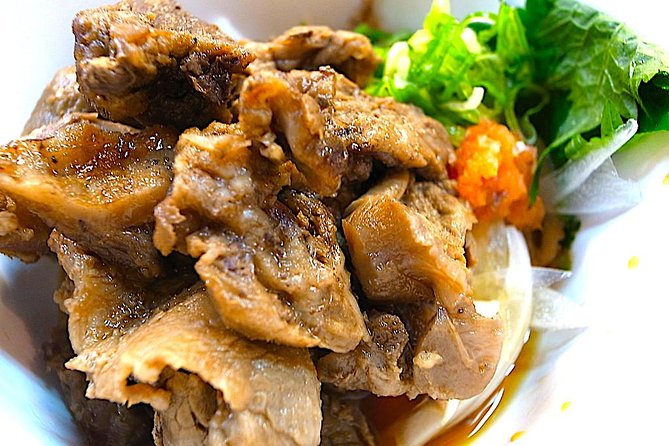
Reviewed · SHINSEKAI & TSUTENKAKU TOURS
Retro Osaka Street Food Tour: Shinsekai
Retro Osaka snacks and street signs, but guided. I like how this Shinsekai walk makes old-school food feel easy: you’ll learn about mixed juice traditions and even make your own takoyaki. One heads-up: it’s not a great match if you’re strictly vegan or need gluten-free options.
This is a short, focused evening tour (about 3 hours, starting at 5:00 pm) with a small group capped at 10. You get an English-speaking local guide, help reading menus, and a built-in flow of sights plus bites—ending around Sennariya Coffee so you can keep the night going without hunting for your next stop.
In This Review
- Key things I’d plan around
- Shinsekai at 5 pm: why this evening route feels like a movie set
- Your guide makes street food actually work
- Mixed juice and Osaka-style breakfast: the tastes that set the tone
- Hands-on takoyaki: what you’ll gain beyond the flavor
- Touring Shinsekai’s standout stops: Tsutenkaku, Billiken, Jan Jan Yokocho, and more
- Tsutenkaku: the start with instant photo power
- Billiken shrine: goofy-looking, culturally important
- Ja Jan Yokocho: narrow lanes with old vibe energy
- Isshin-ji: a different rhythm than the shopping streets
- Tower Knife Osaka: a quirky stop that makes the area memorable
- Kuromon Ichiba Market: a major food-world contrast
- Ending at Sennariya Coffee
- Dinner included: how much food is really in the plan
- Price and value: what $217 buys in Shinsekai time
- Dietary fit and who should book it
- Logistics that actually matter: timing, tickets, and pace
- Should you book the Retro Osaka Street Food Tour: Shinsekai?
- FAQ
- How long is the Retro Osaka Street Food Tour: Shinsekai?
- What time does the tour start?
- Where do I meet the guide?
- Where does the tour end?
- What’s included in the price?
- Is transportation included?
- Is this tour suitable for vegetarians and pescetarians?
- Is it suitable for vegans or gluten-free travelers?
- What age rules apply for the tour?
Key things I’d plan around
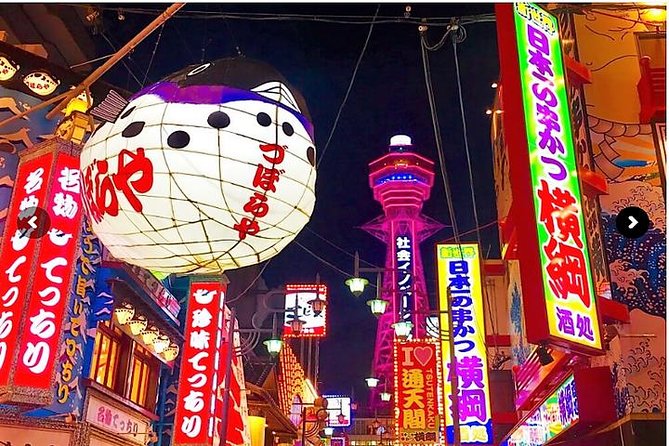
- Tsutenkaku as your launch point for a Shinsekai evening with serious photo energy
- Hands-on takoyaki so you’re not just eating, you’re participating
- Mixed juice + Osaka-style breakfast to understand how locals think about snacking
- Billiken shrine and Jan Jan Yokocho for retro atmosphere that’s hard to find on your own
- Kuromon Ichiba Market on the route for more choice and a bigger sense of Osaka food culture
- Small group size (max 10) so questions and pacing are actually manageable
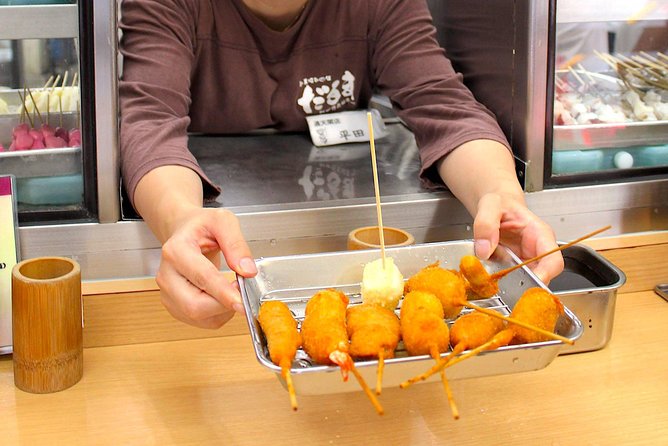
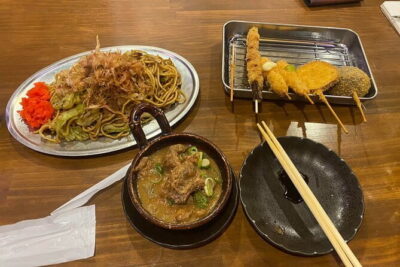
Shinsekai keeps going, kushikatsu and all

Shinsekai at 5 pm: why this evening route feels like a movie set
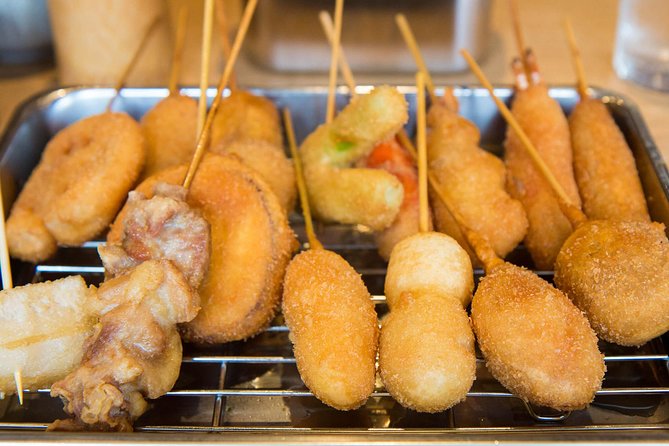
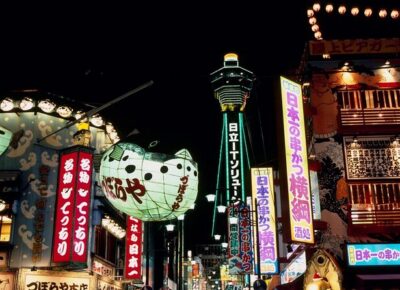
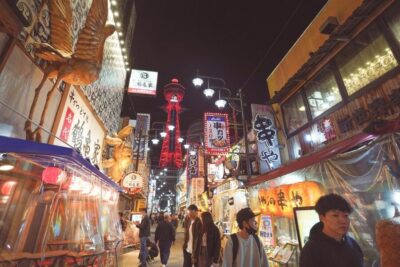
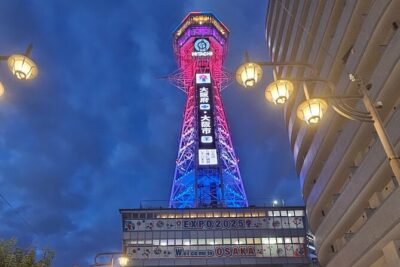
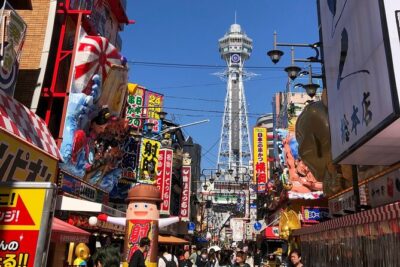
Osaka’s Shinsekai district has that unmistakable retro mood—electric signs, old-school street energy, and the feeling that you’re walking through another era. Starting at Tsutenkaku right at the beginning matters. You get your bearings fast, and you can catch the lights and angles that make the area look so iconic on camera.
This is also an evening tour for a reason. Food stalls and casual shops read differently at night. You’re not racing around in the midday heat or trying to figure out which places are open. You’re simply on a steady path from one stop to the next, with a guide handling the awkward parts—like what to order and how much to order—so you spend your energy actually tasting and exploring.
Your guide makes street food actually work
The best part of a guided street-food plan isn’t the eating. It’s what happens before the first bite: ordering. Street menus can be intimidating, especially when you’re trying to decode pictures, kanji, and abbreviations under time pressure.
With this tour, you’ll have an English-speaking local guide who helps you navigate the shop choices and explains what you’re eating. That means you’re not just grabbing the first thing that looks good. You’re understanding why each dish fits the neighborhood—like how “mixed juice” fits into the local snack culture, or why takoyaki is treated as more than a throwaway street item.
It’s also a pacing advantage. The route keeps moving through the right streets without you constantly checking your map. If you’ve ever tried to do Shinsekai on your own and ended up in the wrong alley, you’ll appreciate how smoothly this runs.
Mixed juice and Osaka-style breakfast: the tastes that set the tone
The tour’s food focus is very Osaka in a practical way: it’s about easy-to-buy bites, local habits, and snack traditions that show up in everyday life. One highlight I’d center in your expectations is mixed juice—part of the local street-snack rhythm, not just a novelty drink.
You’ll also try an Osaka-style breakfast during the tour. That’s a clever move, because it reframes street food as something locals eat as part of real routine, not only as an after-hours tourist activity. The “breakfast” angle gives you variety too. Instead of only sweet treats or only fried items, you get a broader sense of how Osaka people think about grabbing food throughout the day.
This is where the included items matter. You get 1 beverage and multiple tastings, and the guide helps you decide what to try so you’re not overordering or accidentally missing the signature flavors of the route.
Come hungry: more eating your way through Osaka
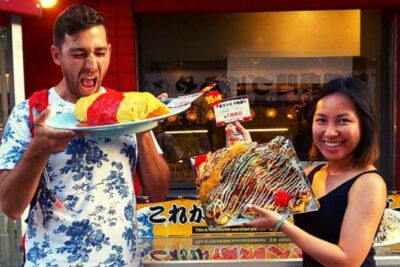

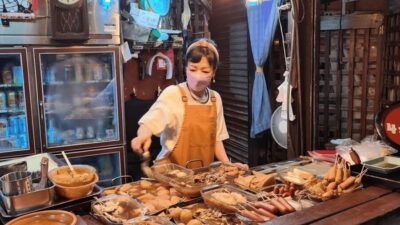
Hands-on takoyaki: what you’ll gain beyond the flavor
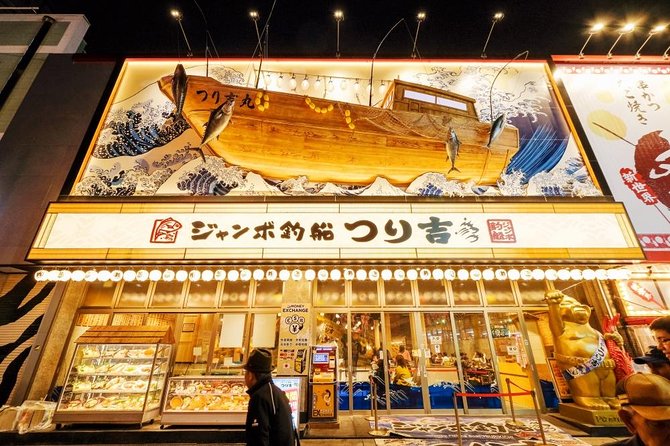
Takoyaki is one of those foods that’s everywhere in Japan, but making it yourself is a different experience. You’ll get a hands-on moment where you learn how the batter and toppings come together and how the cooking style creates that classic texture.
What I like about including the takoyaki-making is that it turns the tour into something you’ll remember even after the taste fades. You’re learning technique, not just chewing. Plus, it gives you something to talk about while you’re moving between photo stops—because you’ll have a real story attached to what you’re seeing.
And from a practical standpoint: when you’re making a dish on a guided schedule, you don’t waste time waiting around or wondering if a stall is only doing one thing that evening. The tour structure keeps everything flowing.
Touring Shinsekai’s standout stops: Tsutenkaku, Billiken, Jan Jan Yokocho, and more
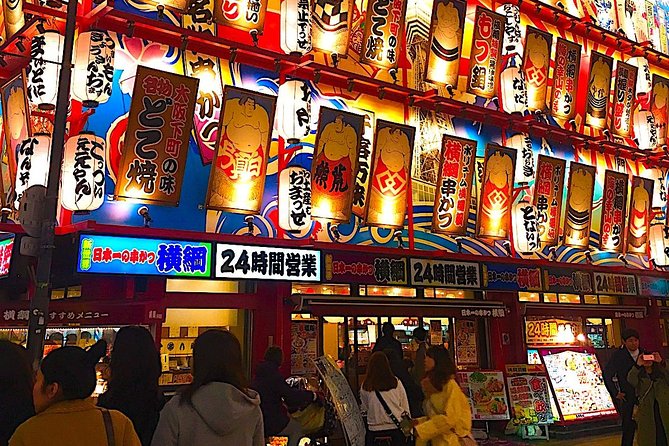
This route isn’t only about food stops. It’s also built to show you the visual landmarks that make Shinsekai feel distinctly itself.
Tsutenkaku: the start with instant photo power
You meet near Tsutenkaku, and even if you don’t go into any tower attractions, the area around it is the right “beginning image.” It’s the kind of place where your photos instantly look like Osaka street scenes, not generic Japan travel shots.
Billiken shrine: goofy-looking, culturally important
You’ll also visit the Billiken shrine. Billiken is one of those charmingly weird Osaka symbols that locals associate with good luck. Even if you’re not deep into Japanese folklore, it’s the type of stop that adds personality to your walk. It’s also a quick cultural moment that doesn’t slow you down.
Ja Jan Yokocho: narrow lanes with old vibe energy
Ja Jan Yokocho is one of those areas where the setting does half the work. The narrow lanes, casual shopfronts, and retro vibe make it ideal for street-food wandering without feeling like you’re just looking at empty signs. This is a good place to slow down for photos, because the guide can also help you spot where to eat and what to pair together.
Isshin-ji: a different rhythm than the shopping streets
You’ll pass through Isshin-ji, which changes the tempo from neon snack lane to something calmer. Including a temple stop in a food tour actually helps your brain reset. You get a breather between tastes, and it makes the route feel more like a full neighborhood experience than a checklist.
Tower Knife Osaka: a quirky stop that makes the area memorable
Tower Knife Osaka sounds exactly like the kind of odd landmark that makes Shinsekai memorable. It’s the sort of site you wouldn’t necessarily seek out on your own, but it’s perfect for a photo moment and a quick conversation with your guide about why this type of playful identity matters in Osaka.
Kuromon Ichiba Market: a major food-world contrast
Near the end, you’ll reach Kuromon Ichiba Market. This part of the route is valuable because Kuromon gives you a broader window into Osaka’s food scene. Even if you’re not sampling everything there, being in the market atmosphere helps connect the street snacks you tried earlier to the bigger food culture of the city.
If you’re the type who likes to compare styles—street stall flavor vs. market flavor—this stop will scratch that itch.
Ending at Sennariya Coffee
The tour ends back near the meeting area, with a final stop at Sennariya Coffee. That matters because it gives you an easy, low-effort landing spot at the end of a walking-and-eating evening. It’s a good place to pause and decide what you still want to do after the tour.
Dinner included: how much food is really in the plan
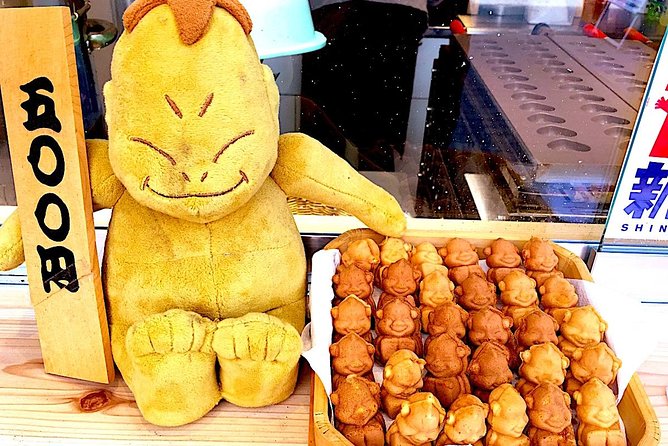
This tour isn’t just four snacks and a goodbye. It includes dinner in a restaurant plus 1 beverage and 4 food stops. That combination is the main reason the pricing can make sense even when it feels high at first glance.
Here’s how I’d think about the food load:
- You’ll have guided tastings across the route, so you’re not guessing what’s filling.
- You’ll also have a restaurant meal, which turns the evening into a complete plan rather than a half-measure.
- Because additional drinks and extra food aren’t included, you should still pace yourself if you’re a light eater.
Also, note the minimum drinking age is 21. The tour includes at least one beverage, but if you’re traveling as a group with mixed ages, plan around that rule.
Price and value: what $217 buys in Shinsekai time
At $217 per person, this tour sits in the “premium casual” category. I’d only call it good value if you care about more than eating. For me, the value comes from a few bundled benefits:
1) A local guide doing the menu work
You’re paying for language help and decision support, not only for walking. If you’ve ever tried to order in street stalls without confidence, you know how much stress that saves.
2) Hands-on takoyaki + multiple tastings
Making takoyaki is a real activity, not just watching. Combined with tastings and dinner, it gives you a full evening’s worth of food experiences.
3) Small group size (max 10)
Smaller groups usually mean less time waiting at shops and more attention from the guide. In a food tour, that difference affects the quality of what you eat and how smoothly you move.
4) You’re not paying extra for the “core” stuff
What’s included is clear: dinner, a beverage, and 4 food stops with a local guide. What’s not included—transportation and extra drinks/food—is standard for this kind of tour, but it helps you budget.
If you’re a foodie who wants structure, this price starts to look reasonable. If you’re purely price-sensitive and happy to roam on your own, you might find a cheaper street-food evening. But if your priority is comfort plus tastings in the right order, this one is set up for that.
Dietary fit and who should book it
This tour is vegetarian and pescetarian friendly, which is a big plus for many groups. But it’s not recommended for vegans and it’s not recommended for gluten-free. So if your diet is strict, you’ll want to think twice before booking.
If you’re traveling with kids, the tour is listed as family-friendly, and children must be accompanied by an adult. There’s also a specific note: a passport information copy is required for kids 10 and above. Plan that ahead so you don’t get stuck on paperwork.
For adults, the minimum drinking age (21) matters if the group includes anyone under that age. The tour still works as a food-and-sights outing for everyone, but the beverage element and any alcohol availability will follow that rule.
Also, the tour requires good weather. Shinsekai is an outdoor-walk neighborhood, so this can matter. If weather is poor, you’ll be offered a different date or a full refund.
Logistics that actually matter: timing, tickets, and pace
The tour starts at 5:00 pm and runs about 3 hours. That timing is ideal for most jet-lagged schedules: you get a late-afternoon start, and you’re done before the night gets too wild.
You’ll get a mobile ticket, and the meeting point is near Tsutenkaku. It also says you’re near public transportation, which is helpful because you won’t be stuck planning a complicated route just to start the tour.
Group size is capped at 10, and that’s a practical quality-of-life point. Smaller groups tend to move better through tight streets and busy market areas like Kuromon.
Should you book the Retro Osaka Street Food Tour: Shinsekai?
Book it if you want an Osaka street-food night that’s structured but still feels local. This tour is for people who like tasting with context—mixed juice traditions, takoyaki you actually make, and a route that includes Shinsekai landmarks plus a major market stop.
Don’t book it if you’re vegan or gluten-free and need guaranteed accommodations, or if you’d rather freestyle without paying for guidance and menu support. Also skip if you dislike evening walking or you’re worried about weather, since the tour needs good conditions.
If your goal is to understand Shinsekai through food and street culture—without getting lost in translation—this is a strong choice.
FAQ
How long is the Retro Osaka Street Food Tour: Shinsekai?
The tour lasts about 3 hours.
What time does the tour start?
The start time is 5:00 pm.
Where do I meet the guide?
You meet at Tsutenkaku, 1-chōme-18-6 Ebisuhigashi, Naniwa Ward, Osaka, 556-0002, Japan.
Where does the tour end?
The tour ends back at the meeting point, with an ending stop at Sennariya Coffee.
What’s included in the price?
It includes a local guide, dinner in a restaurant, 1 beverage, and 4 food stops.
Is transportation included?
No. Transportation costs are not included.
Is this tour suitable for vegetarians and pescetarians?
Yes, it is listed as vegetarian and pescetarian friendly.
Is it suitable for vegans or gluten-free travelers?
It is not recommended for vegans and not recommended for gluten-free.
What age rules apply for the tour?
It’s family-friendly, but children must be accompanied by an adult. It also notes a minimum drinking age of 21 years. For kids 10 and above, a passport information copy is required.
More Tour Reviews in Osaka
- Osaka Go Karting Tour with Funny Costume★ 5.0 · 2,658 reviews
- Osaka Castle: Museum and Tower Entry Ticket★ 4.5 · 2,380 reviews
- Osaka: Shinsekai Food Tour with 13-15 Dishes at 5 Eateries★ 4.8 · 2,204 reviews
- Osaka Food Tour: 13 Dishes at 5 Local Eateries★ 5.0 · 2,149 reviews
- Hungry Osaka Street Food Tour:15 Tastings & 3 Drinks with a Local★ 5.0 · 1,727 reviews
The Kuidaore List: Eat More of Osaka
- Osaka: Shinsekai Food Tour with 13-15 Dishes at 5 Eateries★ 4.8 · 2,204 reviews
- Osaka Food Tour: 13 Dishes at 5 Local Eateries★ 5.0 · 2,149 reviews
- Hungry Osaka Street Food Tour:15 Tastings & 3 Drinks with a Local★ 5.0 · 1,727 reviews
- Deep Backstreet Osaka Tours (Option to add Dinner)★ 5.0 · 1,290 reviews
- Osaka Local Foodie Walking Tour in Dotonbori and Shinsekai★ 5.0 · 985 reviews
Under Tsutenkaku Tower
- Osaka: Shinsekai Food Tour with 13-15 Dishes at 5 Eateries★ 4.8 · 2,204 reviews
- Osaka Local Foodie Walking Tour in Dotonbori and Shinsekai★ 5.0 · 985 reviews
- Osaka: Tsutenkaku Tower Entry Ticket★ 3.8 · 125 reviews
- Osaka: Local Foodie Tour in Dotonbori and Shinsekai★ 4.7 · 95 reviews
- Osaka: Shinsekai Food Tour – 13 Dishes at 5 Local Eateries★ 4.5 · 29 reviews
The Newest Osaka Write-Ups
- Private Photoshoot in Osaka with a Professional Photographer
★ 5.0 · 3 reviews - Osaka Early Morning Osaka Castle Tour Avoid Crowds
★ 5.0 · 3 reviews - Nara Private Tour with Pick and Drop and English Speaking Driver
★ 3.5 · 3 reviews - Osaka: Modern Vegetarian Sushi Cooking Class
★ 5.0 · 3 reviews - Nara Day Trip from Osaka with a Licensed Guide
★ 5.0 · 3 reviews
Shinsekai & Tsutenkaku Tours, compared.
 ★ 4.8Shinsekai Food Tour with 13-15 Dishes at 5 EateriesFrom $532,204 reviews
 ★ 5.0Osaka Local Foodie Walking Tour in Dotonbori and ShinsekaiFrom $111985 reviews
 ★ 3.8Tsutenkaku Tower Entry TicketFrom $8125 reviews
 ★ 4.7Local Foodie Tour in Dotonbori and ShinsekaiFrom $10895 reviews
 ★ 4.5Shinsekai Food Tour – 13 Dishes at 5 Local EateriesFrom $7929 reviews
 ★ 5.0Night Soul Food Tour in Shinsekai with a local guideFrom $8528 reviews
 ★ 5.0Osaka Morning Tour: Shitennoji Temple, Shinsekai &DoutonboriFrom $7423 reviews
 ★ 5.0Let’s Dance Bon Odori Japanese folk Dance near TsutenkakuFrom $1916 reviews
Browse the lists this tour appears in